
GAINESVILLE, Fla.--(BUSINESS WIRE)--Dec 18, 2024--
After another record-breaking Atlantic Hurricane Season Futuri, the global leader in AI technology for broadcast and public safety, in partnership with Florida’s Division of Emergency Management (FDEM) and the University of Florida, launches BEACON ™, a revolutionary AI-powered emergency communication system.
This press release features multimedia. View the full release here: https://www.businesswire.com/news/home/20241218816107/en/
BEACON combines AI with the resiliency of broadcast technology to transform how emergency managers and first responders communicate with communities before, during, and after disasters. This marks the nation’s first 24/7 emergency preparedness network, providing critical, real-time information to keep citizens safe during emergencies.
“Futuri understands that AI can and should be a force for good,” said Daniel Anstandig, CEO and founder of Futuri. “Futuri, along with FDEM and the University of Florida, identified a gap in the timely delivery of critically important messaging to the public, providing the opportunity to introduce a new critical communication infrastructure to Florida’s – and other communities – hardest hit disaster areas. This first-of-its-kind communications tool automates important updates and advisories into radio broadcasts voiced by AI – getting potentially life-saving information to the community faster than ever before.”
A new era in emergency communication
BEACON - The Broadcast Emergency Alerts and Communications Operations Network – is the first system in the nation to seamlessly integrate AI technology with traditional broadcast channels, delivering information in real time to communities across Florida.
Unlike current systems, which rely on multiple channels with varying reach, BEACON ensures a unified, consistent message across all platforms. It automatically captures, prioritizes, and translates 100% of public safety information from authorized government sources, localizing this content based on geography and translating it into multiple languages, ensuring no community is left without vital information.
This critical information from state and local emergency managers is broadcast over traditional radio and TV airwaves and is also available via streaming and the free BEACON mobile app on iOS and Android. The system integrates directly into newsrooms and studios through a secure dashboard, allowing broadcasters across the state to access real-time content.
Around-the-clock emergency preparedness
BEACON’s dedicated radio and TV feeds broadcast easy-to-understand preparedness information, even when there are no active disasters. This includes actionable steps residents can take to protect themselves and their families before, during, and after an emergency. With the ability to reach vulnerable populations through resilient broadcast technology, BEACON is essential for emergency managers in today’s evolving media landscape.
“BEACON provides a 24/7/365 solution to all government agencies with this first-of-its-kind communications tool, automating important updates and advisories into radio broadcasts voiced by artificial intelligence and getting them out to the community faster than ever before,” said Kevin Guthrie, FDEM executive director.
How BEACON works:
Randy Wright, Director of Media Properties at the University of Florida, emphasized the partnership's significance, stating: "BEACON is the first 'always-on' alerting channel, developed at the University of Florida's public media WUFT-TV/FM, which is also home to the nationally recognized Florida Public Radio Emergency Network. BEACON provides hyper-local alerting solutions for every community in the state of Florida using broadcast infrastructure that is largely in place and already operational. BEACON utilizes artificial intelligence in an entirely new way for the public good, ensuring official alerts and advisories are available to the public 24/7/365 without the need for a cell phone, computer, or other device. Based in broadcast, the most resilient of media, BEACON is truly 'safety first, always on.'"
Nationwide rollout and accessibility
After stress testing the reliability of BEACON across every Florida media market, Futuri will extend its emergency system beyond the state, working directly with governors’ offices and emergency managers nationwide to implement BEACON and ensure local broadcasters have access to the content feed to deliver the necessary information to their communities.
“BEACON is revolutionary in emergency communication,” said Craig Fugate, a former FEMA administrator and FDEM executive director. “Its nationwide implementation offers an unprecedented opportunity to transform emergency messaging, with a unified platform for authorities to disseminate critical alerts and instructions in real time.”
Following a record-breaking hurricane season, officials urge all broadcasters and Florida residents to tune into the BEACON feed for critical emergency information. Feeds will be available for every major metropolitan area in Florida via the BEACON mobile app. All Florida residents are encouraged to download the app, available on iOS and Android in the Apple App Store and Google Play. Citizens in the Gainesville media market can also tune in to 89.1 FM for live BEACON broadcasts.
Click here to listen to BEACON audio as Hurricane Milton made landfall along Florida's West Coast.
About Futuri
Futuri, an AI technology company, helps media companies engage and monetize audiences to thrive in the AI era. Futuri’s suite of software leverages the company’s 20+ patents in artificial intelligence, broadcast technology, and public safety to predict audience behavior and deliver the right content to the right audience at the right time across all platforms – broadcast, podcast, streaming, and digital publishing. Futuri also serves government agencies with BEACON, the world’s first AI-powered emergency broadcast system. Over 7,000 broadcast and media companies worldwide, reaching audiences of 100 million per week, trust Futuri to grow and monetize their audiences and improve profitability with software such as TopLine, a sales intelligence system that expedites the sales cycle and grows revenue; and TopicPulse, an audience intelligence system that trends what audiences care about and forecasts what will go viral. For more information, please visit www.futurimedia.com.
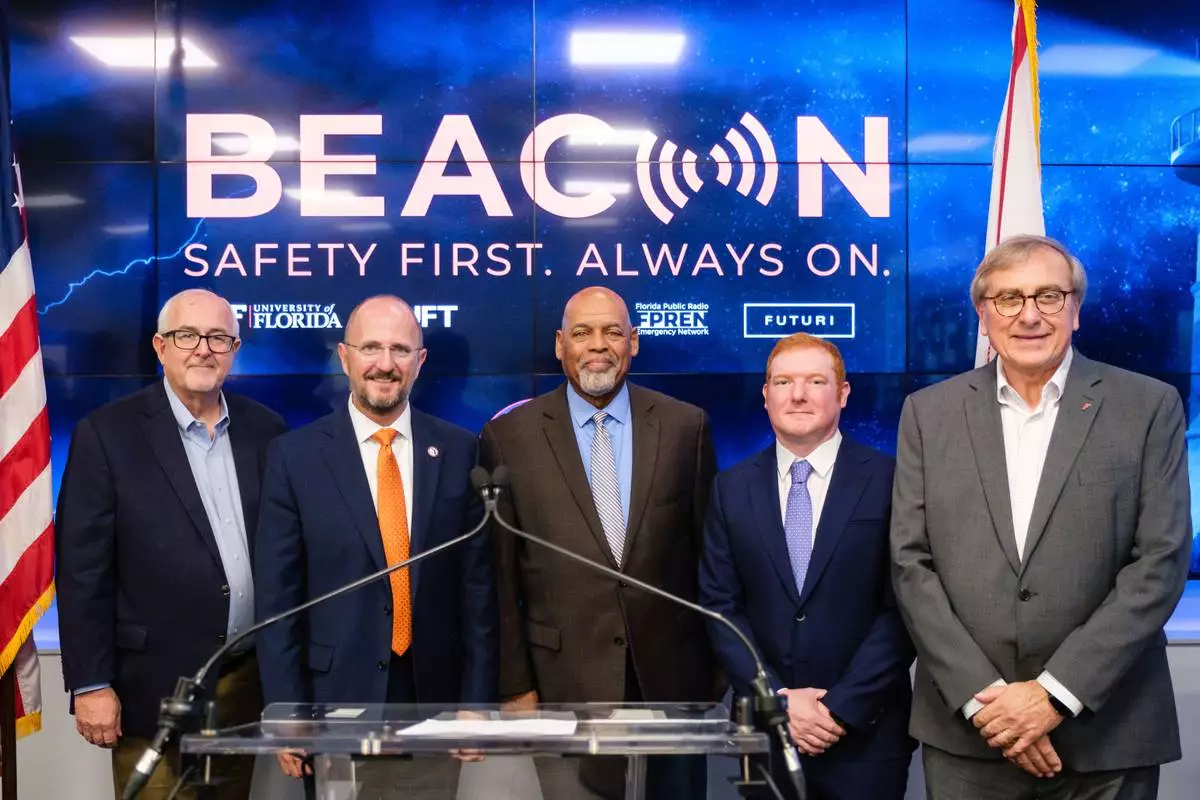
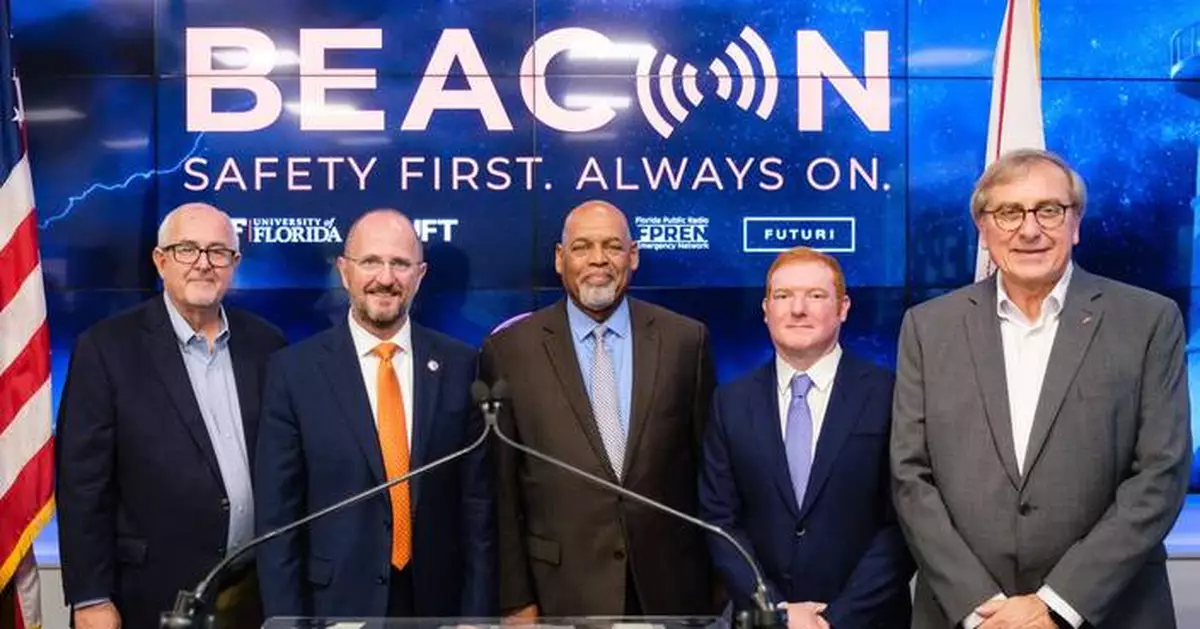
Former FEMA Administrator Craig Fugate, FDEM Executive Director Kevin Guthrie, Dean of UF College of Journalism and Communications Hub Brown, CEO of Futuri Daniel Anstandig, and the President of UF Kent Fuchs. Futuri, Florida’s Division of Emergency Management, and the University of Florida come together to announce the launch of the first-ever AI-driven emergency broadcast system, revolutionizing disaster communications to save lives at the University of Florida College of Journalism and Communications Atlas Lab in Gainesville, FL on Wednesday, December 18, 2024. [Chris Watkins Photography]