PARIS (AP) — Pastry chef Arnaud Delmontel rolls out dough for croissants and pains au chocolat that later emerge golden and fragrant from the oven in his Paris patisserie.
The price for the butter so essential to the pastries has shot up in recent months, by 25% since September alone, Delmontel says. But he is refusing to follow some competitors who have started making their croissants with margarine.
Click to Gallery
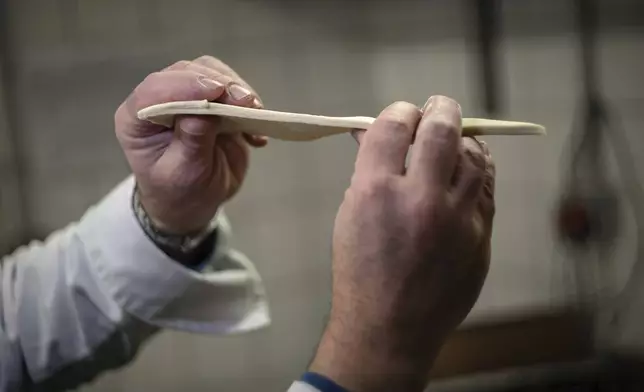
French baker Arnaud Delmontel shows the layers of butter and dough in a butter croissants in his bakery in Paris, Monday, Dec. 16, 2024 as butter has shot up in price across Europe in recent months, adding more pain to consumers this holiday season after years of inflation in the wake of the COVID-19 pandemic and war in Ukraine.(AP Photo/Aurelien Morissard)
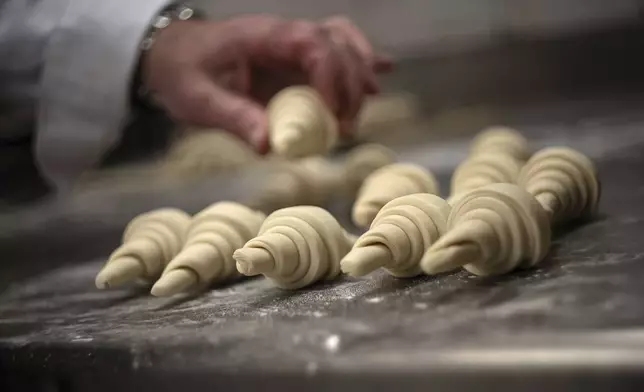
French baker Arnaud Delmontel bakes butter croissants in Paris, Monday, Dec. 16, 2024 as butter has shot up in price across Europe in recent months, adding more pain to consumers this holiday season after years of inflation in the wake of the COVID-19 pandemic and war in Ukraine.(AP Photo/Aurelien Morissard)
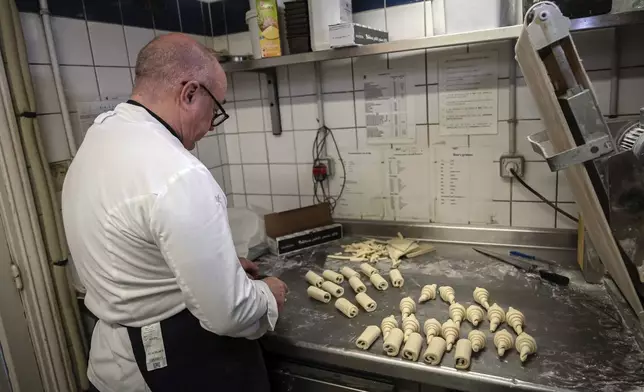
French baker Arnaud Delmontel bakes butter croissants and "pains au chocolat" in his bakery in Paris, Monday, Dec. 16, 2024 as butter has shot up in price across Europe in recent months, adding more pain to consumers this holiday season after years of inflation in the wake of the COVID-19 pandemic and war in Ukraine.(AP Photo/Aurelien Morissard)
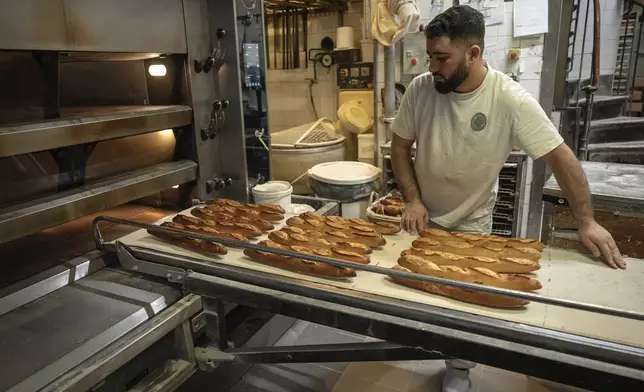
An employee removes bread for the oven in a bakery in Paris, Monday, Dec. 16, 2024 as butter has shot up in price across Europe in recent months, adding more pain to consumers this holiday season after years of inflation in the wake of the COVID-19 pandemic and war in Ukraine.(AP Photo/Aurelien Morissard)
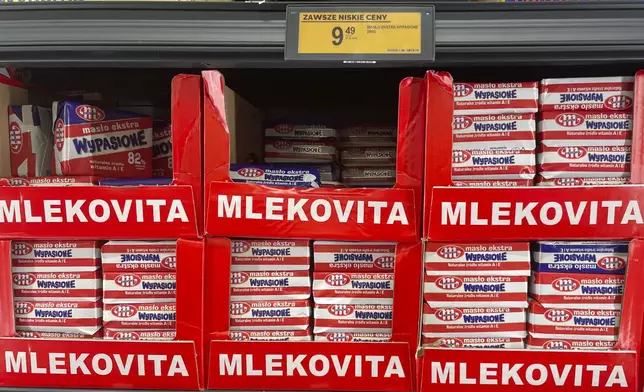
Butter, which has been rising fast in price in much of Europe, is displayed in a grocery store in Warsaw, Poland, Tuesday Dec. 17, 2024. (AP Photo/Czarek Sokolowski)
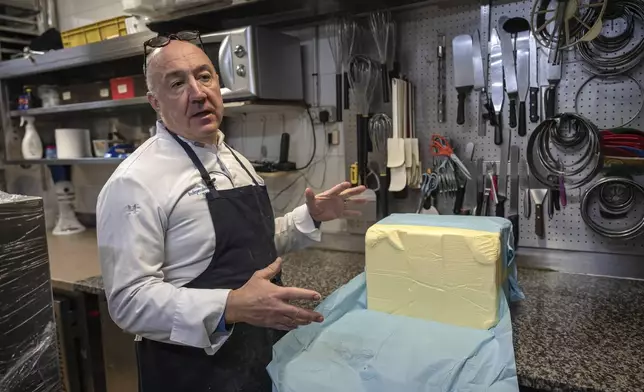
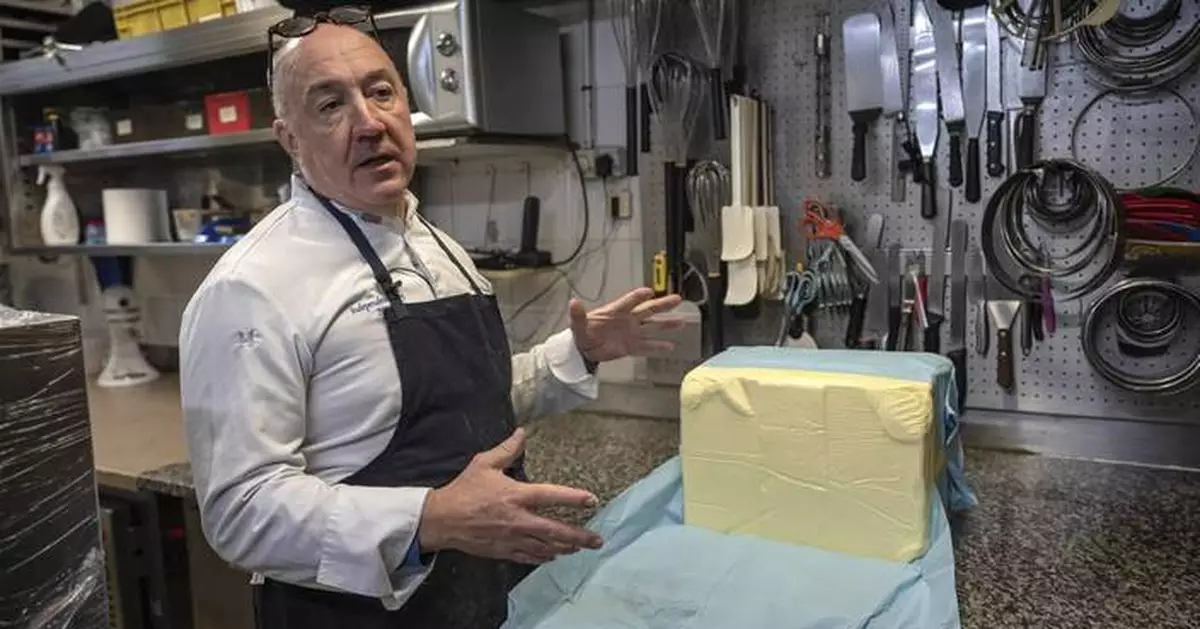
French baker Arnaud Delmontel talks about butter, its price and quality in his bakery in Paris, Monday, Dec. 16, 2024 as butter has shot up in price across Europe in recent months, adding more pain to consumers this holiday season after years of inflation in the wake of the COVID-19 pandemic and war in Ukraine.(AP Photo/Aurelien Morissard)
“It’s a distortion of what a croissant is,” Delmontel said. "A croissant is made with butter.”
One of life’s little pleasures — butter spread onto warm bread or imbuing cakes and seared meats with its flavor — has gotten more expensive across Europe in the last year. After a stretch of post-pandemic inflation that the war in Ukraine worsened, the booming cost of butter is another blow for consumers with holiday treats to bake.
Across the 27-member European Union, the price of butter rose 19% on average from October 2023 to October 2024, including by 49% in Slovakia, and 40% in Germany and the Czech Republic, according to figures provided to The Associated Press by the EU's executive arm. Reports from individual countries indicate the cost has continued to go up in the months since.
In Germany, a 250-gram (8.8-ounce) block of butter now generally costs between 2.40 and 4 euros ($2.49-$4.15), depending on the brand and quality.
The increase is the result of a global shortage of milk caused by declining production, including in the United States and New Zealand, one of the world’s largest butter exporters, according to economist Mariusz Dziwulski, a food and agricultural market analyst at PKO Bank Polski in Warsaw.
European butter typically has a higher fat content than the butter sold in the United States. It also is sold by weight in standard sizes, so food producers can’t hide price hikes by reducing package sizes, something known as " shrinkflation.”
A butter shortage in France in the 19th century led to the invention of margarine, but the French remain some of the continent's heaviest consumers of butter, using the ingredient with abandon in baked goods and sauces.
Butter is so important in Poland that the government keeps a stockpile of it in the country's strategic reserves, as it does national gas and COVID-19 vaccines. The government announced Tuesday that it was releasing some 1,000 tons of frozen butter to stabilize prices.
The price of butter rose 11.4% between early November and early December in Poland, and 49.2% over the past year to nearly 37 Polish zlotys, or $9 per kilo (2.2 pounds) for the week ending Dec. 8, according to the National Support Center for Agriculture, a government agency.
“Every month butter gets more expensive,” Danuta Osinska, a 77-year-old Polish woman, said while shopping recently at a discount grocery chain in Warsaw.
She and her husband love butter — on bread, in scrambled eggs, in creamy desserts. But they also struggle to pay for medications on their meager pensions. So the couple is eating less butter and more margarine, even though they find the taste of the substitute spread inferior.
“There is no comparison,” Osinska said. “Things are getting harder and harder.”
The cost of butter in Poland has become a political issue. With a presidential election scheduled next year, opponents of centrist Prime Minister Donald Tusk are trying to blame him and his Civic Platform party. The party's presidential candidate is seeking to blame the national bank's governor, who hails from an opposing political camp, for the inflation.
Some consumers decide where to shop based on the price of butter, which has led to price wars between grocery chains that in some cases kept prices artificially low in the past to the detriment of dairy farmers, according to Agnieszka Maliszewska, the director of the Polish Chamber of Milk.
Maliszewska thinks domestic, EU-specific and global issues explain butter inflation. She argues that the primary cause is a shortage of milk fat due to dairy farmers shutting down their enterprises across Europe because of slim profit markets and hard work.
She and others also cite higher energy costs from Russia’s war in Ukraine as impacting milk production. There is some debate about the potential effect of climate change. Maliszewska doesn't see a link.
Economist Dziwulski, however, thinks droughts may be a factor in reducing production. Falling milk prices last year also discouraged investments and pushed dairy producers in the EU to make more cheese, which offered better profitability, he said.
An outbreak of bluetongue disease, an insect-borne viral disease that is harmless to humans but can be fatal for sheep, cows and goats, may also play a role, Dziwulski said.
The U.S. saw a butter price spike in 2022, when the average price jumped 33% to $4.88 per pound over the course of the year, according to government data. Dairy farmers struggled with feed costs and hot temperatures.
U.S. butter prices fell in 2023 before rising again this year, hitting a peak of $5 per pound in September. Higher grocery prices in general weighed on U.S. voters during the presidential election in November.
Southern European countries, which rely far more heavily on olive oil, are less affected by the butter inflation — or they just don't consider it as important since they consume so much less.
Since last year the cost of butter shot up 44% on average in Italy, according to dairy market analysis firm CLAL. Italy is Europe's seventh-largest butter producer, but olive oil is the preferred fat, even for some desserts. The price of butter therefore is not causing the same alarm there as it is in butter-addicted parts of Europe.
Delmontel, the Paris pastry chef, said the rising costs put business owners like him under pressure. Along with refusing to switch out butter for margarine, he has not reduced the size of his croissants. But some other French bakers are making smaller pastries to control costs, he said.
“Or else you squeeze it out of your profit margin,” Delmontel said.
Gera reported from Warsaw, Poland. Colleen Barry in Milan, Raf Casert in Brussels and Dee-Ann Durbin in Detroit contributed.
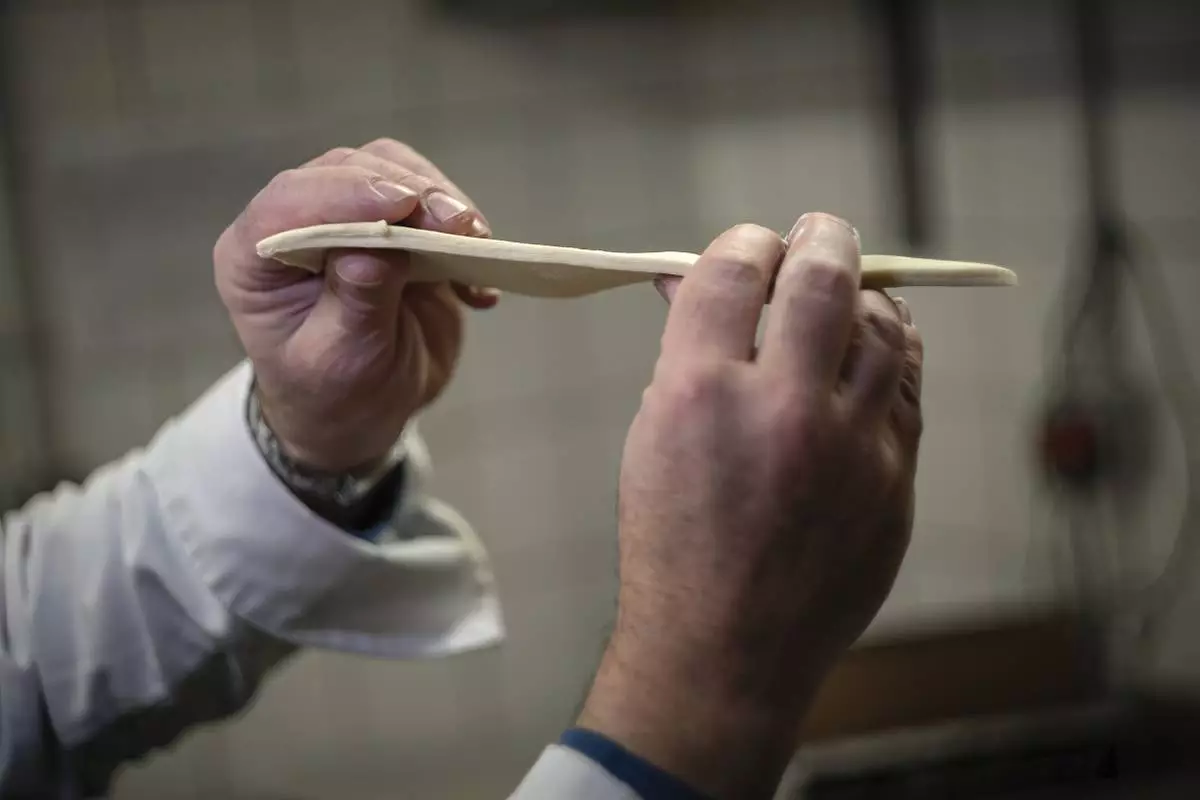
French baker Arnaud Delmontel shows the layers of butter and dough in a butter croissants in his bakery in Paris, Monday, Dec. 16, 2024 as butter has shot up in price across Europe in recent months, adding more pain to consumers this holiday season after years of inflation in the wake of the COVID-19 pandemic and war in Ukraine.(AP Photo/Aurelien Morissard)
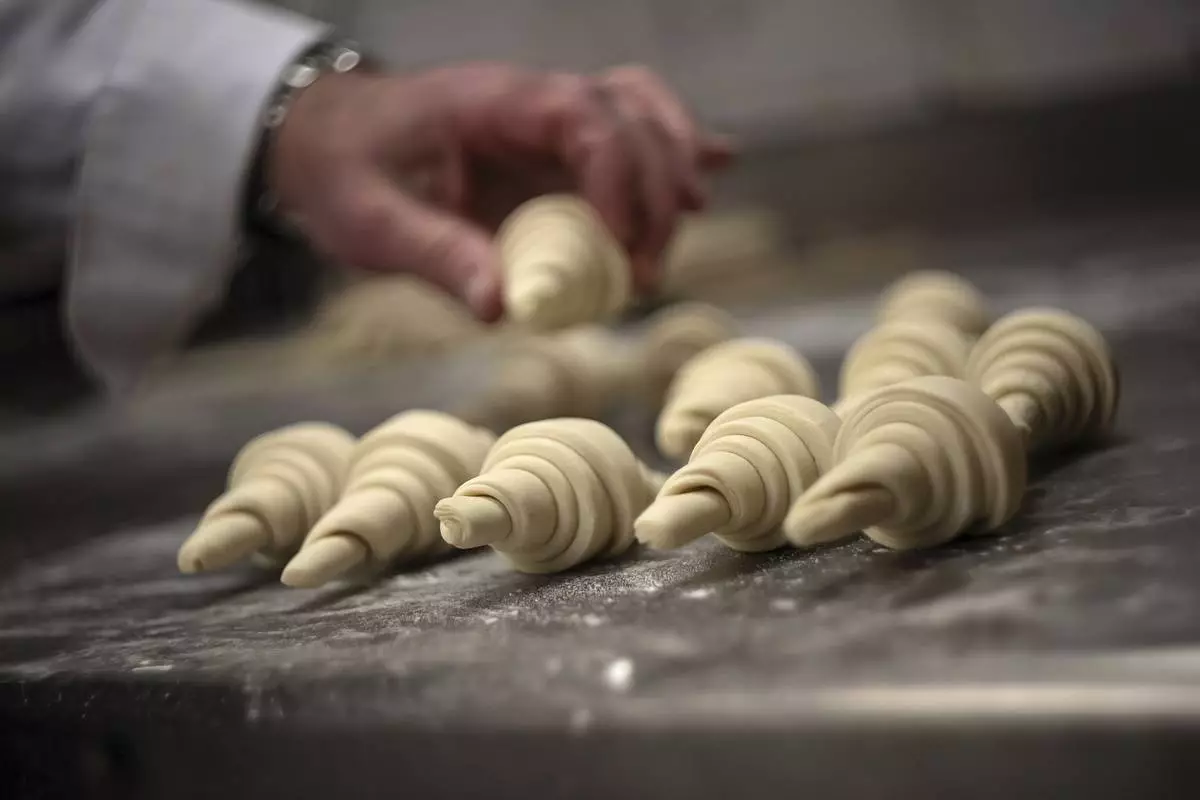
French baker Arnaud Delmontel bakes butter croissants in Paris, Monday, Dec. 16, 2024 as butter has shot up in price across Europe in recent months, adding more pain to consumers this holiday season after years of inflation in the wake of the COVID-19 pandemic and war in Ukraine.(AP Photo/Aurelien Morissard)
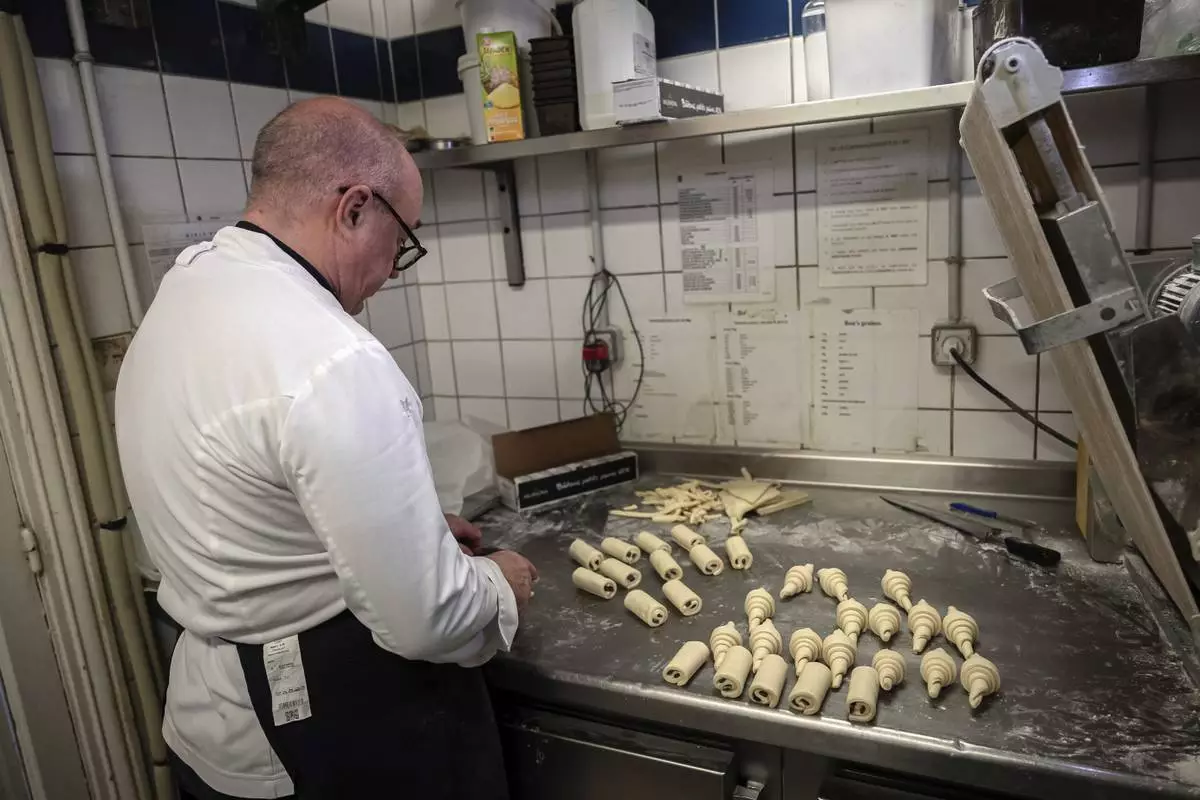
French baker Arnaud Delmontel bakes butter croissants and "pains au chocolat" in his bakery in Paris, Monday, Dec. 16, 2024 as butter has shot up in price across Europe in recent months, adding more pain to consumers this holiday season after years of inflation in the wake of the COVID-19 pandemic and war in Ukraine.(AP Photo/Aurelien Morissard)
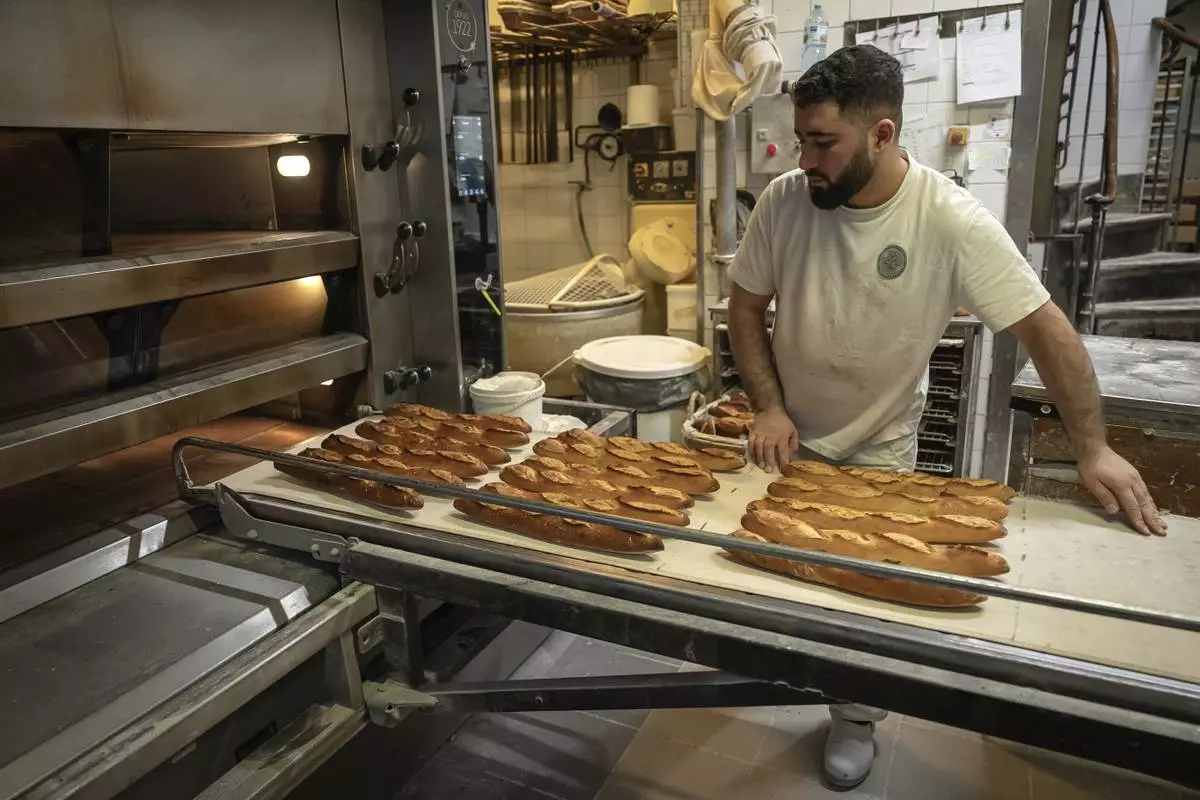
An employee removes bread for the oven in a bakery in Paris, Monday, Dec. 16, 2024 as butter has shot up in price across Europe in recent months, adding more pain to consumers this holiday season after years of inflation in the wake of the COVID-19 pandemic and war in Ukraine.(AP Photo/Aurelien Morissard)
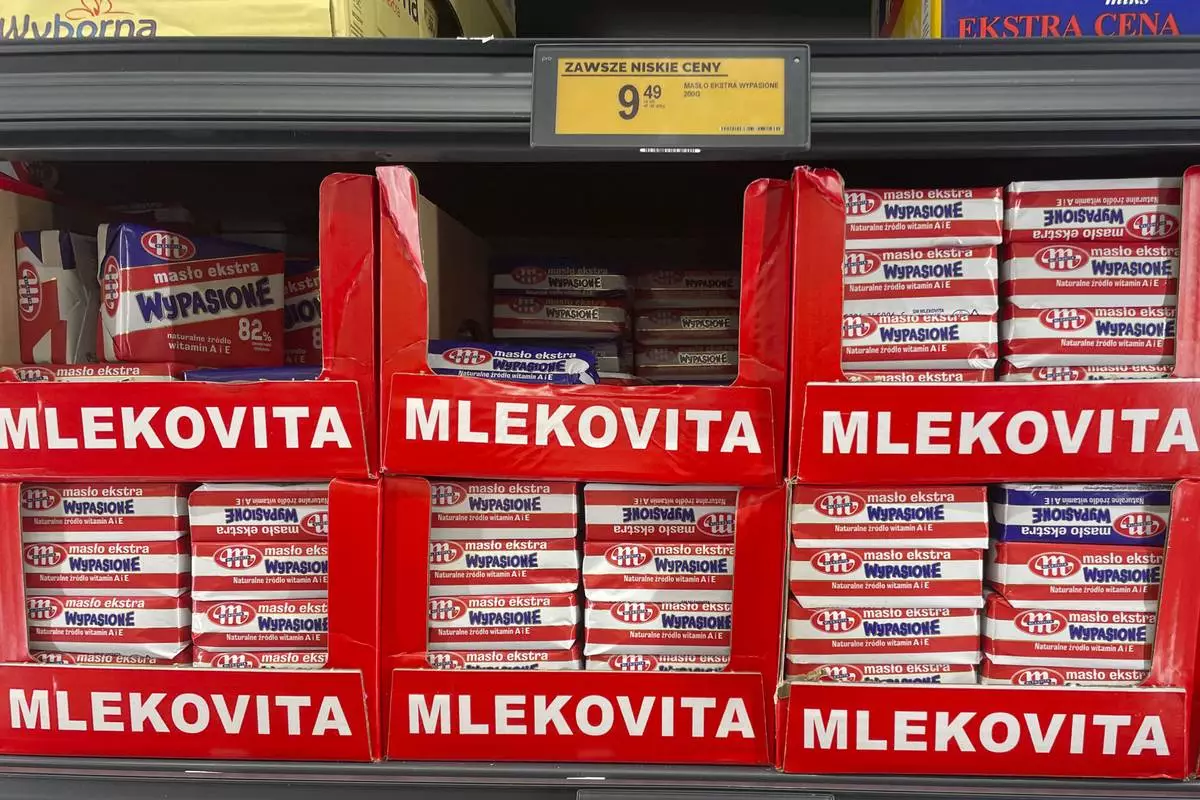
Butter, which has been rising fast in price in much of Europe, is displayed in a grocery store in Warsaw, Poland, Tuesday Dec. 17, 2024. (AP Photo/Czarek Sokolowski)
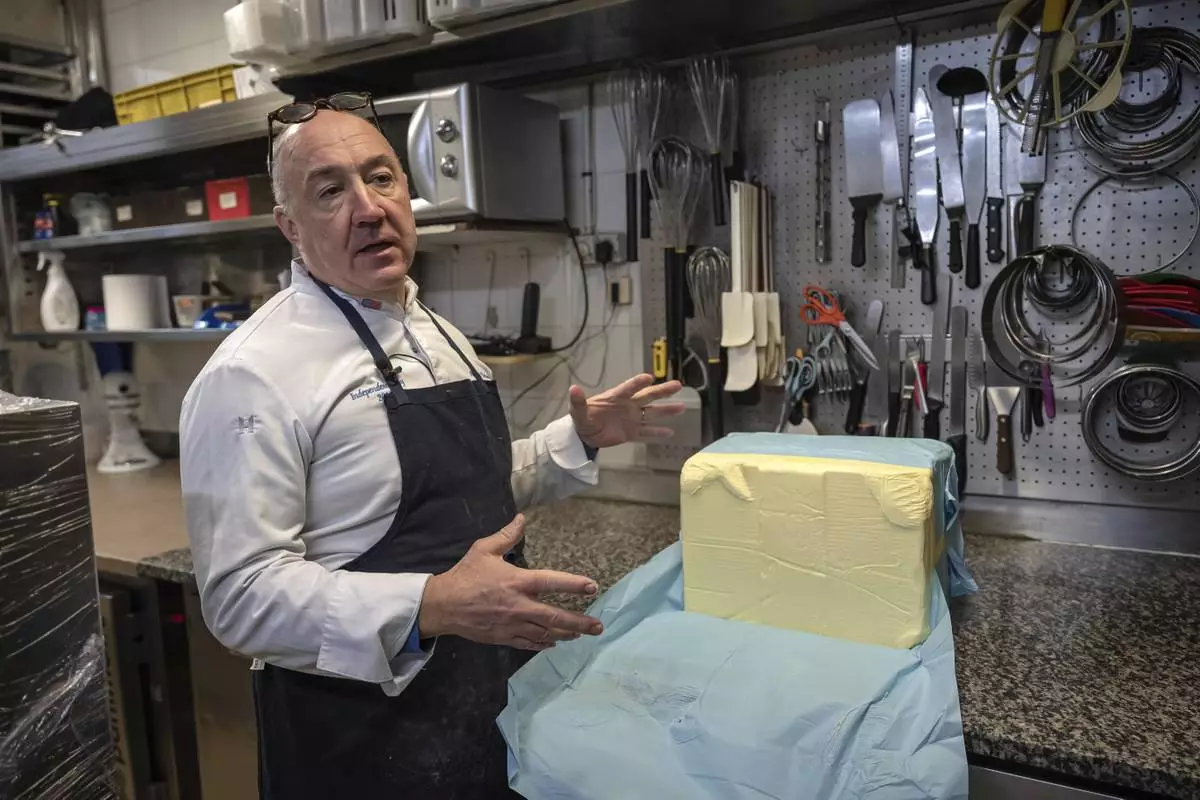
French baker Arnaud Delmontel talks about butter, its price and quality in his bakery in Paris, Monday, Dec. 16, 2024 as butter has shot up in price across Europe in recent months, adding more pain to consumers this holiday season after years of inflation in the wake of the COVID-19 pandemic and war in Ukraine.(AP Photo/Aurelien Morissard)