PANAMA CITY (AP) — Teddy Roosevelt once declared the Panama Canal “one of the feats to which the people of this republic will look back with the highest pride.” More than a century later, Donald Trump is threatening to take back the waterway for the same republic.
The president-elect is decrying increased fees Panama has imposed to use the waterway linking the Atlantic and Pacific oceans. He says if things don't change after he takes office next month, "We will demand that the Panama Canal be returned to the United States of America, in full, quickly and without question.”
Trump has long threatened allies with punitive action in hopes of winning concessions. But experts in both countries are clear: Unless he goes to war with Panama, Trump can't reassert control over a canal the U.S. agreed to cede in the 1970s.
Here's a look at how we got here:
It is a man-made waterway that uses a series of locks and reservoirs over 51 miles (82 kilometers) to cut through the middle of Panama and connect the Atlantic and Pacific. It spares ships having to go an additional roughly 7,000 miles (more than 11,000 kilometers) to sail around Cape Horn at South America's southern tip.
The U.S. International Trade Administration says the canal saves American business interests “considerable time and fuel costs” and enables faster delivery of goods, which is “particularly significant for time sensitive cargoes, perishable goods, and industries with just-in-time supply chains.”
An effort to establish a canal through Panama led by Ferdinand de Lesseps, who built Egypt's Suez Canal, began in 1880 but progressed little over nine years before going bankrupt.
Malaria, yellow fever and other tropical diseases devastated a workforce already struggling with especially dangerous terrain and harsh working conditions in the jungle, eventually costing more than 20,000 lives, by some estimates.
Panama was then a province of Colombia, which refused to ratify a subsequent 1901 treaty licensing U.S. interests to build the canal. Roosevelt responded by dispatching U.S. warships to Panama's Atlantic and Pacific coasts. The U.S. also prewrote a constitution that would be ready after Panamanian independence, giving American forces “the right to intervene in any part of Panama, to re-establish public peace and constitutional order.”
In part because Colombian troops were unable to traverse harsh jungles, Panama declared an effectively bloodless independence within hours in November 1903. It soon signed a treaty allowing a U.S.-led team to begin construction.
Some 5,600 workers died later during the U.S.-led construction project, according to one study.
The waterway opened in 1914, but almost immediately some Panamanians began questioning the validity of U.S. control, leading to what became known in the country as the “generational struggle” to take it over.
The U.S. abrogated its right to intervene in Panama in the 1930s. By the 1970s, with its administrative costs sharply increasing, Washington spent years negotiating with Panama to cede control of the waterway.
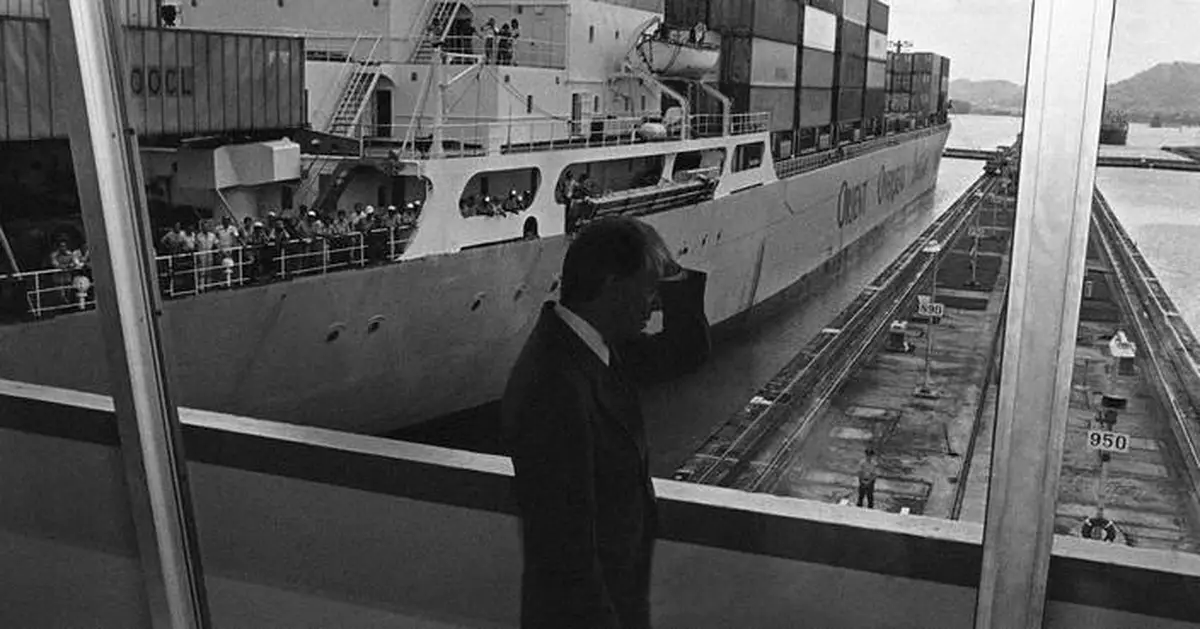
The Carter administration worked with the government of Omar Torrijos. The two sides eventually decided that their best chance for ratification was to submit two treaties to the U.S. Senate, the “Permanent Neutrality Treaty" and the “Panama Canal Treaty."
The first, which continues in perpetuity, gives the U.S. the right to act to ensure the canal remains open and secure. The second stated that the U.S. would turn over the canal to Panama on Dec. 31, 1999, and was terminated then.
Both were signed in 1977 and ratified the following year. The agreements held even after 1989, when President George H.W. Bush invaded Panama to remove Panamanian leader Manuel Noriega.
In the late 1970s, as the handover treaties were being discussed and ratified, polls found that about half of Americans opposed the decision to cede canal control to Panama. However, by the time ownership actually changed in 1999, public opinion had shifted, with about half of Americans in favor.
Administration of the canal has been more efficient under Panama than during the U.S. era, with traffic increasing 17% between fiscal years 1999 and 2004. Panama's voters approved a 2006 referendum authorizing a major expansion of the canal to accommodate larger modern cargo ships. The expansion took until 2016 and cost more than $5.2 billion.
Panamanian President José Raúl Mulino said in a video Sunday that “every square meter of the canal belongs to Panama and will continue to.” He added that, while his country's people are divided on some key issues, “when it comes to our canal, and our sovereignty, we will all unite under our Panamanian flag.”
Shipping prices have increased because of droughts last year affecting the canal locks, forcing Panama to drastically cut shipping traffic through the canal and raise rates to use it. Though the rains have mostly returned, Panama says future fee increases might be necessary as it undertakes improvements to accommodate modern shipping needs.
Mulino said fees to use the canal are “not set on a whim.”
Jorge Luis Quijano, who served as the waterway’s administrator from 2014 to 2019, said all canal users are subject to the same fees, though they vary by ship size and other factors.
“I can accept that the canal’s customers may complain about any price increase,” Quijano said. “But that does not give them reason to consider taking it back.”
The president-elect says the U.S. is getting “ripped off" and “I’m not going to stand for it.”
“It was given to Panama and to the people of Panama, but it has provisions — you’ve got to treat us fairly. And they haven’t treated us fairly,” Trump said of the 1977 treaty that he said “foolishly” gave the canal away.
The neutrality treaty does give the U.S. the right to act if the canal's operation is threatened due to military conflict — but not to reassert control.
“There's no clause of any kind in the neutrality agreement that allows for the taking back of the canal,” Quijano said. “Legally, there's no way, under normal circumstances, to recover territory that was used previously."
Trump, meanwhile, hasn't said how he might make good on his threat.
“There’s very little wiggle room, absent a second U.S. invasion of Panama, to retake control of the Panama Canal in practical terms," said Benjamin Gedan, director of the Latin America Program at the Woodrow Wilson International Center for Scholars in Washington.
Gedan said Trump’s stance is especially baffling given that Mulino is a pro-business conservative who has “made lots of other overtures to show that he would prefer a special relationship with the United States.” He also noted that Panama in recent years has moved closer to China, meaning the U.S. has strategic reasons to keep its relationship with the Central American nation friendly.
Panama is also a U.S. partner on stopping illegal immigration from South America — perhaps Trump’s biggest policy priority.
“If you’re going to pick a fight with Panama on an issue,” Gedan said, “you could not find a worse one than the canal.”
Weissert reported from West Palm Beach, Florida, and Fields from Washington. Amelia Thomson-Deveaux contributed to this report from Washington.
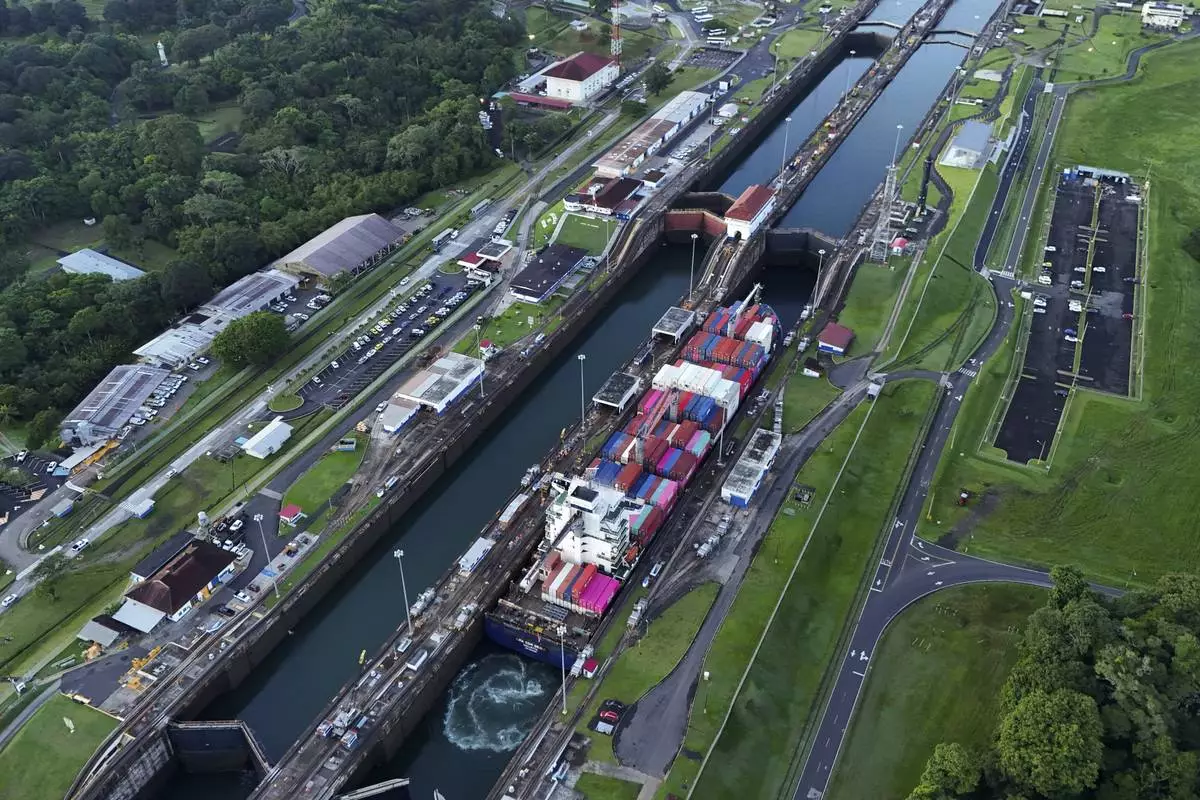
FILE - A cargo ship traverses the Agua Clara Locks of the Panama Canal in Colon, Panama, Sept. 2, 2024. (AP Photo/Matias Delacroix, File)
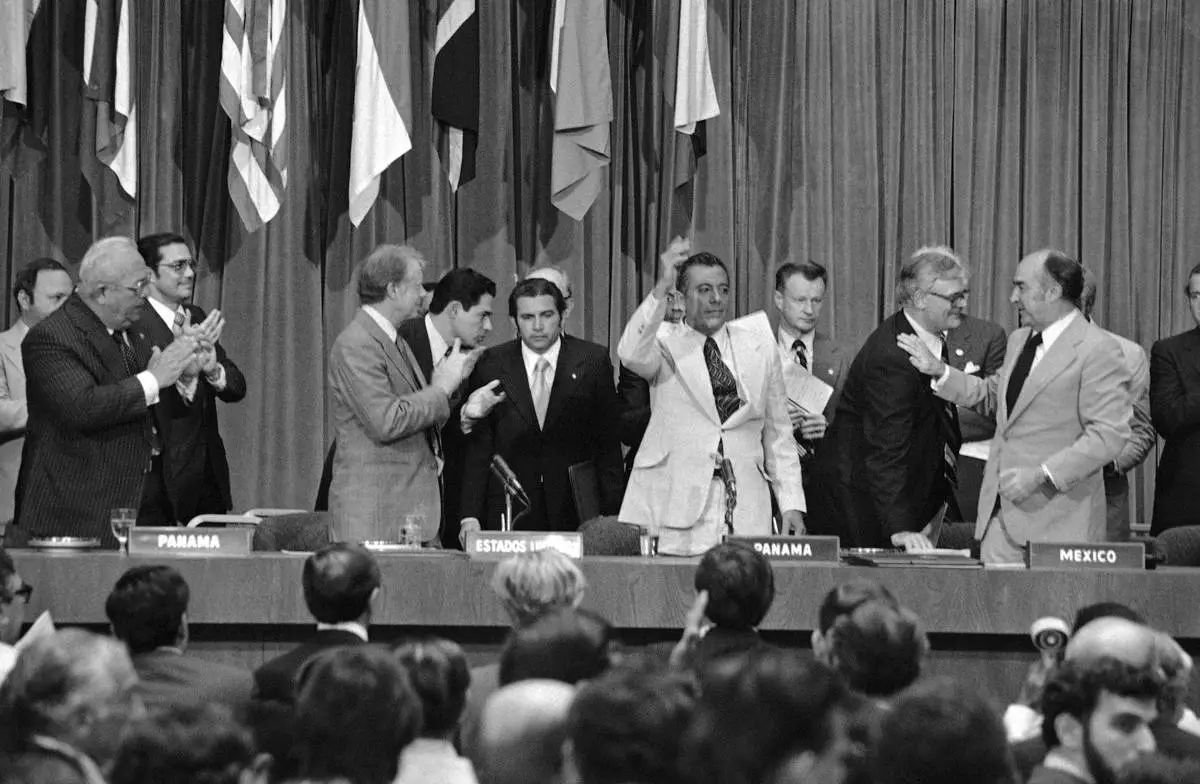
FILE - President Jimmy Carter applauds as General Omar Torrijos waves after the signing and exchange of treaties in Panama City on June 16, 1978, giving control of the Panama Canal to Panama in 2000. At far right is Zbigniew Brzezinski, Carterís National Security Advisor. (AP Photo, File)
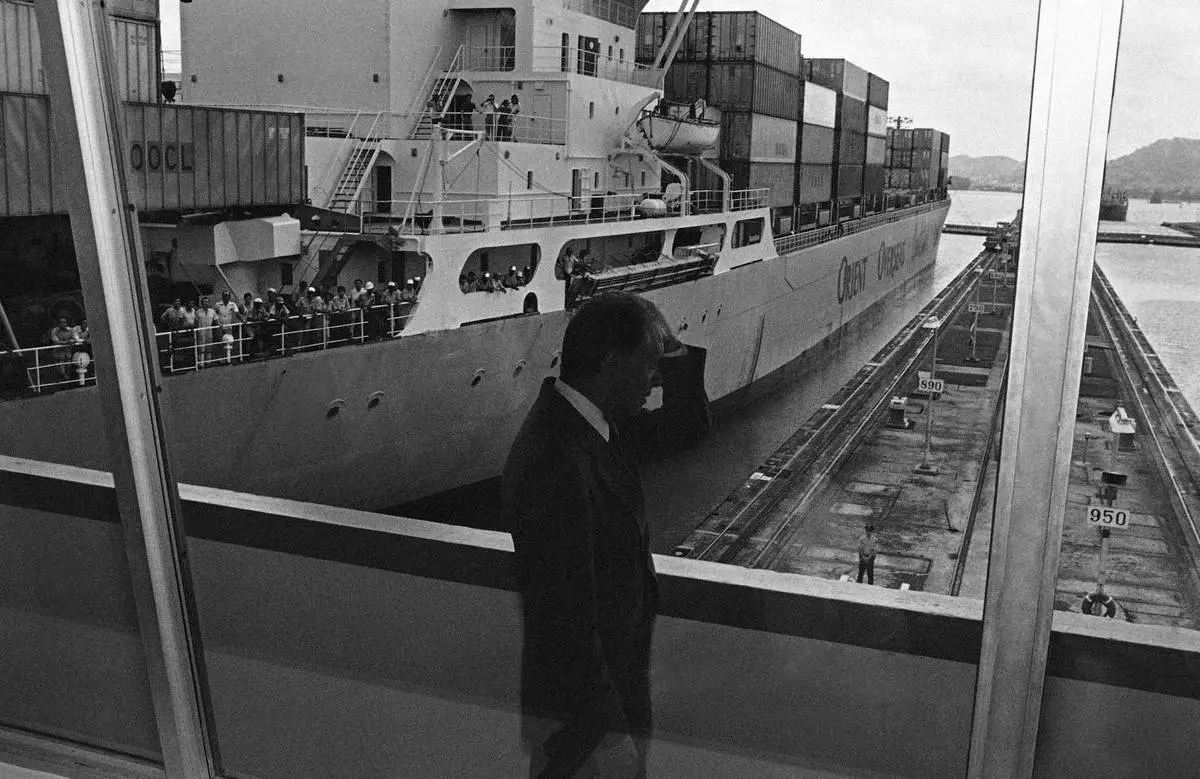
FILE - President Jimmy Carter views the Panama Canal at the Miraflores Locks in Canal Zone on June 17, 1978. On Friday Carter signed the final Panama Canal Treaties giving control of the canal to Panama in 2000. (AP Photo/Tasnadi, File)
ATLANTA (AP) — Derek Dooley will compete against Rep. Mike Collins for the Republican nomination for U.S. Senate in a June 16 runoff, as neither received at least 50% of the vote in Tuesday’s primary to win outright.
Collins, 58, represents a district east of Atlanta. Dooley, 57, is a lawyer and former football coach running for office the first time.
Candidate Rep. Buddy Carter, 68, did not qualify for the runoff.
The winner of the runoff will face Democratic Sen. Jon Ossoff, 39, in November. Ossoff is the only Democratic senator in the country seeking reelection this year in a state that President Donald Trump won in 2024. Republicans are hopeful that they can oust him and prevent Democrats from gaining a Senate majority.
Meanwhile, former Atlanta Mayor Keisha Lance Bottoms won the Democratic nomination to be Georgia’s next governor on Tuesday, setting up a November election where she hopes to win a seat that has eluded her party for more than two decades.
Bottoms snagged a rare endorsement from former President Joe Biden after serving in his administration. She has argued to voters that she was “battle-tested,” trying to make a virtue out of a mayoral term where she had to manage crime, disorder and the COVID-19 pandemic before her surprise decision not to seek reelection.
Following her win Tuesday night, Bottoms said she was going to work to make sure “every Georgian has an opportunity to succeed."
“It means stopping Donald Trump every time his policies hurt Georgia, and also taking action here to make life better for people across the state,” she said.
She cites protecting the right to vote and expanding healthcare, affordable housing and better education as among her top issues.
Democrats have not won the Georgia governor’s office for 24 years. It’s the third consecutive time that Georgia Democrats have nominated a Black woman as their candidate for governor, reflecting a party that relies on support from Black women as its most loyal voters.
In the Republican primary for governor, Lt. Gov. Burt Jones and healthcare billionaire Rick Jackson have advanced to the June 16 runoff, extending a bruising campaign battle.
Trump endorsed Jones last year, and Jones thanked him Tuesday night. A Jones win would boost the president's influence in a critical battleground state. Trump's kingmaker record in Georgia had been shaky, failing to dislodge Gov. Brian Kemp and others in 2022 and backing Herschel Walker in a Senate loss that year.
Ossoff, 39, had no opposition in Tuesday's primary. This is his first reelection campaign.
He's the only Democratic senator in the country seeking reelection this year in a state that Trump won in 2024, making his race one of the most closely watched in the country. He has positioned himself as a critic of political corruption, targeting Trump and his sons for business dealings that have enriched the first family.
Meanwhile, the Republican primary has been a test of fealty to the president.
Carter has attacked Collins over a House ethics complaint accusing him of abusing taxpayer funds by paying the girlfriend of a top aide for work she allegedly didn't perform. The Office of Congressional Conduct, after an initial inquiry, has referred the matter to the House Ethics Committee.
Collins denies wrongdoing.
“If taxpayers can’t trust you to properly steward their money, how can they trust you to be a U.S. senator?” Carter asked Collins in a primary debate.
“Buddy,” Collins shot back, “I can tell through your voice that you know how the polling is going out there.”
Collins sponsored the Laken Riley Act, a 2025 law that requires immigrants be detained when charged with certain crimes. Republicans believe the issue damages Ossoff because he initially voted against the measure before supporting it after Trump’s 2024 victory.
Collins criticized Ossoff during remarks Tuesday night. He talked up his support for the Lake Riley Act and looked ahead to the general election.
“You can replace a Democrat with an actual conservative,” he said.
More than $125 million has been spent on advertising in the Republican primary for governor, with more than $66 million of that spent by Jackson’s campaign, according to the latest figures from ad-tracking firm AdImpact. By contrast, Democrats running for governor have only spent about $4 million.
Jones argues that his conservative record as a state senator and lieutenant governor, combined with Trump's support, should make him the clear choice for Republican voters.
“I think Georgia just spoke, y’all,” Jones said at his election night party. “The reason why I know we’re gonna win is because of friends and family members."
Jackson is betting that his outsider pitch will win over antiestablishment conservatives. On Tuesday night, he called Jones a political insider who is “working inside the system for his own benefit.”
“I cannot be bought, and I will not back down,” Jackson said.
Democrat Jasmine Clark won her party’s nomination on Tuesday to succeed Rep. David Scott for a two-year term representing Georgia’s 13th Congressional District after Scott died in April while seeking another term.
Clark is a state representative, microbiologist and a lecturer at Emory University who has promised to prioritize science in Congress. Her candidacy was boosted by more than $2 million in outside spending by cryptocurrency interests, but Clark said she did not court the support.
Clark will be the odds-on favorite to succeed Scott for a full term starting next January, with Jonathan Chavez unopposed to become the Republican nominee.
In the 11th District northwest of Atlanta, Loudermilk announced his retirement and endorsed staffer Rob Adkerson, who's challenged by neurologist John Cowan and Public Service Commissioner Tricia Pridemore. Cowan has advanced to the runoff.
In the 10th District east of Atlanta, state Rep. Houston Gaines is the top Republican seeking to take the departing Collins' seat. Jim Kingston, the son of longtime U.S. Rep. Jack Kingston, is the top Republican to take Carter's seat in coastal Georgia's 1st District.
In northeast Georgia's 9th District, three-term Republican incumbent Andrew Clyde fended off primary challenges from former Gainesville Mayor Sam Couvillon and Hall County Commissioner Gregg Poole.
Tuesday is the general election for Georgia's judgeships. The posts are technically nonpartisan, but eight of the nine justices on the state Supreme Court were appointed by Republicans governors. Democrats are supporting Miracle Rankin in her challenge to Justice Charlie Bethel. They hope a strong Democratic turnout could produce the first defeat of an incumbent justice since 1922.
Justice Sarah Hawkins Warren won over Democrat-supported former state Sen. Jen Jordan on Tuesday. A third justice, Ben Land, is unopposed for a six-year term.
The state Judicial Qualifications Commission, which investigates allegations of wrongdoing by judges, said in statements dated Sunday that Jordan and Rankin violated rules of judicial conduct by publicly endorsing each other and making statements supporting the restoration of abortion rights.
The commission said it reached its conclusions, which are not a final determination, after receiving and reviewing a complaint about each candidate.
State Democratic Party Chair Charlie Bailey called the commission's statements “a cynical attempt by a mere bureaucratic arm of the Georgia Republican establishment to hide the truth about this race from Georgia voters.”
——
This article has been corrected to show it's the Laken Riley Act, not the Lake Riley Act.
Amy is a former Associated Press reporter. Associated Press reporter Mike Catalini in Morrisville, Pennsylvania, contributed.
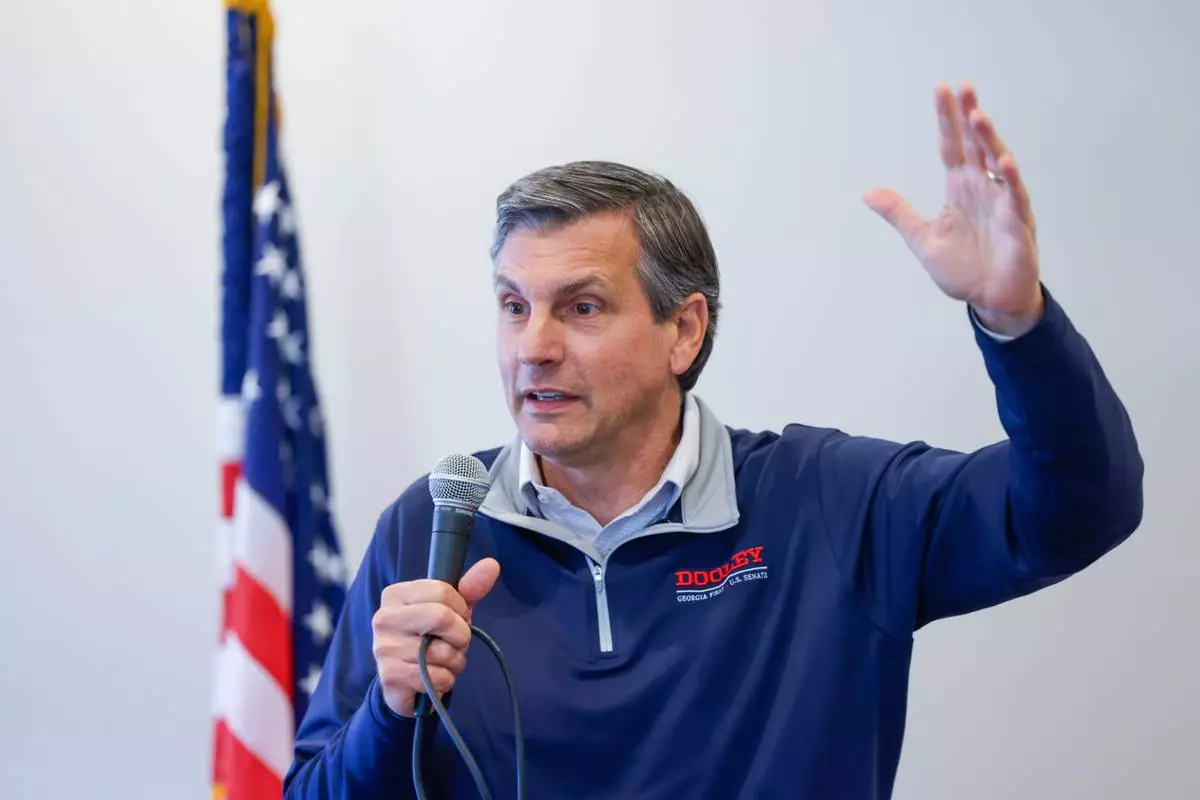
Republican U.S. Senate candidate Derek Dooley speaks at a campaign stop at Farmview Market in Madison, Ga., on May 8, 2026. (Arvin Temkar/Atlanta Journal-Constitution via AP)
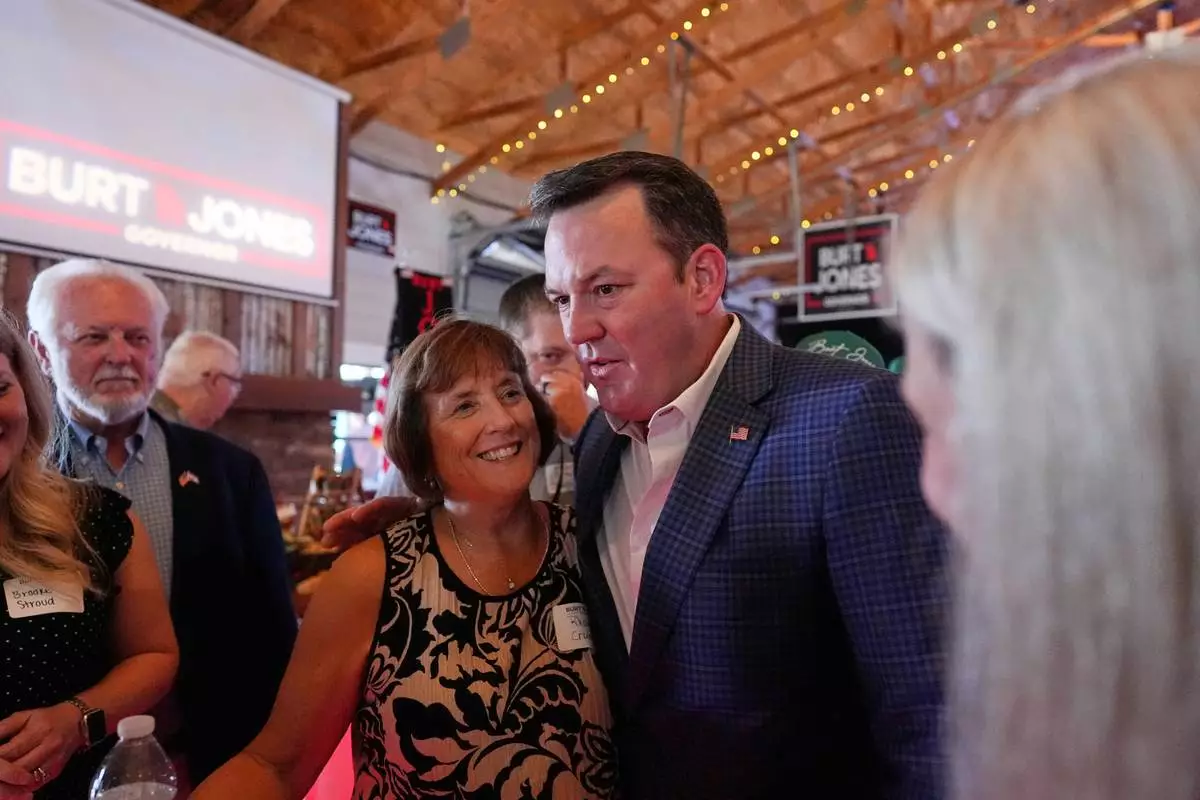
Georgia gubernatorial candidate Burt Jones meets with supporters during a primary election night watch party, Tuesday, May 19, 2026, in Jackson, Ga. (AP Photo/Mike Stewart)
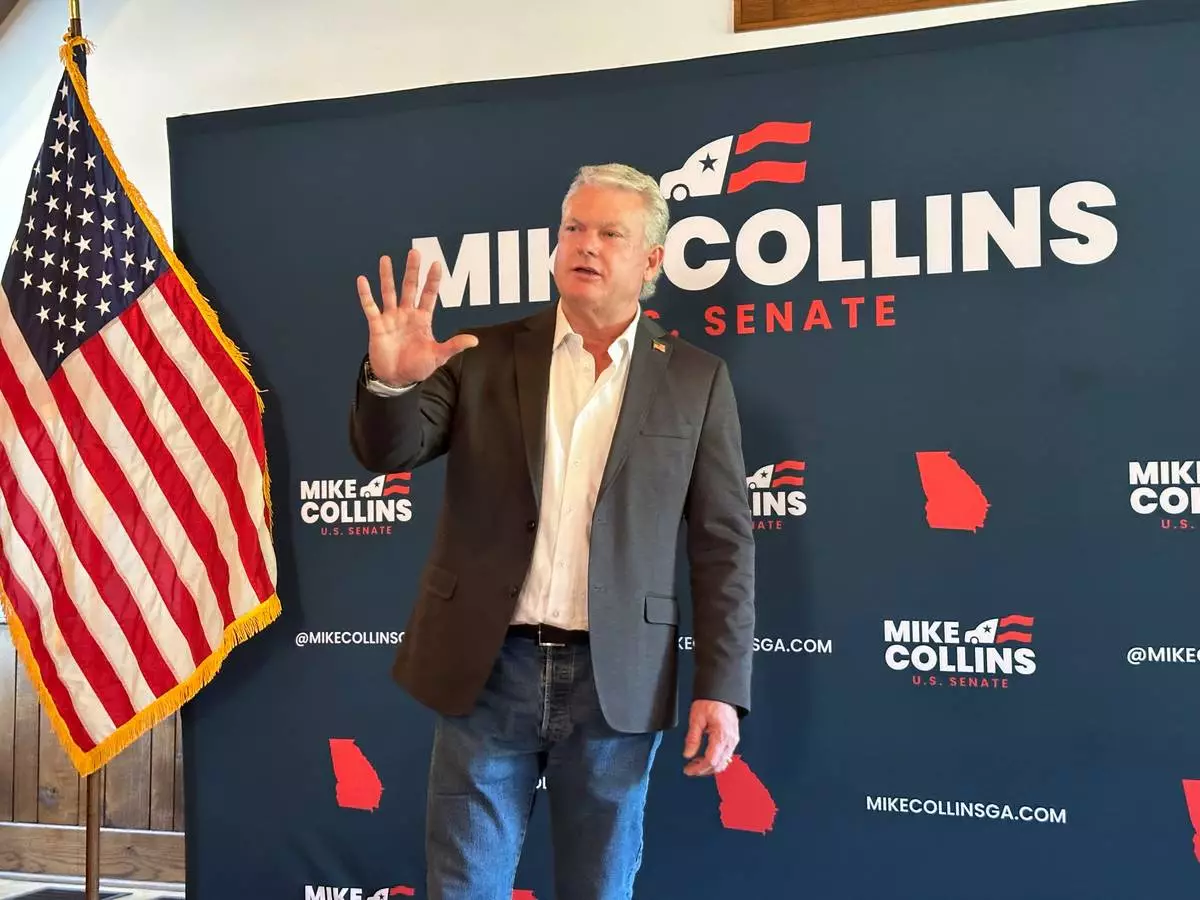
U.S. Rep. Mike Collins, R-Ga., speaks to supporters in Acworth, Ga., on Monday, May 4, 2026. (AP Photo/Jeff Amy)
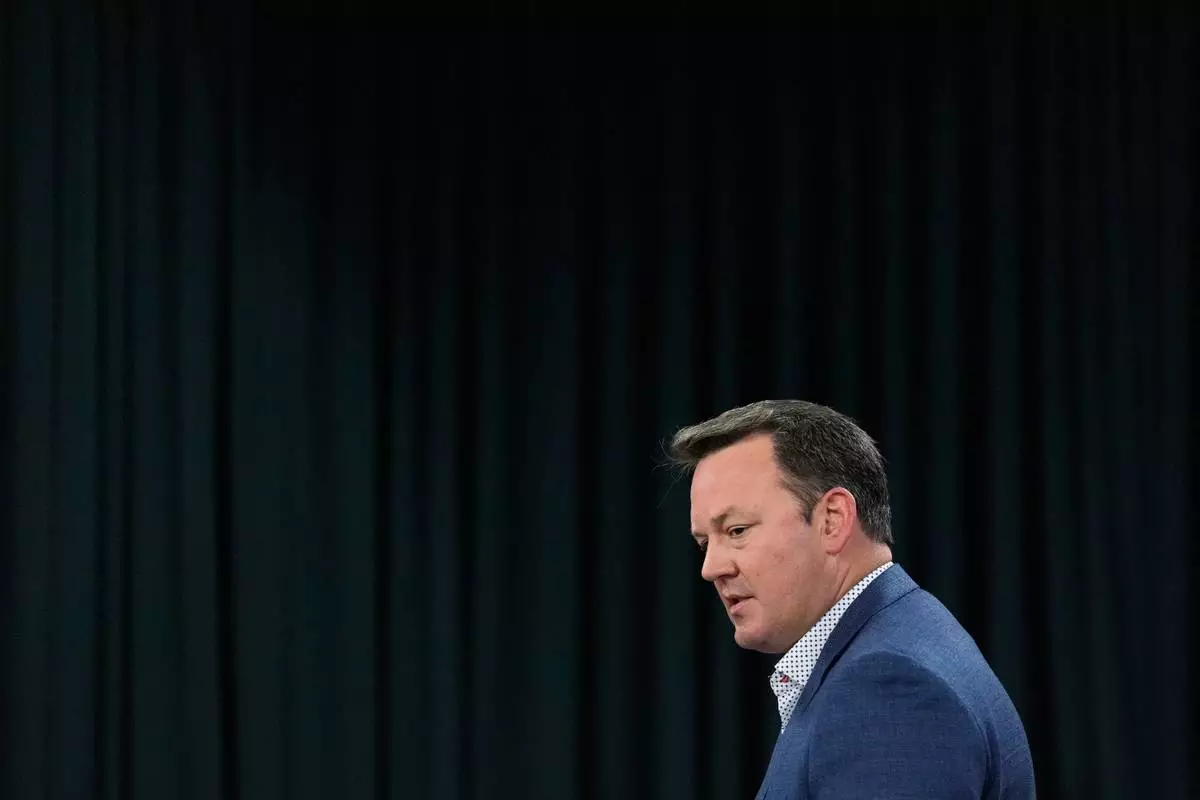
Georgia Republican candidate for governor Burt Jones speaks to supporters Tuesday, May 12, 2026, in Smyrna, Ga. (AP Photo/Brynn Anderson)
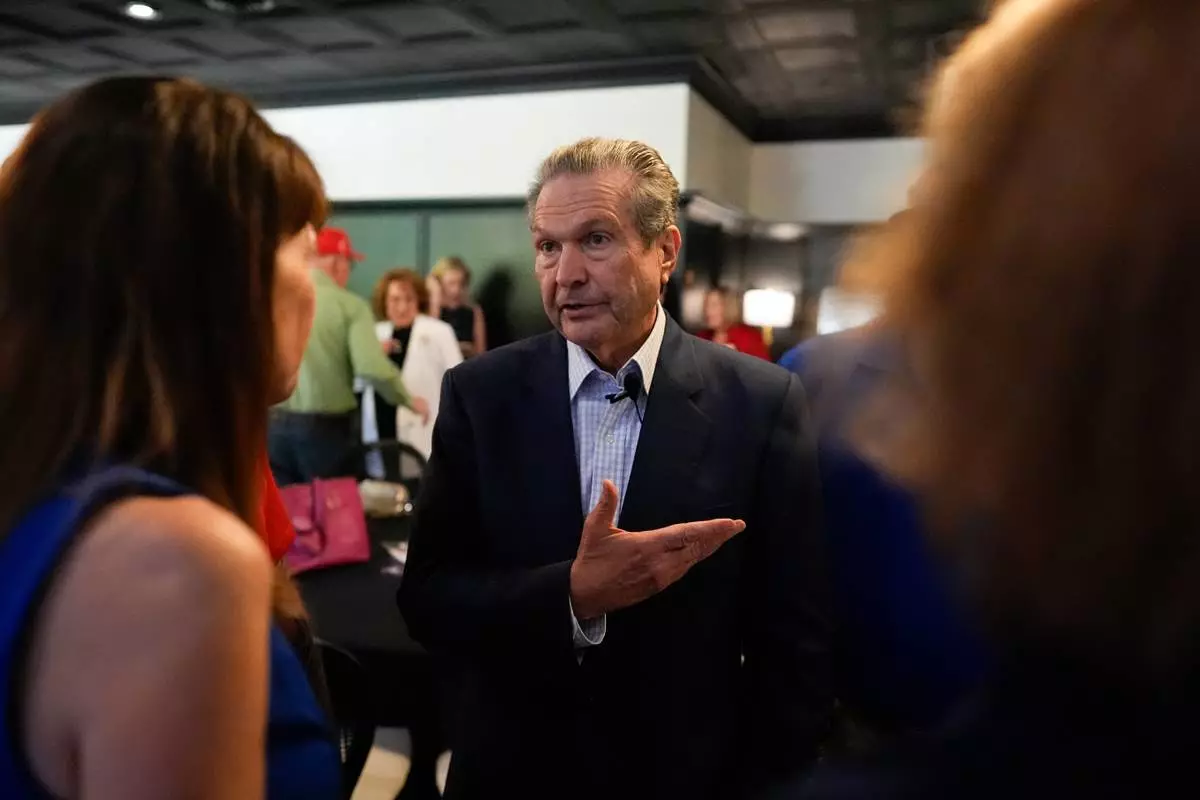
Republican gubernatorial candidate Rick Jackson speaks to voters during a campaign stop, Wednesday, May 13, 2026, in Hiram, Ga. (AP Photo/Mike Stewart)
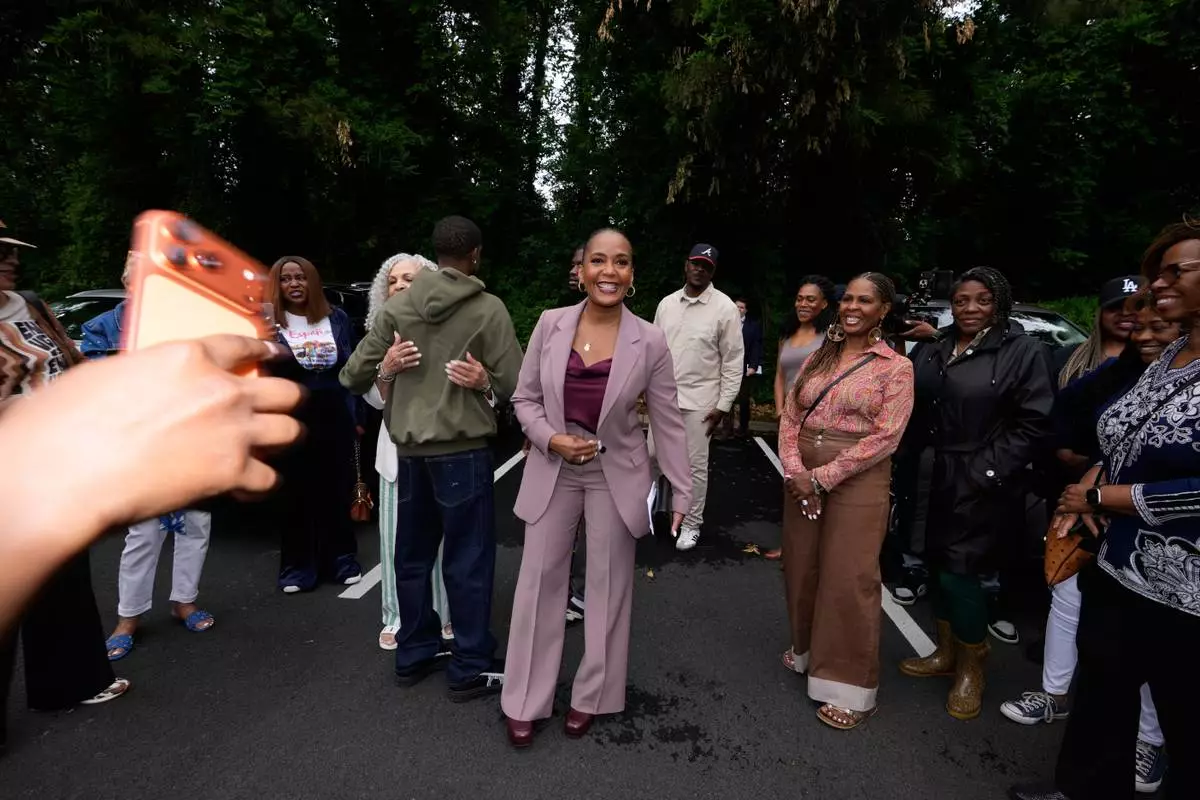
Democratic gubernatorial candidate Keisha Lance Bottoms, arrives to vote early in the Georgia Primary Election, Thursday, May 7, 2026, in Atlanta. (AP Photo/Brynn Anderson)