Skip to Content Facebook Feature Image

Soprano Angel Blue sings her first Metropolitan Opera 'Aida' in a new production

ENT

Soprano Angel Blue sings her first Metropolitan Opera 'Aida' in a new production
ENT

ENT

Soprano Angel Blue sings her first Metropolitan Opera 'Aida' in a new production

2024-12-24 23:12 Last Updated At:12-25 02:20

If she has the voice of an angel, and the face of an angel, she must be an Angel.

Angel Blue, that is.

The American soprano, one of the most admired singers of her generation, is headlining the Metropolitan Opera’s first new production of Verdi’s “Aida” in 36 years. Blue, now 40, debuted at the Met in 2017 as Mimi in Puccini’s “La Boheme” and has become a fixture at the house, starring in two opening nights and this fall portraying the lead character in Osvaldo Golijov’s “Ainadamar.”

But “Aida” is something else. The title role of the enslaved Ethiopian princess torn between love for an Egyptian warrior and loyalty to her country represents the pinnacle of Verdi’s mature vocal style. It demands power, flexibility and the ability to spin out long phrases, while conveying the dramatic intensity of the character’s emotional turmoil.

It also comes weighted with history, especially for a Black soprano at the Met, where Leontyne Price embodied the role from her first performance in 1961 until her retirement in 1985.

“I don’t think I’m the next Leontyne Price, but I’ve definitely looked at her my whole life as an example of someone to model myself after,” Blue said in an interview after a day of rehearsal.

“Sometimes in opera there’s an intimidation factor because of those who come before us,” she added. “But when it’s somebody who I look up to, I feel like, OK it’s my turn. Thank you so much, it’s because of you I’m here.”

Blue’s turn comes on New Year’s Eve, when Michael Mayer’s production opens before a sold-out house with a cast that includes tenor Piotr Beczala as her lover, Radames, mezzo Judit Kutasi as her rival, Amneris, and baritone Quinn Kelsey as her father, Amonasro. Met music director Yannick Nézet-Séguin conducts. The Jan. 25 matinee will be broadcast live in HD to movie theaters worldwide.

Blue was less than a year old when Price made her Met farewell, so she never got to hear her live in opera. But her father, a classically trained gospel singer and pastor, loved her recordings and — according to family lore — pronounced shortly after Blue was born that she would be “the next Leontyne Price.”

“My beautiful dad, he was just enamored of her,” Blue said. “It was like a thought that came into his heart when I took my first breath.”

Growing up as one of five children in Southern California, Blue sang in church, studied voice and piano in high school, then entered several beauty pageants and used her prize money to help pay for her musical studies. She had been bitten by the opera bug at age 4 when her father took her to see a concert performance of Puccini’s “Turandot” while the family was visiting relatives in Cleveland.

Though she had sung “Aida” once in concert in Detroit, her only previous staged performances came last year at London’s Royal Opera House. The critics were impressed, though some felt she was still mastering the role.

“Sometimes Blue’s tone frays under pressure,” wrote Neil Fisher in The Times. But he added that she is “a heartfelt, affecting Aida … riding high in ensembles. This gutsy Aida will grow in authority.”

Mark Elder, who conducted Blue in London, recalled that “when she came to me, she wasn’t very experienced in the part, and I was incredibly impressed with how she would quietly go on with studying it and thinking about it and taking on board some of the ideas that I gave her.

“To express everything the music demands of her is by far the hardest thing that she’s probably ever had to do,” Elder said. “By the time she did the first performance with me it was clear she was very suited to the role. She will sing it for years to come.”

Mayer said that during the Met rehearsals he was struck by how naturally Blue was able to capture the character’s inner conflicts as she is torn between love for her Egyptian captor and duty to her homeland and her father.

“What’s remarkable about working with Angel is that she is utterly sympathetic,” Mayer said. “She does the thing that great actors do: She has the thought, and we see it. She’s not doing any histrionic indicating of feelings, she’s trusting that Verdi knew what he was doing in terms of how the music is telling its own story.

“She’s a gentle soul, but then she opens up and you hear this magnificent voice,” Mayer said.

Opening night of the Met production will be a poignant occasion for Blue because New Year’s Eve marks the 18th anniversary of her father’s death. Her mother and brother will be in the audience cheering her on, and the rest of her family will come to a later performance. She’s determined not to disappoint them.

“I feel like a boxer at the side of the ring, and I have these gloves on that say ‘AIDA,’” Blue said. “People are giving me water, patting me down and saying, ‘Angel, you’ve got this. You can do it!’’”
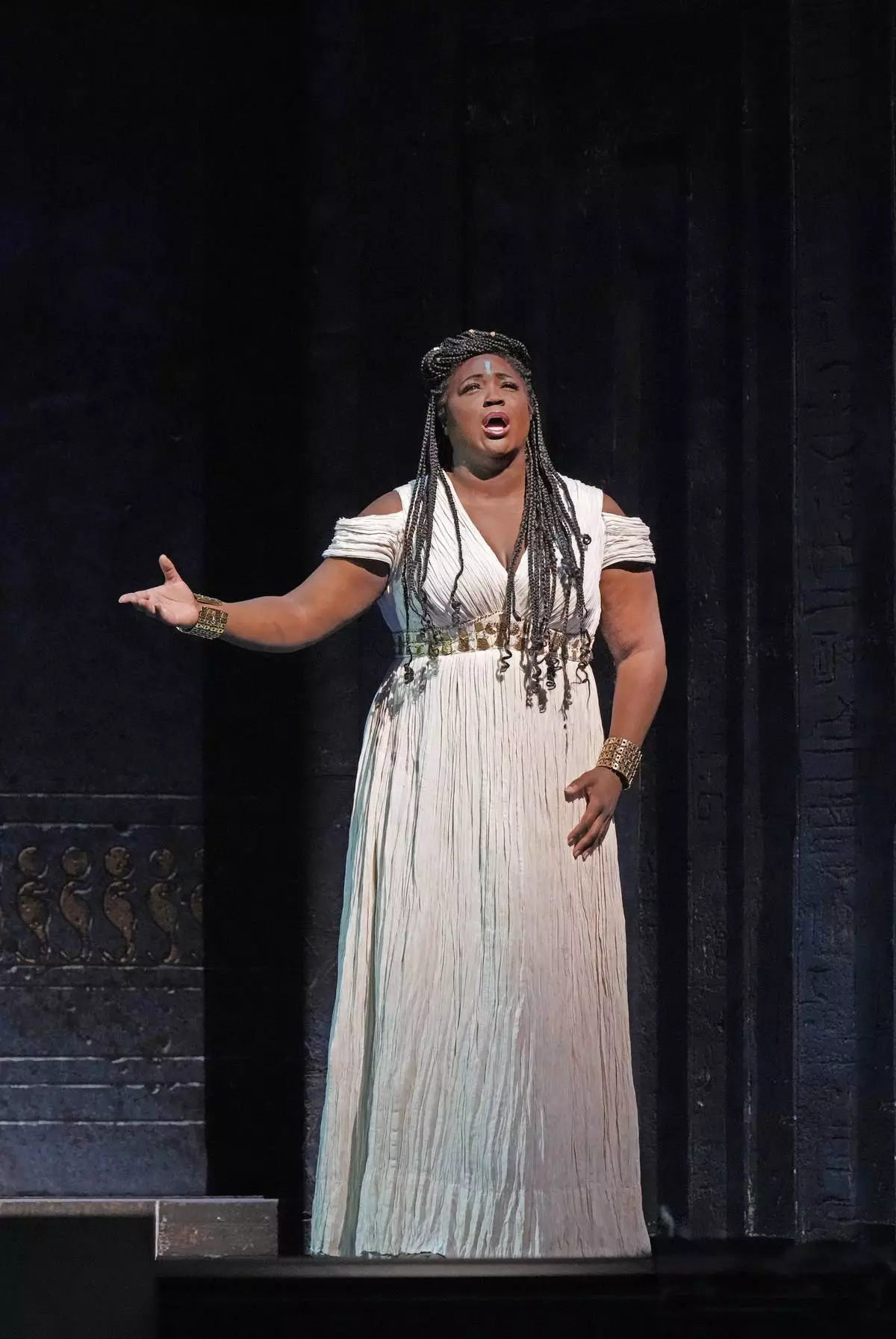
Soprano Angel Blue performs in a rehearsal for a new production of Verdi's "Aida," opening at the Metropolitan Opera on New Year's Eve. (Ken Howard/Met Opera via AP).

Soprano Angel Blue performs in a rehearsal for a new production of Verdi's "Aida," opening at the Metropolitan Opera on New Year's Eve. (Ken Howard/Met Opera via AP).

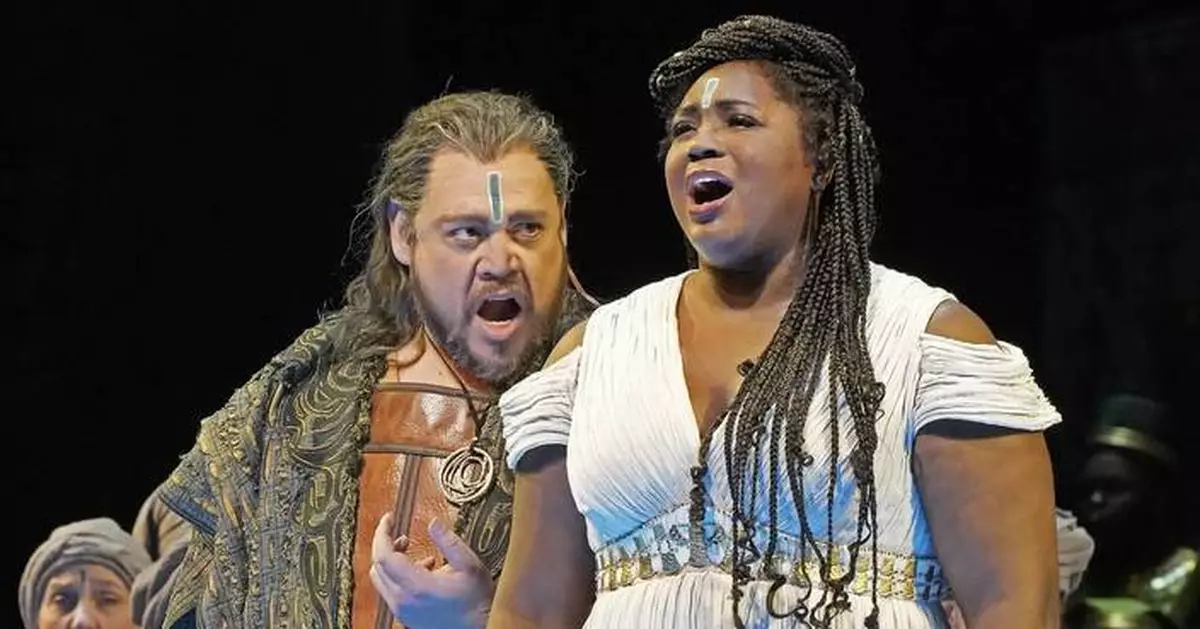
Baritone Quinn Kelsey, left, performs with soprano Angel Blue in a rehearsal for a new production of Verdi's "Aida," opening at the Metropolitan Opera on New Year's Eve. (Ken Howard/Met Opera via AP)
Baritone Quinn Kelsey, left, performs with soprano Angel Blue in a rehearsal for a new production of Verdi's "Aida," opening at the Metropolitan Opera on New Year's Eve. (Ken Howard/Met Opera via AP)
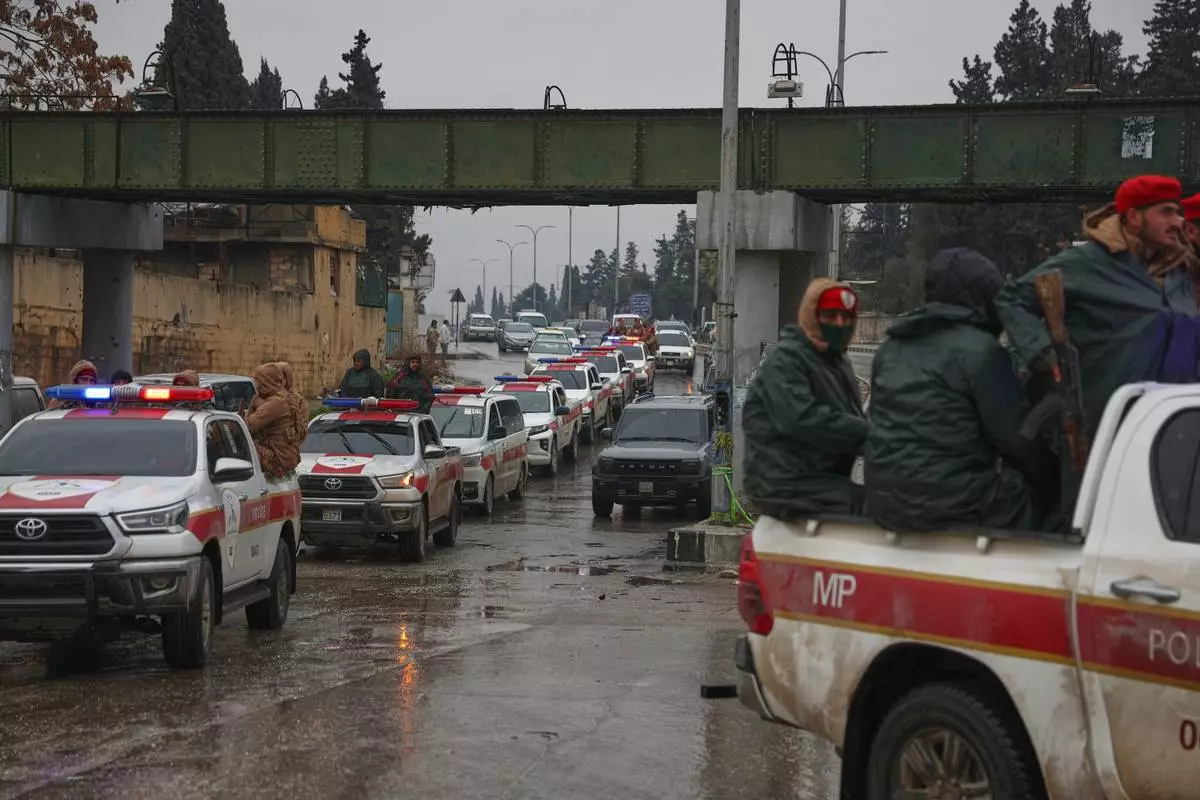
ALEPPO, Syria (AP) — First responders on Sunday entered a contested neighborhood in Syria’ s northern city of Aleppo after days of deadly clashes between government forces and Kurdish-led forces. Syrian state media said the military was deployed in large numbers.

The clashes broke out Tuesday in the predominantly Kurdish neighborhoods of Sheikh Maqsoud, Achrafieh and Bani Zaid after the government and the Syrian Democratic Forces, the main Kurdish-led force in the country, failed to make progress on how to merge the SDF into the national army. Security forces captured Achrafieh and Bani Zaid.

The fighting between the two sides was the most intense since the fall of then-President Bashar Assad to insurgents in December 2024. At least 23 people were killed in five days of clashes and more than 140,000 were displaced amid shelling and drone strikes.

The U.S.-backed SDF, which have played a key role in combating the Islamic State group in large swaths of eastern Syria, are the largest force yet to be absorbed into Syria's national army. Some of the factions that make up the army, however, were previously Turkish-backed insurgent groups that have a long history of clashing with Kurdish forces.

The Kurdish fighters have now evacuated from the Sheikh Maqsoud neighborhood to northeastern Syria, which is under the control of the SDF. However, they said in a statement they will continue to fight now that the wounded and civilians have been evacuated, in what they called a “partial ceasefire.”

The neighborhood appeared calm Sunday. The United Nations said it was trying to dispatch more convoys to the neighborhoods with food, fuel, blankets and other urgent supplies.

Government security forces brought journalists to tour the devastated area, showing them the damaged Khalid al-Fajer Hospital and a military position belonging to the SDF’s security forces that government forces had targeted.

The SDF statement accused the government of targeting the hospital “dozens of times” before patients were evacuated. Damascus accused the Kurdish-led group of using the hospital and other civilian facilities as military positions.

On one street, Syrian Red Crescent first responders spoke to a resident surrounded by charred cars and badly damaged residential buildings.

Some residents told The Associated Press that SDF forces did not allow their cars through checkpoints to leave.

“We lived a night of horror. I still cannot believe that I am right here standing on my own two feet,” said Ahmad Shaikho. “So far the situation has been calm. There hasn’t been any gunfire.”

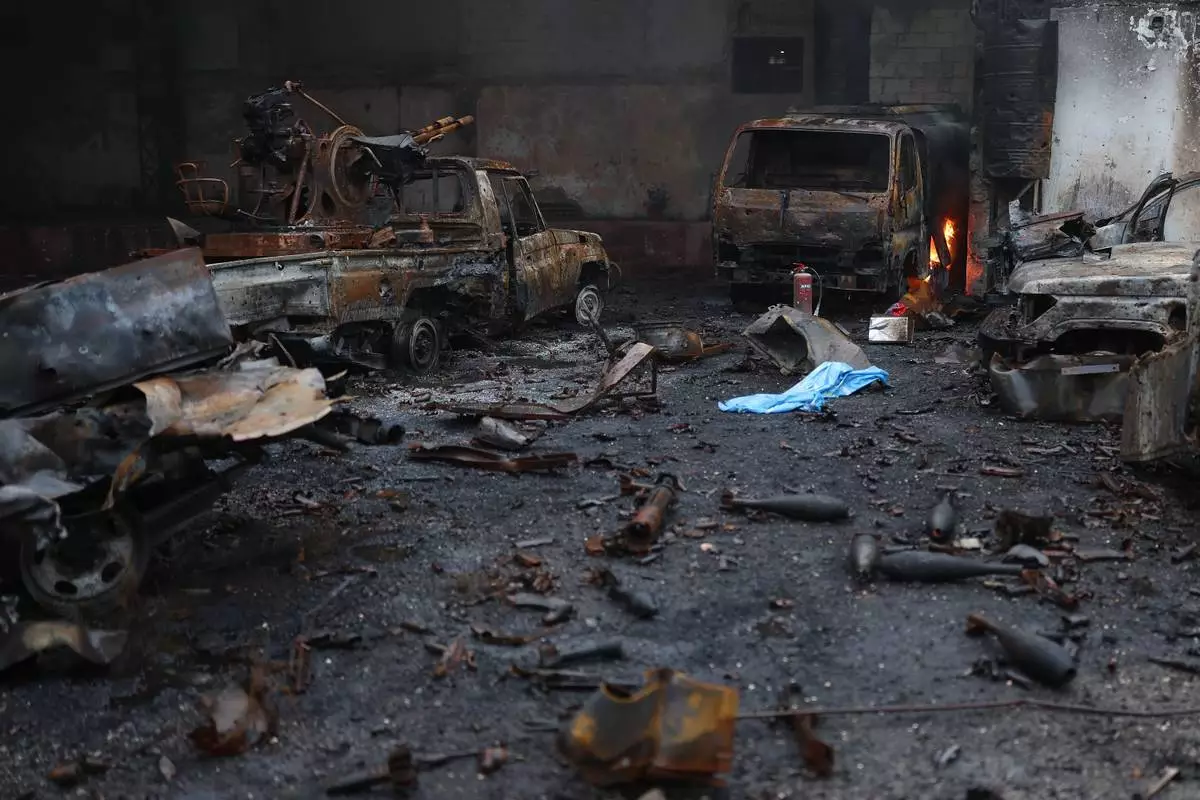
Syrian Civil Defense first responders have been disarming improvised mines that they say were left by the Kurdish forces as booby traps.

Residents who fled are not being allowed back into the neighborhood until all the mines are cleared. Some were reminded of the displacement during Syria’s long civil war.

“I want to go back to my home, I beg you,” said Hoda Alnasiri.

Associated Press journalist Kareem Chehayeb in Beirut contributed to this report.

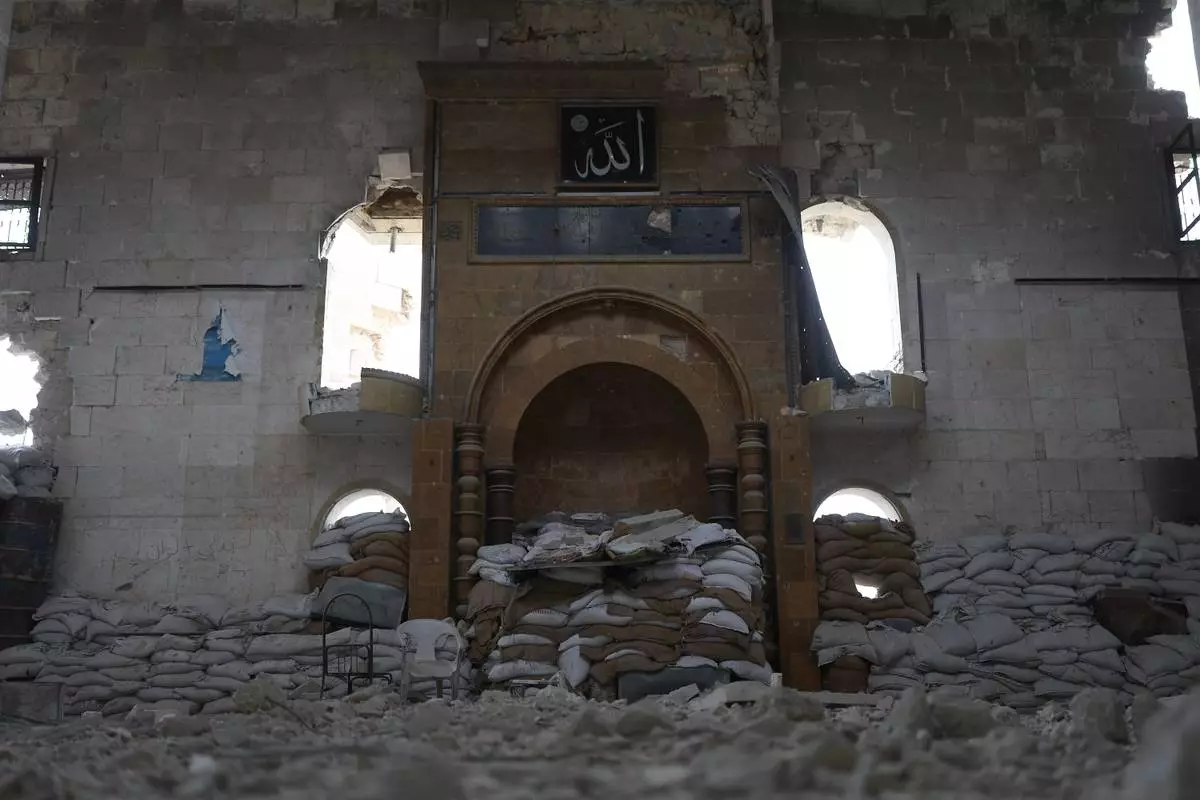
Sandbag barriers used as fighting positions by Kurdish fighters, left inside a destroyed mosque in the Sheikh Maqsoud neighborhood, where clashes between government forces and Kurdish fighters have been taking place in the northern city of Aleppo, Syria, Sunday, Jan. 11, 2026. (AP Photo/Ghaith Alsayed)

Sandbag barriers used as fighting positions by Kurdish fighters, left inside a destroyed mosque in the Sheikh Maqsoud neighborhood, where clashes between government forces and Kurdish fighters have been taking place in the northern city of Aleppo, Syria, Sunday, Jan. 11, 2026. (AP Photo/Ghaith Alsayed)

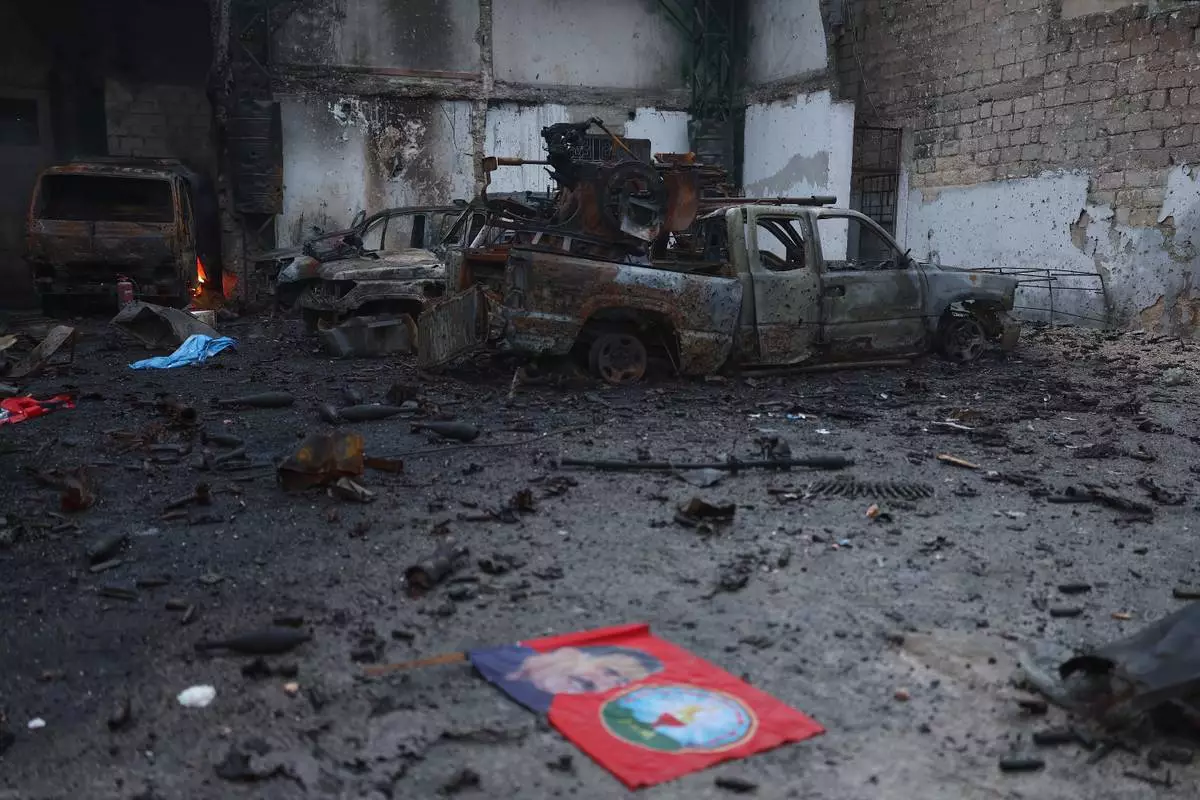
Burned vehicles at one of the Kurdish fighters positions at the Sheikh Maqsoud neighborhood, where clashes between government forces and Kurdish fighters have been taking place in the northern city of Aleppo, Syria, Sunday, Jan. 11, 2026. (AP Photo/Ghaith Alsayed)

Burned vehicles at one of the Kurdish fighters positions at the Sheikh Maqsoud neighborhood, where clashes between government forces and Kurdish fighters have been taking place in the northern city of Aleppo, Syria, Sunday, Jan. 11, 2026. (AP Photo/Ghaith Alsayed)

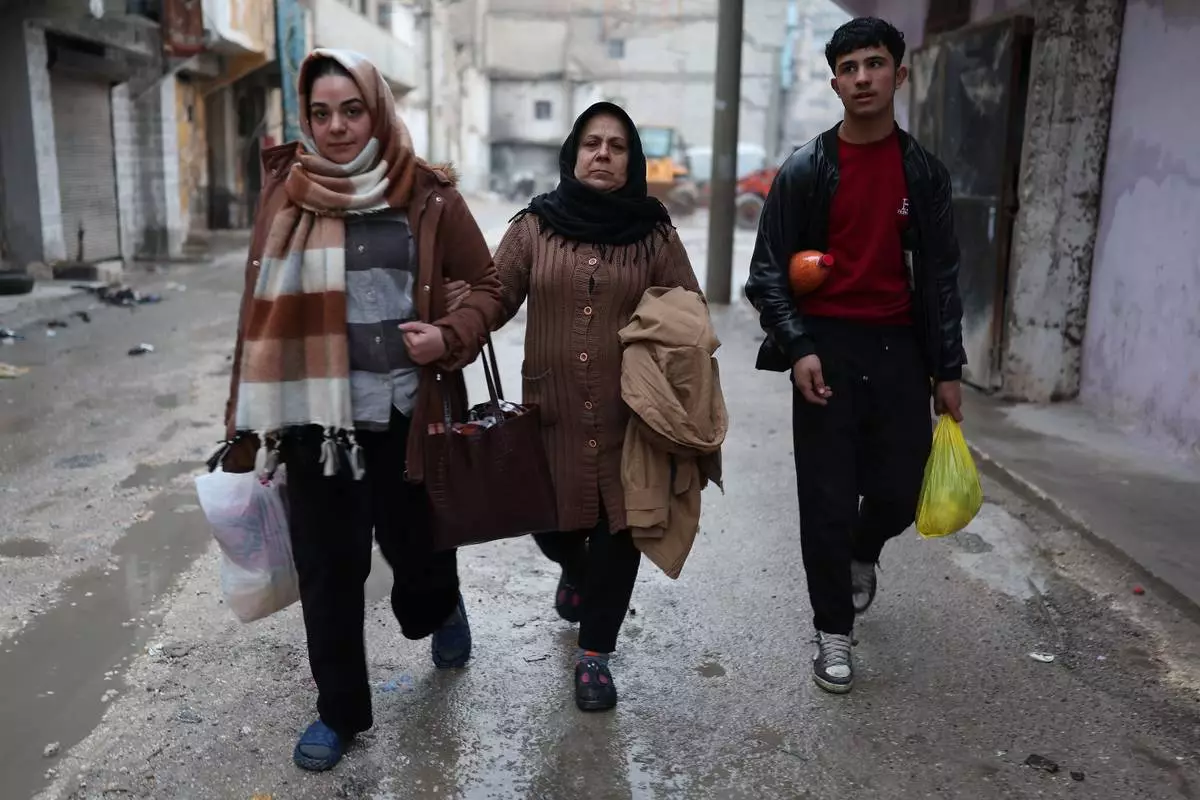
People flee the Sheikh Maqsoud neighborhood, where clashes between government forces and Kurdish fighters have been taking place in the northern city of Aleppo, Syria, Sunday, Jan. 11, 2026. (AP Photo/Ghaith Alsayed)

People flee the Sheikh Maqsoud neighborhood, where clashes between government forces and Kurdish fighters have been taking place in the northern city of Aleppo, Syria, Sunday, Jan. 11, 2026. (AP Photo/Ghaith Alsayed)

A Syrian military police convoy enters the Sheikh Maqsoud neighborhood, where clashes between government forces and Kurdish fighters have been taking place in the northern city of Aleppo, Syria, Sunday, Jan. 11, 2026. (AP Photo/Ghaith Alsayed)

A Syrian military police convoy enters the Sheikh Maqsoud neighborhood, where clashes between government forces and Kurdish fighters have been taking place in the northern city of Aleppo, Syria, Sunday, Jan. 11, 2026. (AP Photo/Ghaith Alsayed)

Burned vehicles and ammunitions left at one of the Kurdish fighters positions at the Sheikh Maqsoud neighborhood, where clashes between government forces and Kurdish fighters have been taking place in the northern city of Aleppo, Syria, Sunday, Jan. 11, 2026. (AP Photo/Ghaith Alsayed)

Burned vehicles and ammunitions left at one of the Kurdish fighters positions at the Sheikh Maqsoud neighborhood, where clashes between government forces and Kurdish fighters have been taking place in the northern city of Aleppo, Syria, Sunday, Jan. 11, 2026. (AP Photo/Ghaith Alsayed)

Recommended Articles