All you have to do to become a South Dakota resident is spend one night.
Stay in a campground or hotel and then stop by one of the businesses that specialize in helping people become South Dakotans, and they’ll help you do the paperwork to gain residency in a state with no income tax and relatively cheap vehicle registration.
The system brings in extra government revenue through vehicle fees and offers refuge to full-time travelers who wouldn’t otherwise have a permanent address or a place to vote.
And that’s the problem. State leaders are at a stalemate between those who say people who don’t really live in South Dakota shouldn’t be allowed to vote in local elections and those who say efforts to impose a longer residency requirement for voting violate the principle that everyone gets to vote.
And at least one state has gotten wind that its residents might be avoiding high income taxes with easy South Dakota residency and is investigating.
Easy South Dakota residency for nomads has become an enterprising opportunity for businesses such as RV parks and mail forwarders.
“That’s the primary concept here, is the people that have given up their sticks and bricks and now are on wheel estate, we call it, and they’re full-time traveling,” said Dane Goetz, owner of the Spearfish-based South Dakota Residency Center, which caters to full-time travelers. “They need a place to call home, and we provide that address for them to do that, and they are just perpetually on the move.”
Goetz estimated more than 30,000 people are full-time traveler residents of South Dakota, but the actual number is unclear. The state Department of Public Safety, which handles driver licensing, says it doesn't track the number of full-time traveler applications.
Officials of the South Dakota Secretary of State's Office did not respond to emailed questions or a phone message seeking the state's tally of full-time travelers registered to vote. The office is not responsible for enforcing residency requirements, Division of Elections Director Rachel Soulek said.
Victor Robledo, his wife and their five kids hit the road a decade ago in a 28-foot (8.5-meter) motorhome to seek adventure and ease their high cost of living in Southern California. They found South Dakota to be an opportunity to save money, receive mail and “take a residency in a state that really nurtures us,” he said. They filed for residency in 2020.
“It was as simple as coming into the state, staying one night in one of the campgrounds, and once we do that, we bring in a receipt to the office, fill out some paperwork, change our licenses. I mean, really, you can blow through there — gosh, 48 hours,” Robledo said.
Residency becomes thorny around voting. Some opponents don’t want people who don’t physically live in South Dakota to vote in its elections.
“I don’t want to deny somebody their right to vote, but to think that they can vote in a school board election or a legislative election or a county election when they’re not part of the community, I’m troubled by that,” said Democratic Rep. Linda Duba, who cited 10,000 people or roughly 40% of her Sioux Falls constituents being essentially mailbox residents. She likes to knock on doors and meet people but said she is unable to do “relationship politics” with travelers.
The law the Republican-controlled Legislature passed in 2023 added requirements for voter registration, including 30 days of residency — which don't have to be consecutive — and having “an actual fixed permanent dwelling, establishment, or any other abode to which the person returns after a period of absence.”
The bill's prime sponsor, Republican Sen. Randy Deibert, told a Senate panel that citizens expressed concerns about “people coming to the state, being a resident overnight and voting (by) absentee ballot or another way the next day and then leaving the state.”
Those registered to vote before the new law took effect remain registered, but some who tried to register since its passage had trouble. Dozens of people recently denied voter registration contacted the American Civil Liberties Union of South Dakota, according to the chapter’s advocacy manager, Samantha Chapman.
Durational residency requirements for voting are, in general, unconstitutional because such restrictions interfere with the interstate right to travel, said David Schultz, a Hamline University professor of political science and a professor of law at the University of St. Thomas.
“It’s kind of this parochialism, this idea of saying that only people who are really in our neighborhood, who really live in our city have a sufficient stake in it, and the courts have generally been unsympathetic to those types of arguments because, more often than not, they’re used for discriminatory purposes,” he said.
Earlier this year, the Legislature considered a bill to roll back the 2023 law. It passed the Senate but stalled in the House.
During a House hearing on that bill, Republican Rep. Jon Hansen asked one full-time traveler when he was last in South Dakota and when he intends to return. The man said he was in the state a year earlier but planned to return in coming months. Another man who moved from Iowa to work overseas said he had not lived “for any period of time, physically” in South Dakota.
“I don’t think we should allow people who have never lived in this state to vote in our state,” Hansen said.
Republican Sen. David Wheeler, an attorney in Huron, said he expects litigation would be what forces a change. It's unlikely a change to the 30-day requirement would pass the Legislature now, he said.
“It is a complicated topic that involves federal and state law and federal and state voting rights, and it is difficult to bring everybody together on how to appropriately address that,” Wheeler said.
More than 1,600 miles (2,500 kilometers) east, Connecticut State Comptroller Sean Scanlon has asked prosecutors to look into whether some state employees who live in Connecticut may have skirted their tax obligations by claiming to be residents of South Dakota.
Connecticut has a graduated income tax rate of 3.0% to 6.99%. Connecticut cities and towns also impose a property tax on vehicles. South Dakota has none.
Scanlon and his office, which administers state employee retiree benefits, learned from a Hartford Courant columnist in September that some state retirees might be using South Dakota’s mail-forwarding services for nefarious reasons.
Asked if there are concerns about other Connecticut taxpayers who are not state retirees possibly misusing South Dakota’s lenient residency laws, the Department of Revenue Services would only say the agency is “aware of the situation and we’re working with our partners to resolve it.”
A South Dakota legislative panel broached the residency issue as recently as August, a meeting in which one lawmaker called the topic “the Gordian knot of politics.”
“It seems like it’s almost impossible to come to some clear and definitive statement as to what constitutes a residency with such a mobile population with people with multiple homes and addresses and political boundaries that are easy to see on a map but there’s so much cross-transportation across them,” Republican Sen. Jim Bolin said.
Dura reported from Bismarck, North Dakota. Associated Press Writer Susan Haigh in Hartford, Connecticut, contributed to this report.
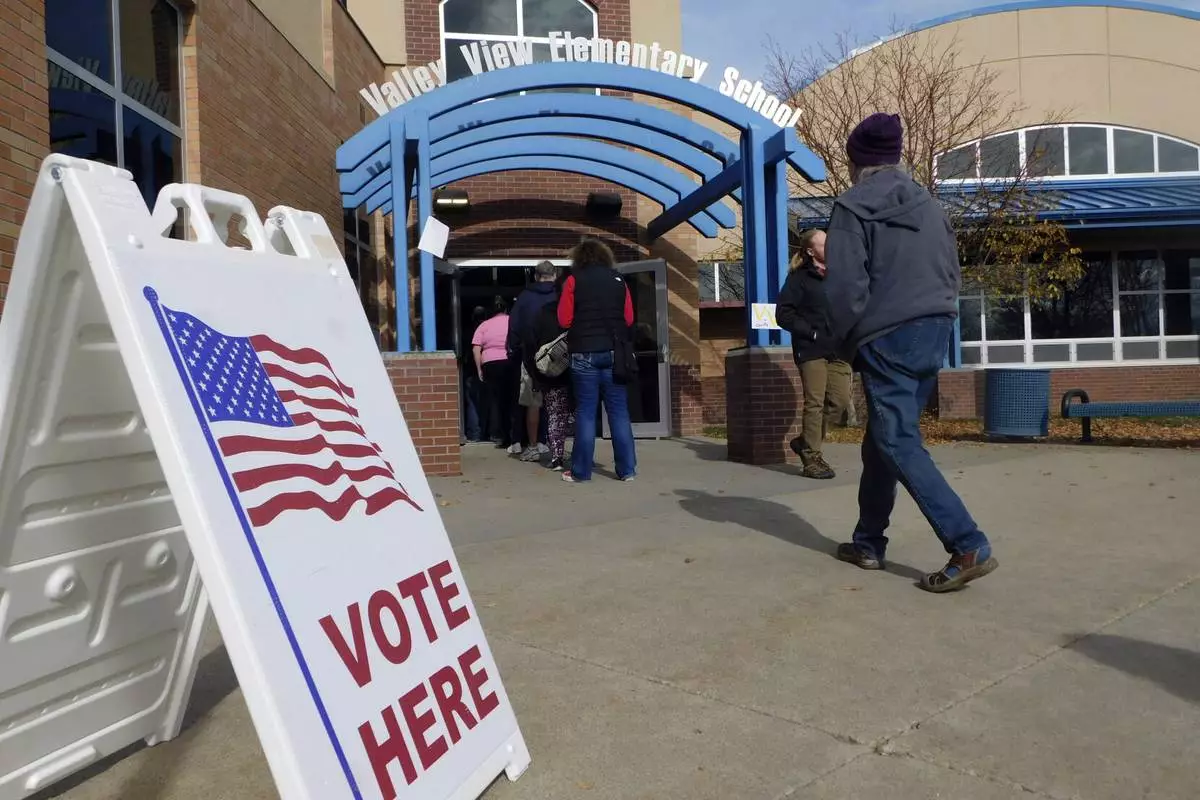
FILE - Pennigton County voters head to the polls at Valley View Elementary School Gym on Election Day, on Nov. 5, 2024, in Rapid City, S.D. (Madison Willis/Rapid City Journal via AP, File)
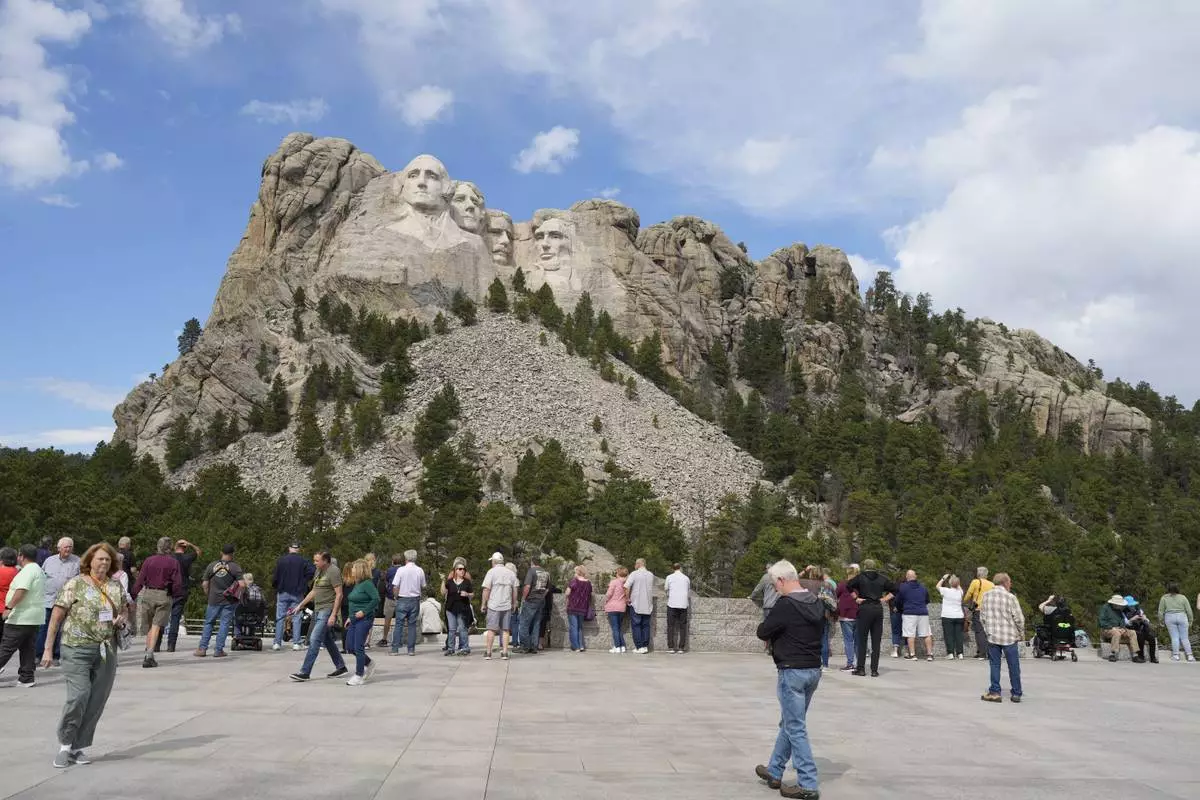
Visitors take in the massive sculpture carved into Mount Rushmore at the Mount Rushmore National Memorial Thursday, Sept. 21, 2023, in, Keystone, S.D. (AP Photo/David Zalubowski)
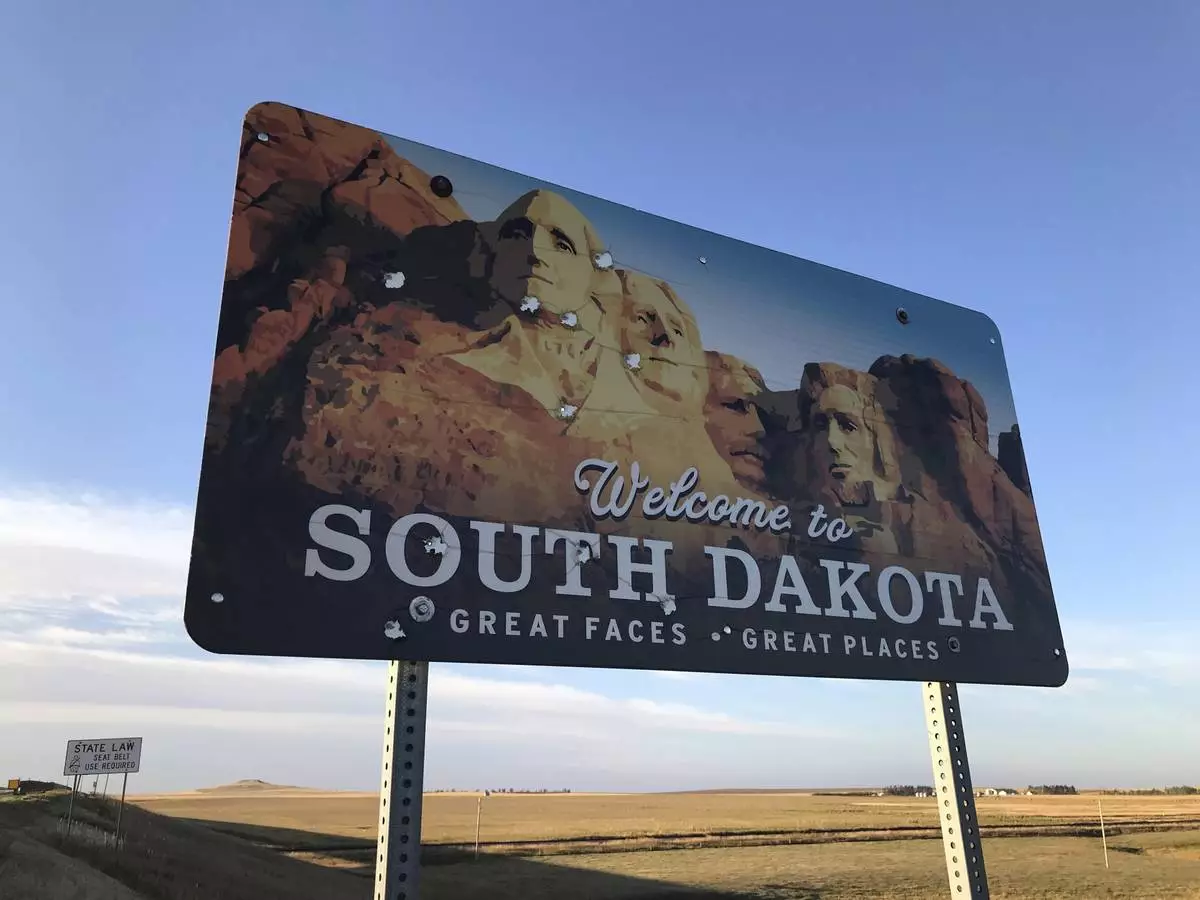
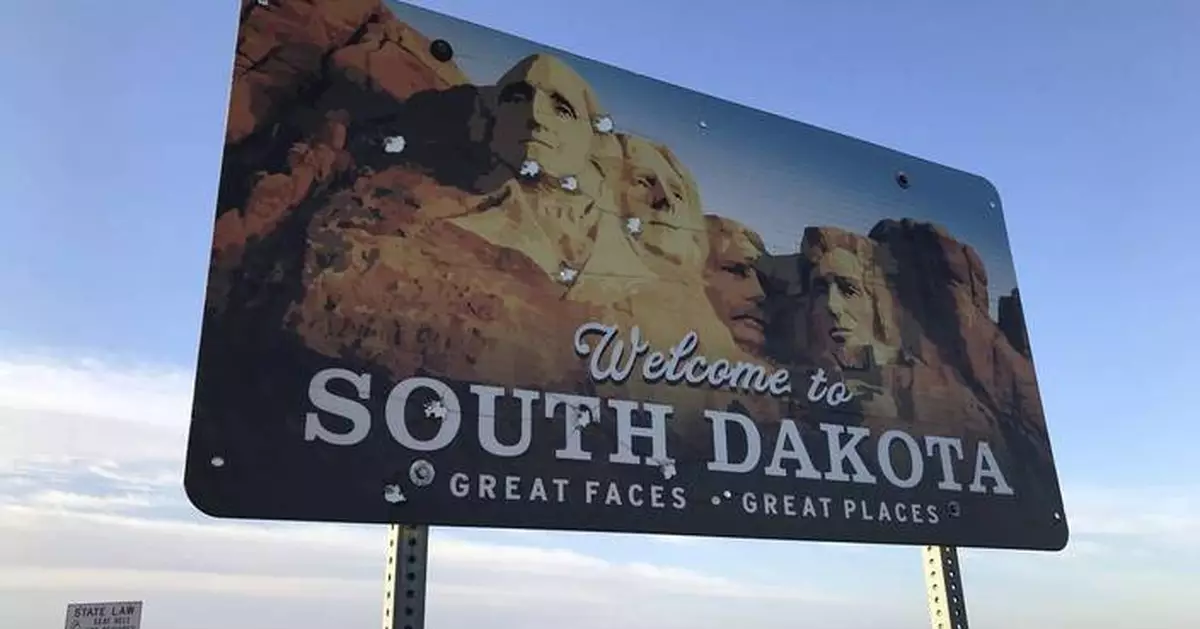
A highway sign depicting Mount Rushmore and reading "Welcome to South Dakota. Great faces, great places" stands on the North Dakota-South Dakota border near Thunder Hawk, South Dakota, on Saturday, Oct. 12, 2024. (AP Photo/Jack Dura)