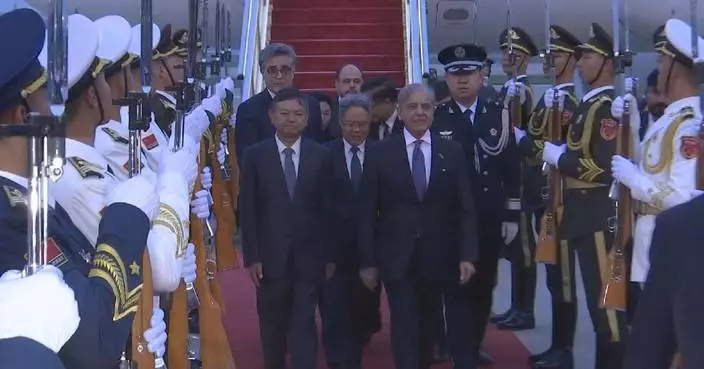
China's visa-free policy and its streamlined travel process have sparked a surge in inbound tourism, with international visitors flocking to the country in record numbers.
Data from the Beijing General Station of Exit and Entry Frontier Inspection shows that the Chinese capital's ports of entry and exit have received 4.66 million foreign nationals as of December 20, 2024, a 128 percent year-on-year increase.
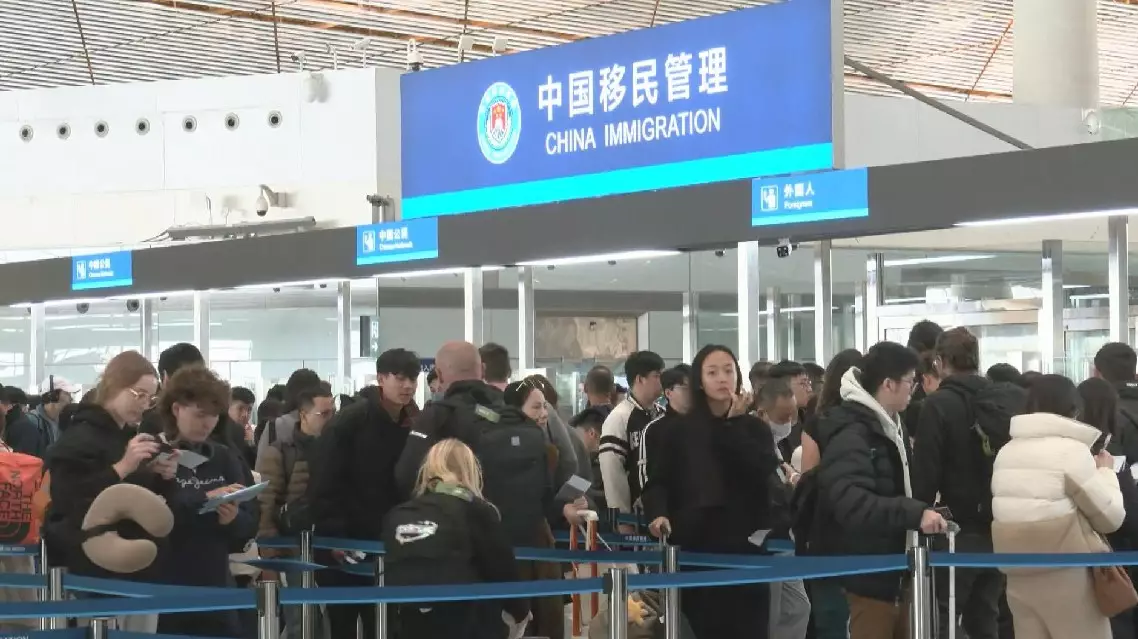
A long queue of foreign travelers formed at Beijing Capital International Airport's border checkpoint, with visitors eager to enter China and discover its iconic landmarks.
"I'm pretty excited about the Forbidden City. So, yeah, we'll see," said a foreign traveler from Poland.
"We'll go to the Forbidden City, I think, to eat some good dumplings, maybe, to meet the people," said another foreign traveler.
"China is very big and very beautiful. I added it to my wish list. I wanted to visit it. And now, I felt it's time to come now," said a traveler from Italy.
On Dec 17, China announced a significant relaxation of its visa-free transit policy, extending the permitted stay for eligible foreign travelers from the initial 72 hours and subsequent 144 hours to 240 hours, or 10 days.
Under the very updated policy, eligible citizens from 54 countries, including Russia, Brazil, Britain, the United States and Canada, can enter China visa-free when transiting to a third country or region.
Among the foreign travelers was Peter, a young man from Russia, who was on his way back to Moscow from Manila with a stopover in Beijing. Knowing that he can stay in Beijing for 10 days under the visa-free transit policy, Peter decided to tour the Great Wall and other landmarks in the city.
"I want to visit Summer Palace, Fragrance Hills, and of course, the Great Wall. It's my reason for staying in Beijing, because I've read a lot about this," said Peter.
China's visa-free policies have made travel to the country more accessible for foreign tourists, including German traveler Becker, who was visiting China for the first time with his family.
"My wife, my son are with me for the Christmas vacation and our son's birthday, also. It's good to come for one week only, it's not so much time to see so much. But one week the first time, I think, is better than never staying here. So, I'm very proud to be here," said Becker.
To help inbound travelers save time in border checking, the airport has also set up multiple lanes, including specific channels for Chinese citizens and foreign nationals.
"We now have 30 lanes open in the first row for inspection. And we'll open the door in the middle and activate the second row for dual-lane inspections, if there's quite a lot of travelers. We've selected police officers who are adept at foreign languages to form a multilingual service team to provide on-site answers and guidance for foreign travelers, making the border checking process more efficient and smoother," said Yan Zhongming, a police officer with Beijing General Station of Exit and Entry Frontier Inspection.
At the final stage of customs clearance, real-time remote monitoring of luggage has helped ensure most foreign travelers to pass through quickly and smoothly.
"Below the baggage carousel, we have customs X-ray machines that perform preliminary image analysis. After passengers collect their luggage, for normal passengers without any abnormalities, the customs clearance is seamless. We are minimizing the time passengers spend at the customs to the largest extent," said Qin Xinbo, an officer with Beijing Capital Airport customs.
As of Dec 20, Beijing had handled visa-free entry for 870,000 foreign nationals and issued 144-hour and 240-hour temporary entry permits to over 62,000 eligible foreign travelers, marking increases of 5.1 times and 2.3 times, respectively, compared to last year.

China's visa-free policy drives surge in inbound tourism
China's visa-free policy drives surge in inbound tourism