Skip to Content Facebook Feature Image

Climate change added 41 days of dangerous heat around world in 2024

News

Climate change added 41 days of dangerous heat around world in 2024
News

News

Climate change added 41 days of dangerous heat around world in 2024

2024-12-27 13:04 Last Updated At:12-28 00:01

People around the world suffered an average of 41 extra days of dangerous heat this year because of human-caused climate change, according to a group of scientists who also said that climate change worsened much of the world's damaging weather throughout 2024.

The analysis from World Weather Attribution and Climate Central researchers comes at the end of a year that shattered climate record after climate record as heat across the globe made 2024 likely to be its hottest ever measured and a slew of other fatal weather events spared few.

More Images
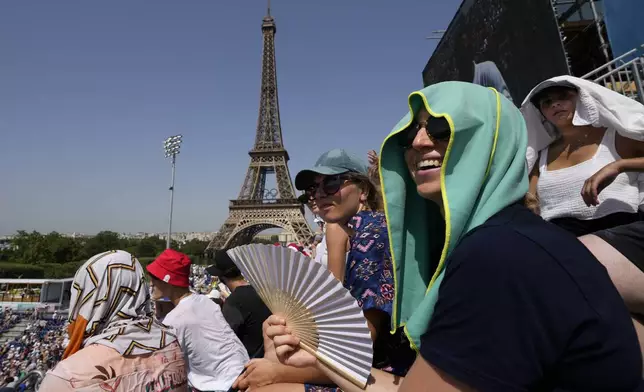
FILE - Stephanie Touissaint, foreground, uses a fan to keep cool in the sweltering heat at Eiffel Tower Stadium during a beach volleyball match between Cuba and Brazil at the 2024 Summer Olympics, July 30, 2024, in Paris, France. (AP Photo/Robert F. Bukaty, File)

FILE - Stephanie Touissaint, foreground, uses a fan to keep cool in the sweltering heat at Eiffel Tower Stadium during a beach volleyball match between Cuba and Brazil at the 2024 Summer Olympics, July 30, 2024, in Paris, France. (AP Photo/Robert F. Bukaty, File)

FILE - A Red Cross volunteer gives water to tourists at the foot of the Acropolis hill during a hot and windy day in Athens, July 17, 2024. (AP Photo/Petros Giannakouris, File)

FILE - A Red Cross volunteer gives water to tourists at the foot of the Acropolis hill during a hot and windy day in Athens, July 17, 2024. (AP Photo/Petros Giannakouris, File)

FILE - A boy cools himself with an electric fan on a sweltering day at a park in Tongzhou, on the outskirts of Beijing, June 10, 2024. (AP Photo/Andy Wong, File)
FILE - A boy cools himself with an electric fan on a sweltering day at a park in Tongzhou, on the outskirts of Beijing, June 10, 2024. (AP Photo/Andy Wong, File)

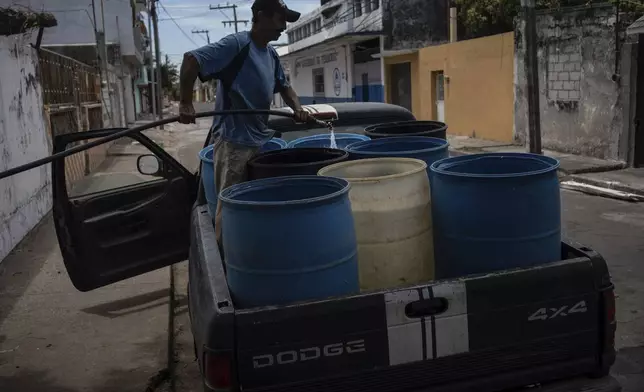
FILE - A man fills containers with water due to the shortage caused by high temperatures and drought in Veracruz, Mexico, on June 16, 2024. (AP Photo/Felix Marquez, File)
FILE - A man fills containers with water due to the shortage caused by high temperatures and drought in Veracruz, Mexico, on June 16, 2024. (AP Photo/Felix Marquez, File)

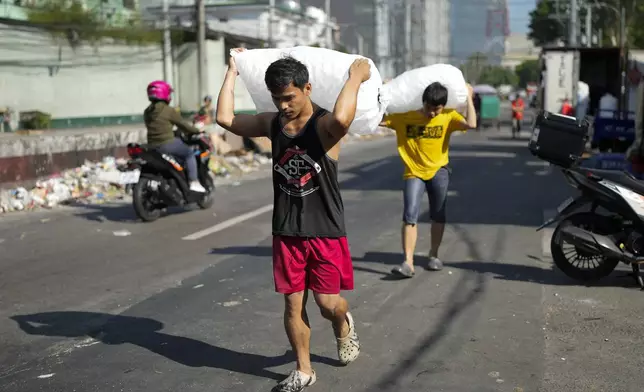
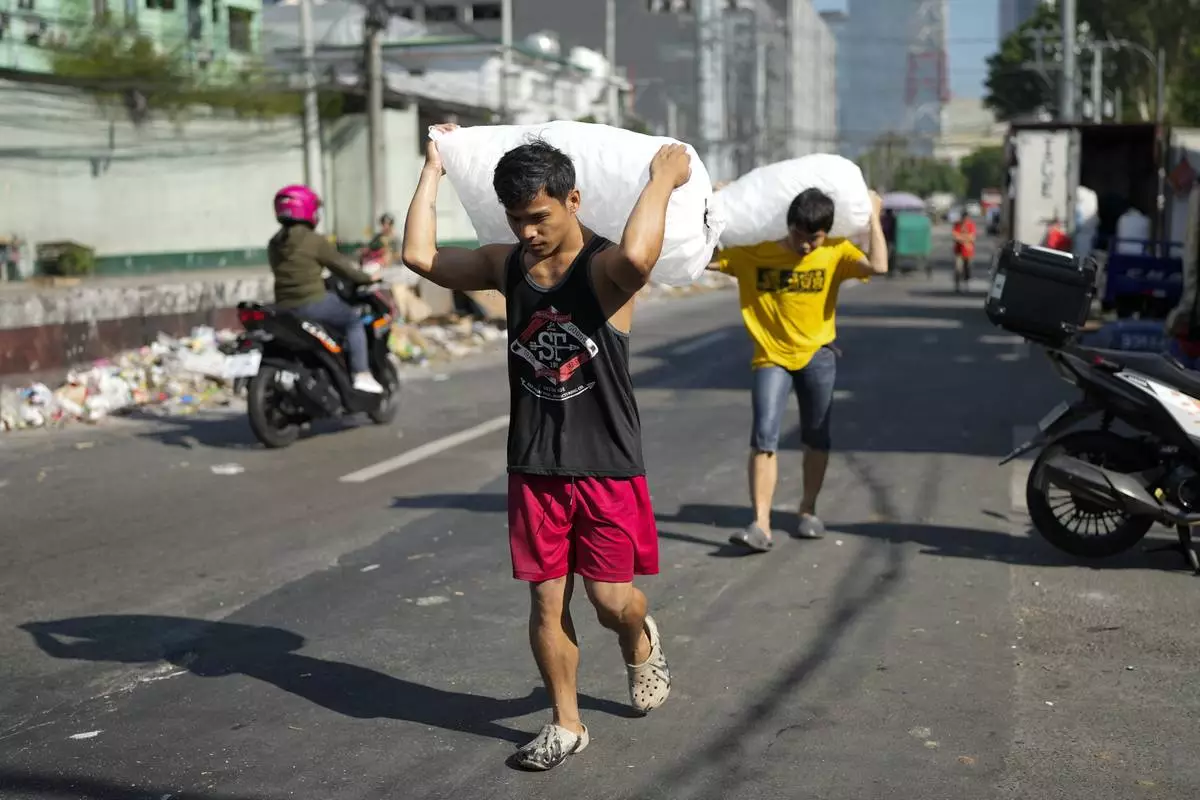
FILE - Men deliver sacks of ice cubes as demand remains high due to hot temperatures in Quezon city, Philippines on April 24, 2024. (AP Photo/Aaron Favila, File)

FILE - Men deliver sacks of ice cubes as demand remains high due to hot temperatures in Quezon city, Philippines on April 24, 2024. (AP Photo/Aaron Favila, File)

FILE - Tourists with an umbrella walk in front of the Parthenon at the ancient Acropolis in central Athens, June 12, 2024. (AP Photo/Petros Giannakouris, File)

FILE - Tourists with an umbrella walk in front of the Parthenon at the ancient Acropolis in central Athens, June 12, 2024. (AP Photo/Petros Giannakouris, File)

FILE - Ricky Leath, an outreach specialist with the City of Miami, talks with Bei Zhao, right, as he works with the Miami-Dade County Homeless Trust to distribute bottles of water and other supplies to the homeless population, helping them manage high temperatures, May 15, 2024, in Miami. (AP Photo/Lynne Sladky, File)

FILE - Ricky Leath, an outreach specialist with the City of Miami, talks with Bei Zhao, right, as he works with the Miami-Dade County Homeless Trust to distribute bottles of water and other supplies to the homeless population, helping them manage high temperatures, May 15, 2024, in Miami. (AP Photo/Lynne Sladky, File)

“The finding is devastating but utterly unsurprising: Climate change did play a role, and often a major role in most of the events we studied, making heat, droughts, tropical cyclones and heavy rainfall more likely and more intense across the world, destroying lives and livelihoods of millions and often uncounted numbers of people,” Friederike Otto, the lead of World Weather Attribution and an Imperial College climate scientist, said during a media briefing on the scientists' findings. “As long as the world keeps burning fossil fuels, this will only get worse.”

Millions of people endured stifling heat this year. Northern California and Death Valley baked. Sizzling daytime temperatures scorched Mexico and Central America. Heat endangered already vulnerable children in West Africa. Skyrocketing southern European temperatures forced Greece to close the Acropolis. In South and Southeast Asian countries, heat forced school closures. Earth experienced some of the hottest days ever measured and its hottest-yet summer, with a 13-month heat streak that just barely broke.

To do its heat analysis, the team of volunteer international scientists compared daily temperatures around the globe in 2024 to the temperatures that would have been expected in a world without climate change. The results are not yet peer-reviewed, but researchers use peer-reviewed methods.

Some areas saw 150 days or more of extreme heat due to climate change.

“The poorest, least developed countries on the planet are the places that are experiencing even higher numbers,” said Kristina Dahl, vice president of climate science at Climate Central.

What's worse, heat-related deaths are often underreported.

“People don’t have to die in heat waves. But if we can’t communicate convincingly, ‘but actually a lot of people are dying,’ it’s much harder to raise this awareness,” Otto said. “Heat waves are by far the deadliest extreme event, and they are the extreme events where climate change is a real game changer.”

This year was a warning that the planet is getting dangerously close to the Paris Agreement’s 1.5 degrees Celsius (2.7 degrees Fahrenheit) warming limit compared to the pre-industrial average, according to the scientists. Earth is expected to soon edge past that threshold, although it's not considered to have been breached until that warming is sustained over decades.

The researchers closely examined 29 extreme weather events this year that killed at least 3,700 people and displaced millions, and found that 26 of them had clear links to climate change.

The El Niño weather pattern, which naturally warms the Pacific Ocean and changes weather around the world, made some of this weather more likely earlier in the year. But the researchers said most of their studies found that climate change played a bigger role than that phenomenon in fueling 2024's events. Warm ocean waters and warmer air fueled more destructive storms, according to the researchers, while temperatures led to many record-breaking downpours.

Jennifer Francis, a climate scientist at the Woodwell Climate Research Center in Cape Cod who wasn’t involved in the research, said the science and findings were sound.

“Extreme weather will continue to become more frequent, intense, destructive, costly, and deadly, until we can lower the concentration of heat-trapping gases in the atmosphere," she said.

Significantly more climate extremes could be expected without action, the United Nations Environment Programme said in the fall, as more planet-warming carbon dioxide has been sent into the air this year by burning fossil fuels than last year.

But the deaths and damages from extreme weather events aren't inevitable, said Julie Arrighi, director of programmes at the Red Cross Red Crescent Climate Centre and part of the research.

“Countries can reduce those impacts by preparing for climate change and adapting for climate change, and while the challenges faced by individual countries or systems or places vary around the world, we do see that every country has a role to play," she said.

Alexa St. John is an Associated Press climate solutions reporter. Follow her on X: @alexa_stjohn. Reach her at ast.john@ap.org.

Read more of AP’s climate coverage at http://www.apnews.com/climate-and-environment

The Associated Press’ climate and environmental coverage receives financial support from multiple private foundations. AP is solely responsible for all content. Find AP’s standards for working with philanthropies, a list of supporters and funded coverage areas at AP.org.

FILE - Stephanie Touissaint, foreground, uses a fan to keep cool in the sweltering heat at Eiffel Tower Stadium during a beach volleyball match between Cuba and Brazil at the 2024 Summer Olympics, July 30, 2024, in Paris, France. (AP Photo/Robert F. Bukaty, File)

FILE - Stephanie Touissaint, foreground, uses a fan to keep cool in the sweltering heat at Eiffel Tower Stadium during a beach volleyball match between Cuba and Brazil at the 2024 Summer Olympics, July 30, 2024, in Paris, France. (AP Photo/Robert F. Bukaty, File)

FILE - A Red Cross volunteer gives water to tourists at the foot of the Acropolis hill during a hot and windy day in Athens, July 17, 2024. (AP Photo/Petros Giannakouris, File)

FILE - A Red Cross volunteer gives water to tourists at the foot of the Acropolis hill during a hot and windy day in Athens, July 17, 2024. (AP Photo/Petros Giannakouris, File)

FILE - A boy cools himself with an electric fan on a sweltering day at a park in Tongzhou, on the outskirts of Beijing, June 10, 2024. (AP Photo/Andy Wong, File)

FILE - A boy cools himself with an electric fan on a sweltering day at a park in Tongzhou, on the outskirts of Beijing, June 10, 2024. (AP Photo/Andy Wong, File)

FILE - A man fills containers with water due to the shortage caused by high temperatures and drought in Veracruz, Mexico, on June 16, 2024. (AP Photo/Felix Marquez, File)
FILE - A man fills containers with water due to the shortage caused by high temperatures and drought in Veracruz, Mexico, on June 16, 2024. (AP Photo/Felix Marquez, File)

FILE - Men deliver sacks of ice cubes as demand remains high due to hot temperatures in Quezon city, Philippines on April 24, 2024. (AP Photo/Aaron Favila, File)

FILE - Men deliver sacks of ice cubes as demand remains high due to hot temperatures in Quezon city, Philippines on April 24, 2024. (AP Photo/Aaron Favila, File)

FILE - Tourists with an umbrella walk in front of the Parthenon at the ancient Acropolis in central Athens, June 12, 2024. (AP Photo/Petros Giannakouris, File)

FILE - Tourists with an umbrella walk in front of the Parthenon at the ancient Acropolis in central Athens, June 12, 2024. (AP Photo/Petros Giannakouris, File)

FILE - Ricky Leath, an outreach specialist with the City of Miami, talks with Bei Zhao, right, as he works with the Miami-Dade County Homeless Trust to distribute bottles of water and other supplies to the homeless population, helping them manage high temperatures, May 15, 2024, in Miami. (AP Photo/Lynne Sladky, File)


FILE - Ricky Leath, an outreach specialist with the City of Miami, talks with Bei Zhao, right, as he works with the Miami-Dade County Homeless Trust to distribute bottles of water and other supplies to the homeless population, helping them manage high temperatures, May 15, 2024, in Miami. (AP Photo/Lynne Sladky, File)
NEW YORK (AP) — Reviving a campaign pledge, President Donald Trump wants a one-year, 10% cap on credit card interest rates, a move that could save Americans tens of billions of dollars but drew immediate opposition from an industry that has been in his corner.

Trump was not clear in his social media post Friday night whether a cap might take effect through executive action or legislation, though one Republican senator said he had spoken with the president and would work on a bill with his “full support.” Trump said he hoped it would be in place Jan. 20, one year after he took office.

Strong opposition is certain from Wall Street in addition to the credit card companies, which donated heavily to his 2024 campaign and have supported Trump's second-term agenda. Banks are making the argument that such a plan would most hurt poor people, at a time of economic concern, by curtailing or eliminating credit lines, driving them to high-cost alternatives like payday loans or pawnshops.

“We will no longer let the American Public be ripped off by Credit Card Companies that are charging Interest Rates of 20 to 30%,” Trump wrote on his Truth Social platform.

Researchers who studied Trump’s campaign pledge after it was first announced found that Americans would save roughly $100 billion in interest a year if credit card rates were capped at 10%. The same researchers found that while the credit card industry would take a major hit, it would still be profitable, although credit card rewards and other perks might be scaled back.

About 195 million people in the United States had credit cards in 2024 and were assessed $160 billion in interest charges, the Consumer Financial Protection Bureau says. Americans are now carrying more credit card debt than ever, to the tune of about $1.23 trillion, according to figures from the New York Federal Reserve for the third quarter last year.

Further, Americans are paying, on average, between 19.65% and 21.5% in interest on credit cards according to the Federal Reserve and other industry tracking sources. That has come down in the past year as the central bank lowered benchmark rates, but is near the highs since federal regulators started tracking credit card rates in the mid-1990s. That’s significantly higher than a decade ago, when the average credit card interest rate was roughly 12%.

The Republican administration has proved particularly friendly until now to the credit card industry.

Capital One got little resistance from the White House when it finalized its purchase and merger with Discover Financial in early 2025, a deal that created the nation’s largest credit card company. The Consumer Financial Protection Bureau, which is largely tasked with going after credit card companies for alleged wrongdoing, has been largely nonfunctional since Trump took office.

In a joint statement, the banking industry was opposed to Trump's proposal.

“If enacted, this cap would only drive consumers toward less regulated, more costly alternatives," the American Bankers Association and allied groups said.

Bank lobbyists have long argued that lowering interest rates on their credit card products would require the banks to lend less to high-risk borrowers. When Congress enacted a cap on the fee that stores pay large banks when customers use a debit card, banks responded by removing all rewards and perks from those cards. Debit card rewards only recently have trickled back into consumers' hands. For example, United Airlines now has a debit card that gives miles with purchases.

The U.S. already places interest rate caps on some financial products and for some demographics. The Military Lending Act makes it illegal to charge active-duty service members more than 36% for any financial product. The national regulator for credit unions has capped interest rates on credit union credit cards at 18%.

Credit card companies earn three streams of revenue from their products: fees charged to merchants, fees charged to customers and the interest charged on balances. The argument from some researchers and left-leaning policymakers is that the banks earn enough revenue from merchants to keep them profitable if interest rates were capped.

"A 10% credit card interest cap would save Americans $100 billion a year without causing massive account closures, as banks claim. That’s because the few large banks that dominate the credit card market are making absolutely massive profits on customers at all income levels," said Brian Shearer, director of competition and regulatory policy at the Vanderbilt Policy Accelerator, who wrote the research on the industry's impact of Trump's proposal last year.

There are some historic examples that interest rate caps do cut off the less creditworthy to financial products because banks are not able to price risk correctly. Arkansas has a strictly enforced interest rate cap of 17% and evidence points to the poor and less creditworthy being cut out of consumer credit markets in the state. Shearer's research showed that an interest rate cap of 10% would likely result in banks lending less to those with credit scores below 600.

The White House did not respond to questions about how the president seeks to cap the rate or whether he has spoken with credit card companies about the idea.

Sen. Roger Marshall, R-Kan., who said he talked with Trump on Friday night, said the effort is meant to “lower costs for American families and to reign in greedy credit card companies who have been ripping off hardworking Americans for too long."

Legislation in both the House and the Senate would do what Trump is seeking.

Sens. Bernie Sanders, I-Vt., and Josh Hawley, R-Mo., released a plan in February that would immediately cap interest rates at 10% for five years, hoping to use Trump’s campaign promise to build momentum for their measure.

Hours before Trump's post, Sanders said that the president, rather than working to cap interest rates, had taken steps to deregulate big banks that allowed them to charge much higher credit card fees.

Reps. Alexandria Ocasio-Cortez, D-N.Y., and Anna Paulina Luna, R-Fla., have proposed similar legislation. Ocasio-Cortez is a frequent political target of Trump, while Luna is a close ally of the president.

Seung Min Kim reported from West Palm Beach, Fla.

President Donald Trump arrives on Air Force One at Palm Beach International Airport, Friday, Jan. 9, 2025, in West Palm Beach, Fla. (AP Photo/Julia Demaree Nikhinson)

President Donald Trump arrives on Air Force One at Palm Beach International Airport, Friday, Jan. 9, 2025, in West Palm Beach, Fla. (AP Photo/Julia Demaree Nikhinson)

FILE - Visa and Mastercard credit cards are shown in Buffalo Grove, Ill., Feb. 8, 2024. (AP Photo/Nam Y. Huh, File)

FILE - Visa and Mastercard credit cards are shown in Buffalo Grove, Ill., Feb. 8, 2024. (AP Photo/Nam Y. Huh, File)

Recommended Articles