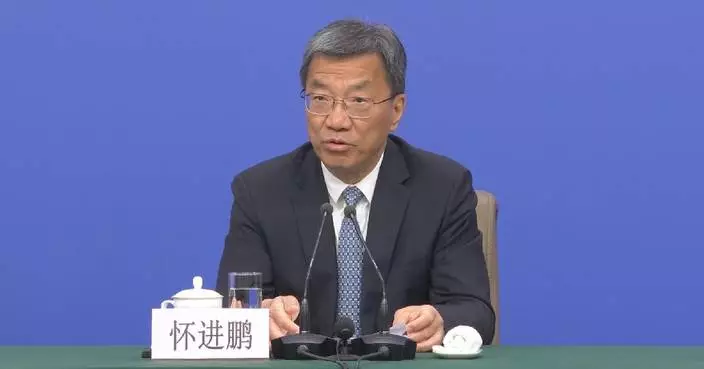
The private sector of the Chinese economy significantly benefited from the government's tax and administrative fee cuts in the first 11 months of this year, according to the latest official data released by the State Taxation Administration.
From January to November, the newly implemented tax refunds for the private sector of the economy as well as new cuts and deferrals of tax and administrative fee payments amounted to 1 trillion yuan (about 137 billion U.S. dollars), accounting for 71.3 percent of the total amount of the new tax and fee reductions and tax rebates for all sectors of the economy in the country, according to the data.
Since the beginning of this year, a series of preferential tax policies have kept playing a role in stimulating the vigor and vitality of the private sector of the economy.
In Hangzhou, capital city of east China's Zhejiang Province, a company that uses special and sophisticated technologies to produce novel and unique products has enjoyed a tax reduction of 20 million yuan (2.74 million U.S. dollars) so far this year.
"We've equipped our production line with a 'digital brain', which improves the production efficiency by 30 percent. So far this year, our sales have already topped 300 million yuan (about 41.1 million U.S. dollars), an increase of more than 10 percent over the same period of last year," said Zheng Lei, financial administrator of the company.
Official data show that in the first 11 months of this year, private enterprises nationwide enjoyed tax cuts of 699.1 billion yuan (95.78 billion U.S. dollars) through two preferential tax policies to support scientific and technological innovation, namely additional deductions for research and development expenses and value-added tax (VAT) deductions for advanced manufacturing enterprises, and a total of 269.1 billion yuan (36.87 billion U.S. dollars) of VAT credit refunds.
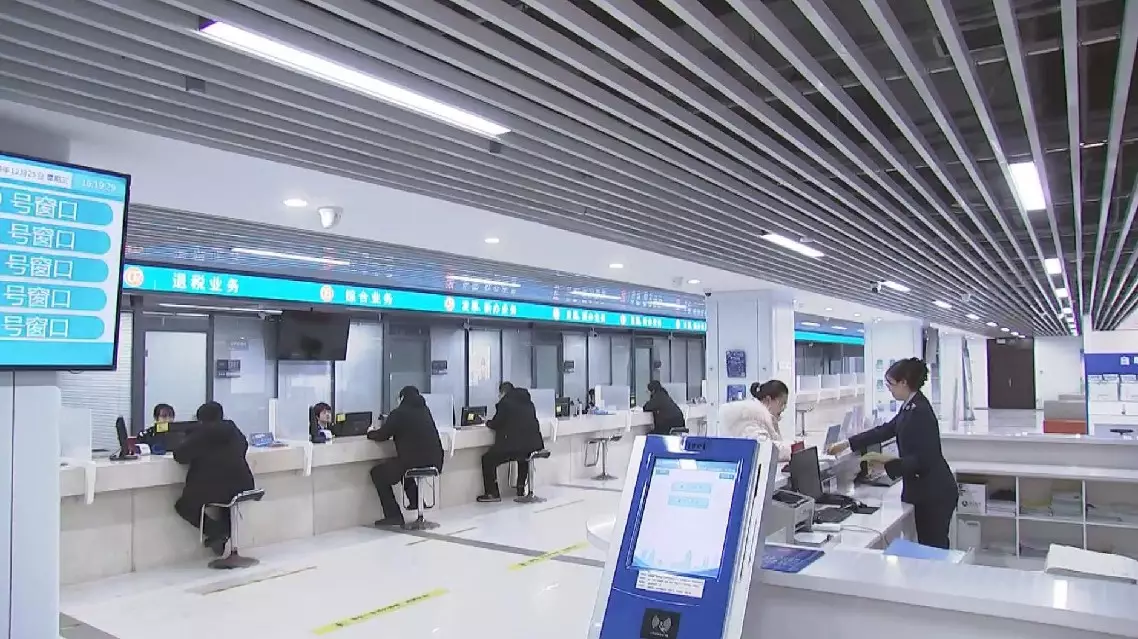
China's private sector significantly benefits from tax, fee cuts in January-November
Canadian Prime Minister Mark Carney's official visit to China signals a policy shift towards building a more pragmatic relationship between the two countries, according to a Canadian researcher.
Carney arrived in Beijing on Wednesday to begin an official visit to China through Saturday, which marks the first trip by a Canadian Prime Minister to the country in eight years.
Robert Hanlon, director and principal investigator of Canada and the Asia Pacific Policy Project (CAPPP) at Thompson Rivers University in British Columbia, told the China Global Television Network (CGTN) that Carney's visit indicates Canada is recalibrating its strategic perception of China, which could cement the foundation for the country's economic diversification efforts and boost the development of bilateral cooperation.
"I think it's a clear message that he has moved Canada's strategy to a much more pragmatic, interest-based, -focused relationship with our trading partners, moving away from values-based narratives that we might have heard on previous governments. Canada has spoken about moving from what the Prime Minister's Office is calling "from reliance to resilience", and that means diversifying our economies and our trade everywhere in the world. And so China being our second largest trading partner, it makes perfect sense for our PM to head to Beijing," he said.
The scholar also noted the huge cooperation potential between the two sides in economic and trade fields, citing Canada's efforts to step up shipments of liquefied natural gas (LNG) and the planned construction of an oil pipeline in Alberta which aims to increase export access to Asian markets. "Canada and China both share tremendous economic opportunities together and so finding ways to enhance our exports. Canada specifically looking to build out its LNG and oil, kind of export market. We know Canada is a major producer of critical minerals and China is a buyer. And so there's a lot of synergy between that kind of those kind of markets," he said.
Canadian PM's visit to China paves way for more pragmatic trade ties: scholar