Skip to Content Facebook Feature Image

China's social welfare for vulnerable groups improves further in 2024

China

China

China

China's social welfare for vulnerable groups improves further in 2024

2024-12-30 17:27 Last Updated At:19:17

China has beefed up social welfare for vulnerable groups including people in need, orphans and the disabled in 2024, according to the country's Ministry of Civil Affairs (MCA).

This year, China has rolled out the identification of low-income households on the edge of social assistance and families facing rigid expenditure difficulties.

The MCA has also strengthened dynamic monitoring and ongoing support for low-income populations.

The national dynamic monitoring platform for low-income populations now tracks 80.59 million people, approximately 5.7 percent of the total population.

At the same time, a data-sharing mechanism involving 12 departments, including the MCA and the Ministry of Education, has been established for regular data comparisons on low-income populations. This year, 26 provinces and the Xinjiang Production and Construction Corps have raised the subsistence allowances.

Additionally, welfare levels for children in need and disabled individuals have steadily improved this year.

In terms of child welfare, the per capita monthly standard for children in institutional care, children in social foster care and children without guardianship have reached 1,971.4 yuan (about 270 U.S. dollars), 1,511.9 yuan (more than 207 U.S. dollars) and 1,500.7 yuan (about 205 U.S. dollars), respectively.

These amounts represent year-on-year increases of 4.5 percent, 5 percent and 5.1 percent.

As for the welfare of disabled people, 25 provinces increased the living subsidies for those in financial difficulty and the care subsidies for those with severe disabilities this year.

Meanwhile, 16 provinces expanded the eligibility criteria for subsidies, benefiting 11.93 million disabled people in need and 16.19 million with severe disabilities.
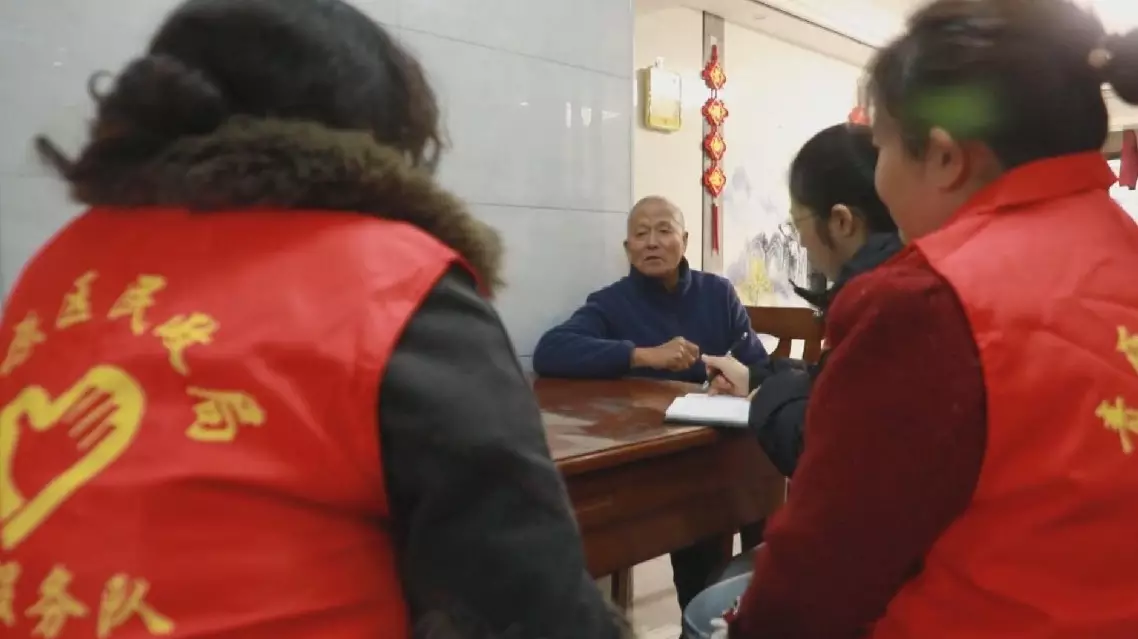
China's social welfare for vulnerable groups improves further in 2024

China's social welfare for vulnerable groups improves further in 2024

A program produced by China Global Television Network (CGTN) aired on Saturday presented the unerasable evidence of crimes committed by Yoshijiro Umezu, a top leader in Japan's wartime military during the invasion of China, exposing the history that must never be forgotten.

Umezu was a notorious name deeply involved in Japan's war of aggression against China. As Chief of the Army General Staff, he was closely linked to atrocities like the brutal policy of "Three Alls" - kill all, burn all, and loot all - and the inhuman experiments of Unit 731.

Umezu was dispatched to China in March 1934. His role spanned the entire course of Japan's aggression, from the invasion of northeast China to the collapse of the Pacific War.

In May 1935, Umezu presented then-acting chairman of the Beiping Military Council, He Yingqin, with an outrageous demand to expel Chinese forces from North China. He then redeployed Japanese troops south from northeast China, coercing He into signing the He–Umezu Agreement, effectively opening the door for Japan's full-scale military expansion into North China.

In 1938, Umezu became commander of the Japanese First Army. He enforced the savage "Three Alls" policy, inflicting immense suffering on the Chinese people.

Statistics show that during the Chinese People's War of Resistance against Japanese Aggression, as many as 7 million civilians in North China were killed under the "Three Alls" policy. Umezu became known among the Chinese as the "Demon of the Three Alls."

One of the most heinous units Japan deployed in China was Unit 731. When it was first established, the unit had no official designation. It was Umezu, then commander of the Kwantung Army, who granted it its code number and helped expand its operations. That's why he is widely regarded as the man behind Unit 731.

At least tens of thousands of Chinese, Soviet and Korean civilians, and Allied prisoners of war were used as live subjects in human experiments, dying in extreme pain and cruelty. This chapter of history remains an indelible scar on the conscience of human civilization.

"The Japanese biological warfare units expanded with the direct involvement of the Japanese government, the military high command, the Kwantung Army, and the medical community. This fully demonstrates that Japan's biological warfare was a premeditated, organized, and state-led crime, carried out from the top down," said Jin Chengmin, director of the Exhibition Hall of Crime Evidence of Japanese Army Unit 731.

As a loyal executor of Japan's expansionist militarist strategy, Umezu did not limit his crimes to China. In 1941, having previously taken part in the Russo-Japanese War, Umezu organized large-scale military exercises targeting the Soviet Union as a hypothetical enemy. He continued to train Kwantung Army forces and sent large numbers of elite troops to the Pacific Theater.

On the morning of September 2, 1945, the ceremony formally marking Japan's unconditional surrender was held on the deck of the USS Missouri.

After the ceremony and the final victory in the world's anti-fascist war, Umezu was put on trial at the Tokyo Tribunal, among the highest-ranking military officers. He was convicted as a Class-A war criminal and sentenced to life imprisonment in November 1948.

Although he escaped execution, justice was not denied forever. On January 8, 1949, Umezu died of rectal cancer in Sugamo Prison in Tokyo without ever admitting guilt.

After his death, Umezu's spirit tablet was enshrined at Yasukuni Shrine, alongside 14 Class-A war criminals. For years, despite strong opposition from Asian countries and criticism from the international community, some Japanese right-wing politicians have repeatedly visited the shrine.

This is far more than a so-called act of mourning. It is a blatant challenge to historical verdicts, a deep insult to the victims of aggression, and a dangerous attempt to rehabilitate militarist crimes.

"History and reality both prove that returning to militarism is a dead end. Completely breaking with militarism and sincerely pursuing peaceful development is a crucial precondition for Japan to gain the trust and understanding of the international community, especially its Asian neighbors, and is also the correct choice in the interests of the Japanese people," Chinese Foreign Ministry Spokesman Guo Jiakun said at a recent press briefing in Beijing.

CGTN program exposes undeniable history of Yoshijiro Umezu’s war crimes in China

CGTN program exposes undeniable history of Yoshijiro Umezu’s war crimes in China

Recommended Articles