Foreign Ministry spokeswoman Mao Ning dismissed the U.S. Treasure Department's claim that its systems had been attacked by hackers supported by China as "unwarranted and groundless allegations" at a the last press briefing of the year in Beijing on Tuesday.
She made the remarks in response to a media query about the U.S. Treasury Department's statement on Monday that it was subject to a cyberattack by a China state-sponsored actor earlier in December.
Click to Gallery
Spokeswoman dismisses US Treasury Department's hacker allegation
Spokeswoman dismisses US Treasury Department's hacker allegation
Spokeswoman dismisses US Treasury Department's hacker allegation
Spokeswoman dismisses US Treasury Department's hacker allegation
Spokeswoman dismisses US Treasury Department's hacker allegation
"On this kind of unwarranted and groundless allegations, we've made clear our position more than once. China opposes all forms of hacking, and in particular, we oppose spreading China-related disinformation motivated by political agenda," she said.

Spokeswoman dismisses US Treasury Department's hacker allegation

Spokeswoman dismisses US Treasury Department's hacker allegation

Spokeswoman dismisses US Treasury Department's hacker allegation

Spokeswoman dismisses US Treasury Department's hacker allegation

Spokeswoman dismisses US Treasury Department's hacker allegation
Embodied artificial intelligence (AI) has emerged as a major highlight at the ongoing 2026 China International Fair for Trade in Services (CIFTIS), with humanoid robots and related technologies showcasing advances across the industry's full industrial chain -- from whole-machine motion and underlying control systems to data collection and training.
More than 130 companies and institutions are exhibiting in the telecommunications, computer and information services exhibition hall at this year's CIFTIS, where the full industrial chain of embodied AI is on display.
Humanoid robots are among the key attractions, demonstrating technologies covering whole-machine movement, underlying control and data collection.
One humanoid robot on display is equipped with a domestically-developed electronic architecture platform for robots. The architecture is designed to meet functional and safety requirements across a range of applications, including daily life, industrial production and healthcare.
"With the enhanced security functions of the electronic architecture, we can effectively prevent cyberattacks or damage caused by viruses, ensuring that our robots can carry out their designated tasks in a secure state," said Li Ping, a representative of an exhibiting company.
Difficulties and high costs in collecting and calibrating data have long been the challenges hindering the development of the embodied AI industry.
An exhibitor specializing in data services for embodied robots has developed a simulation training system that can highly replicate real-world physical environments.
The system allows robots to undergo repeated training and trial-and-error in virtual settings, significantly reducing training costs for embodied intelligence companies.
The company has so far made more than 100,000 hours of human behavior datasets freely available worldwide, covering 15,000 different scenarios.
"We hope this can help small and medium enterprises in China's embodied AI industry, as well as research institutions, conduct training more quickly and lower the barriers to accessing data. Meanwhile, we are also promoting the standardization of data products and hope to process the data to a high-quality standardized level, so that the same dataset can be reused by multiple teams," said Dong Xiaochao, a representative of the exhibiting company.
The five-day CIFTIS opened on Wednesday, drawing participants from 90 countries, regions and international organizations, with over 1,800 companies showcasing their service products on-site.
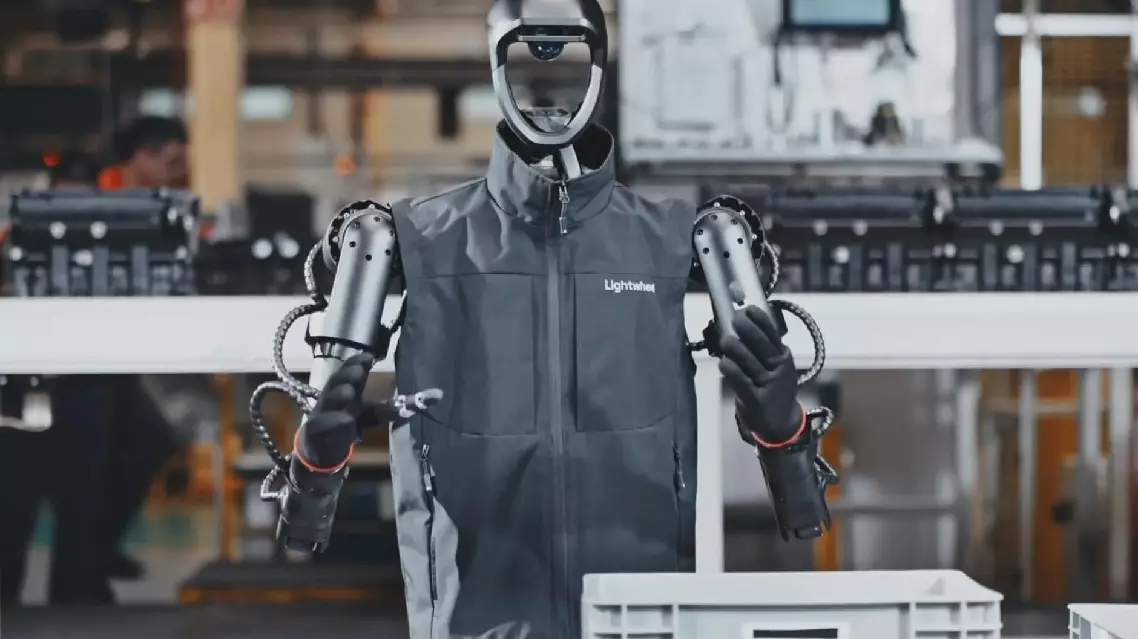
Humanoid robots showcase advances in embodied AI at CIFTIS