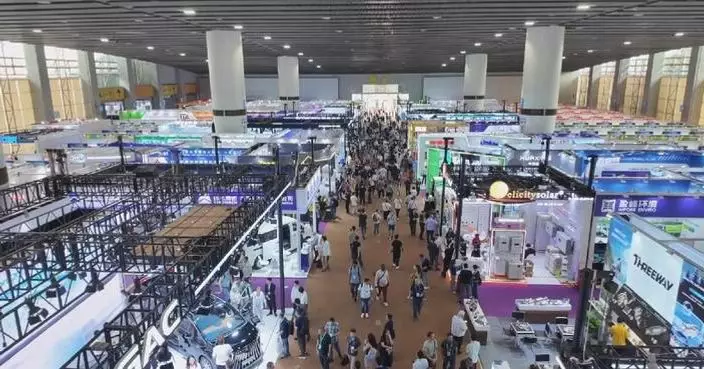
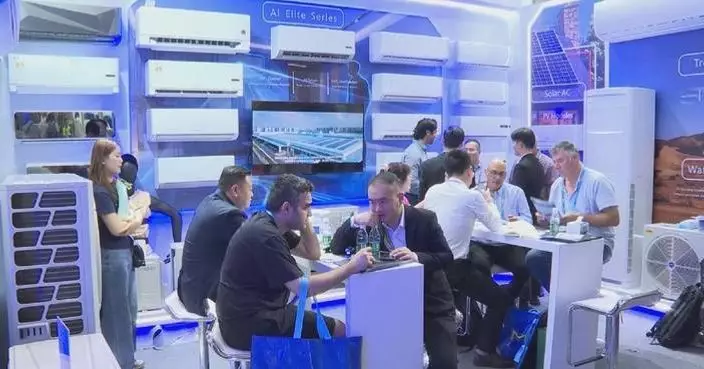
Businesses in member countries of the Regional Comprehensive Economic Partnership (RCEP) are reaping the rewards of reduced trade barriers, preferential tariffs, and expanded market access, leading to increased economic cooperation and growth.
RCEP is a free trade agreement initiated by the Association of Southeast Asian Nations (ASEAN) in 2012 and comprises 15 members -- China, Japan, South Korea, Australia, New Zealand and the 10 ASEAN countries.
Entering into force on Jan 1, 2022, RCEP is the world's largest free trade pact in terms of population and trade volume. Over 90 percent of goods traded within the region will eventually enjoy zero tariffs.
A report by consulting firm Deloitte showed that the overall transaction volume of micro-multinational companies in RCEP countries and regions surged by 190 percent year on year in the first half of 2024.
"We see quite a fair bit of increasing, especially with our cross-border declaration services. In terms of the service, declaration itself is much simpler and easier. One of the very important business that we are looking at is the import of records. With RCEP, we actually see net new revenue growth of 10 percent to 15 percent from this area," said Ng Chee Keong, vice-president of North-East, Central and Southeast Asia of Crimson Logic.
He added that RCEP's measures, such as gradually eliminating tariffs on 90 percent of goods, and expanding the opening of services trade, have reduced trade barriers between member countries.
"First, we have a big conglomerate of high-tech companies in China that is working with us now. They are very interested in bringing their products into ASEAN countries. We have helped them to leverage on the RCEP framework, so that they can reduce in terms of tax and make the whole trade itself much easier," said Ng.
Kim Samsoo, director of the Dalian South Korea Trade Center under the South Korea Trade-Investment Promotion Agency, echoed this sentiment, saying that preferential tariffs help enterprises save costs and gain technological and market development benefits.
"Through preferential tariffs among South Korea, China, Japan, Southeast Asia, Australia, New Zealand and other RCEP member countries, enterprises can not only save costs, but also get more benefits in terms of technology and market development," said Kim.
A survey by the Chinese Academy of International Trade and Economic Cooperation and the Ministry of Commerce found that over three-quarters of nearly 2,300 Chinese companies reported an improved business environment, and more than half acknowledged the positive impact of RCEP on their operations.
As the largest economy in the RCEP region, China accounts for 60 percent of the region's GDP, 49 percent of exports and 42 percent of imports. The country also represents 36 percent of foreign investment and 25 percent of outbound investment in the region.
In 2022 and 2023, China's trade with RCEP members accounted for over 30 percent of China's total foreign trade.
According to the Foreign Ministry, in the first three quarters of 2024, China's trade with other RCEP members reached 9.63 trillion yuan (about 1.33 trillion U.S. dollars), a year-on-year increase of 4.5 percent.
In 2023, China's non-financial direct investment in RCEP countries surged 26 percent year on year, surpassing the global investment growth rate by 14 percentage points.
The International Monetary Fund (IMF) predicted that from 2023 to 2029, the GDP of the RCEP region will grow by 10.9 trillion U.S. dollars, which is 1.4 times the expected GDP growth of the U.S. and 2.6 times that of the EU during the same period.
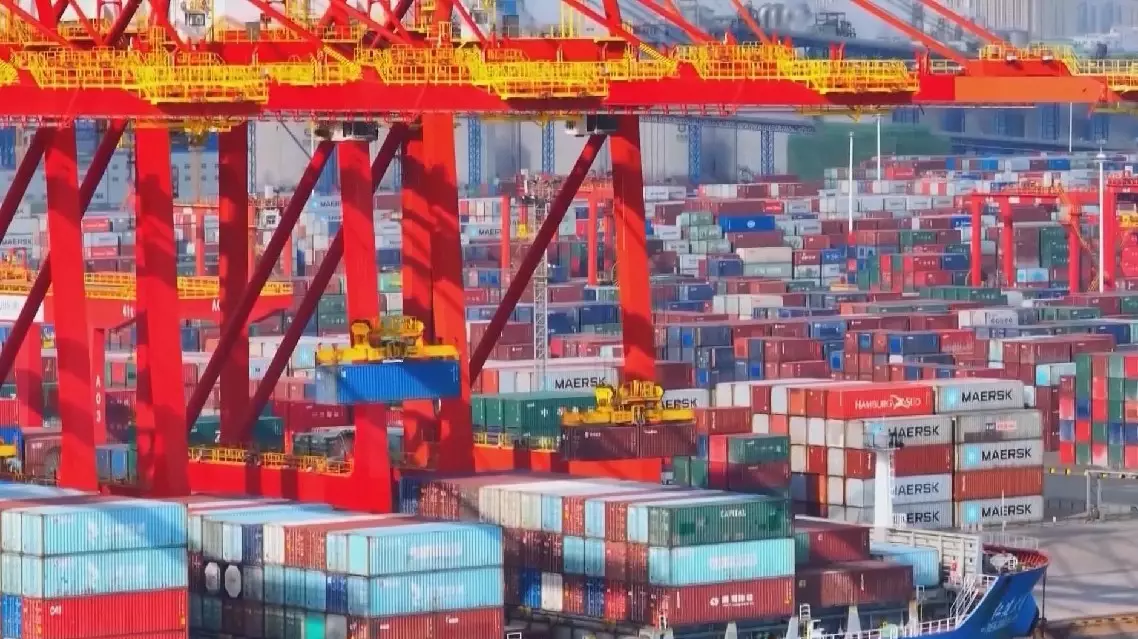
RCEP boosts trade, business growth for member countries