U.S. stocks ended lower on Thursday, extending the late-2024 slump into the first trading day of 2025.
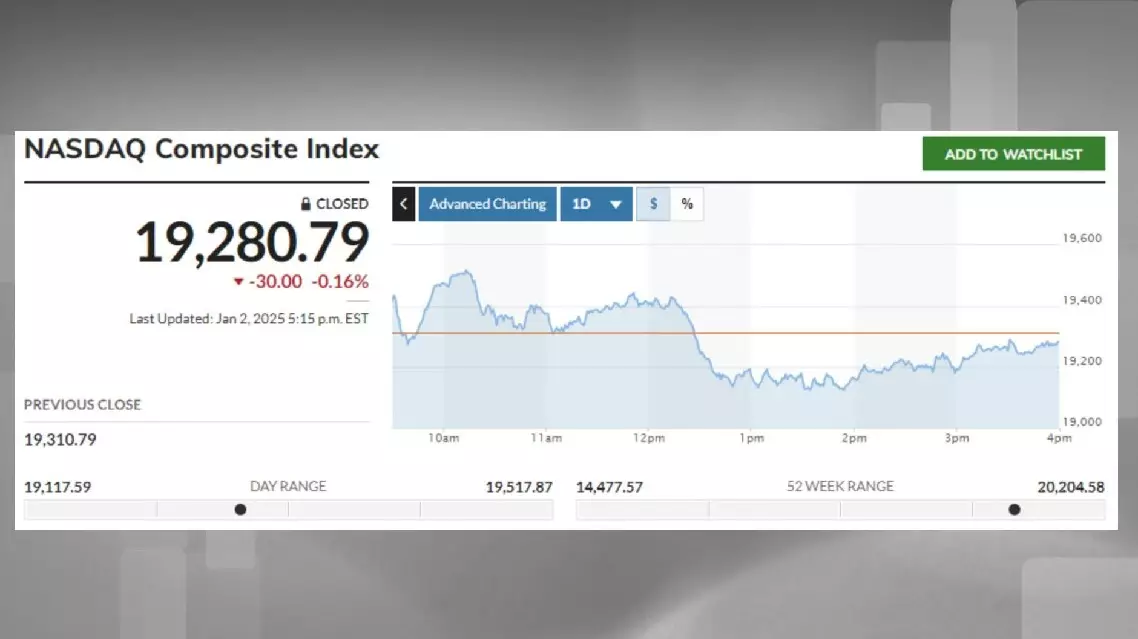
Despite early gains that saw the Dow Jones Industrial Average rise over 300 points, the Dow fell by 151.95 points, or 0.36 percent, to 42,392.27, logging a 700-point intraday swing from high to low. The S and P 500 sank 13.08 points, or 0.22 percent, to 5,868.55. The Nasdaq Composite Index shed 30.00 points, or 0.16 percent, to 19,280.79.
Seven of the 11 primary S and P 500 sectors ended in red, with consumer discretionary and materials leading the laggards by dropping 1.27 percent and 1.14 percent, respectively. Meanwhile, energy and utilities led the gainers by going up 1.04 percent and 0.73 percent, respectively.
Technology stocks weighed heavily on the market. Apple dropped 2.62 percent, while Tesla fell 6.08 percent after reporting an annual decline in deliveries for 2024.
Adding to Tesla's challenges, a Cybertruck loaded with fireworks mortars and fuel canisters exploded in Las Vegas on Wednesday, resulting in one fatality.
On the other hand, chipmaker Nvidia provided a bright spot, rising almost 3 percent and tempering the broader sell-off in Big Tech.
U.S. bond yields added to the market's turbulence. The benchmark 10-year Treasury yield briefly topped 4.6 percent before retreating to 4.559 percent as of 16:15 EST.
The dollar index, which measures the greenback against six major peers, gained 0.84 percent to 109.394 at 15:00 (2000 GMT).
In late New York trading, the euro dropped to 1.0251 U.S. dollars from 1.0358 dollars in the previous session, and the British pound decreased to 1.2369 dollars from 1.2516 dollars in the previous session.
In terms of crude oil futures, overseas investors remain upbeat about the prospect of more proactive macroeconomic policies from the Chinese government this year, expecting that oil consumption demand will grow accordingly.
Oil prices climbed on Thursday.
The West Texas Intermediate for February delivery gained 1.41 U.S. dollars, or 1.97 percent, to settle at 73.13 dollars a barrel on the New York Mercantile Exchange. Brent crude for March delivery increased 1.29 dollars, or 1.73 percent, to settle at 75.93 dollars a barrel on the London ICE Futures Exchange.
As for precious metals, factors such as geopolitical risks and global trade uncertainties pushed international gold prices up by more than 1 percent on Thursday.
U.S. stocks close lower, dashing rebound hopes
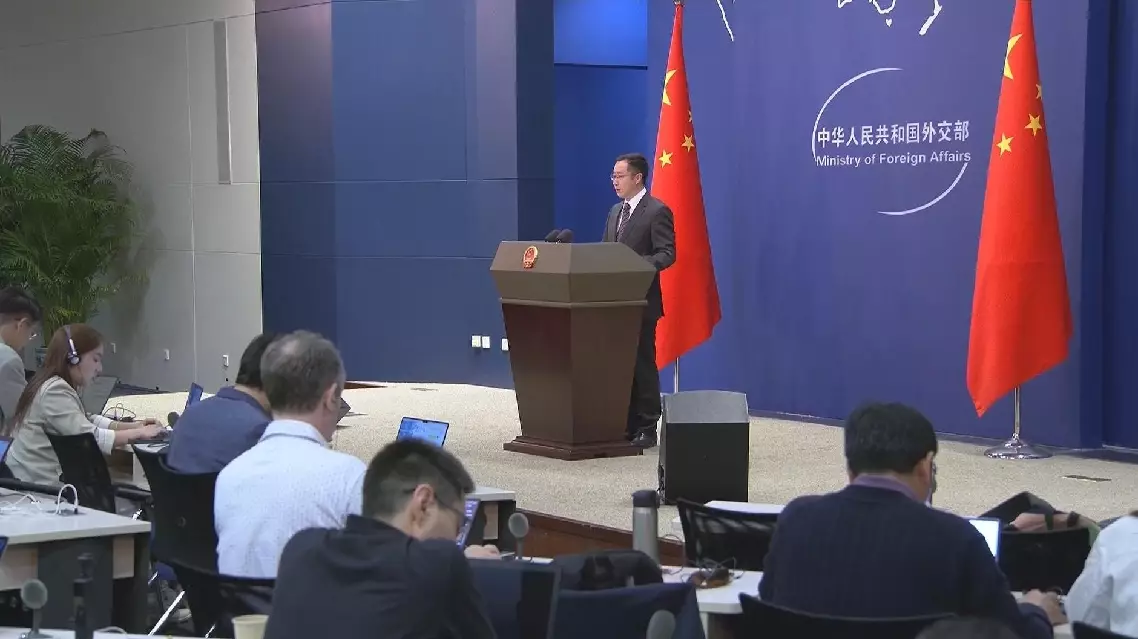
China's development has never been a "threat" to anyone but the source of growth advancing common development of all countries, Foreign Ministry spokesman Lin Jian said at a regular press conference in Beijing on Friday.
Some Western media and think tanks are peddling so-called "China Shock 2.0," saying that "China is achieving fast development in high-tech sectors such as renewable energy and AI and relies on foreign markets to absorb its overcapacity, thus reducing the market share of developed countries and sending more serious shock waves to the global economy compared with the era of traditional manufacture industry," while there are foreign commentators saying that the "China Shock 2.0" argument ignores the genuine innovation occurring within the Chinese industrial ecosystem and that Chinese export is the exact booster of the global economy that is needed in the turbulent period and more indispensable than ever.
Commenting on that, Lin said: "From the world's factory to the world's market and innovation powerhouse, China's development is achieved through strong performance driven by innovation and brings tangible cooperation opportunities and space to the world. High-quality Chinese products represented by the 'old three' of textiles, furniture and home appliances have stabilized the global industrial and supply chain, lowered the living cost of global consumers and eased the inflationary pressure worldwide. China's green production capacity represented by the 'new three' of electric vehicles, batteries and solar panels has bridged the gap between supply and demand in global green development and bolstered the global energy transition and low-carbon development. Moreover, China's high-tech products represented by the 'new new three' of robots, AI and innovative drugs have broken high-tech barriers and monopoly and enabled people in more countries to access affordable new technologies," said the spokesman.
"Openness and cooperation bring about progress and win-win result. China's development has never been a 'threat' to anyone but the source of growth advancing common development of all countries. What really creates 'shocks' to the world has never been the innovation of Chinese companies and efficiency of Chinese industrial capacity, but protectionist moves of setting up barriers, decoupling and severing industrial and supply chains. China will stay committed to high-standard opening up, defend the multilateral trading system and provide more certainty and new impetus to the world economy with its own steady development," said Lin.
China's development never a threat: FM spokesman