CHP announces one new confirmed melioidosis infection case over past week
The Centre for Health Protection (CHP) of the Department of Health today (January 3) said that one new confirmed melioidosis infection case had been recorded in the past week (December 27, 2024, to January 2, 2025).
The case involves a 72-year-old male with underlying illnesses who lives in Sham Shui Po. He developed fever and cough on December 13, 2024. He attended Caritas Medical Centre and was admitted the next day. His clinical sample was confirmed positive for Burkholderia pseudomallei upon testing.
The CHP is investigating the infection source of the case. Epidemiological investigations are ongoing.
A total of 23 melioidosis infection cases were recorded last year (2024).
A spokesman for the CHP stressed that person-to-person transmission and animal-to-human transmission are rare, but melioidosis bacteria can survive in the local environment. Melioidosis is an endemic disease in Hong Kong and melioidosis cases have been recorded in Hong Kong each year.
According to literature, infection cases are more common after typhoons or storms. The bacterium Burkholderia pseudomallei of melioidosis in soil and muddy water may become exposed to the ground after typhoons or storms, and the bacteria could spread more easily with strong winds or storms. As such, the number of melioidosis cases may increase.
With this in mind, the spokesman reminded members of the public that, where practicable, people should stay indoors during typhoons and storms, avoid travelling to areas with potential flooding, and do not wade in or have contact with muddy water and soil. In addition, high-risk individuals should avoid paths near stormwater drains where aerosols may be generated from contaminated water.
Members of the public should also take the following preventive measures against infection:
Avoid contact with contaminated soil;
Wear appropriate protective clothing or footwear when participating in activities with possible contact with soil or water, e.g. using gloves and wearing boots. High-risk individuals may also consider wearing a surgical mask;
Wash or shower after exposure to contaminated water or soil;
Always clean any wounds as soon as possible and cover any cuts or grazes with waterproof dressings;
Wash hands with liquid soap and water after handling soil or gardening;
Observe food hygiene and avoid drinking raw water; and
Travellers can contract the disease through outdoor water sports. Risk of infection can be minimised by avoiding exposure to water sources (such as rivers, ponds or lakes) that might be contaminated.
The CHP appealed to members of the public to seek medical advice if they develop symptoms, in particular people with diabetes or other immunocompromised conditions, in order to receive an appropriate medical diagnosis and treatment. For more information on melioidosis, please visit the website of the CHP atwww.chp.gov.hk/en/healthtopics/content/24/101110.html.
Seven persons arrested during anti-illegal worker operation
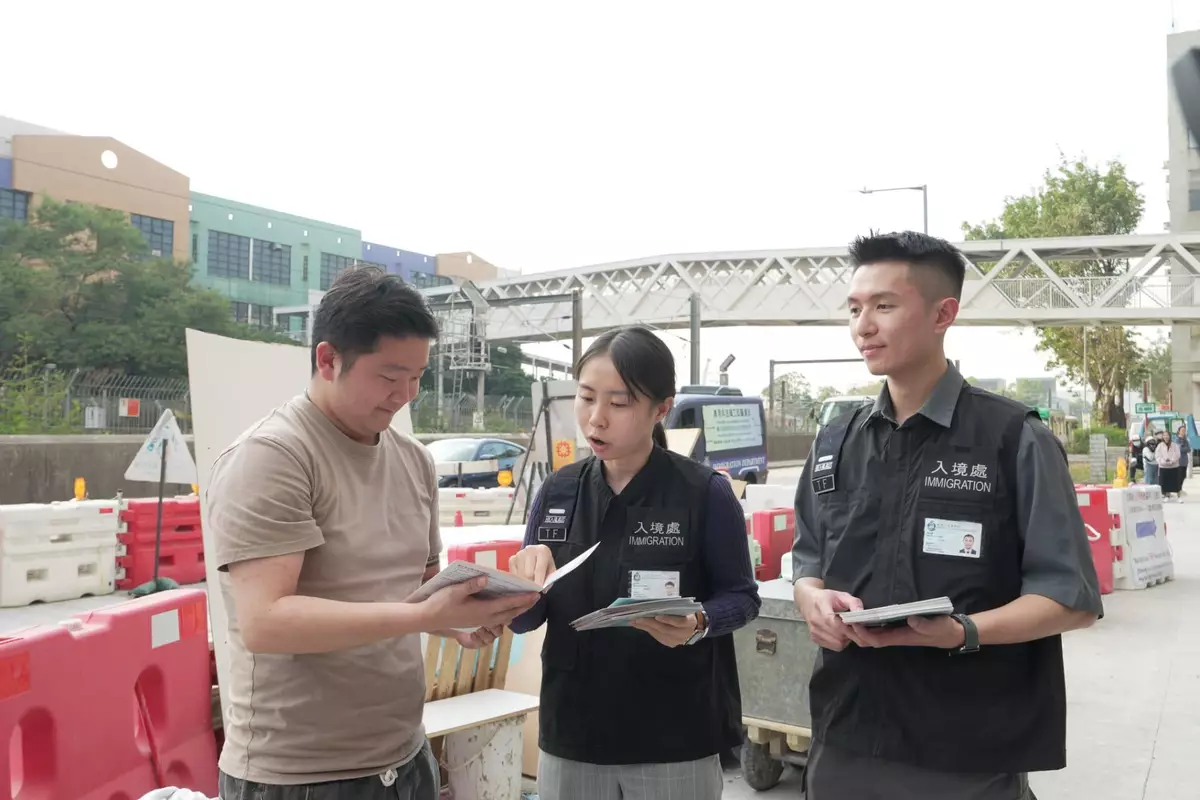
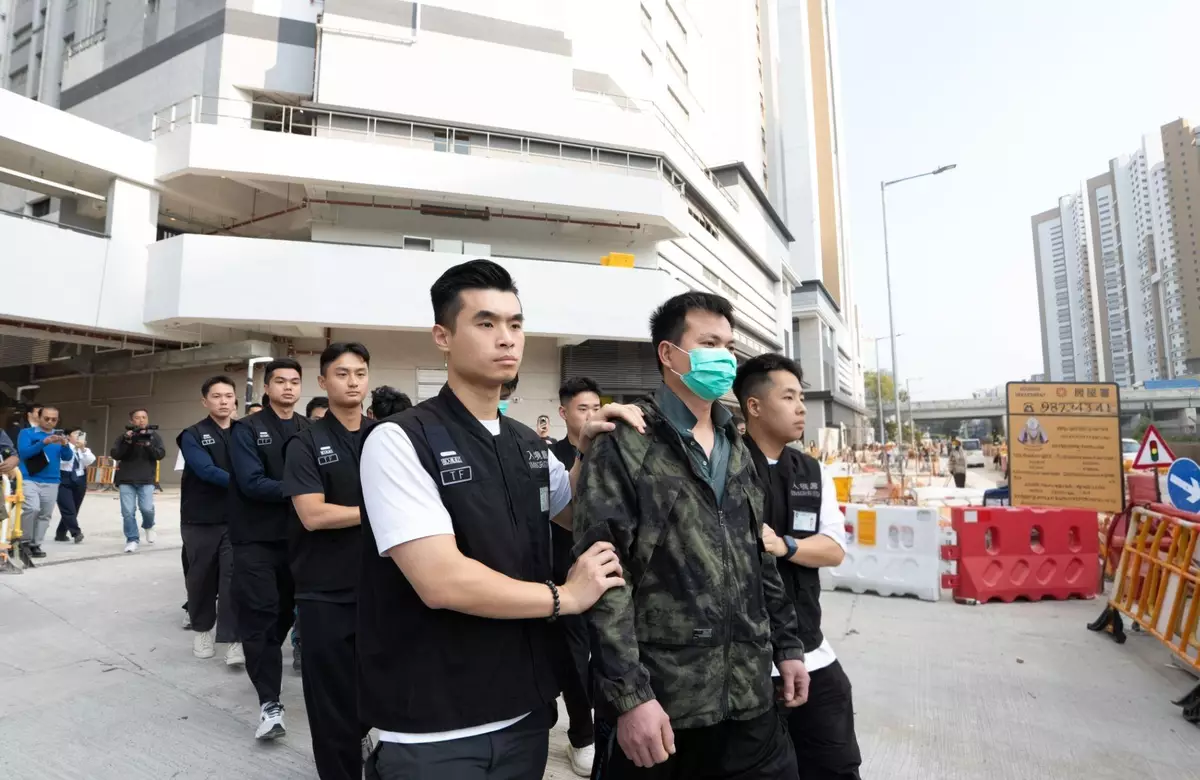
The Immigration Department (ImmD) mounted an anti-illegal worker operation codenamed "Contribute" today (January 15).During the operation, ImmD Task Force officers raided premises under renovation in a newly built public housing estate in Sheung Shui district.A total of six suspected illegal workers and one suspected employer were arrested. Thearrested suspected illegal workers comprise six men, aged 22 to 41. Furthermore, one man, aged 45, suspected of employing the illegal workers, was also arrested. An investigation into the suspected employers is ongoing, and the possibility of further arrests is not ruled out.
Apart from mounting the enforcement operation, ImmD officers and a promotional vehicle have been deployed to distribute "Don't Employ Illegal Workers" leaflets and convey the message in the estate.
An ImmD spokesman said, "Any person who contravenes a condition of stay in force in respect of him or her shall be guilty of an offence. Also, visitors are not allowed to take employment in Hong Kong, whether paid or unpaid, without the permission of the Director of Immigration. Offenders are liable to prosecution and upon conviction face a maximum fine of $50,000 and up to two years' imprisonment. Aiders and abettors are also liable to prosecution and penalties."
The spokesman stressed that it is a serious offence to employ people who are not lawfully employable. Under the Immigration Ordinance, the maximum penalty for an employer employing a person who is not lawfully employable, i.e. an illegal immigrant, a person who is the subject of a removal order or a deportation order, an overstayer or a person who was refused permission to land, has been significantly increased from a fine of $350,000 and three years' imprisonment to a fine of $500,000 and 10 years' imprisonment to reflect the gravity of such offences. The director, manager, secretary, partner, etc, of the company concerned may also bear criminal liability. The High Court has laid down sentencing guidelines that the employer of an illegal worker should be given an immediate custodial sentence.
According to the court sentencing, employers must take all practicable steps to determine whether a person is lawfully employable prior to employment. Apart from inspecting a prospective employee's identity card, the employer has the explicit duty to make enquiries regarding the person and ensure that the answers would not cast any reasonable doubt concerning the lawful employability of the person. The court will not accept failure to do so as a defence in proceedings. It is also an offence if an employer fails to inspect the job seeker's valid travel document if the job seeker does not have a Hong Kong permanent identity card. Offenders are liable upon conviction to a maximum fine of $150,000 and to imprisonment for one year. In that connection, the spokesman would like to remind all employers not to defy the law by employing illegal workers. The ImmD will continue to take resolute enforcement action to combat such offences.
Under the existing mechanism, the ImmD will, as a standard procedure, conduct an initial screening of vulnerable persons, including illegal workers, illegal immigrants, sex workers and foreign domestic helpers, who are arrested during any operation with a view to ascertaining whether they are trafficking in persons (TIP) and/or forced labour victims. When any TIP and/or forced labour indicator is revealed in the initial screening, the ImmD officers will conduct a full debriefing and identification by using a standardised checklist to ascertain the presence of TIP and/or forced labour elements. Identified TIP and/or forced labour victims will be provided with various forms of support and assistance, including urgent intervention, medical services, counselling, shelter or temporary accommodation and other supporting services. The ImmD calls on TIP and/or forced labour victims to report crimes to the relevant departments immediately.
For reporting illegal employment activities, please call the dedicated hotline 3861 5000, by fax at 2824 1166, email to anti_crime@immd.gov.hk, or submit "Online Reporting of Immigration Offences" form at www.immd.gov.hk.
Seven persons arrested during anti-illegal worker operation Source: HKSAR Government Press Releases
Seven persons arrested during anti-illegal worker operation Source: HKSAR Government Press Releases