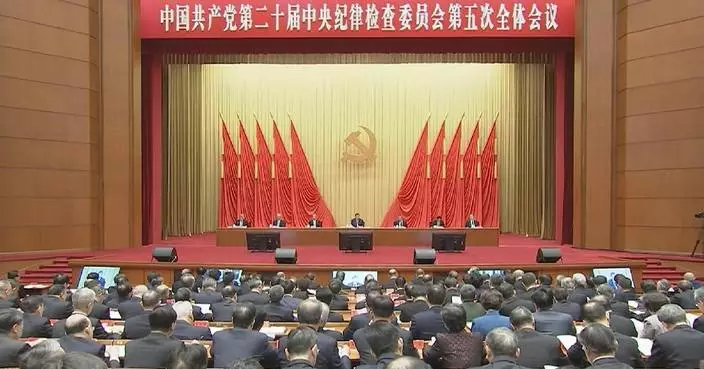
China has allocated 81 billion yuan (about 11.04 billion U.S. dollars) in subsidies for the country's trade-in promotion for 2025, said an official from the Ministry of Finance in Beijing on Wednesday. Fu Jinling, director of the Department of Economic Construction at the Chinese Ministry of Finance, said the ministry has expanded its subsidy program to cover a wider range of sectors and has also raised the funding standards for areas with significant financial needs and high public interest
"For instance, we will expand the support for equipment restoration to more fields like electronic information, production safety, and facility agriculture. We will expand the categories of home appliance products eligible for trade-in subsidies from eight to 12, and introduce new subsidies for purchasing new digital products such as mobile phones. We also raised the standards for subsidies for new energy public buses and power battery renewals, with the average subsidy per bus increased from 60,000 yuan (about 8,183.53 U.S. dollars) to 80,000 yuan (over 10,900 U.S. dollars)," said Fu.
By the end of 2024, China's central government had exhausted its 150 billion yuan (approximately $20.45 billion USD) allocation for trade-in consumption.
The Ministry of Finance also allocated another 150 billion yuan (about 20.45 billion U.S. dollars) for large-scale equipment restoration to local governments across the country, with the use clearly defined for specific projects.
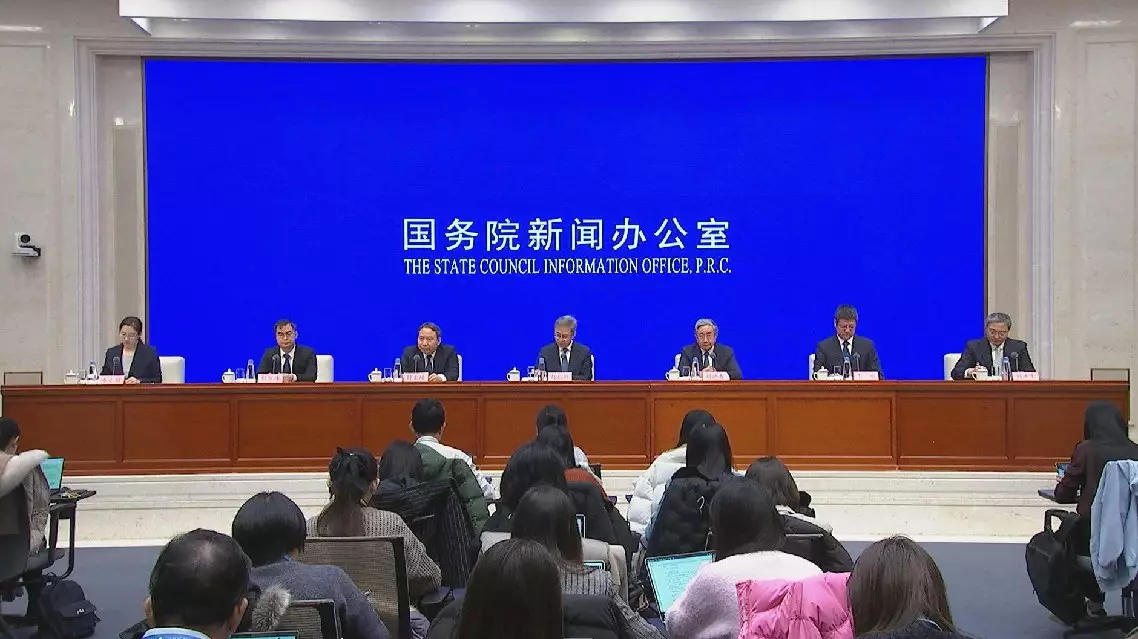
China allocates 81 bln yuan for 2025 trade-in subsidies
Yemen's temporary capital Aden is showing resilience and stability in economy, with market operations and public services running smoothly despite a recent escalation in the region's volatile military and political situation.
Currently, various essential supplies, including grain, oil, food and everyday items, are consistently available on the markets.
Public services such as water, electricity and communications are also functioning normally, and shops in multiple commercial districts remain open.
"We went out to buy household items today. The prices were the same. There was no rise in prices," said Mohamed Naguib, a resident.
The current market stability is attributed to the efficient functioning of the transportation and logistics systems, as well as the government's ongoing efforts to enhance market oversight and regulate prices, which have helped reduce market volatility, according to analysts.
"Although there are some rumors about rising tensions, the overall situation in Aden remains stable. The industry and commerce department has continued to monitor the market and rigorously control prices to prevent increases in commodity and food costs," said Amjad Al-Husseini, director of the Aden Governor's Office.
The city's monetary circulation system has also largely maintained balance, with the exchange rate of the local currency against major foreign currencies remaining relatively stable.
Aden has long been a flashpoint in the country's civil war, which erupted in 2014 when Houthi forces seized much of the north, prompting a Saudi-led military intervention in the following year. Tensions in the south have persisted despite repeated power-sharing deals.
The tensions further escalated last month after the United Arab Emirates-backed Southern Transitional Council (STC) seized large swathes of Yemen's oil-rich Hadramout province and the eastern province of Al-Mahrah. Riyadh considers these areas as a "red line" due to their proximity to the Saudi border and their concentration of Yemen's remaining energy reserves.
Last week, airstrikes and ground operations by the Saudi-led coalition forced the STC forces to withdraw from the two provinces.
Formed in 2017, the STC seeks autonomy and eventual independence for southern Yemen. Although it joined the Saudi-led coalition and became part of the Yemen's Presidential Leadership Council in 2022, the group's push for southern self-rule has continued to fuel disputes over power-sharing and control of territory and resources.
Economy, market remain stable in Yemen's Aden despite escalating violence