Nearly a decade ago, intense protests over racial injustice rocked the University of Missouri’s flagship campus, leading to the resignation of two top administrators. The university then hired its first-ever vice chancellor for inclusion, diversity and equity. Tensions were so high that football players were threatening a boycott and a graduate student went on hunger strike.
Today, the entire diversity office is gone, an example of changes sweeping universities in states led by conservatives, and a possible harbinger of things to come nationwide.
Click to Gallery
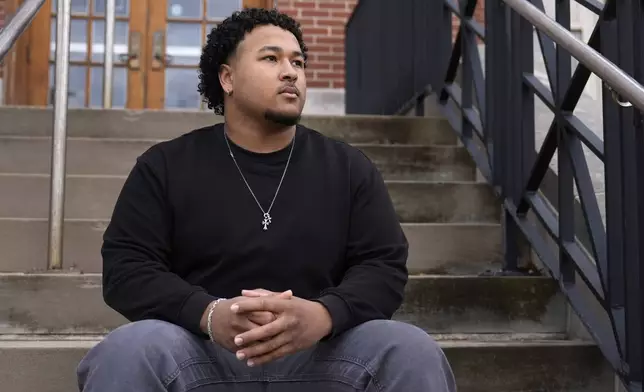
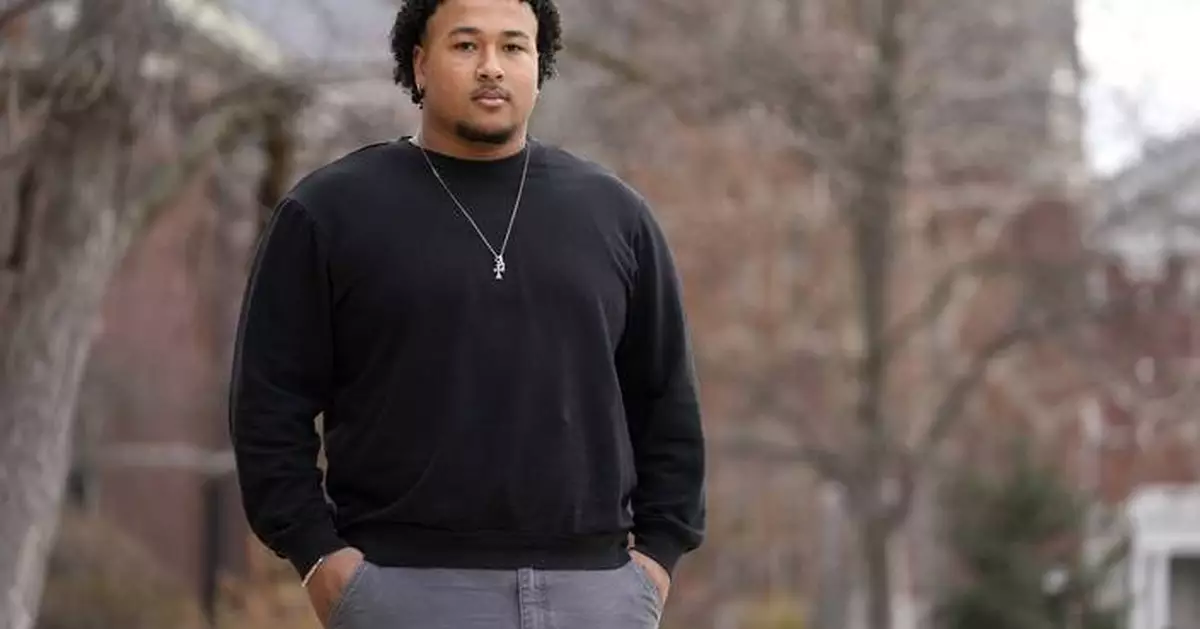
Student Kenny Douglas poses for a photo at the University of Missouri where he is a a history and Black studies major, Wednesday, Dec. 18, 2024, in Columbia, Mo. (AP Photo/Jeff Roberson)
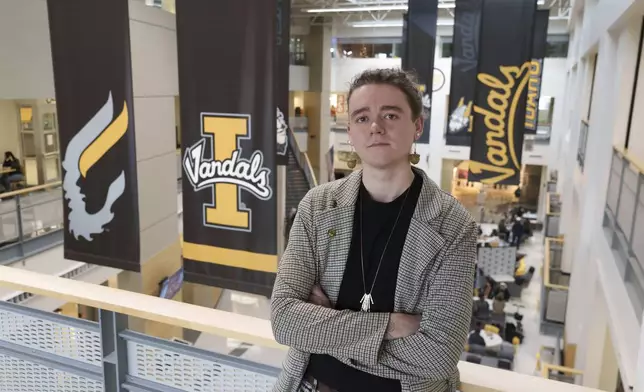
Nick Koenig, a University of Idaho doctoral student who teaches in climate change and sociology, poses for a photo on Thursday, Dec. 12, 2024, on campus in Moscow, Idaho. (AP Photo/Ted S. Warren)
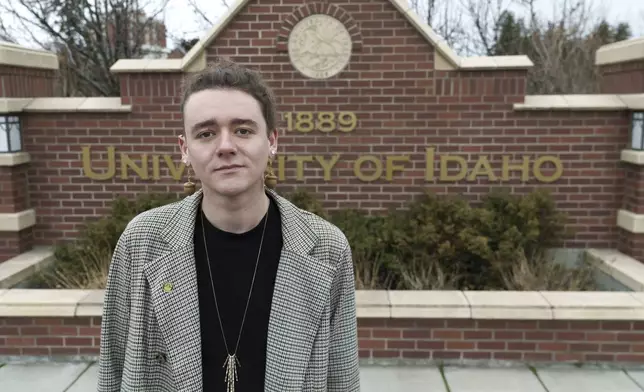
Nick Koenig, a University of Idaho doctoral student who teaches in climate change and sociology, poses for a photo on Thursday, Dec. 12, 2024, on campus in Moscow, Idaho. (AP Photo/Ted S. Warren)
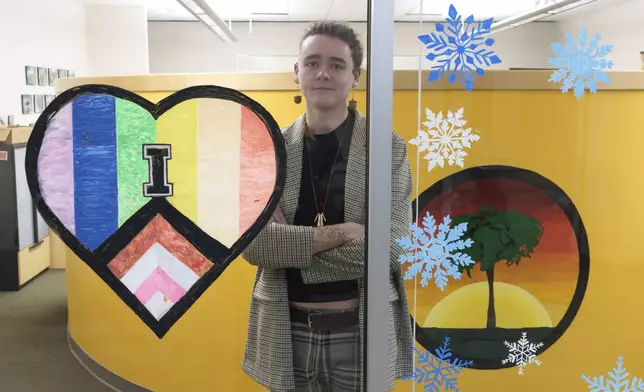
Nick Koenig, a University of Idaho doctoral student who teaches in climate change and sociology, poses for a photo on Thursday, Dec. 12, 2024, inside the Student Diversity Center on campus in Moscow, Idaho. (AP Photo/Ted S. Warren)
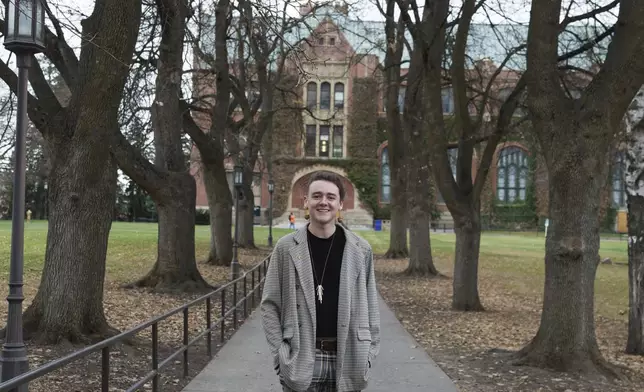
Nick Koenig, a University of Idaho doctoral student who teaches in climate change and sociology, poses for a photo on Thursday, Dec. 12, 2024, on campus in Moscow, Idaho. (AP Photo/Ted S. Warren)

Nick Koenig, a University of Idaho doctoral student who teaches in climate change and sociology, sorts canned goods as he volunteers on Thursday, Dec. 12, 2024 for the West Side Food Pantry near the University of Idaho campus in Moscow, Idaho. (AP Photo/Ted S. Warren)
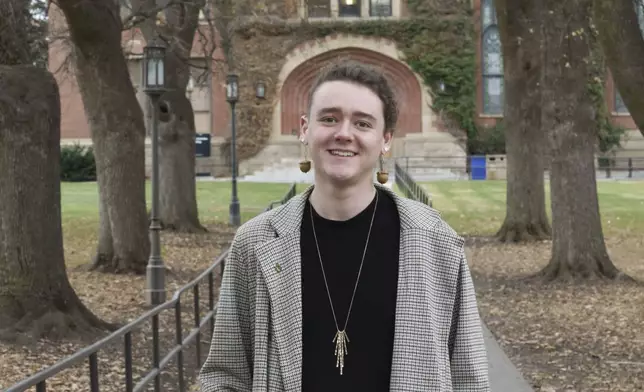
Nick Koenig, a University of Idaho doctoral student who teaches in climate change and sociology, poses for a photo on Thursday, Dec. 12, 2024, on campus in Moscow, Idaho. (AP Photo/Ted S. Warren)
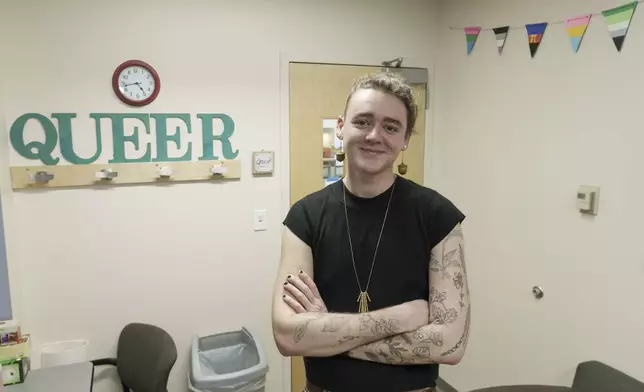
Nick Koenig, a University of Idaho doctoral student who teaches in climate change and sociology, poses for a photo on Thursday, Dec. 12, 2024, in the student lounge area of the LGBTQA office on campus in Moscow, Idaho. (AP Photo/Ted S. Warren)
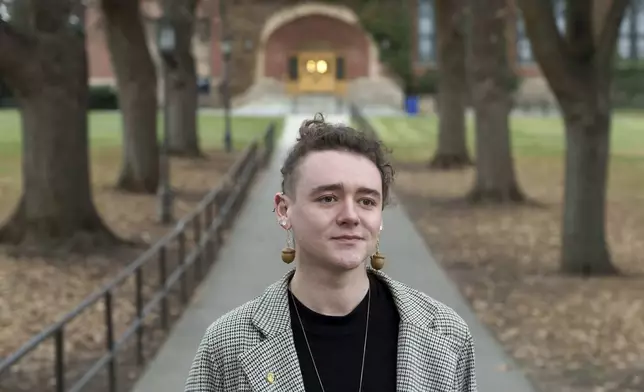
Nick Koenig, a University of Idaho doctoral student who teaches in climate change and sociology, poses for a photo on Thursday, Dec. 12, 2024, on campus in Moscow, Idaho. (AP Photo/Ted S. Warren)
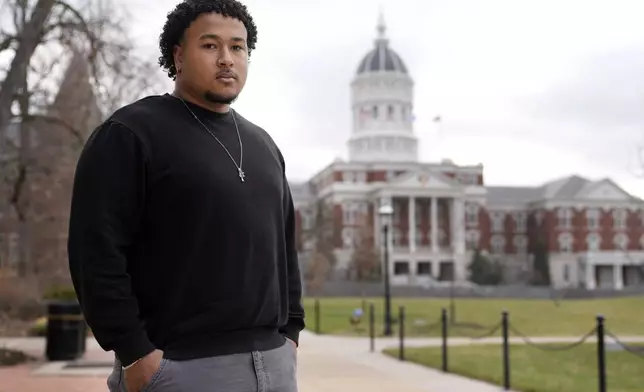
Student Kenny Douglas poses for a photo at the University of Missouri where he is a a history and Black studies major, Wednesday, Dec. 18, 2024, in Columbia, Mo. (AP Photo/Jeff Roberson)
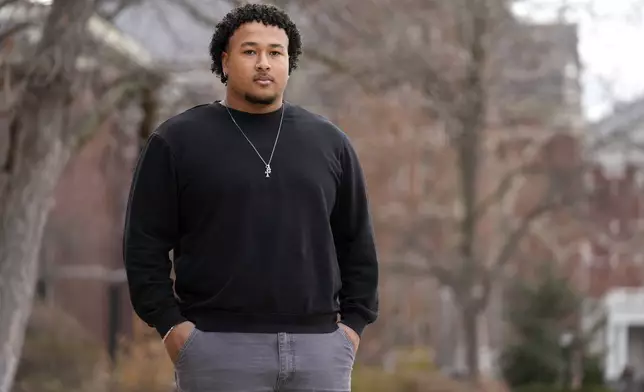
Student Kenny Douglas poses for a photo at the University of Missouri where he is a a history and Black studies major, Wednesday, Dec. 18, 2024, in Columbia, Mo. (AP Photo/Jeff Roberson)
“I feel like that is the future, especially for the next four years of Trump’s presidency,” said Kenny Douglas, a history and Black studies major on the campus in Columbia, Missouri.
As President-elect Donald Trump prepares to take office, both conservative and liberal politicians say higher education changes in red parts of America could be a road map for the rest of the country.
Dozens of diversity, equity and inclusion programs have already closed in states including Alabama, Florida, Kentucky, North Carolina, Iowa, Nebraska and Texas. In some cases, lessons about racial and gender identity have been phased out. Supports and resources for underrepresented students have disappeared. Some students say changes in campus climate have led them to consider dropping out.
During his campaign, Trump vowed to end “wokeness” and “leftist indoctrination” in education. He pledged to dismantle diversity programs that he says amount to discrimination, and to impose fines on colleges "up to the entire amount of their endowment.”
Many conservatives have taken a similar view. Erec Smith, a research fellow at the free-market Cato Institute whose scholarship examines anti-racist activism and Black conservatism, said DEI sends the message that “whiteness is oppression." Diversity efforts are "thoroughly robbing Black people and other minorities of a sense of agency," he said.
The New College of Florida, a tiny liberal arts institution once known as the most progressive of Florida’s public campuses and a refuge for LGBTQ+ students, became a centerpiece for Republican Gov. Ron DeSantis’ “war on woke.” DeSantis overhauled the school’s Board of Trustees in 2023, appointing a new majority of conservative allies, including culture war strategist Christopher Rufo.
Many faculty departed last year, leaving vacancies that the new leadership has filled with a variety of conservative academics — and non-academics, including British comedian and conservative commentator Andrew Doyle, who will be teaching a new course this January called “The Woke Movement.”
“This is only the beginning,” Rufo wrote in the forward to school President Richard Corcoran’s new book, “Storming the Ivory Tower.”
Trump’s opponents dismiss his depictions of liberal indoctrination on campuses as a fiction. But conservatives point to diversity programs and the student debt crisis as evidence colleges are out of touch.
“What happens if you are an institution that’s trying to change society?” asked Adam Kissel, a new trustee of the University of West Florida and a fellow at the conservative Heritage Foundation — the group behind Project 2025, a sweeping anti-DEI blueprint for a new GOP administration that Trump has disavowed while nominating some of its authors for administrative roles. “Society will push back on you.”
Pushback is exactly what DEI programs have faced.
Alabama Gov. Kay Ivey, a Republican, in March signed into law a bill barring state funding for public colleges that advocate for “divisive concepts” including that someone should feel guilty because of their race or gender. The law also states people at schools and colleges must use the bathroom that matches their gender assigned at birth.
The effects of the anti-DEI law rippled through campuses including the University of Alabama and Auburn University, the state’s two largest four-year colleges. DEI offices and designated areas for LGBTQ+ and Black students closed when classes started in late August — just before the law took effect.
Dakota Grimes, a graduate student in chemistry, was disappointed when Auburn University closed the campus’ Pride Center, a designated safe space for LGBTQ+ people and allies. Grimes' organization, Sexuality and Gender Alliance, still meets regularly in the library, she said, but LGBTQ+ students don’t feel as welcome on campus. Students are subjected to homophobic and transphobic slurs, Grimes said.
“They don’t feel safe just sitting in the student center because of the kind of environment that a lot of students and even teachers create on campus,” Grimes said.
Julia Dominguez, a political science senior at the University of Alabama and president of the Hispanic-Latino Association, said funding for the group’s annual Hispanic Heritage Month festival was pulled two weeks before the event in September. Students who were once excited about being at a school that celebrates Latino culture, she said, are now feeling dejected and disillusioned.
The organization isn’t giving up, Dominguez said.
“We are still present,” Dominguez said. “We are still doing the work. It’s just harder now. But we’re not going to allow that to steal our joy because joy is resistance.”
In Idaho, DEI programs have been under attack for years, with Republican lawmakers blasting efforts to build an inclusive culture as "divisive and exclusionary." In recent sessions, the Legislature has blocked colleges and universities from using taxpayer dollars on campus DEI programs. A 2024 law banned written “diversity statements” in higher education hiring and student admissions.
In December, the State Board of Education scrapped DEI offices, causing shockwaves at the University of Idaho. Doctoral student Nick Koenig is considering leaving the state.
“Where do your true values lie?” asked Koenig, who decided to move to Idaho to research climate change after a Zoom call with the then-director of the school’s LGBT center. “It’s not with the students that are most marginalized.”
So far, nearly all of the threats to DEI have come from state legislatures, said Jeremy Young, of the free-expression group PEN America.
“There hasn’t been much support at the federal level to do anything," he said. "Now, of course, that’s going to change.”
Young anticipates that diversity considerations will be eliminated for research grants and possibly for accreditation. The Education Department's Office for Civil Rights typically investigates discrimination against people of color, but under Trump, that office could start investigating diversity programs that conservatives argue are discriminatory.
Republicans also may have more leeway to take action at the state level, thanks to an administration that's “going to get out of the way of red states and let them pursue these policies," said Preston Cooper, a senior fellow who studies higher education policy at the American Enterprise Institute.
Colleges are also cutting some programs or majors seen as unprofitable. Whether politics plays into decisions to eliminate certain courses of student remains to be seen.
Douglas, the University of Missouri student, is concerned. He said the promise of change that followed the earlier protests on the Columbia campus has dissipated.
This fall, a student group he is part of had to rename its Welcome Black BBQ because the university wanted it to be “welcoming to all.” The Legion of Black Collegians, which started in 1968 after students waved a Confederate flag at a football game, complained the change was erasing its visibility on campus.
For Douglas and many others, the struggle for civil rights that prompted diversity efforts isn’t a thing of the past. “White people might have moved past it, but Black people are still experiencing it,” he said.
Hollingsworth reported from Kansas City, Missouri; Gecker from San Francisco; Richert from Boise, Idaho; Morris from Tuscaloosa, Alabama. AP Education Writer Alia Wong contributed from Washington.
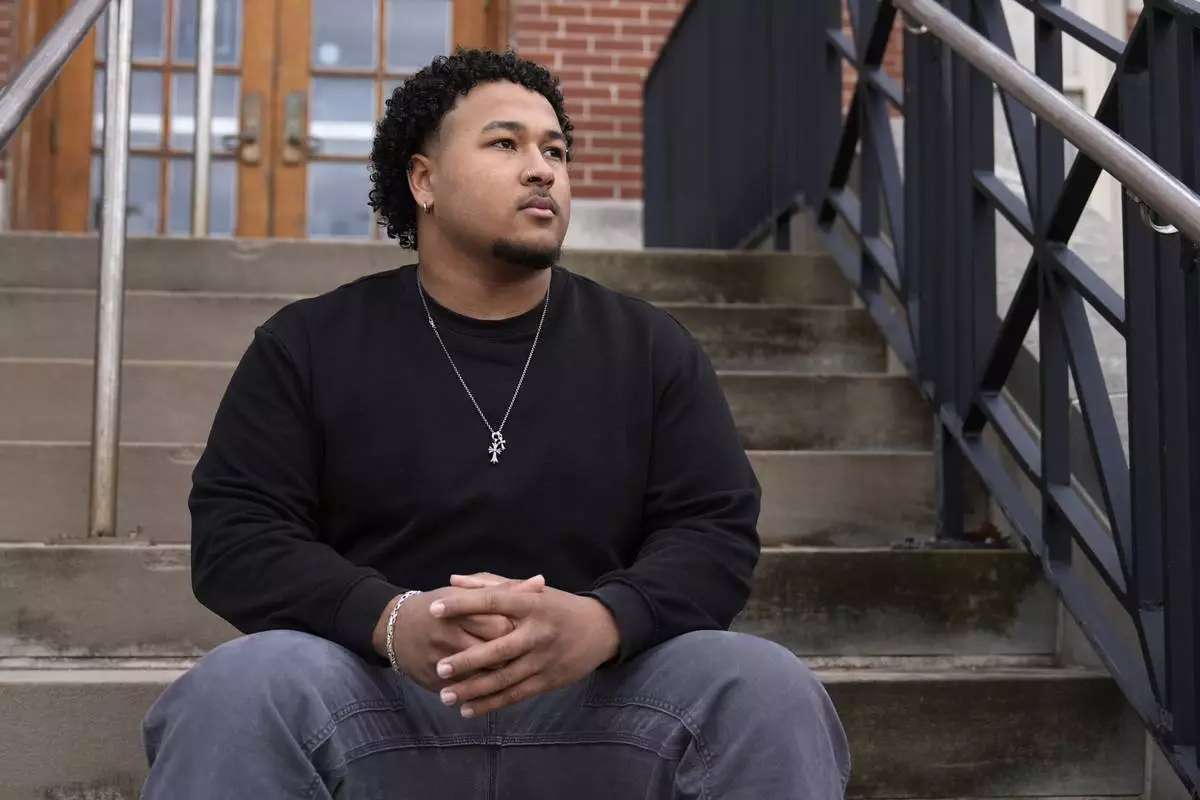
Student Kenny Douglas poses for a photo at the University of Missouri where he is a a history and Black studies major, Wednesday, Dec. 18, 2024, in Columbia, Mo. (AP Photo/Jeff Roberson)
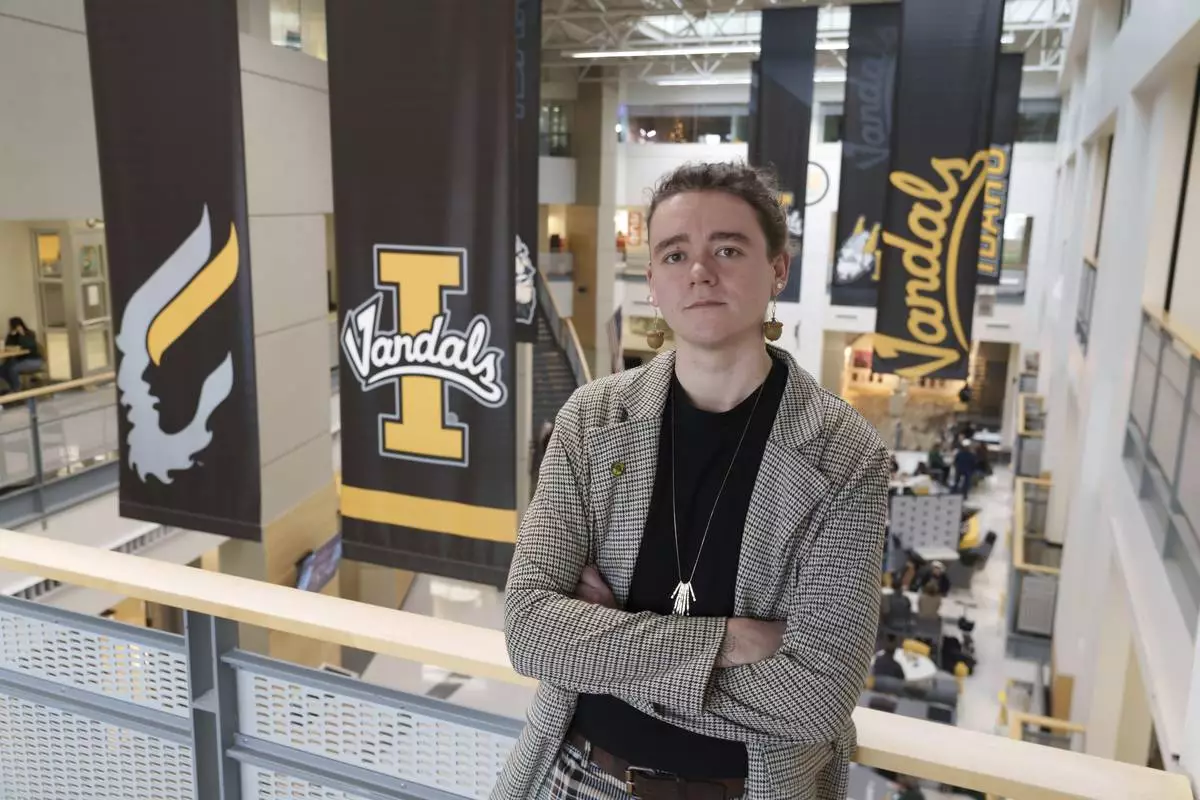
Nick Koenig, a University of Idaho doctoral student who teaches in climate change and sociology, poses for a photo on Thursday, Dec. 12, 2024, on campus in Moscow, Idaho. (AP Photo/Ted S. Warren)
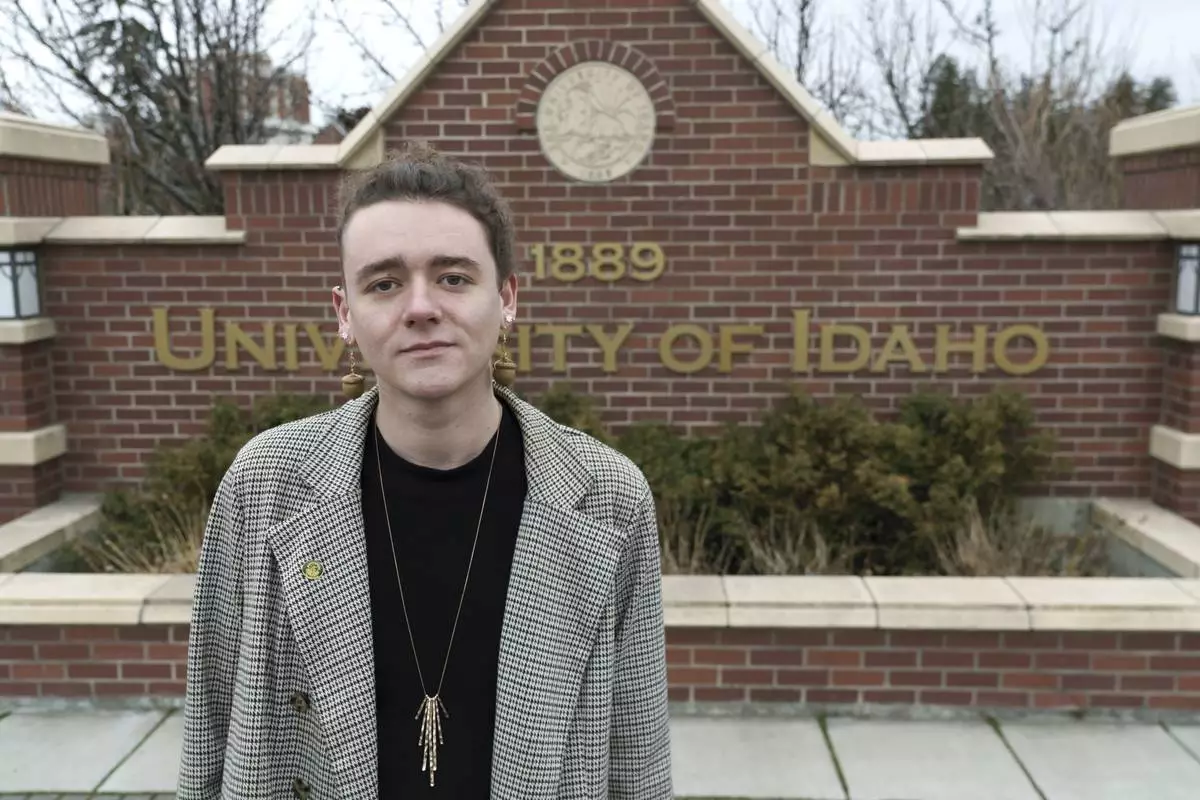
Nick Koenig, a University of Idaho doctoral student who teaches in climate change and sociology, poses for a photo on Thursday, Dec. 12, 2024, on campus in Moscow, Idaho. (AP Photo/Ted S. Warren)
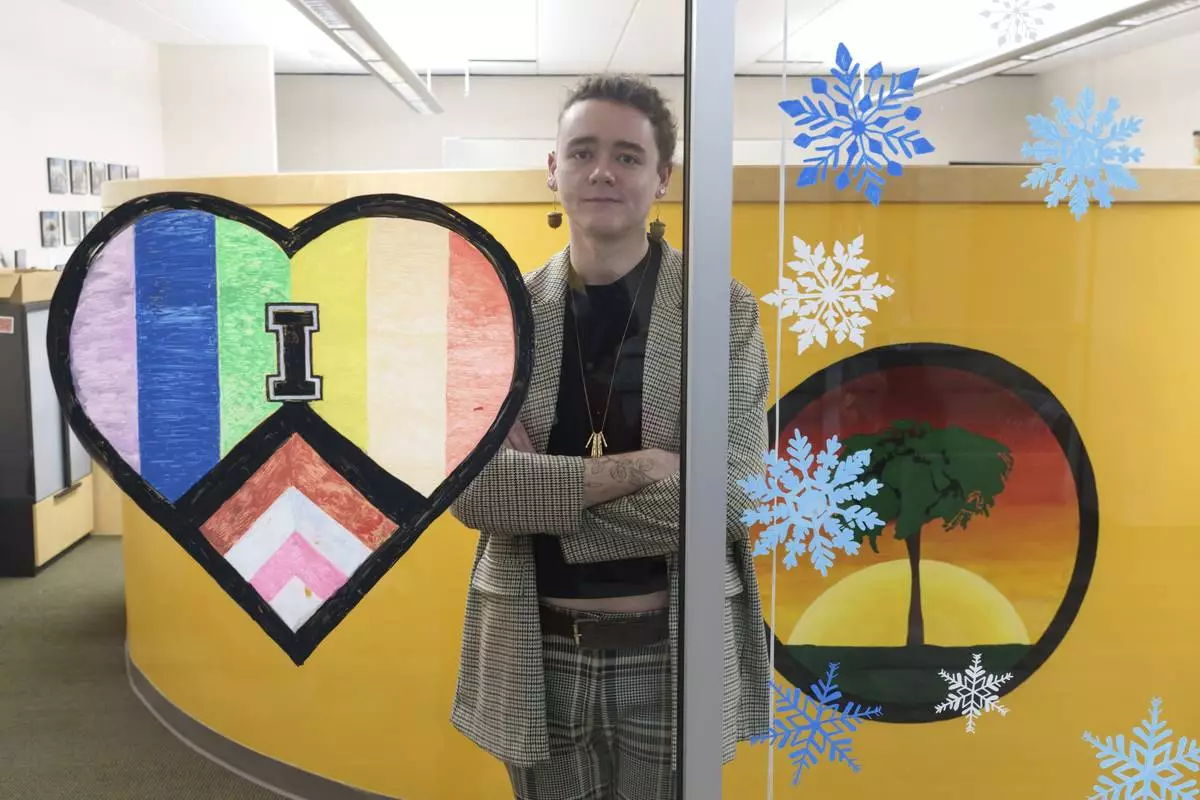
Nick Koenig, a University of Idaho doctoral student who teaches in climate change and sociology, poses for a photo on Thursday, Dec. 12, 2024, inside the Student Diversity Center on campus in Moscow, Idaho. (AP Photo/Ted S. Warren)
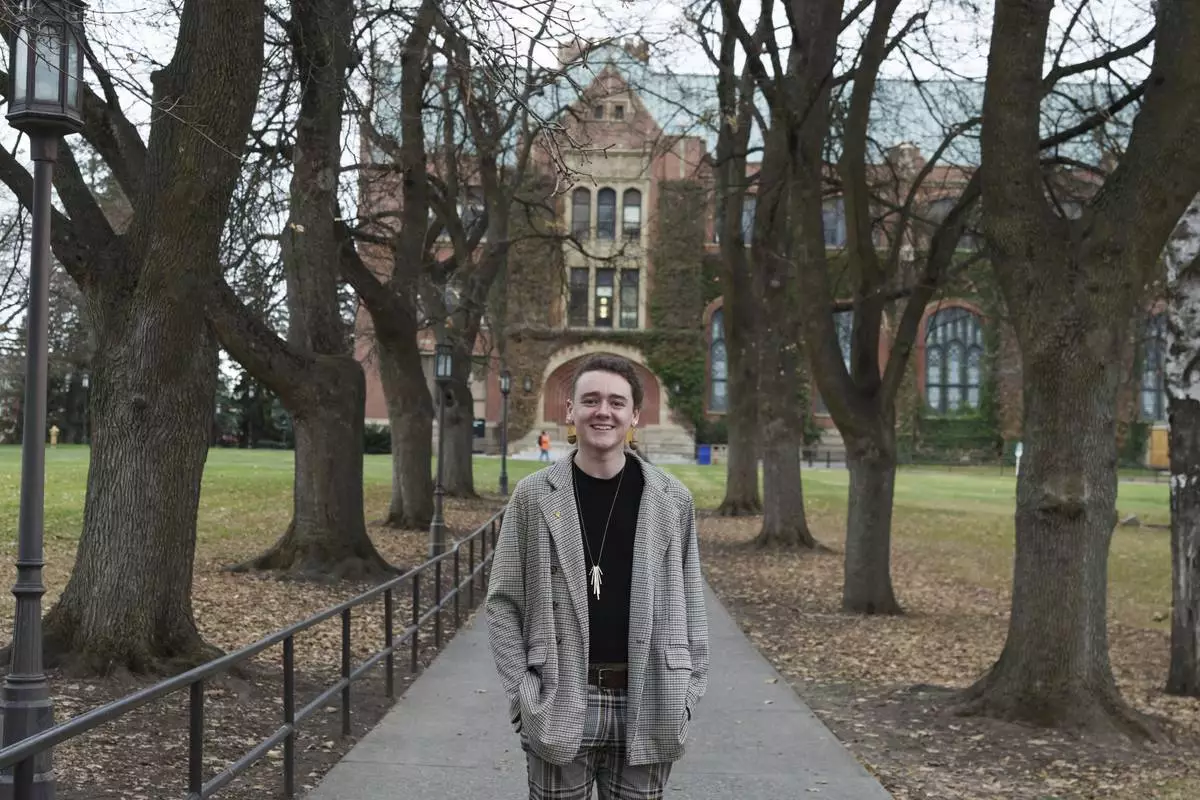
Nick Koenig, a University of Idaho doctoral student who teaches in climate change and sociology, poses for a photo on Thursday, Dec. 12, 2024, on campus in Moscow, Idaho. (AP Photo/Ted S. Warren)

Nick Koenig, a University of Idaho doctoral student who teaches in climate change and sociology, sorts canned goods as he volunteers on Thursday, Dec. 12, 2024 for the West Side Food Pantry near the University of Idaho campus in Moscow, Idaho. (AP Photo/Ted S. Warren)
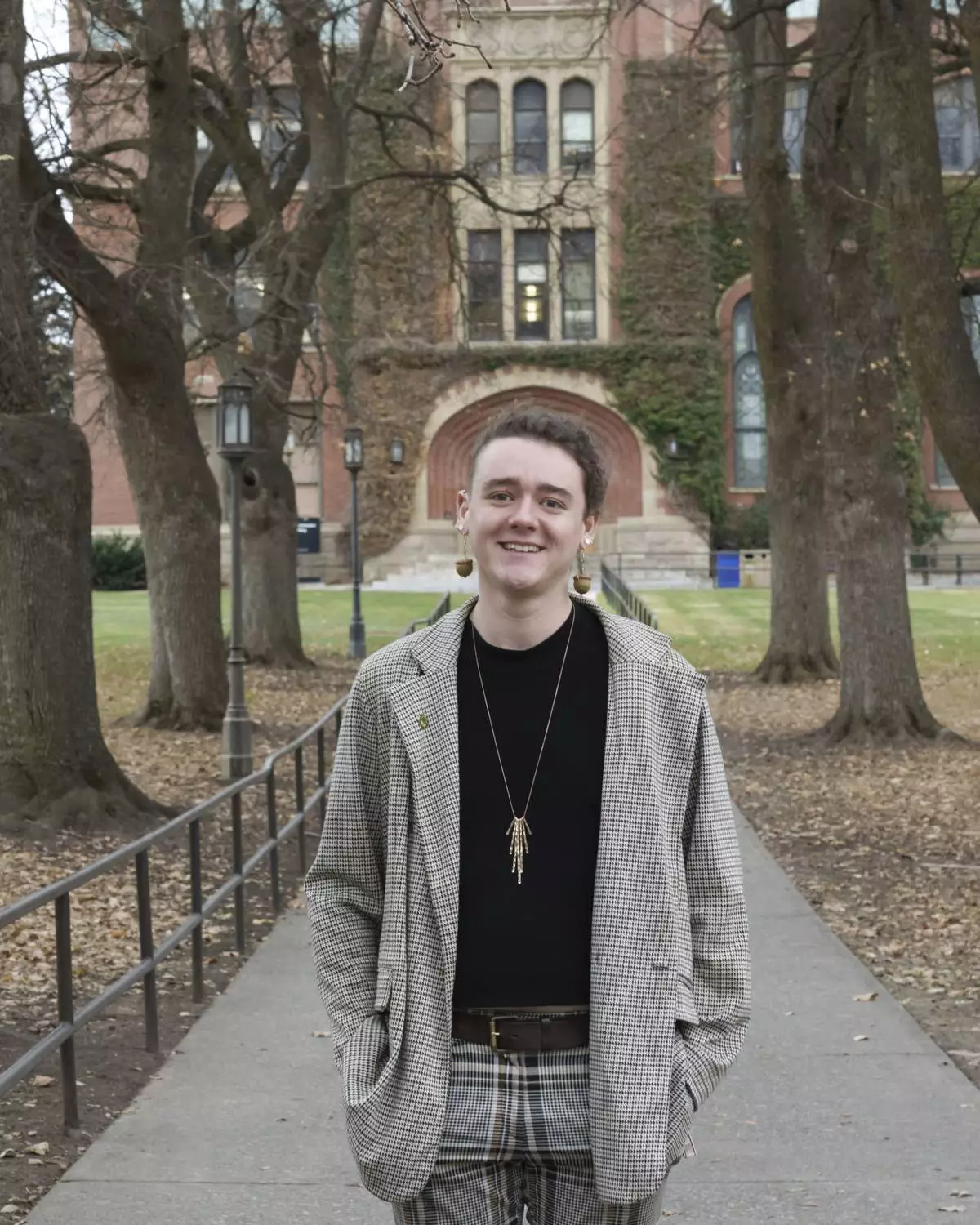
Nick Koenig, a University of Idaho doctoral student who teaches in climate change and sociology, poses for a photo on Thursday, Dec. 12, 2024, on campus in Moscow, Idaho. (AP Photo/Ted S. Warren)
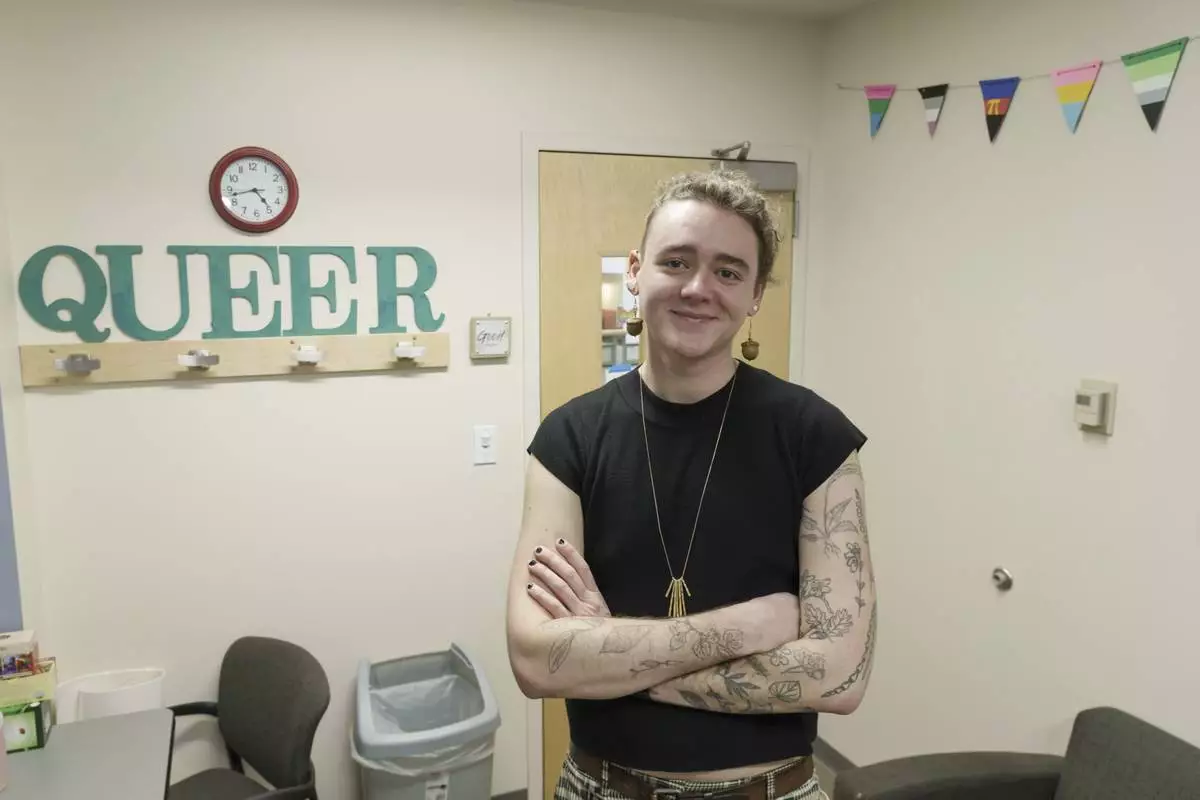
Nick Koenig, a University of Idaho doctoral student who teaches in climate change and sociology, poses for a photo on Thursday, Dec. 12, 2024, in the student lounge area of the LGBTQA office on campus in Moscow, Idaho. (AP Photo/Ted S. Warren)
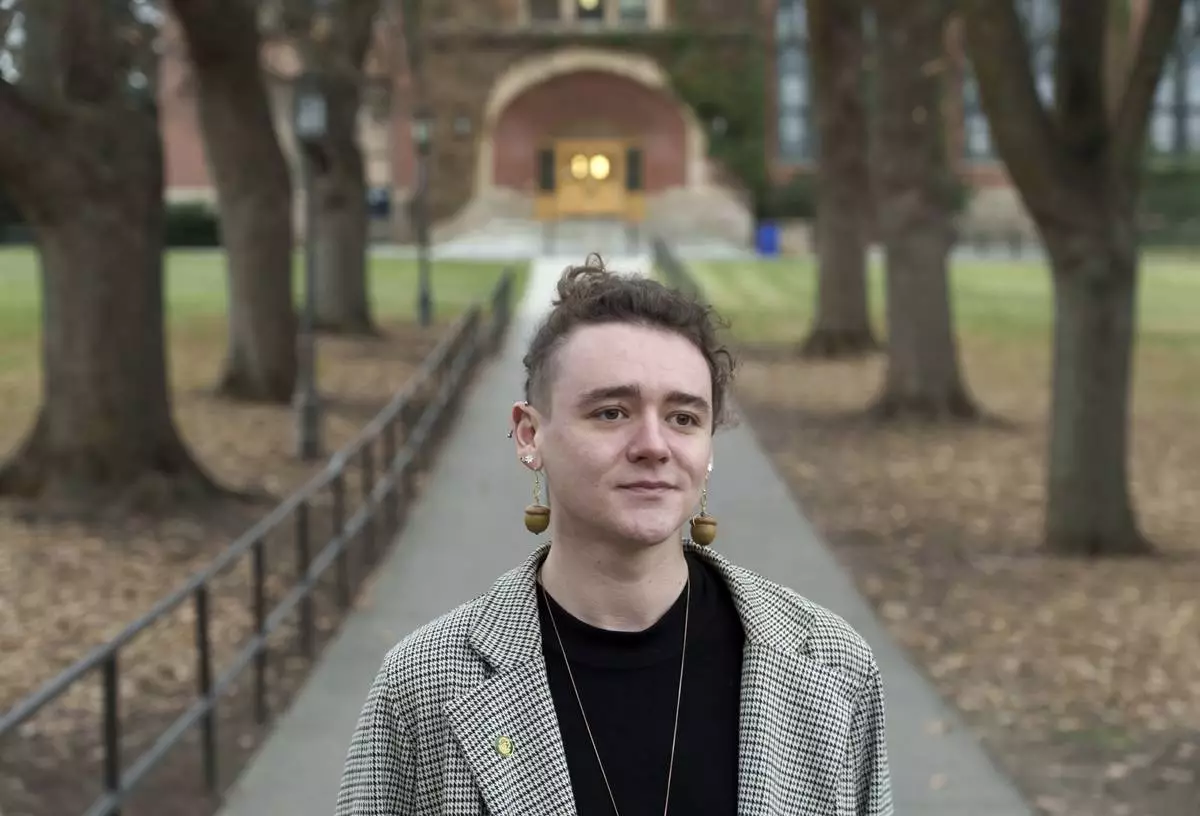
Nick Koenig, a University of Idaho doctoral student who teaches in climate change and sociology, poses for a photo on Thursday, Dec. 12, 2024, on campus in Moscow, Idaho. (AP Photo/Ted S. Warren)
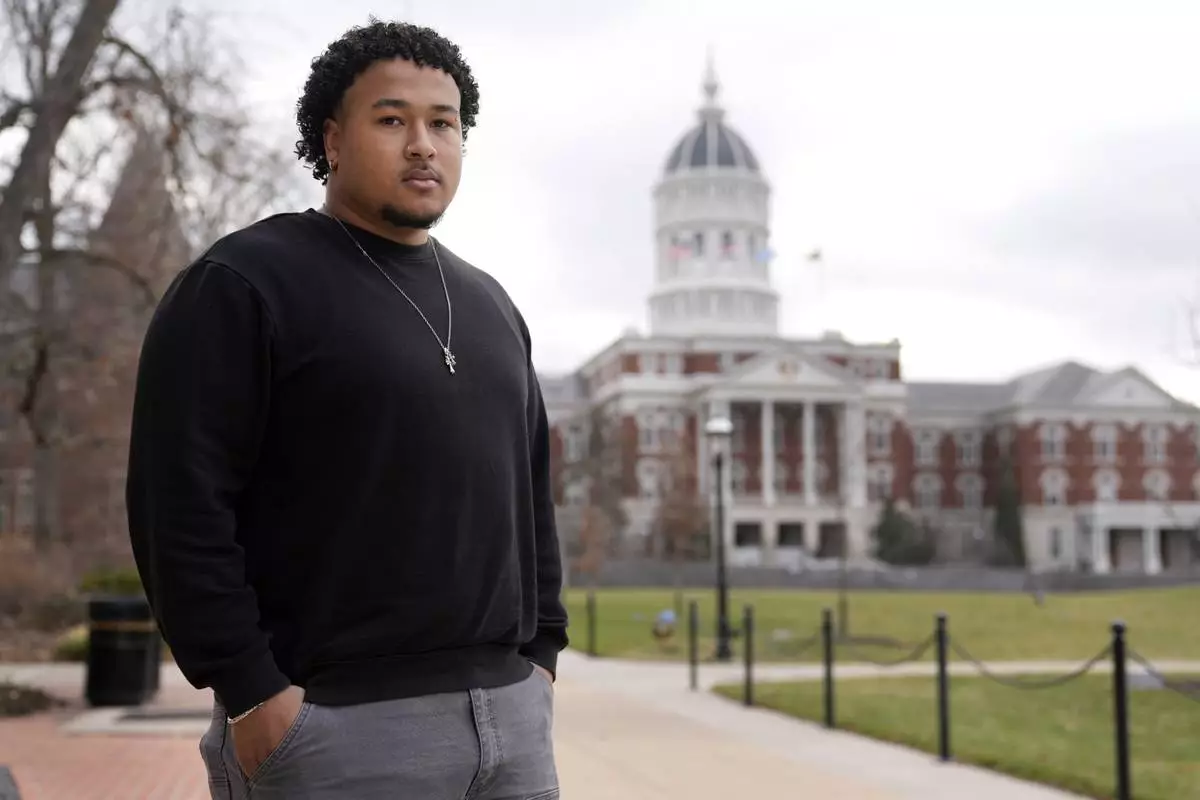
Student Kenny Douglas poses for a photo at the University of Missouri where he is a a history and Black studies major, Wednesday, Dec. 18, 2024, in Columbia, Mo. (AP Photo/Jeff Roberson)
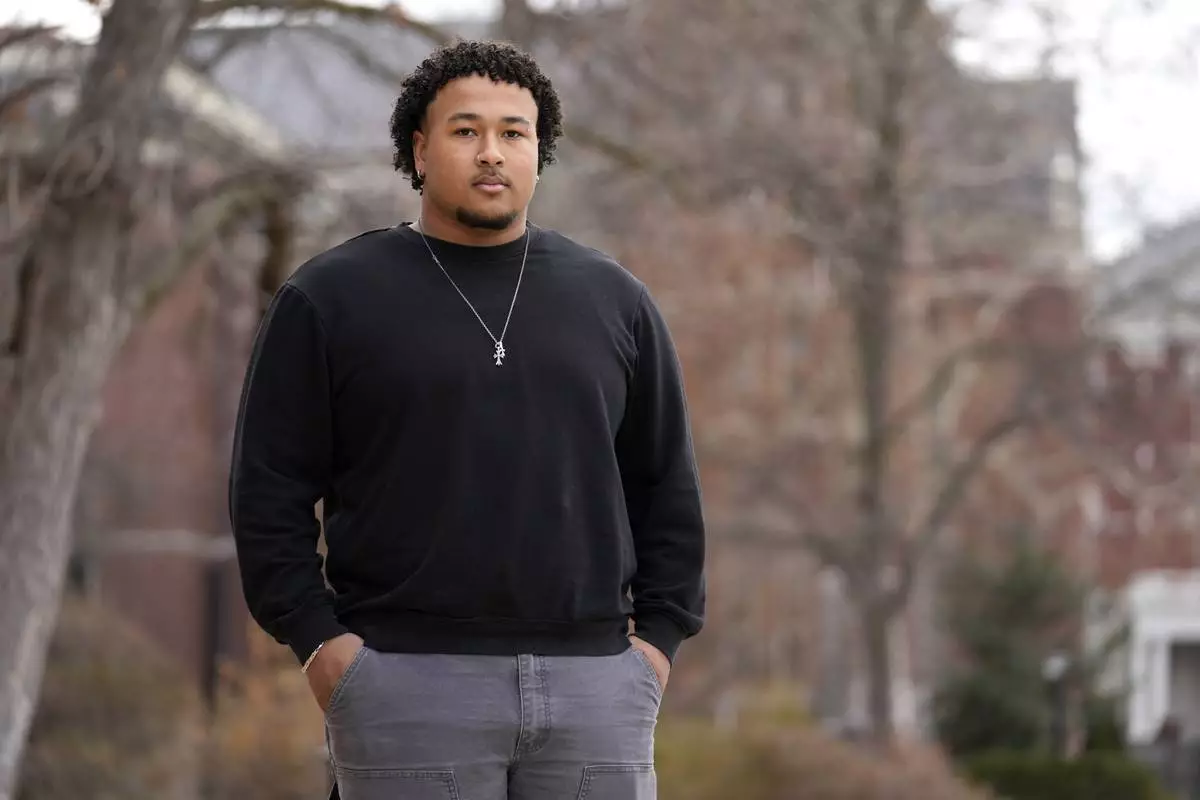
Student Kenny Douglas poses for a photo at the University of Missouri where he is a a history and Black studies major, Wednesday, Dec. 18, 2024, in Columbia, Mo. (AP Photo/Jeff Roberson)