Sales revenue of enterprises across China surged in the fourth quarter of 2024, fueled by the implementation of favorable policies, according to data released by the State Taxation Administration (STA) on Thursday.
In the manufacturing sector, sales revenue grew by 3.8 percent year on year in the fourth quarter. Notably, the equipment manufacturing sector saw a significant increase, with the sales revenue rising by 8.3 percent year on year.
Emerging industries continued their rapid expansion in the last quarter of 2024, with the sales revenue in high-tech industries maintaining a double-digit growth to increase by 10.6 percent year on year.
Within this sector, high-tech services and high-tech manufacturing saw year-on-year growth of 11.1 percent and 10 percent respectively.
In the fourth quarter, eco-environmental services showed steady growth, with the sales revenue from green technology promotion services, including new energy, energy conservation, and environmental protection, growing by 21.2 percent, 21.8 percent, and 16.3 percent year on year respectively.
Meanwhile, equipment upgrades gained momentum thanks to the implementation of relevant policies.
In the fourth quarter, the value of mechanical equipment purchased by enterprises nationwide increased by 7.5 percent year on year, a 2.2 percentage point rise compared with the third quarter.
Along with the promotion of implementing major national strategies and building security capacity in key areas, the sales revenue of the civil engineering and construction industry, an indicator of infrastructure investment, grew significantly in the fourth quarter.
In December, the sales revenue of the civil engineering and construction sector registered a year-on-year growth of seven percent.
The development of a unified national market progressed smoothly in the fourth quarter, with sales revenue from inter-provincial trade growing by 3.3 percent year on year.
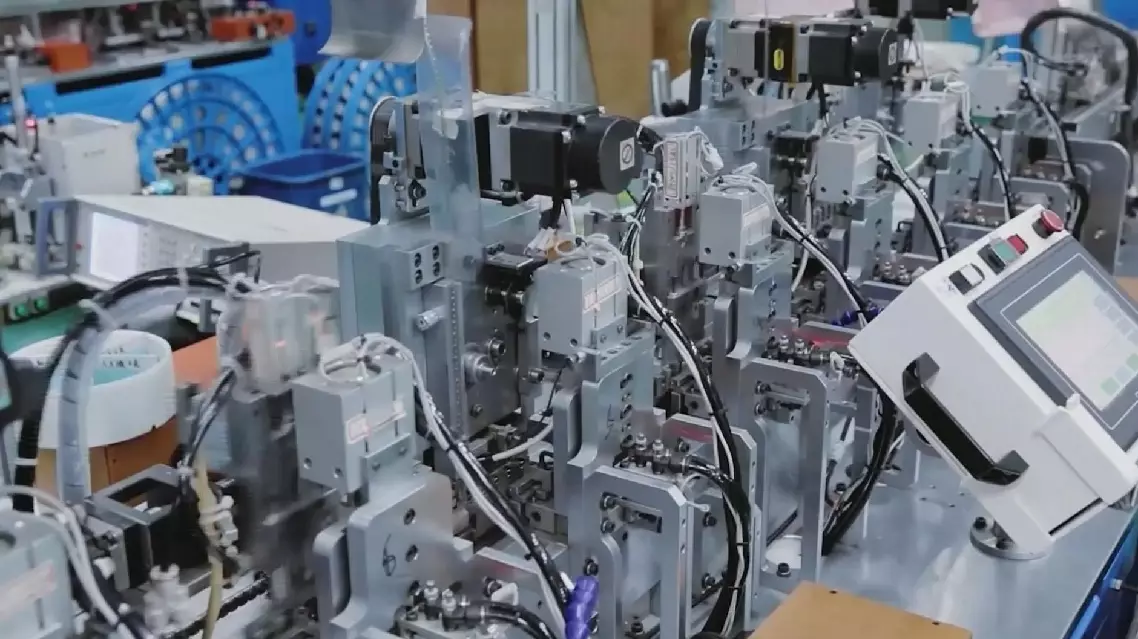
Sales revenue of enterprises across China surges in Q4, fueled by favorable policies
Voting for the second phase of Myanmar's multi-party democratic general election concluded on Sunday afternoon.
Voting began at 06:00 local time on Sunday. At 16:00, an election official at a polling station in Yangon's Latha township announced the closure of the polling station.
Following the closure, election staff at the polling station, in the presence of domestic and international media, candidates, and observers, counted the votes, including advance votes, for seats in the Pyithu Hluttaw (Lower House), Amyotha Hluttaw (Upper House), and State and Region Hluttaws (State and Region Parliaments).
The second phase of the election was held in 100 townships across 12 of the 14 regions and states. In the Yangon region, it was held in 16 townships, including the townships of Latha, Bahan, Kyimyindaing and Kawhmu.
"We welcome the election, which is expected to bring new changes to the country," said a Yangon resident.
"I hope the parties can lead us and make it a better country, which is why I support the election," said another voter.
Myanmar's multi-party democratic general election is being held in three phases, with the first phase held in 102 townships on Dec 28 last year, and the third phase scheduled for Jan 25 this year in 63 townships.
"The parliament is scheduled to convene in March. Following the conclusion of the session, the new government will officially take office in April. We hope that more foreign investment will flow into Myanmar, enabling the public to enjoy the opportunities generated by the country's economic development more fully," said Zaw Min Tun, leader of the Information Team of Myanmar's National Defense and Security Council.
The Union Election Commission (UEC) said that about 5,000 candidates from 57 political parties are competing in the three phases of the election, adding that it plans to set up over 21,000 polling stations across the country for all three phases of the general election.
The election will produce the elected members of the Union Parliament (Pyithu Hluttaw and Amyotha Hluttaw) and State and Region Parliaments; the new Union Parliament will then elect a new president, who will form a new Union Government.

Voting for 2nd phase of Myanmar's general election concludes