Skip to Content Facebook Feature Image

China launches construction of attosecond laser infrastructure to glimpse ultrafast world

China

China

China

China launches construction of attosecond laser infrastructure to glimpse ultrafast world

2025-01-11 05:05 Last Updated At:06:37

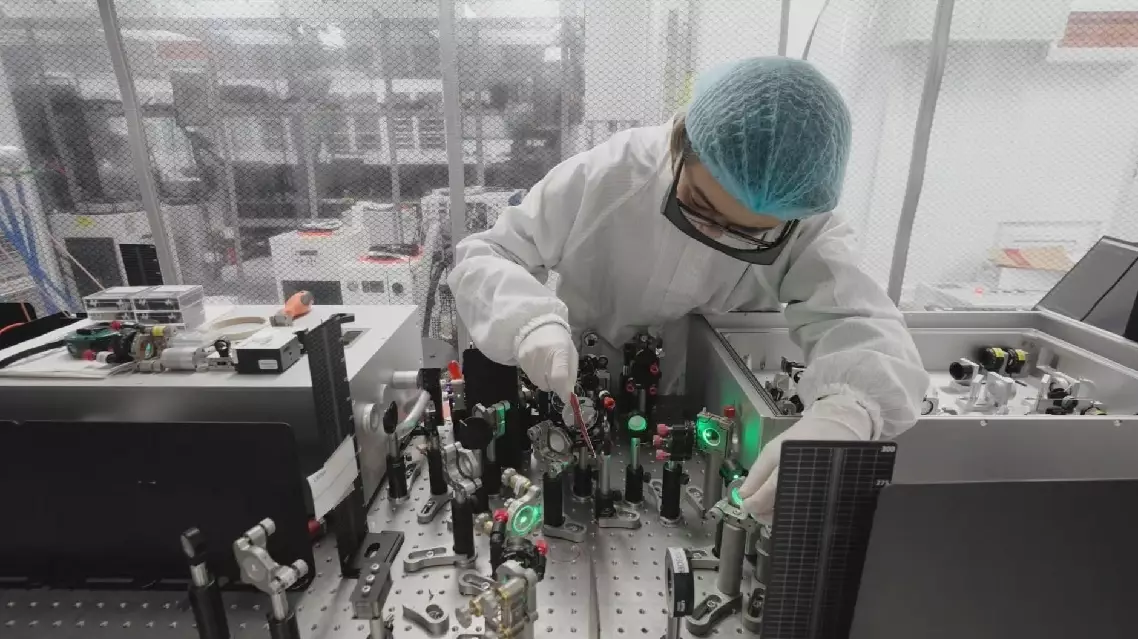
China has launched the construction of a key scientific infrastructure to generate attosecond laser, which will help scientists "see" the ultrafast particles in the microscopic world and facilitate cutting-edge research and high-tech industries.

The Advanced Attosecond Laser Infrastructure (AALI), including facilities in Dongguan in south China's Guangdong Province and Xi'an in northwest China's Shaanxi Province, is constructed by the Chinese Academy of Sciences (CAS).

The AALI project is planned to set up 10 beamlines covering wavelengths in extreme ultraviolet, soft X-ray and terahertz radiation, along with 22 research terminals, forming a comprehensive attosecond science facility in the next five years, according to the Institute of Physics (IOP) of CAS.

One attosecond is one-quintillionth of a second, or 0.000000000000000001 seconds. In one second, light can circle the Earth's equator seven and a half times. However, in one attosecond, the distance light travels is only on the scale of an atom, physicists explained.

Within atoms and molecules, electrons zip around at extreme speeds. Capturing their to-and-fro is only possible with pulses of light that are extremely short. Attosecond laser is akin to a camera flash that lasts billions of billions of times briefer than a second. When viewed in such short flashes, the incessant buzzing of electrons becomes sluggish.

The development of attosecond laser pulses has opened the door to the world of electrons, allowing physicists to investigate a wide range of electron behaviors. Scientists are expected to discover more novel phenomena at the attosecond scale, advancing both fundamental and applied sciences.

The 2023 Nobel Prize in physics was shared by three physicists for their pioneering work in developing the ability to illuminate this realm with ultrashort pulses of light.

"The facility will have 10 attosecond beamlines, six of which will be in Dongguan and four in Xi'an. Dongguan already houses several large-scale scientific facilities that can work in synergy, allowing for comprehensive studies and a deeper understanding of physical imagery from both spatial and experimental perspectives. Xi'an, with its robust technological infrastructure and strategic arrangements, plays a crucial role in major scientific initiatives in the western region. With many universities, Xi'an boasts strong research capabilities. Therefore, this strategic layout, carefully designed by experts, is expected to deliver highly effective results," said Wei Xueyi, a researcher with the Institute of Physics (IOP) of CAS and chief scientist of AALI.

According to the project's blueprint, the facility will offer state-of-the-art capabilities for ultrafast electronic dynamics research with attosecond time resolution and high spatial-temporal coherence.

Upon completion, it will offer novel technological means to address significant fundamental scientific issues in physics, chemistry, materials science, information technology and biomedicine.

"The civil engineering phase will take around two years. Afterward, we will begin installing femtosecond lasers, followed by the attosecond lasers and experimental terminals. We aim to complete the project within the planned five-year timeframe," said Zhao Kun, a researcher with IOP and chief engineer of the Dongguan part of AALI.
China launches construction of attosecond laser infrastructure to glimpse ultrafast world
China launches construction of attosecond laser infrastructure to glimpse ultrafast world
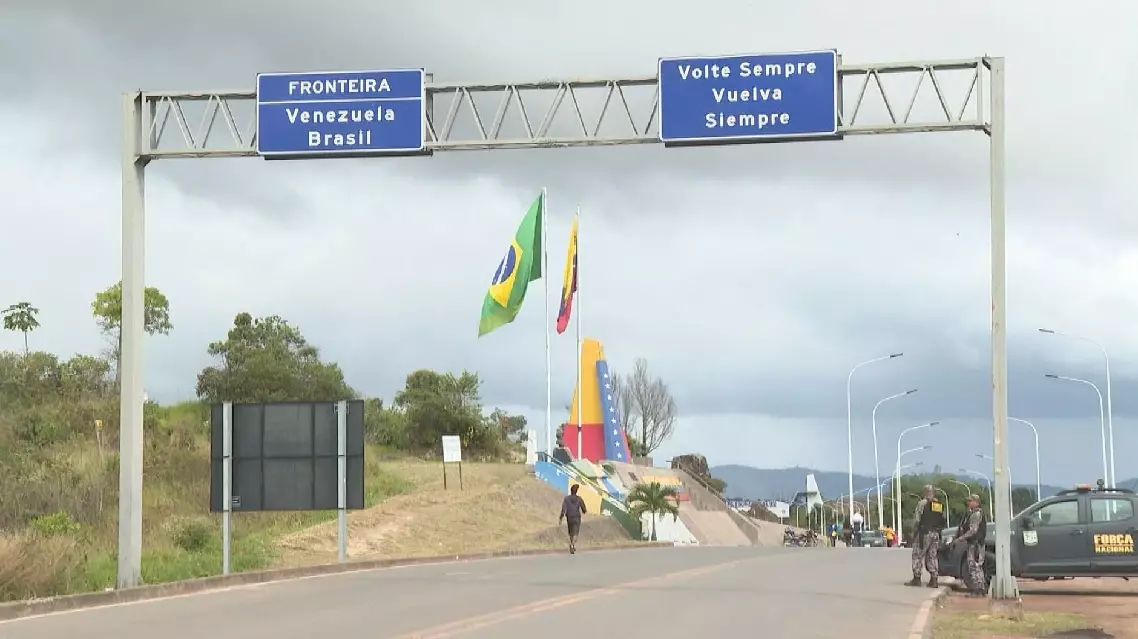
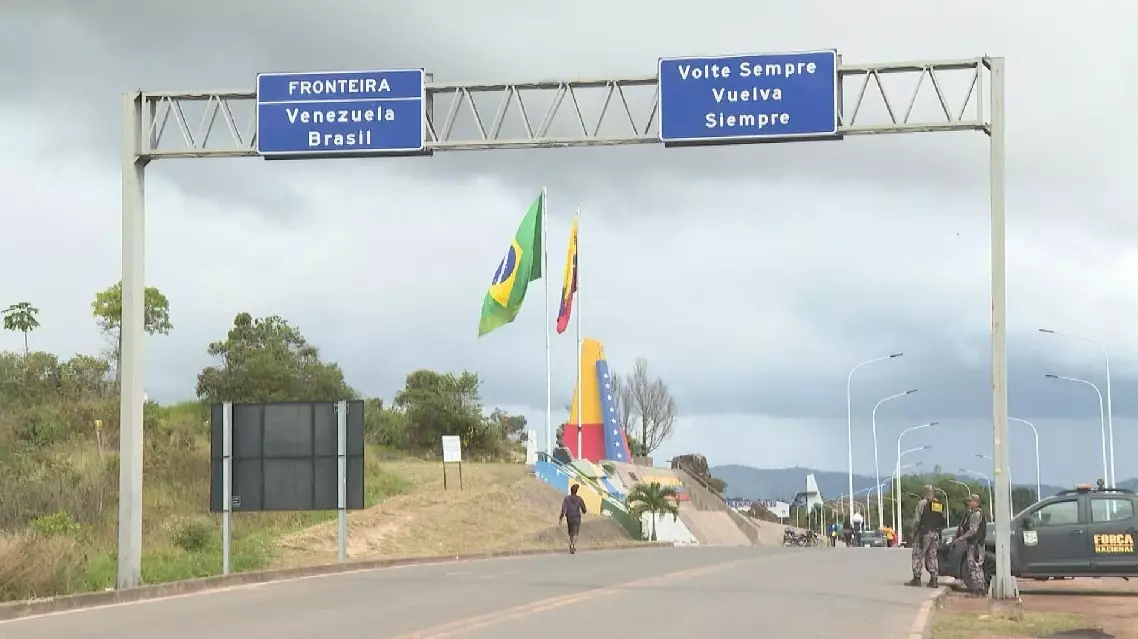
Thousands of Venezuelan migrants have crossed into Brazil following U.S. military strikes in Caracas and other cities earlier this month, local officials said.

On Jan. 3, the U.S. government carried out military attacks on Caracas and other localities in Venezuela, forcibly taking away the presidential couple, resulting in 100 fatalities, according to the official tally.

Over the first 20 days in January, more than 5,000 Venezuelans have crossed into Brazil, according to local government data, as thousands seek safety and better opportunities amid ongoing crises at home.

Since the past decade, about 1.4 million Venezuelans have migrated to Brazil, with more than 70 percent entering through Roraima, whose northern border city of Pacaraima serves as a major gateway for migrants seeking better living conditions. Most arrivals are family units like parents with children or siblings, rarely traveling alone.

"I came with my three family members, they are my nephews. My brother has been in Brazil for a year, and he invited me here to get financially stable, which is what we're really looking for," said a Venezuelan migrant.

"I come from Zaraza, in the state of Guarico, Venezuela, after a journey of approximately two days and one night by bus. We have decided to migrate to a brotherly country like Brazil to pursue a better quality of life," said Jimmy Carapa, another Venezuelan migrant.

Antonio Denarium, the governor of Roraima, said the state has a border of over 2,000 kilometers, making it the second longest border state in Brazil. Following the U.S. military action against Venezuela, the state has been closely monitoring the situation to ensure security.

"Following recent military actions, we have reinforced our security forces on the border with Venezuela, including the military police, the civil police and the public security secretariat. Measures including identity recognition, facial recognition and license plate recognition have been carried out through the surveillance system. Everything at the border will be reported to the federal government, the Ministry of Defense and the president in a timely manner," said Denarium.

In 2018, the Brazilian government launched Operacao Acolhida (Operation Welcome), a humanitarian initiative to assist Venezuelan migrants at the border.

The operation provides registration assistance, CPF (Cadastro de Pessoa Fisica/Individual Tax Payer Registry) numbers, free vaccinations, temporary shelter and food aid.

"Previously, we were receiving around 300 to 350 people per day. Now, that number has dropped slightly to about 200, but we expect it to rise as normalcy returns. The Operation Welcome program is prepared for any increase in migrant flows," said Cintia Miranda, a coordinator of social protection and emergencies at the Ministry of Development and Social Assistance, Family and Fight against Hunger.

Thousands of Venezuelan migrants cross into Brazil after US strikes

Thousands of Venezuelan migrants cross into Brazil after US strikes

Thousands of Venezuelan migrants cross into Brazil after US strikes

Thousands of Venezuelan migrants cross into Brazil after US strikes

Recommended Articles