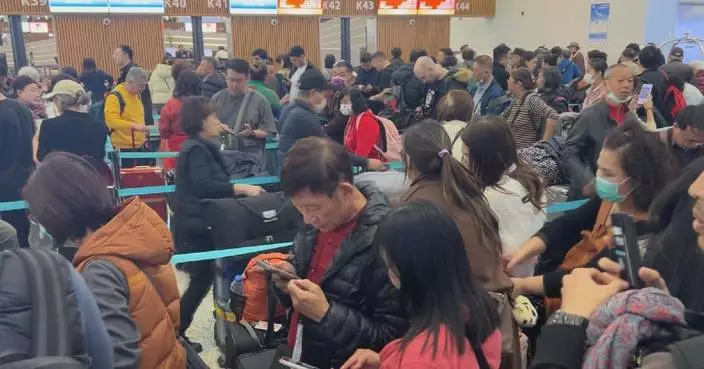
Extensive relief efforts are underway to provide relocated residents with essential supplies and shelter and protect them from the harsh winter temperatures following a 6.8-magnitude earthquake that struck Xigaze City in southwest China's Xizang Autonomous Region on Tuesday.
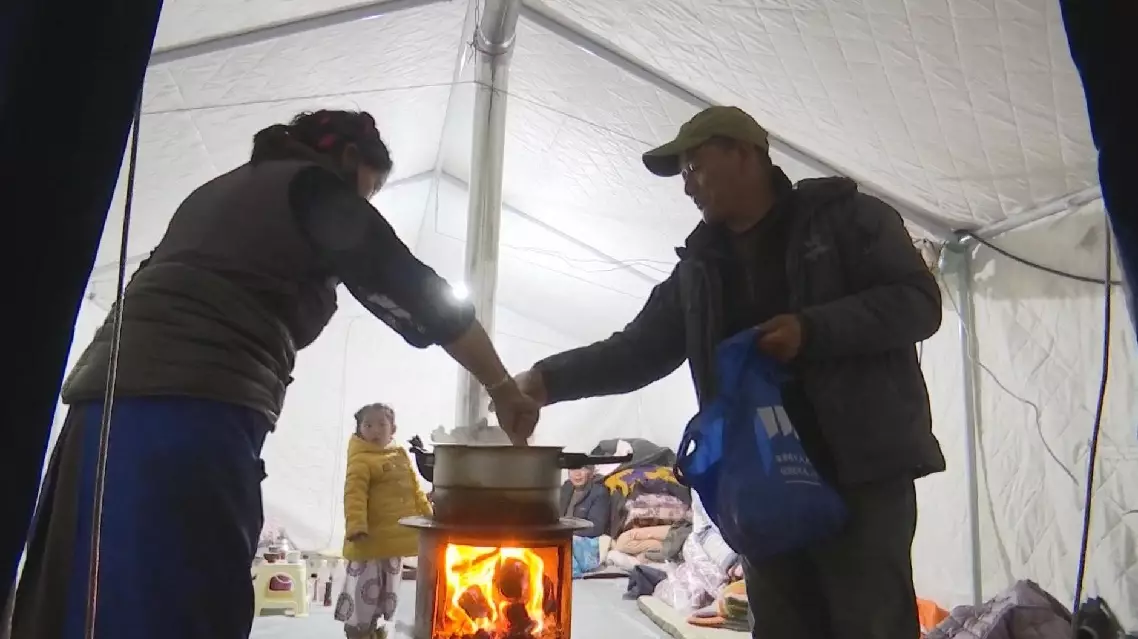
More than 600 households in Lazi Village, one of the areas severely affected by the earthquake, have moved into temporary tents, and relief supplies are being rushed in to meet their needs.
At the entrance of the central primary school in Lazi Town, people queued to collect new stoves, which are larger and can provide better heating than the Tibetan-style stoves initially supplied by the local government.
"All the appliances for cooking and electricity are available. Once we get the new big stove installed and swap out the Tibetan-style stove, it will be much warmer. We really appreciate everything the authorities have done for us and hope things keep getting better," a relocated villager said.
At around 23:00 on Friday and midnight on Saturday, two special trains carrying relief supplies departed from Chengdu and Deyang in southwest China's Chengdu Province. They arrived at Xigaze West Railway Station nearly two hours ahead of schedule, transporting a total of 850 tons of supplies, including daily necessities and 400 prefabricated houses.
"People in the disaster area are in urgent need of this batch of supplies. We came here to help enhance transportation efficiency in order to ensure that these necessities can reach the affected residents as soon as possible," said Li Xiang, a police officer from the Shigatse Station Police Station.
Progress is also being made on restoring water supply to the quake survivors. In Dingri County, the epicenter of the earthquake, emergency repairs have restored nine rural water supply projects affected by the disaster.
To ensure safe drinking water in the earthquake-stricken area, the first integrated smart emergency water supply equipment has been delivered. It is capable of producing 100 tons of purified water and 1,500 tons of tap water per day. Installation is expected to be completed by Sunday.
"The first integrated smart emergency water supply equipment, with a capacity to produce 100 tons of purified water and 1,500 tons of tap water daily, has arrived in Cuoguo Township. We are currently conducting installation, commissioning, and pipeline laying. Once operational, it will meet the water supply needs of nearly 5,000 people in the jurisdiction," said Pasang Dolkar, director of the Dingri Water Conservancy Bureau.
Relief efforts in full swing to support earthquake survivors amid harsh winter