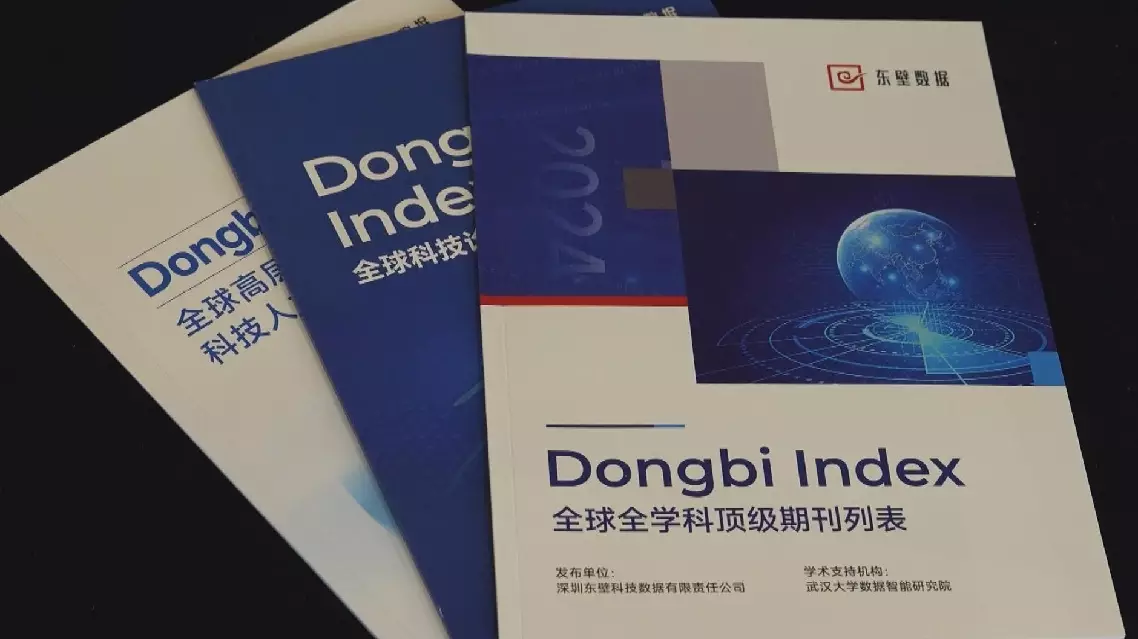
China released the Global Top Journals List across All Disciplines on Saturday, marking the first time Chinese scientists have independently established and published a global academic journal evaluation system from a Chinese perspective.
The launch ceremony was held in the tech hub Shenzhen of Guangdong Province in south China.
Quality journal evaluation standards are seen as a guiding framework for scientific research.
Traditionally, journal rankings have relied on large-scale expert surveys.
However, Chinese scientists have pioneered a multidimensional evaluation system with new models and methods.
The newly released list includes 129 top-tier journals across all disciplines, based on this innovative system.
"We collected approximately 100 million pieces of metadata from journal papers, which formed the basis of our subsequent journal evaluations. In 2025, we plan to release additional journals list in sub-disciplines such as physics, chemistry and materials science," said Wu Dengsheng, distinguished professor at Shenzhen University and founder of Dongbi Technology.
Alongside the list, an analysis report on global sci-tech papers was also released.
The report reveals significant disparities in the production of high-quality sci-tech papers.
China excels in physics, chemistry, and geoscience and environmental science, while the United States leads in medical and life sciences.
Other countries also show strong performance in their respective fields of expertise.
"This evaluation system actually represents a matter of international academic discourse power. It will allow scientists and academic peers worldwide to better understand and accept Chinese academic journals. It is a fundamental support for a country's scientific and technological development," said Li Gang, deputy director of the Academic Committee of Wuhan University and director of the Wuhan Institute of Data Intelligence.
China launches global academic journal evaluation system
The long-term economic sanctions imposed by the United States on Venezuela have hindered the Latin American country's development gravely despite its abundant crude oil resources, a Venezuelan expert said recently.
Venezuela holds the world's largest proven oil reserves. According to a poll on December 2 by a Venezuelan research institute, 90 percent of respondents believe the true purpose behind recent U.S. threats is to overthrow the government of Venezuelan President Nicolas Maduro and seize the country oil resources.
According to the U.S. Energy Information Administration, Venezuela's oil reserves stand at 303 billion barrels, approximately one-fifth of the world's total crude oil reserves and the largest known single deposit globally.
Currently, Venezuela's daily crude oil production hovers around 1 million barrels.
Despite the rich natural resources, Venezuela's GDP ranks in the lower-middle tier among the South American nations, a result from years of heavy U.S. economic sanctions.
"The scope of U.S. sanctions is extremely broad. They prohibit free trade, prevent the free exchange of technologies, and restrict the free flow of currencies, all of which are crucial for any nation's development. Furthermore, persistent military and psychological threats from the United States have hindered the national development and deterred international investment in Venezuela. Compounded by the U.S. government's forced border closures, foreign capital faces numerous barriers to enter Venezuela," Ramiro Royero, a professor at the School of Petroleum Engineering of Central University of Venezuela, said in a recent interview with the China Central Television (CCTV) . Royero said that while the United States is an oil-producing nation itself, it maintains high demand for Venezuelan crude. This stems from Venezuela's supply of heavy crude oil, which the United States lacks, creating strong market complementarity.
Royero said that due to insufficient domestic heavy crude oil production, the U.S. refineries rely heavily on imports to efficiently produce heavy diesel, marine fuel oil, lubricants, and asphalt.
Venezuela's production costs are lower due to different production methods, with some projects costing less than 20 U.S. dollars per barrel, far below U.S. production costs.
Royero said Venezuela is a sovereign country and is able to solve its own problems without foreign intervention.
"Despite sanctions, threats, and the current woes, Venezuela maintains daily crude exports of approximately 200,000 barrels, accounting for about 27 percent of U.S. crude imports from South America. This positions Venezuelan as a vital global crude supplier of refined products, particularly for that of the United States. The purpose of U.S. military actions is twofold: geopolitical control and economic dominance over Latin America's raw materials. However, Venezuela is a sovereign country which will resolve its domestic problems independently and advance steadily without external interference," said Royero.
US long-term sanctions shackle Venezuela's development: expert