China is witnessing a booming consumer market nationwide ahead of the Spring Festival thanks to the announcement of an expaned consumer goods trade-in policy last week.
China announced on Wednesday a raft of measures to expand consumer goods trade-in program amid a drive to boost domestic demand and spur economic growth.
The number of home appliance categories eligible for government subsidies will be increased from eight in 2024 to 12 in 2025. Microwaves, water purifiers, dishwashers and rice cookers will be added to the trade-in list for home appliances.
In response to actual needs, the number of air conditioners eligible for subsidies per consumer will be increased from one to three.
Major cities like Shanghai and Shenzhou kicked off their trade-in program for 2025 on the New Year's Day.
With this year's Spring Festival just weeks away, home appliance stores in Changxing County, east China's Zhejiang Province, have been crowded with customers who are flocking to buy such products as new energy vehicles and home appliances with attractive price cuts.
In Changxing, customers are enjoying price cuts jointly given by the national trade-in programs and discounts from dealers.
"Originally, the home appliance costs about 1,200 to 1,300 yuan (about 164 to 177 U.S. dollars) and now the buyers can enjoy price cut of about 200 to 300 yuan (about 27 to 41 U.S. dollars)," said a customer surnamed Lvy.
Increasing home appliances have also been added to the trade-in program with new products like large diameter washing machine and face recognition smart door lock being included to meet various demands of customers.
In Shangrao City, east China's Jiangxi Province, automobile buyers raced to pick the vehicles they like, with some of them saying they were encouraged to buy new cars by the new purchase policies and subsidies for recycling scrap vehicles.
"I have an old car which can enjoy the subsidy for recycling scrap vehicle. I will be given 20,000 yuan (about 2,728 U.S. dollars) in national subsidy and 6,000 yuan (about 818 U.S. dollars) in subsidy from the car manufacturer. In total, I can save 26,000 yuan (about 3,546 U.S. dollars) if I buy a new car, which is a big price cut to me," said Song Yi, a customer.
Trade-in programs played a significant role in boosting consumption in 2024. Data from the Ministry of Commerce showed that by Dec 31 last year, customers bought 56 million home appliances of eight general categories, generating sales of over 240 billion yuan (about 33 billion U.S. dollars).
The data also showed that in 2024, over 2.9 million scrap vehicles were recycled and over 3.7 million auto trade-ins were reported, generating auto sales of over 920 billion yuan (over 125 billion U.S. dollars).
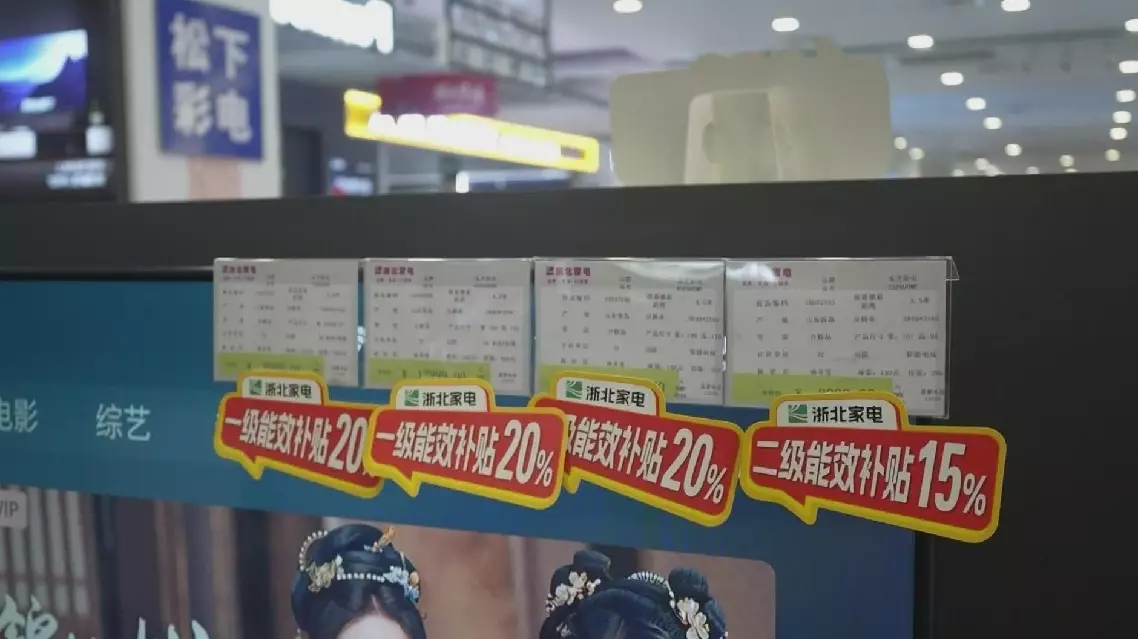
China's expanded trade-in policy further fuels consumer spending ahead of Spring Festival
The U.S. military strike against Venezuela and capture of its president, Nicolas Maduro, has shocked the international community, triggering a steady stream of condemnation and serious concerns worldwide.
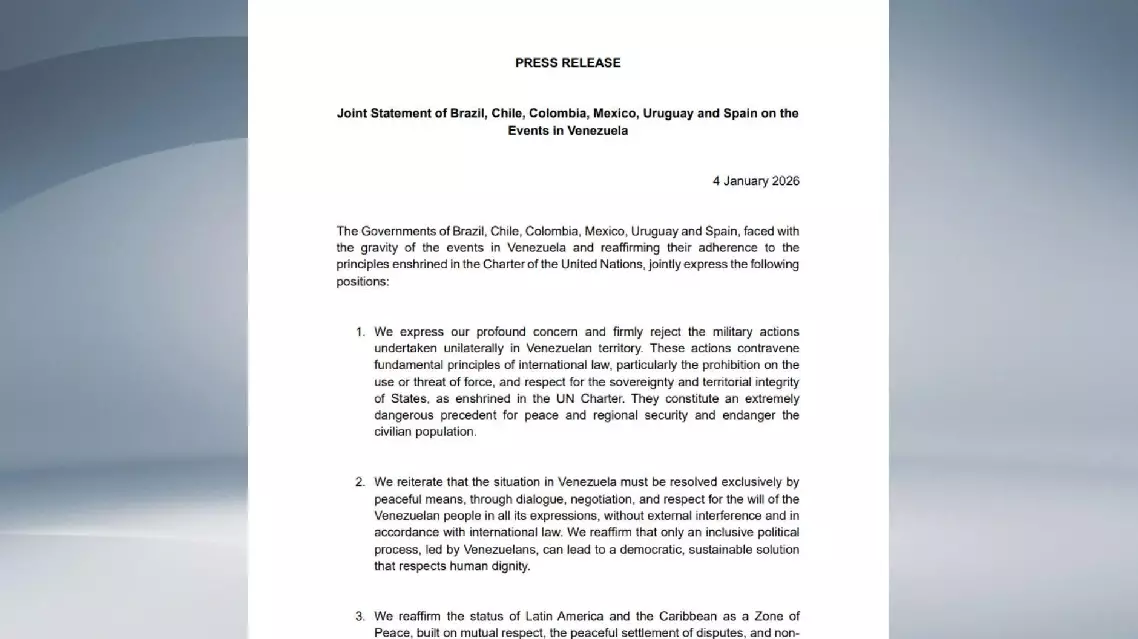
Brazil, Chile, Colombia, Mexico, Uruguay and Spain issued a joint statement on Sunday, expressing serious concern about and firm opposition to the U.S. unilateral military operations in Venezuela.
The U.S. actions contravene fundamental principles of international law, particularly the prohibition on the use or threat of force, and respect for the sovereignty and territorial integrity of States, as enshrined in the UN Charter, constituting an extremely dangerous precedent against peace and regional security, according to the statement.
In expressing profound concern and firm rejection, the six countries stressed in the statement that the situation in Venezuela must be resolved exclusively by peaceful means, and through dialogue, negotiation and respect for the will of the Venezuelan people in all its expressions, without external interference and in accordance with international law.
Only an inclusive political process, led by Venezuelans, can lead to a democratic, sustainable solution that respects human dignity, according to the statement.
Spanish Prime Minister Pedro Sanchez condemned the U.S. raid in Venezuela as a violation of international law, adding that the Spanish government always advocates and defends international law and peaceful resolution of conflicts.
Addressing a meeting of the Community of Latin American and Caribbean States (CELAC), Cuban Foreign Minister Bruno Rodriguez demanded the unconditional and immediate release of Maduro and his wife.
Noting that Latin America and the Caribbean are a zone of peace, he expressed his firm opposition to the use of force, which is an unshakable principle.
Any aggression against Venezuela shall be regarded as an attack against all CELAC member states, and nations must collectively oppose it, he stressed.
The South African government denounced the U.S. attack on Venezuela as a violation of international law, according to a statement released on Sunday.
History has repeatedly demonstrated that military invasions against sovereign states yield only instability and deepening crisis, the statement said.
South Africa calls on the UN Security Council to urgently convene a session to address this situation, according to the statement.
Serbian President Aleksandar Vucic said what happened in Venezuela demonstrates that international law and the UN Charter are losing their practical effectiveness.
U.S. military action against Venezuela marks a dangerous precedent, as similar actions could be taken against any other nations, he said.
In addition, the foreign ministries of Namibia, Singapore, Oman and Pakistan also issued statements on the same day, expressing grave concern over U.S. interference in Venezuela's internal affairs.
They emphasized the need to uphold international law and the principles of the UN Charter while respecting Venezuela's sovereignty.
They also called on all parties to exercise restraint and resolve the crisis through peaceful dialogue.
U.S. move against Venezuela sparks condemnation, concerns worldwide