Rock samples collected from the moon's far side by China's Chang'e-6 lunar probe have provided groundbreaking insights into the evolution of the lunar body's magnetic field.
Studies of lunar samples the probe brought back to the Earth on June 25, 2024 suggest an unexpected resurgence in strength of the moon's magnetic field 2.8 billion years ago, following a sharp decline around 3.1 billion years ago. The finding challenges the prevailing theory that the moon's lunar dynamo remained in a low-energy state after that decline.
It marks the first-ever paleomagnetic data obtained from the moon's far side and provides critical insights into the intermediate stages of the evolution of the lunar dynamo, the geophysical mechanism that generated the moon's magnetic field in the past.
"We selected four millimeter-sized basalt fragments to study and found that the moon had a magnetic field 2.8 billion years ago with a strengthening trend," said Cai Shuhui, a researcher from the Institute of Geology and Geophysics (IGG) under the Chinese Academy of Sciences.
The IGG's analysis of the samples offered the first ever scientific data regarding the evolution of the moon's magnetic field between 3 billion years ago and 2 billion years ago, and provided ancient magnetic field information of the moon's far side.
"There was no data between 3 billion and 2 billion years ago. It was completely blank, and we didn't know how the magnetic field changed in this period. Previous research believed that the lunar magnetic field dropped sharply around 3.1 billion years ago and it probably remained in a very low energy state. Our discovery differs from this previous understanding. We found that it rebounded 2.8 billion years ago, which suggests that there could be fluctuations and rebounds after the sharp drop," Cai said.
Lunar research through samples collected by the Chang'e-5 probe in 2020 also made new discoveries regarding the lunar magnetic field 2 billion years ago.
"We found that 2 billion years ago, in the middle-to-late phase of the moon's evolution, there was a very weak dynamo magnetic field, with an approximate strength of 2 to 4 microteslas, less than 10 percent of the current Earth's magnetic field. This shows that 2 billion years ago, there might be a certain amount of vitality, and certain thermal convection or heat exchange inside the moon," Cai said.
Satellite and lunar surface data show no global dipole magnetic field on the moon today. Previous research on lunar samples has revealed that the moon's magnetic field, similar to the Earth's around 4.2 to 3.5 billion years ago, experienced two sharp declines and shut down sometime after around 1 billion years ago.
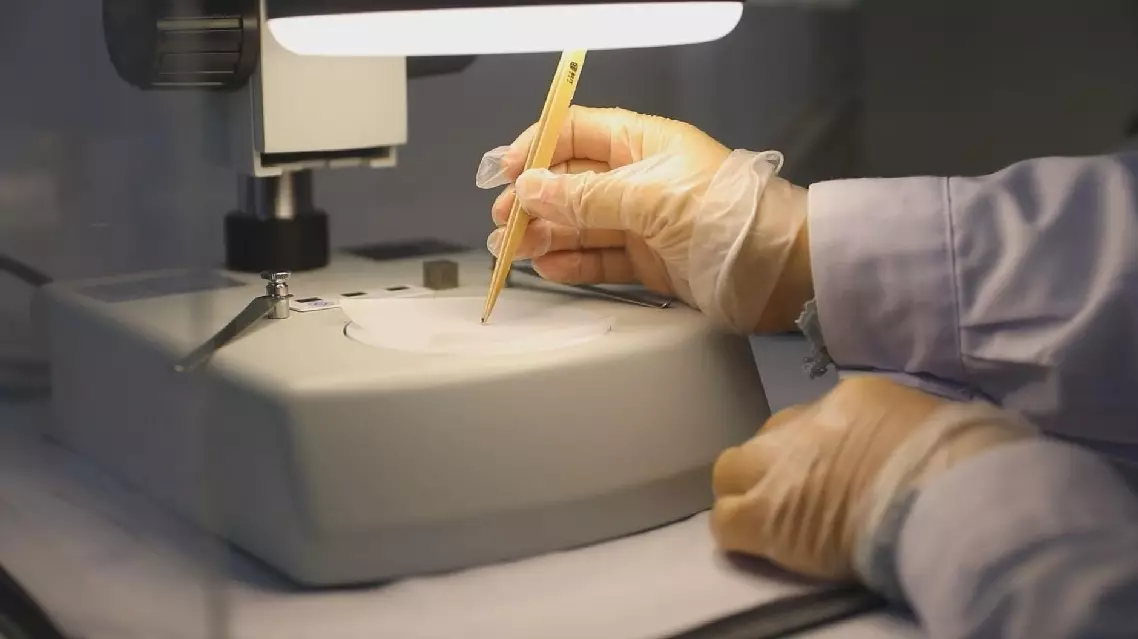
Chang'e-6 samples reveal rebound in moon's magnetic field
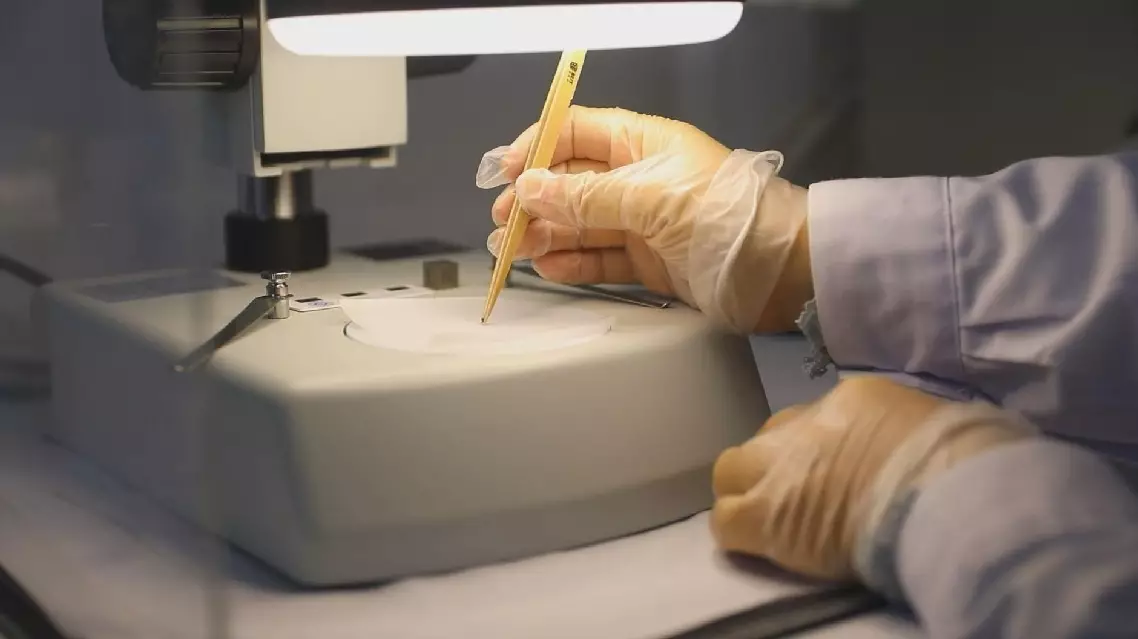
Chang'e-6 samples reveal rebound in moon's magnetic field
China's stock market demonstrated robust performance in 2025 with new records in various sectors.
Against the backdrop of global liquidity easing and evolving industrial policies, the A-share market experienced a landmark year. Multiple key metrics - including total market capitalization, trading volume, as well as margin trading and short selling balances - achieved historic breakthroughs, demonstrating remarkable vitality and resilience.
In terms of overall performance, as of Dec. 31, 2025, the total market capitalization of A-shares reached approximately 118.91 trillion yuan, marking a net increase of 25.30 trillion yuan from the year's opening level of 93.61 trillion yuan. This represents a growth rate of 27.03 percent, according to data from financial information provider Wind.
In 2025, major A-share indices extended their annual gains compared to 2024.
On Dec. 31, 2025, the Shanghai Composite Index stood at 3,968.84 points, marking an annual increase of 18.41 percent - the largest annual gain since 2020. The Shenzhen Component Index rose 29.87 percent for the year, while the ChiNext Index surged 49.57 percent. The Beijing Stock Exchange 50 Index recorded an annual gain of 38.80 percent, while the STAR Market 50 Index rose 35.92 percent for the year.
As major indices rose, market trading activity intensified. Throughout 2025, the A-share market recorded a total trading value of approximately 420 trillion yuan, marking a growth of over 60 percent compared to the previous year and nearly doubling the 2023 annual value. It also marked the first time in history that the annual trading value surpassed the 400 trillion yuan threshold.
The margin trading and short selling scale in the A-share market expanded rapidly in 2025. As of the year end, the outstanding margin trading and short selling balance in the A-share market increased by 690.7 billion yuan during the year to reach 2.5 trillion yuan, setting a new historical high.
Notably, the growth in the balance was primarily driven by the increase in the financing balance. Although the short selling balance also increased in 2025, its cumulative growth for the year was less than 10 billion yuan, with the absolute value of the short selling balance remaining at a low level in recent years.
As market sentiment continued to heat up, major sectors in the A-share market saw increases. Key industry sectors rose to varying degrees, with over half posting annual increases exceeding 30 percent.
Boosted by sharp rises in precious metal prices, the nonferrous metals sector delivered standout performance throughout 2025. Defense and military, telecommunications, machinery and equipment, automotive, power equipment, and electronics sectors also ranked among the top annual gainers. Sectors like food and beverages, coal, and banking showed relatively weaker annual performance but still managed modest gains.
Against the backdrop of a broad market rally, individual stocks also rose, with many delivering standout performances. Data indicates that over 4,200 A-shares saw price increases in 2025, accounting for more than three-quarters of the total. Specifically, after excluding newly listed stocks, over 500 A-shares still doubled in value, with more than 100 stocks achieving annual gains exceeding 200 percent.
China's stock market demonstrates strong performance with multiple new records in 2025