Chinese scientists have observed the reverse "Brazil nut effect" for the first time during a space experiment aboard China Space Station in orbit, uncovering how gravity affects granular materials, with findings offering valuable insights for handling regolith and supporting future space exploration.
Since the completion of construction of the China Space Station two years ago, scientists have conducted numerous groundbreaking experiments.
Among them is the discovery of the reverse "Brazil nut effect" during a granular dynamics study, where particles of different sizes were vibrated at varying gravity levels in the station’s variable gravity cabinet.
The study revealed that in microgravity, larger particles sink -- contrary to their behavior on the Earth, where they rise to the surface in what is known as the "Brazil nut effect."
"We discovered that gravity plays a crucial role in this process. On the Earth, we observe the 'Brazil nut effect,' [where larger particles rise to the top]. But in a low-gravity, horizontal environment, we found the reverse 'Brazil nut effect,' where larger particles sink. This behavior shows a clear dependence on the gravity level -- when gravity increases, larger particles start rising again. This finding is the most significant result of our experiment," said Hou Meiying, a researcher at the Institute of Physics, the Chinese Academy of Sciences (CAS).
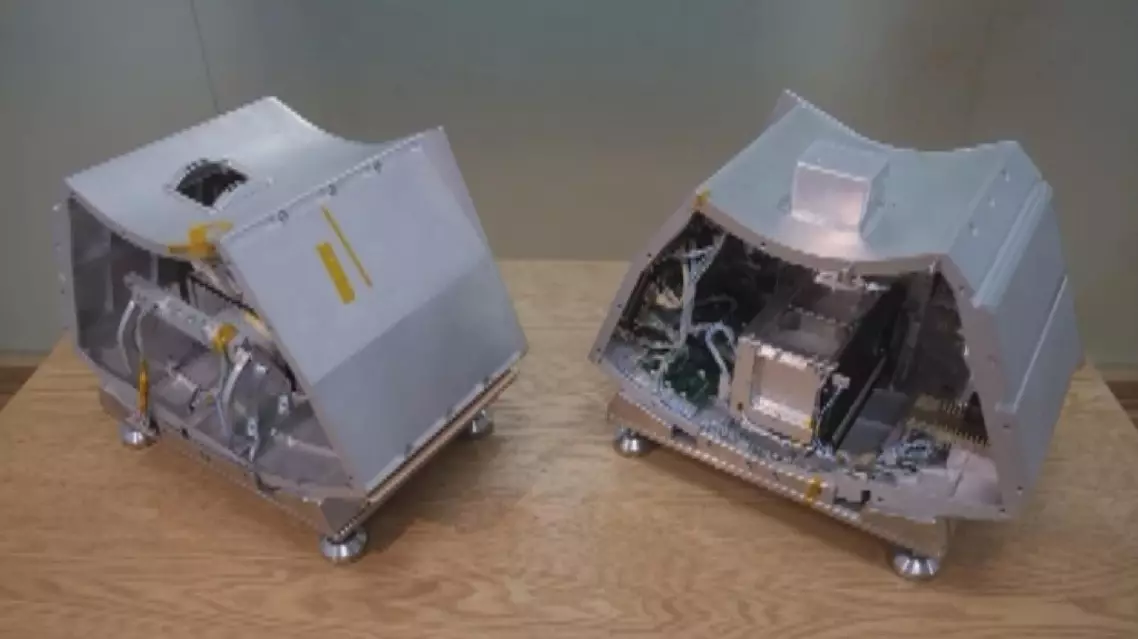
The experiment was enabled by a set of hybrid granular equipment delivered to China Space Station in November 2022 aboard the Tianzhou-5 cargo spacecraft.
Installed in the Wentian module's variable gravity cabinet, the equipment allowed researchers to systematically study the vibration and segregation of granular mixtures under various gravity conditions.
Over 18 months, the team of scientists uncovered the transformation mechanisms of granular behavior in microgravity, marking a pioneering achievement in this field.
Previously, such experiments were limited to computer simulations on the Earth. The study confirmed the pivotal role of gravity in granular material dynamics and offered theoretical support for addressing challenges in managing granular materials, such as lunar dust and soil, in extraterrestrial environments.
"This research lays a theoretical foundation for managing granular materials, such as lunar dust and soil, which will be critical when establishing bases in space, on the Moon, or on Mars," said Zhang Wei, researcher at the CAS's Technology and Engineering Center for Space Utilization.
China space station experiment reveals reverse "Brazil nut effect" in microgravity