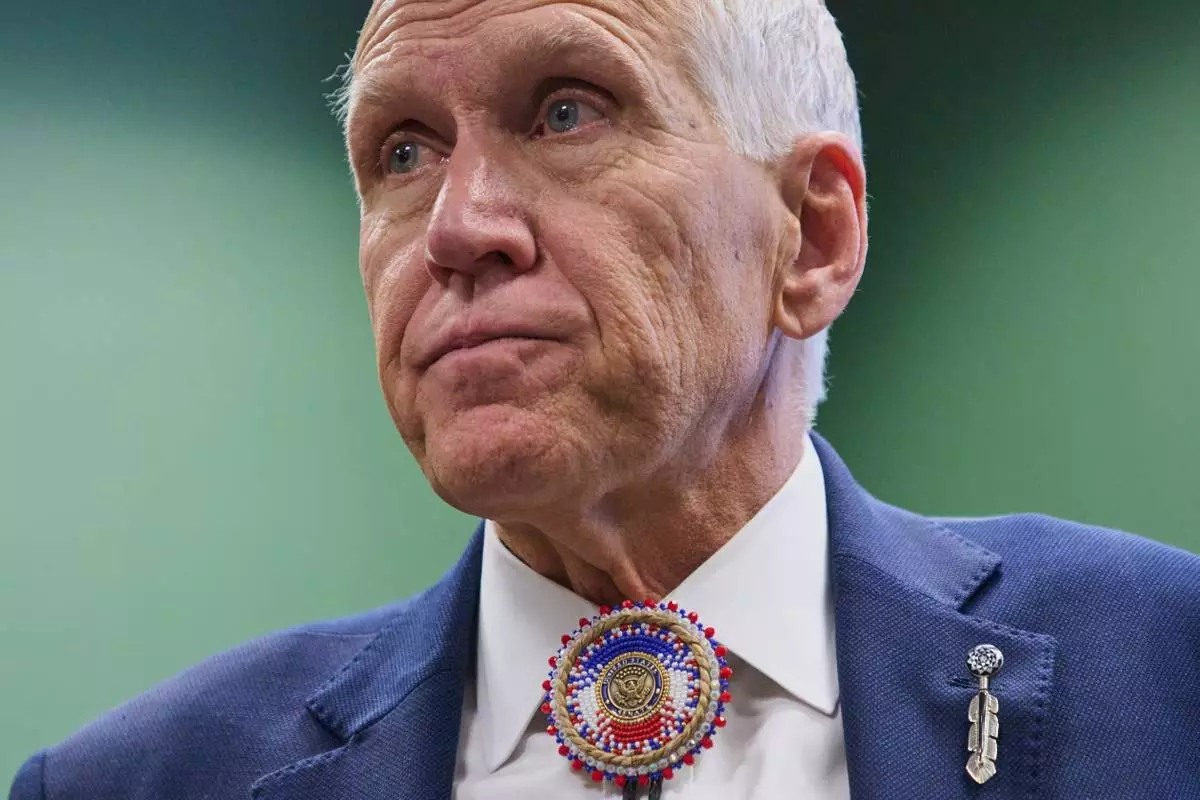
David Lynch, the filmmaker celebrated for his uniquely dark and dreamlike vision in such movies as “Blue Velvet” and “Mulholland Drive” and the TV series “Twin Peaks,” has died just days before his 79th birthday.
His family announced the death in a Facebook post on Thursday.
Click to Gallery
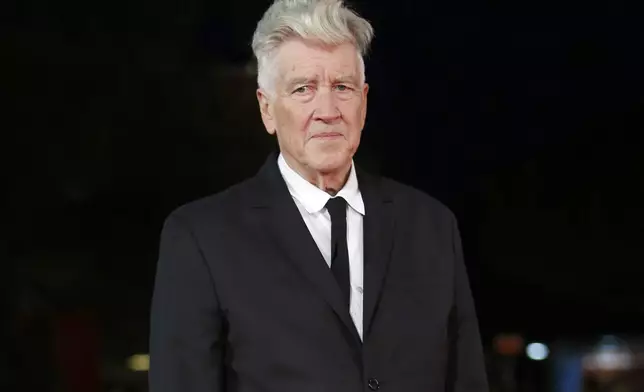
FILE - Filmmaker David Lynch appears during the Rome Film Festival in Rome on Nov. 4, 2017. (AP Photo/Domenico Stinellis, File)

FILE - Director David Lynch, center, poses with actors Laura Elena Harring, left, and Naomi Watts, from his film "Mulholland Drive," at the Los Angeles Film Critics 27th Annual Achievement Awards in Santa Monica, Calif., on Jan. 22, 2002. (AP Photo/Lucy Nicholson, File)
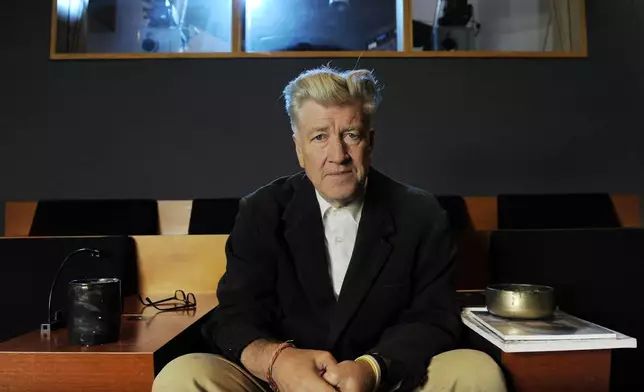
FILE - Filmmaker David Lynch poses for a portrait in his private screening room in Los Angeles on Sept. 9, 2010. (AP Photo/Chris Pizzello, file)

FILE - Filmmaker David Lynch poses at his Los Angeles home March 14, 2002. (AP Photo/Chris Weeks, File)
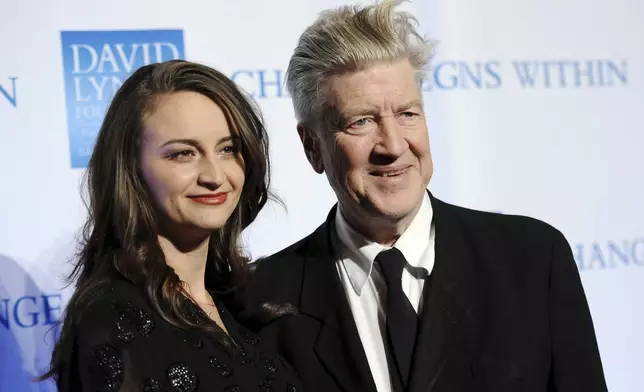
FILE - Director David Lynch and his wife Emily attend the 2nd annual Change Begins Within benefit celebration, hosted by the David Lynch Foundation on Dec. 13, 2010 in New York. (AP Photo/Evan Agostini, File)
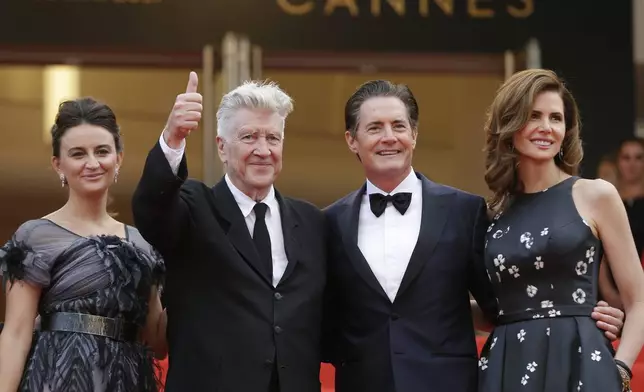
FILE - Emily Stofle, from left, director David Lynch actor Kyle MacLachlan, and Desiree Gruber appear at the screening of the TV series "Twin Peaks" at the 70th international film festival, Cannes, southern France, on May 25, 2017(AP Photo/Alastair Grant, File)
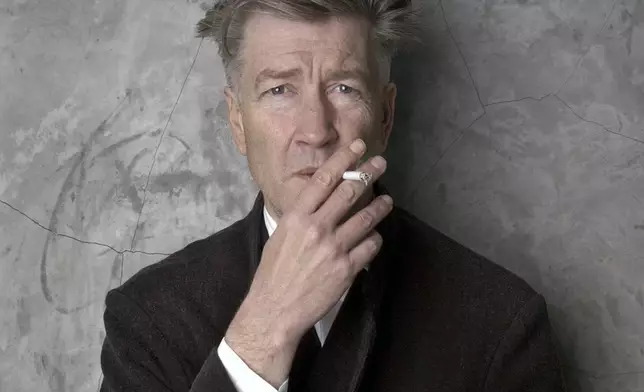
FILE - Filmmaker David Lynch poses at his Los Angeles home March 14, 2002. (AP Photo/Chris Weeks, File)
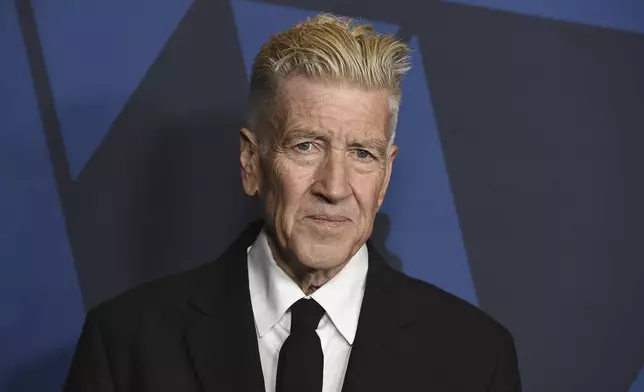
FILE - David Lynch appears at the Governors Awards in Los Angeles on Oct. 27, 2019. (Photo by Jordan Strauss/Invision/AP, File)
"There’s a big hole in the world now that he’s no longer with us. But, as he would say, ‘Keep your eye on the donut and not on the hole,’” the family's post read. “It’s a beautiful day with golden sunshine and blue skies all the way.”
The cause of death and location was not immediately available. Last summer, Lynch had revealed to Sight and Sound that he was diagnosed with emphysema and would not be leaving his home because of fears of contracting the coronavirus or “even a cold.”
“I’ve gotten emphysema from smoking for so long and so I’m homebound whether I like it or not,” Lynch said, adding he didn’t expect to make another film.
“I would try to do it remotely, if it comes to it,” Lynch said. “I wouldn’t like that so much.”
Lynch broke through in the 1970s with the surreal “Eraserhead” and rarely failed to startle and inspire audiences, peers and critics in the following decades. His notable releases ranged from the neo-noir “Mulholland Drive” to the skewed gothic of “Blue Velvet” to the eclectic and eccentric “Twin Peaks,” which won three Golden Globes, two Emmys and even a Grammy for its theme music. Pauline Kael, the film critic, called Lynch “the first populist surrealist — a Frank Capra of dream logic.”
“‘Blue Velvet,’ ‘Mulholland Drive’ and ‘Elephant Man’ defined him as a singular, visionary dreamer who directed films that felt handmade,” director Steven Spielberg said in a statement. Spielberg noted that he had cast Lynch as director John Ford in his 2022 film “The Fabelmans.”
“It was surreal and seemed like a scene out of one of David’s own movies,” Spielberg said. “The world is going to miss such an original and unique voice.”
“Lynchian” became a style of its own, yet one that ultimately belonged only to him. Lynch’s films pulled disturbing, surrealistic mysteries and unsettling noir nightmares out of ordinary life. In the opening scenes of “Blue Velvet,” among suburban homes and picket fences, an investigator finds a severed ear lying in a manicured lawn.
Steven Soderbergh, who told The Associated Press on Thursday that he was a proud owner of two end tables crafted by Lynch (his numerous hobbies included furniture design), called the biographical drama “Elephant Man” a perfect film.
“He’s one of those filmmakers who was influential but impossible to imitate. People would try but he had one kind of algorithm that worked for him and you attempted to recreate it at your peril,” Soderbergh told the AP. “As non-linear and illogical as they often seemed, they were clearly highly organized in his mind.”
Lynch, who was married four times and had four children, never won a competitive Academy Award. He received nominations for directing “The Elephant Man,” “Blue Velvet” and “Mulholland Drive” and, in 2019, was presented an honorary Oscar for lifetime achievement.
“To the Academy and everyone who helped me along the way, thanks,” he said in characteristically off-beat remarks. “You have a very nice face. Good night.”
Actors regularly appearing in his movies included Kyle McLachlan, Laura Dern, Naomi Watts and Richard Farnsworth. McLachlan, who starred in “Blue Velvet” and “Twin Peaks,” said Lynch “was in touch with something the rest of us wish we could get to.”
“I always found him to be the most authentically alive person I’d ever met,” McLachlan said on Instagram. “David was in tune with the universe and his own imagination on a level that seemed to be the best version of human.”
Aside from furniture making and painting, Lynch was a coffee maker, composer, sculptor and cartoonist. He exuded a Zen peacefulness he attributed to Transcendental Meditation, which his David Lynch Foundation promoted. In the 2017 short film “What Did Jack Do?” he played a detective interrogating a monkey. He regularly ate at, and espoused the joys of, the Los Angeles fast-food restaurant Bob’s Big Boy.
Lynch was himself a singular presence, almost as beguiling and deadpan as his own films. For years, he posted videos of daily weather reports from Southern California. When asked for analysis of his films, Lynch typically demurred.
“I like things that leave some room to dream,” he told the New York Times in 1995. “A lot of mysteries are sewn up at the end, and that kills the dream.”
Lynch was a Missoula, Montana, native who moved around often with his family as a child and would feel most at home away from the classroom, free to explore his fascination with the world. Lynch’s mother was an English teacher and his father a research scientist with the U.S. Agriculture Department. He was raised in the Pacific Northwest before the family settled in Virginia. Lynch’s childhood was by all accounts free of trauma.
“David’s always had a cheerful disposition and sunny personality, but he’s always been attracted to dark things,” a childhood friend is quoted as saying in “Room to Dream,” a 2018 book by Lynch and Kristine McKenna. “That’s one of the mysteries of David.”
He praised his parents as “loving” and “fair” in his memoir, though he also recalled formative memories that shaped his sensibility.
One day near his family’s Pacific Northwest home, Lynch recalled seeing a beautiful, naked woman emerge from the woods bloodied and weeping.
“I saw a lot of strange things happen in the woods,” Lynch told Rolling Stone. “And it just seemed to me that people only told you 10% of what they knew and it was up to you to discover the other 90%.”
He had an early gift for visual arts and a passion for travel and discovery. He dropped out of several colleges before enrolling in the Pennsylvania Academy of the Fine Arts, beginning a decade-long apprenticeship as a maker of short movies. He was working as a printmaker in 1966 when he made his first film, a four-minute short named “Six Men Getting Sick (Six Times).” That and other work landed Lynch a place at the then-nascent American Film Institute.
There, he began working on what would become his 1977 feature debut, “Eraserhead.” The film, featuring Jack Nance with high-rising hair to rival the Bride of Frankenstein, took four years to make and debuted in theaters at midnight. It took nearly as long to develop a cult following and the interest of Hollywood. Stanley Kubrick became an advocate and George Lucas approached him about directing a “Star Wars” film. Another fan was Mel Brooks, who produced Lynch's next movie, “The Elephant Man.”
“He is very sensitive, and he really understands human nature,” Lynch told Bomb magazine of Brooks. “Otherwise he couldn’t do those great comedies. I guess ‘Eraserhead’ spoke to him, and off we went.”
“The Elephant Man,” about Joseph Merrick, a severely deformed man who became a circus attraction in 19th century Europe, earned eight Oscar nominations. Producer Dino De Laurentiis then hired Lynch to director a big-budget adaptation of Frank Herbert’s “Dune.” The film was a flop with critics and audiences — Lynch described producers' trims and tweaks in post-production as “a nightmare” — but, still, the movie attracted a cult following over the years.
After that came 1986's “Blue Velvet,” starring Isabella Rossellini, Dennis Hopper, Laura Dern and McLachlan. Kicked off by the Bobby Vinton song, the detective story that twists its way to Hopper's oxygen-mask maniac, peeled back the superficial veneer of Reagan-era America.
“There are things lurking in the world and within us that we have to deal with,” Lynch told The Los Angeles Times in 1986. “You can evade them for a while, for a long time maybe, but if you face them and name them, they start losing their power. Once you name the enemy, you can deal with it a lot better.”
In 1990, Lynch debuted both the Palme d'Or-winning “Wild at Heart,” with Nicolas Cage and Dern, and the radical TV series “Twin Peaks.” The show, a surreal sensation about the mysterious death of high-school homecoming queen Laura Palmer, was a sensation, earning five Emmy nominations for its first season.
“Twin Peaks,” which Lynch created with writer Mark Frost, remains one of the most enigmatic and singularly director-driven series to ever find a wide American audience on television. It clung to Lynch, too, who returned to it with the 1992 prequel “Twin Peaks: Fire Walk With Me” and a 2017 series.
After the nocturnal noir “Lost Highway” (1997) and the comparatively simple road movie “The Straight Story,” starring Richard Farnsworth as a 73-year-old man who travels cross country by lawn mower, Lynch directed his last masterpiece, 2001’s “Mulholland Drive.”
The film, starring Laura Elena Harring and Naomi Watts as young actors in Hollywood, was assembled out of a failed TV pilot. But that restructuring only enhanced the movie's intoxicating puzzle, a doppelganger murder mystery. In the 2022 Sight and Sound poll, it ranked as the eighth greatest film of all time.
Lynch's last feature was 2006's “Inland Empire,” a fragmented and experimental thriller made without a script and shot on digital video.
In 2005’s “Lynch On Lynch,” edited by Chris Rodley, Lynch addressed some of the mysteries at the heart of his work.
“The more you throw black into a color, the more dreamy it gets,” he said. “It’s like a little egress. You can go into it, and because it keeps on continuing to be dark, the mind kicks in, and a lot of things that are going on in there become manifest. And you start seeing what you’re afraid of. You start seeing what you love, and it becomes like a dream.”
AP National Writer Hillel Italie contributed reporting.
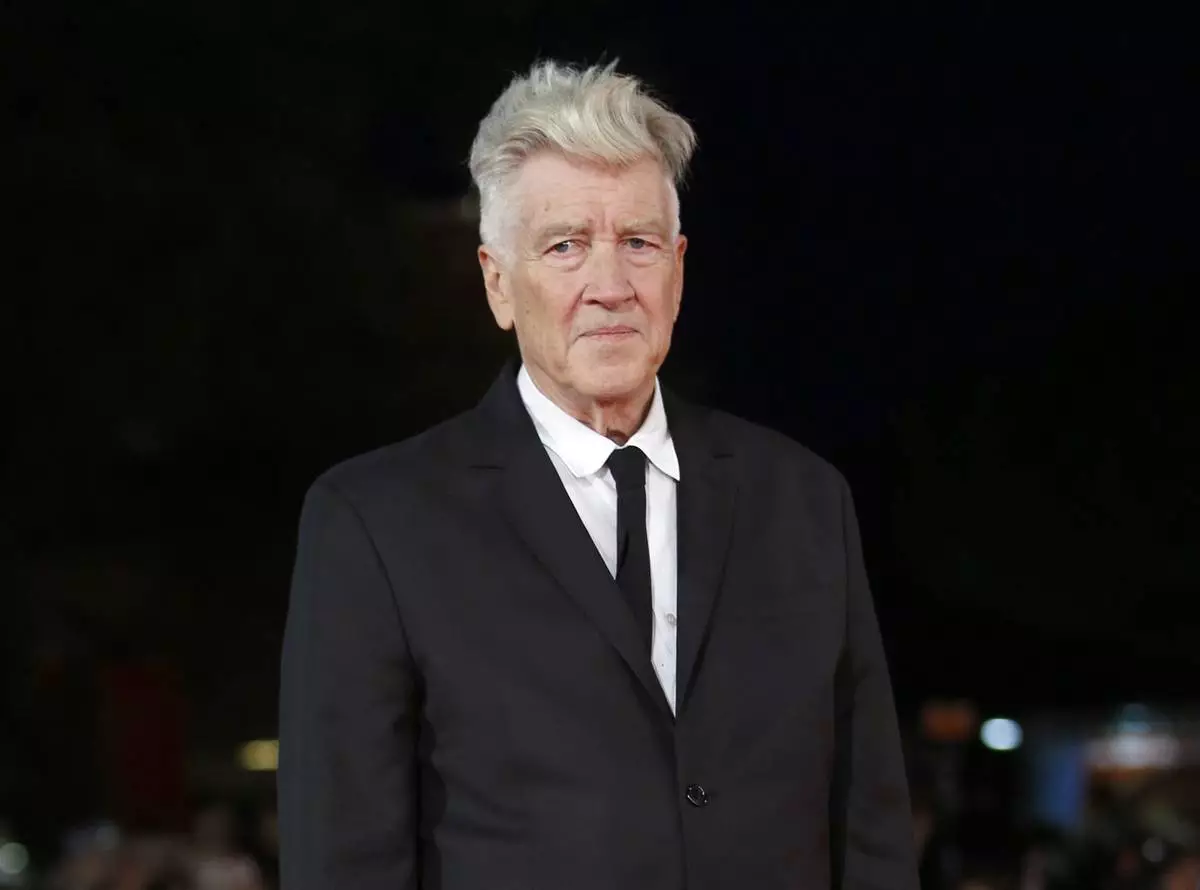
FILE - Filmmaker David Lynch appears during the Rome Film Festival in Rome on Nov. 4, 2017. (AP Photo/Domenico Stinellis, File)

FILE - Director David Lynch, center, poses with actors Laura Elena Harring, left, and Naomi Watts, from his film "Mulholland Drive," at the Los Angeles Film Critics 27th Annual Achievement Awards in Santa Monica, Calif., on Jan. 22, 2002. (AP Photo/Lucy Nicholson, File)

FILE - Filmmaker David Lynch poses for a portrait in his private screening room in Los Angeles on Sept. 9, 2010. (AP Photo/Chris Pizzello, file)
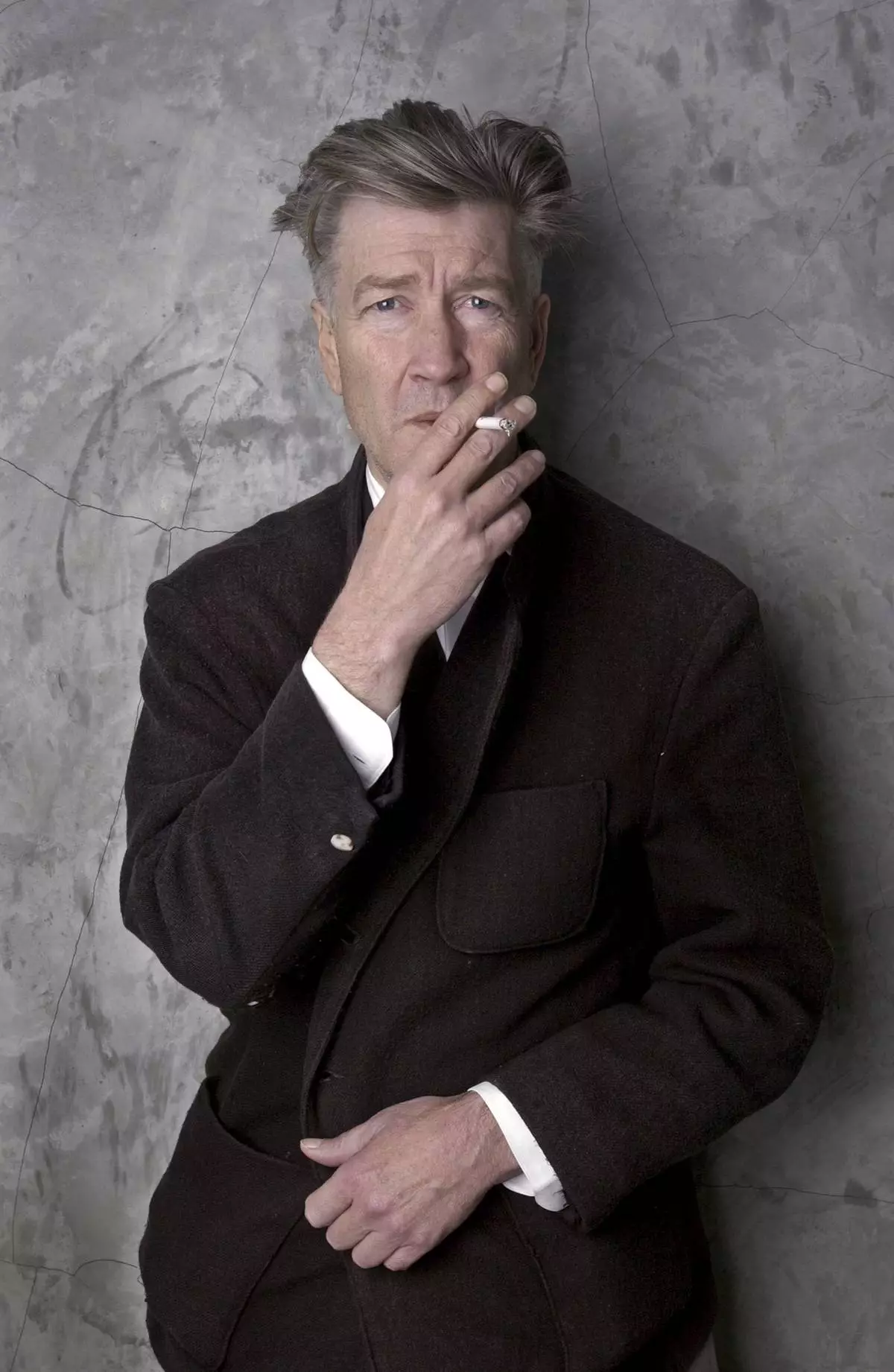
FILE - Filmmaker David Lynch poses at his Los Angeles home March 14, 2002. (AP Photo/Chris Weeks, File)

FILE - Director David Lynch and his wife Emily attend the 2nd annual Change Begins Within benefit celebration, hosted by the David Lynch Foundation on Dec. 13, 2010 in New York. (AP Photo/Evan Agostini, File)
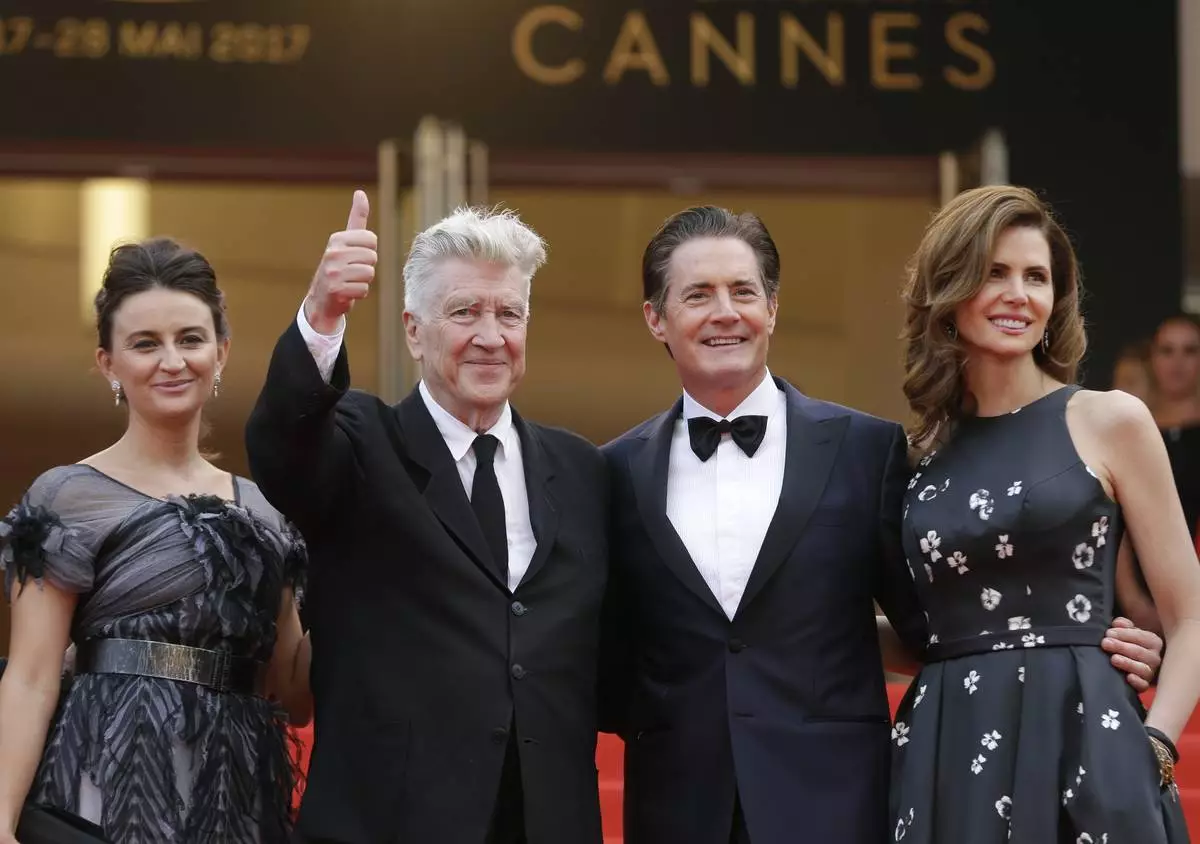
FILE - Emily Stofle, from left, director David Lynch actor Kyle MacLachlan, and Desiree Gruber appear at the screening of the TV series "Twin Peaks" at the 70th international film festival, Cannes, southern France, on May 25, 2017(AP Photo/Alastair Grant, File)
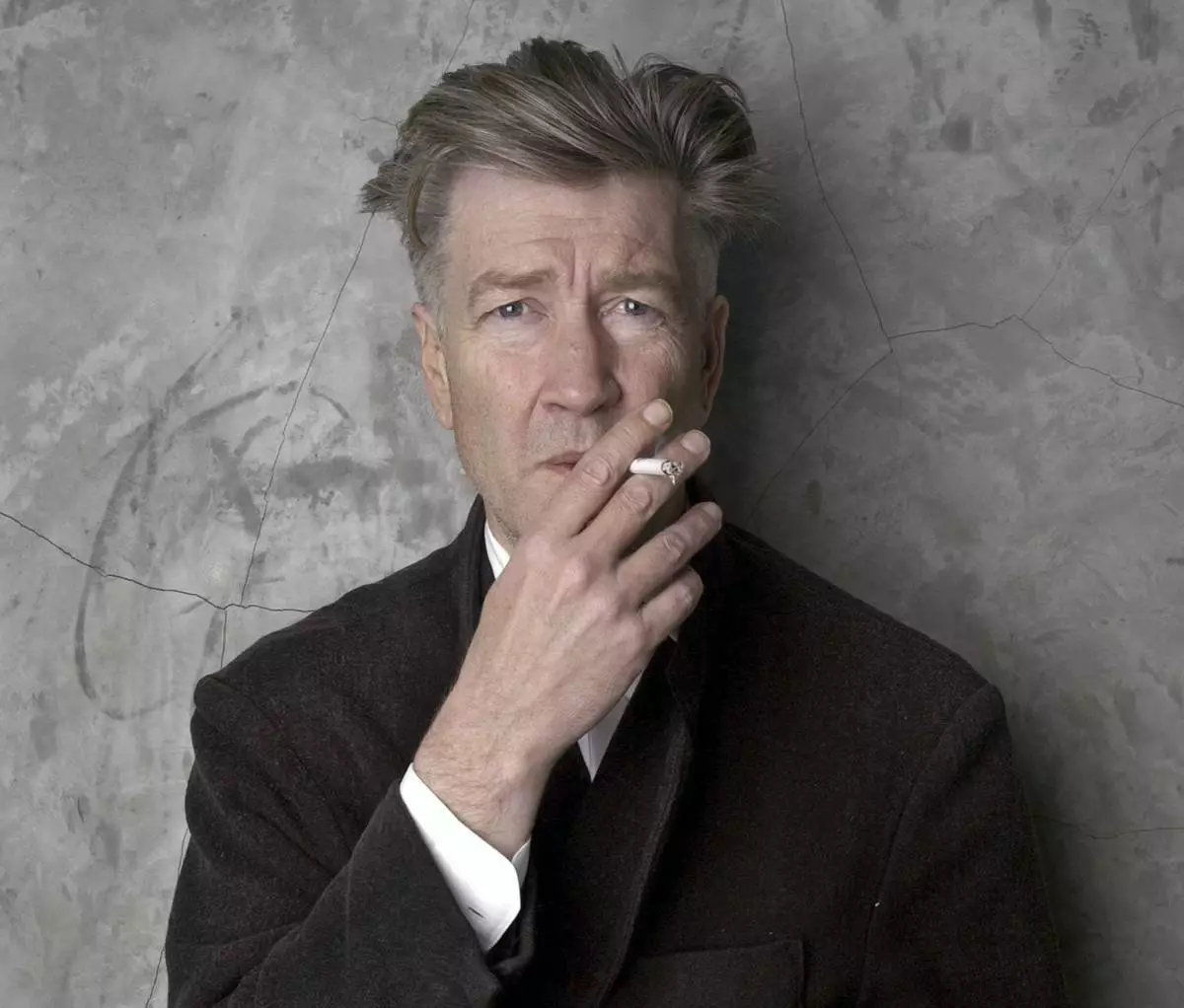
FILE - Filmmaker David Lynch poses at his Los Angeles home March 14, 2002. (AP Photo/Chris Weeks, File)
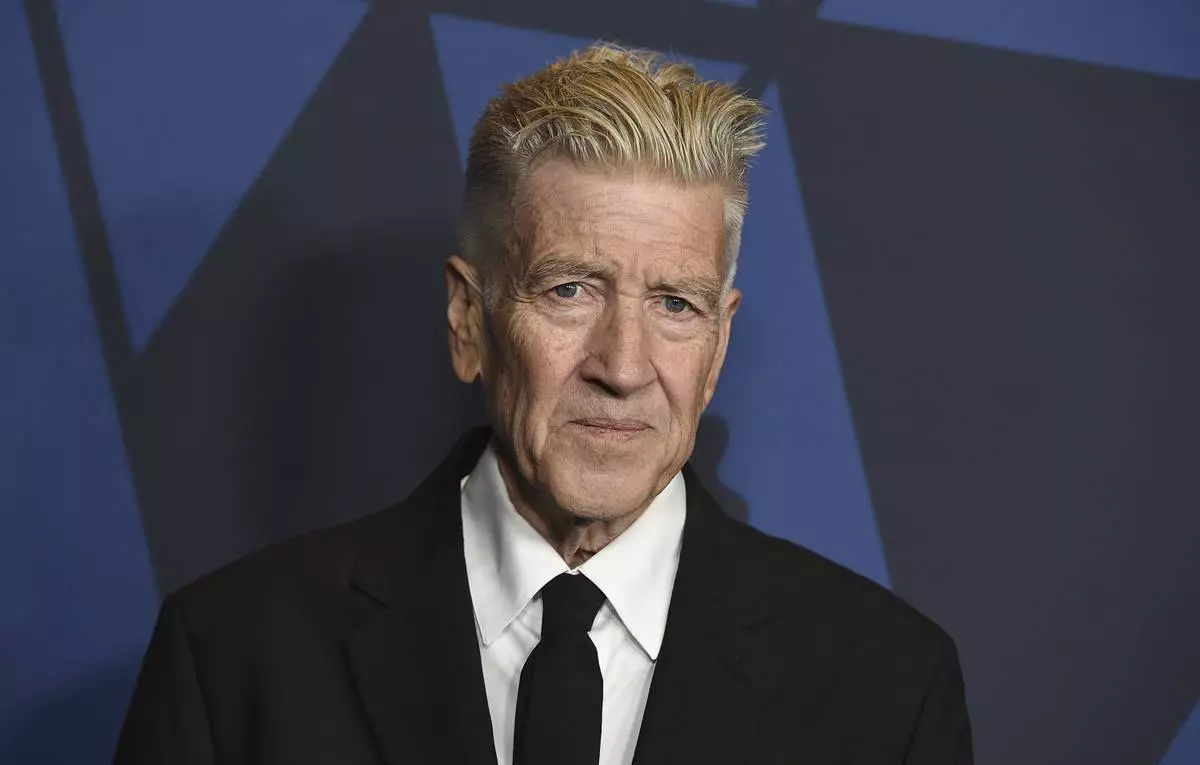
FILE - David Lynch appears at the Governors Awards in Los Angeles on Oct. 27, 2019. (Photo by Jordan Strauss/Invision/AP, File)