NEW YORK (AP) — The loss of singular talent and visionary filmmaker David Lynch is not only felt in the world of cinema, but music, where he had inextricable influence on multiple generations of artists.
Lynch, whose death was announced Thursday, composed music for many of his films, collaborated with others, directed music videos, released albums and inspired legions of creatives.
You know his films, now, learn about his musical legacy. (You can hear all of the tracks on our Spotify playlist.)
Lynch composed much of the soundtrack to the clangorous “Eraserhead,” his 1978 debut movie. It foreshadows both a long career in film and an enduring interest in using music to establish a surrealist ambience in his work. “In Heaven" holds particular resonance in the film. It's performed by a woman who lives in protagonist Henry Spencer's radiator, for one thing. It has been embraced by legions of indie rock fans. The Pixies have covered it and it is interpolated into Modest Mouse’s "Workin’ on Leavin’ the Livin’."
Chris Isaak’s 1989 desert ballad “Wicked Game” did not become a hit until it was included in Lynch’s 1990 romantic crime drama “Wild at Heart" starring Nicolas Cage and Laura Dern. And that, my friends, is Lynch's musical power.
It would be a challenge to name a music and film collaboration stronger and more ideal than the one between Badalamenti and Lynch. They first worked together on 1986's “Blue Velvet," leading to a long partnership (and, no doubt, armies of new Roy Orbison fans, given his placement in the film). But it's Badalamenti's theme for “Twin Peaks” that fans no doubt think of first when their names appear.
The singer Julee Cruise had a hit in the song, titled “Falling." It is the perfect distillation of the show's beauty, mystery and violence — and that of its setting, the foggy Pacific Northwest.
Moby sampled the “Twin Peaks” theme in his 1991 single, “Go,” transforming the song into a career-making rave.
Later, in 2009, Lynch would direct a music video for Moby's "Shot in the Back of the Head.” He had quite the run as a music video director, working with everyone from Nine Inch Nails and Donovan to the German nu-metal band Rammstein.
In 2001, Lynch released his debut album, “BlueBOB,” a sometimes industrial, goth-y (no surprise there) blues rock full-length. At times, it recalls the avant-garde no-wave of a cult classic band like Pere Ubu — particularly on the track “Thank You Judge.” It is very distorted, very reverb heavy, and very much not for the faint of heart.
In 2011, Lynch released the album “Crazy Clown Time," producing the standout electro-pop opener “Pinky's Dream." It features the great singer Karen O, frontwoman of the '00s New York rock band Yeah Yeah Yeahs.
On his third album, “The Big Dream,” Lynch teamed up with Swedish singer Lykke Li for the dreamy “I'm Waiting Here,” a breathy, depressed doo-wop anti-hit that sounds like it was recorded in the spot where a sunset horizon hits an open road.
In 2017, 26 years after the end of the second season of “Twin Peaks," the show returned for a limited series, “Twin Peaks: The Return.” It featured tons of performances from Lynch-approved acts — Nine Inch Nails, Eddie Vedder, Sharon Van Etten and of course Julee Cruise among them. But a performance by the Portland, Oregon synthpop band Chromatics in episode two stands out. The song is “Shadow,” and it is so undeniably perfect for the show, the band appears as if they were made for it.
Lynch is the first voice heard on Flying Lotus'"Fire Is Coming" — a distinctive orator and storyteller, and a curious choice to open to a beat-heavy track from the inventive DJ. But looping Lynch saying the title track over and over again? That's an inspired decision.
In her review, The Associated Press' Krysta Fauria describes Lynch's last album, “Cellophane Memories” a collaboration with the artist Chrystabell, as “surrealist” and “difficult to categorize within a genre.” She argues it can only be defined by its “austere lyrics and ambient soundscapes carried by Chrystabell’s hypnotic, reverbed vocals.” Now that it has become Lynch's final album, it doubles as a fitting coda — as does its closing track, “Sublime Eternal Love." It's a haunting, romantic vocal performance atop modulating synthetic production, the kind sound long associated with Lynch.
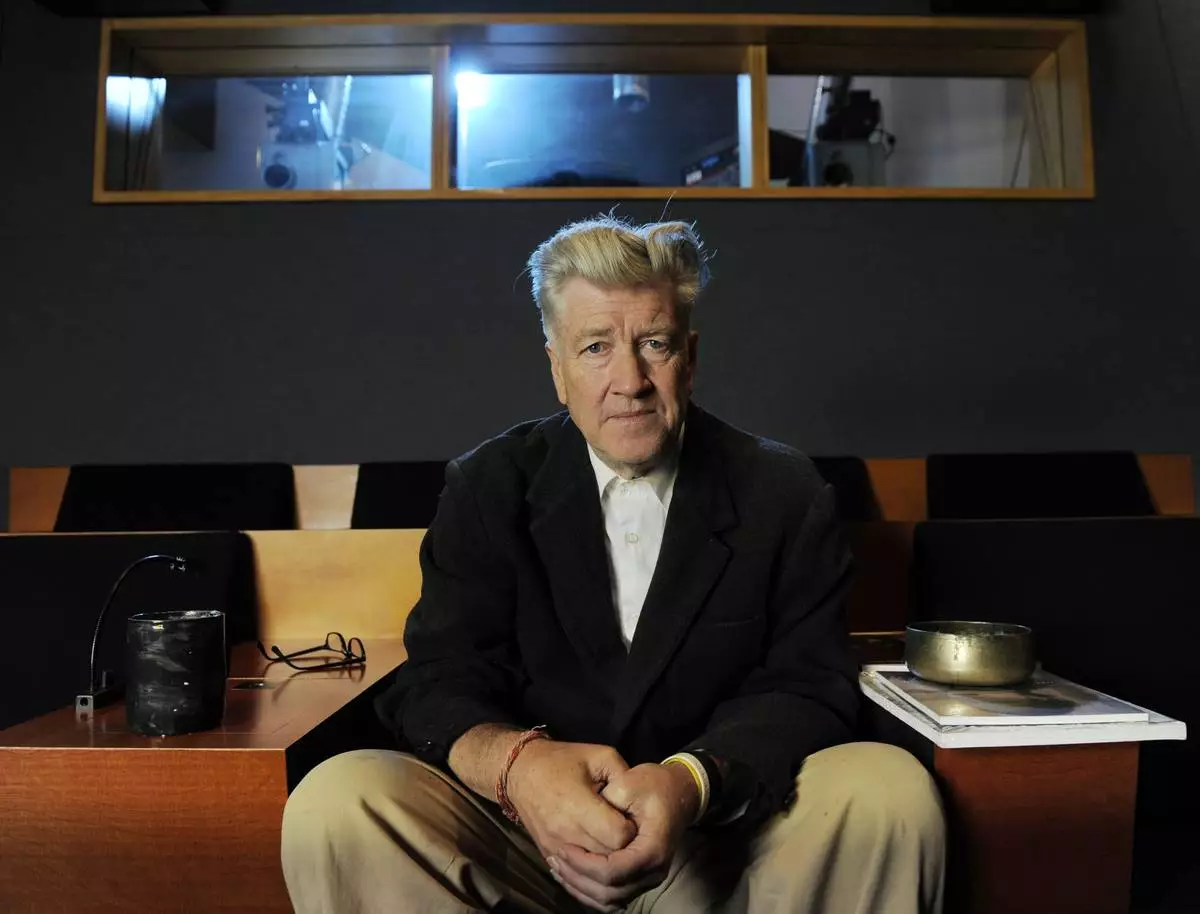
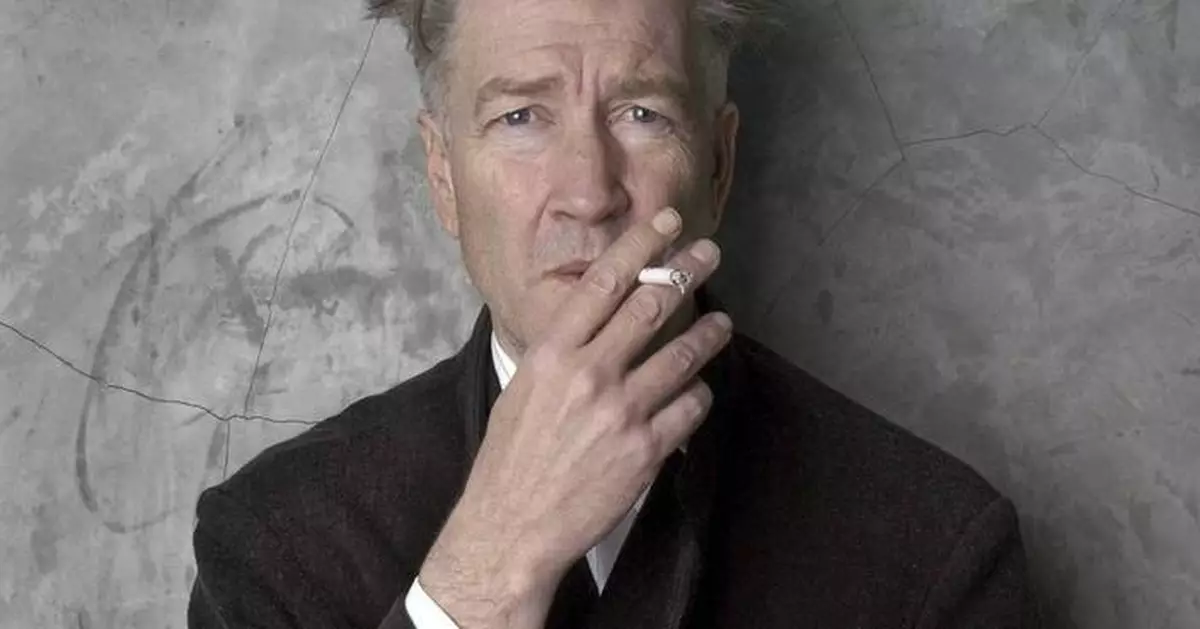
FILE - Filmmaker David Lynch poses for a portrait in his private screening room in Los Angeles on Sept. 9, 2010. (AP Photo/Chris Pizzello, file)
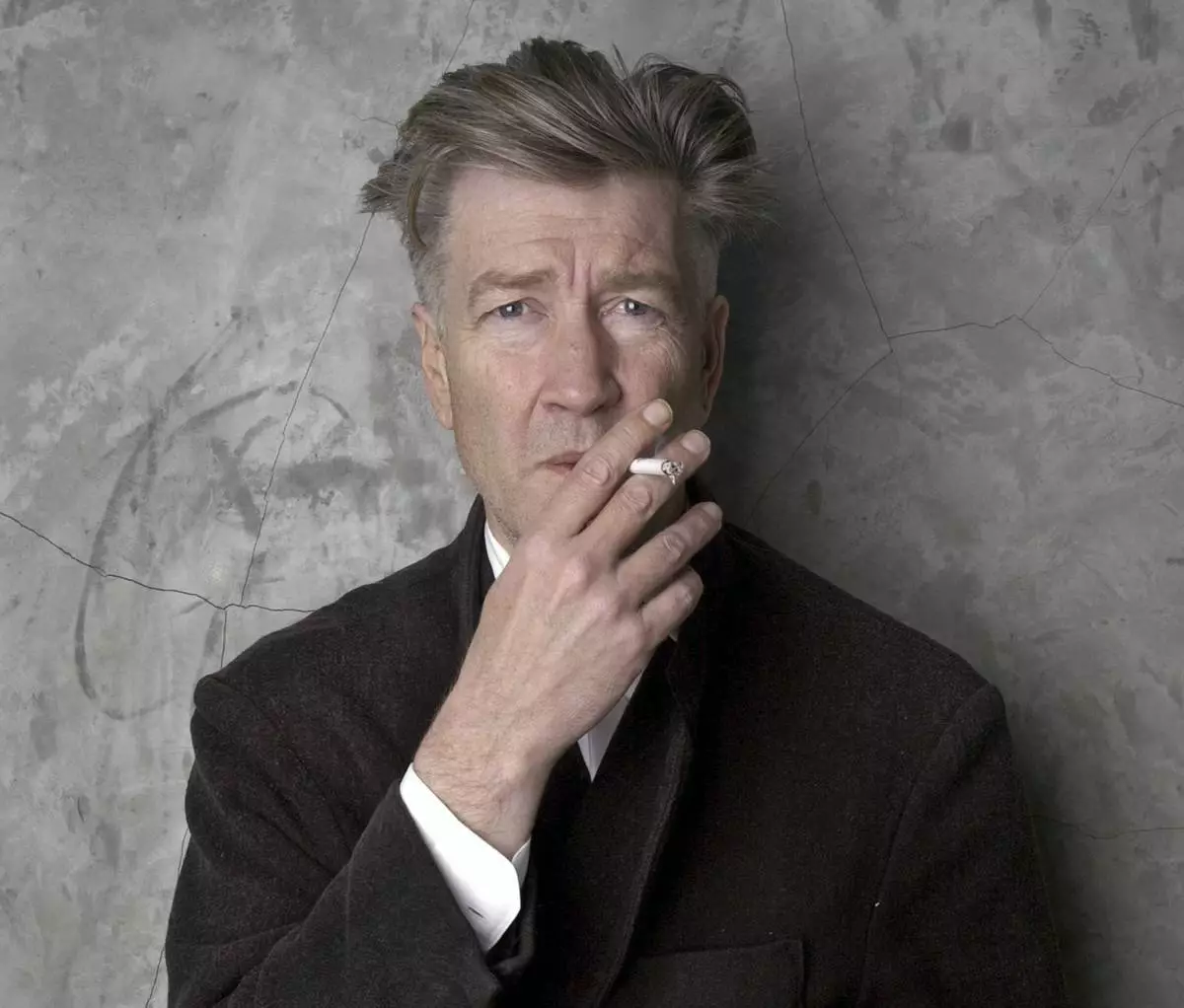
FILE - Filmmaker David Lynch poses at his Los Angeles home March 14, 2002. (AP Photo/Chris Weeks, File)
KAMPALA, Uganda (AP) — One figure looms large ahead of Uganda's elections Thursday, although he is not on the ballot: the president's son and military commander, Muhoozi Kainerugaba.
Kainerugaba, long believed to be the eventual successor, stood down for his father, President Yoweri Museveni, who is seeking a seventh term that would bring him closer to five decades in power.
Yet Kainerugaba, a four-star general, remains a key figure in Ugandan politics as the chief enforcer of his father’s rule in this east African country. He is the top military commander, appointed by his father nearly two years ago after Kainerugaba told a political rally he was ready to lead.
Kainerugaba’s appointment as army chief put his political campaign on hold — a least, critics say, for as long as Museveni still wants to stay.
Many Ugandans are now resigned to the prospect of hereditary rule, once vehemently denied by government officials who said claims of a secret “Muhoozi Project” for leadership were false and malicious.
Kainerugaba himself has been honest about his presidential hopes since at least 2023 and openly says he expects to succeed his father.
“I will be President of Uganda after my father,” he said in 2023, writing on social platform X. “Those fighting the truth will be very disappointed.”
The president’s son is more powerful than ever, his allies strategically deployed in command positions across the security services. As the presumed heir to the presidency, he is the recipient of loyalty pledges from candidates seeking minor political offices.
Kainerugaba joined the army in the late 1990s, and his fast rise to the top of the armed forces proved controversial.
In February 2024, a month before Kainerugaba was named army chief, the president officially delegated some of his authority as commander-in-chief to the head of the military.
Exercising authority previously reserved for the president, including promoting army officers of high rank and creating new army departments, Kainerugaba is more powerful than any army chief before him, said Mwambutsya Ndebesa, a political historian at Uganda’s Makerere University, adding that family rule appears inevitable.
“Honestly, I don’t see a way out through constitutional means,” he said.
Elections, he said, “is just wasting time, legitimizing authority but not intended as a democratic goal... Any change from Museveni will be determined by the military high command.”
With Museveni not saying when he would retire, a personality cult around Kainerugaba has emerged. Some Ugandans stage public celebrations of his birthday. Campaign posters of many seeking parliamentary seats often feature the emblem of Kainerugaba’s political group, the Patriotic League of Uganda. Speaker of Parliament Anita Among last year called Kainerugaba “God the Son."
The speaker's comments underscored the political rise of Kainerugaba in a country where the military is the most powerful institution and Museveni has no recognizable successors in the upper ranks of his party, the National Resistance Movement.
Some believe Kainerugaba is poised to take over in the event of a disorderly transition from Museveni, who is 81. One critic, ruminating on Kainerugaba’s military rank, has been urging the son to depose his father.
“I have endlessly appealed to Muhoozi Kainerugaba to, at least, pretend to coup his dad, become the opposition hero, and accuse the old man of all the crimes the general Kampala public accuses him of,” Yusuf Serunkuma, an academic and independent analyst, wrote in the local Observer newspaper last year.
“Sadly, Kainerugaba hasn’t heeded my calls thus far. That he is being pampered by his father to the presidency doesn’t look good at all.”
Kainerugaba’s supporters say he is humble in private and critical of the corruption that has plagued the Museveni government. They also say he offers Uganda the opportunity of a peaceful transfer of political power in a country that has not had one since independence from British colonial rule in 1962.
In addition to opposing family rule, his critics point out that Kainerugaba has behaved badly in recent years as the author of often-offensive tweets.
He has threatened to behead Bobi Wine, a presidential candidate who is the most prominent opposition figure in Uganda. He has said the opposition figure Kizza Besigye, jailed over alleged treason charges, should be hanged "in broad daylight” for allegedly plotting to kill Museveni. And he has appeared to confound even his father, who briefly removed him from his military duties in 2022 when Kainerugaba threatened on X to capture the Kenyan capital of Nairobi in two weeks.
Wine said in a recent interview with The Associated Press that Kainerugaba's army "has largely taken over the election.” Wine said his supporters are the victims of violence, including beatings, perpetrated by soldiers.
In its most recent dispatch ahead of voting, Amnesty International said the security forces were engaging in a “brutal campaign of repression.” It cited one event at a rally by Wine’s party, the National Unity Platform, in eastern Uganda on Nov. 28, when one man died after the military blocked an exit and open fired on the crowd.
It was not possible to get a comment from Kainerugaba, who rarely gives interviews.
Frank Gashumba, a Kainerugaba ally and vice chairman of the Patriotic League of Uganda, said Wine was exaggerating the threat against him. “Nobody is touching him,” he said. “He’s lacking the limelight.”
Only one senior member of the president’s party has publicly pushed back against hereditary rule.
Kahinda Otafiire, a retired major general who is among those who were by Museveni’s side when he first took power by force after a guerrilla war in 1986, has urged Kainerugaba to seek leadership on his own merits rather than as his father’s son.
“If you say so-and-so’s son should take over from the father, his son will also want to take over from his grandfather. Then there will be Sultan No. 1, Sultan No. 2, and then the whole essence of democracy, for which we fought, will be lost," Otafiire, who serves as Uganda's interior minister, told local broadcaster NBS last year.
"Let there be fair competition, including Gen. Muhoozi. Let him prove to Ugandans that he is capable, not as Museveni’s son but as he, Muhoozi, who is competent to manage the country.”
Follow AP’s Africa coverage at: https://apnews.com/hub/africa
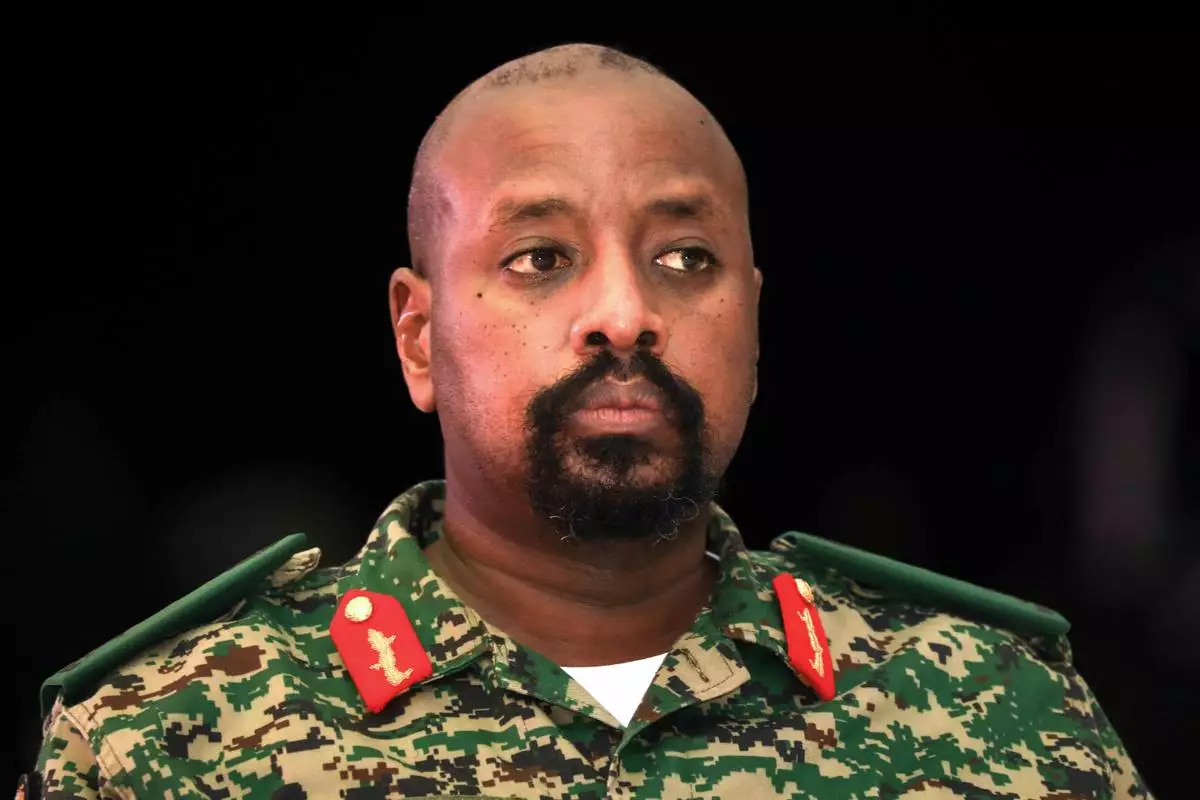
FILE - Lt. Gen. Muhoozi Kainerugaba, son of Uganda's President Yoweri Museveni, attends a "thanksgiving" ceremony in Entebbe, Uganda, May 7, 2022. (AP Photo/Hajarah Nalwadda, File)