An official with the International Federation of Red Cross and Red Crescent Societies (IFRC) said she hopes the ceasefire agreement between Israel and Hamas will bring greater access to delivering much-needed supplies to people in Gaza.
Israel and Hamas have agreed to a Gaza ceasefire deal following intensive mediation by Qatar, Egypt, and the United States, Qatari Foreign Minister Sheikh Mohammed bin Abdulrahman bin Jassim Al Thani announced on Wednesday.
The Gaza ceasefire starts taking hold on Sunday, according to Qatar's Foreign Ministry Spokesperson Majed Al Ansari.
In an interview with China Global Television Network (CGTN), Nichola Jones, communications coordinator for Middle East Crisis at IFRC, underscored that lasting peace and urgent humanitarian assistance is desperately needed in the war-torn enclave.
"It's very difficult to say what is the most pressing when in a situation like this, people have lost everything and are unable to access even the most basic of support. But what we do know is that people need food. There is massive food insecurity and a risk of famine in Gaza. People need shelter. They have nowhere to live and there is no safe place in Gaza. I think that's one of the most important things to underline, that until there is a ceasefire, until there is lasting peace, there is no safety in Gaza for families, for children, for anybody," she said.
"People really need to be able to access healthcare. We are waiting to be able to transport more medical supplies and medicines in. The reality in Gaza is that there is no electricity, there is no clean water, there is no power, there are no roads. This basic infrastructure has been damaged and eroded over the last fifteen months. So the challenge faced to the people is huge, and the challenge faced to us in order to be able to support them is also massive," Jones emphasized.
Throughout the conflict, Israel has consistently blocked humanitarian aid from entering Gaza at the rates it had previously. Jones said the organization is eager to see the freer flow of aid resume.
"We hope that with the advent of a ceasefire agreement, there will be greater access for us and so that transportation of goods will be able to happen from those border points in Egypt and in Jordan. But we don't know exactly what the next few hours or days or weeks will bring in terms of access. But what we hope is that it will improve for us and we've been calling for that as the International Federation of Red Cross and Red Crescent since the beginning, because if we can't access and we can't transfer much-needed supplies to the people, then we can't provide the lifesaving support that we are mandated to provide," Jones said.
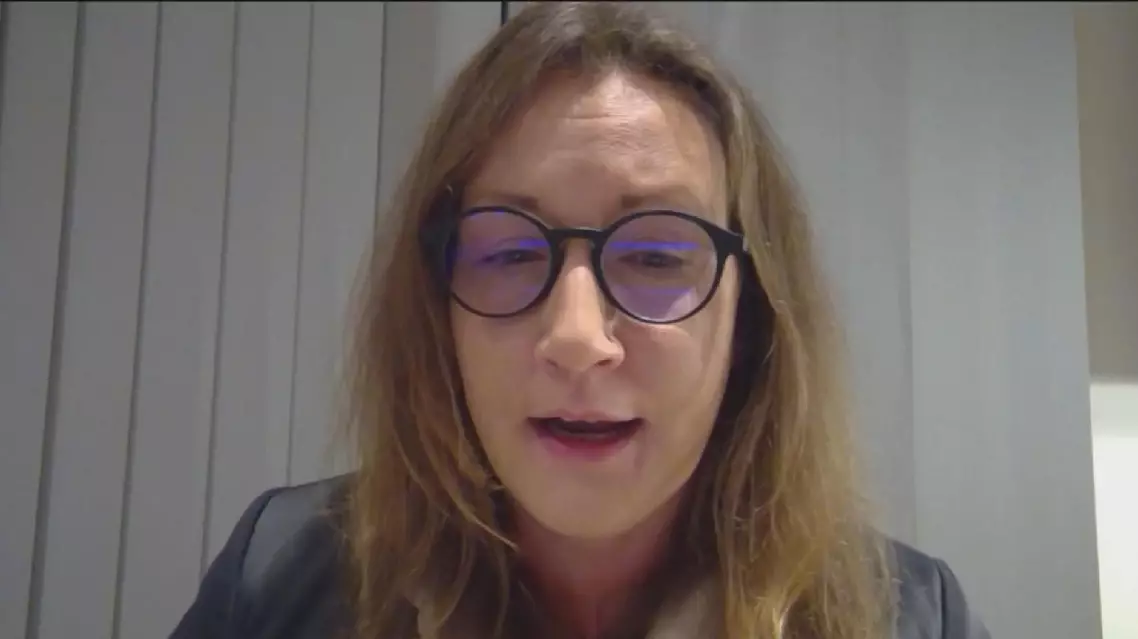
IFRC official hopes for greater access for transporting much-needed aid to Gaza