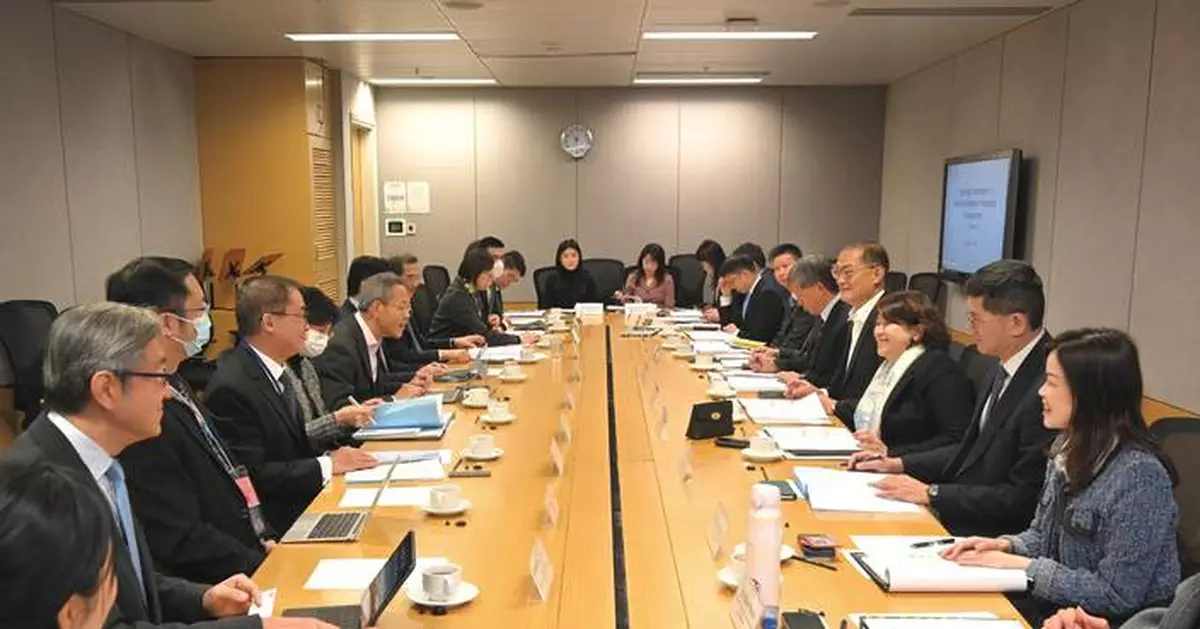
Secretary for Health chairs second meeting of Steering Committee on Health and Medical Innovation Development
The Secretary for Health, Professor Lo Chung-mau, chaired the second meeting of the Steering Committee on Health and Medical Innovation Development today (January 20) to discuss the development direction and policy initiatives for driving medical innovation in Hong Kong. Members also offered advice on the progress of establishing the Hong Kong Centre for Medical Products Regulation (CMPR) and the development of the Greater Bay Area International Clinical Trial Institute (GBAICTI).
At the meeting, members were briefed on the latest developments of establishing the CMPR. Since its establishment in June last year, the Preparatory Office for the CMPR has been taking forward a number of measures, including reviewing the regulatory work of drugs and medical devices in other regions to formulate a regulatory framework of drugs and medical devices suitable for Hong Kong, assessing the need for legislation, devising the restructuring of the existing regulatory functions and service plans for drugs and medical devices, and proposing the timetable for the establishment of the CMPR and the roadmap towards the adoption of "primary evaluation" in the first half of this year.
Furthermore, members also offered advice on the strategic development plan for the GBAICTI. The GBAICTI will take forward a number of key tasks this year, including promoting process optimisation, establishing a one-stop Hong Kong Clinical Trial Digital Portal, strengthening collaboration within the Guangdong-Hong Kong-Macao Greater Bay Area (GBA), and planning for the GBAICTI's move into one of the wet laboratory-enabled buildings at the soon-to-be-completed Hong Kong-Shenzhen Innovation and Technology Park, with a view to further enhancing Hong Kong's overall clinical trial efficiency and capability.
Other key areas of work of the GBAICTI include talent training, strengthening Hong Kong's role in regional and international clinical trial networks, and establishing a high-level international clinical trial services platform in collaboration with other GBA cities, with a view to pushing ahead with the development of an advanced biomedical industry at full steam by capitalising on Hong Kong's unique advantages of enjoying strong support of the motherland and being closely connected to the world, thereby complementing the development goals as set out in the Development Plan for Shenzhen Park of Hetao Shenzhen-Hong Kong Science and Technology Innovation Co-operation Zone promulgated by the State Council.
Professor Lo said, "At today's meeting, members of the Steering Committee recognised the efforts of the Hong Kong Special Administrative Region (HKSAR) Government in promoting health and medical innovation and offered professional advice on the way forward regarding the development direction and policy initiatives. The Health Bureau (HHB) will actively follow up, and make every effort to take forward and implement the measures on expediting the reform of the approval mechanism for drugs and medical devices and enhancing Hong Kong's clinical trial capability on all fronts as set out in 'The Chief Executive’s 2024 Policy Address' by complementing technological innovation with institutional innovation. The HHB will also collaborate with Shenzhen to establish the GBA Clinical Trial Collaboration Platform to extend the research and development (R&D) network and expedite clinical trials; and establish the Real-World Study and Application Centre to leverage Hong Kong's vast and standardised high-quality medical databases, with a view to accelerating Hong Kong's development into an international health and medical innovation hub."
"In the Resolution of the Communist Party of China (CPC) Central Committee on Further Deepening Reform Comprehensively to Advance Chinese Modernization adopted by the Third Plenary Session of the 20th CPC Central Committee, it mentions the development strategy for further reforming the medical and healthcare systems and improving the mechanisms for supporting the development of innovative drugs and medical equipment. The HHB will embrace changes while staying principled, and leverage Hong Kong's advantages of 'one country, two systems', its high-quality healthcare professions and high compatibility with international standards and more, to develop Hong Kong into an international health and medical innovation hub and foster co-ordinated development with other GBA cities, so that patients may benefit from the most advanced diagnostic and treatment technologies, thereby achieving the goal of bringing the benefits of good drugs and R&D to Hong Kong. At the same time, we will promote the development of advanced biomedical technology industries and actively integrate into the overall national development by showing support for fostering new quality productive forces in biomedical technology as set out in the Resolution and the Development Plan to align with national development strategies," he emphasised.
Established and wholly owned by the HKSAR Government, the GBAICTI officially opened on November 21 last year in the Hong Kong Park of the Hetao Shenzhen-Hong Kong Science and Technology Innovation Co-operation Zone. The GBAICTI co-ordinates clinical trial resources in the public and private sectors in Hong Kong and serve as a one-stop clinical trial support platform for medical research institutions. The Greater Bay Area International Clinical Trials Center in the Shenzhen Park also officially opened on the same day. The "one institute, one center" will jointly establish the GBA Clinical Trial Collaboration Platform under the "one zone, two parks" co-ordinated development model.
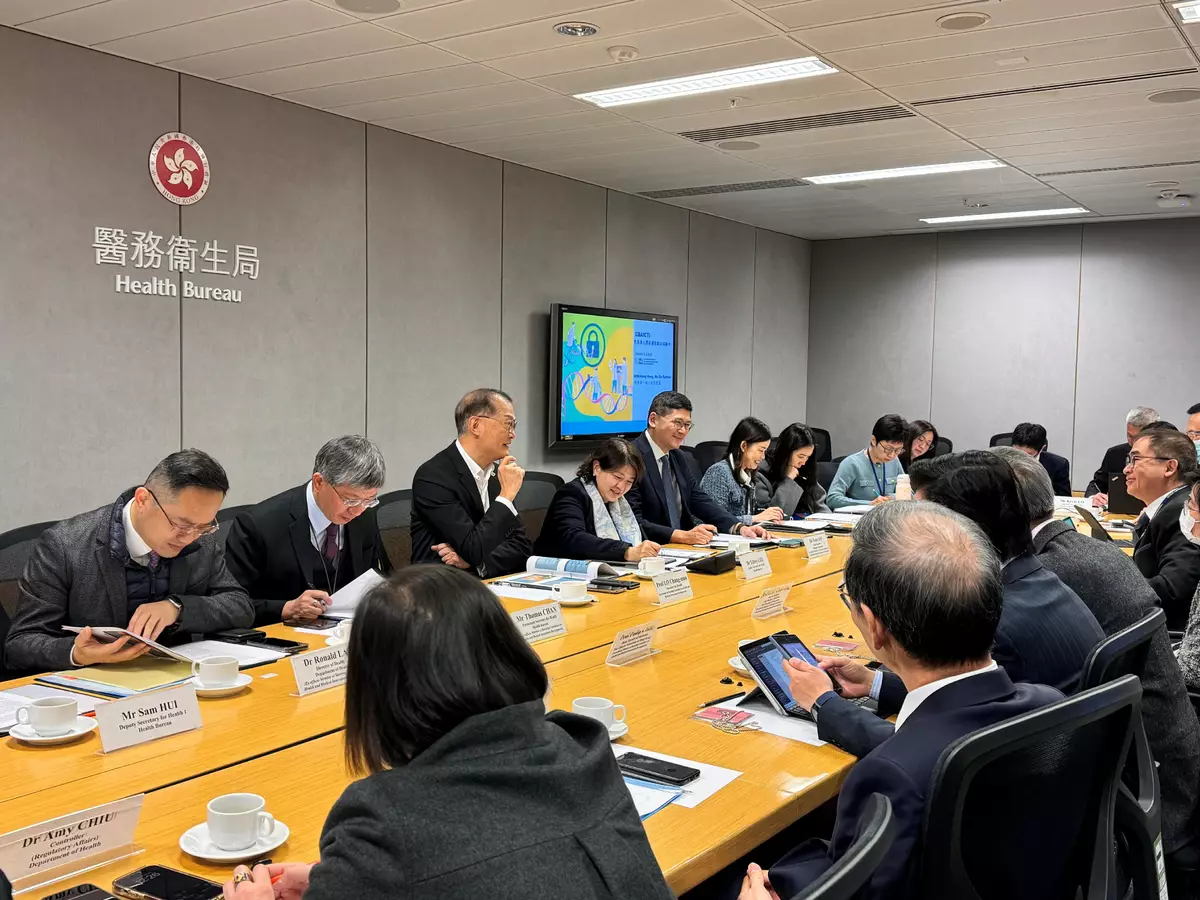
Secretary for Health chairs second meeting of Steering Committee on Health and Medical Innovation Development Source: HKSAR Government Press Releases
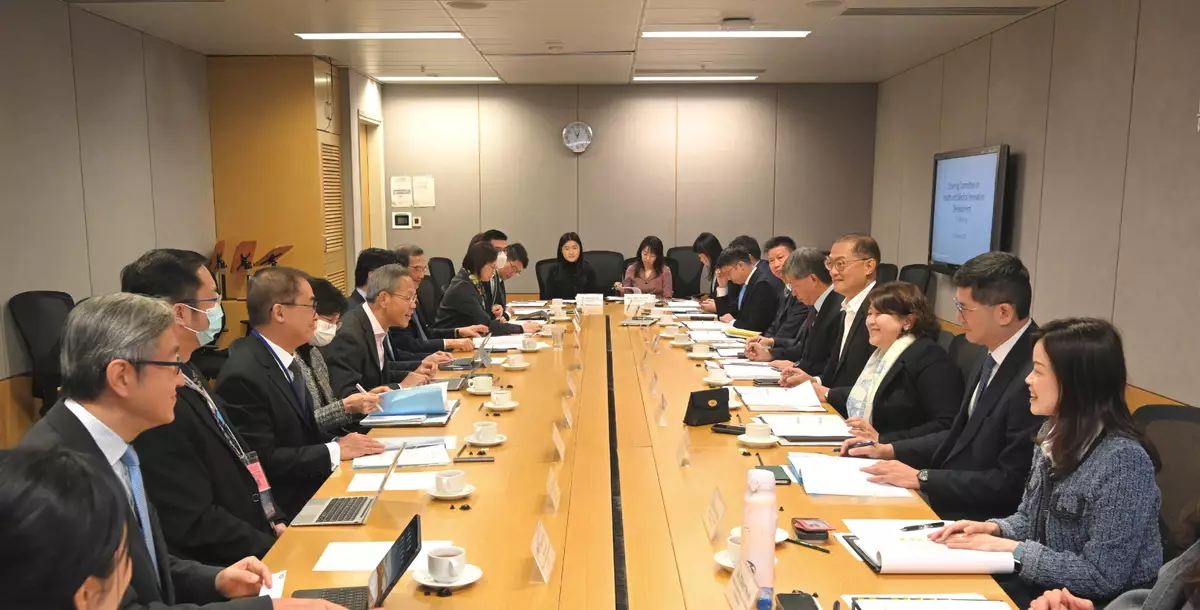
Secretary for Health chairs second meeting of Steering Committee on Health and Medical Innovation Development Source: HKSAR Government Press Releases