Import of poultry meat and products from areas in US suspended
The Centre for Food Safety (CFS) of the Food and Environmental Hygiene Department announced today (January 20) that in view of a notification from the World Organisation for Animal Health (WOAH) about outbreaks of highly pathogenic H5N1 avian influenza in areas in the United States (US), the CFS has instructed the trade to suspend the import of poultry meat and products (including poultry eggs) from the relevant areas with immediate effect to protect public health in Hong Kong.
The relevant areas are as follows:
State of South Carolina
(1) Spartanburg County
State of Indiana
(2) Jay County
State of Delaware
(3) Kent County
State of South Dakota
(4) Miner County
State of Missouri
(5) Cooper County
State of Nebraska
(6) Lancaster County
(7) Johnson County
(8) Nemaha County
State of Wisconsin
(9) Burnett County
State of Michigan
(10) Ottawa County
State of California
(11) Butte County
(12) Riverside County
(13) Monterey County
State of Ohio
(14) Mercer County
(15) Greene County
State of Arkansas
(16) Clay County
State of Mississippi
(17) Copiah County
State of Illinois
(18) Lawrence County
State of West Virginia
(19) Pocahontas County
A CFS spokesman said that according to the Census and Statistics Department, Hong Kong imported about 63 470 tonnes of chilled and frozen poultry meat, and about 17.2 million poultry eggs from the US in the first nine months of last year.
"The CFS has contacted the American authority over the issue and will closely monitor information issued by the WOAH and the relevant authorities on the avian influenza outbreaks. Appropriate action will be taken in response to the development of the situation," the spokesman said.
Subsidiary legislations relating to regulation of ride-hailing services gazetted today
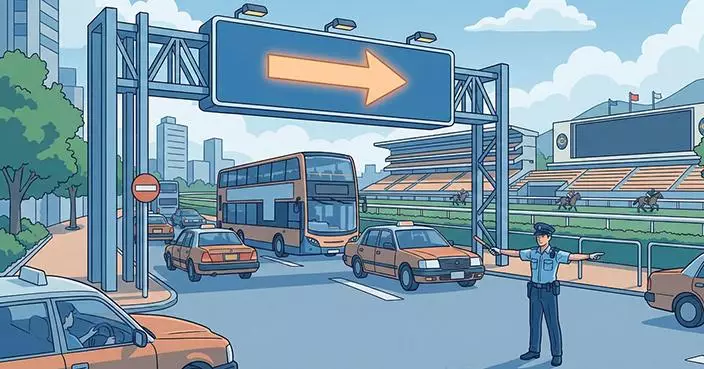
The Government today (May 26) gazetted four pieces of subsidiary legislation relating to the regulation of ride-hailing services.
The Road Traffic (Ride-hailing Service) Regulation sets out the details of the regulatory regime for ride-hailing services, including the validity period and renewal arrangement for ride-hailing service licences, ride-hailing vehicle permits (vehicle permits) and ride-hailing vehicle driving permits; the fees associated with the aforementioned licences and permits; and the obligations imposed on the holders of such licences and permits. The Road Traffic (Driving Licences) (Amendment) Regulation 2026 introduces a combined driving test for taxis and ride-hailing vehicles. The Road Traffic (Limit on Number of Ride-hailing Vehicle Permits) Notice specifies the limit on the number of vehicle permits that may be issued. The Road Traffic (Amendment) (Ride-hailing Service) Ordinance 2025 (Commencement) Notice prescribes the commencement dates of the various provisions of the Road Traffic (Amendment) (Ride-hailing Service) Ordinance 2025.
A spokesperson for the Transport and Logistics Bureau said, "With the support of different sectors of society, the Road Traffic (Amendment) (Ride-hailing Service) Bill 2025 introduced by the Government was passed by the Legislative Council (LegCo) last October, establishing a clear legal framework for the regulation of ride-hailing services and resolving a long-standing controversy. Following extensive consultation, gathering of operational data from the trade and balancing of various considerations, the Government has further established the regulatory details for ride-hailing services through various pieces of subsidiary legislation, with a view to implementing the regulatory regime.
"With the busy traffic in Hong Kong and nearly 90 per cent of the public relying on the efficient public transportation system for their daily journeys, the Government needs to impose an overall control on the number of ride-hailing vehicles. Based on the data collected from the Transport Department's (TD) survey on the demand for local personalised point-to-point transport services, and having holistically considered all relevant factors and views from various sectors of society, we propose setting the limit on vehicle permits at 10 000 at this stage. We believe this is a prudent, sound and appropriate approach that balances considerations regarding road resources and the public transport ecosystem, allowing the ride-hailing regulatory regime to be implemented smoothly. Following the introduction of the regulatory regime, changes may occur in both passenger demand for ride-hailing services and the operational conditions of ride-hailing vehicles. The Government will closely monitor market developments and the actual operations of the platforms, including licensed platforms' operational data received by the TD, and conduct dynamic assessments to review and adjust as appropriate," the spokesperson added.
"The Government's objective in introducing a regulatory regime for ride-hailing services is to provide the public with more safe, legally compliant and diverse transport options, while ensuring the healthy and orderly development of the point-to-point transport service industry as a whole. This will foster a healthy competitive environment, with a view to bringing new vitality to the industry, attracting more new entrants and encouraging frontline drivers to upgrade and transform, thereby achieving a win-win situation for the public, ride-hailing services and taxis," the spokesperson reiterated.
In May 2026, the Government consulted the Panel on Transport of the LegCo and the Transport Advisory Committee on the regulatory details for ride-hailing services respectively. Members expressed support for the Government's proposals and offered views on regulatory matters.
The Government will table the four pieces of subsidiary legislation mentioned above before the LegCo tomorrow (May 27) for negative vetting. Details of the regulatory regime and the various pieces of subsidiary legislation are set out in the LegCo brief issued by the Government today.
Source: AI-found images