PANAMA CITY (AP) — President Donald Trump’s insistence Monday that he wants the Panama Canal back under U.S. control fed nationalist sentiment and worry in Panama, home to the critical trade route and a country familiar with U.S. military intervention.
“American ships are being severely overcharged and not treated fairly in any way, shape or form, and that includes the United States Navy. And above all, China is operating the Panama Canal,” Trump said Monday.
Click to Gallery
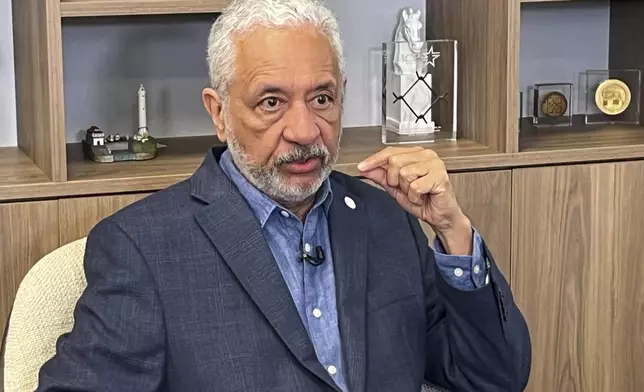
Panama Canal Administrator Ricaurte Vásquez addresses President-elect Donald Trump's suggestion that the U.S. should retake control of the Panama Canal during an interview with Associated Press in his office Friday, Jan. 10, 2025, in Panama City, Panama. (AP Photo/Abraham Terán)
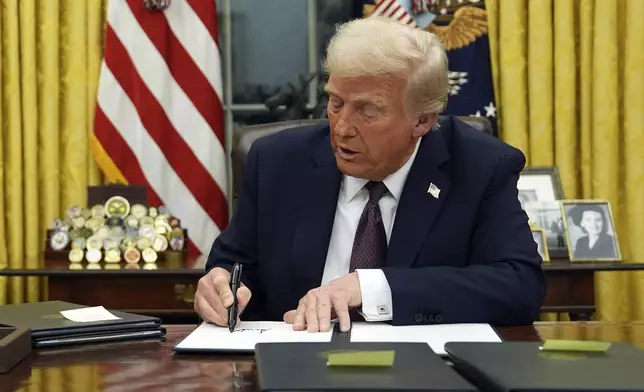
President Donald Trump signs an executive order on TikTok in the Oval Office of the White House, Monday, Jan. 20, 2025, in Washington. (AP Photo/Evan Vucci)
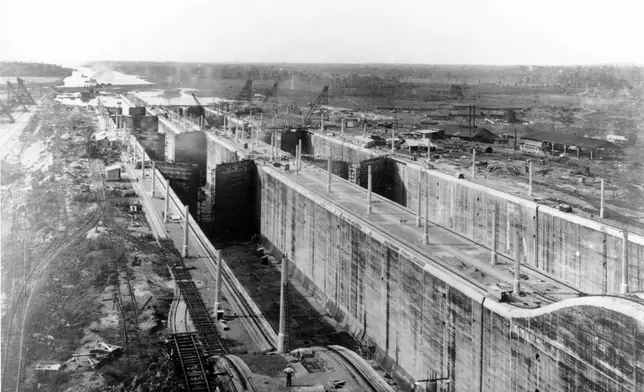
FILE - Looking north from the lighthouse on the west wall is the Gatun middle locks of the Panama Canal in the final stages of construction on June 25, 1913. (AP Photo, File)
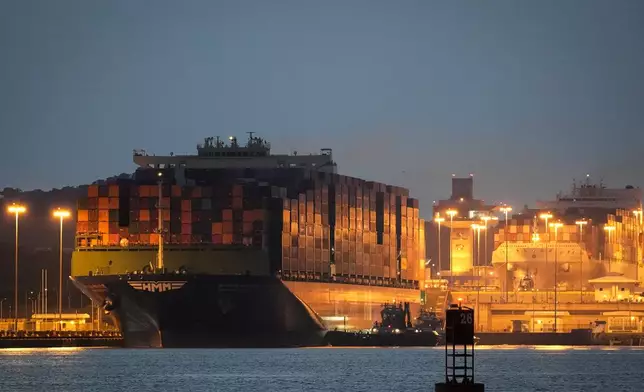
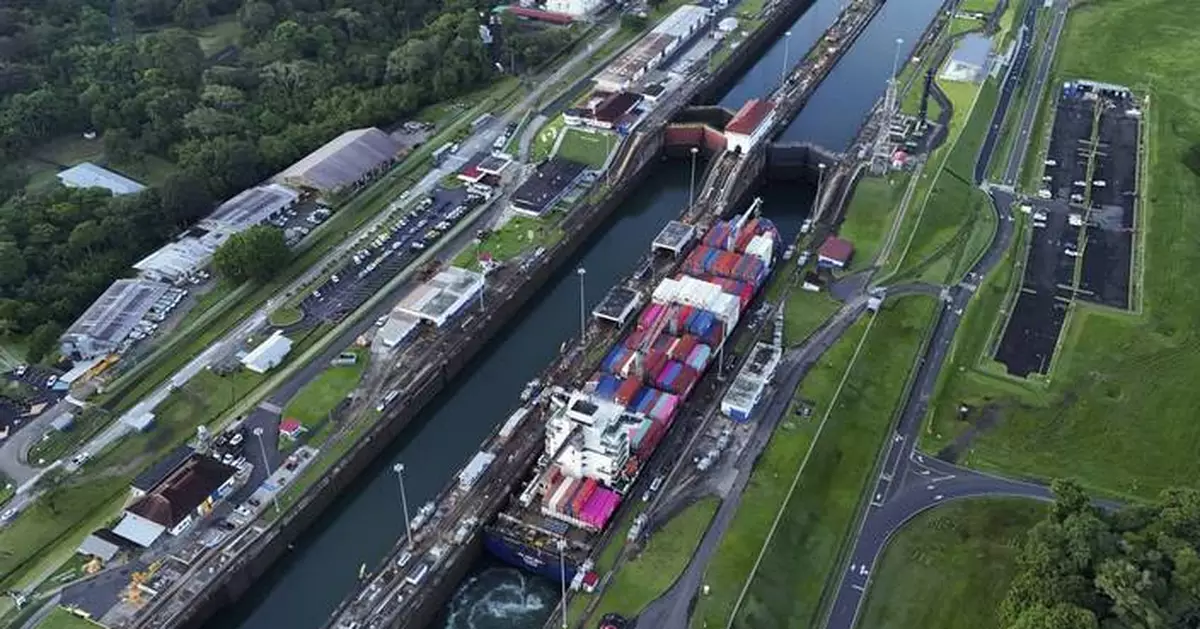
FILE - A cargo ship sails through the Miraflores locks of the Panama Canal, in Panama City, on Sept. 9, 2024. (AP Photo/Matias Delacroix, File)
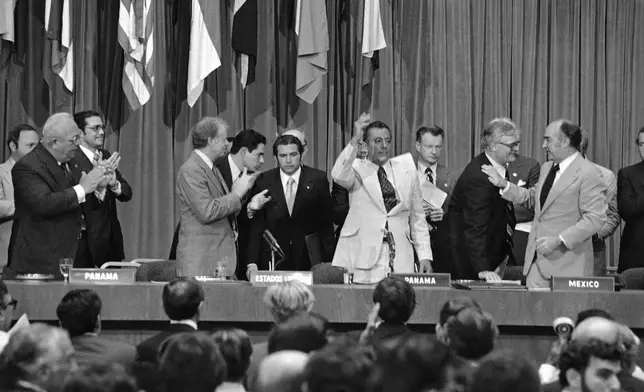
FILE - President Jimmy Carter applauds and General Omar Torrijos waves after the signing and exchange of treaties in Panama City on June 16, 1978, giving control of the Panama Canal to Panama in 2000. At far right is Zbigniew Brzezinski, Carterís National Security Advisor. (AP Photo, File)
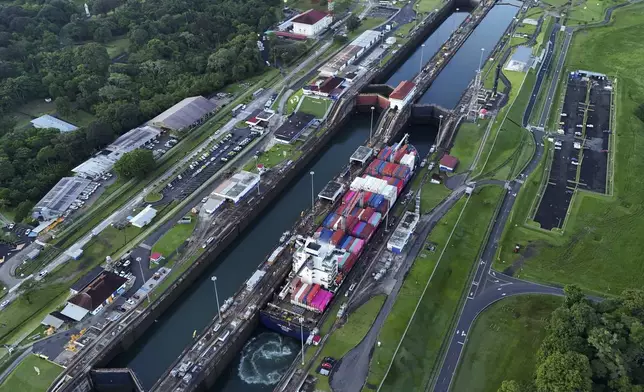
FILE - A cargo ship traverses the Agua Clara Locks of the Panama Canal in Colon, Panama, Sept. 2, 2024. (AP Photo/Matias Delacroix, File)
In the capital, some Panamanians saw Trump’s remarks as a way of applying pressure on Panama for something else he wants: better control of migration through the Darien Gap. Others recalled the 1989 U.S. invasion of Panama with concern.
Panama President José Raúl Mulino responded forcefully, as he did after Trump’s initial statement last month that the U.S. should consider repossessing the canal, saying the canal belongs to his country of 4 million and will remain Panama’s territory.
Panama's U.N. Mission sent Mulino's statement to the U.N. Security Council. The statement rejected “in its entirety" Trump's comments on the canal and said: “There is no presence of any nation in the world that interferes with our administration.”
Luis Barrera, a 52-year-old cab driver, said Panama had fought hard to get the canal back and has expanded it since taking control.
“I really feel uncomfortable because it’s like when you’re big and you take a candy from a little kid,” Barrera said.
At a rally in Phoenix in December, Trump said he might try to get the canal back after it was “foolishly” ceded to Panama. He complained that shippers were overcharged and that China had taken control of the key shortcut between the Pacific and Atlantic oceans.
Earlier this month, Trump wouldn’t rule out using military force to take it back.
The United States built the canal in the early 1900s as it looked for ways to facilitate the transit of commercial and military vessels between its coasts. Washington relinquished control of the waterway to Panama on Dec. 31, 1999, under a treaty signed in 1977 by President Jimmy Carter.
The canal is a point of pride for Panamanians. On Dec. 31, they celebrated the 25th anniversary of the handover, and days later they commemorated the deaths of 21 Panamanians who died at the hands of the U.S. military decades earlier.
On Jan. 9, 1964, students protested in the then-U.S. controlled canal zone over not being allowed to fly Panama’s flag at a secondary school there. The protests expanded to general opposition to the U.S. presence in Panama and U.S. troops got involved. A group of protesters this year burned an effigy of Trump.
The canal’s administrator, Ricaurte Vásquez, said this month that China is not in control of the canal and that all nations are treated equally under a neutrality treaty.
He said Chinese companies operating in the ports on either end of the canal were part of a Hong Kong consortium that won a bidding process in 1997. He added that U.S. and Taiwanese companies operate other ports along the canal as well.
Omayra Avendaño, who works in real estate, said Trump’s threat should be taken seriously.
“We should be worried,” she said. “We don’t have an army and he’s said he would use force.”
On Dec. 20, 1989, the U.S. military invaded Panama to remove dictator Manuel Noriega. Some 27,000 troops were tasked by then-President George H.W. Bush with capturing Noriega, protecting the lives of Americans living in Panama and restoring democracy to the country that a decade later would take over control of the Panama Canal.
Avendaño said she was 11 years old the last time the U.S. invaded her country and hoped Panama’s current government would seek international support to head off Trump’s designs on the canal.
“I remember the disaster that it was,” she said.
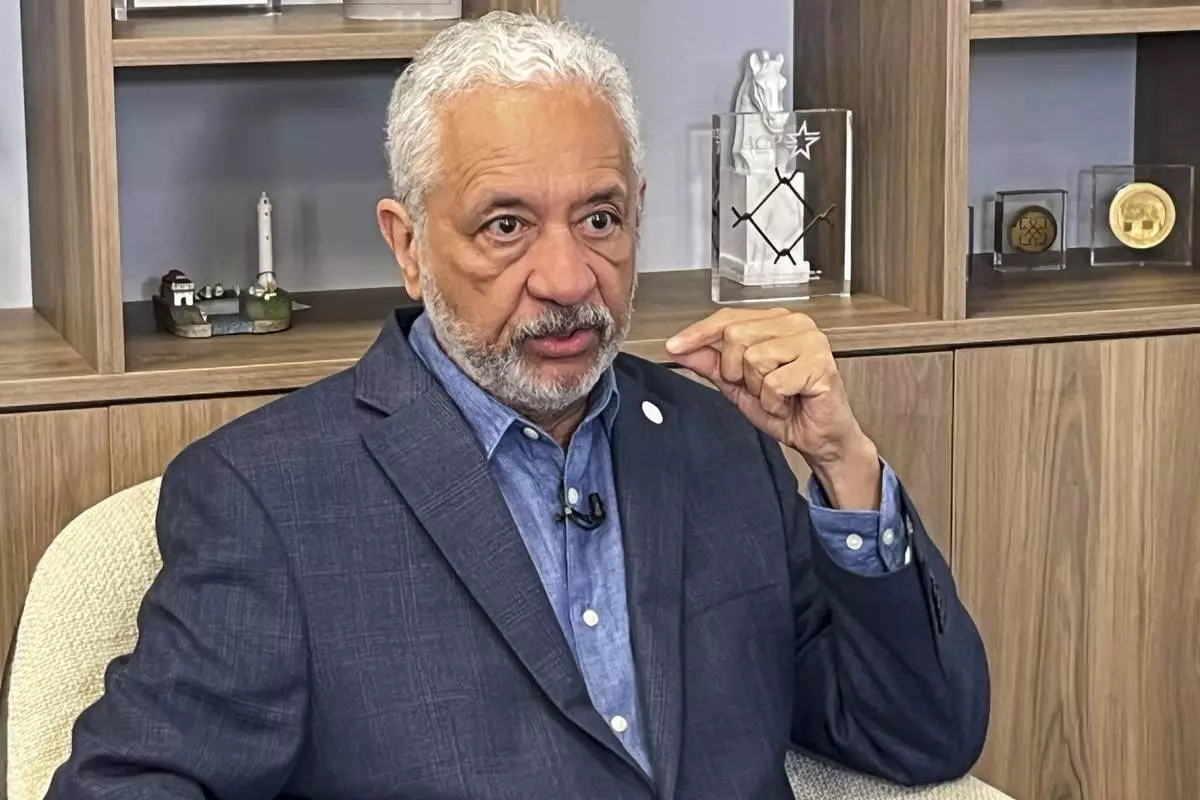
Panama Canal Administrator Ricaurte Vásquez addresses President-elect Donald Trump's suggestion that the U.S. should retake control of the Panama Canal during an interview with Associated Press in his office Friday, Jan. 10, 2025, in Panama City, Panama. (AP Photo/Abraham Terán)
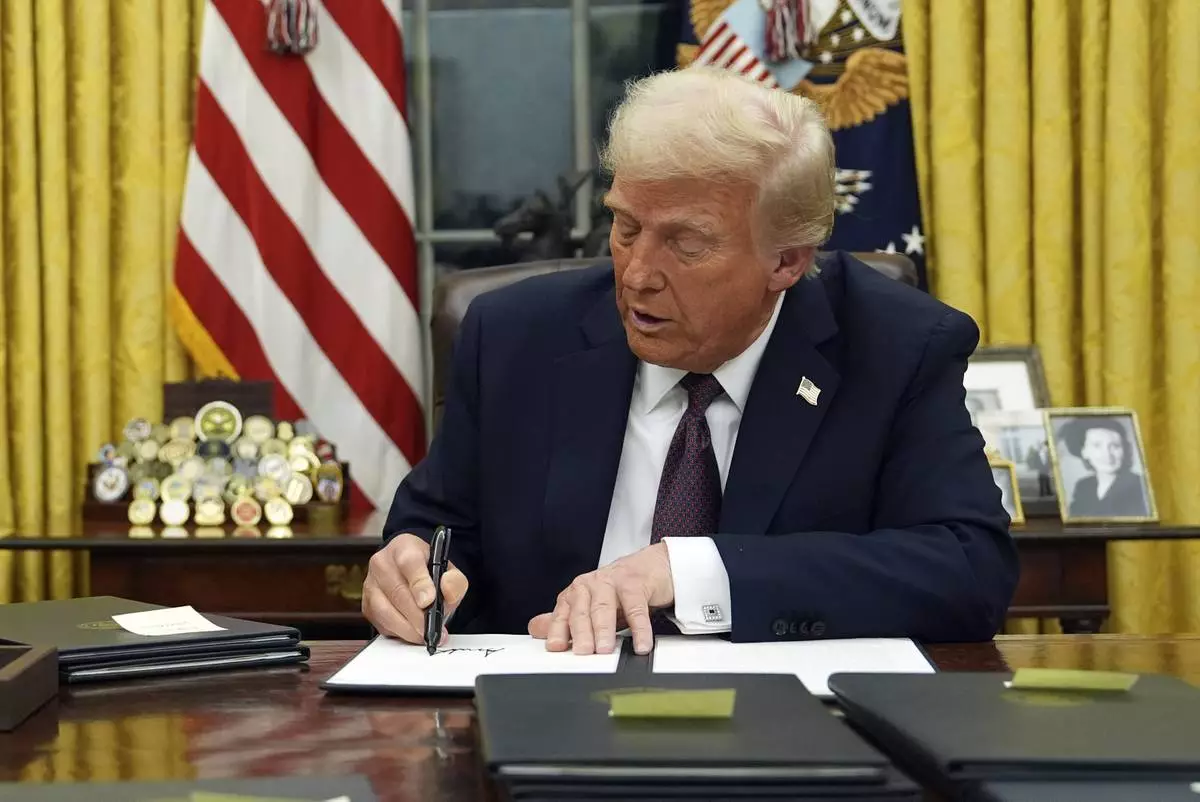
President Donald Trump signs an executive order on TikTok in the Oval Office of the White House, Monday, Jan. 20, 2025, in Washington. (AP Photo/Evan Vucci)
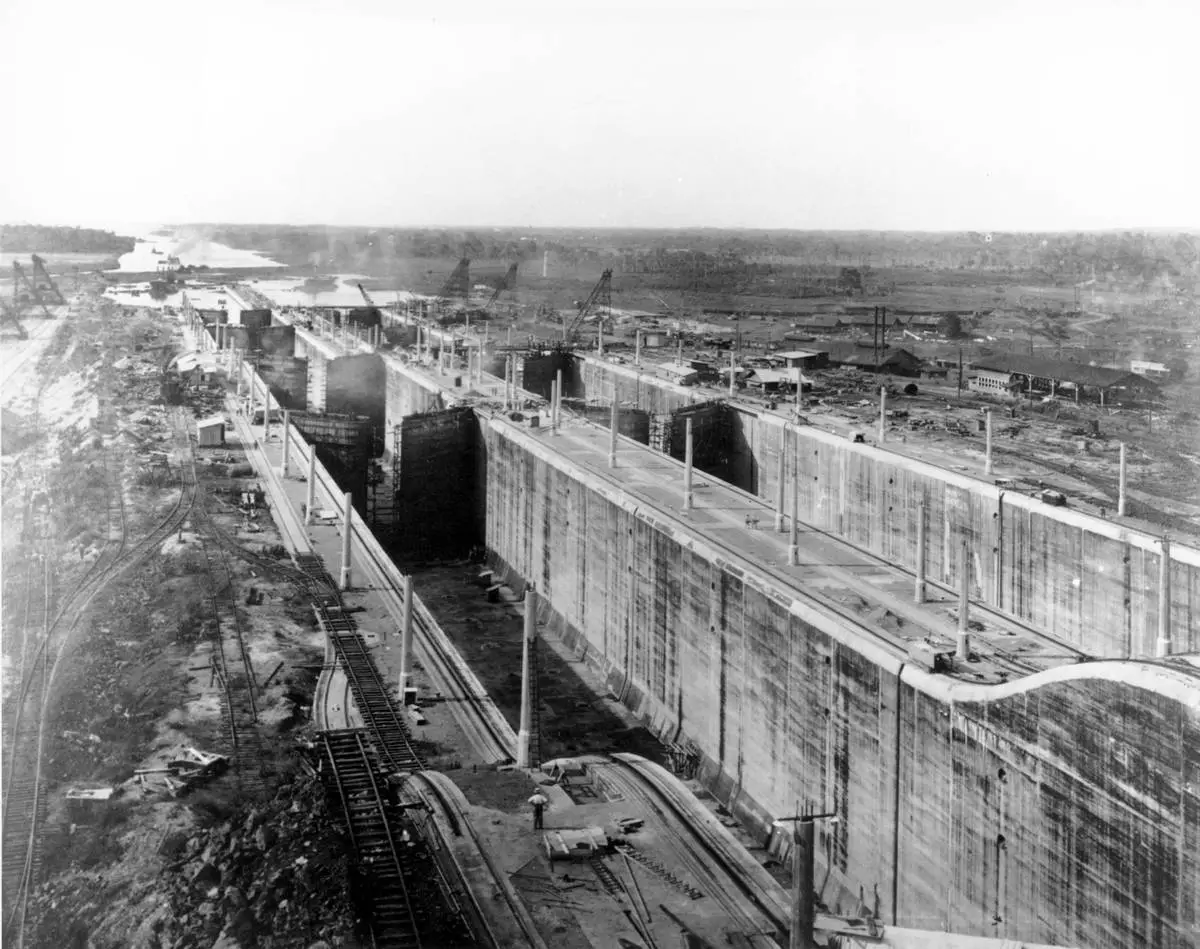
FILE - Looking north from the lighthouse on the west wall is the Gatun middle locks of the Panama Canal in the final stages of construction on June 25, 1913. (AP Photo, File)
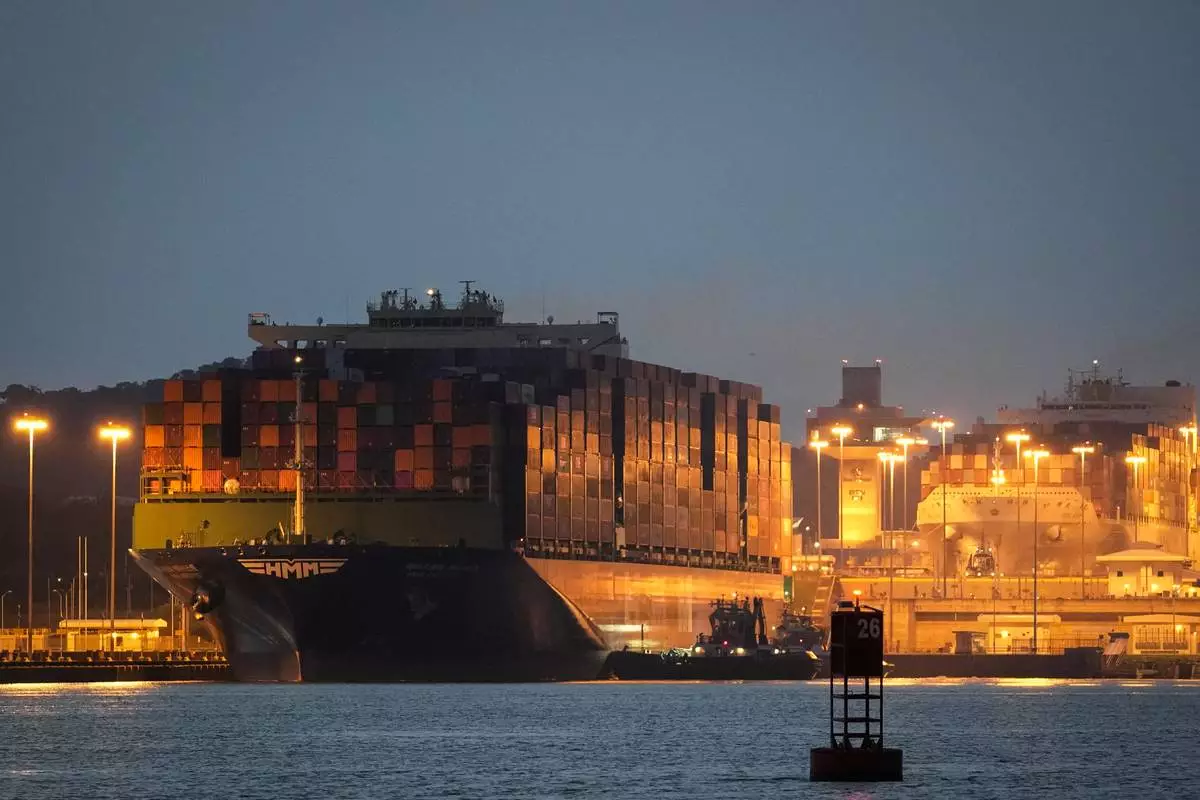
FILE - A cargo ship sails through the Miraflores locks of the Panama Canal, in Panama City, on Sept. 9, 2024. (AP Photo/Matias Delacroix, File)
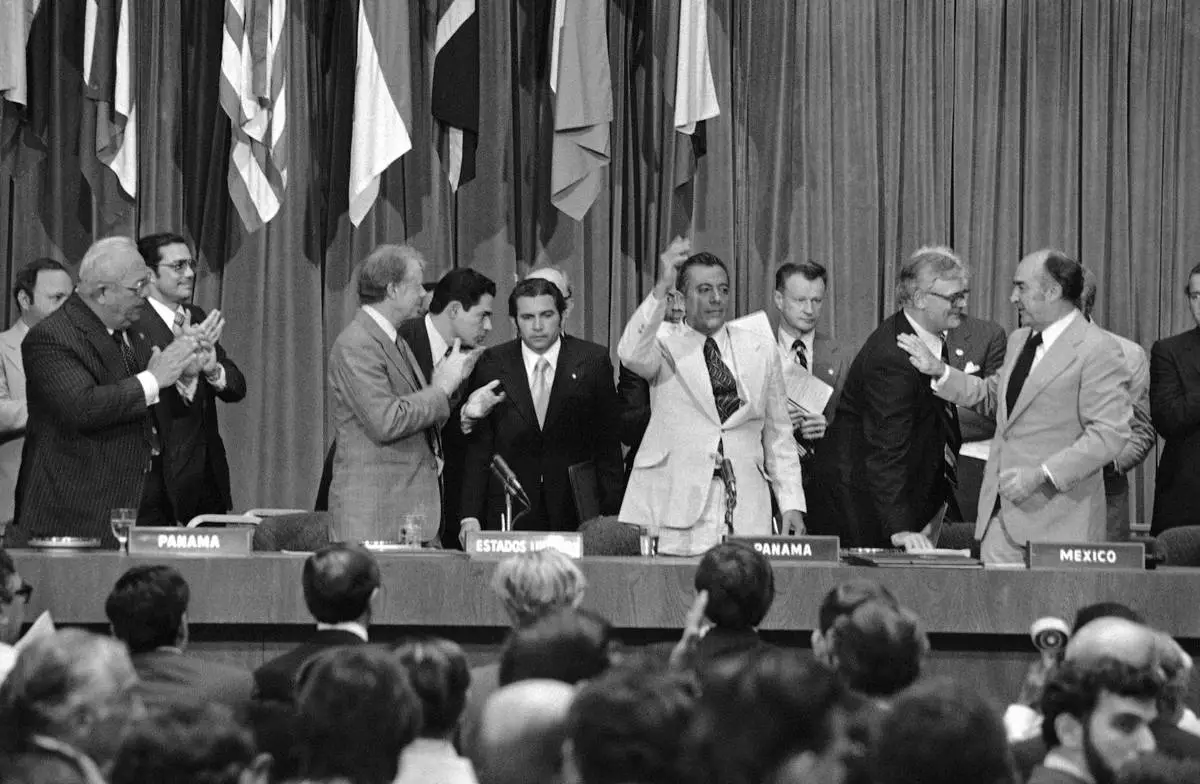
FILE - President Jimmy Carter applauds and General Omar Torrijos waves after the signing and exchange of treaties in Panama City on June 16, 1978, giving control of the Panama Canal to Panama in 2000. At far right is Zbigniew Brzezinski, Carterís National Security Advisor. (AP Photo, File)
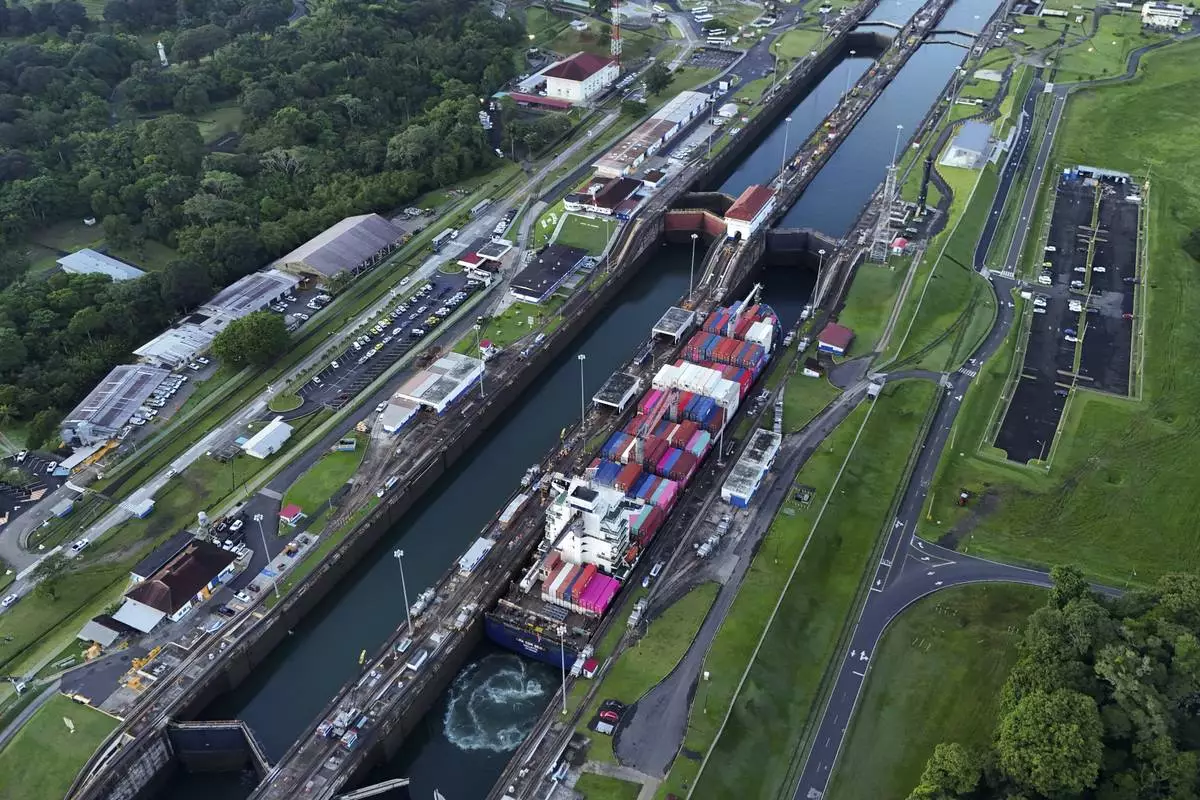
FILE - A cargo ship traverses the Agua Clara Locks of the Panama Canal in Colon, Panama, Sept. 2, 2024. (AP Photo/Matias Delacroix, File)