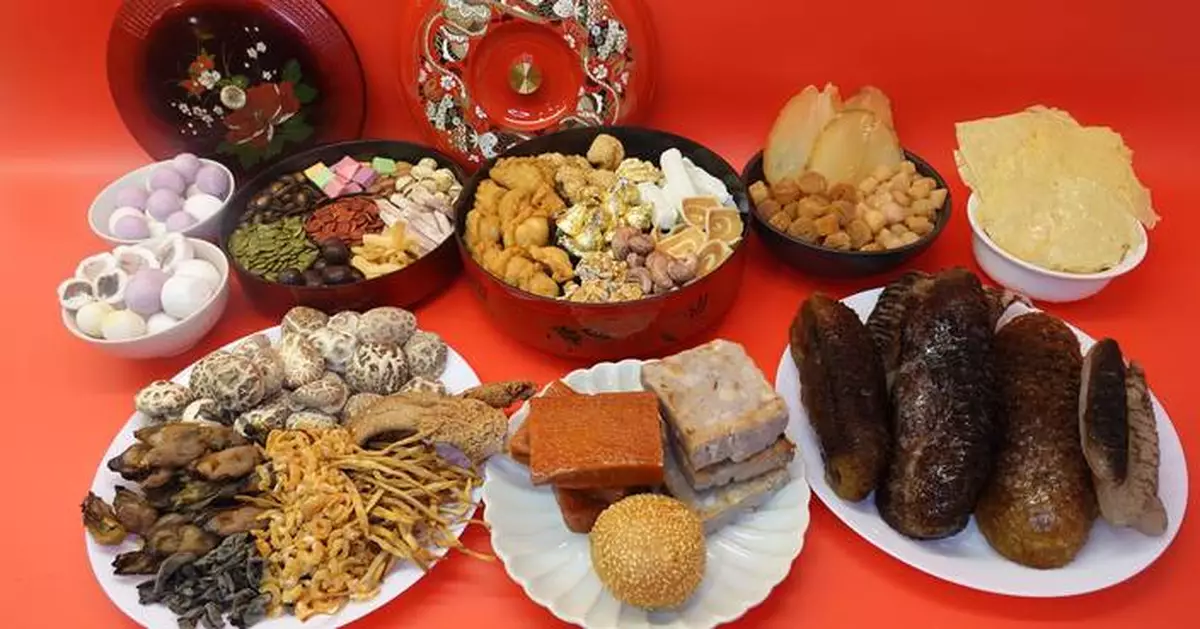
Centre for Food Safety announces test results of Lunar New Year food (second phase)
The Centre for Food Safety (CFS) of the Food and Environmental Hygiene Department today (January 22) announced the test results of a recently completed seasonal food surveillance project on Lunar New Year (LNY) food (second phase). The test results of around 180 samples collected were satisfactory except for one sample that was announced earlier.
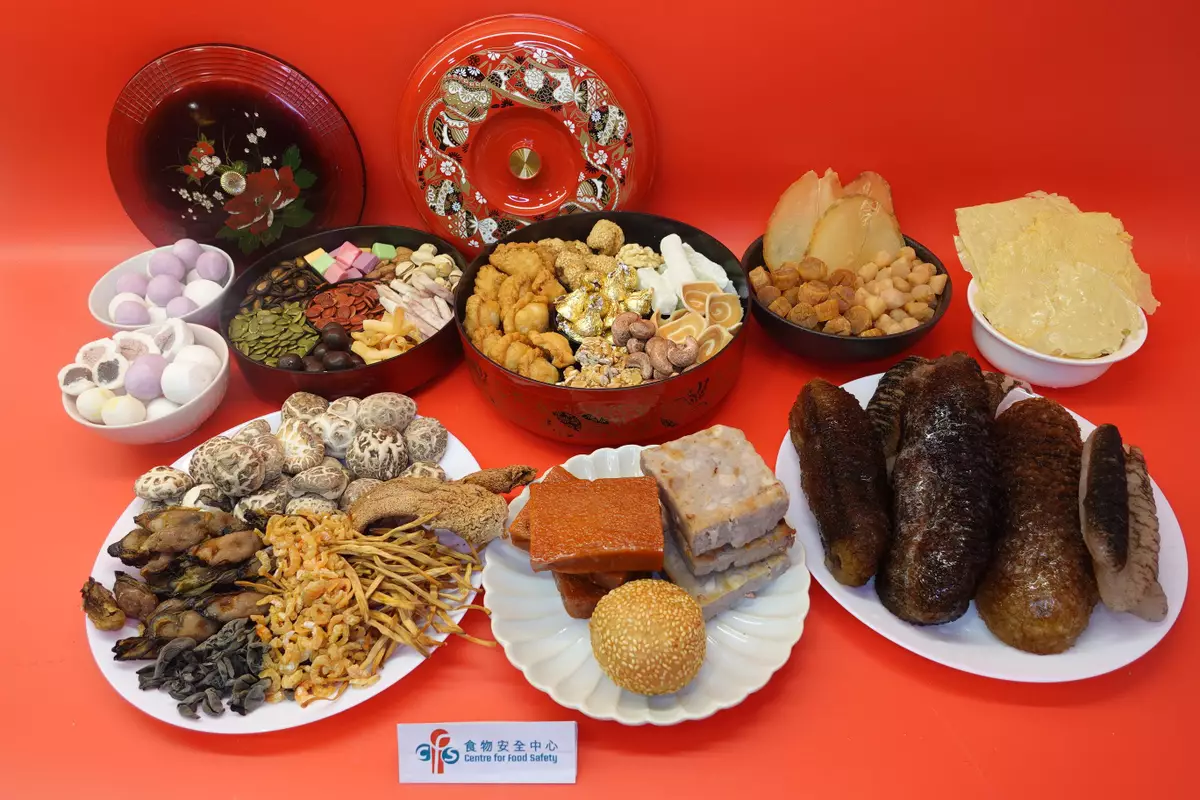
A spokesman for the CFS said, "The CFS has conducted this seasonal food surveillance project in two phases, and the first-phase test results were announced last month. With the LNY around the corner, the CFS has completed the second phase of the surveillance project on LNY food. Steamed puddings (e.g. turnip puddings and festive cakes), fried dumplings (e.g. sesame balls and crispy triangles), candies, glutinous rice balls, nuts, pistachio nuts, melon seeds, vegetarian dishes and dried aquatic products were collected from different retailers (including online retailers) for chemical analysis. Chemical tests targeted preservatives, colouring matters, antioxidants, veterinary drug residue, etc."
The unsatisfactory food sample was a prepackaged candied winter melon sample detected with non-permitted preservatives. The CFS has taken follow-up action on the above-mentioned unsatisfactory sample including informing the vendor concerned of the test result, instructing them to stop selling the affected food item, and tracing the source of the food item in question.
The spokesman urged the food trade to comply with the relevant laws and regulations in the preparation of food and production of labels. They should follow Good Manufacturing Practice and use permitted food additives only in an appropriate manner. Retailers should source food from reliable suppliers, and conduct quality checks of incoming materials and end products to ensure that ingredients used are within legal standards. In addition, the food trade should maintain proper records in accordance with the requirements of the Food Safety Ordinance to allow source tracing if needed.
The spokesman also advised consumers to buy LNY food from reliable retailers with good hygiene conditions; make sure the packaging of prepackaged cakes and snacks is intact and the products have not expired; refer to the nutrition labels on the sugar, salt (sodium) and fat content, etc, for making healthy choices; and pay attention to the hygiene conditions of food containers and the personal hygiene of staff when buying loose-packed food (e.g. candied lotus seeds, nuts and melon seeds).
"Consumers should choose food products with natural colours. Bright white pistachios may have been bleached and melon seeds with unnatural gloss may have had mineral oil added. Consumption of these food products can cause gastrointestinal discomfort," the spokesman said.
"Festive cakes that are not for immediate consumption should be kept refrigerated or stored according to the instructions on the package, and should be eaten before they expire. Reheat hot-served festive cakes thoroughly before consumption, consume it as soon as possible and avoid prolonged exposure of the food at room temperature. Nuts and melon seeds should not be kept for a long time, and those with mould or an abnormal smell or taste should not be eaten," he added.
The spokesman reminded members of the public to maintain a balanced diet and avoid excessive consumption of LNY food that is high in energy, sugar, salt or fat.
Please visit the CFS website (www.cfs.gov.hk/seasonalfood) for more food safety information about seasonal food.
Centre for Food Safety announces test results of Lunar New Year food (second phase) Source: HKSAR Government Press Releases
Public hospitals experience smooth operations on second day of public healthcare fees and charges reform
The following is issued on behalf of the Hospital Authority:
On the second day (January 2) of the implementation of the Hospital Authority public healthcare fees and charges reform (fees and charges reform), public hospitals maintained smooth operation. The HA will continue to deploy additional manpower across various departments at hospitals to assist patients in need.
On the first day (January 1) of the fees and charges reform, 3 888 patients attended the Accident and Emergency departments (A&E) of 18 public hospitals, a decrease of about 25 per cent when comparing to New Year's Day last year. From midnight to 2pm yesterday (January 2), 2 329 patients attended all A&E, approximately 30 per cent fewer than the same time period of January 2 of last year. Among the patients seeking medical consultation, there were 34 critical cases and 82 emergency cases. According to the new fees and charges arrangement, these two categories of patients will have their A&E charges fully exempted. The other cases subject to the new fees and charges arrangement include 986 urgent cases, 1 171 semi-urgent cases, and 56 non-urgent cases. The average waiting times for semi-urgent and non-urgent cases was around 55 minutes, which is shorter compared to the average waiting time for the same period last year (approximately 147 minutes) for semi-urgent and non-urgent cases.
Additionally, the HA's 75 Family Medicine Clinics (FMCs) providing family medicine outpatient services also operated smoothly yesterday. As of 2pm yesterday, approximately 10 000 patients attended these FMCs, with overall service usage remaining similar to that before the implementation of the measures.
The HA has deployed additional manpower to expedite the processing of patients' medical fee waivers applications. As of 2pm yesterday, public hospitals received approximately 3 300 applications in total for the day, with nearly 90per cent approved, amounting to about 2 900 applications. The remaining cases will be processed as soon as possible. Compared to the 14 000 individuals who were approved for medical fee waivers in 2023/24, the HA has approved approximately 35 000 applications since early November last year, benefiting citizens in need.
Furthermore, patients who had previously scheduled non-urgent radiology services or pathology services will be receiving payment notifications through mail or the HA mobile application HA Go starting from January 1. The HA reminds patients with recent appointments can arrange payment as early as practicable upon receiving the notification. For patients with distant appointment dates, payment can be arranged at their convenience after receiving the notification. Patients are not required to settle the payment immediately. Patients undergoing non-urgent radiology services must settle the payment at least 14 days before their appointment date, while patients requiring pathology services must settle the payment before testing. If patients have questions regarding payment items, they can inquire with healthcare staff during follow-up appointment, and specialist out-patient clinics will also have Integrated Patient Service Centres to provide detailed explanations about payment arrangements.
The HA reminds patients that the fees and charges reform has been implemented. Patients are advised to familiarise themselves with the new fees and charges arrangements before visiting public hospitals or outpatient clinics. Some medical service procedures have also been modified. Every cluster has set up hotlines (see table below) for patients to inquire about the fees and charges reform arrangements. Patients can also visit the HA website to learn about the new arrangements.
Hotlines for Public Healthcare Fees and Charges Reform
Clusters |
Hotlines |
Hong Kong East Cluster |
6460 4303 |
Hong Kong West Cluster |
2255 4177 |
Kowloon Central Cluster |
3506 7198 |
Kowloon East Cluster |
5215 7326 |
Kowloon West Cluster |
3467 7575 |
New Territories East Cluster |
6273 3551 |
New Territories West Cluster |
2468 5353 |
Service hours: January 2-11, 2026, 8am to 8pm
Source: AI-found images