 |
REYKJAVIK, Iceland, Jan. 23, 2025 /PRNewswire/ -- Scientists at deCODE genetics/Amgen have constructed a complete map of how human DNA is mixed as it is passed down during reproduction. The map marks a major step in the understanding of genetic diversity and its impact on health and fertility. It continues 25 years of research at deCODE genetics into how new diversity is generated in the human genome, and its relationship to health and disease.
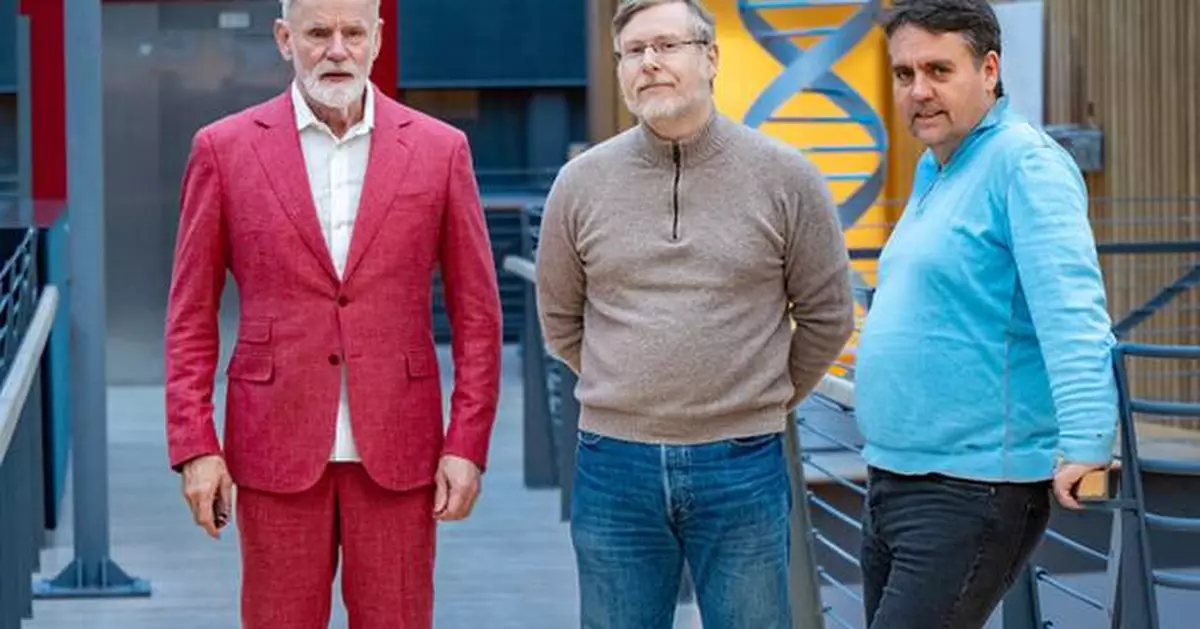
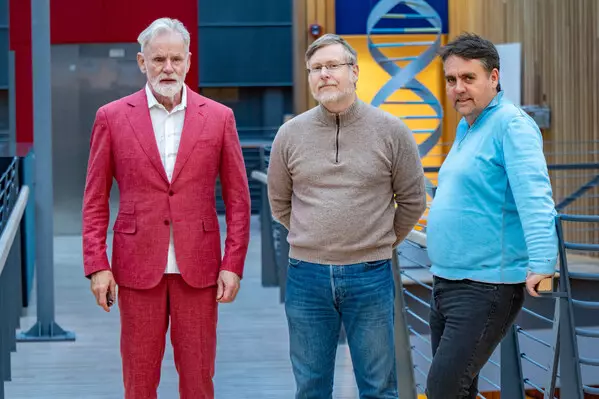
Bjarni V. Halldorsson and Kari Stefansson, scientists at deCODE genetics, discuss the paper: Complete recombination map of the human-genome, published in Nature today. The paper continues 25 years of research into how new diversity is generated in the human genome, and its relationship to health and disease. The new map, appearing today in the online edition of Nature, is the first to incorporate shorter-scale shuffling, (non crossover) of grandparental DNA, which is difficult to detect due to the high DNA sequence similarity. The map also identifies areas of DNA that are devoid of major reshuffling, likely to protect critical genetic functions or prevent chromosomal problems. This insight offers a clearer picture of why some pregnancies fail and how the genome balances diversity with stability.
While this shuffling, known as recombination, is essential for genetic diversity, errors in the process can lead to serious reproductive issues. These failures can result in genetic errors that prevent pregnancies from continuing, helping to explain why infertility affects around one in ten couples worldwide. Understanding this process offers new hope for improving fertility treatments and diagnosing pregnancy complications.
The research also reveals key differences between men and women in how and where, the genome recombination occurs. Women have fewer non-crossover recombinatios, but their frequency increases with age, which may help explain why older maternal age is associated with higher risks of pregnancy complications and chromosomal disorders of the child. Men, however, do not show this age-related change, although recombination in both sexes can contribute to mutations passed to offspring.
Understanding the recombination process is also important in understanding how humans evolved as a species and what shapes individual differences, including health outcomes. All human genetic diversity can be traced to recombination and de novo mutations, DNA sequence present in the child but not in the parents. The map shows that mutations are elevated near regions of DNA mixing and consequently that the two processes are highly correlated.
Based in Reykjavik, Iceland, deCODE genetics is a global leader in analyzing and understanding the human genome. Using its unique expertise and population resources, deCODE has discovered genetic risk factors for dozens of common diseases. The purpose of understanding the genetics of disease is to use that information to create new means of diagnosing, treating and preventing disease. deCODE genetics is a wholly-owned subsidiary of Amgen (NASDAQ:AMGN).
Video for public use:
https://vimeo.com/1037862873/90309f69c3
REYKJAVIK, Iceland, Jan. 23, 2025 /PRNewswire/ -- Scientists at deCODE genetics/Amgen have constructed a complete map of how human DNA is mixed as it is passed down during reproduction. The map marks a major step in the understanding of genetic diversity and its impact on health and fertility. It continues 25 years of research at deCODE genetics into how new diversity is generated in the human genome, and its relationship to health and disease.
The new map, appearing today in the online edition of Nature, is the first to incorporate shorter-scale shuffling, (non crossover) of grandparental DNA, which is difficult to detect due to the high DNA sequence similarity. The map also identifies areas of DNA that are devoid of major reshuffling, likely to protect critical genetic functions or prevent chromosomal problems. This insight offers a clearer picture of why some pregnancies fail and how the genome balances diversity with stability.
While this shuffling, known as recombination, is essential for genetic diversity, errors in the process can lead to serious reproductive issues. These failures can result in genetic errors that prevent pregnancies from continuing, helping to explain why infertility affects around one in ten couples worldwide. Understanding this process offers new hope for improving fertility treatments and diagnosing pregnancy complications.
The research also reveals key differences between men and women in how and where, the genome recombination occurs. Women have fewer non-crossover recombinatios, but their frequency increases with age, which may help explain why older maternal age is associated with higher risks of pregnancy complications and chromosomal disorders of the child. Men, however, do not show this age-related change, although recombination in both sexes can contribute to mutations passed to offspring.
Understanding the recombination process is also important in understanding how humans evolved as a species and what shapes individual differences, including health outcomes. All human genetic diversity can be traced to recombination and de novo mutations, DNA sequence present in the child but not in the parents. The map shows that mutations are elevated near regions of DNA mixing and consequently that the two processes are highly correlated.
Based in Reykjavik, Iceland, deCODE genetics is a global leader in analyzing and understanding the human genome. Using its unique expertise and population resources, deCODE has discovered genetic risk factors for dozens of common diseases. The purpose of understanding the genetics of disease is to use that information to create new means of diagnosing, treating and preventing disease. deCODE genetics is a wholly-owned subsidiary of Amgen (NASDAQ:AMGN).
Video for public use:
https://vimeo.com/1037862873/90309f69c3
** The press release content is from PR Newswire. Bastille Post is not involved in its creation. **
deCODE genetics: Complete recombination map of the human-genome, a major step in genetics
Thousands of Performances and Events Presented in More Than 190 Countries on All Continents
CHICAGO, May 2, 2026 /PRNewswire/ -- The 15th annual International Jazz Day came to a rousing conclusion with a historic All-Star Global Concert in the International Jazz Day 2026 Global Host City of Chicago.
This highly anticipated concert at Chicago's iconic Lyric Opera House featured over 40 world-renowned artists, including: Kris Bowers, Dee Dee Bridgewater, Till Brönner, Terri Lyne Carrington, James Carter, Emmet Cohen, Jacob Collier, Buddy Guy, Kurt Elling, Béla Fleck, Herbie Hancock, Christian McBride, Marcus Miller, Gregory Porter, Dianne Reeves and many more.
The 2026 All-Star Global Concert opened with a vibrant, four-part salute to the Host City of Chicago, with each performance reflecting the city's deep musical legacy. Dee Dee Bridgewater and Gregory Porter set the tone with an electrifying duet on "The In-Crowd," honoring Chicago jazz legend Ramsey Lewis. They were followed by Chicago native Herbie Hancock, who reimagined his crossover hit "Watermelon Man" by seamlessly blending its 1960s Blue Note groove with its later jazz-funk incarnation. The Chicago celebration continued with blues legend Buddy Guy—a defining figure of the Chicago blues tradition—joined by his protégé Christone "Kingfish" Ingram for a powerful take on his GRAMMY-winning "Damn Right, I've Got the Blues." Jacob Collier closed the opening tribute with a heartfelt homage to Quincy Jones, whose career was shaped in Chicago, featuring "She's Out of My Life" and "Soul Bossa Nova."
The evening continued with a stirring, choir-backed rendition of "Seems I'm Never Tired of Loving You" from Lizz Wright, followed by the innovative jazz hip-hop fusion segment "Funny Rabbit" led by Robert Glasper on piano, featuring Burniss "Boom Bishop" Travis II, Justin Tyson and DJ Jahi Sundance. Next came a radiant performance of "Antes de Ir" by Brazil's Bia Ferreira. Living up to its title, "Touch and Go," Béla Fleck delivered a nimble, exploratory performance that moved fluidly across bluegrass, jazz fusion, and classical influences. Dianne Reeves brought luminous depth to "In a Sentimental Mood," capturing the elegance of Duke Ellington's writing, while Kurt Elling delivered a soulful, swinging interpretation of "Dat Dere," a Bobby Timmons' composition associated with Art Blakey and the Jazz Messengers.
As the evening drew to a close, a series of iconic jazz works took center stage. Gonzalo Rubalcaba led a dynamic performance of "Caravan", followed by Gershwin's "Summertime", presented with a nod to the transformative interpretation by John Coltrane, which redefined the piece as a vehicle for intense improvisation. Marcus Miller then paid tribute to his former bandleader Miles Davis with a powerful rendition of "Tutu". International Jazz Day 2026 concluded with its traditional finale, "Imagine," the enduring anthem of peace by John Lennon—bringing the audience to its feet in a celebration of unity through music.
International Jazz Day was celebrated in 196 countries and all 50 U.S. States, through performances, education programs, and community service initiatives.
In the Host City of Chicago International Jazz Day was co-chaired by Quintin Primo III, Michael Reschke and Andrew Pritzker with major support by Capri Capital, GCM Grosvenor, GRoW @ Annenberg Foundation, MacArthur Foundation, The Prime Group, and TAWANI Foundation. United, the International Jazz Day Global Airline Partner, provided air transportation and additional support for artists and educators.
About International Jazz Day: In 2011, the United Nations Educational, Scientific and Cultural Organization (UNESCO) officially designated April 30 as International Jazz Day to highlight jazz and its diplomatic role of uniting people in all corners of the globe. International Jazz Day is chaired and led by the UNESCO Director-General Khaled El-Enany and legendary jazz pianist and composer Herbie Hancock, who serves as a UNESCO Goodwill Ambassador for Intercultural Dialogue. The Herbie Hancock Institute of Jazz is the lead nonprofit charged with planning, promoting and producing this annual celebration. International Jazz Day has become a global movement reaching more than a billion people annually through performances, education programs, community outreach initiatives, radio, television and streaming, along with electronic, print and social media.
Learn more about International Jazz Day at www.jazzday.com and www.unesco.org/jazzday.
** This press release is distributed by PR Newswire through automated distribution system, for which the client assumes full responsibility. **

International Jazz Day 2026 Worldwide Celebration Concludes with Thrilling All-Star Global Concert from Chicago

International Jazz Day 2026 Worldwide Celebration Concludes with Thrilling All-Star Global Concert from Chicago