WICHITA, Kan. (AP) — Amber Glenn has fought through so many injuries and mental roadblocks over the years that nobody would have thought less of her had she given up figure skating, the sport that has brought her so much stress yet so much joy.
One of the best hopes for an American medal at the 2026 Winter Olympics, the 25-year-old tackled head-on an eating disorder, which is all-too common in the sport. She has battled depression and learned to cope with ADHD, which at one point drove her to take eight months away from the ice. And she has become a popular champion for the LGBTQ community.
Now, at an age when many rivals contemplate retirement, Glenn has reached something approaching inner peace, and it has translated into a late-career revival. She has not lost in any competition in more than a year, last month becoming the first American to win the prestigious Grand Prix Final in nearly 15 years, and beginning Thursday night will attempt to defend her gold medal at the final U.S. Figure Skating Championships before the Milano-Cortina Games.
“It's taken many, many years to get to this point,” Glenn said. “I went through a point being just at my lowest, to recovering, to being at a place of stagnant — I was OK. I wasn't great but I was surviving, which isn't thriving, but I was surviving. I would have flare-ups, setbacks, things would happen. I was in a more delicate state but more stable than when it came crashing down.”
That was back in 2015 and '16, Glenn explained, when she was considered an up-and-coming prodigy, poised to follow in the footsteps of such American champions as Tara Lipinski, Michelle Kwan, Sasha Cohen, Kimmie Meissner and Rachael Flatt.
Instead, Glenn found herself in a mental health facility shortly before her first senior international competition. She went on to finish sixth at the Autumn Classic, but then stepped away from the sport entirely to focus on her personal well-being.
She didn't quit, though — not on figure skating or herself. And while there were still hurdles for Glenn to overcome, including a series of concussions, she began to see progress, and that gave her the confidence to keep going.
“As I came into my own and really did some reflection on who I am, and along with that the coming out, deciding to skate how I wanted to skate — not for the scores but for myself — and doing things like that even in my everyday life, it has been essential for my growth both mentally and in the sport,” Glenn said. "I would say I really came into my own my last couple years, and my crisis was '15-16, but luckily I had a lot of good resources, a lot of good tools and people I asked for help.
“And here I am now,” she said with a smile, “doing what I never thought I would be capable of.”
With her confidence soaring, Glenn began this season by winning the lower-level Lombardia Trophy and then triumphed at the Cup of China and Grand Prix de France; the first Grand Prix wins of her career. At the event in France, Glenn landed a triple axel in the short program and scored 78.14 points, the highest ever for an American woman.
At the Grand Prix Final in December, Glenn won both the short program and free skate to become the first American woman to win the event since Alissa Czisny stood upon the top step of the podium in 2010.
“It started with (last year's) national championships. There was the world championships, a break, and I didn't really know how to navigate being the champion,” Glenn said. “Then I got my first international win and it just kept going.”
Now, after the withdrawal of 2023 champ Isabeau Levito due to injury, Glenn is favored to win her second straight national title this week. Her biggest competition figures to be Alysa Liu, a 2022 Olympian in the midst of a comeback; two-time champ Bradie Tennell, who has been dealing with injuries of her own; and rising stars Sarah Everhardt and Elyce Lin-Gracey.
Two-time defending world champs Madison Chock and Evan Bates are even bigger favorites to win their fourth straight U.S. ice dance title, and their sixth overall. They have the world's top score this season of 219.85 points, which the 2022 Olympians set while winning their second consecutive Grand Prix Final.
Ellie Kam and Daniel O'Shea are the top pairs team following their fifth-place finish at the Grand Prix Final.
In the men's competition, 20-year-old Ilia Malinin — the reigning world champion and favorite to win Olympic gold in just over a year — could once again showcase the quad axel, a 4 1/2-revolution jump that only he has landed in competition.
His event wraps up four days of competition Sunday. Then comes the world championships in Boston in March, followed by ...
“The event that's 13 months away, I'm definitely excited for it. It's a little bit in the back of my mind,” Malinin said of the Winter Olympics. “I just want to get through this season, and when I get the down time between seasons, that's when I can begin planning my process and that strategic plan for it.”
AP Winter Olympics: https://apnews.com/hub/winter-olympicsAP
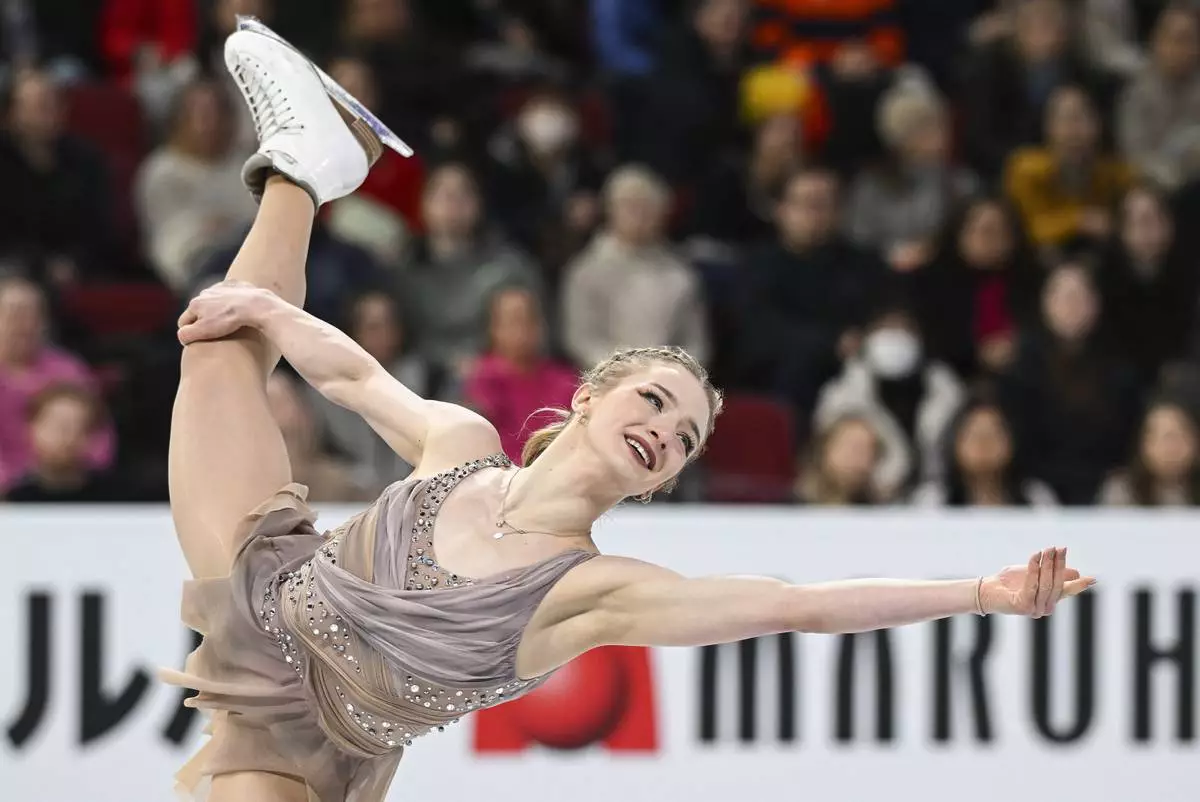
FILE - Amber Glenn, of the United States, performs her free skate routine at the world figure skating championships Friday, March 22, 2024, in Montreal. (Graham Hughes/The Canadian Press via AP, File)

FILE - Amber Glenn holds her gold medal at the U.S. figure skating championships Friday, Jan. 26, 2024, in Columbus, Ohio. (AP Photo/Sue Ogrocki, File)
The Carolina Panthers are NFC South champions for the first time in 10 years.
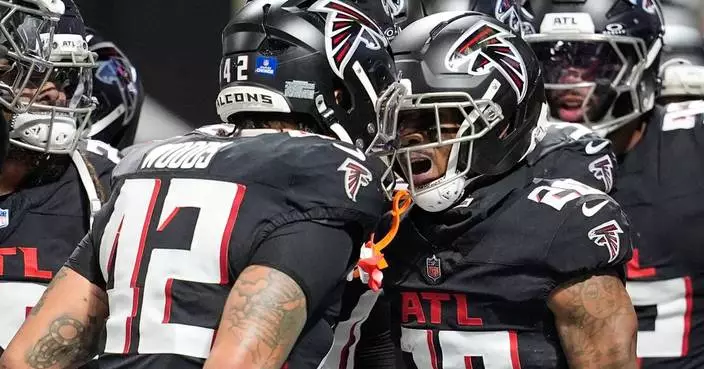
The Panthers (8-9) clinched the division title when the Falcons beat the Saints 19-17 on Sunday to eliminate the Tampa Bay Buccaneers.
Led by second-year coach Dave Canales and third-year quarterback Bryce Young, the Panthers are the NFC's No. 4 seed and will host either the Rams (11-5) or 49ers (12-5). It's their first playoff appearance since 2017, when they lost a wild-card game two years after they went 15-1 and lost the Super Bowl.
The Buccaneers (8-9) beat Carolina on Saturday to stay alive for an extra day but lost a three-team tiebreaker with the Falcons also finishing 8-9. Tampa Bay started 6-2 before losing seven of nine, failing to win its fifth straight division title.
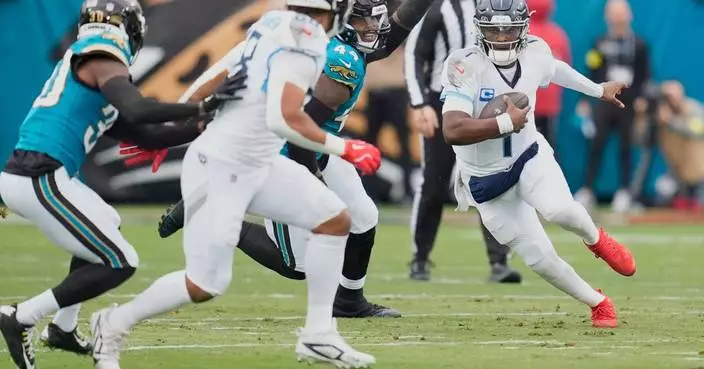
The Jacksonville Jaguars won the AFC South with a 41-7 rout of Tennessee. Rookie coach Liam Coen and Trevor Lawrence led the Jaguars to a 13-4 record, a major turnaround after going 4-13 in 2024.
The road to the Super Bowl in the NFC goes through Seattle. The Seahawks secured the No. 1 seed and won the NFC West with a 13-3 victory over the San Francisco 49ers on Saturday night in a showdown that had major ramifications. The 49ers could have won the division but instead will be the No. 5 or 6 seed.
While Sam Darnold and the Seahawks (14-3) earned a first-round bye, Brock Purdy, Christian McCaffrey and the injury-depleted 49ers missed an opportunity to play at home the rest of the way. Levi's Stadium, which is San Francisco's home field, hosts the Super Bowl on Feb. 8.
Thirteen of the 14 playoff berths have been secured. The AFC's No. 1 seed is still up for grabs and there’s a winner-take-all game for the AFC North between the Ravens and Steelers to wrap up the regular season.
The Broncos (13-3), Patriots (13-3), Jaguars (13-4), Texans (12-5), Chargers (11-5) and Bills (11-5) have secured playoff spots in the AFC.
The Seahawks (14-3), Bears (11-5), Eagles (11-5), Panthers, Rams (11-4), 49ers (12-5) and Packers (9-6-1) are heading to the NFC playoffs.
New England won its first division title since Tom Brady led the franchise to 11 straight from 2009-19. The Patriots would secure the AFC’s No. 1 seed with a win over Miami and a loss or tie by Denver against the Chargers or a tie against the Dolphins and a loss by the Broncos. The Patriots could finish with the No. 1, 2 or 3 seed.
Buffalo’s run of five consecutive division crowns ended, but the Bills will be the No. 5, 6 or 7 seed.
The Steelers beat the Ravens 27-22 at Baltimore on Dec. 7. They have to beat them again or tie them on Sunday night without wide receiver DK Metcalf to get into the playoffs.
Derrick Henry and backup quarterback Tyler Huntley led the Ravens to a win at Green Bay last Saturday night that kept Baltimore in the race and made Pittsburgh’s loss to Cleveland the next day matter. Lamar Jackson is expected to return from a back injury to start for the Ravens, who are 3 1/2-point favorites on the road, according to BetMGM Sportsbook.
The division winner will be the No. 4 seed and host the Texans.
Jacksonville won the division. The Jaguars will finish with the No. 1, 2 or 3 seed.
The Texans secured the No. 5 seed with a 38-30 victory over Indianapolis.
The Broncos have already won the division, ending Kansas City’s nine-year run. Denver can secure the AFC’s No. 1 seed with a win against the Chargers or a loss by New England to Miami. If the Broncos lose, they could fall to No. 2 or 3.
Los Angeles will be the No. 5, 6 or 7 seed.
The defending Super Bowl champion Eagles became the first team to win this division in consecutive seasons in two decades. They’ll be the NFC’s No. 2 or 3 seed. If Philadelphia, which is resting key starters, beats Washington and Chicago loses to Detroit, the Eagles will be the No. 2 seed.
The Bears clinched their first division championship since 2018. They will be the No. 2 seed with a win over the Lions. If they lose, they'll need the Eagles to lose to the Commanders.
The Packers are locked into the No. 7 seed.
The Panthers are division champions and the No. 4 seed.
The Seahawks earned the No. 1 seed.
The Rams and 49ers will be the No. 5 and No. 6 seeds. If Los Angeles beats Arizona, the Rams will be the 5 and the 49ers the 6. If the Rams lose, San Francisco gets the fifth seed.
AP NFL: https://apnews.com/hub/nfl
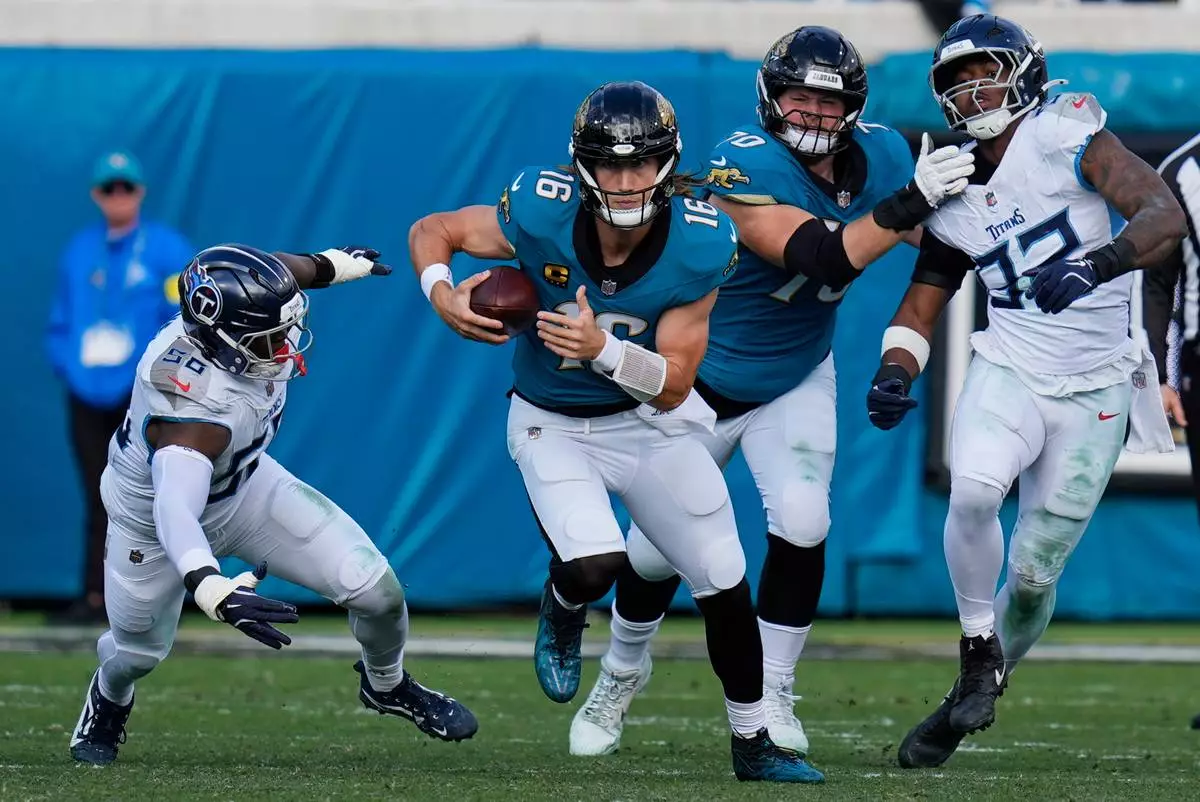
Jacksonville Jaguars quarterback Trevor Lawrence (16) runs the ball past Tennessee Titans outside linebackers Truman Jones (56) and Jaylen Harrell, far right, during the second half of an NFL football game Sunday, Jan. 4, 2026, in Jacksonville, Fla. (AP Photo/John Raoux)
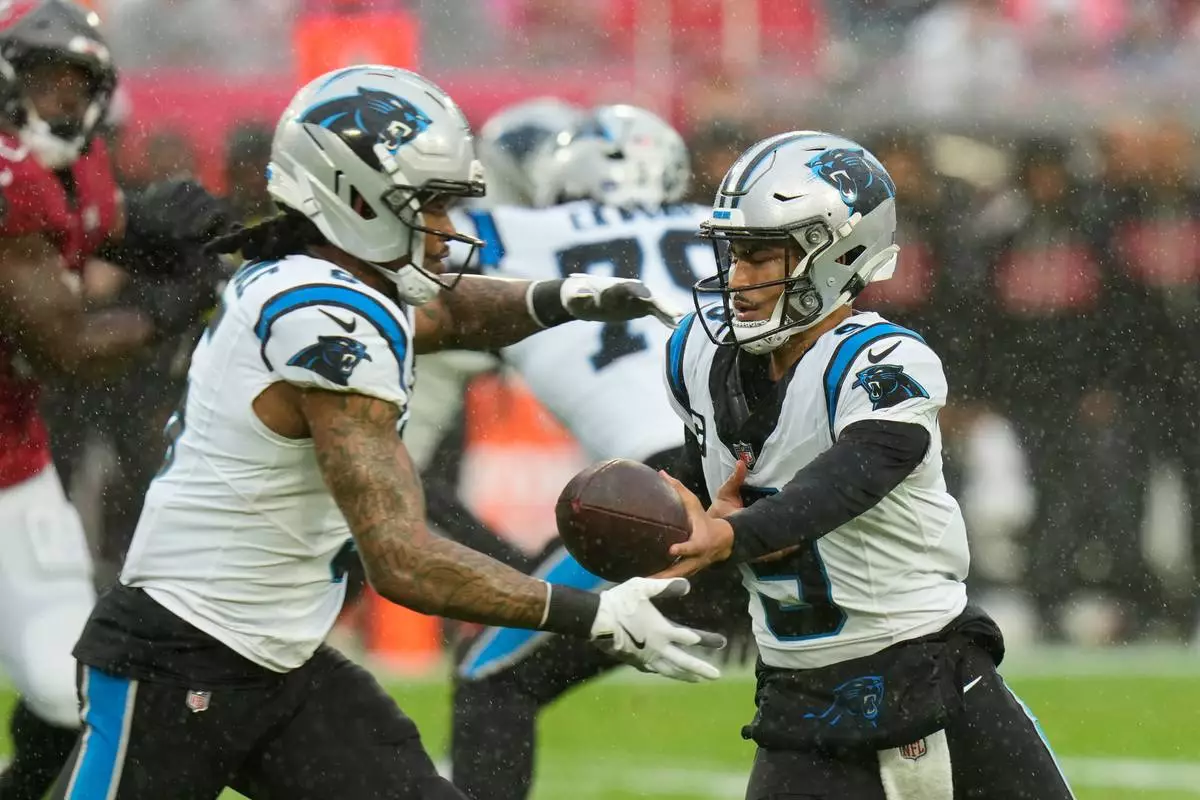
Carolina Panthers quarterback Bryce Young, right, hands off to running back Rico Dowdle (5) during the first half of an NFL football game Saturday, Jan. 3, 2026, in Tampa, Fla. (AP Photo/Chris O'Meara)
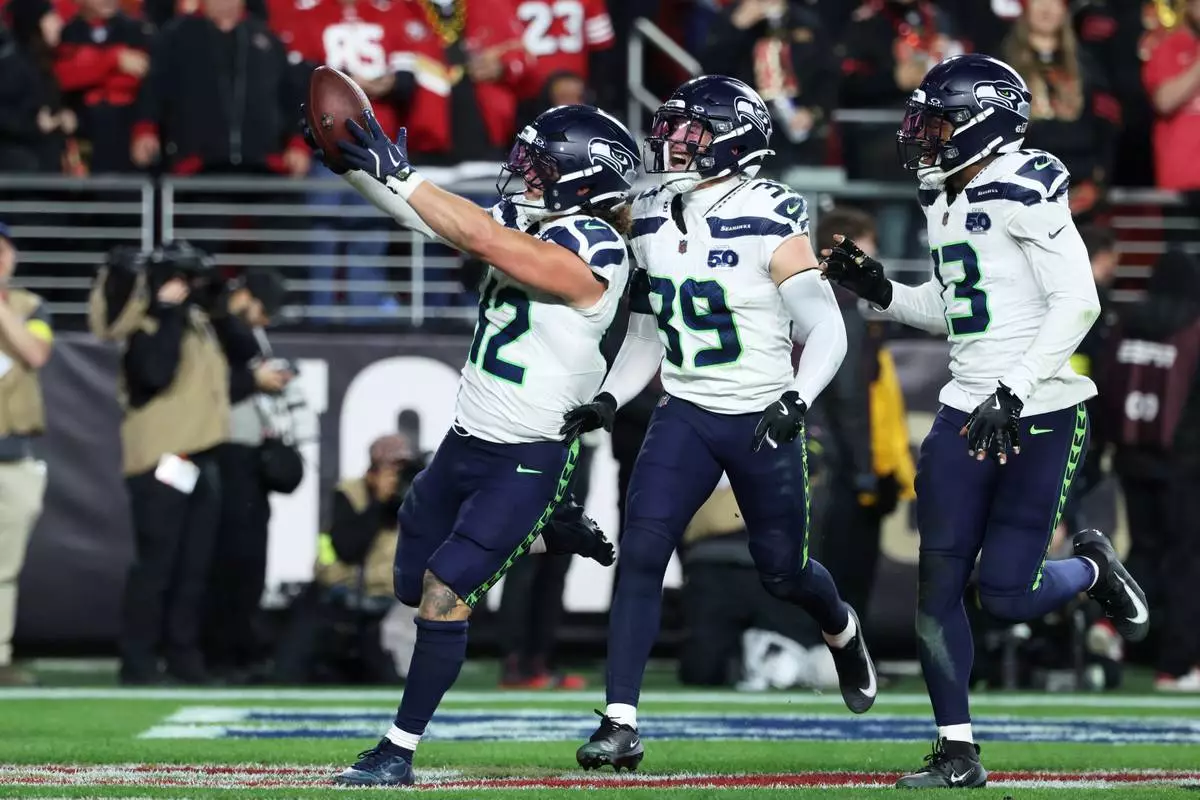
Seattle Seahawks linebacker Drake Thomas, left, is congratulated by safety Ty Okada (39) and linebacker Ernest Jones IV after intercepting a pass against the San Francisco 49ers during the second half of an NFL football game in Santa Clara, Calif., Saturday, Jan. 3, 2026. (AP Photo/Jed Jacobsohn)
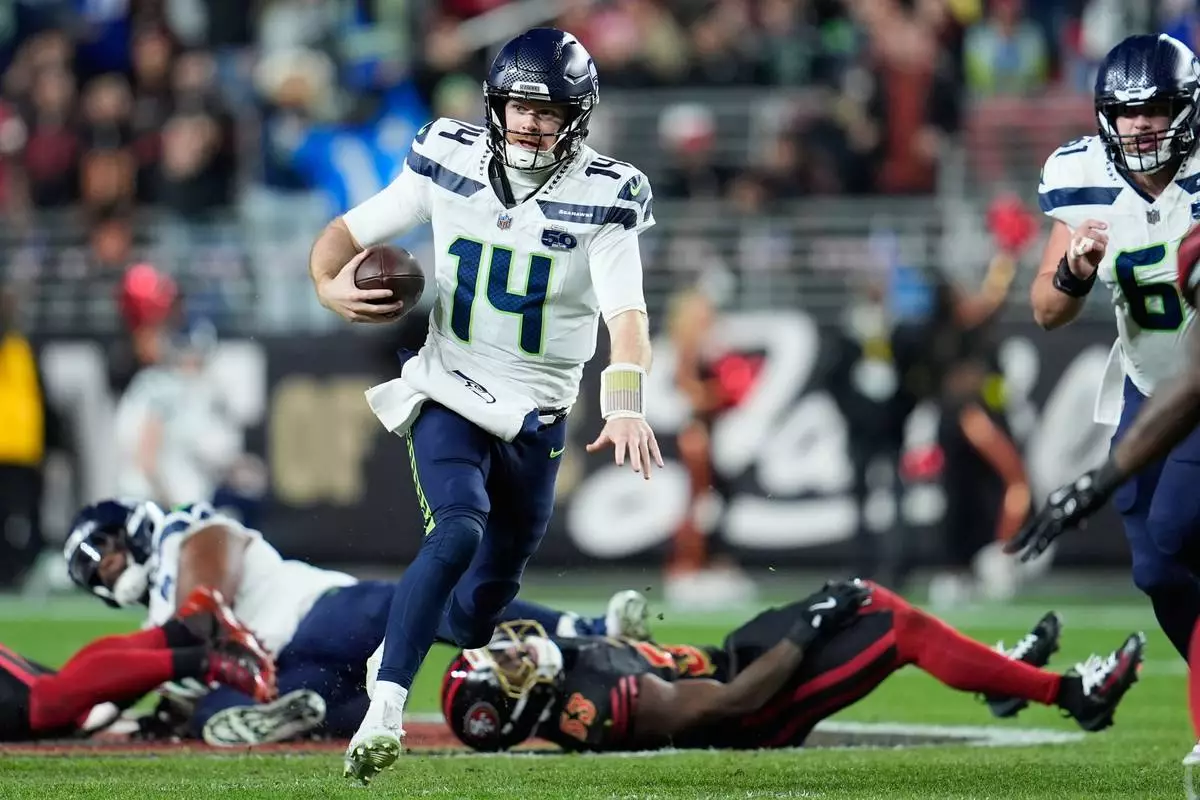
Seattle Seahawks quarterback Sam Darnold (14) runs against the San Francisco 49ers during the first half of an NFL football game in Santa Clara, Calif., Saturday, Jan. 3, 2026. (AP Photo/Godofredo A. Vásquez)
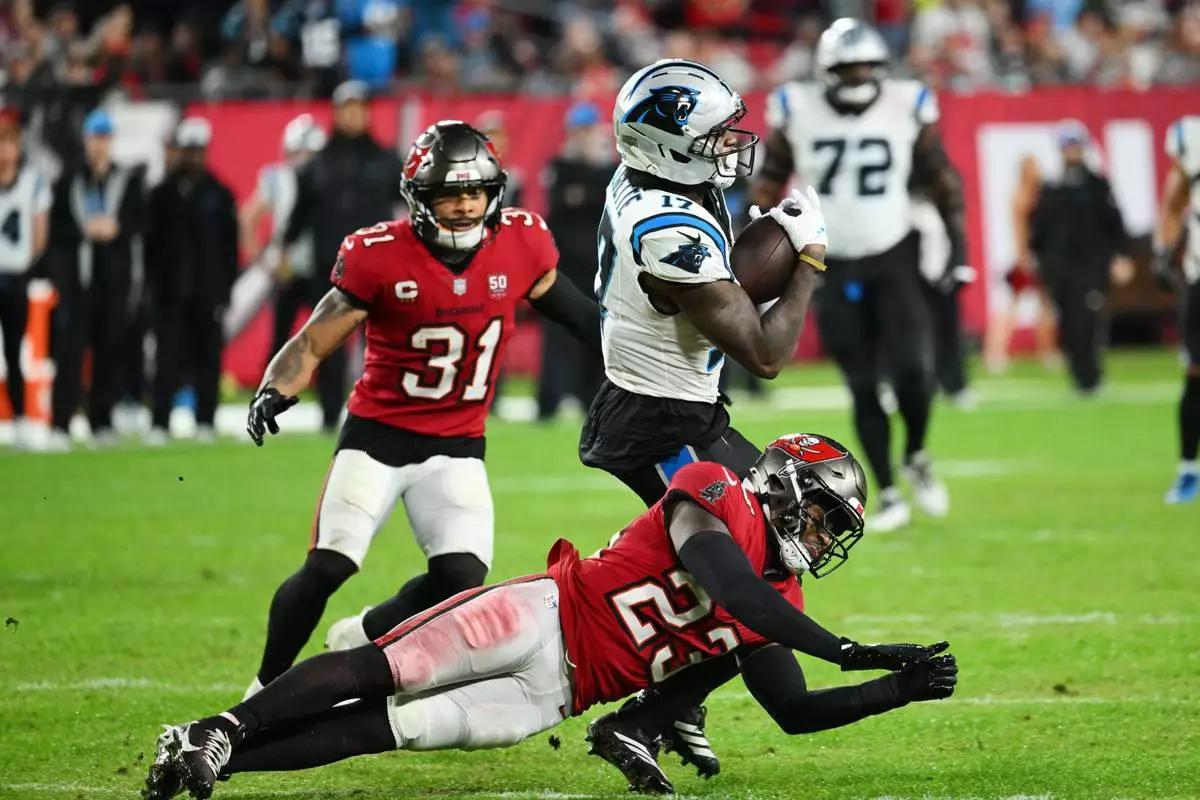
Carolina Panthers wide receiver Xavier Legette (17) makes a catch over Tampa Bay Buccaneers safety Tykee Smith (23) during the second half of an NFL football game Saturday, Jan. 3, 2026, in Tampa, Fla. (AP Photo/Jason Behnken)
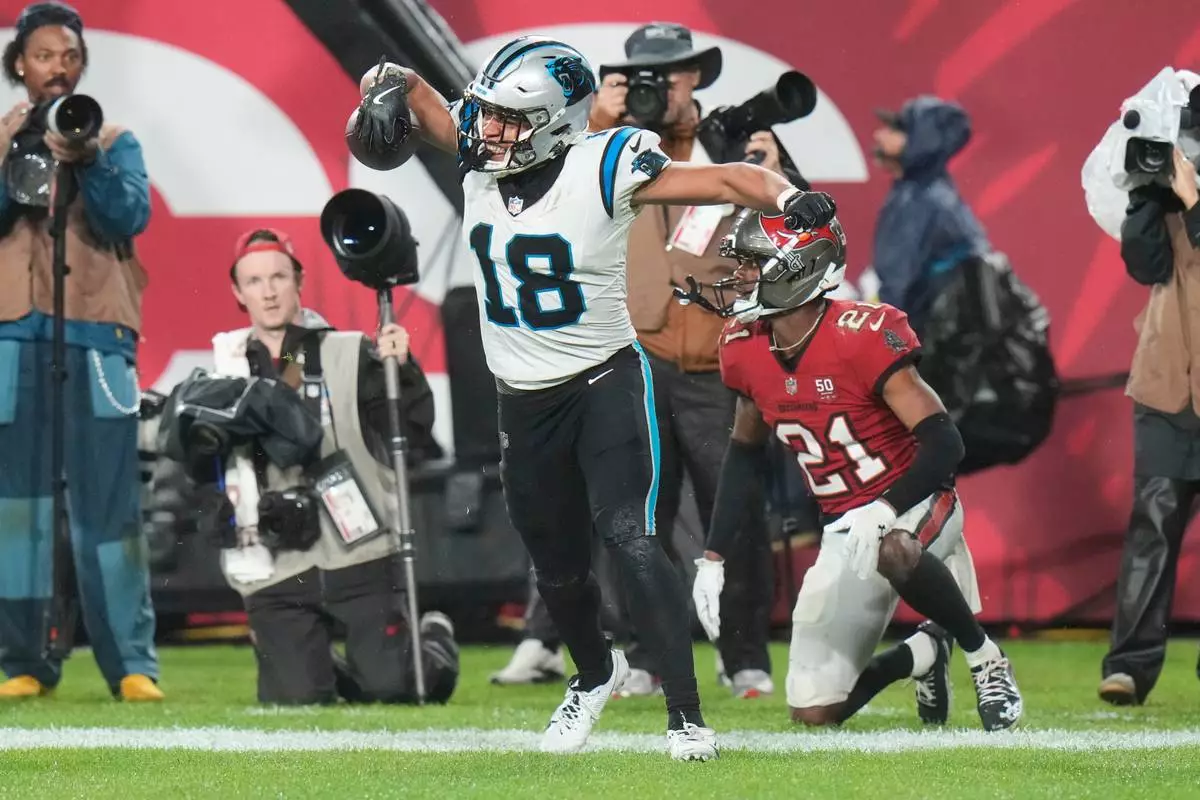
Carolina Panthers wide receiver Jalen Coker (18) reacts after his touchdown catch over Tampa Bay Buccaneers cornerback Benjamin Morrison (21) during the second half of an NFL football game Saturday, Jan. 3, 2026, in Tampa, Fla. (AP Photo/Chris O'Meara)
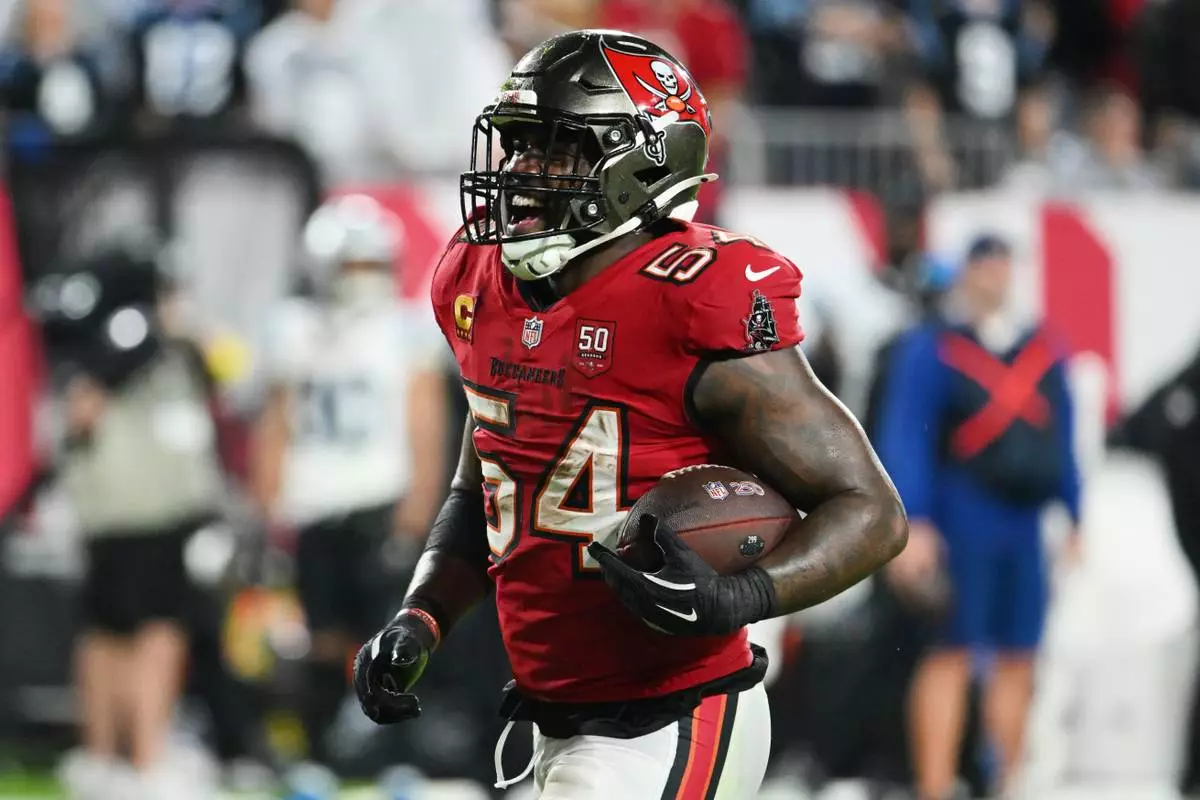
Tampa Bay Buccaneers linebacker Lavonte David (54) celebrates after recovering a fumble by Carolina Panthers running back Rico Dowdle during the second half of an NFL football game Saturday, Jan. 3, 2026, in Tampa, Fla. (AP Photo/Jason Behnken)