DH's Women Health Centres to be integrated into Primary Healthcare Commission and Central and Western District Health Centre to be established
The Health Bureau (HHB) announced today (January 23) that woman health services under the Department of Health (DH) will be integrated into the district health network, to be named as Women Wellness Satellites (WWS), of the Primary Healthcare Commission (PHC Commision) of the HHB, forming a network with District Health Centres (DHC)/DHC Expresses (DHCEs) in all 18 districts across Hong Kong to provide eligible women with prevention-based and more personalised primary healthcare services. Upon open tendering, the HHB awarded a three-year operation service contract for the three WWSs and the Central and Western (C&W) DHC to the Tung Wah Group of Hospitals (the operator). The three WWSs and C&W DHC are expected to commence operation within this year.
In the 2024 Policy Address, the Chief Executive put forward the initiatives of integrating Woman Health Centres'services and upgrading more interim DHCEs to DHCs, along with the extension of a multidisciplinary service network. The Primary Healthcare Blueprint also recommended gradually integrating the primary healthcare services under the DH into the district-based community healthcare system. The establishment of WWSs and the upgrading of C&W DHC Express to DHC aim to implement the relevant policy directions for strengthening the prevention-oriented, district-based, and family-centric primary healthcare network.
Strengthening women's health services, promotion and education work in DHCs
Integration of the DH's existing women's health services into the district health network will be conducive to shortening the waiting time for services, reducing duplication of healthcare services and promoting primary healthcare development. The PHC Commision will commence the integrated women's health services within this year in an orderly manner. DHCs/DHCEs across all 18 districts will enhance promotion and education related to women's health, as well as provide new dedicated nurse clinics for women's health services to encourage citizens to manage their own health. DHCs/DHCEs will also identify women in need through basic health assessments and individual consultations, and refer them to WWSs or the General Out-patient Clinics (GOPCs) of the Hospital Authority (HA) to receive women's health services as appropriate.
Personalised and value-added women's health services
The formation of the service network will enhance accessibility to women's health services. The HA will start to provide preventive care services to the underprivileged, whereas WWSs will focus on addressing specific health needs of women by providing more personalised and value-added primary healthcare services. In addition to the existing services such as health assessments, breast cancer and cervical cancer screenings, WWSs will devise personalised preventive care or specific consultation services according to individual health risks and needs for members' selection. WWSs will also explore introducing self-sampling for Human Papillomavirus (HPV) testing to enhance prevention-oriented women's health services. Furthermore, to promote the "Family Doctor for All" concept, WWSs will explore collaboration with family doctors participating in the Chronic Disease Co-Care Pilot Scheme to support and strengthen comprehensive health management and screening services for women. Details will be announced later.
The three WWSs will be located in Chai Wan, Lam Tin, and Tuen Mun (see Annex). The Chai Wan WWS is expected to start service in June at the earliest, while the Lam Tin and Tuen Mun WWSs are expected to commence operation in September at the earliest. Starting from tomorrow (January 24), DHCs/DHCEs across all 18 districts will accept registration from women aged 64 or below and provide basic women's health services, conduct initial assessments and arrange referrals to WWSs for scheduling of services as necessary. Women who would like to receive services at WWSs must first register as members at DHCs/DCHEs.
During the transition period of service integration, the three Woman Health Centres (namely the Chai Wan Woman Health Centre, Lam Tin Woman Health Centre, and Tuen Mun Woman Health Centre) and four designated Maternal and Child Health Centres (namely the Ap Lei Chau Maternal and Child Health Centre, Yaumatei Maternal and Child Health Centre, Fanling Maternal and Child Health Centre, and Ma On Shan Maternal and Child Health Centre) under the DH will cease accepting new appointments for women's health services starting from tomorrow (January 24). Those who have already made appointments or have paid their annual fee and are still within the service period will continue to receive relevant services from the DH. Details on the relevant transition arrangements are available on the website of the Family Health Services of the DH (www.fhs.gov.hk/english/main_ser/woman_health.html).
To encourage citizens to take primary responsibility for managing their own health, WWS services will adopt a co-payment model, where eligible individuals will receive partial subsidy from the Government and also be required to pay a designated co-payment fee. The co-payment fee for standard services will be similar to the current charges of the Woman Health Centres of the DH, with details to be announced later. Members of the public may also visit the DHC website (www.dhc.gov.hk/en/) for the latest information.
Catering for underprivileged women
Meanwhile, GOPCs of the HA will provide new preventive women's health services with a view to focusing on caring for the underprivileged. Starting from tomorrow (January 24), eligible persons (including Comprehensive Social Security Assistance recipients or individuals granted medical fee waivers) will be arranged through DHCs/DHCEs to receive women preventive care and health promotion services, which are the same as those in the district health network, at selected GOPCs of the HA.
Expansion of C&W DHC Express to DHC
Apart from women's health services, the operator is required to set up a DHC core centre and a satellite centre in the C&W district within the first year of operation. The core centre of the C&W DHC will be located at 308 Des Voeux Road Central with a total floor area of about 1000 square metres, and is expected to commence service in the third quarter. The PHC Commision will discuss with the operator and implement a transitional arrangement for upgrading the C&W DHC Express to a DHC to ensure a smooth transition of services.
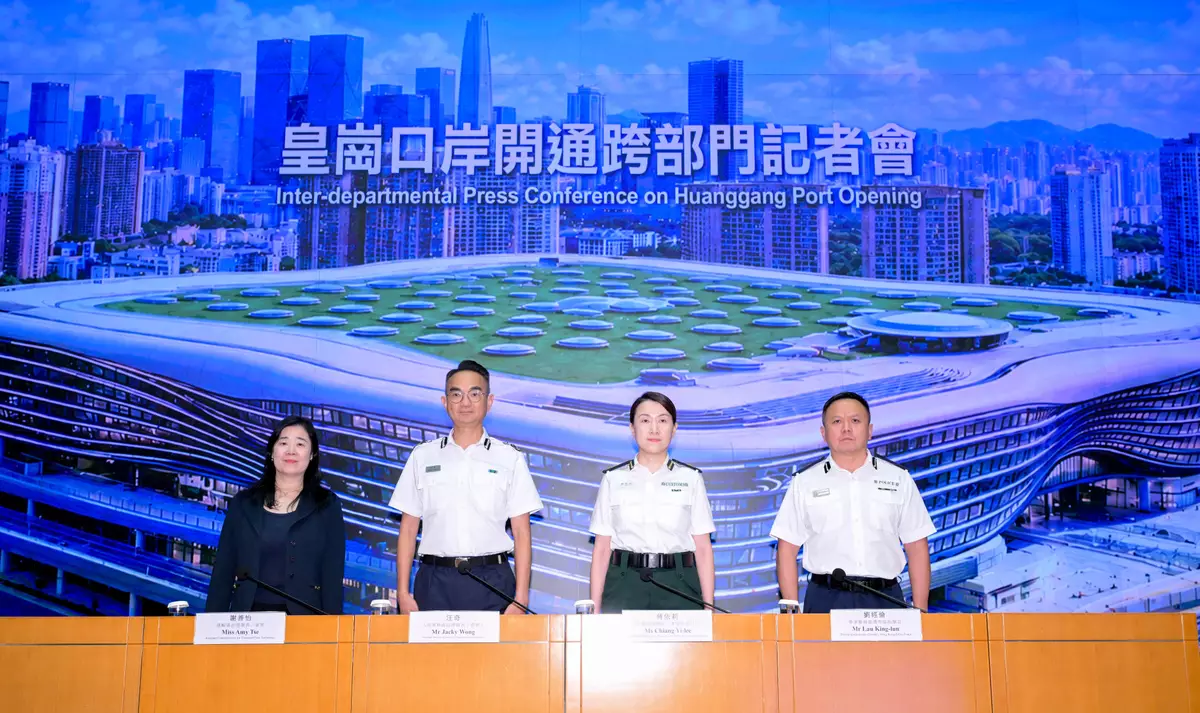
Inter-departmental collaboration to ensure seamless transition between original and new Huanggang Ports (with photo/video)
The redeveloped Huanggang Port (new Huanggang Port) will open at 6.30am on October 12 (Monday). The Immigration Department (ImmD), the Hong Kong Customs and Excise Department (C&ED), the Transport Department (TD) and the Hong Kong Police Force (HKPF) yesterday (October 9) released the following latest information regarding the arrangements for the opening of the new Huanggang Port:
Immigration clearance arrangements
The ImmD will commence immigration clearance services at the new Huanggang Port starting from 6.30am on October 12. Before 6.30am on the same day, all passengers are still required to use the Lok Ma Chau Control Point to travel between Hong Kong and Shenzhen. The ImmD will ensure that all passengers arriving at the Lok Ma Chau Control Point or the temporary port building of the Huanggang Port in Shenzhen before 6.30am can complete their immigration clearance procedures.
During the initial opening of the new Huanggang Port, it is expected that traffic in the vicinity may be relatively busy. The ImmD reminds passengers planning to use the new Huanggang Port to plan their journeys ahead and allow sufficient time to adapt to the new arrangements. The ImmD will set up a joint command centre with relevant departments, including the HKPF, the C&ED and the TD, and maintain close liaison with Mainland authorities such as the Shenzhen General Station of Exit and Entry Frontier Inspection, to closely monitor the operation of the new port and take timely response measures. The ImmD will also flexibly deploy manpower to cope with the possible surge in passenger and vehicular traffic during the initial stage, ensuring smooth and orderly clearance for both passengers and vehicles.
Furthermore, the ImmD appeals to eligible Hong Kong residents to enrol for the new "collaborative inspection" automated channels in advance through the "HK e-Channel" mobile application. The ImmD also reminds passengers that, when using the "collaborative inspection" automated channels to travel between Hong Kong and the Mainland, they are still required to carry valid travel documents that meet the immigration requirements of both sides, and to check the validity of their documents carefully before departure.
Customs clearance arrangements
To ensure a smooth transition of passenger and vehicular clearance services between the original and new ports, the C&ED has planned ahead and deployed sufficient manpower at both the new Huanggang Port and the Lok Ma Chau Control Point. The C&ED will maintain close liaison with relevant government departments and Shenzhen counterparts, and closely monitor the arrival time of the last inbound and outbound cross-boundary buses and private cars at the Lok Ma Chau Control Point to ensure that all passengers and cross-boundary vehicles of the final departures have completed clearance procedures and departed the Lok Ma Chau Control Point.
The new Huanggang Port will implement new clearance arrangements for cross-boundary vehicles featuring "joint one-stop" vehicle lanes, where drivers can complete clearance procedures of both places in one go simply by completing the collection of body temperature, travel document, facial features and fingerprints through the "integrated information collection device" in the lane. Drivers using the "joint one-stop" vehicle lanes for the first time are required to complete the relevant authorisation at the "integrated information collection device". Outbound vehicles will first pass through the "customs front kiosk" for customs risk assessment, and vehicles requiring customs inspection must turn right as directed to proceed to the inspection area for examination. In addition, the new Huanggang Port will adopt a "passenger-vehicle separation" arrangement, under which general passengers of cross-boundary private cars are required to disembark at the drop-off area and carry their personal luggage and belongings to proceed to the immigration clearance hall for on-board passengers to undergo passenger clearance procedures.
Traffic and transport arrangements for switchover between original and new Huanggang Ports
To tie in with the suspension of passenger clearance services between the Lok Ma Chau Control Point and the original Huanggang Port, as well as the opening of the new Huanggang Port at 6.30am on October 12, the TD has steered local and cross-boundary public transport operators (PTOs) in formulating vehicle deployments, service schedules, and passenger notices for the routes concerned.
A Government spokesman said, "Before and after the switchover between the original and new Huanggang Ports, traffic in the vicinity may be relatively busy. Members of the public are urged to follow the instructions of the Police and PTO staff, and refrain from lingering at the original and new ports or the San Tin Public Transport Interchange (PTI), heed service schedules, and maintain order while queuing. The public should plan their journeys in advance, choose suitable boundary control points according to their needs, and do not need to rush to use the new Huanggang Port."
1) Public transport arrangements for Lok Ma Chau Control Point/original Huanggang Port
The last northbound Lok Ma Chau-Huanggang cross-boundary shuttle bus (Yellow Bus) to the original Huanggang Port will depart from San Tin PTI between 6.15am and 6.20am on October 12, and the operator will stop latecomers from joining the queue as appropriate. Passengers who miss the last Yellow Bus may take three franchised bus daytime routes (KMB B11, NLB B12 and Citybus B13) and three green minibus (GMB) daytime routes (44B, 44B1 and 78) serving San Tin PTI to travel to the new Huanggang Port for boundary crossing. The last southbound Yellow Bus from the original Huanggang Port to San Tin PTI will depart only after all cross-boundary travellers entering the original Huanggang Port before 6.30am have completed clearance procedures and boarded the bus.
In addition, five 24-hour short-haul cross-boundary coach (CBC) routes will tie in with the switchover at 6.30am on October 12. The last northbound departures from urban areas to the original Huanggang Port, and the last southbound departures from the original Huanggang Port to urban areas on that morning are as follows:
| Route | Last departure to original Huanggang Port (northbound) | Last departure to urban areas (southbound) |
| Mong Kok | 5.30am | 6.30am |
| Yau Tsim | 5.45am | 6.15am |
| Kwun Tong | 5.30am | 6.30am |
| Wan Chai | 5.15am | 6.15am |
| Tsuen Wan | 5.30am | 6.30am |
Regarding GMBs and taxis, the TD has alerted relevant operators and trades to render full facilitation to the switchover arrangements. If any northbound vehicles heading to the original Huanggang Port fail to arrive before the Lok Ma Chau Control Point suspends service, they will be arranged to wait at the public transport buffer area near the new Huanggang Port and be redirected to the new port when it opens.
2) Public transport arrangements for new Huanggang Port
On that day, the first departure times of the five franchised bus and three GMB daytime routes to the new Huanggang Port are as follows:
| Route | First departure time to new Huanggang Port* |
| KMB B10 (Kwai Tsui Estate PTI – New Huanggang Port) | 5.30am |
| KMB B11 (Tin Fu Bus Terminus – New Huanggang Port) | 5.30am |
| NLB B12 (Wu Kai Sha Station PTI – New Huanggang Port) | 5.30am |
| Citybus B13 (Siu Sai Wan (Island Resort) – New Huanggang Port) | 4.45am |
| Citybus B14 (Kai Tak (Olympic Avenue) – New Huanggang Port) | 5.40am |
| GMB 44B (Tuen Mun Station – New Huanggang Port) | 5.45am |
| GMB 44B1 (Tuen Mun Ferry Pier – New Huanggang Port) | 5.45am |
| GMB 78 (Pat Heung Road (near Tai Lam Tunnel Bus-Bus Interchange) – New Huanggang Port) | 6am |
*The first departures are advanced to tie in with the opening time of new Huanggang Port, and services will resume according to the Schedule of Service starting from the following day.
On that morning, the southbound first departures of the above franchised bus and GMB routes departing from the new Huanggang Port will also tie in with the commencement of clearance services at 6.30am, taking into account the estimated time required for passengers to complete clearance procedures and arrive at the PTI.
As for the short-haul CBC routes, they will be redirected to serve the new Huanggang Port after the last departures to and from the original Huanggang Port, operating according to their original service schedules:
| Route | First departure to new Huanggang Port (northbound) | First departure to urban areas (southbound)* |
| Mong Kok | 6am | 6.40am |
| Yau Tsim | 6.45am | 6.45am |
| Kwun Tong | 6am | 6.45am |
| Wan Chai | 6.15am | 6.40am |
| Tsuen Wan | 6am | 6.45am |
*Following the opening time of new Huanggang Port, subject to the time required for passengers to complete clearance procedures, the first departures may be slightly delayed.
Various PTOs will arrange sufficient vacant vehicles on standby at the new Huanggang Port PTI and the nearby public transport buffer area to pick up passengers arriving in Hong Kong via the new Huanggang Port.
3) Traffic arrangements near new Huanggang Port
Appropriate traffic signs and road markings have been installed on major roads connecting to the new Huanggang Port, such as San Sham Road and the Lok Ma Chau Bridge, to guide motorists to the new port. The Police will also be on-site to direct vehicles to the new Huanggang Port. Motorists should pay attention to on-site traffic signs and road markings, and follow the instructions of Police officers.
The spokesman said, "We will closely monitor passenger demand in collaboration with PTOs and strengthen or adjust services when necessary. Passengers should refer to operator notices, websites, mobile apps, or pay attention to onboard broadcasts to understand route details, stop locations and service hours. Cross-boundary travellers who need to use the new Huanggang Port should plan their journeys early and reserve time to adapt to the new arrangements. The TD's Emergency Transport Co-ordination Centre will closely monitor the traffic and public transport conditions at the new port."
Members of the public and visitors may visit the TD's designated webpage "Access to Huanggang Port" for details, or heed the latest traffic news via the TD's website (www.td.gov.hk), the HKeMobility mobile app as well as radio and television broadcasts.
Crowd management and traffic control measures
The HKPF has formulated detailed operational plans for the opening of the new Huanggang Port and its switchover period, and will implement crowd management measures, regulate traffic flow, and facilitate media activities on-site to ensure the smooth operation of the port and public safety.
The switchover plan will be executed in the small hours of October 12. The operational plans are as follows:
1) Activation of Joint Operation Centre and implementation of crowd management plans
On the night of the switchover, the HKPF will set up a Joint Operation Centre at the new Huanggang Port to monitor the crowd and traffic flow in real time. Noting that members of the public and bus enthusiasts may visit the Lok Ma Chau Control Point or the San Tin PTI to catch the first and last departures of buses, or to take photos of facilities prior to their cessation of operations, the Police will deploy officers to the above locations. Designated public activity areas, media areas, and waiting zones will be demarcated on ground. Crowd management measures will be implemented to ensure that these activities will not obstruct the normal operation of the port and the switchover arrangements.
Meanwhile, Police officers will also be stationed at the PTI on the second floor, as well as the passenger clearance halls on the fourth and fifth floors of the Huanggang Port. They will conduct joint crowd control operations alongside members of the Civil Aid Service and staff from the Government Property Agency to ensure good order upon the opening of the port.
The Security Bureau will activate the Emergency Monitoring and Support Centre, and the New Huanggang Port Joint Command Post to closely monitor and co-ordinate the opening of the port, oversee and co-ordinate inter-departmental operations, and ensure a seamless switchover from the Lok Ma Chau Control Point to the new Huanggang Port.
2) Traffic contingency plans and vehicle diversion measures
To ensure smooth traffic ahead of the switchover, Police officers have inspected surrounding roads prior to the implementation of the switchover plan with relevant departments to ensure road safety as well as clear and precise signage. During the switchover period, Police officers will step up patrols in the vicinity of San Tin Interchange, San Sham Road, and San Tin Highway to maintain smooth traffic in the surrounding areas.
When the switchover plan is underway, the HKPF will place water-filled barriers at the entrance to the Lok Ma Chau Control Point and divert all Shenzhen-bound vehicles to the new Huanggang Port. Once it is confirmed that all northbound and southbound passengers and vehicles have departed the Lok Ma Chau Control Point, passenger clearance services at the Control Point will suspend operations.
In view of the potential traffic volume during the switchover period, the HKPF will, depending on the actual traffic conditions on-site, activate the Lok Ma Chau Control Point Northbound Vehicle Holding Area to prevent traffic queues from tail backing onto San Sham Road and San Tin Highway, which could otherwise cause widespread congestion. Meanwhile, police officers will also stand by at various locations around the port. In the event of traffic accidents or road blockages, they will immediately intervene to ensure the smooth overall operation of the new port.
Inter-departmental collaboration to ensure seamless transition between original and new Huanggang Ports (with photo/video) Source: HKSAR Government Press Releases