Chinese automobile brands have been gaining popularity in South Africa as consumers in the country are increasingly drawn to their affordability and advanced features.
South Africa has been actively promoting the import and adoption of new energy vehicles (NEVs), with several supportive policies that provide Chinese vehicles a larger space for development.
From 2023 to 2024, the market share of Chinese automobiles in South Africa increased by nearly 30 percent.
"The Chinese brands in South Africa, they came in very rapidly in the past five years, I would say. But in the past two years, there is rapid growth in market share. And I think the most important thing they do realize is that people are looking for affordability, they are looking for technology, they are looking for innovation," said Haarhoff Barnard, dealer principal at FAW Germiston, a dealership in Germiston, South Africa.
Chinese automobile brands have opened the market with their innovative technology and flexible product layout, with NEVs in particular receiving positive feedback from local customers.
"My decision to buy a Chinese brand was based on its style and the value it has given me. First of all, it's the most affordable vehicle in the market, and it has also got a lot of good reliability. The vehicle has all of my needs at once in it. And it serves me and my family very well," said a South African car buyer.

Chinese cars gain traction in South Africa as demand for affordability and innovation soars
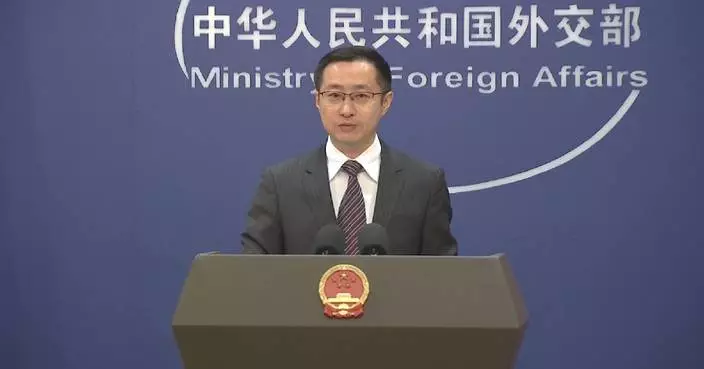
China's development has never been a "threat" to anyone but the source of growth advancing common development of all countries, Foreign Ministry spokesman Lin Jian said at a regular press conference in Beijing on Friday.
Some Western media and think tanks are peddling so-called "China Shock 2.0," saying that "China is achieving fast development in high-tech sectors such as renewable energy and AI and relies on foreign markets to absorb its overcapacity, thus reducing the market share of developed countries and sending more serious shock waves to the global economy compared with the era of traditional manufacture industry," while there are foreign commentators saying that the "China Shock 2.0" argument ignores the genuine innovation occurring within the Chinese industrial ecosystem and that Chinese export is the exact booster of the global economy that is needed in the turbulent period and more indispensable than ever.
Commenting on that, Lin said: "From the world's factory to the world's market and innovation powerhouse, China's development is achieved through strong performance driven by innovation and brings tangible cooperation opportunities and space to the world. High-quality Chinese products represented by the 'old three' of textiles, furniture and home appliances have stabilized the global industrial and supply chain, lowered the living cost of global consumers and eased the inflationary pressure worldwide. China's green production capacity represented by the 'new three' of electric vehicles, batteries and solar panels has bridged the gap between supply and demand in global green development and bolstered the global energy transition and low-carbon development. Moreover, China's high-tech products represented by the 'new new three' of robots, AI and innovative drugs have broken high-tech barriers and monopoly and enabled people in more countries to access affordable new technologies," said the spokesman.
"Openness and cooperation bring about progress and win-win result. China's development has never been a 'threat' to anyone but the source of growth advancing common development of all countries. What really creates 'shocks' to the world has never been the innovation of Chinese companies and efficiency of Chinese industrial capacity, but protectionist moves of setting up barriers, decoupling and severing industrial and supply chains. China will stay committed to high-standard opening up, defend the multilateral trading system and provide more certainty and new impetus to the world economy with its own steady development," said Lin.
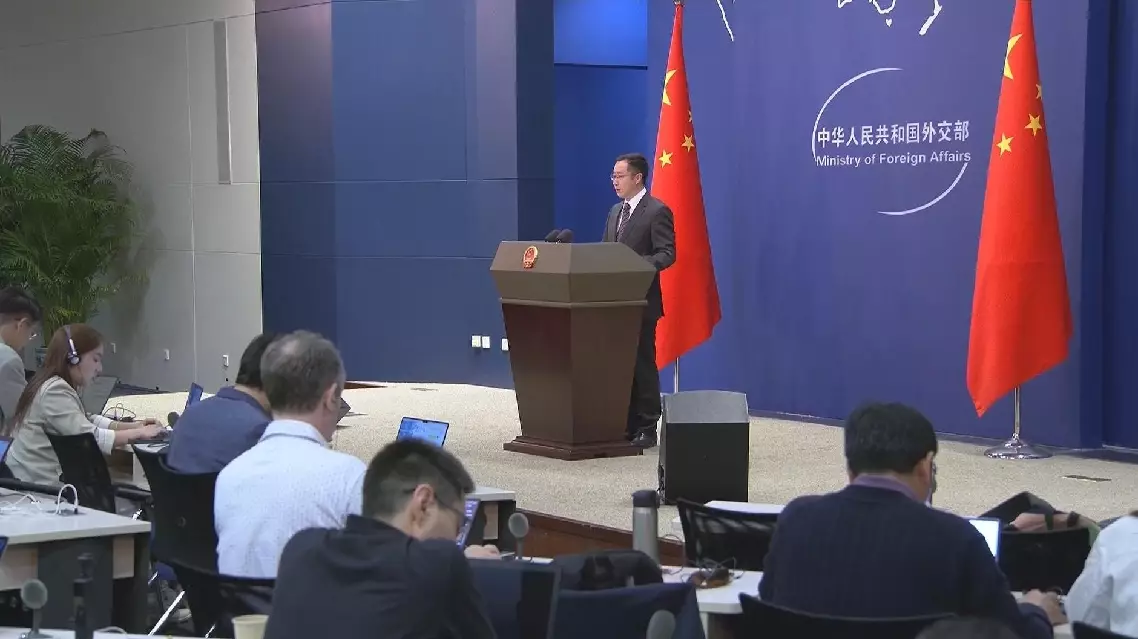
China's development never a threat: FM spokesman