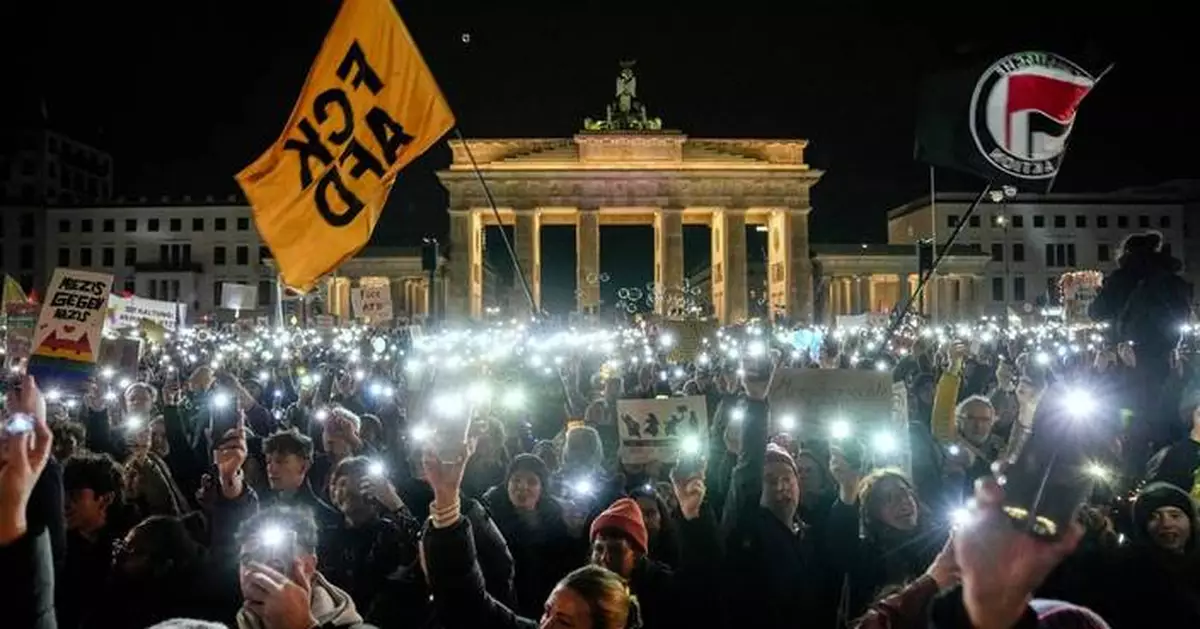
BERLIN (AP) — Tens of thousands of Germans on Saturday protested in Berlin and other cities against the rise of the far-right, anti-immigrant Alternative for Germany (AfD) party ahead of the Feb. 23 general election.
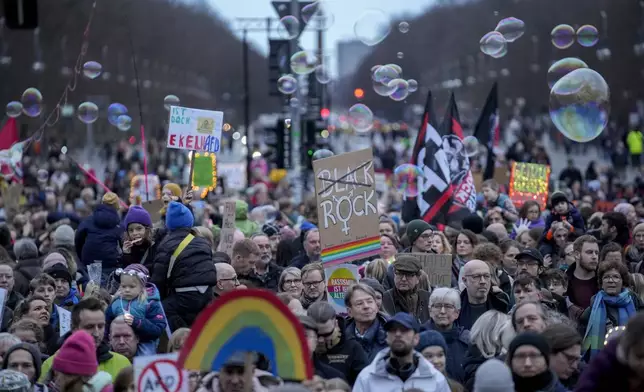
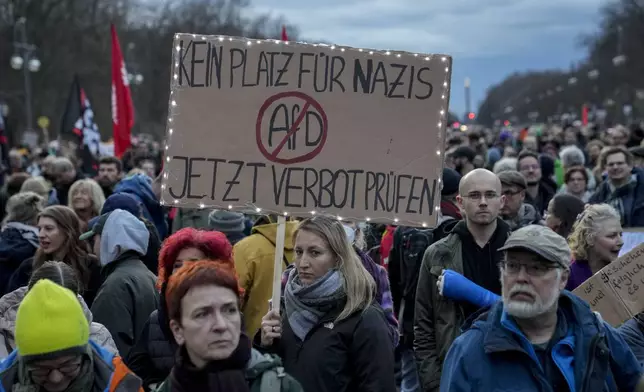
At Berlin's Brandenburg Gate, a huge crowd blew whistles, sang anti-fascist songs and carried banners denouncing AfD. Activists said they hoped the rally also would draw attention to other far-right parties in Europe and the new administration of U.S. President Donald Trump.
Click to Gallery
People gather to protest against the far-right Alternative for Germany, or AfD party, and right-wing extremism in front of the Brandenburg Gate in Berlin, Germany, Saturday, Jan. 25, 2025. (AP Photo/Ebrahim Noroozi)
People gather to protest against the far-right Alternative for Germany, or AfD party, and right-wing extremism in front of the Brandenburg Gate in Berlin, Germany, Saturday, Jan. 25, 2025. (AP Photo/Ebrahim Noroozi)
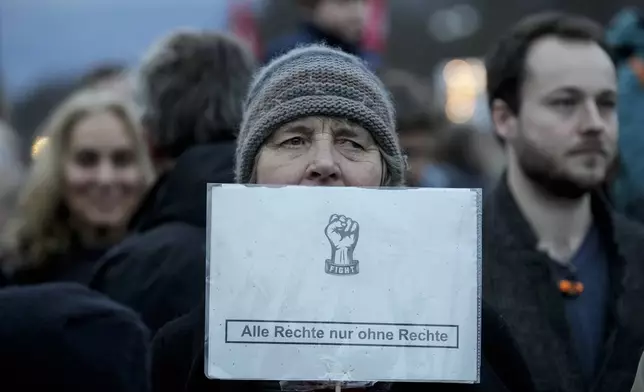
People gather to protest against the far-right Alternative for Germany, or AfD party, and right-wing extremism in front of the Brandenburg Gate in Berlin, Germany, Saturday, Jan. 25, 2025. (AP Photo/Ebrahim Noroozi)
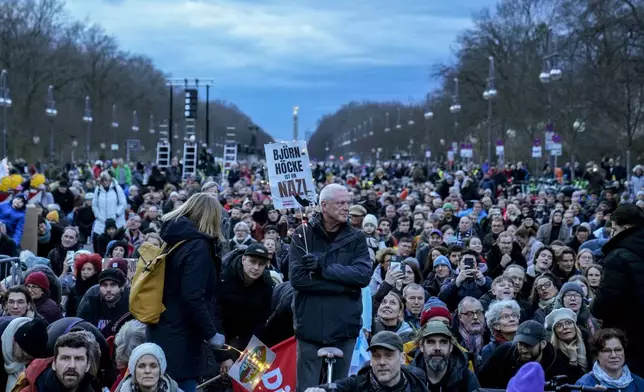
People gather to protest against the far-right Alternative for Germany, or AfD party, and right-wing extremism in front of the Brandenburg Gate in Berlin, Germany, Saturday, Jan. 25, 2025. (AP Photo/Ebrahim Noroozi)
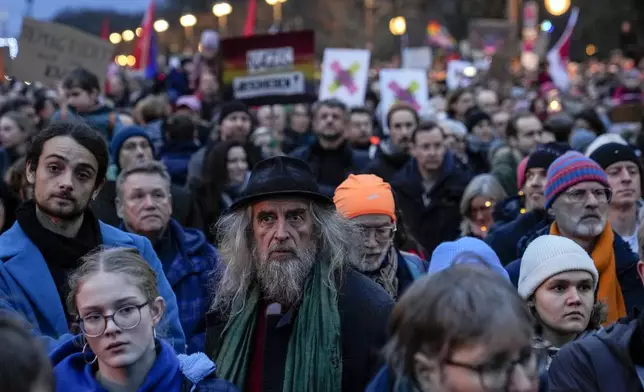
People gather to protest against the far-right Alternative for Germany, or AfD party, and right-wing extremism in front of the Brandenburg Gate in Berlin, Germany, Saturday, Jan. 25, 2025. (AP Photo/Ebrahim Noroozi)
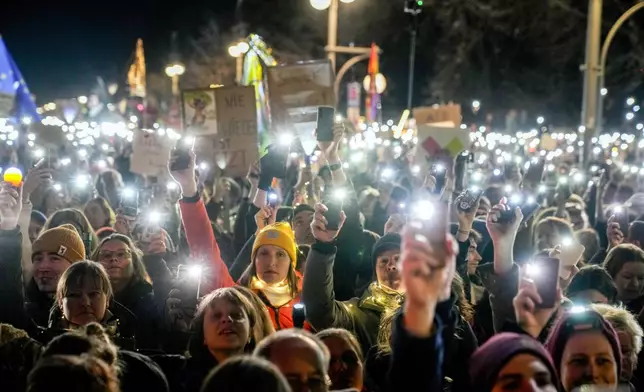
People hold up their cell phones as they protest the far-right Alternative for Germany, or AfD party, and right-wing extremism in front of the Brandenburg Gate in Berlin, Germany, Saturday, Jan. 25, 2025. (AP Photo/Ebrahim Noroozi)
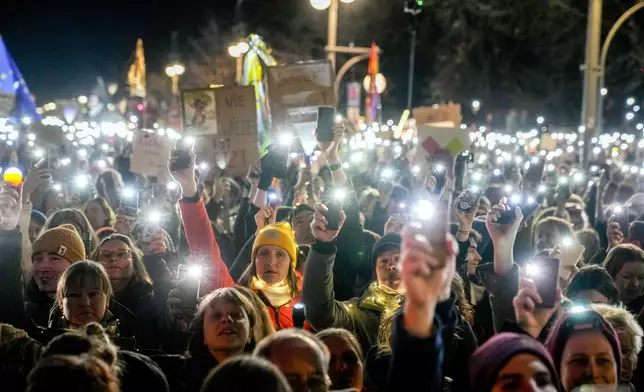
People hold up their cell phones as they protest the far-right Alternative for Germany, or AfD party, and right-wing extremism in front of the Brandenburg Gate in Berlin, Germany, Saturday, Jan. 25, 2025. (AP Photo/Ebrahim Noroozi)
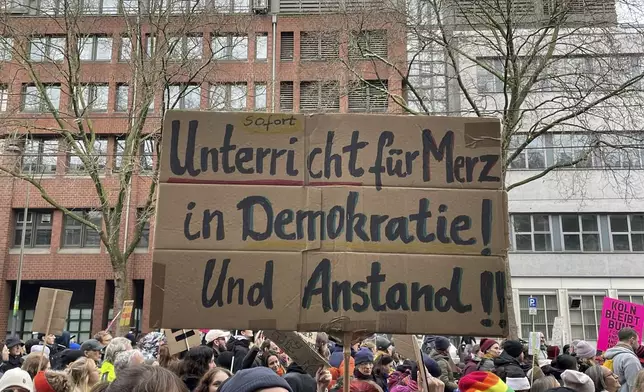
People gather to protest against the Far Right, in Cologne, Germany, Saturday Jan. 25, 2025. Banner reads: "Immediate lessons for Merz in democracy and decency". (Christoph Driessen/dpa via AP)
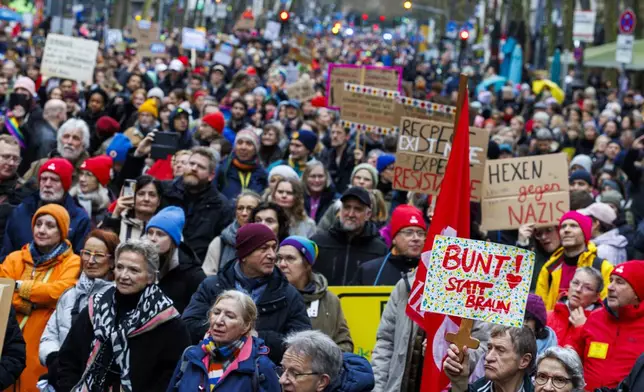
People gather to take part in the "5 before 12 - Loud for Democracy" protest in Cologne, Germany, Saturday Jan. 25, 2025. (Christoph Reichwein/dpa via AP)
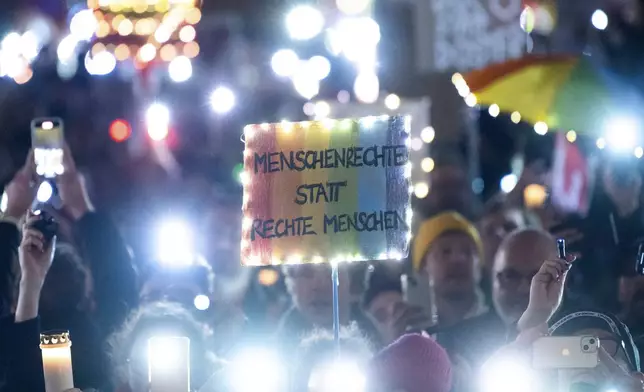
Participants hold lights, and a banner reading 'human rights instead of right people' during a rally, in front of the Brandenburg Gate, in Berlin, Saturday, Jan. 25, 2025. (Christophe Gateau/dpa via AP)
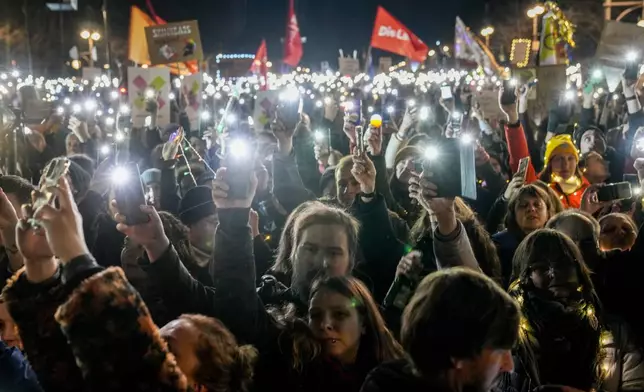
People hold up their cell phones as they protest the far-right Alternative for Germany, or AfD party, and right-wing extremism in front of the Brandenburg Gate in Berlin, Germany, Saturday, Jan. 25, 2025. (AP Photo/Ebrahim Noroozi)
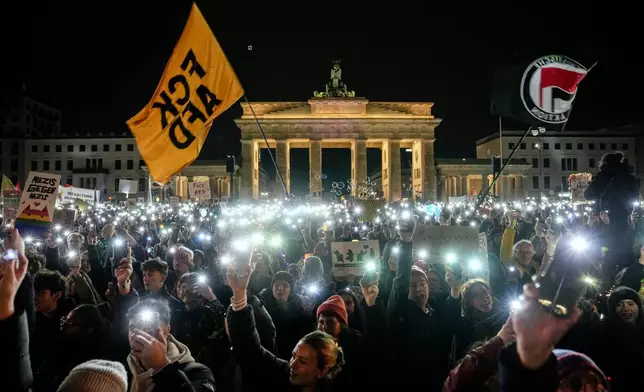
People hold up their cell phones as they protest the far-right Alternative for Germany, or AfD party, and right-wing extremism in front of the Brandenburg Gate in Berlin, Germany, Saturday, Jan. 25, 2025. (AP Photo/Ebrahim Noroozi)
“Those who fuel racism and attack climate protection are not just campaigning, they are endangering lives,” Luisa Neubauer with the Fridays for Future climate group told the crowd, which police estimated at 35,000. Police estimated the crowd at the Cologne rally at 40,000.
Europe's largest economy has been shaken after Chancellor Olaf Scholz’s three-party governing coalition collapsed late last year in a dispute over how to revitalize amid stagnation.
Saturday's protests took place while AfD opened its election campaign in the central city of Halle, where party leader Alice Weidel, AfD’s candidate for chancellor, spoke to about 4,500 people.
Weidel has the backing of Elon Musk, who addressed the rally remotely. His open support has caused an uproar in Germany.
Mainstream parties have declared they will not work with the AfD. The opposition center-right Union bloc and its candidate for chancellor, Friedrich Merz, top pre-election polls, followed by the far-right party.
Merz said Friday his party next week will bring motions to Parliament to toughen migration policy, one of the main election issues. That potentially leaves Merz open to accusations of breaking longstanding pledges not to work directly or indirectly with the AfD, if the motions go to a vote and pass with the party's help.
Merz earlier vowed to bar people from entering the country without proper papers, and to step up deportations if he is elected chancellor. His comments came after a knife attack in Aschaffenburg by a rejected asylum-seeker left a man and a 2-year-old boy dead.
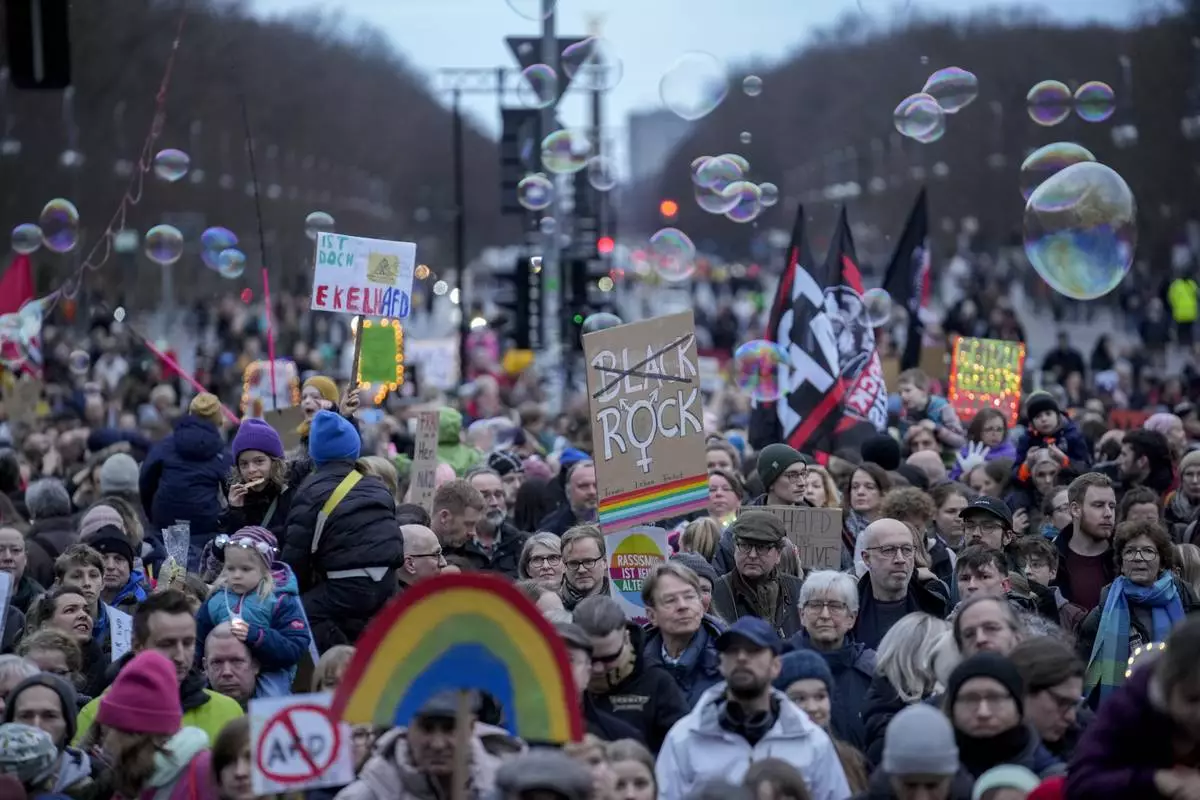
People gather to protest against the far-right Alternative for Germany, or AfD party, and right-wing extremism in front of the Brandenburg Gate in Berlin, Germany, Saturday, Jan. 25, 2025. (AP Photo/Ebrahim Noroozi)
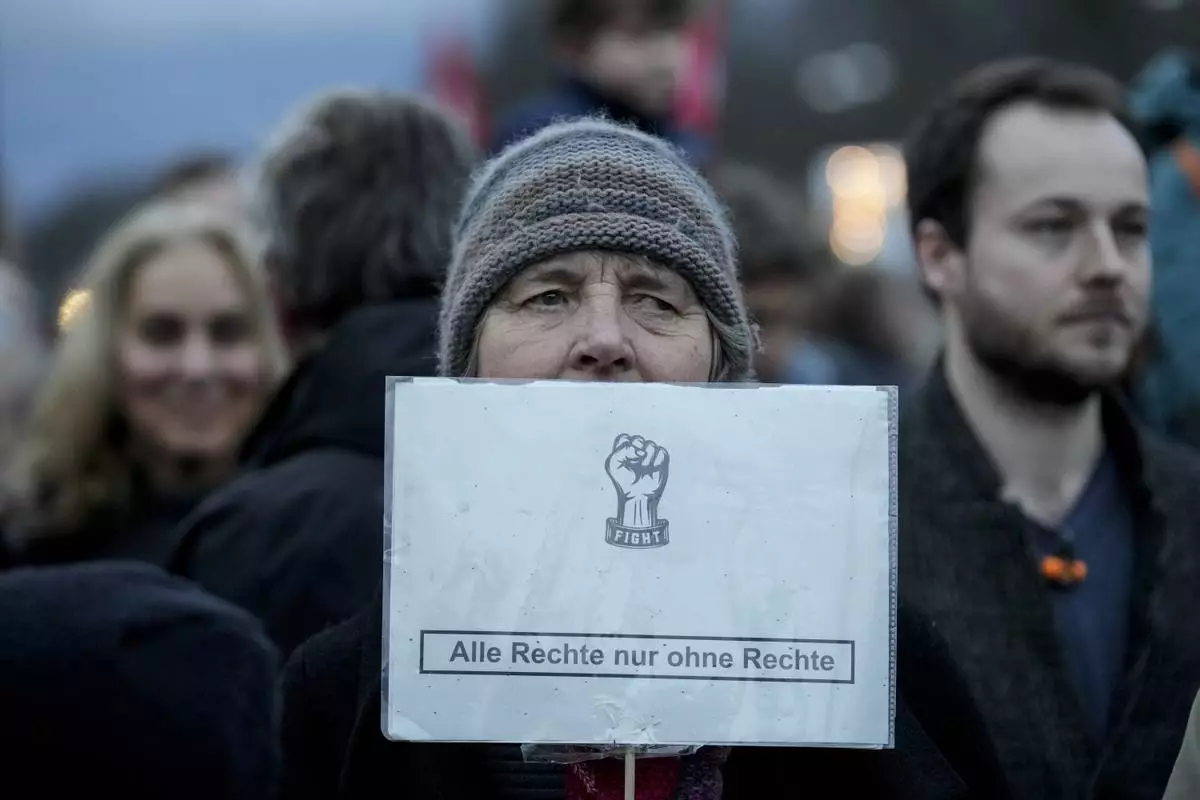
People gather to protest against the far-right Alternative for Germany, or AfD party, and right-wing extremism in front of the Brandenburg Gate in Berlin, Germany, Saturday, Jan. 25, 2025. (AP Photo/Ebrahim Noroozi)
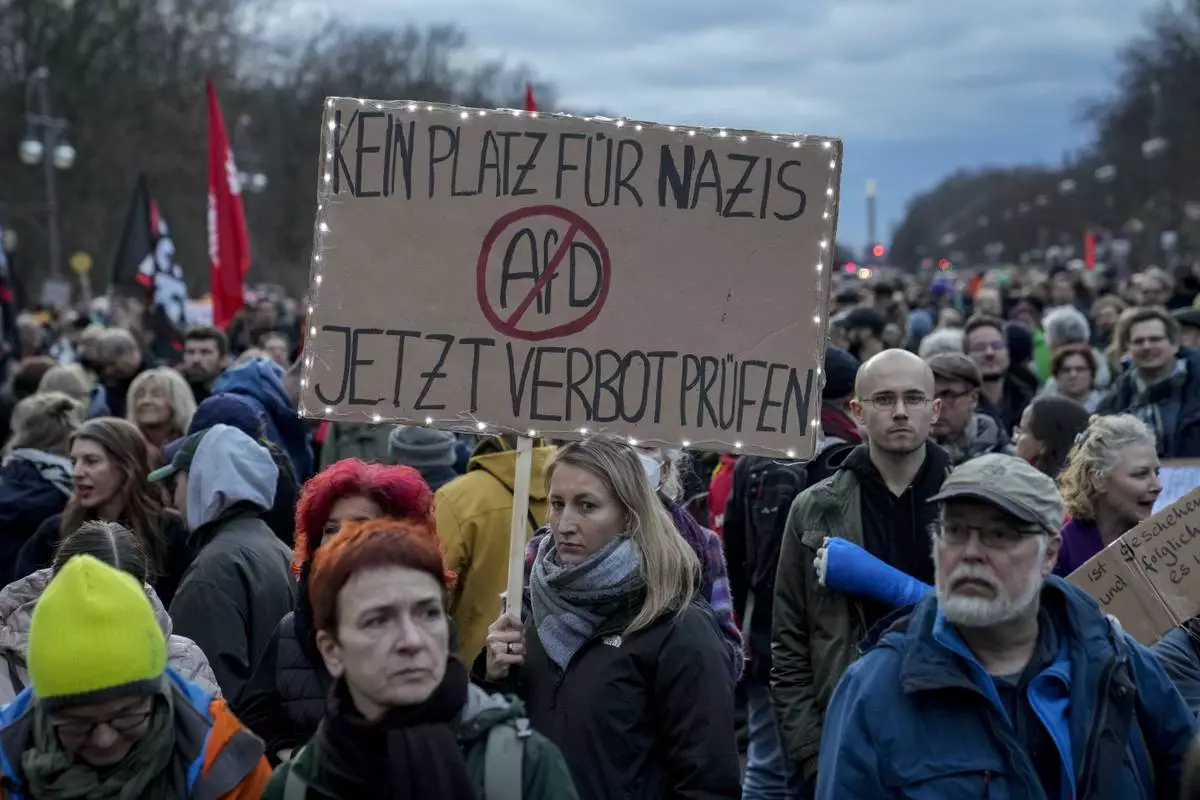
People gather to protest against the far-right Alternative for Germany, or AfD party, and right-wing extremism in front of the Brandenburg Gate in Berlin, Germany, Saturday, Jan. 25, 2025. (AP Photo/Ebrahim Noroozi)
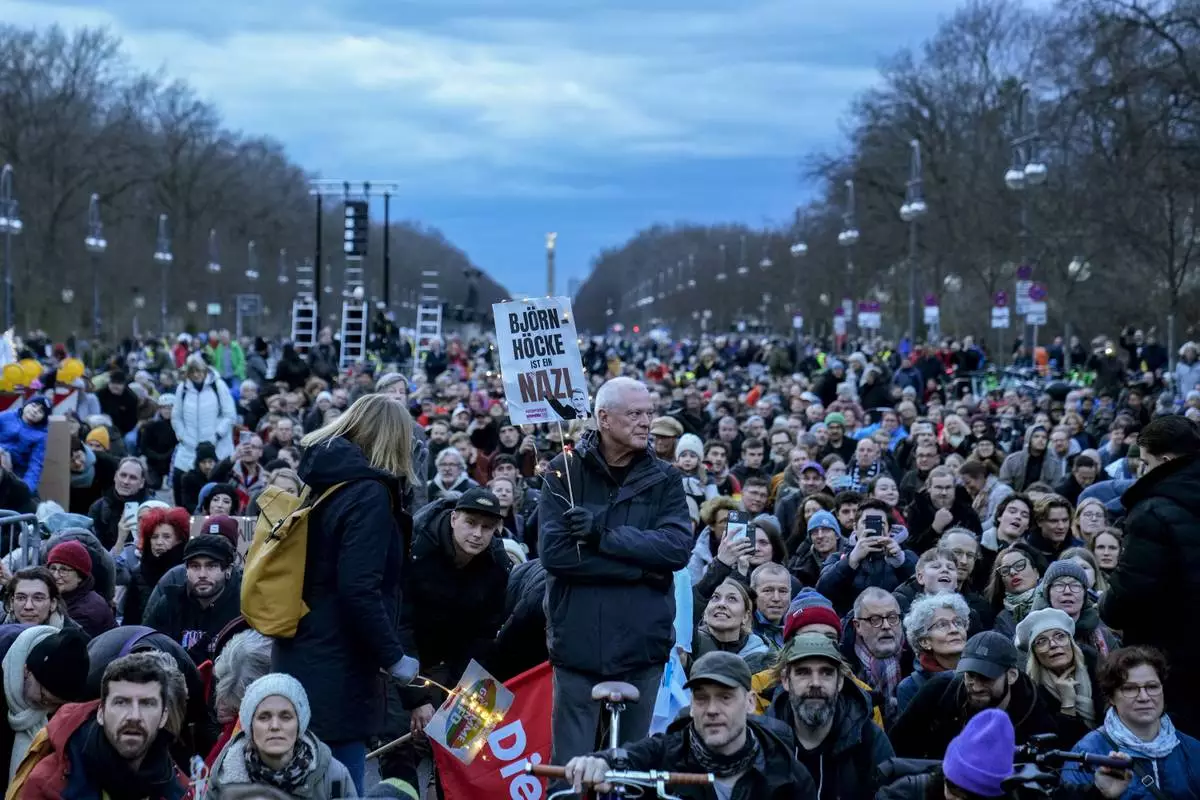
People gather to protest against the far-right Alternative for Germany, or AfD party, and right-wing extremism in front of the Brandenburg Gate in Berlin, Germany, Saturday, Jan. 25, 2025. (AP Photo/Ebrahim Noroozi)
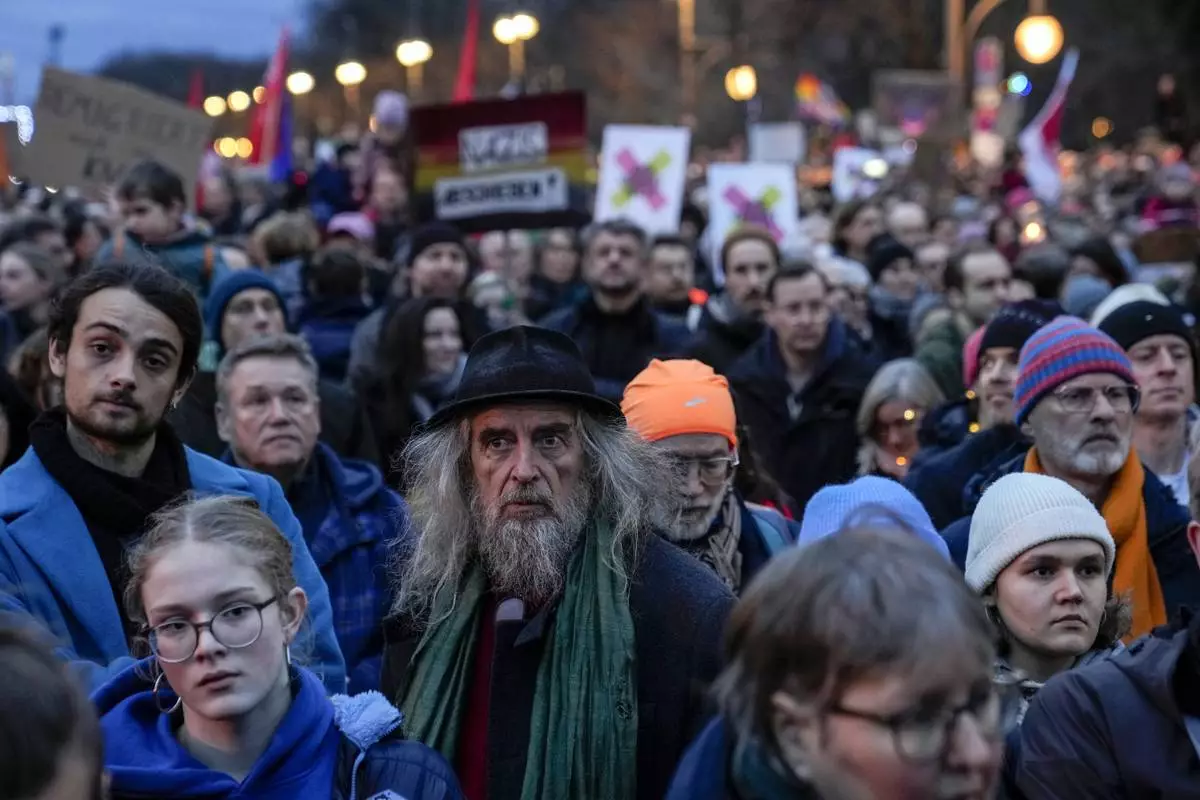
People gather to protest against the far-right Alternative for Germany, or AfD party, and right-wing extremism in front of the Brandenburg Gate in Berlin, Germany, Saturday, Jan. 25, 2025. (AP Photo/Ebrahim Noroozi)
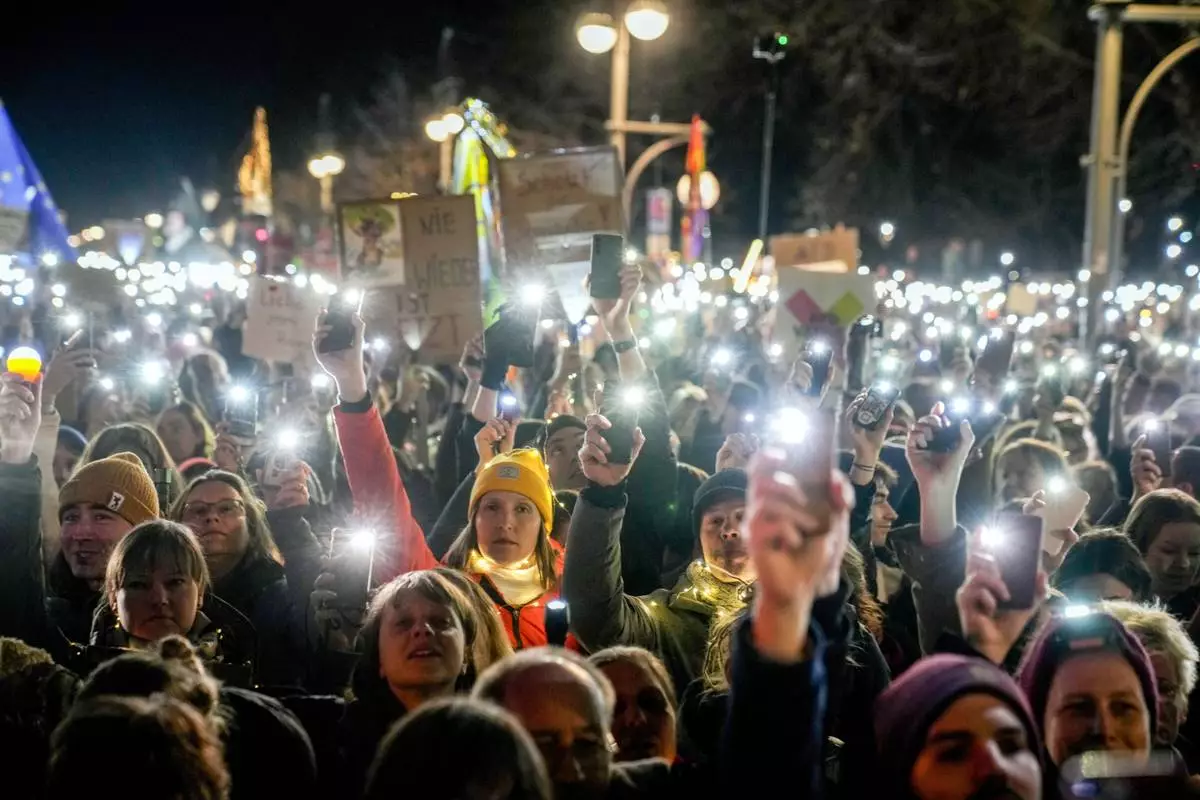
People hold up their cell phones as they protest the far-right Alternative for Germany, or AfD party, and right-wing extremism in front of the Brandenburg Gate in Berlin, Germany, Saturday, Jan. 25, 2025. (AP Photo/Ebrahim Noroozi)
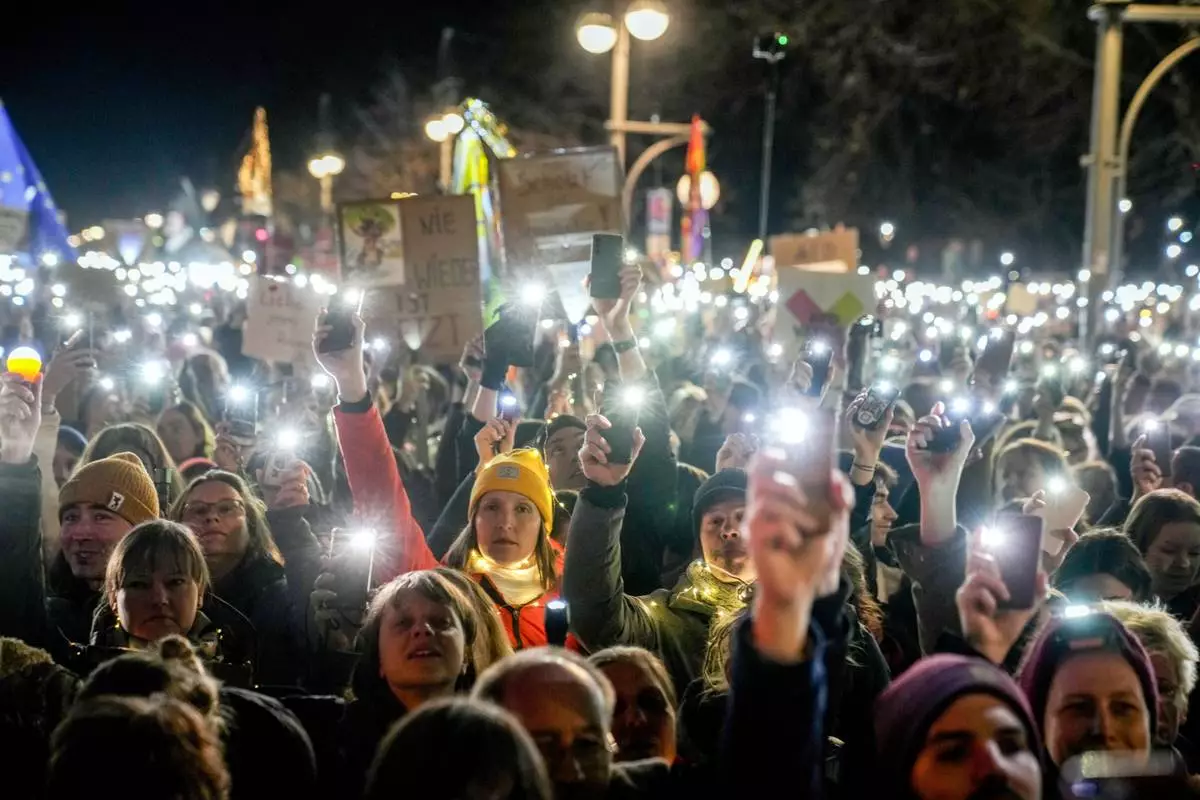
People hold up their cell phones as they protest the far-right Alternative for Germany, or AfD party, and right-wing extremism in front of the Brandenburg Gate in Berlin, Germany, Saturday, Jan. 25, 2025. (AP Photo/Ebrahim Noroozi)
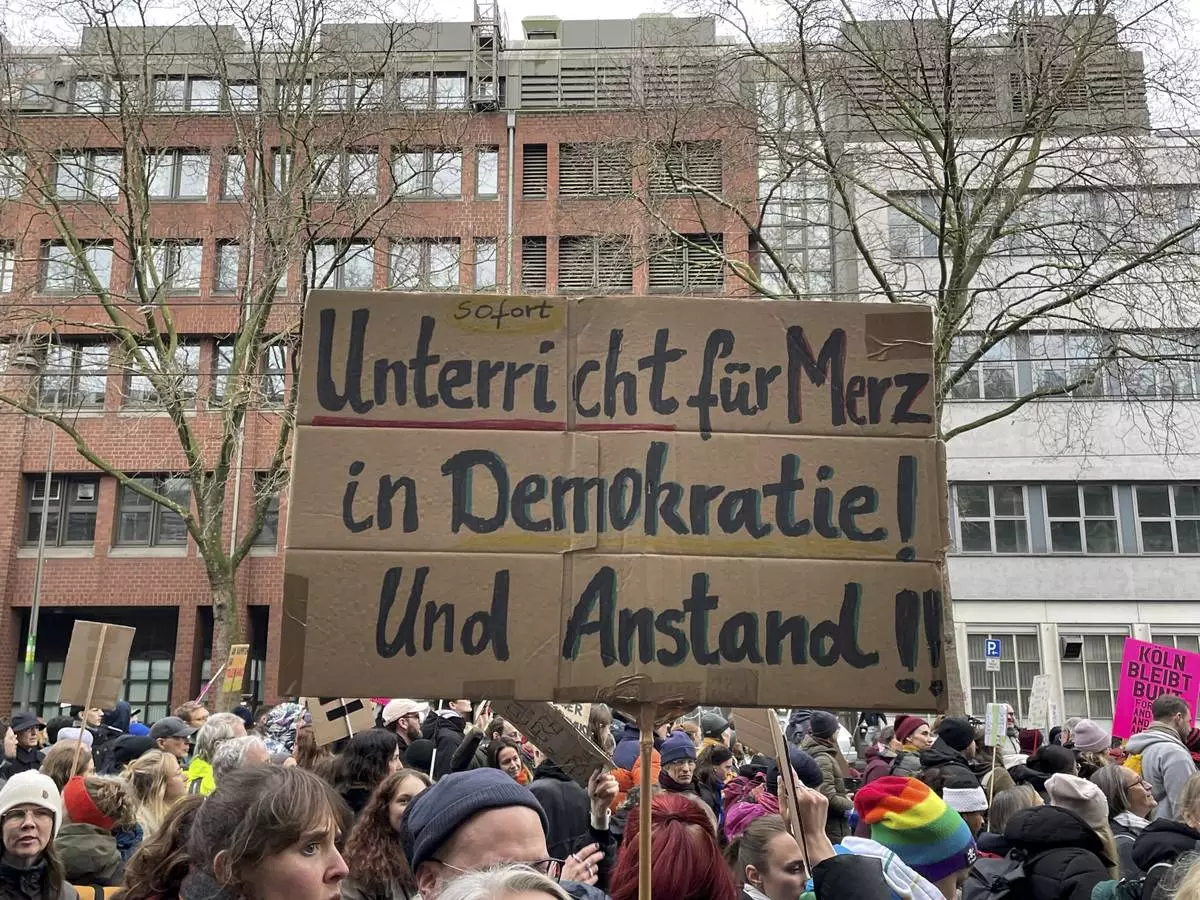
People gather to protest against the Far Right, in Cologne, Germany, Saturday Jan. 25, 2025. Banner reads: "Immediate lessons for Merz in democracy and decency". (Christoph Driessen/dpa via AP)
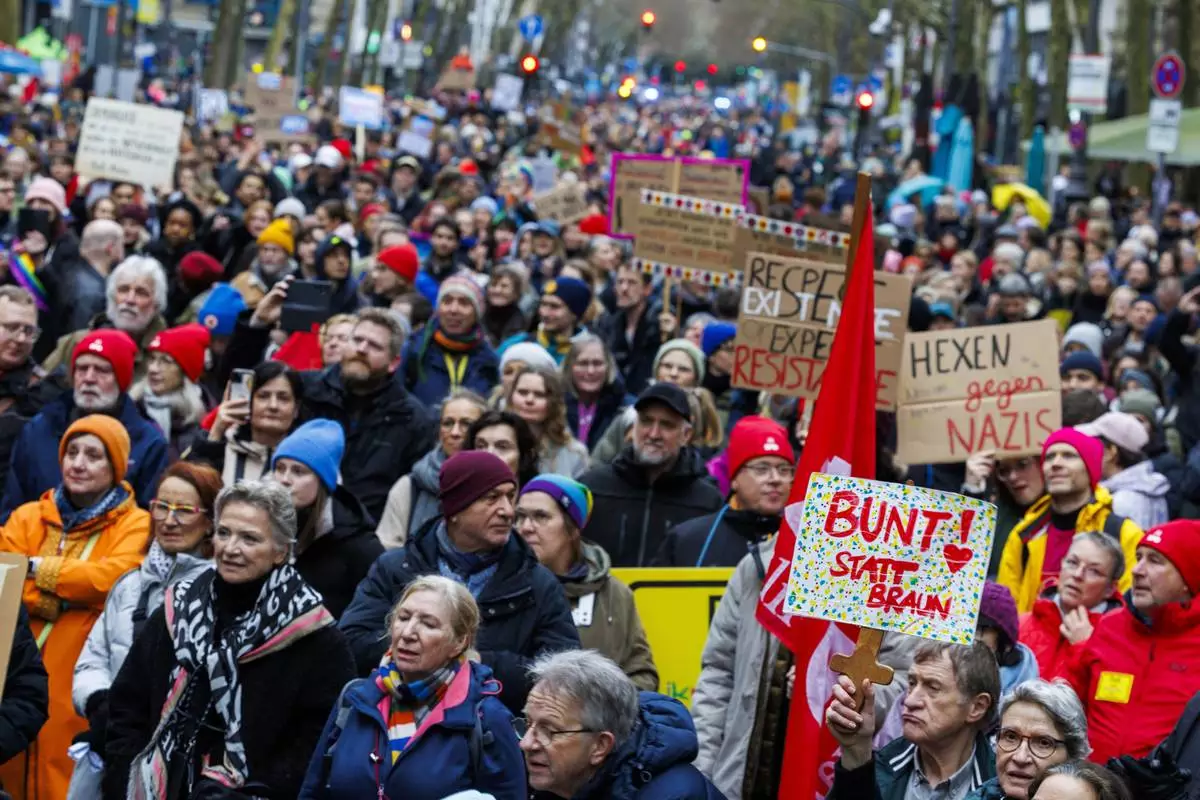
People gather to take part in the "5 before 12 - Loud for Democracy" protest in Cologne, Germany, Saturday Jan. 25, 2025. (Christoph Reichwein/dpa via AP)
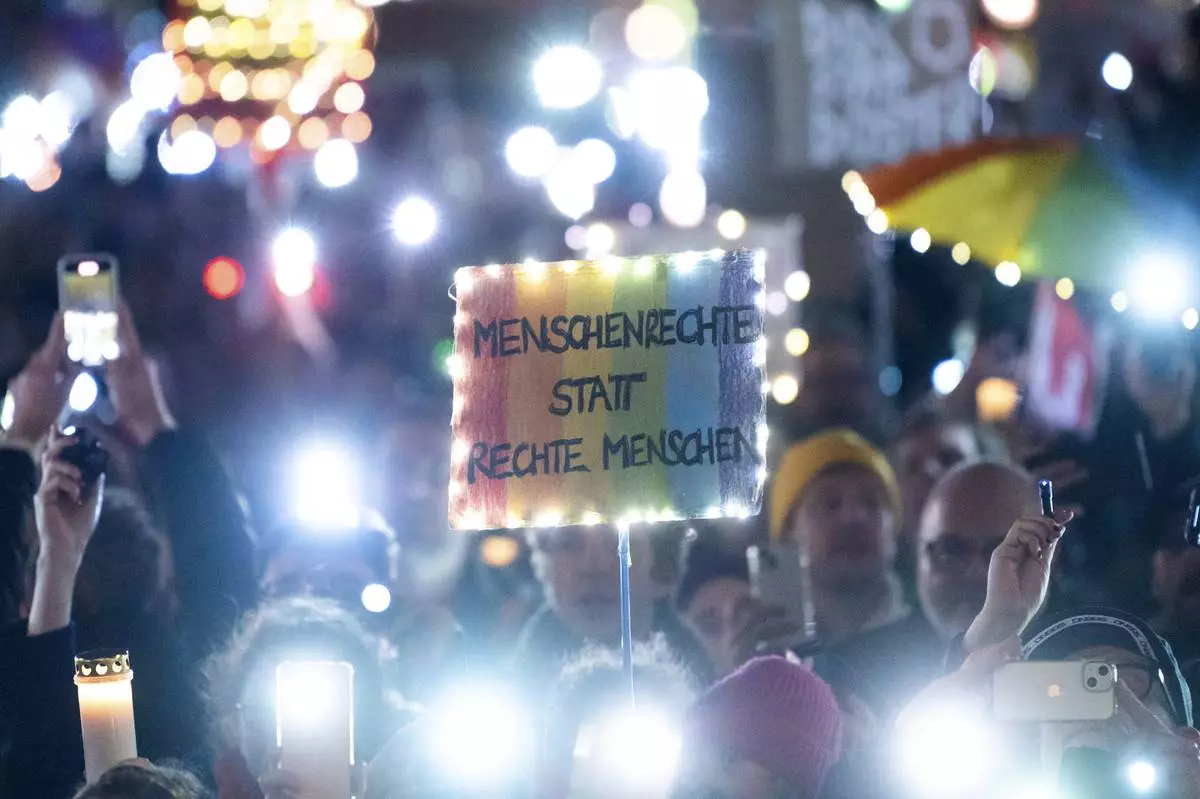
Participants hold lights, and a banner reading 'human rights instead of right people' during a rally, in front of the Brandenburg Gate, in Berlin, Saturday, Jan. 25, 2025. (Christophe Gateau/dpa via AP)
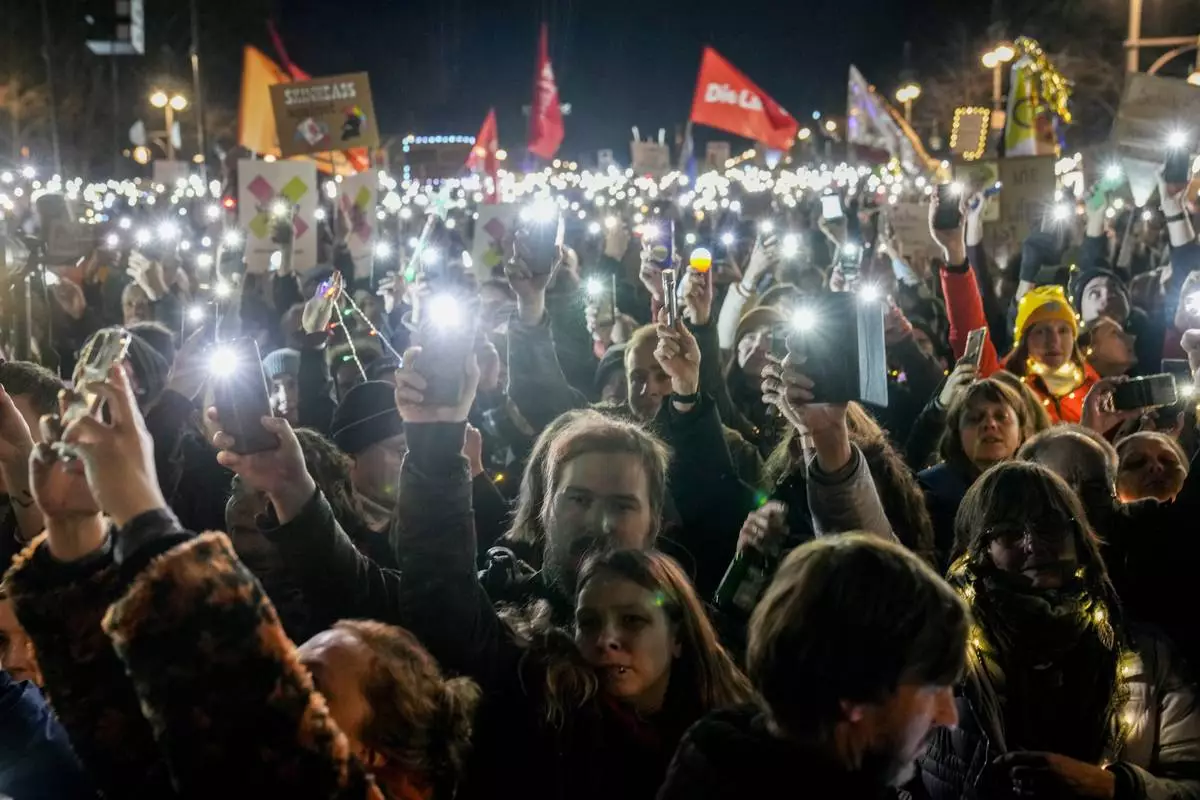
People hold up their cell phones as they protest the far-right Alternative for Germany, or AfD party, and right-wing extremism in front of the Brandenburg Gate in Berlin, Germany, Saturday, Jan. 25, 2025. (AP Photo/Ebrahim Noroozi)
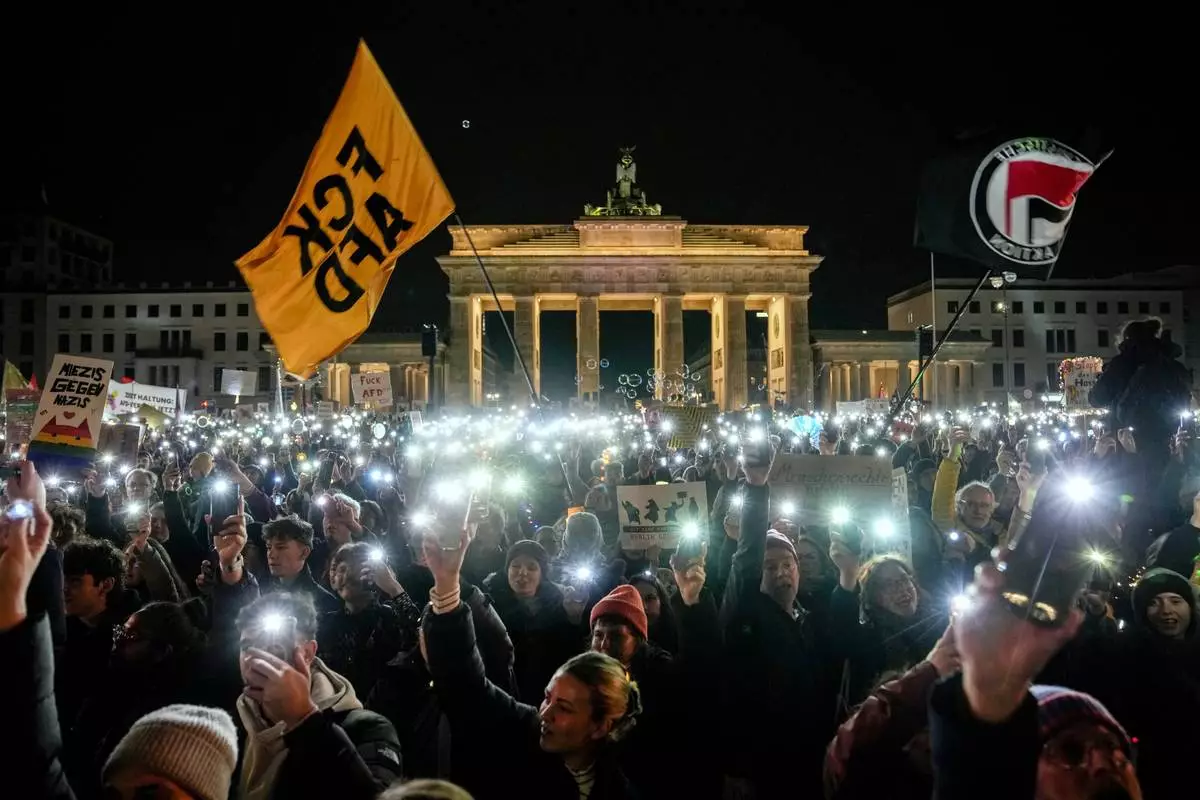
People hold up their cell phones as they protest the far-right Alternative for Germany, or AfD party, and right-wing extremism in front of the Brandenburg Gate in Berlin, Germany, Saturday, Jan. 25, 2025. (AP Photo/Ebrahim Noroozi)