Festive vibes are getting richer across China as people are welcoming the arrival of Spring Festival with various characteristic activities.
In Xiaxian County of north China's Shanxi Province, traditional performances like stilt walking and lion dance have won rounds of applause from spectators. People can also enjoy over 100 of local delicacies, with some of them being intangible cultural heritage.
The Wudang Mountain scenic spot in Hubei Province's Shiyan City has turned into a colorful cultural world, with several artistic performances on stage.
From dancing, martial art to acrobatics, these shows have created a comprehensive immersive experience for tourists with the help of visual devices and hologram technology.
During the Spring Festival holiday, the scenic spot will also hold additional light show and lantern fair, wowing visitors with its unique charm and rich festive atmosphere.
"We hope, with these colorful artistic performances, tourists around the world will come to Wudang Mountain in Hubei Province's Shiyan City to celebrate the Spring Festival," said He Yaochen, person in charge of the scenic spot.
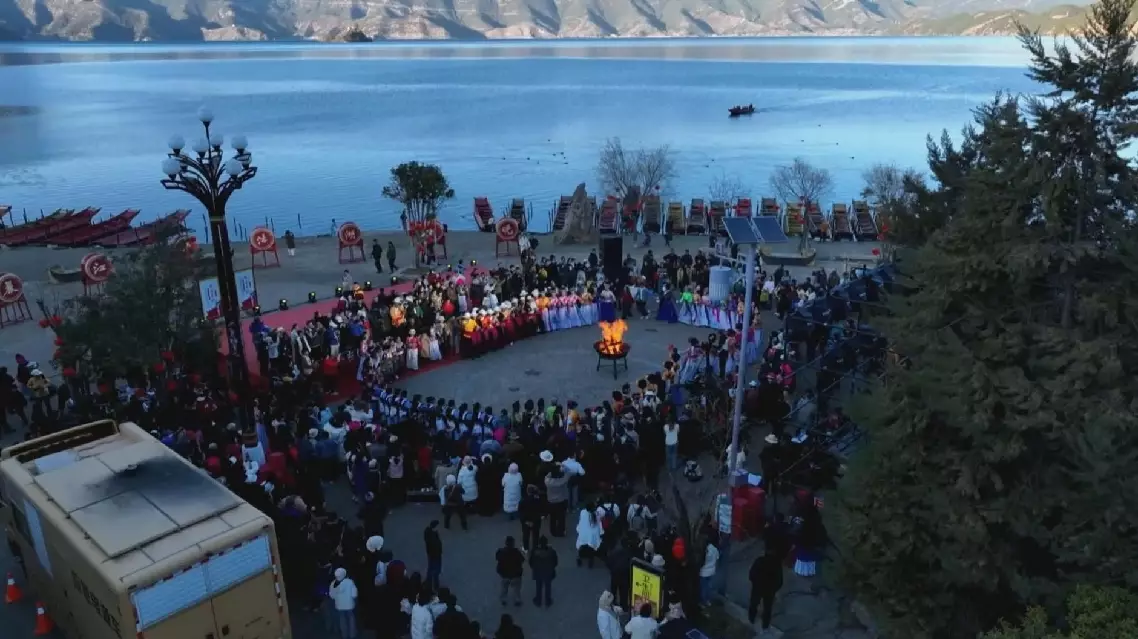
Right before the Chinese New Year, a village gala was held on the bank of the Lugu Lake in Lijiang City of southwest China's Yunnan Province. Villagers showed their talents with instrumental performances and dancing, attracting a lot of tourists.
"I feel so lucky to see such a wonderful show and the stunning view, and to experience the amazing culture," said a tourist.
Some residents in Luoyang City of central China's Henan Province had a chance to closely watch shows of intangible cultural heritage, such as lion dance, "Bian Lian" (face-changing) and fire-spitting.
They also ate tasty food and played games at a Spring Festival fair.
"I'm very happy. This has made our life more colorful," said Cheng Lingling, a local resident.
Baoqing County in northeast China's Heilongjiang Province is buzzing with excitement, as a Spring Festival fair is packed with local food and daily necessities to celebrate the festival.
People across China ring in Spring Festival with culture-rich activities
China's foreign trade in yuan-denominated terms expanded 18.8 percent year on year in the first three quarters of this year, official data showed on Wednesday.
Speaking at a press conference in Beijing, Wang Jun, deputy head of the General Administration of Customs (GAC), said China's trade in goods imports and exports totaled 39.94 trillion yuan (about 6 trillion U.S. dollars) from January to September.
"According to customs statistics, in the first three quarters of this year, China's trade in goods imports and exports totaled 39.94 trillion yuan, up 18.8 percent year on year. Among them, exports rose 16.4 percent to 23.2 trillion yuan over the period, while imports climbed 22.3 percent to 16.74 trillion yuan. On a monthly basis, growth remained in double digits for six consecutive months. In September alone, goods trade climbed 27.5 percent from a year earlier to 5.16 trillion yuan, exceeding 5 trillion yuan for the first time," said Wang.
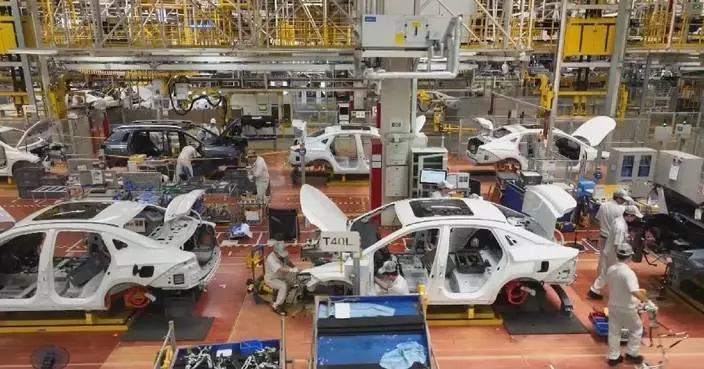
"In the first three quarters, China's equipment manufacturing sector played a prominent leading role, contributing nearly 90 percent of the growth in exports. Intermediary goods accounted for more than half of total export value, effectively serving as an anchor for global industrial and supply chains. Exports moved toward greater intelligence and green development, with integrated circuit exports growing 99.1 percent, while green products such as electric vehicles, lithium batteries, and wind turbine generator sets and their parts grew 72.3 percent, 36.4 percent, and 22.4 percent, respectively," he said.
On the import side, growth has exceeded 20 percent for seven consecutive months since March, a run that culminated in September with monthly imports topping 2 trillion yuan for the first time. Imports grew 5.9 percentage points faster than exports in the first nine months, outpacing exports in trade with more than 110 countries and regions, promoting more balanced trade development, according to the customs data.
"In the first three quarters, the growth rate of foreign trade was the fastest for the same period in nearly five years, with both quarterly and monthly growth rates generally showing an accelerating trend. The driving forces and vitality of China's foreign trade development have continued to accumulate and strengthen, demonstrating notable resilience, and there is a solid foundation and support for continued import and export growth in the fourth quarter," Wang said.
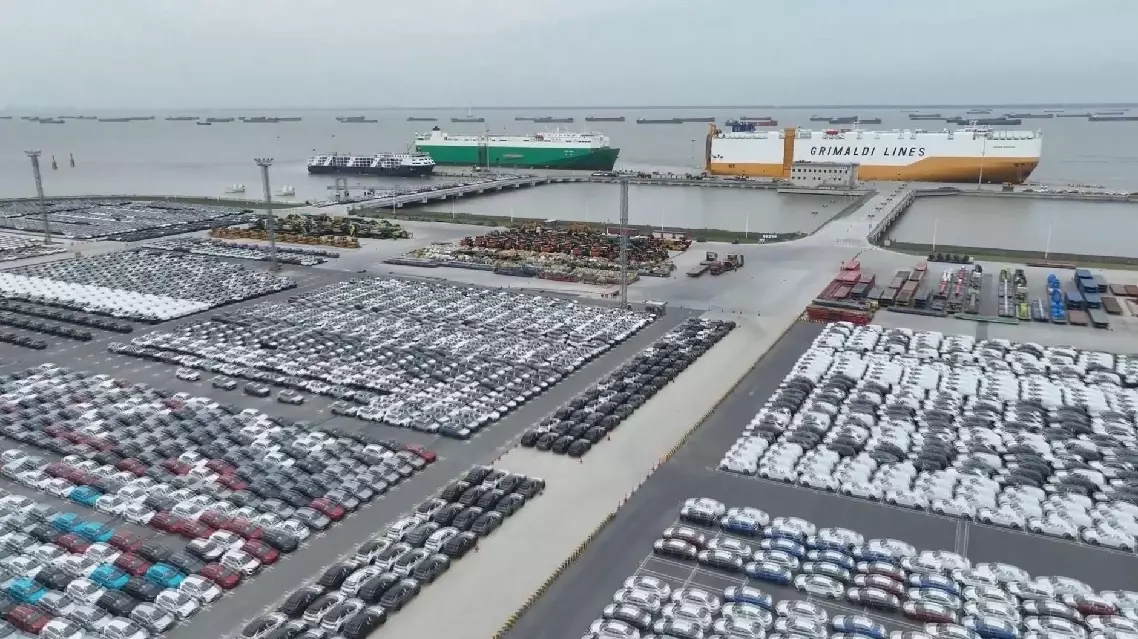
China's foreign trade expands 18.8 pct in first three quarters