SEOUL, South Korea (AP) — South Korean President Yoon Suk Yeol has become the country's first leader to be indicted, less than two weeks after he was the first to be detained.
The impeached, jailed president, who had been holed up in his presidential compound for weeks after issuing a shocking martial law decree last month, now faces rebellion charges that are punishable by the death penalty or life in prison.
Click to Gallery
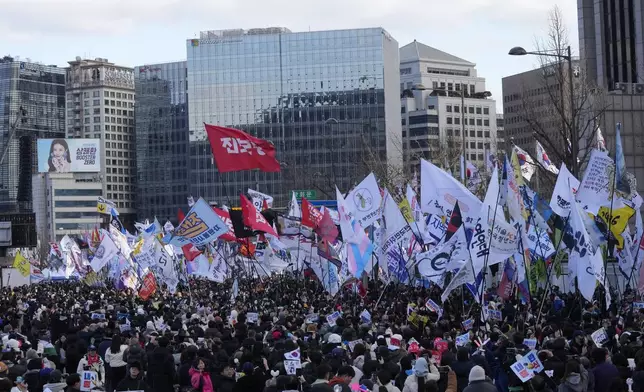
Protesters carry flags during a rally demanding immediate indictment of impeached South Korean President Yoon Suk Yeol in Seoul, South Korea, Saturday, Jan. 25, 2025. (AP Photo/Ahn Young-joon)
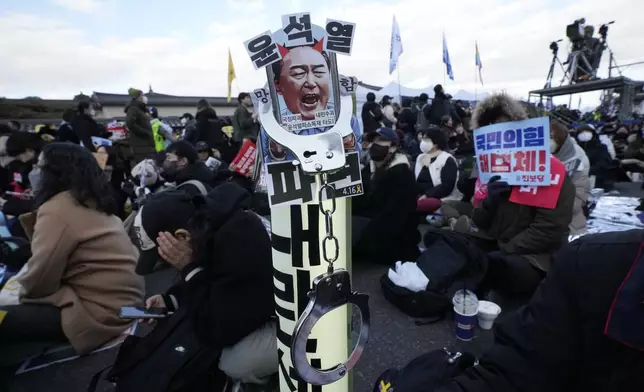
An image of impeached South Korean President Yoon Suk Yeol is displayed during a rally demanding immediate indictment of Yoon in Seoul, South Korea, Saturday, Jan. 25, 2025. The letters read "Yoon Suk Yeol." (AP Photo/Ahn Young-joon)
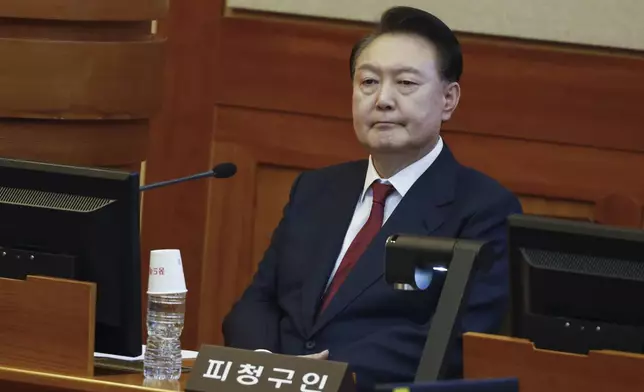
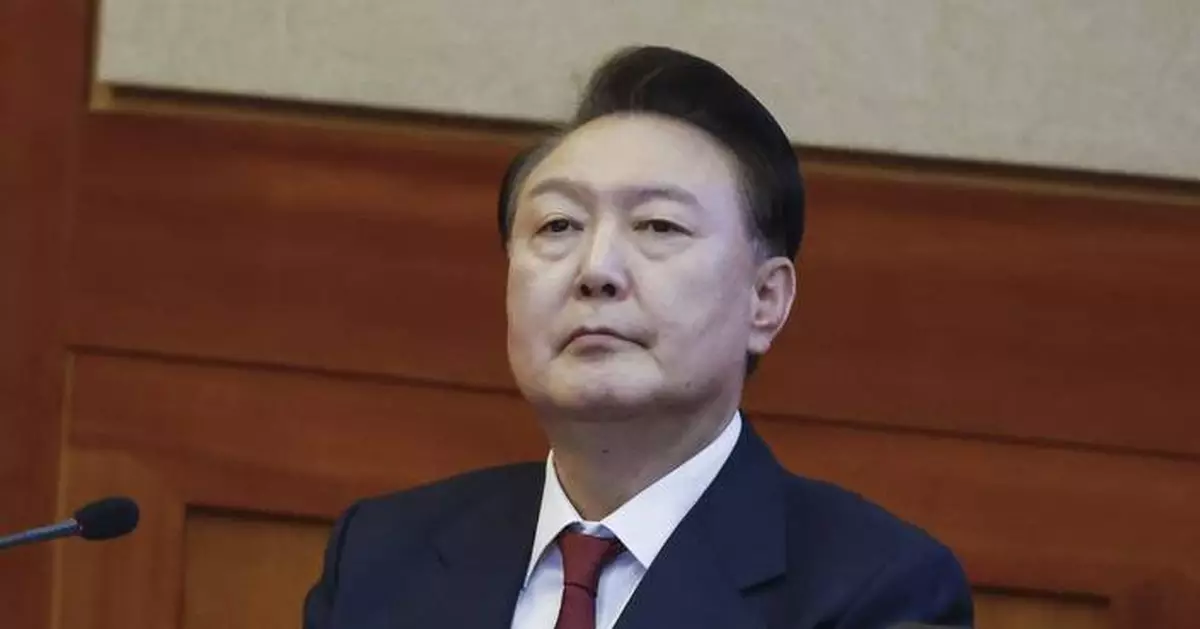
FILE- South Korea's impeached President Yoon Suk Yeol attends the fourth hearing of his impeachment trial over his short-lived imposition of martial law at the Constitutional Court in Seoul, South Korea, Thursday, Jan. 23, 2025. (Jeon Heon Kyun/Pool Photo via AP, File)
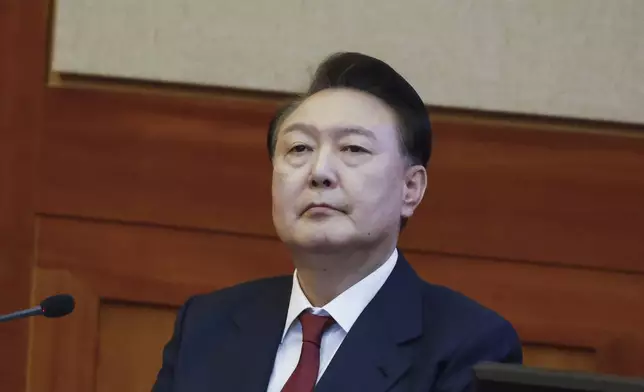
South Korea's impeached President Yoon Suk Yeol, attends the fourth hearing of his impeachment trial over his short-lived imposition of martial law at the Constitutional Court in Seoul, South Korea, Jan.23, 2025. (Jeon Heon Kyun/Pool Photo via AP)
It's part of a tortuous saga that has plunged South Korea into political turmoil and further riven an already divided society.
And it's not the only legal headache Yoon faces. A separate proceeding will determine whether to formally dismiss Yoon as president or reinstate him.
As Seoul prepares for double court hearings, continuing chaotic protests and increasingly harsh rhetoric from pro-and anti-Yoon forces, here's what to expect next:
Yoon will stay in jail.
He will be brought from a detention facility to a Seoul court for hearings in the rebellion trial, which is expected to last about six months.
Prosecutors say that Yoon directed a rebellion when he briefly imposed martial law on Dec. 3.
Yoon has presidential immunity from most criminal prosecutions, but not on charges of rebellion or treason.
Yoon’s defense minister, police chief and several other military commanders have already been arrested and indicted on alleged rebellion, abuse of power and other charges related to the martial law decree.
Meanwhile, rival protests look likely to continue in downtown Seoul.
After a local court on Jan. 19 approved a formal arrest warrant to extend Yoon’s detention, dozens of his supporters stormed the court building, destroying windows, doors and other property. They also attacked police officers with bricks, steel pipes and other objects. The violence left 17 police officers injured, and police detained 46 protesters.
Yoon also has to worry about the Constitutional Court, which has until June to determine whether to formally dismiss or reinstate him as president.
Observers expect a ruling to come sooner than the deadline.
In the cases of two past impeached presidents, Roh Moo-hyun in 2004 and Park Geun-hye in 2016, the court spent 63 days and 91 days respectively before determining to reinstate Roh and dismiss Park.
If the Constitutional Court removes Yoon from office, an election to choose his successor must be held within two months.
Recent public surveys show that governing and opposition party candidates are running neck-and-neck in a possible presidential by-election race.
Both are promising that this is just the beginning.
Shin Dong-wook, a spokesperson for the governing conservative People Power Party, is warning that prosecutors will face unspecified legal and political consequences for their “wrong indictment” of Yoon.
Yoon’s defense team says the prosecutors who indicted the president are trying to curry favor with political forces who want Yoon gone. They called the indictment “a shame in the history of South Korean prosecutors.”
The main opposition liberal Democratic Party, which led Yoon’s Dec. 14 impeachment, called his indictment and arrest “the beginning of the punishment of the ringleader of a rebellion.”
Party spokesperson Han Min-soo warned Yoon to stop what he called his attempt to incite far-right supporters based on “groundless delusion.”
Yoon has steadfastly denied any wrongdoing and says his declaration of martial law was a legitimate act of governance meant to raise public awareness of the danger of the liberal-controlled National Assembly, which obstructed his agenda.
After declaring martial law on Dec. 3, Yoon sent troops and police officers to the assembly, but enough lawmakers still managed to enter an assembly chamber to unanimously vote down Yoon’s decree, forcing his Cabinet to lift it.
The martial law imposition, the first of its kind in South Korea in more than four decades, lasted only six hours. But it evoked painful memories of the military-backed rulers who used martial law and emergency decrees to suppress opponents in the 1960s through the '80s.
Klug reported from Tokyo.
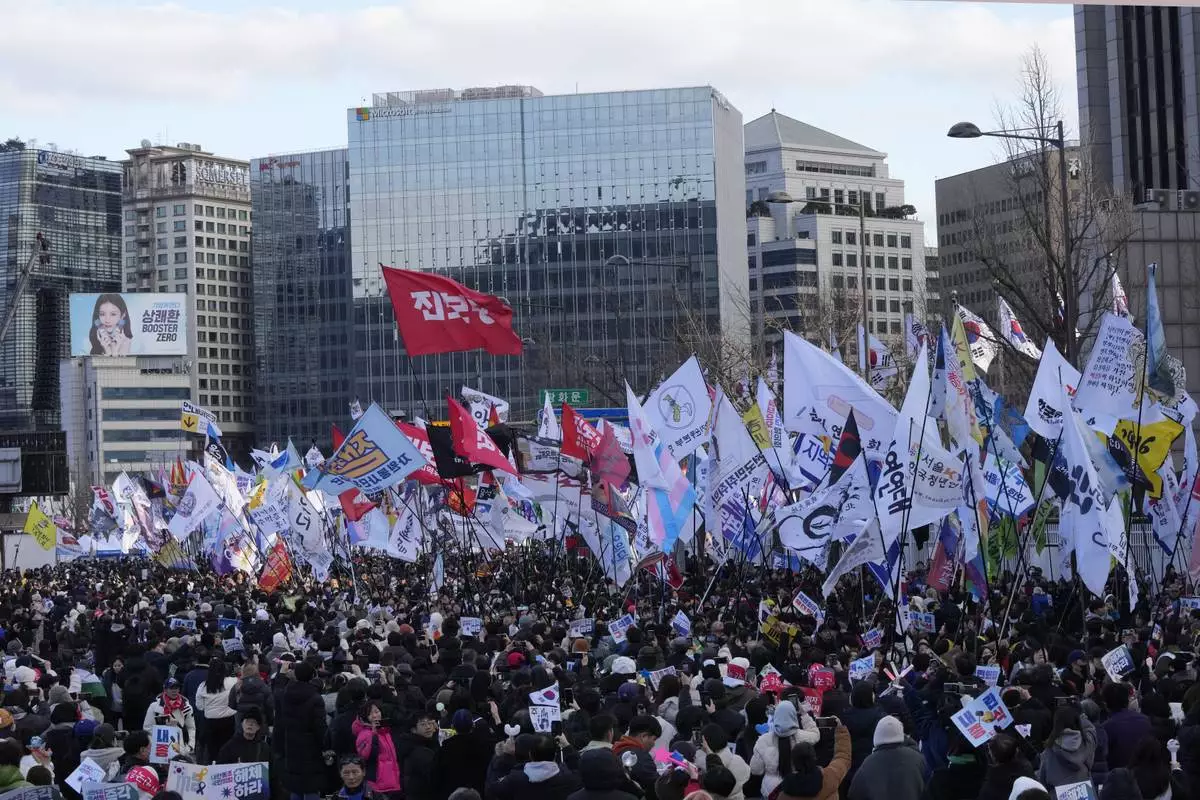
Protesters carry flags during a rally demanding immediate indictment of impeached South Korean President Yoon Suk Yeol in Seoul, South Korea, Saturday, Jan. 25, 2025. (AP Photo/Ahn Young-joon)
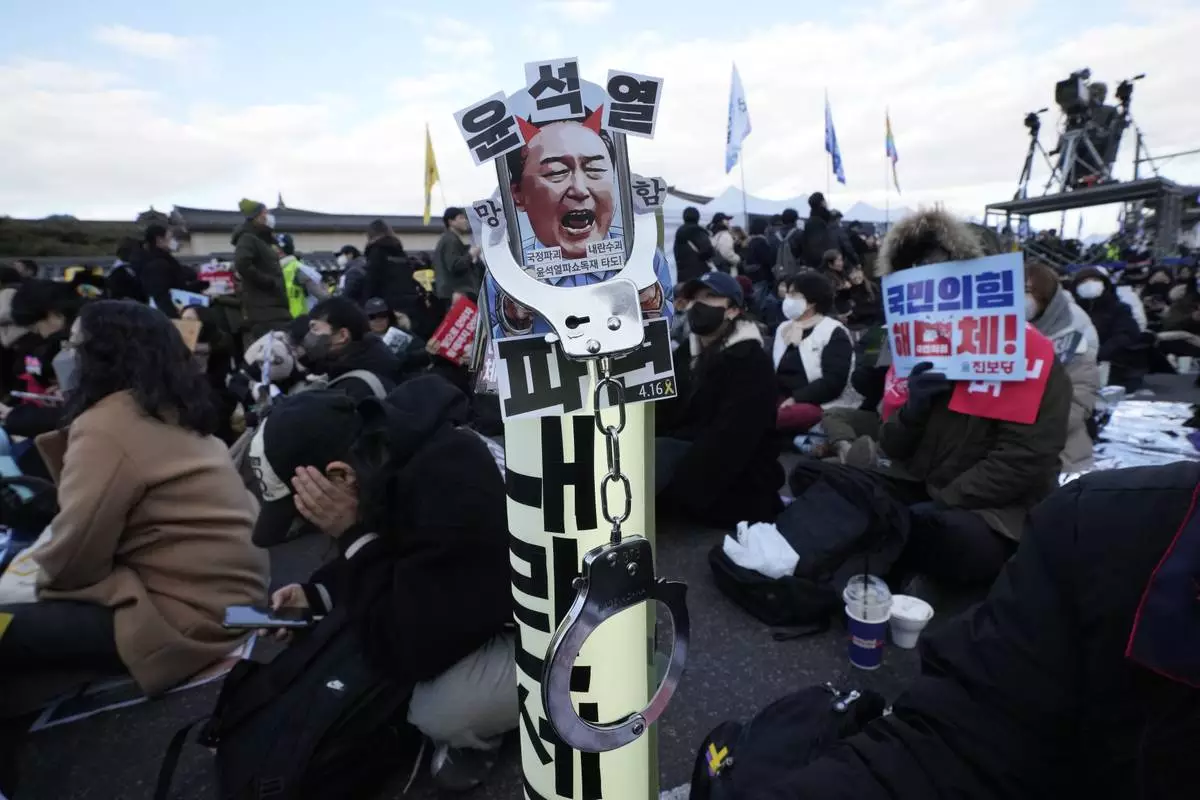
An image of impeached South Korean President Yoon Suk Yeol is displayed during a rally demanding immediate indictment of Yoon in Seoul, South Korea, Saturday, Jan. 25, 2025. The letters read "Yoon Suk Yeol." (AP Photo/Ahn Young-joon)
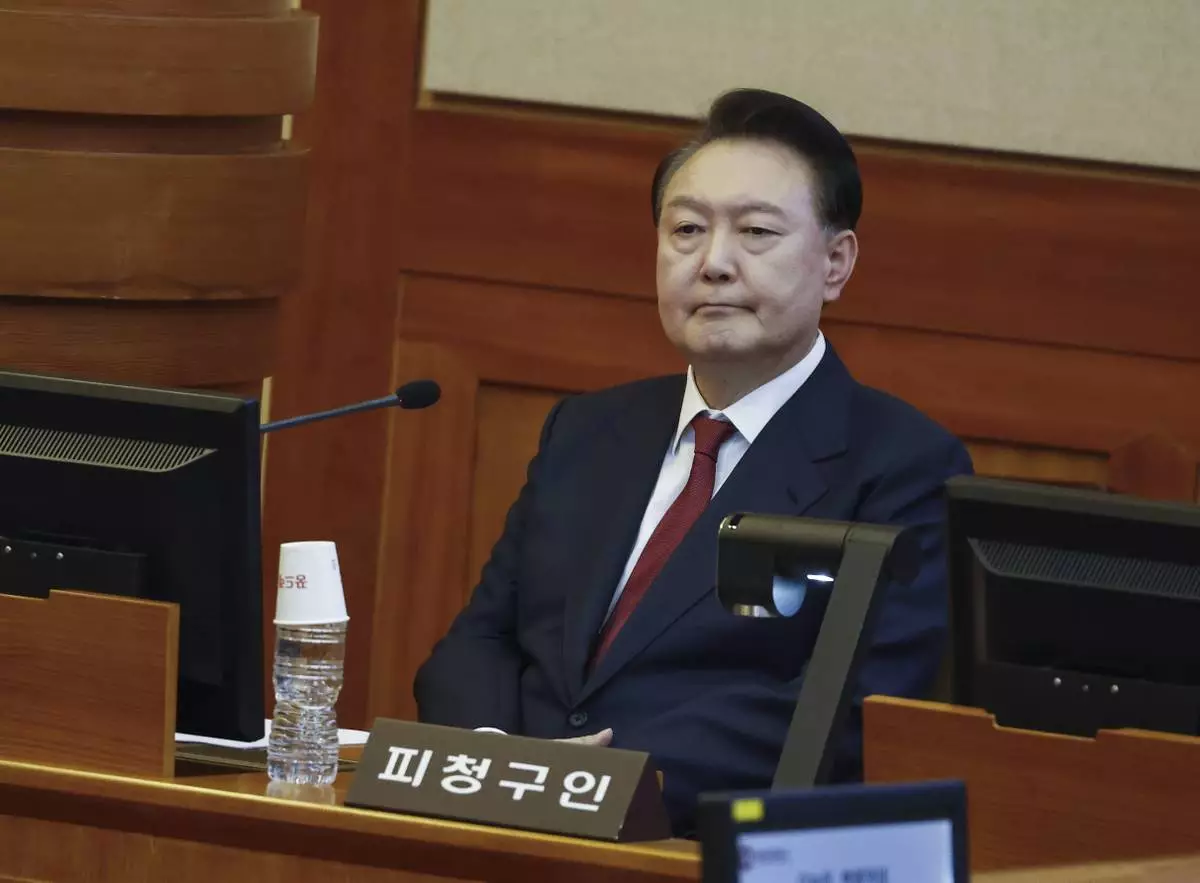
FILE- South Korea's impeached President Yoon Suk Yeol attends the fourth hearing of his impeachment trial over his short-lived imposition of martial law at the Constitutional Court in Seoul, South Korea, Thursday, Jan. 23, 2025. (Jeon Heon Kyun/Pool Photo via AP, File)
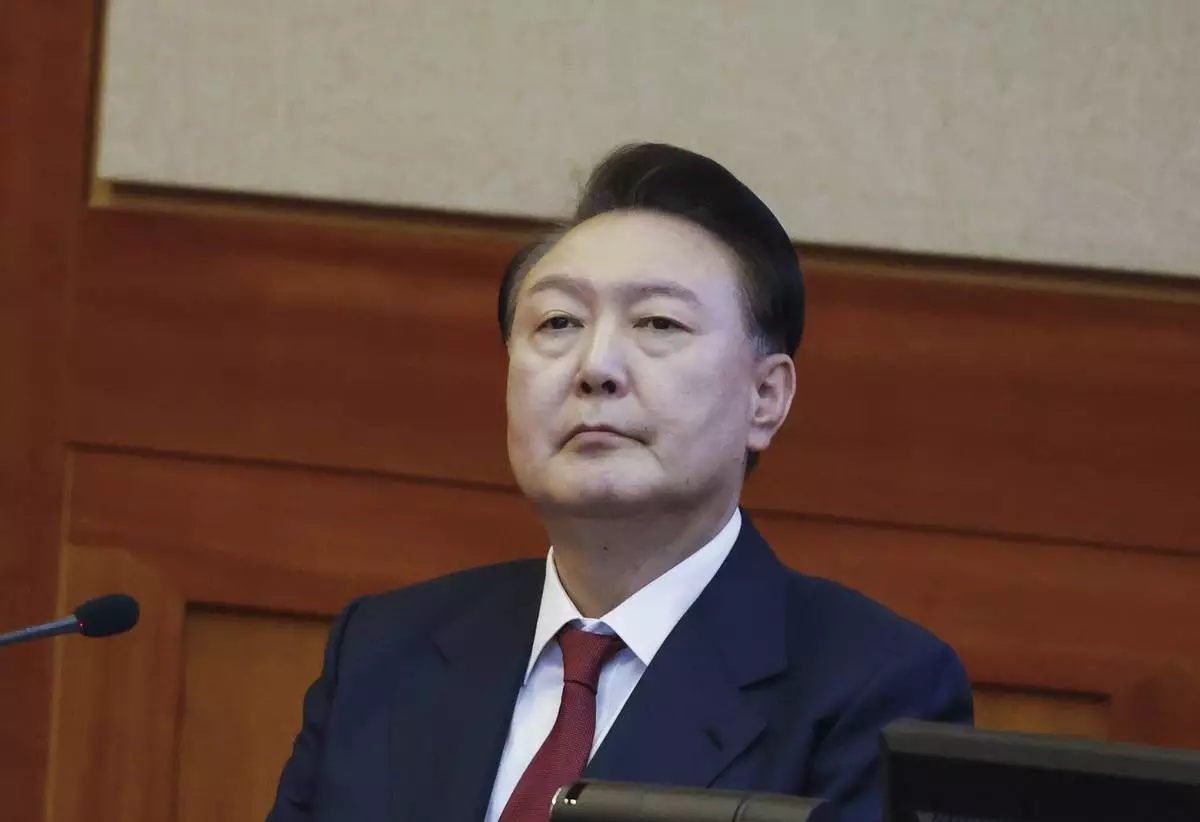
South Korea's impeached President Yoon Suk Yeol, attends the fourth hearing of his impeachment trial over his short-lived imposition of martial law at the Constitutional Court in Seoul, South Korea, Jan.23, 2025. (Jeon Heon Kyun/Pool Photo via AP)