TOKYO (AP) — The president and chairperson of Japanese network Fuji Television have resigned over a widening sex assault scandal linked to one of Japan's top TV celebrities.
The scandal centers on Masahiro Nakai, a former leader of Japan’s once-hugely popular boy band SMAP, and his costly settlement with a woman over the alleged sex assault at a 2023 dinner party.
Click to Gallery
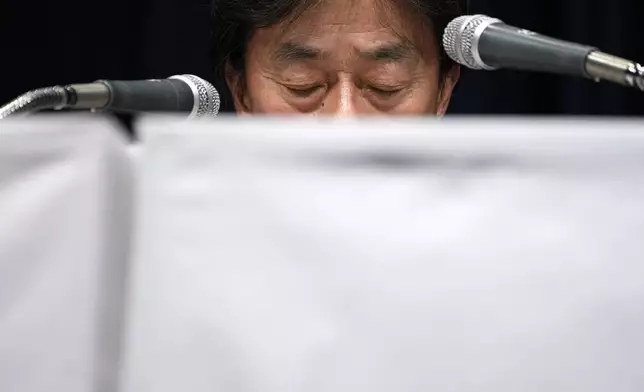
Koichi Minato, President and CEO of Fuji Television Network, answers questions during a press conference at Fuji Television headquarter in Tokyo, Monday, Jan. 27, 2025. (AP Photo/Eugene Hoshiko)
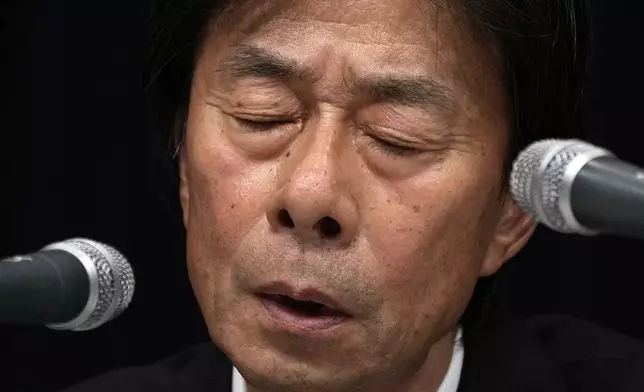
Koichi Minato, President and CEO of Fuji Television Network, answers a question during a news conference at the Fuji Television headquarters in Tokyo, Monday, Jan. 27, 2025. (AP Photo/Eugene Hoshiko)
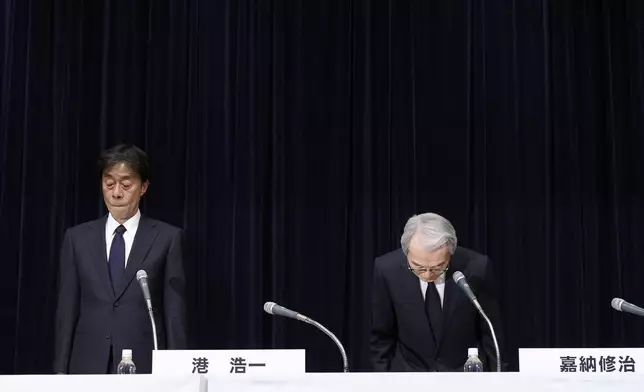
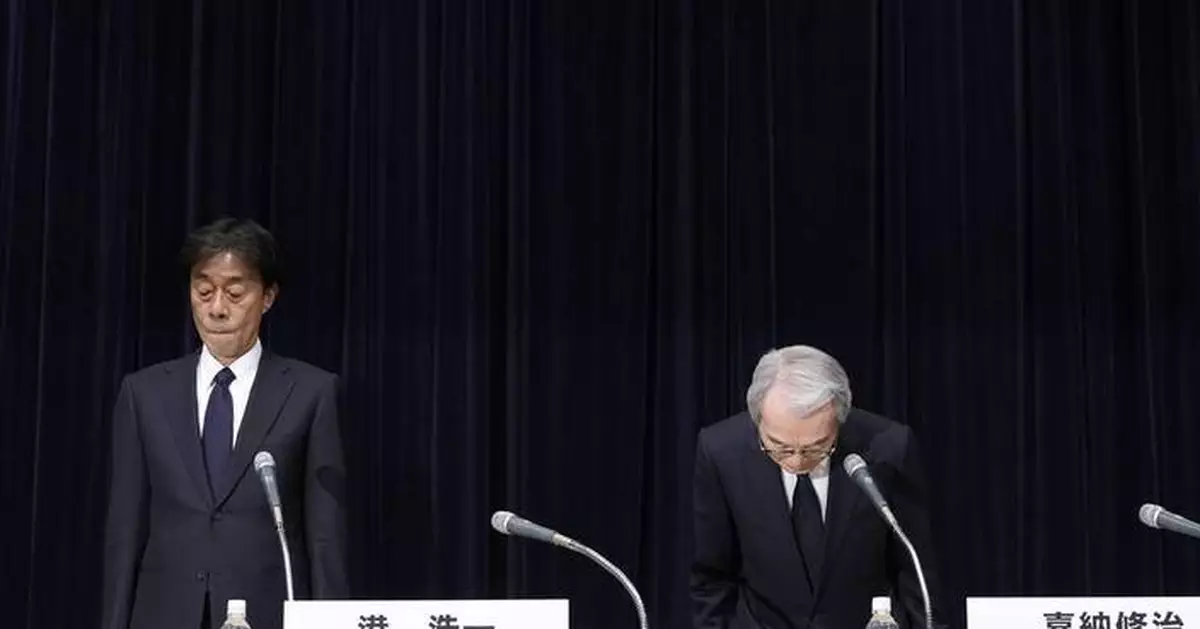
Koichi Minato, president and CEO of Fuji Television Network, left, and Shuji Kano, Fuji Media Holdings COB, announce their resignation during a news conference at the Fuji Television headquarters in Tokyo, Monday, Jan. 27, 2025. (AP Photo/Eugene Hoshiko)
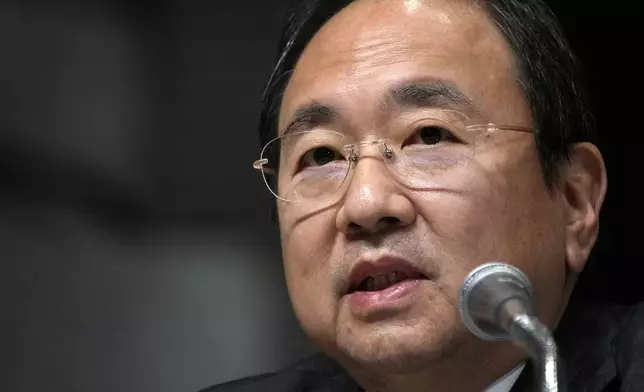
Kenji Shimizu, newly appointed president and CEO of Fuji Television Network, answers a question during a news conference at the Fuji Television headquarters in Tokyo, Monday, Jan. 27, 2025. (AP Photo/Eugene Hoshiko)
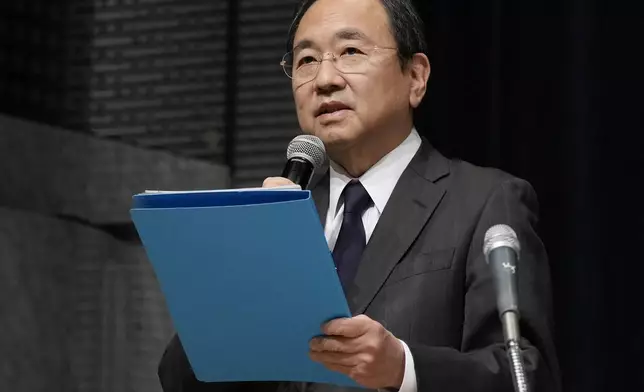
Kenji Shimizu, newly-appointed president and CEO of Fuji Television Network, speaks during a news conference at the Fuji Television headquarters in Tokyo, Monday, Jan. 27, 2025. (AP Photo/Eugene Hoshiko)
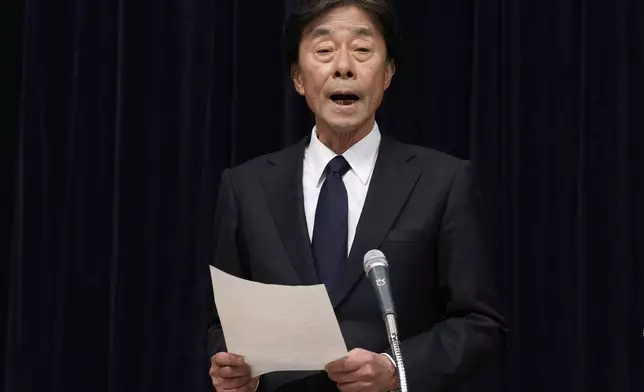
Koichi Minato, president and CEO of Fuji Television Network, speaks during a news conference at the Fuji Television headquarters in Tokyo, Monday, Jan. 27, 2025. (AP Photo/Eugene Hoshiko)
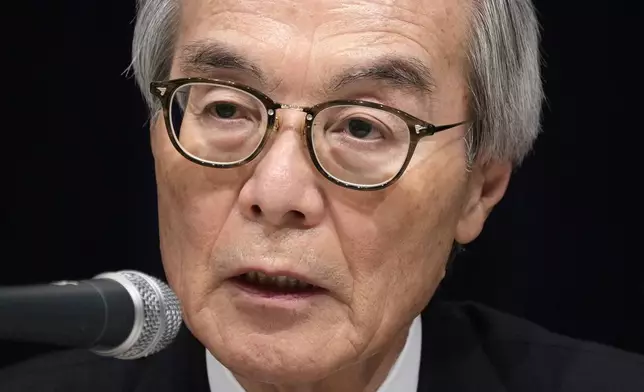
Shuji Kano, Fuji Media Holdings COB, answers a question during a news conference at the Fuji Television headquarters in Tokyo, Monday, Jan. 27, 2025. (AP Photo/Eugene Hoshiko)
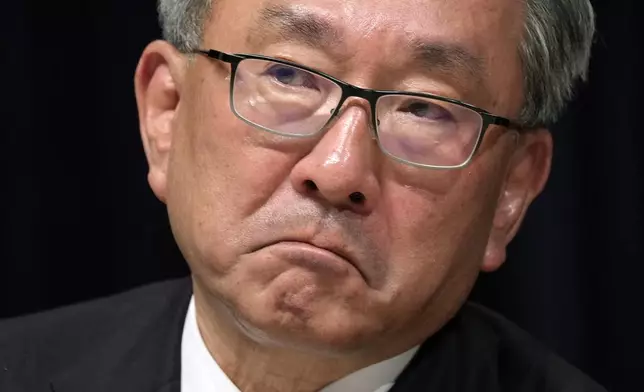
Ryunosuke Endo, vice chairman of the Board of Fuji Television Network, listens to a question during a news conference at the Fuji Television headquarters in Tokyo, Monday, Jan. 27, 2025. (AP Photo/Eugene Hoshiko)
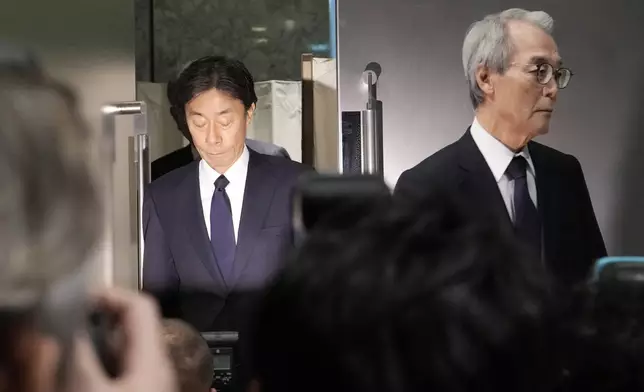
From left, Koichi Minato, President and CEO of Fuji Television Network, and Shuji Kano, Fuji Media Holdings COB, arrive for a press conference at Fuji Television headquarter in Tokyo, Monday, Jan. 27, 2025. (AP Photo/Eugene Hoshiko)
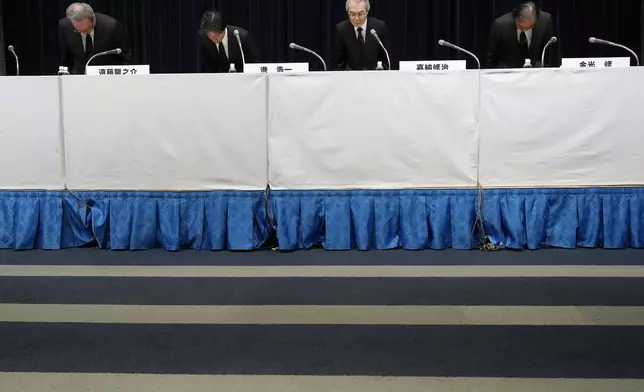
Ryunosuke Endo, from left, vice chairman of the Board of Fuji Television Network, Koichi Minato, president and CEO of Fuji Television Network, Shuji Kano, Fuji Media Holdings COB, Osamu Kanemitsu, president and CEO of Fuji Media Holdings, bow during a news conference at the Fuji Television headquarters in Tokyo, Monday, Jan. 27, 2025. (AP Photo/Eugene Hoshiko)
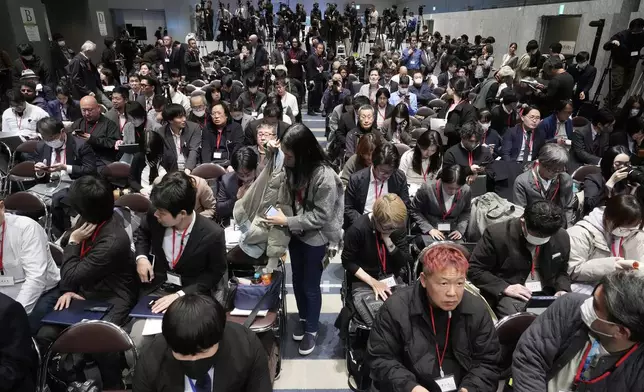
Members of media outlets wait for the start of a news conference which will be held by senior officials from Fuji Television and its parent company at the Fuji Television headquarter in Tokyo, Monday, Jan. 27, 2025. (AP Photo/Eugene Hoshiko)
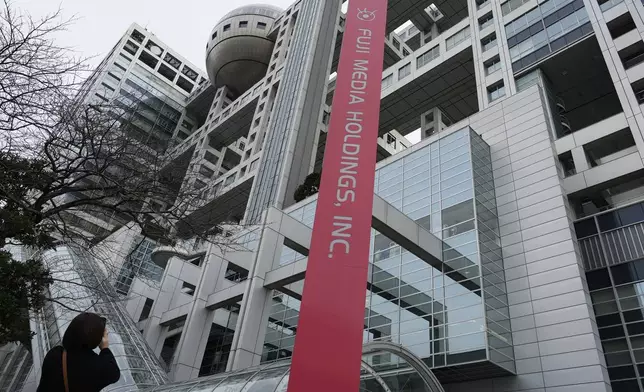
A person takes a photo of the FCG building, holding the Fuji Television and its parent company Fuji Media Holdings, in Tokyo, Monday, Jan. 27, 2025. (AP Photo/Eugene Hoshiko)
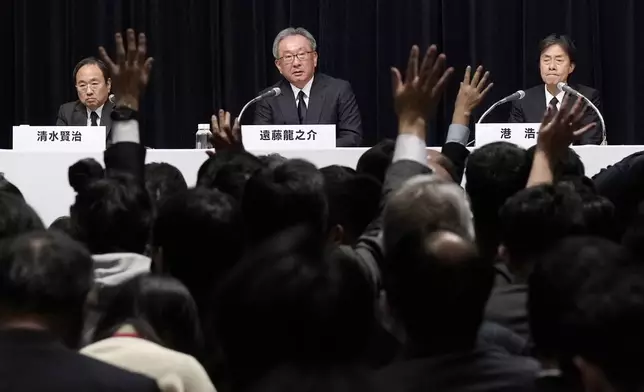
From left, Kenji Shimizu, newly appointed president and CEO of Fuji Television Network, Ryunosuke Endo, vice chairman of the Board of Fuji Television Network, and Koichi Minato, outgoing president and CEO of Fuji Television Network, attend a news conference at the Fuji Television headquarters in Tokyo, Monday, Jan. 27, 2025. (AP Photo/Eugene Hoshiko)
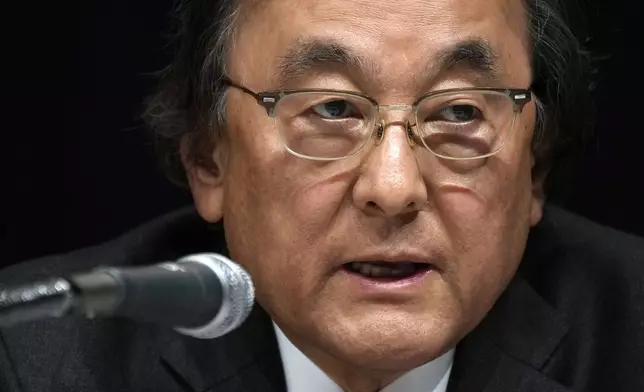
Osamu Kanemitsu, president and CEO of Fuji Media Holdings, answers a question during a news conference at the Fuji Television headquarters in Tokyo, Monday, Jan. 27, 2025. (AP Photo/Eugene Hoshiko)
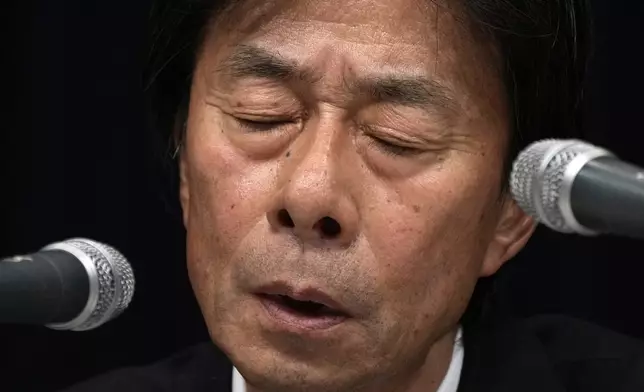
Koichi Minato, President and CEO of Fuji Television Network, answers a question during a news conference at the Fuji Television headquarters in Tokyo, Monday, Jan. 27, 2025. (AP Photo/Eugene Hoshiko)
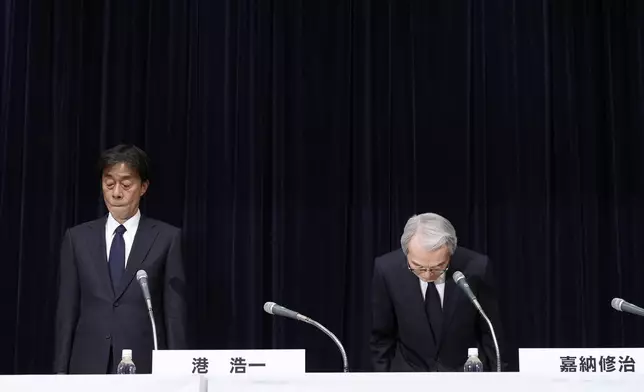
Koichi Minato, president and CEO of Fuji Television Network, left, and Shuji Kano, Fuji Media Holdings COB, announce their resignation during a news conference at the Fuji Television headquarters in Tokyo, Monday, Jan. 27, 2025. (AP Photo/Eugene Hoshiko)
The allegations surfaced in magazine articles in December and have since triggered claims of systematic cover-ups by Fuji TV executives. The public outrage over the lack of transparency and explanation at the network's earlier news conference this month have led to an avalanche of advertising losses at Fuji, one of the networks where Nakai worked.
Fuji Television Network President Koichi Minato and other company officials said Monday the case was mishandled and possibly had violated the woman’s human rights. But they didn’t provide new details, citing her privacy as well as the third-party investigation, during the more than 10-hour news conference while they at times faced yelling by frustrated reporters demanding clarifications.
“We are very sorry that we mishandled the case because of our lack of awareness about human rights and corporate governance ... and as a result our responses to the involved woman were inadequate,” Minato said. “We are very sorry to have destroyed our credibility.”
He said it was handled as an “extraordinary” case requiring maximum confidentiality and sensitivity for the woman's mental health and was shared by a small group of officials. The company had continued allowing Nakai to appear on Fuji shows for a year and six months, he said, but denied covering up the case because it involved a big star.
Minato said he did not think what happened was sexual assault and that the case was not reported to the company’s compliance office until the magazine report came out. The third-party investigation report is due in March.
He denied a Fuji TV employee’s involvement in that case but said allegations that the employee had previously organized barbecue and other parties for Nakai needed to be investigated. He said he believed the employee's innocence based on interviews only by him and Nakai and without asking the woman.
Fuji officials also acknowledged that female announcers and other female employees have in the past participated at parties for male stars, talent agency executives and sponsors, though they denied any sexual services. Minato said he believed top officials were complacent about outdated gender roles and they now need to “update their mindset.”
Shukan Bunshun weekly, one of the magazines that exposed the scandal, at first erroneously reported that the woman was invited by a Fuji TV employee to the party but nobody but her showed up, leaving her alone with Nakai. The magazine later apologized and clarified that Nakai invited her, but said it stood by its allegation that the employee has previously organized parties for the TV host.
It also alleged that Fuji TV has long exploited its female announcers to entertain stars like Nakai.
In addition to Minato's resignation, board chairperson Shuji Kanoh resigned from his position prior to the news conference, officials said.
Nakai last Thursday announced his retirement to take responsibility for the trouble and business losses. He had earlier denied any violence or involvement of a third party.
A series of sexual assault allegations have surfaced in recent years in Japan's entertainment industry, in what is seen as a delayed #MeToo movement that began in Western nations in the 2010s. The cases include the abuse of hundreds of boys and young men by late talent mogul Johnny Kitagawa, whose now-defunct agency Johnny & Associates managed many boy bands, including the one to which Nakai belonged, SMAP.
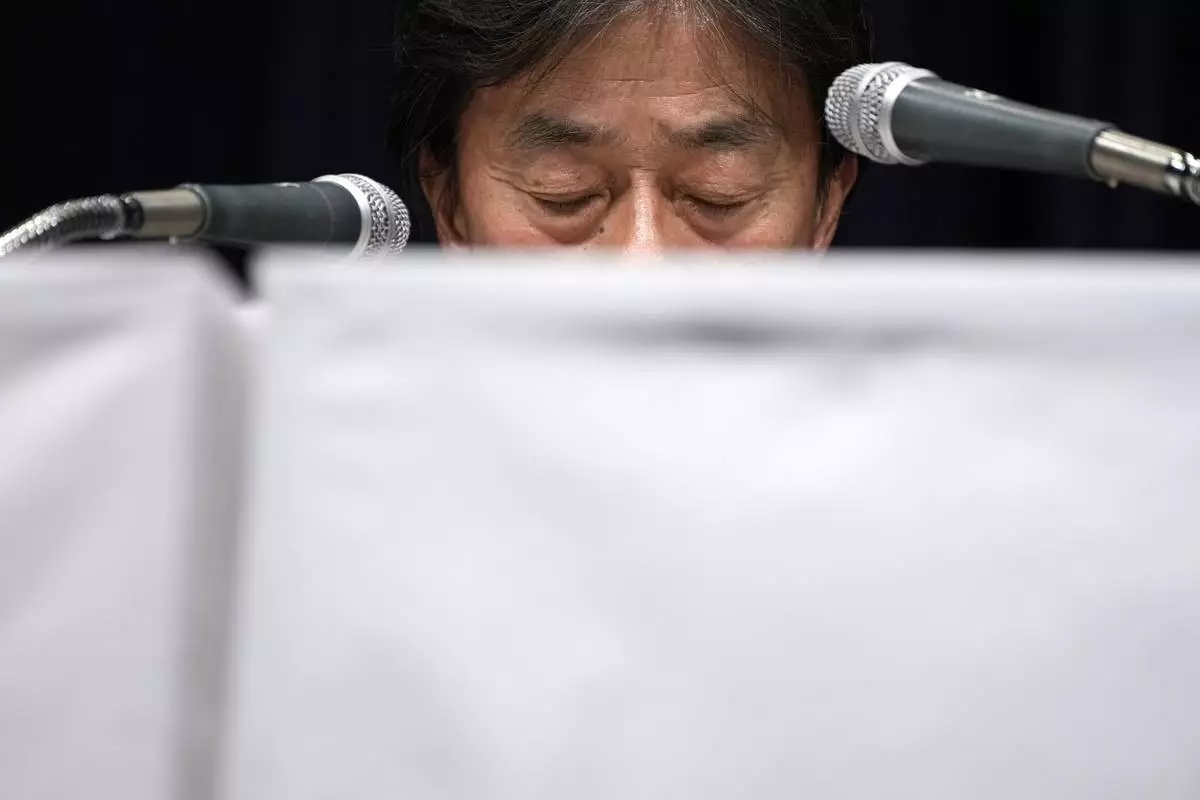
Koichi Minato, President and CEO of Fuji Television Network, answers questions during a press conference at Fuji Television headquarter in Tokyo, Monday, Jan. 27, 2025. (AP Photo/Eugene Hoshiko)
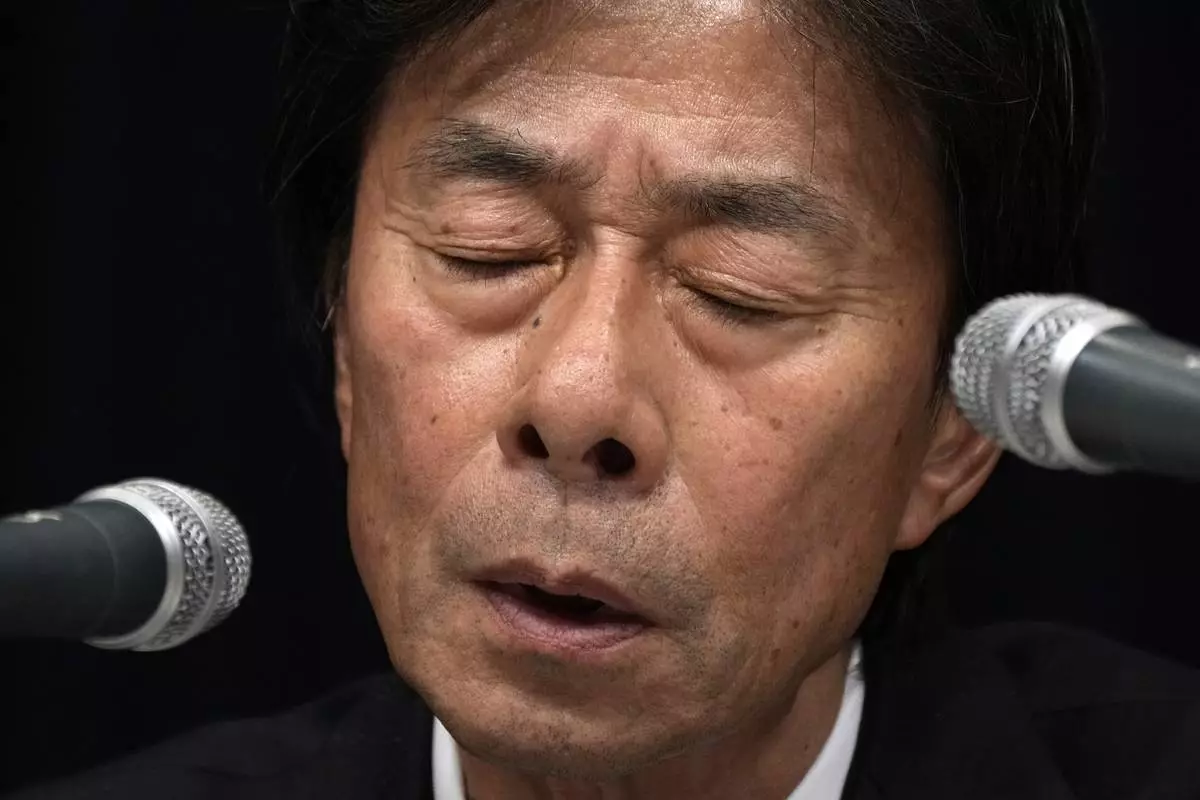
Koichi Minato, President and CEO of Fuji Television Network, answers a question during a news conference at the Fuji Television headquarters in Tokyo, Monday, Jan. 27, 2025. (AP Photo/Eugene Hoshiko)
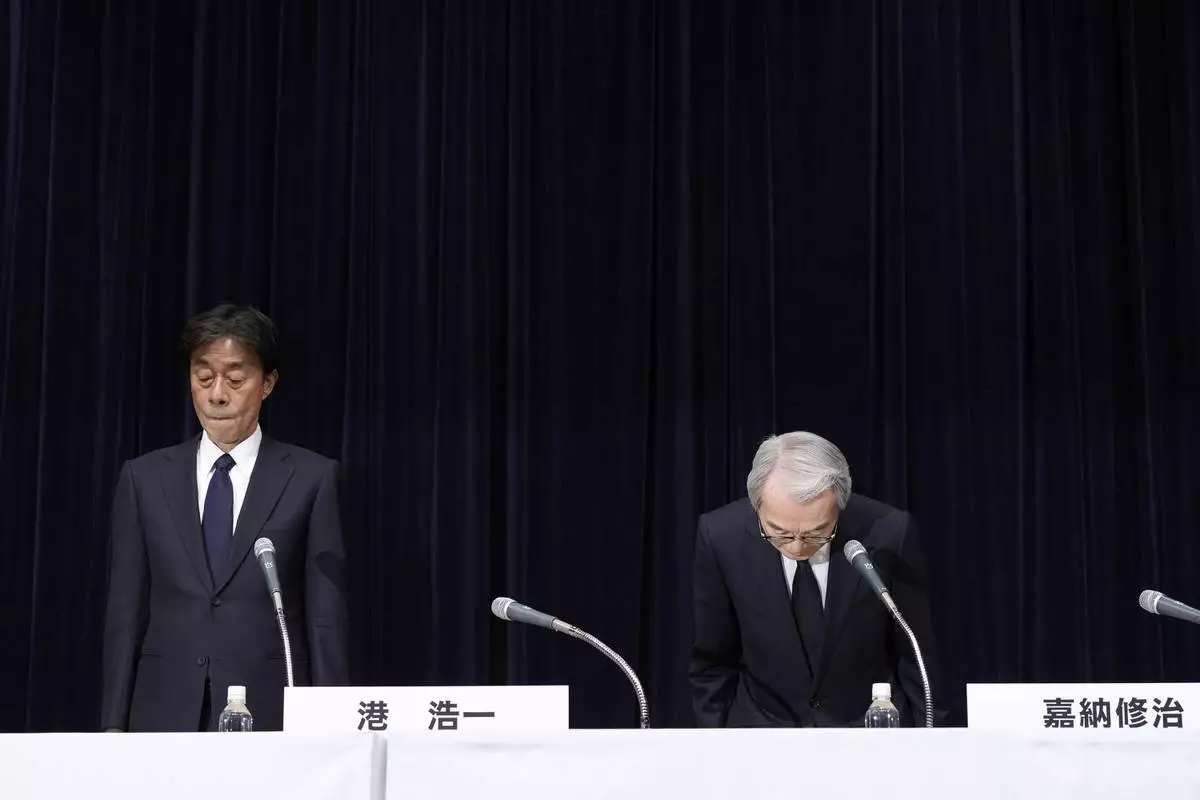
Koichi Minato, president and CEO of Fuji Television Network, left, and Shuji Kano, Fuji Media Holdings COB, announce their resignation during a news conference at the Fuji Television headquarters in Tokyo, Monday, Jan. 27, 2025. (AP Photo/Eugene Hoshiko)
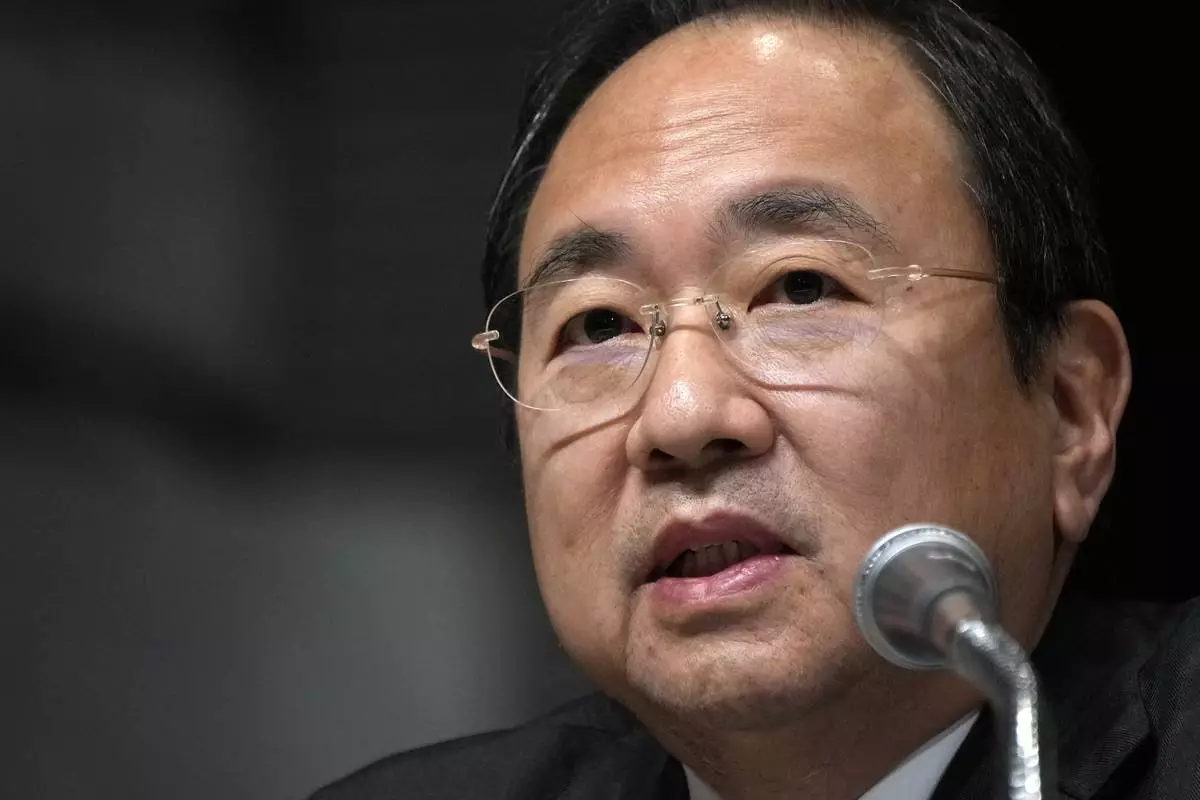
Kenji Shimizu, newly appointed president and CEO of Fuji Television Network, answers a question during a news conference at the Fuji Television headquarters in Tokyo, Monday, Jan. 27, 2025. (AP Photo/Eugene Hoshiko)
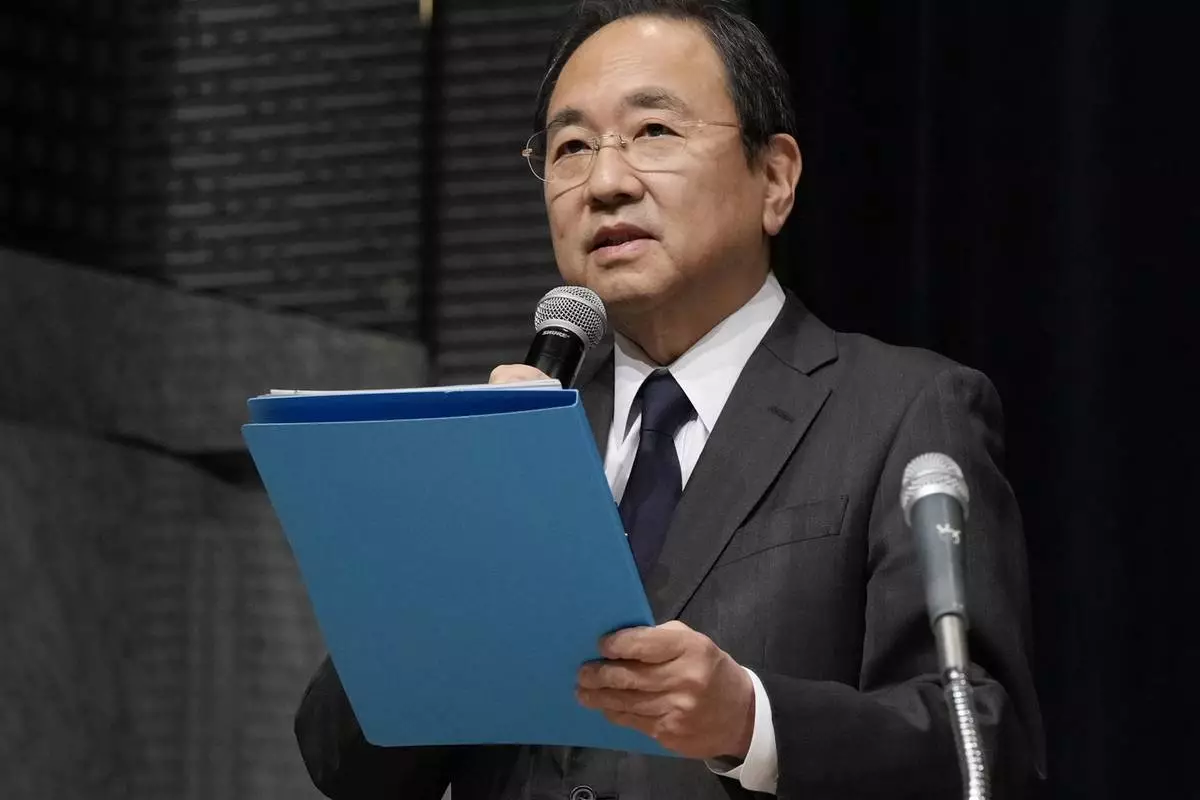
Kenji Shimizu, newly-appointed president and CEO of Fuji Television Network, speaks during a news conference at the Fuji Television headquarters in Tokyo, Monday, Jan. 27, 2025. (AP Photo/Eugene Hoshiko)
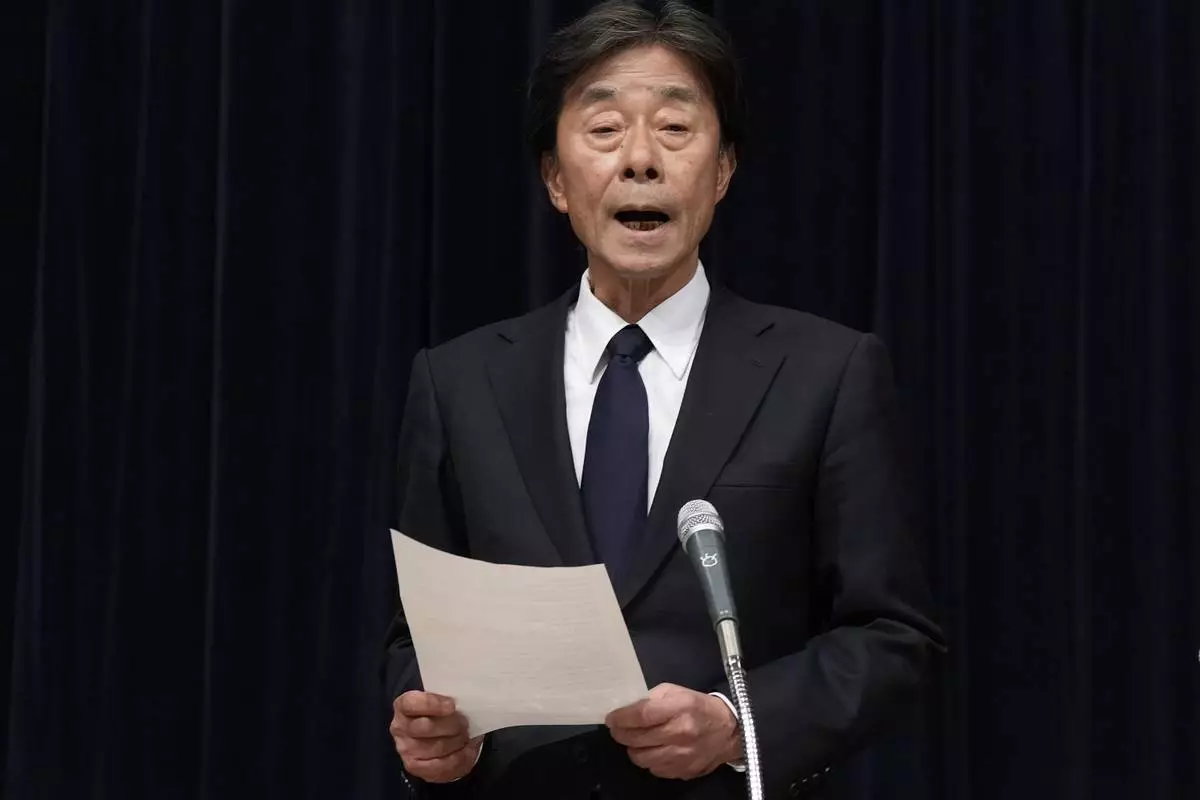
Koichi Minato, president and CEO of Fuji Television Network, speaks during a news conference at the Fuji Television headquarters in Tokyo, Monday, Jan. 27, 2025. (AP Photo/Eugene Hoshiko)
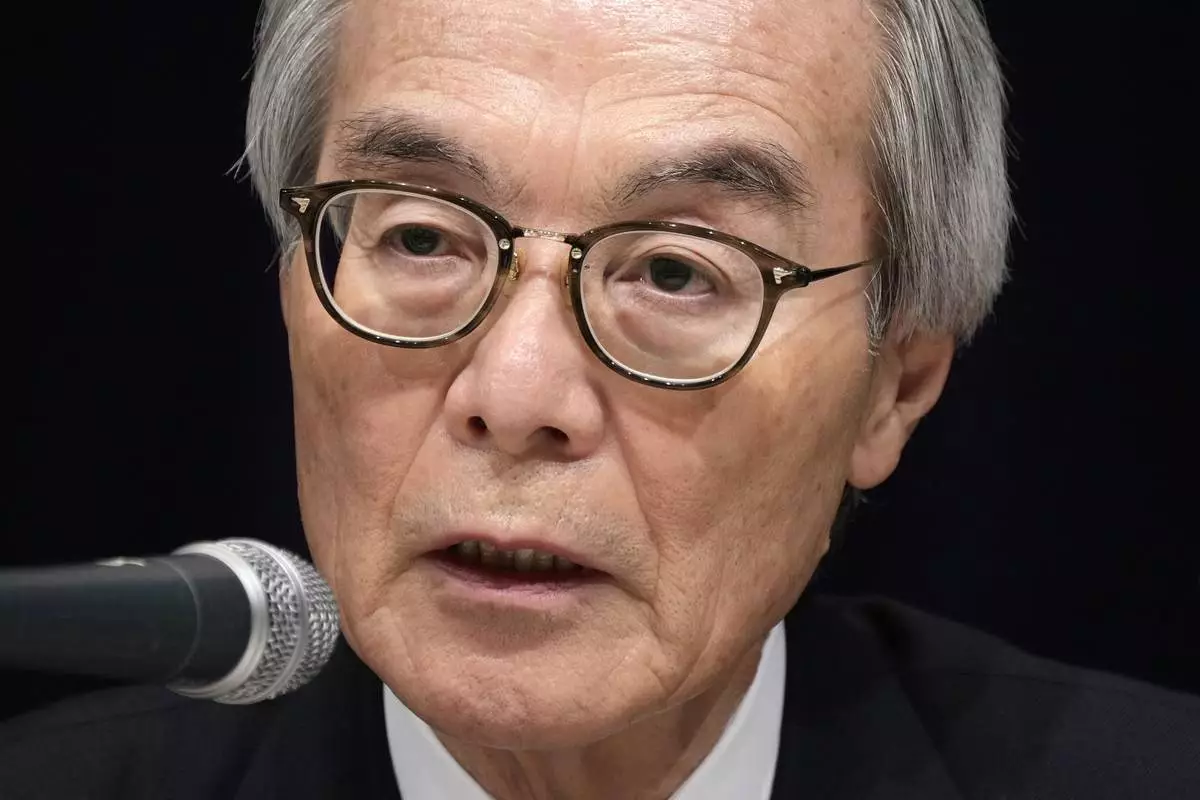
Shuji Kano, Fuji Media Holdings COB, answers a question during a news conference at the Fuji Television headquarters in Tokyo, Monday, Jan. 27, 2025. (AP Photo/Eugene Hoshiko)
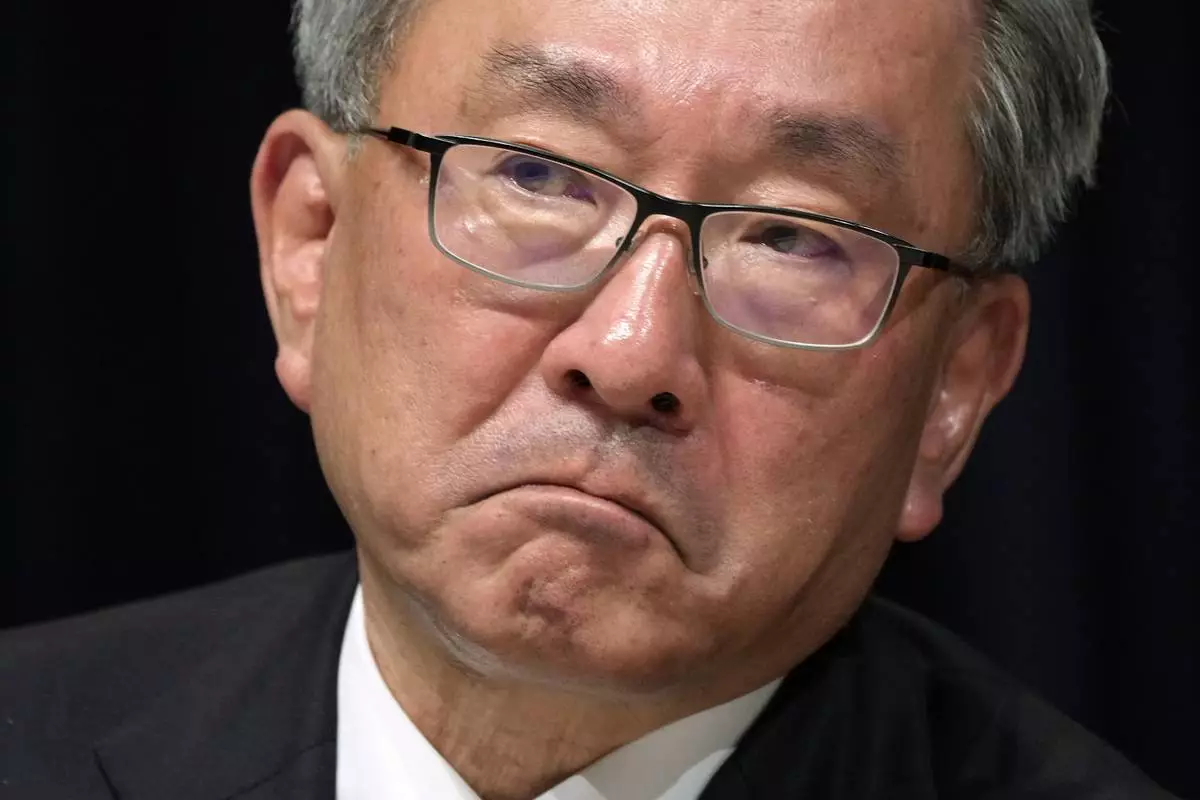
Ryunosuke Endo, vice chairman of the Board of Fuji Television Network, listens to a question during a news conference at the Fuji Television headquarters in Tokyo, Monday, Jan. 27, 2025. (AP Photo/Eugene Hoshiko)
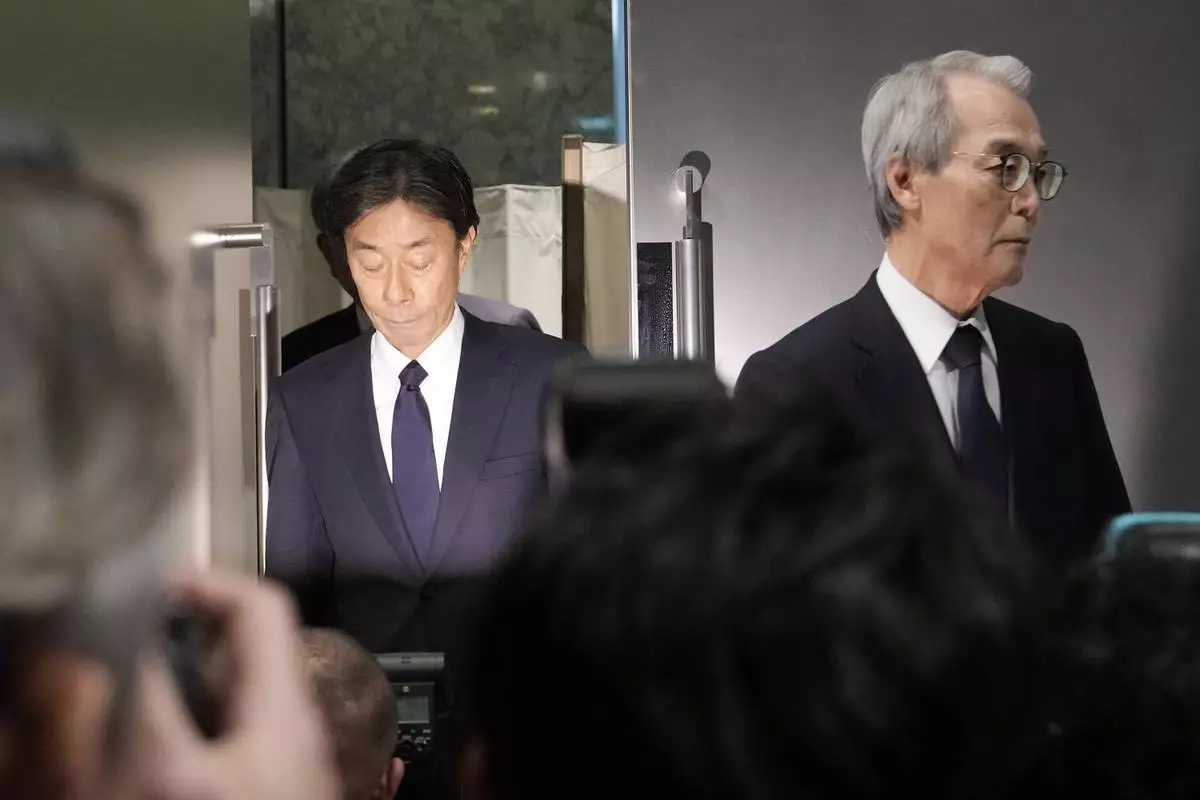
From left, Koichi Minato, President and CEO of Fuji Television Network, and Shuji Kano, Fuji Media Holdings COB, arrive for a press conference at Fuji Television headquarter in Tokyo, Monday, Jan. 27, 2025. (AP Photo/Eugene Hoshiko)
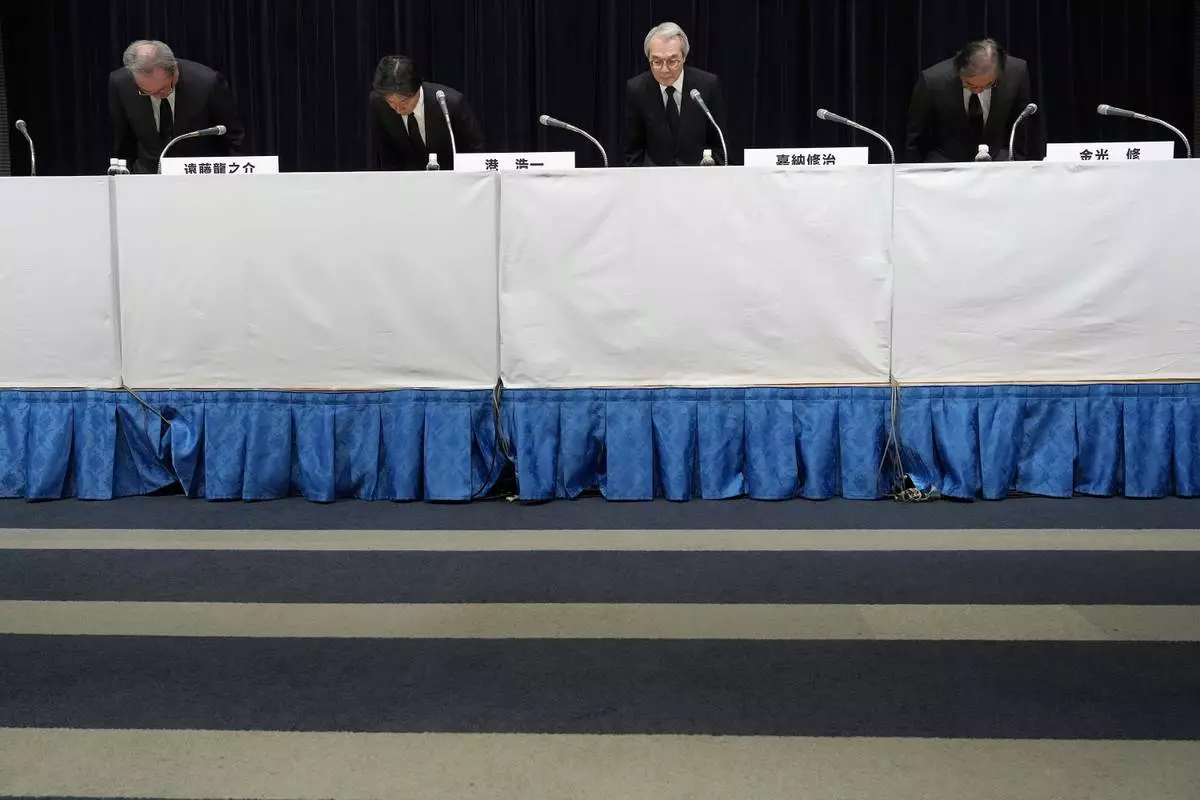
Ryunosuke Endo, from left, vice chairman of the Board of Fuji Television Network, Koichi Minato, president and CEO of Fuji Television Network, Shuji Kano, Fuji Media Holdings COB, Osamu Kanemitsu, president and CEO of Fuji Media Holdings, bow during a news conference at the Fuji Television headquarters in Tokyo, Monday, Jan. 27, 2025. (AP Photo/Eugene Hoshiko)

Members of media outlets wait for the start of a news conference which will be held by senior officials from Fuji Television and its parent company at the Fuji Television headquarter in Tokyo, Monday, Jan. 27, 2025. (AP Photo/Eugene Hoshiko)

A person takes a photo of the FCG building, holding the Fuji Television and its parent company Fuji Media Holdings, in Tokyo, Monday, Jan. 27, 2025. (AP Photo/Eugene Hoshiko)
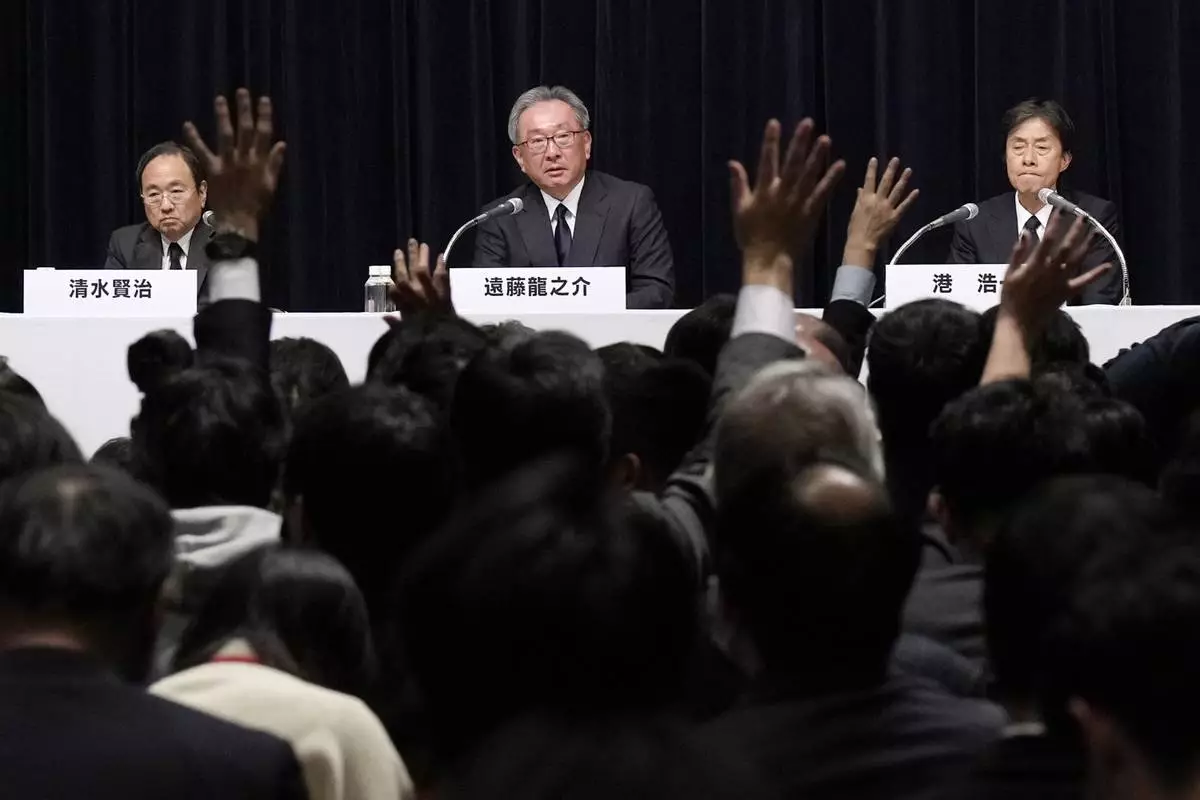
From left, Kenji Shimizu, newly appointed president and CEO of Fuji Television Network, Ryunosuke Endo, vice chairman of the Board of Fuji Television Network, and Koichi Minato, outgoing president and CEO of Fuji Television Network, attend a news conference at the Fuji Television headquarters in Tokyo, Monday, Jan. 27, 2025. (AP Photo/Eugene Hoshiko)
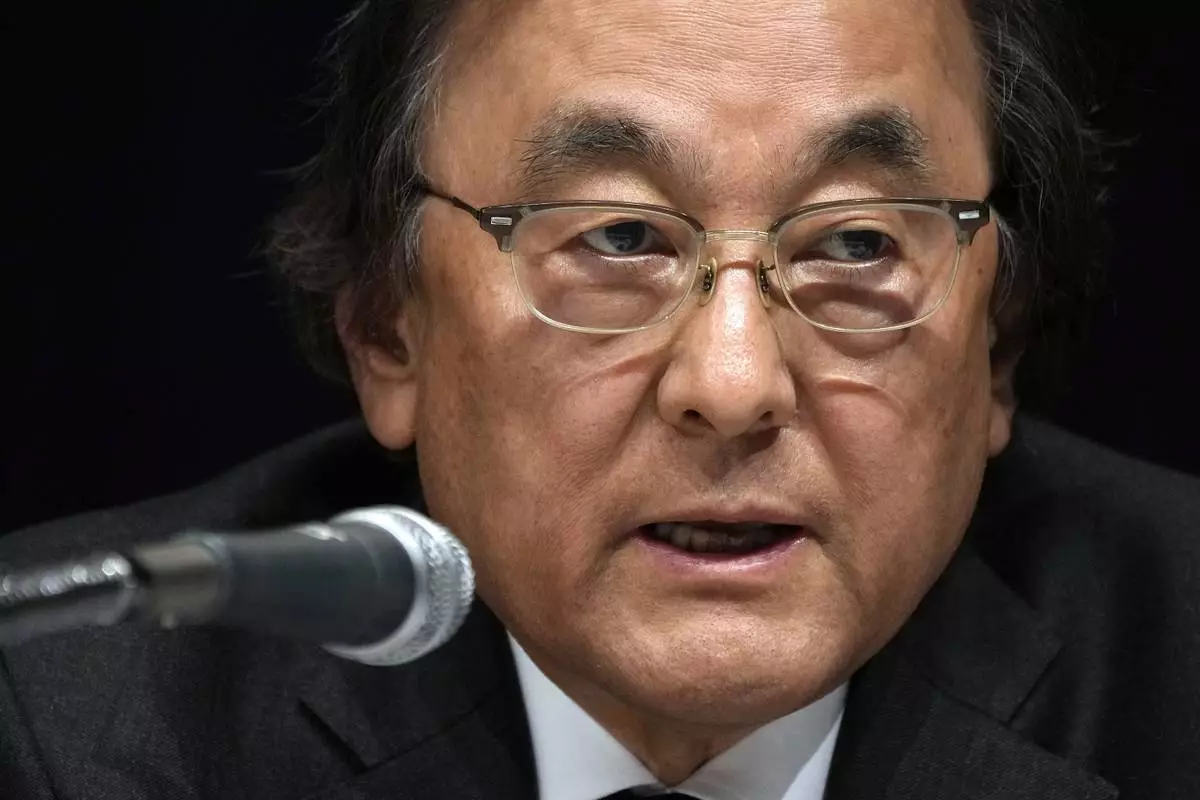
Osamu Kanemitsu, president and CEO of Fuji Media Holdings, answers a question during a news conference at the Fuji Television headquarters in Tokyo, Monday, Jan. 27, 2025. (AP Photo/Eugene Hoshiko)
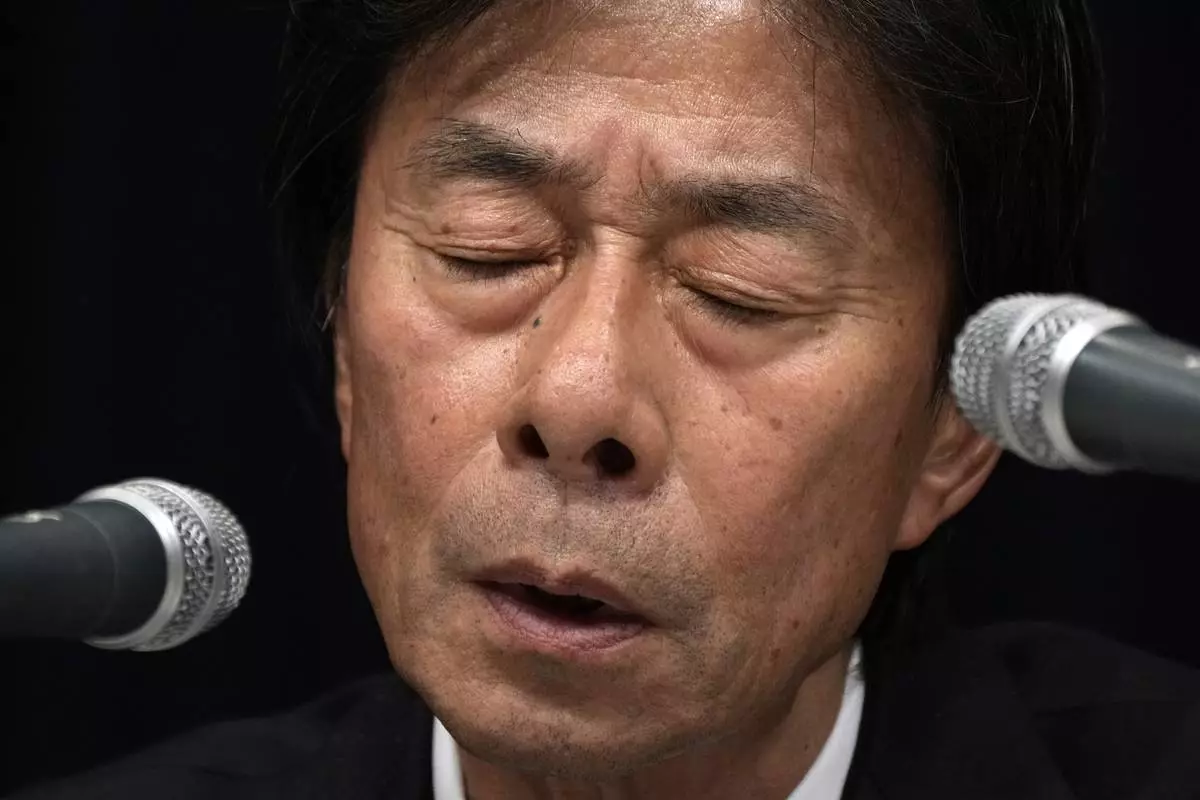
Koichi Minato, President and CEO of Fuji Television Network, answers a question during a news conference at the Fuji Television headquarters in Tokyo, Monday, Jan. 27, 2025. (AP Photo/Eugene Hoshiko)
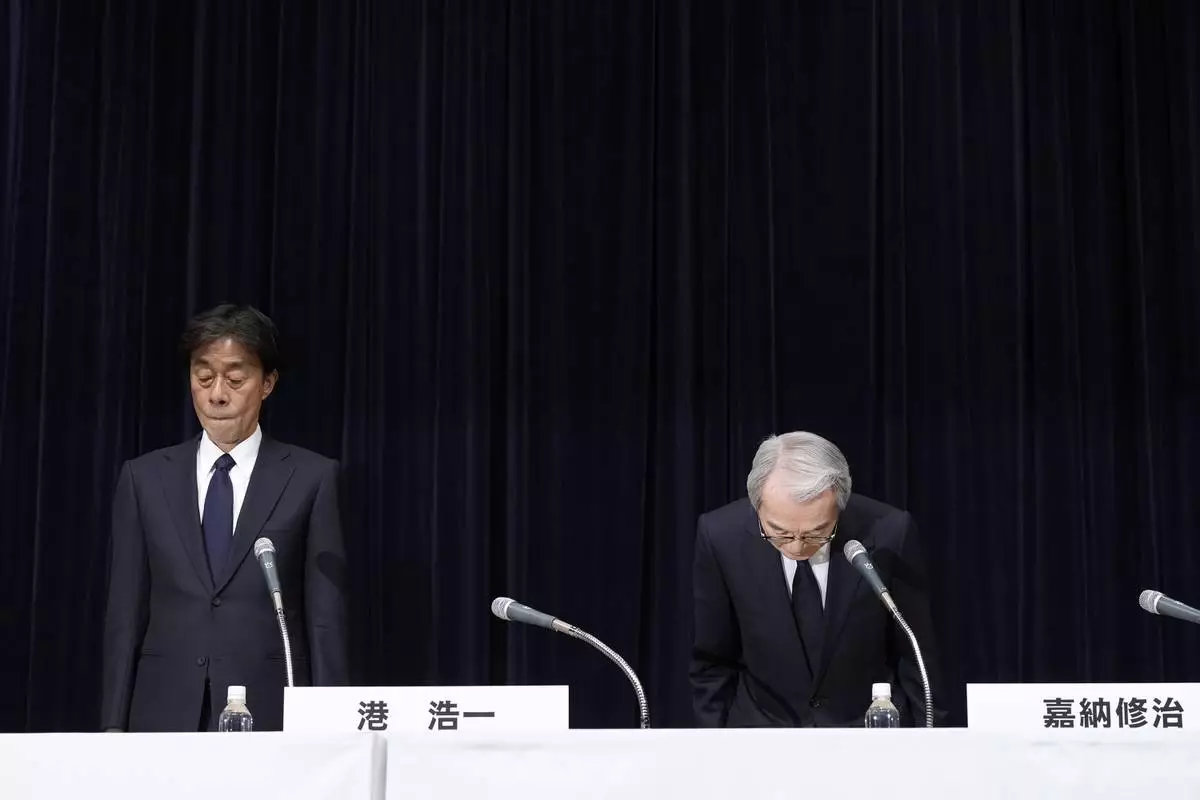
Koichi Minato, president and CEO of Fuji Television Network, left, and Shuji Kano, Fuji Media Holdings COB, announce their resignation during a news conference at the Fuji Television headquarters in Tokyo, Monday, Jan. 27, 2025. (AP Photo/Eugene Hoshiko)