The head coach of a regional ski mountaineering team in China shares his insights into the sport which will make its Asian Winter Games debut in the northeastern Chinese city of Harbin next month.
At the Harbin Asian Winter Games schedule for February 7-14, athletes competing in ski mountaineering will race to complete a set course. The event consists of three races -- the men’s sprint, women’s sprint, and the mixed relay.
Langjia Duoji, a former professional ski mountaineering athlete, is now the head coach of the ski mountaineering team of southwest China's Xizang Autonomous Region.
Speaking with the China Global Television Network (CGTN) during the team's training in northeast China's Jilin Province, Langjia Duoji elaborated on ski mountaineering and his enthusiasm for the sport.
"Ski mountaineering is a winter sport derived from mountaineering. It is mainly about climbing, with skiing as a secondary element," he said.
"To me, the greatest appeal of ski mountaineering is the sense of reaching the summit, step by step. It is tough, but when you get to the top, it feels like it is all worth it. You feel like you've conquered everything," added the ski mountaineering veteran.
Ski mountaineering is also set to debut as a new event at the 2026 Milano-Cortina Winter Olympics.
Traditionally, residents of snow-covered mountainous regions worldwide have practiced ski mountaineering as a mode of transport. It evolved into a competitive sport in Europe, where modern sports developed early. To this day, in the Alps and the Pyrenees, locals still treat ski mountaineering as a recreational activity, climbing snow-capped mountains with friends for a coffee before descending together.
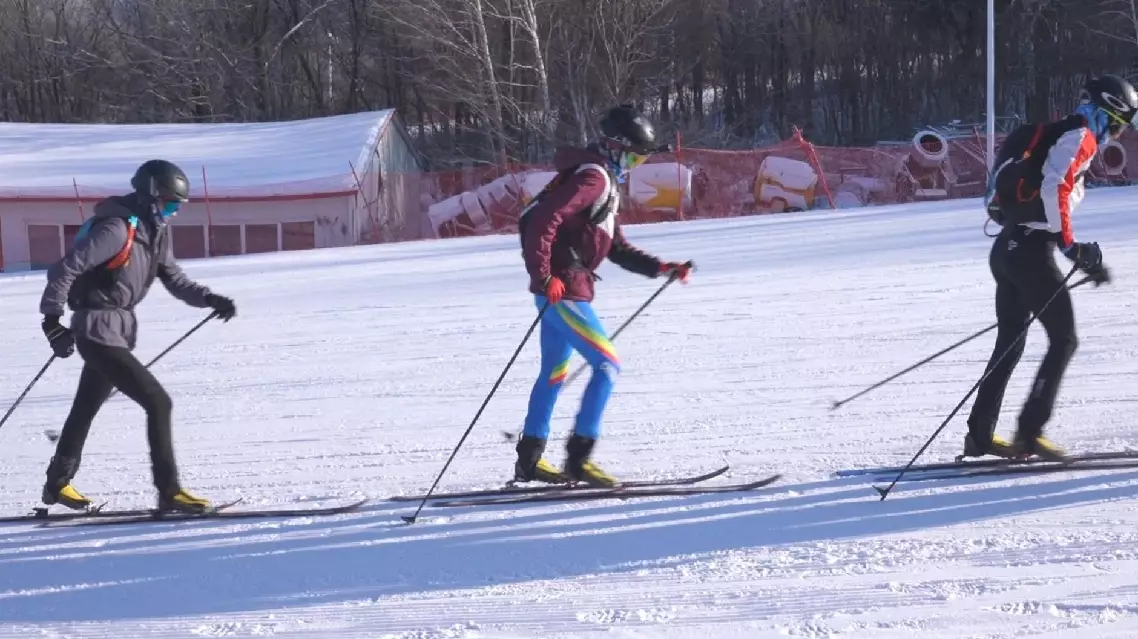
Ski mountaineering to make debut at upcoming Asian Winter Games in China's Harbin