Taicang Port in east China's Jiangsu Province has seen a significant surge in new energy vehicle (NEV) exports since the beginning of 2025, with automobile throughput expected to reach 65,000 in the first month.
Taicang Port stands as the largest export base along the Yangtze River for products such as photovoltaics, NEVs, and lithium battery storage cabinets, with exported cars accounting for one-tenth of the national total.
In addition to NEVs, lithium battery storage cabinet manufactured in China have emerged as another hot export item at Taicang Port.
At the Zhenghe International Wharf of Taicang Port, the average daily container throughput reached nearly 10,000 TEUs during the Spring Festival holiday, with the wharf's tower cranes operating around the clock at full capacity.
Various port departments are working in coordination to ensure smooth exports. Additionally, the wharf underwent early reconstruction to meet safety standards for lithium battery storage cabinets.
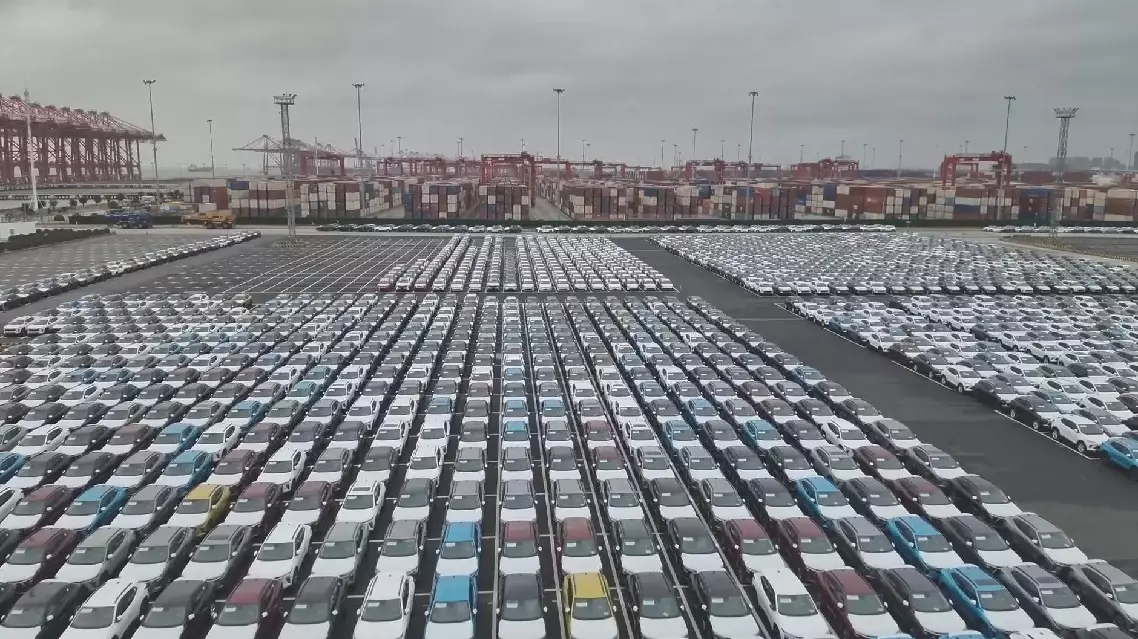
Taicang Port sees surge in NEV throughput since beginning of 2025
The first widespread heavy rainfall China has experienced this year has triggered emergency responses across the country.
The National Meteorological Center (NMC) said the heavy rain is set to intensify throughout Saturday night to Sunday.
Level-IV flood control emergency responses were activated at 12:00 on Saturday for central China's Hubei Province and the southwestern Chongqing Municipality, while responses at the same level were maintained for the southern province of Guangdong and the southwestern province of Guizhou.
On early Saturday, heavy rain hit Guizhou's Zhenning Bouyei and Miao Autonomous County, with rainfall in some regions in the county exceeding 50 millimeters,
Trees toppled over on some roads in Zhenning, as thunderstorms and high winds swept the city.
Local authorities immediately launched emergency responses including hazard inspections and road obstacle clearance.
Continuing rainfalls in Guigang City in south China's Guangxi Zhuang Autonomous Region caused extensive flooding in major streets.
With the help of traffic control and flood drainage, the situation on the city's roads has returned to normal.
In Chongyi County, in east China's Jiangxi Province, persistent rain has flooded farmlands and triggered landslides on some roads.
Swift responses were launched to clear debris and reopen roads and traffic has started flowing again.
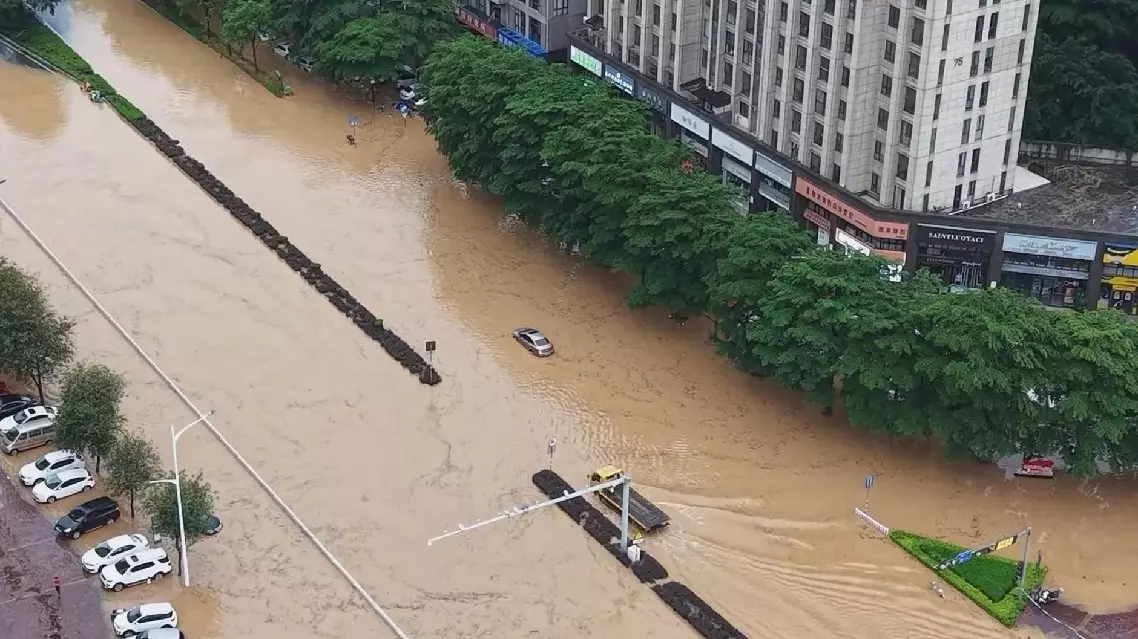
Heavy rains trigger emergency responses across China