President Donald Trump's plan to impose tariffs on goods from Mexico, Canada and China is partly aimed at combating the illicit flow of fentanyl into the U.S., where the opioid is blamed for some 70,000 overdose deaths annually.
Mexico agreed Monday to send 10,000 troops to the U.S.-Mexico border as part of a deal with Trump to pause the tariffs for a month — and hold off levying its own. Canada reached its own deal with Trump hours later, delaying the trade war and pledging several steps against fentanyl trafficking.
Click to Gallery
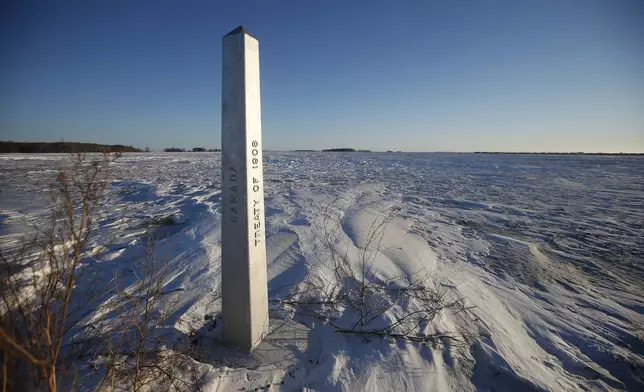
FILE - A border marker between the United States and Canada is shown just outside of Emerson, Manitoba, Thursday, Jan. 20, 2022. (John Woods/The Canadian Press via AP, File)
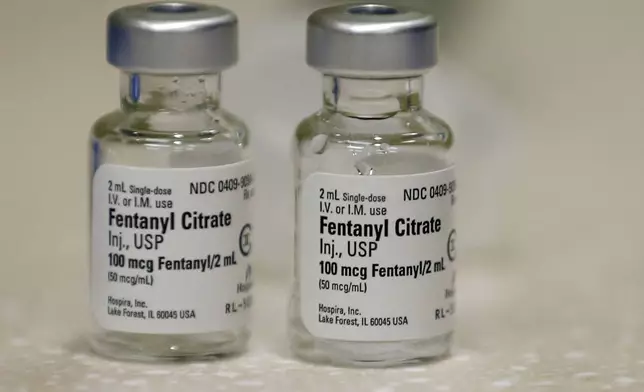
FILE - Small vials of fentanyl are shown in the inpatient pharmacy at the University of Utah Hospital in Salt Lake City, June 1, 2018. (AP Photo/Rick Bowmer, File)
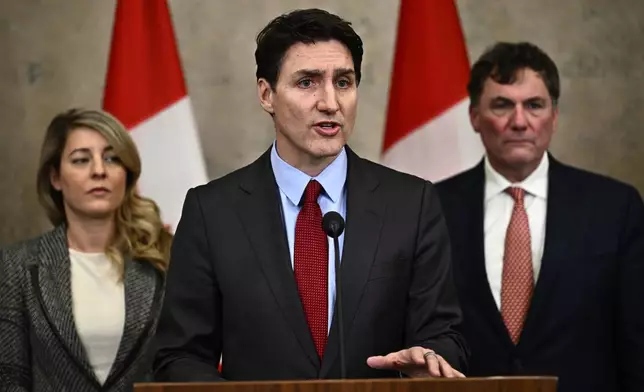
Canadian Prime Minister Justin Trudeau addresses media members after U.S. President Donald Trump signed an order to impose stiff tariffs on imports from Mexico, Canada and China, in Ottawa, Canada, Saturday, Feb. 1, 2025. (Justin Tang/The Canadian Press via AP)
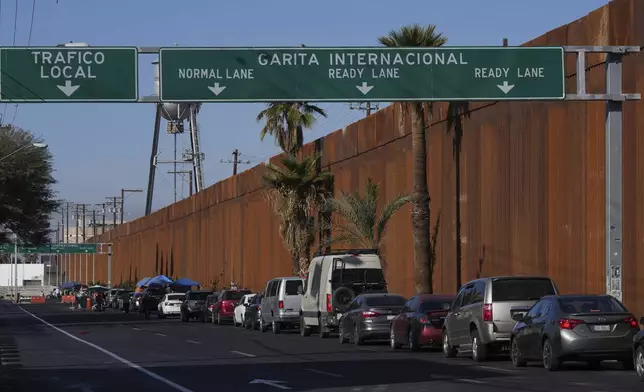
Drivers wait in line to enter to U.S, in Mexicali, Mexico, Saturday, Feb. 1, 2025. (AP Photo/Fernando Llano)
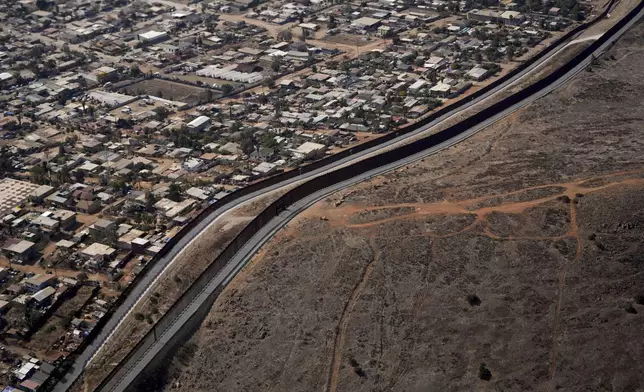
The U.S. Border with Mexico is seen in an aerial view Friday, Jan. 31, 2025, near San Diego. (AP Photo/Jae C. Hong)
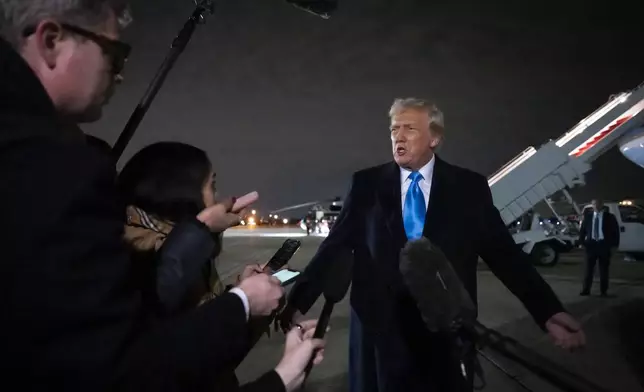
President Donald Trump speaks to reporters next to Air Force One after arriving back at Joint Base Andrews, Md., Sunday, Feb. 2, 2025. (AP Photo/Ben Curtis)
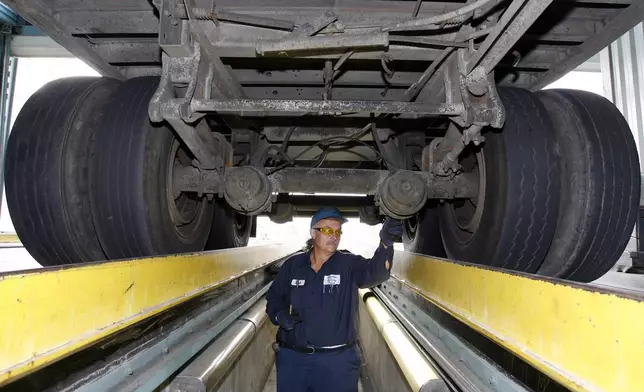
FILE - California Highway Patrol commercial vehicle inspector Ruben Montanez inspects the undercarriage of a truck entering the U.S. from Mexico at the CHP's Otay Mesa Inspection Station Thursday, Sept. 6, 2007, in San Diego. (AP Photo/Denis Poroy)
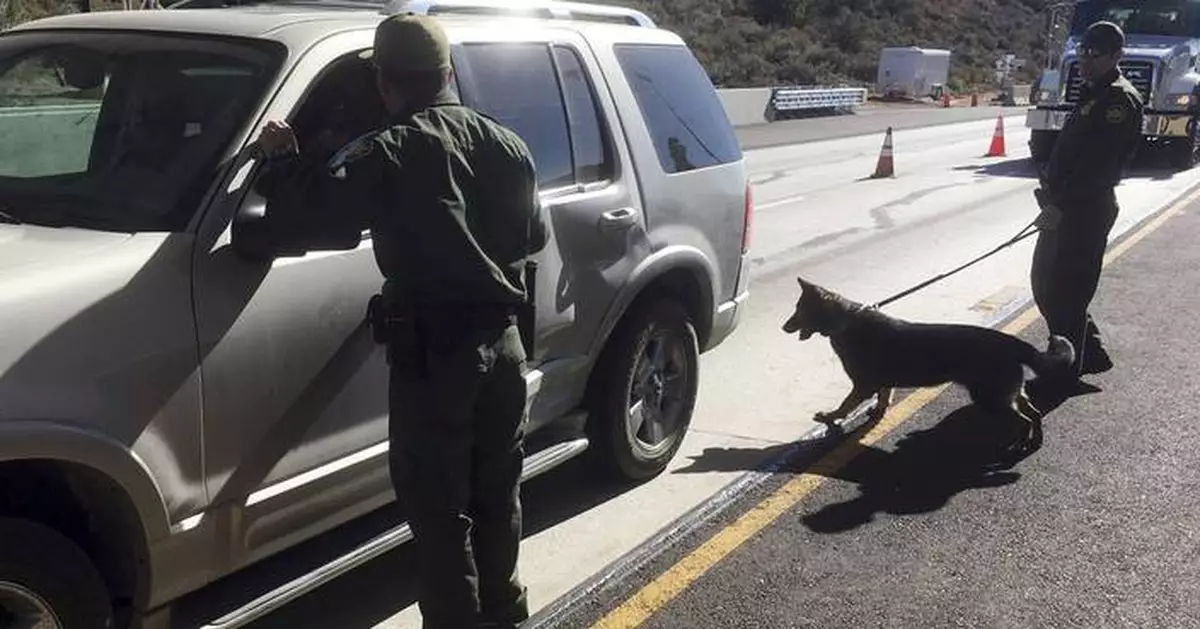
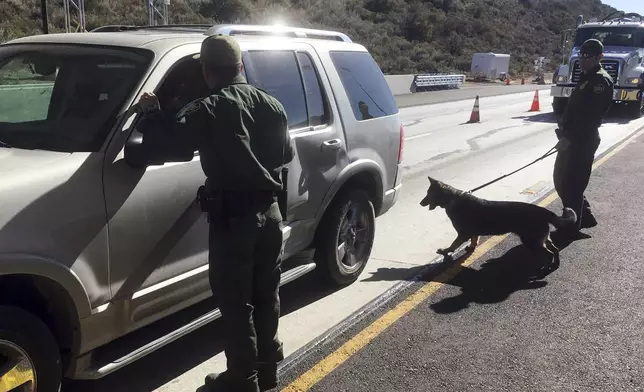
FILE - Border patrol agents use a drug sniffing dog to check vehicles at California's Pine Valley checkpoint, on the main route from Arizona to San Diego, Dec. 14, 2017 (AP Photo/Elliot Spagat, File)
China hasn't signaled major changes in tackling the flow of fentanyl into the U.S., and has said it would retaliate for any U.S. tariffs.
What role do Mexico, Canada and China play in fentanyl reaching the U.S.? And how much can their governments do?
The ingredients in fentanyl are largely produced by companies in China and used by pharmaceutical companies to make legal painkillers. But a portion of those chemicals is purchased by the Sinaloa and Jalisco cartels in Mexico.
Cartels make the synthetic opioid in labs and then smuggle it into the U.S., largely at official land crossings in California and Arizona. The small amounts of fentanyl in any shipment — the drug is 50 times more potent than heroin — and its lack of odor, make detection and seizures extremely challenging.
Fentanyl is also made in Canada and smuggled into the U.S., but to a much lesser extent. U.S. customs agents seized 43 pounds (19.5 kilograms) of fentanyl at the Canadian border during the last fiscal year, compared with 21,100 pounds (9,570 kilograms) at the Mexican border.
Seizures of fentanyl jumped by as much as tenfold under President Joe Biden, an increase that may reflect improved detection.
Mexico announced in December the seizure of more than a ton of fentanyl pills in what it described as the largest bust of synthetic opioids in the country's history. The haul was striking because fentanyl seizures in Mexico had fallen dramatically in the first half of 2024.
Under President Claudia Sheinbaum, who took office in October, Mexico's security forces appear to be far more aggressive than they were under her predecessor. Former President Andrés Manuel López Obrador denied that fentanyl was even produced in Mexico, contradicting officials in his own administration.
To pause the tit-for-tat tariffs, Mexico agreed to immediately deploy 10,000 National Guard troops to the border to battle drug-trafficking, while the U.S. committed to do more to stop the trafficking of guns into Mexico, said Trump and Sheinbaum on social media.
Facing tariff threats, Canadian Prime Minister Justin Trudeau has highlighted his country's recent $1.3 billion investment in border enforcement, including chemical detection tools at entry ports and a new unit focused on the oversight of precursor chemicals.
Once Trump ordered the tariffs, Trudeau rebuked the move and geared up for a trade war before reaching a deal with Trump Monday to pause the use of tariffs for at least a month.
Trudeau posted on X that Canada would appoint a fentanyl czar, list Mexican cartels as terrorist groups and launch a “Canada- U.S. Joint Strike Force” to combat fentanyl, organized crime and money laundering.
China defended its efforts to combat fentanyl in what has been years of touch-and-go cooperation with the U.S. China doesn't have the same fentanyl crisis among its own population, and doesn't view it as a priority, said Zongyuan Zoe Liu, a senior fellow for China studies at the Council on Foreign Relations.
Combating the production and movement of illicit fentanyl is particularly challenging.
Unlike heroin and cocaine, which are produced from plants, fentanyl is made with ingredients used for legal pharmaceutical drugs, and can be made in cheap labs that can be erected relatively quickly. And despite the dangers, demand in the U.S. for the highly addictive drug remains strong.
Mike Vigil, the former chief of international operations at the U.S. Drug Enforcement Agency, said he was skeptical that Mexico’s extra troops at the border on their own would make much of a dent in trafficking.
Once fentanyl leaves the labs, it’s usually well concealed in hidden compartments of vehicles or in huge cargo trucks; better detection technology is crucial, in addition to more troops, he said. The other challenge, Vigil said, is that combating the fentanyl trade will likely require more than just collaboration between the U.S. and its neighbors.
“Even if Mexico, Canada and these other countries snap their fingers and did away with the drug trade, as long as we have that demand, there will be another country that will satisfy that demand.”
Bedayn is a corps member for the Associated Press/Report for America Statehouse News Initiative. Report for America is a nonprofit national service program that places journalists in local newsrooms to report on undercovered issues.
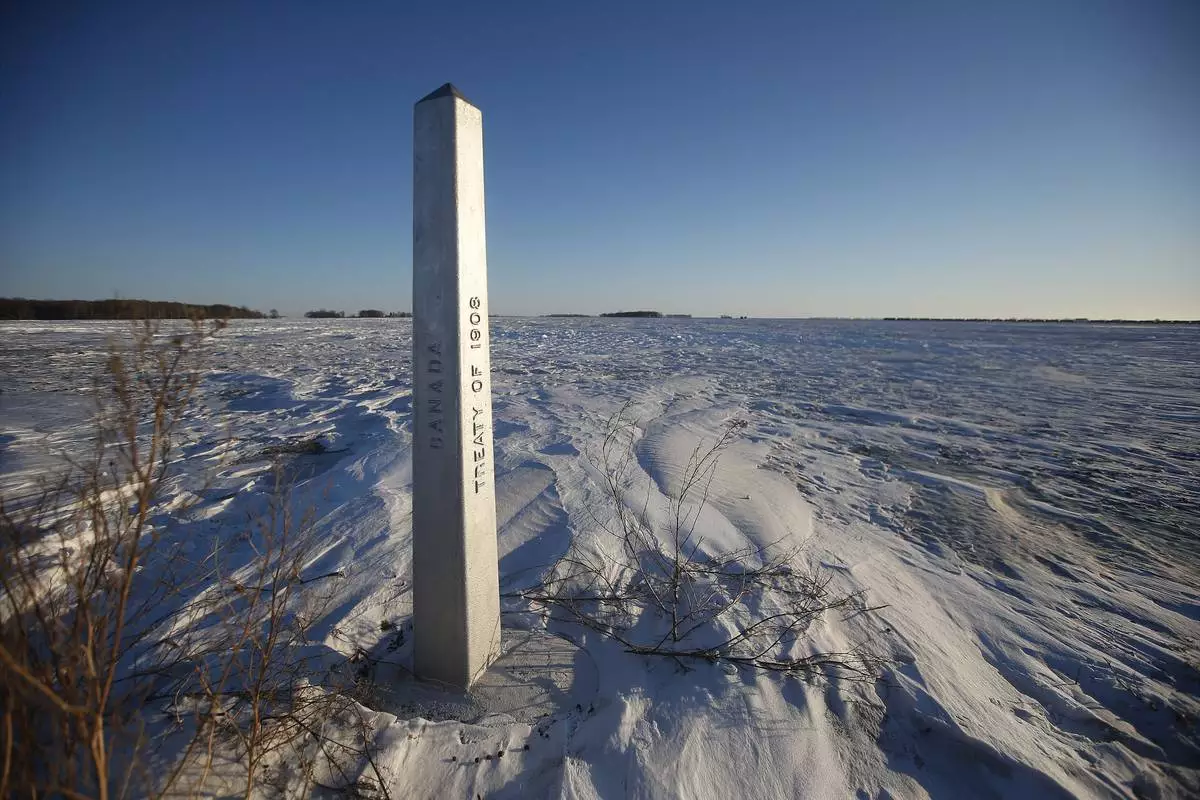
FILE - A border marker between the United States and Canada is shown just outside of Emerson, Manitoba, Thursday, Jan. 20, 2022. (John Woods/The Canadian Press via AP, File)
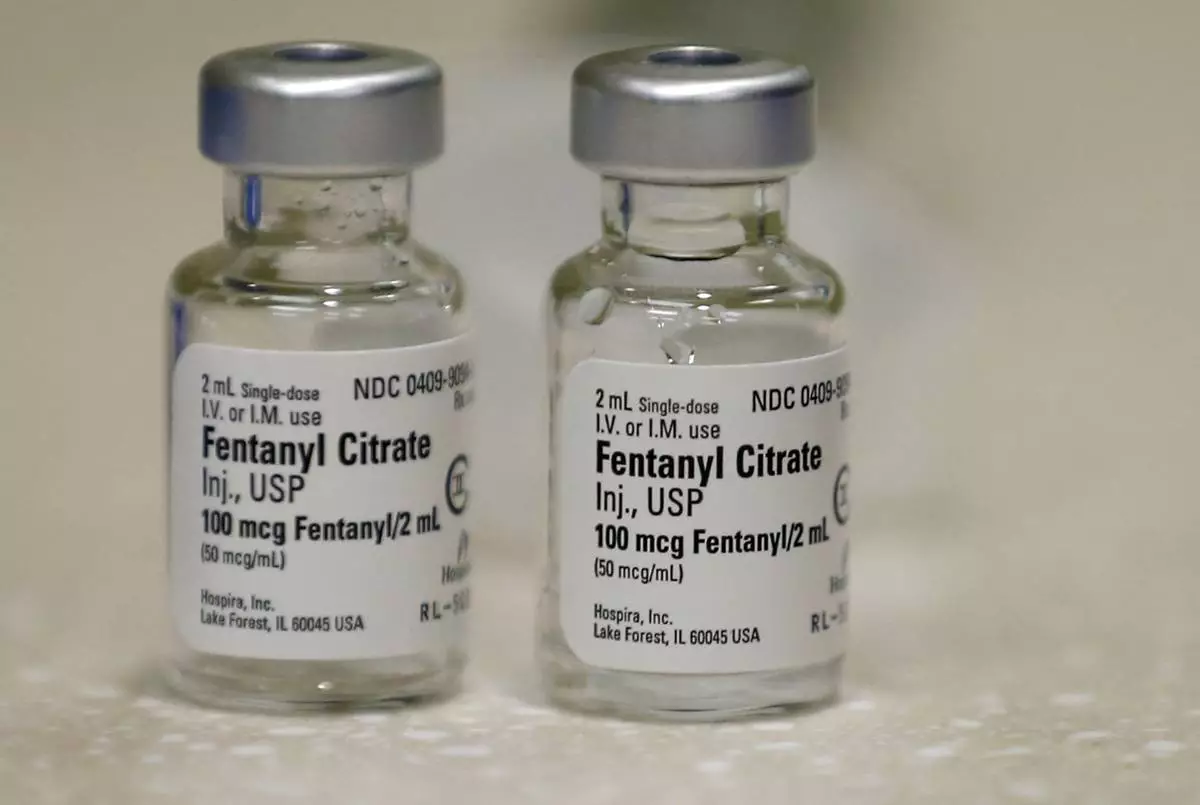
FILE - Small vials of fentanyl are shown in the inpatient pharmacy at the University of Utah Hospital in Salt Lake City, June 1, 2018. (AP Photo/Rick Bowmer, File)
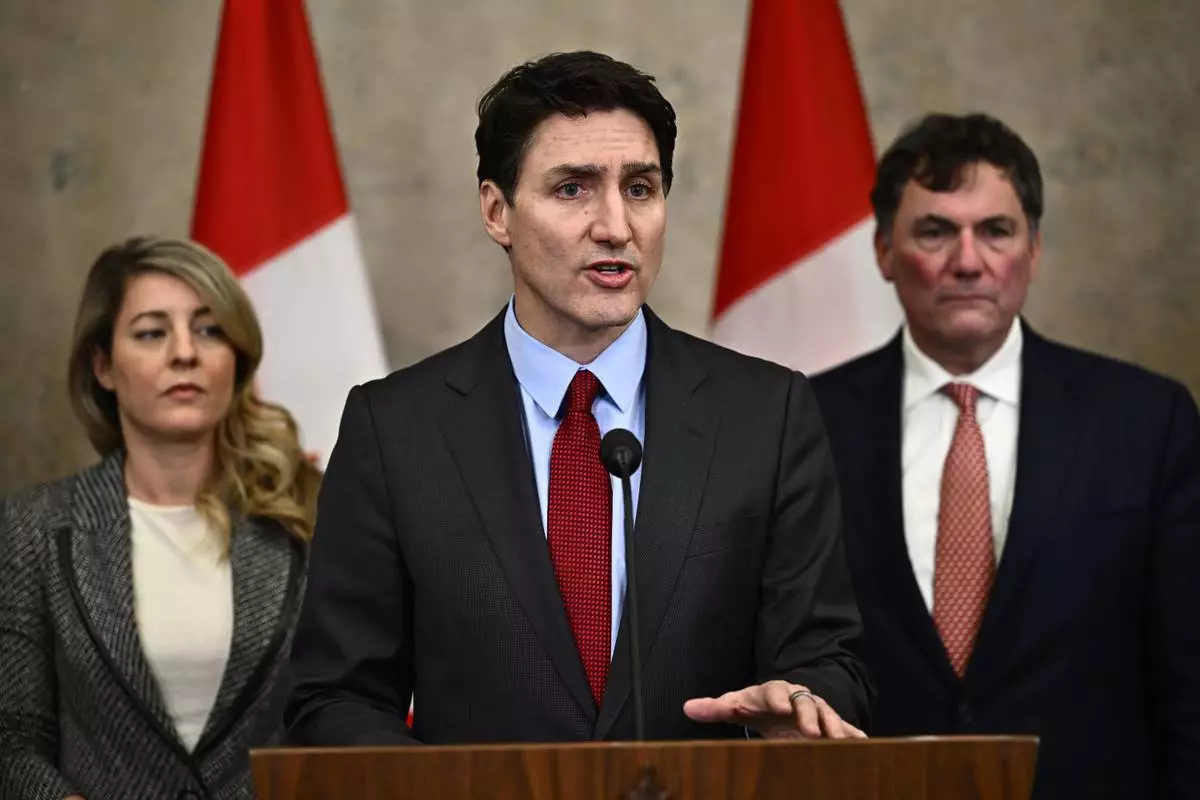
Canadian Prime Minister Justin Trudeau addresses media members after U.S. President Donald Trump signed an order to impose stiff tariffs on imports from Mexico, Canada and China, in Ottawa, Canada, Saturday, Feb. 1, 2025. (Justin Tang/The Canadian Press via AP)
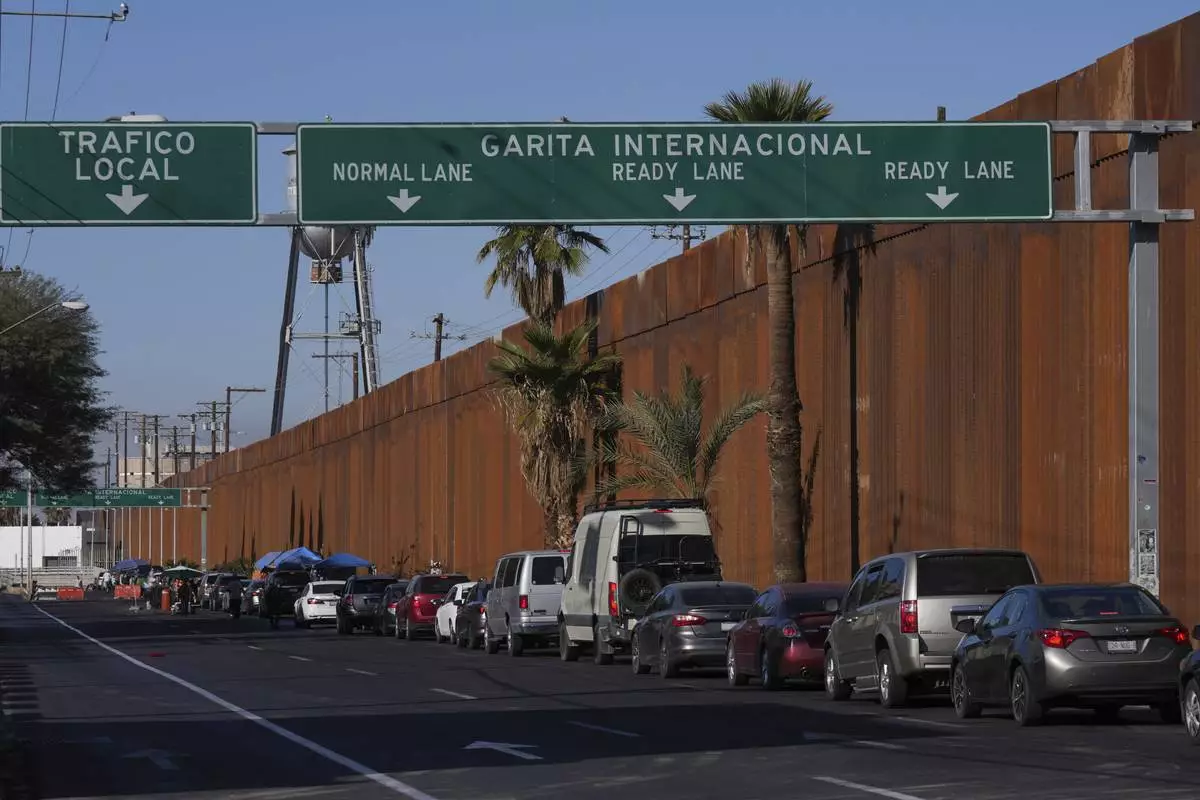
Drivers wait in line to enter to U.S, in Mexicali, Mexico, Saturday, Feb. 1, 2025. (AP Photo/Fernando Llano)
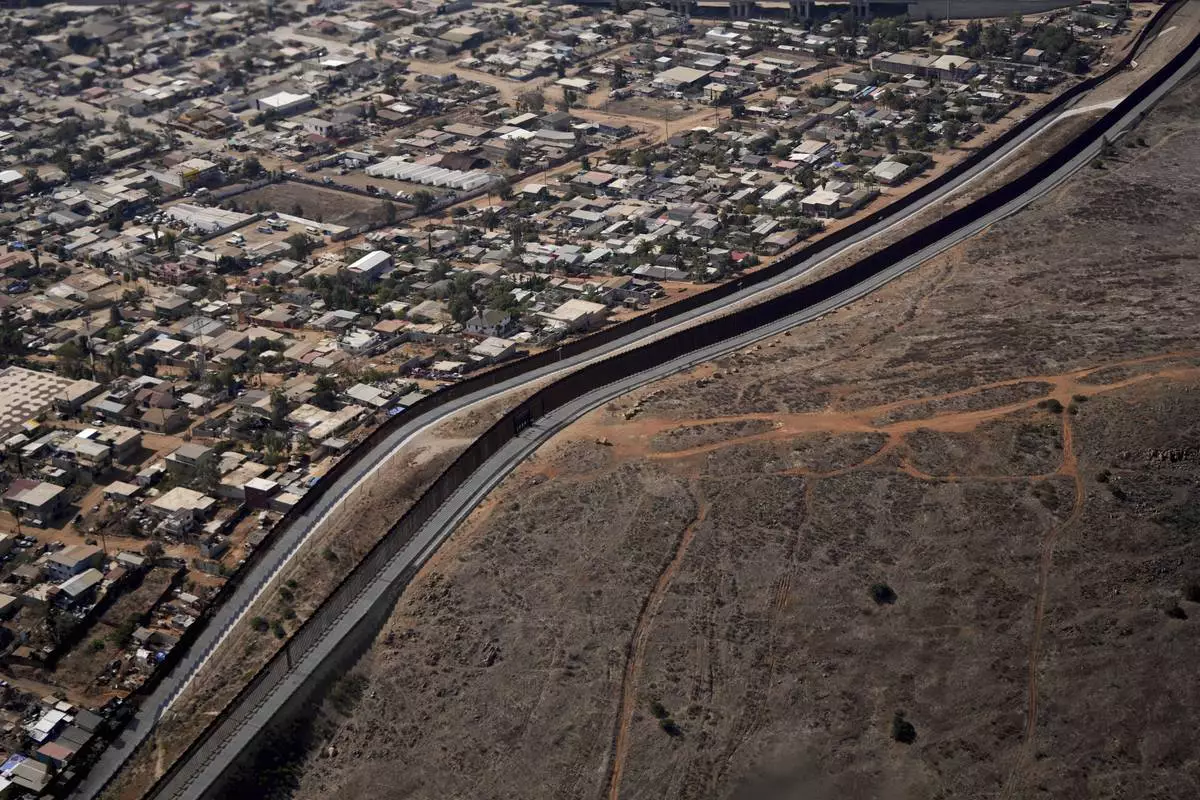
The U.S. Border with Mexico is seen in an aerial view Friday, Jan. 31, 2025, near San Diego. (AP Photo/Jae C. Hong)
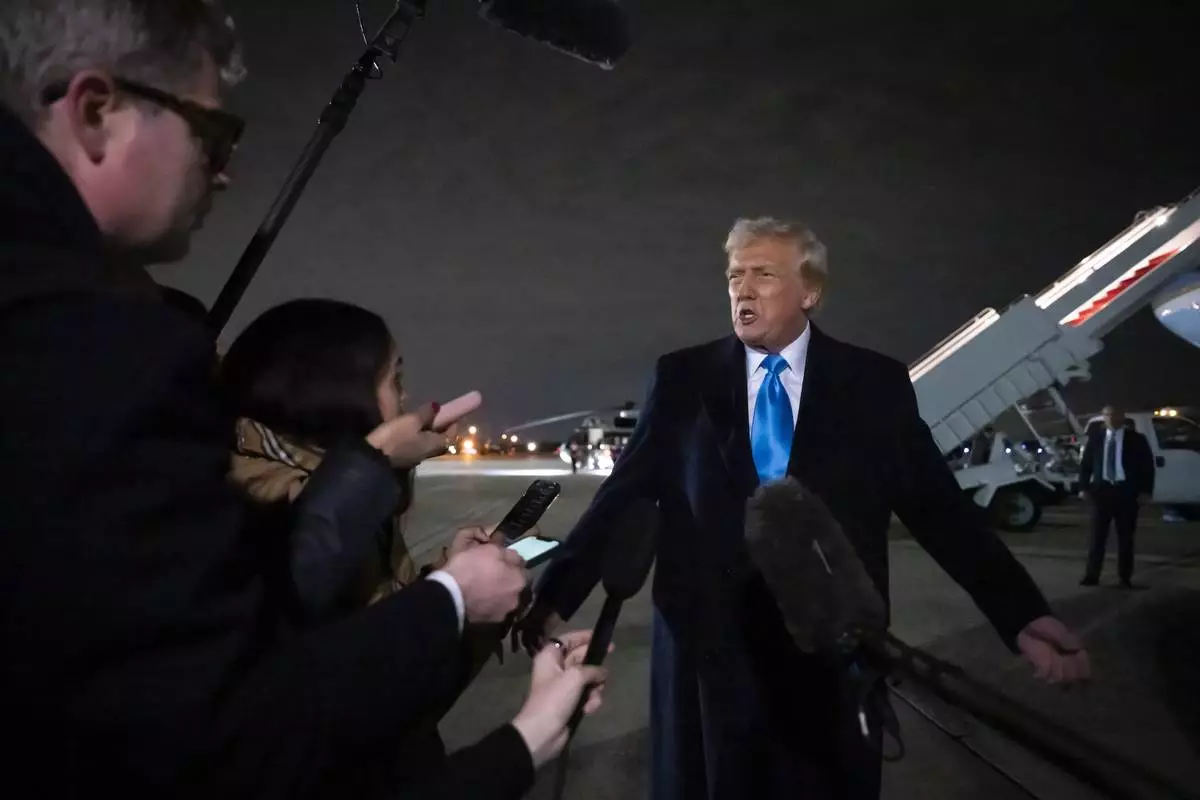
President Donald Trump speaks to reporters next to Air Force One after arriving back at Joint Base Andrews, Md., Sunday, Feb. 2, 2025. (AP Photo/Ben Curtis)
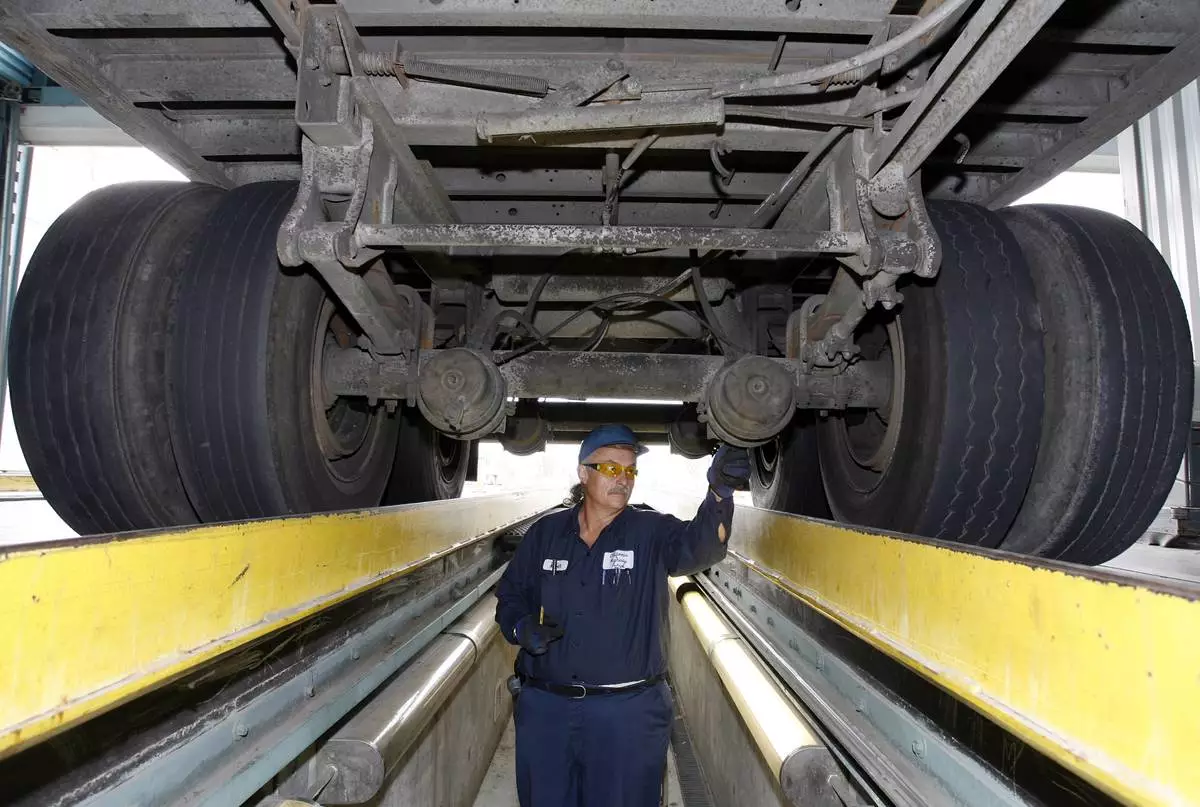
FILE - California Highway Patrol commercial vehicle inspector Ruben Montanez inspects the undercarriage of a truck entering the U.S. from Mexico at the CHP's Otay Mesa Inspection Station Thursday, Sept. 6, 2007, in San Diego. (AP Photo/Denis Poroy)
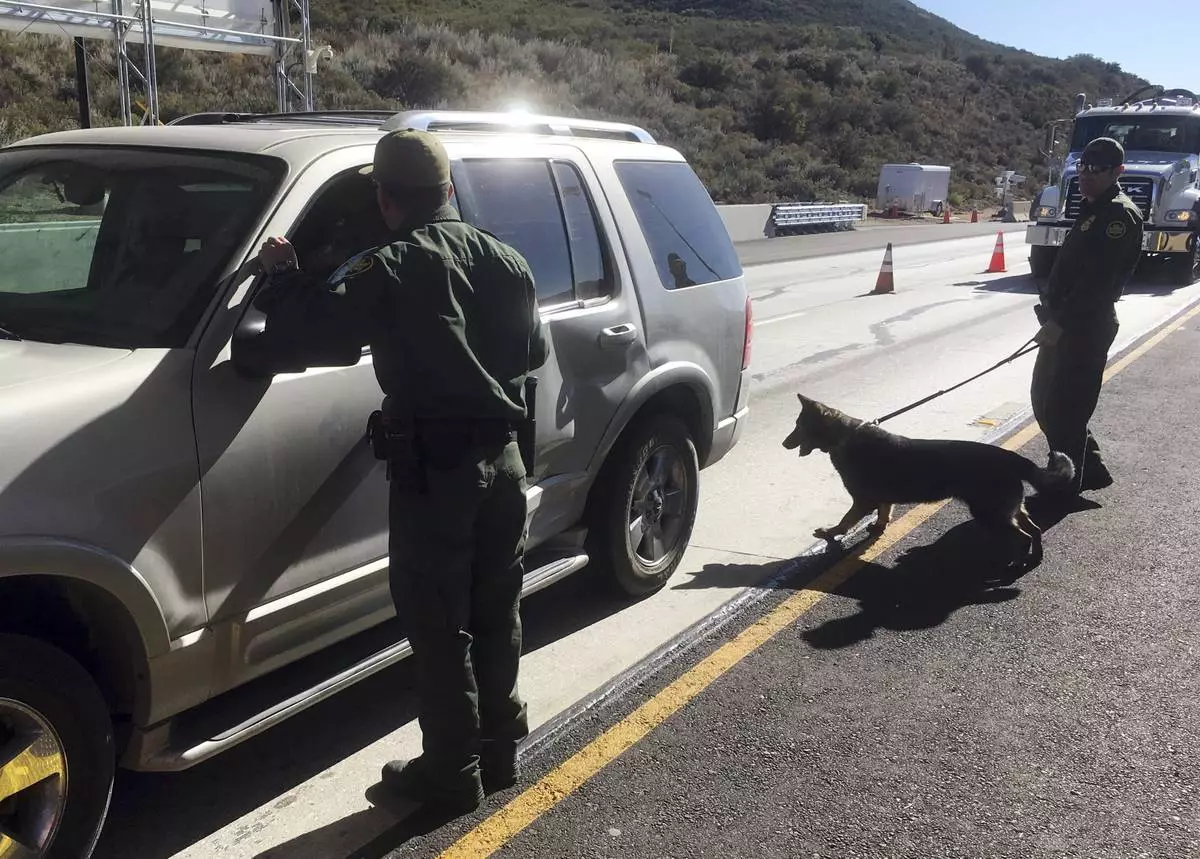
FILE - Border patrol agents use a drug sniffing dog to check vehicles at California's Pine Valley checkpoint, on the main route from Arizona to San Diego, Dec. 14, 2017 (AP Photo/Elliot Spagat, File)
TEHRAN, Iran (AP) — U.S. President Donald Trump on Sunday made expletive-filled threats against Iran and its infrastructure if it doesn't open the Strait of Hormuz by his Tuesday deadline, after American forces rescued a wounded aviator whose Iran-downed plane fell behind enemy lines.
A defiant Iran struck infrastructure targets in neighboring Gulf Arab countries and threatened to restrict another heavily used regional waterway, the Bab el-Mandeb Strait off the Arabian Peninsula.
Trump on social media vowed to hit Iran’s power plants and bridges and said the country would be “living in Hell” if the Strait of Hormuz, crucial for global trade, isn’t opened. He ended with “Praise be to Allah.”
Trump has issued such deadlines before but extended them when mediators have claimed progress toward ending the war, which has killed thousands, shaken global markets and spiked fuel prices in just over five weeks.
“It seems Trump has become a phenomenon that neither Iranians nor Americans are able to fully analyze,” Iranian Culture Minister Sayed Reza Salihi-Amiri told visiting Associated Press journalists in an interview in Tehran, adding that the U.S. president “constantly shifts between contradictory positions.”
Both sides have threatened and hit civilian targets like oil fields and desalination plants critical for drinking water. Iran’s U.N. mission called Trump’s threat “clear evidence of intent to commit war crime.”
Iran’s joint military command warned of stepped-up attacks on regional oil and civilian infrastructure if the U.S. and Israel attack such targets there, according to state television.
The laws of armed conflict allow attacks on civilian infrastructure only if the military advantage outweighs the civilian harm, legal scholars say. It’s considered a high bar to clear, and causing excessive suffering to civilians can constitute a war crime.
An intense search followed Friday's crash of the F-15E Strike Eagle, while Iran promised a reward for the “enemy pilot.” It was the first known American aircraft to crash in Iranian territory since the U.S. and Israel launched the war on Feb. 28.
Trump said that the service member was “seriously wounded and really brave” and rescued from “deep inside the mountains" in an operation involving dozens of armed aircraft. He said a second crew member was rescued in “broad daylight” within hours of the crash.
A senior U.S. administration official said that before locating the second aviator, the CIA spread word inside Iran that U.S. forces had found him and were moving him out, creating confusion for Iranians. The official spoke on the condition of anonymity to discuss details not yet made public.
Iran also shot down another U.S. military plane Friday, demonstrating the perils of the bombing campaign and the ability of Iran's degraded military to hit back. Neither the status of the A-10 attack aircraft's crew nor where it crashed is known.
On Sunday, Iran’s state television aired a video showing what it claimed were parts of U.S. aircraft — a transport plane and two helicopters — shot down by Iranian forces during the rescue operation.
However, a regional intelligence official briefed on the mission told the AP that the U.S. military blew up two transport planes because of a technical malfunction and brought in additional aircraft to complete the rescue. The official spoke on condition of anonymity to discuss the covert mission.
Iran’s joint military command later said the U.S. bombarded its own aircraft to “prevent embarrassment for President Trump."
Two Black Hawk helicopters were hit but navigated to safe airspace, according to a person familiar with the situation who spoke on condition of anonymity to discuss the sensitive information.
Trump's deadline centers on alarm over Iran's grip on the Strait of Hormuz, critical for global shipments of oil and gas from the Persian Gulf as well as humanitarian supplies. Some ships have paid Iran for passage.
An Iranian presidential spokesperson, Seyyed Mohammad Mehdi Tabatabaei, said on social media that the strait can reopen only if some transit revenues compensate Iran for war damages.
A top Iranian adviser, Ali Akbar Velayati, warned on social media that Tehran also could disrupt trade on the Bab el-Mandeb, a key chokepoint to and from the Red Sea.
Diplomatic efforts continued. Oman's Foreign Ministry said that deputy foreign ministers and experts from Iran and Oman met to discuss proposals to ensure “smooth transit” through the strait.
Egypt said that Foreign Minister Badr Abdelatty had spoken with U.S. envoy Steve Witkoff and Iranian Foreign Minister Abbas Araghchi, and with Turkish and Pakistani counterparts. Russia said that Araghchi also spoke with Russian Foreign Minister Sergey Lavrov.
Bahrain urged the U.N. Security Council to act on its draft proposal with language authorizing defensive action to ensure safe passage through the strait.
In the United Arab Emirates, authorities said that four people — one Nepali and three Pakistani — were hurt in fires caused by debris from the interception of an Iranian projectile at Khor Fakkan port, and interception debris caused fires at a petrochemical plant in Ruwais, halting operations.
In Kuwait, Iranian drone attacks caused significant damage to power plants and a petrochemical plant. They also put a water desalination station out of service, according to the Ministry of Electricity.
In Bahrain, a drone attack caused a fire at a national oil company storage facility and a state-run petrochemical plant, the kingdom’s official news agency said.
In Israel, rescue authorities searched for three people in the northern city of Haifa after an apartment building was hit. It wasn't immediately clear what struck it.
Meanwhile, more than 1,900 people have been killed in Iran since the war began.
In Lebanon, whose health ministry said an Israeli strike without warning killed four people in Beirut, more than 1,400 people have been killed and more than 1 million people have been displaced. Eleven Israeli soldiers have died there while targeting Iranian-backed Hezbollah militants.
In Gulf Arab states and the occupied West Bank, more than two dozen people have died, while 19 have been reported dead in Israel and 13 U.S. service members have been killed.
Lee and Toropin reported from Washington, Metz from Jerusalem and Magdy from Cairo. Associated Press writers Jon Gambrell in Dubai, United Arab Emirates; Lisa Mascaro and Seung Min Kim in Washington; Munir Ahmed in Islamabad; and Farnoush Amiri in New York contributed to this report.
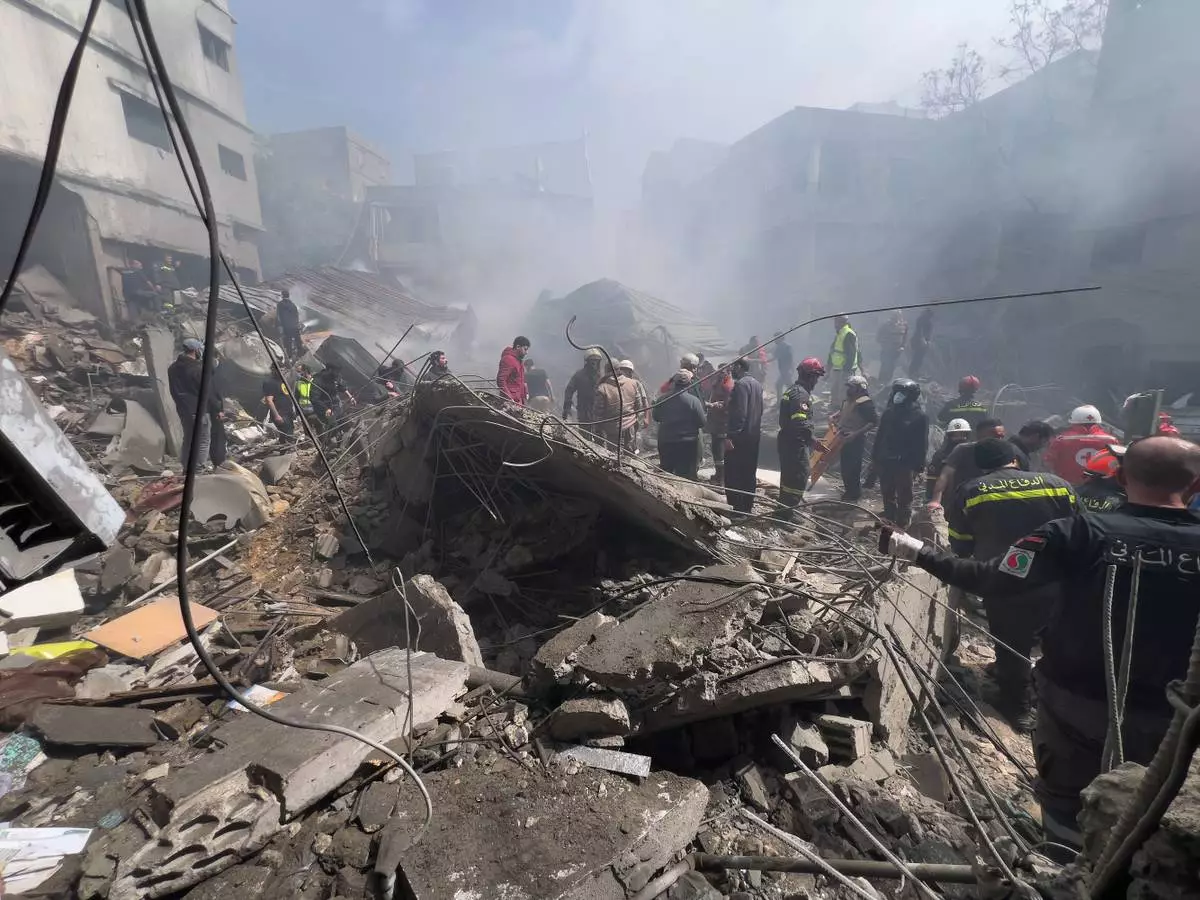
Rescue workers search for victims at the site of an Israeli airstrike that hit a crowded neighbourhood south of Beirut, Lebanon, Sunday, April 5, 2026. (AP Photo/Hussein Malla)
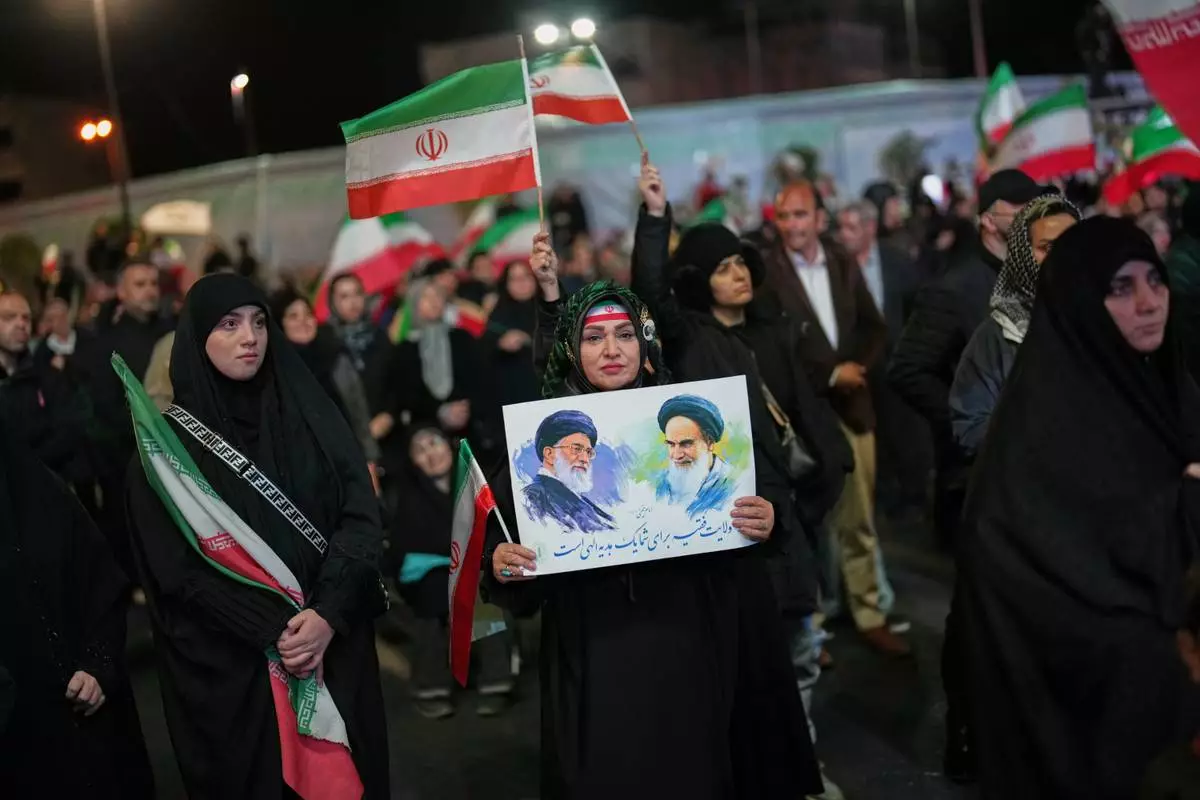
A woman holds a poster depicting the late Iran’s Supreme Leader Ayatollah Ali Khamenei, left, and the late revolutionary founder Ayatollah Ruhollah Khomeini during a pro-government gathering in a square in Tehran, Iran, Sunday, April 5, 2026. (AP Photo/Francisco Seco)
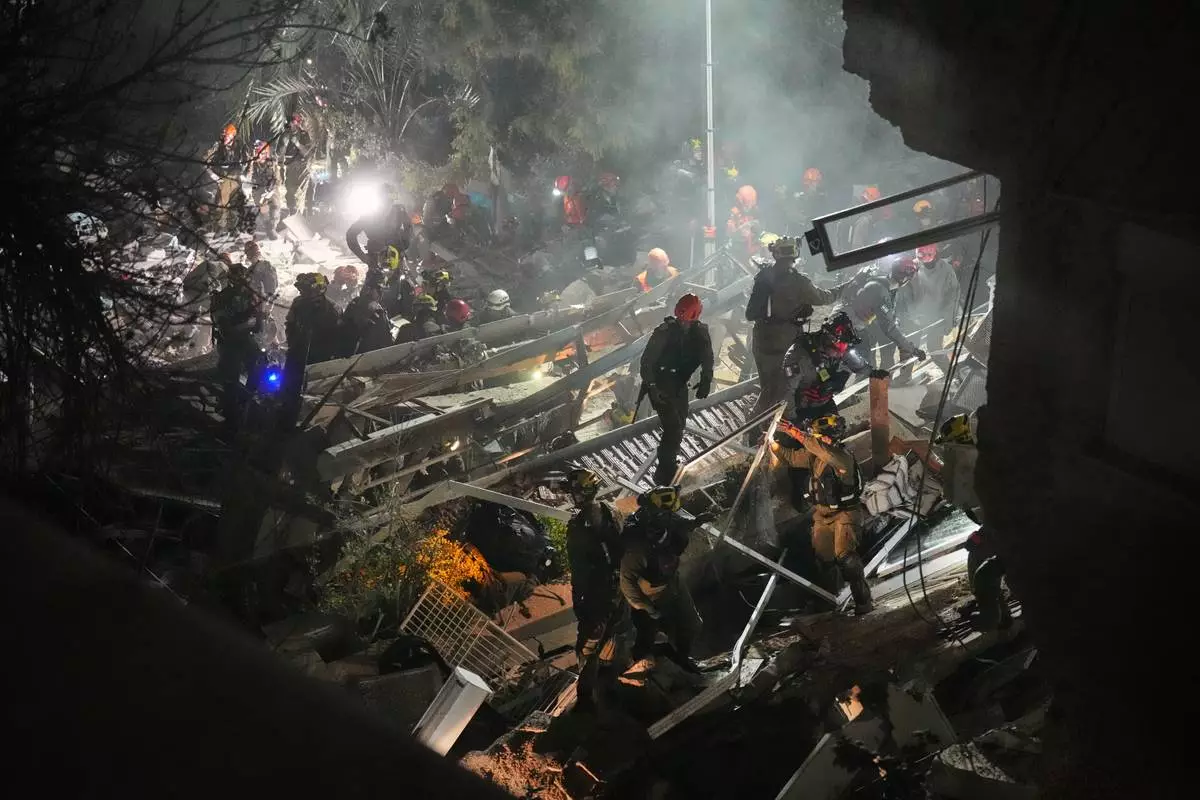
Israeli security forces and rescue teams work amid the rubble of a residential building struck by an Iranian missile in Haifa, Israel, Sunday, April 5, 2026. (AP Photo/Ariel Schalit)
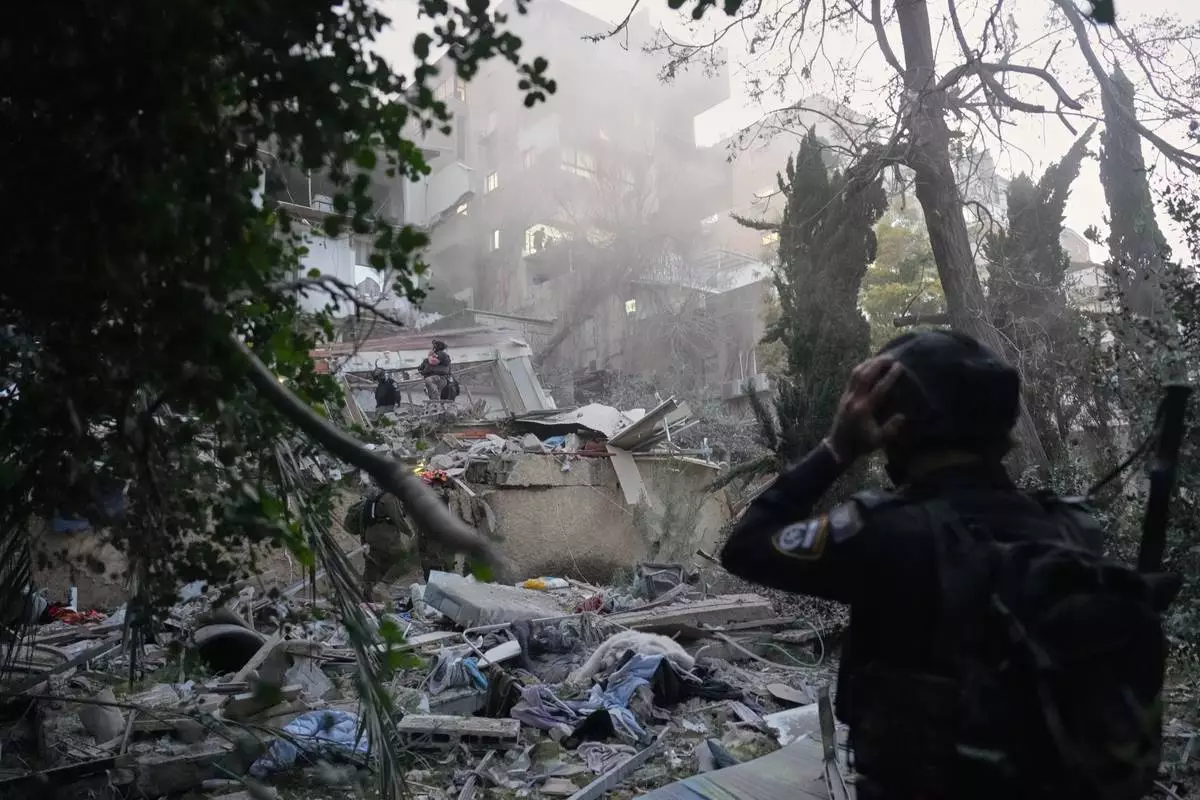
Israeli security forces and rescue teams work amid the rubble of a residential building struck by an Iranian missile in Haifa, Israel, Sunday, April 5, 2026. (AP Photo/Ariel Schalit)
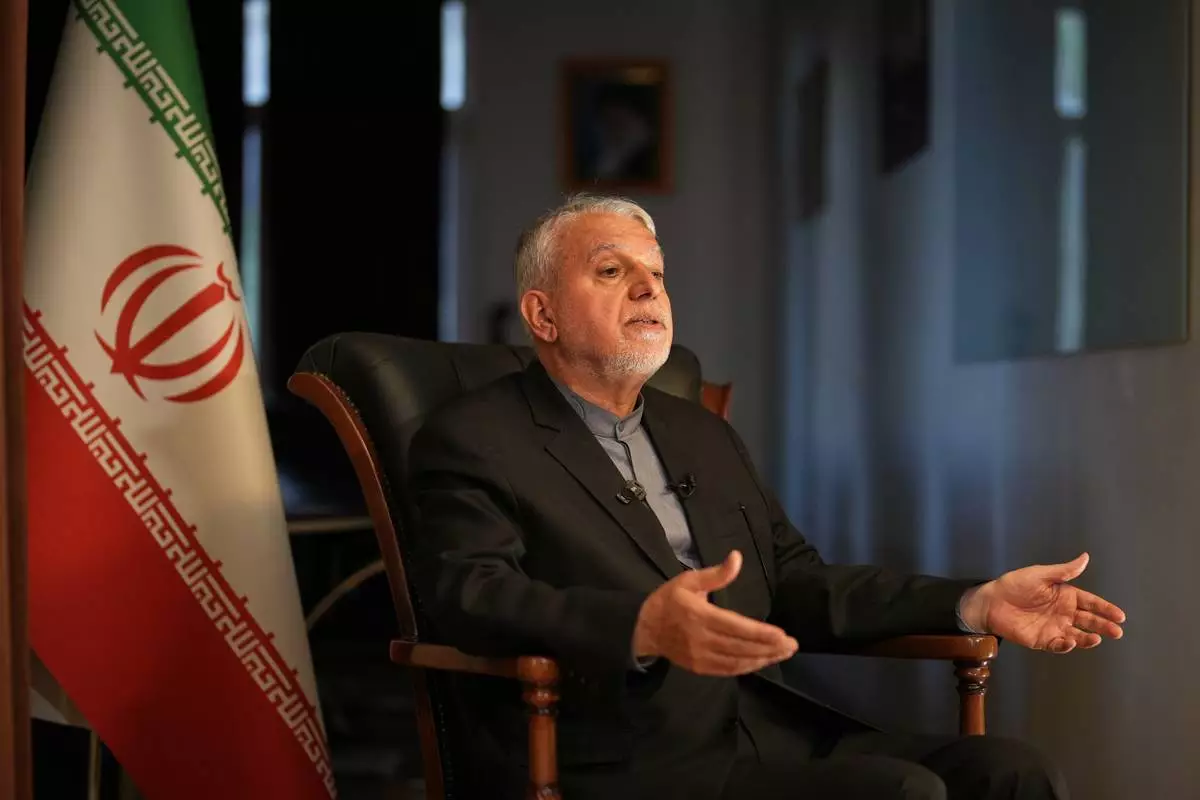
Iran's Minister of Cultural Heritage, Tourism and Handicrafts, Seyed Reza Salehi Amiri, talks during an interview with the Associated Press in Tehran, Iran, Sunday, April 5, 2026. (AP Photo/Francisco Seco)
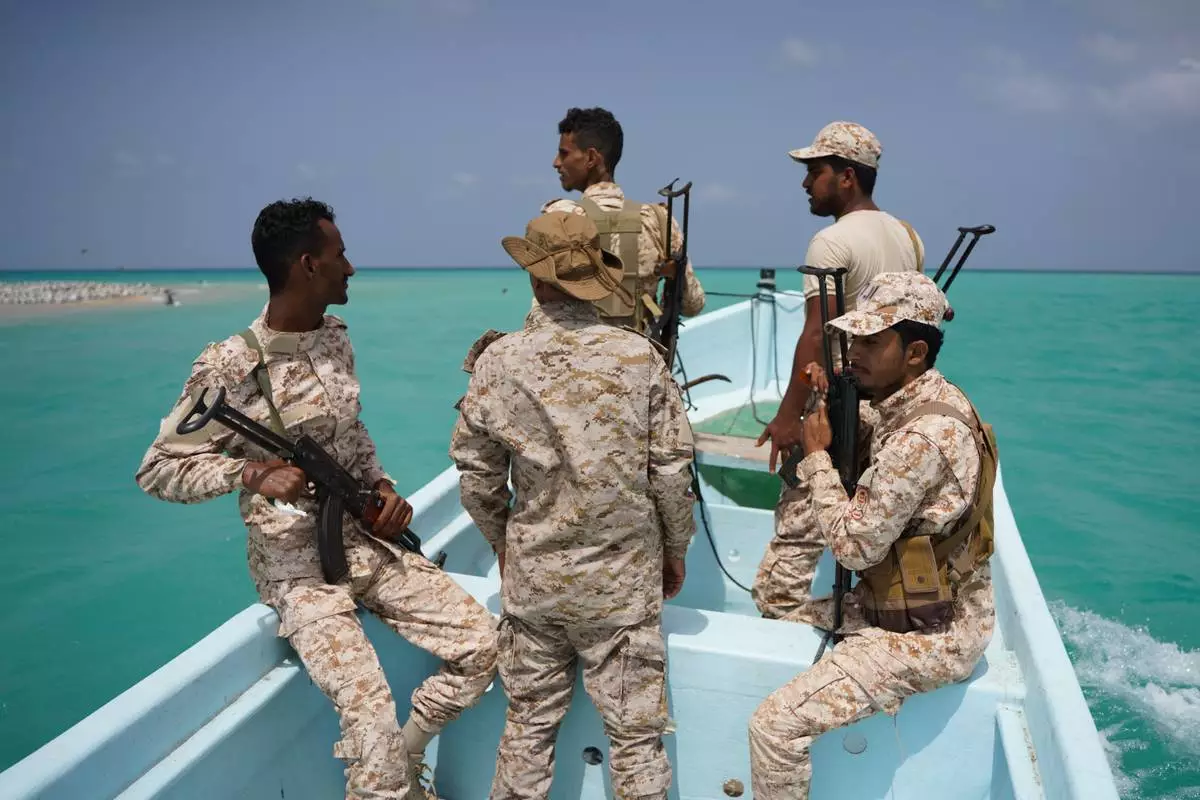
Yemeni soldiers patrol the strategic Bab el-Mandeb Strait, Yemen, Sunday, April 5, 2026. (AP Photo/Abdulnasser Alseddik)

A cafe attendant sits at the counter as two men sit at a cafe in downtown Tehran, Iran, Sunday, April 5, 2026. (AP Photo/Vahid Salemi)
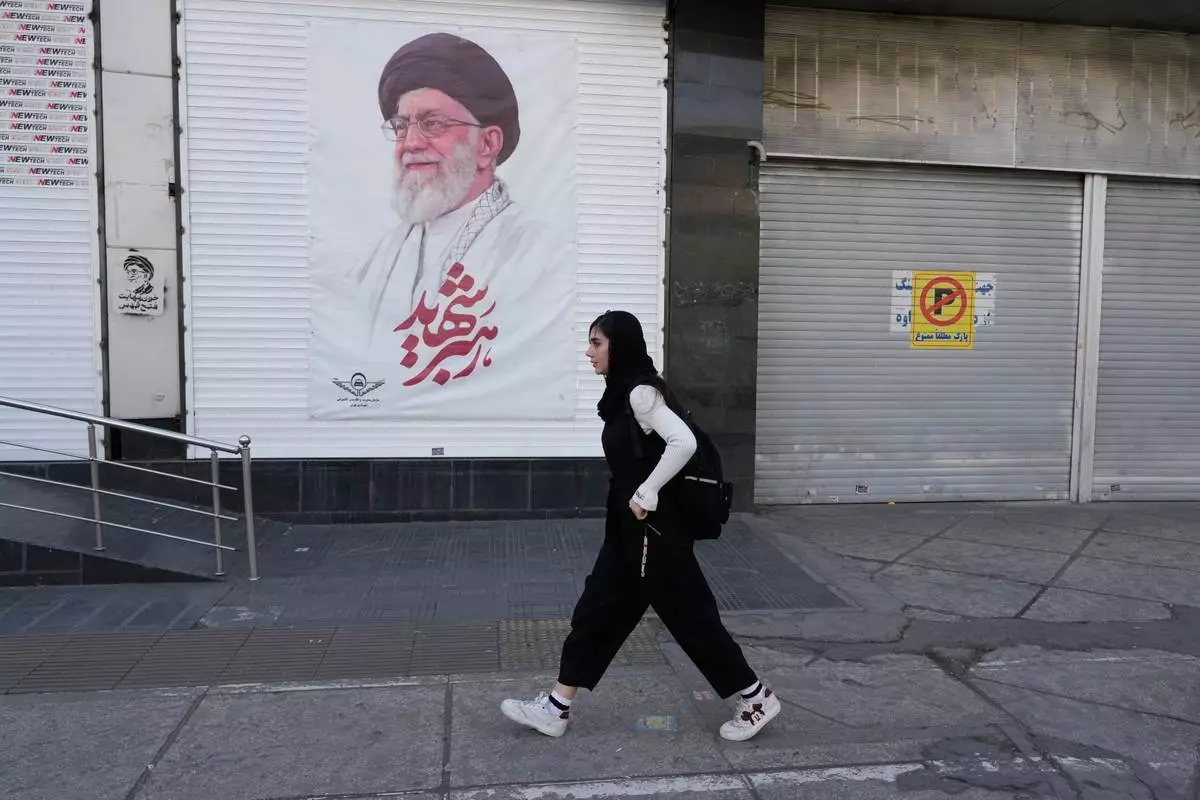
A woman walks past a poster of the late Iranian Supreme Leader Ayatollah Ali Khamenei in downtown Tehran, Iran, Sunday, April 5, 2026. (AP Photo/Vahid Salemi)
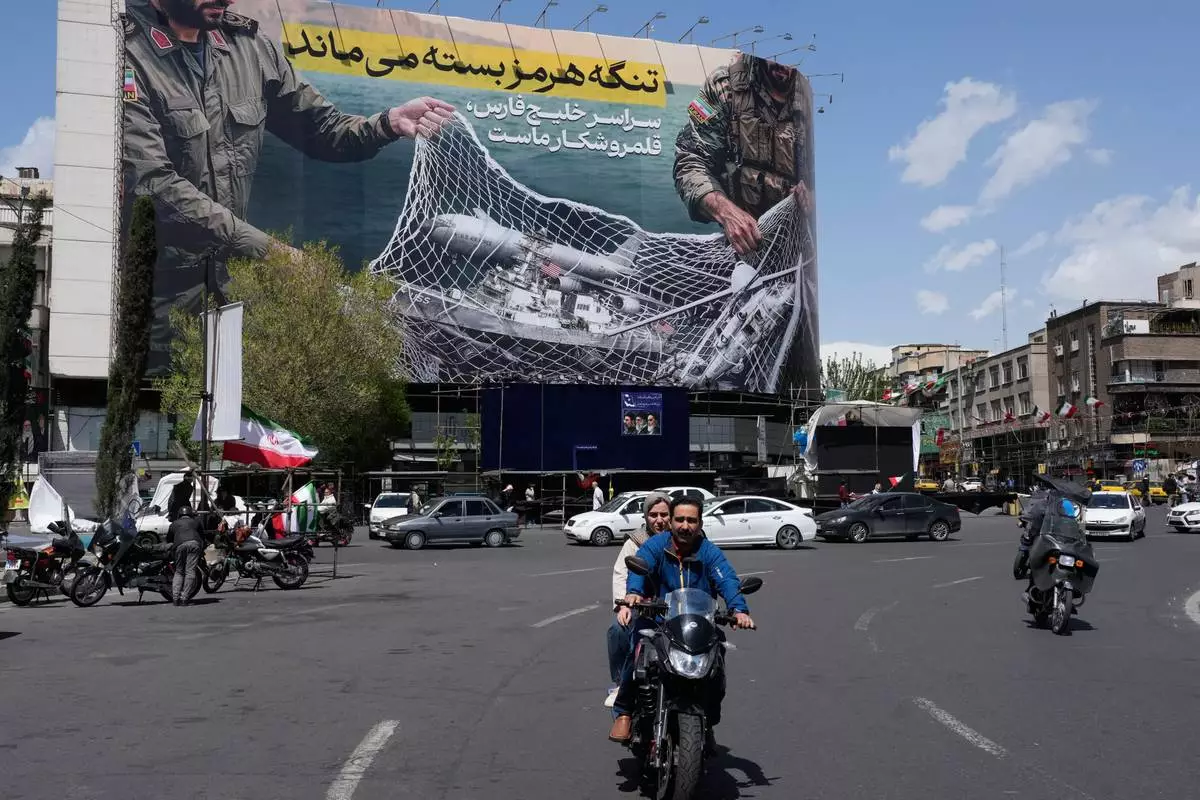
Vehicles and motorcycles move past an anti-U.S. billboard depicting the American aircrafts into the Iranian armed forces fishing net with signs that read in Farsi: "The Strait of Hormuz will remain closed, The entire Persian Gulf is our hunting ground," at the Eqelab-e-Eslami, or Islamic Revolution square in downtown Tehran, Iran, Sunday, April 5, 2026. (AP Photo/Vahid Salemi)
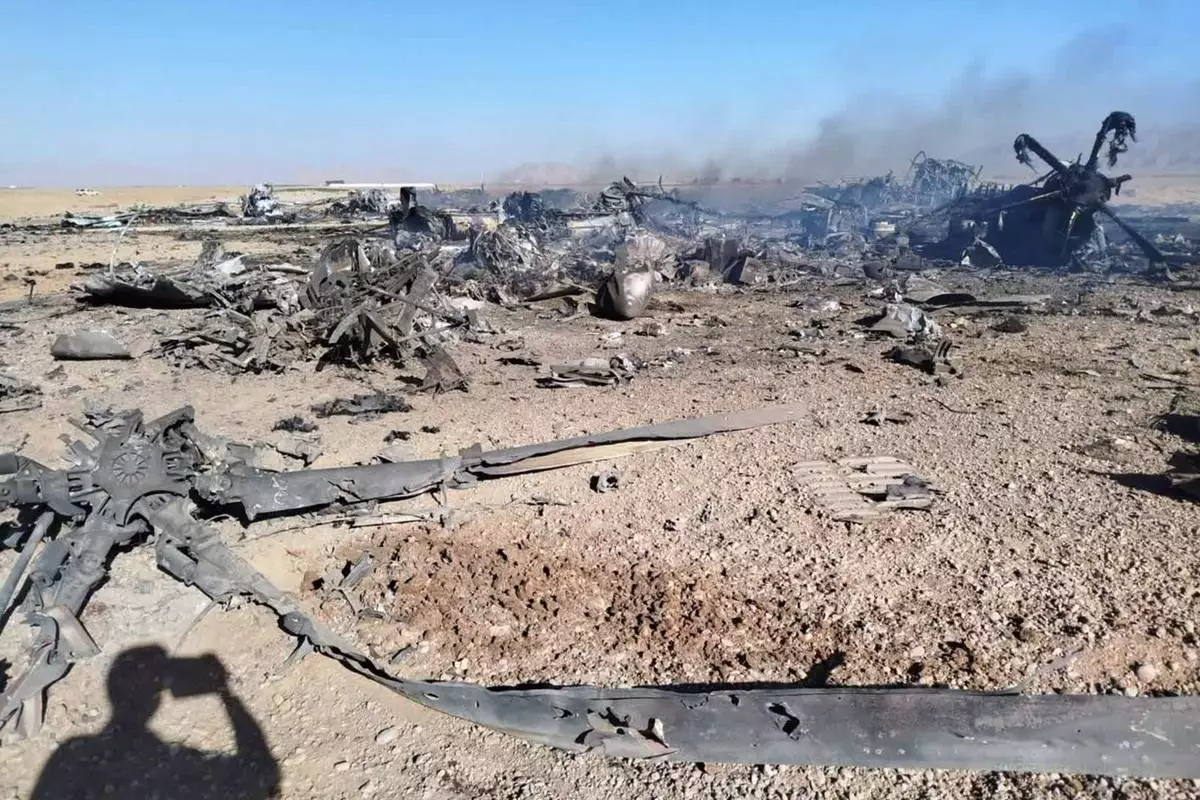
In this image provided by Sepahnews, the Iranian Revolutionary Guard's official website, wreckage is shown at what Iran's state TV claimed was the site of a downed American transport plane and two helicopters involved in a rescue operation, in Isfahan province, Iran, April, 2026. (Sepahnews via AP)
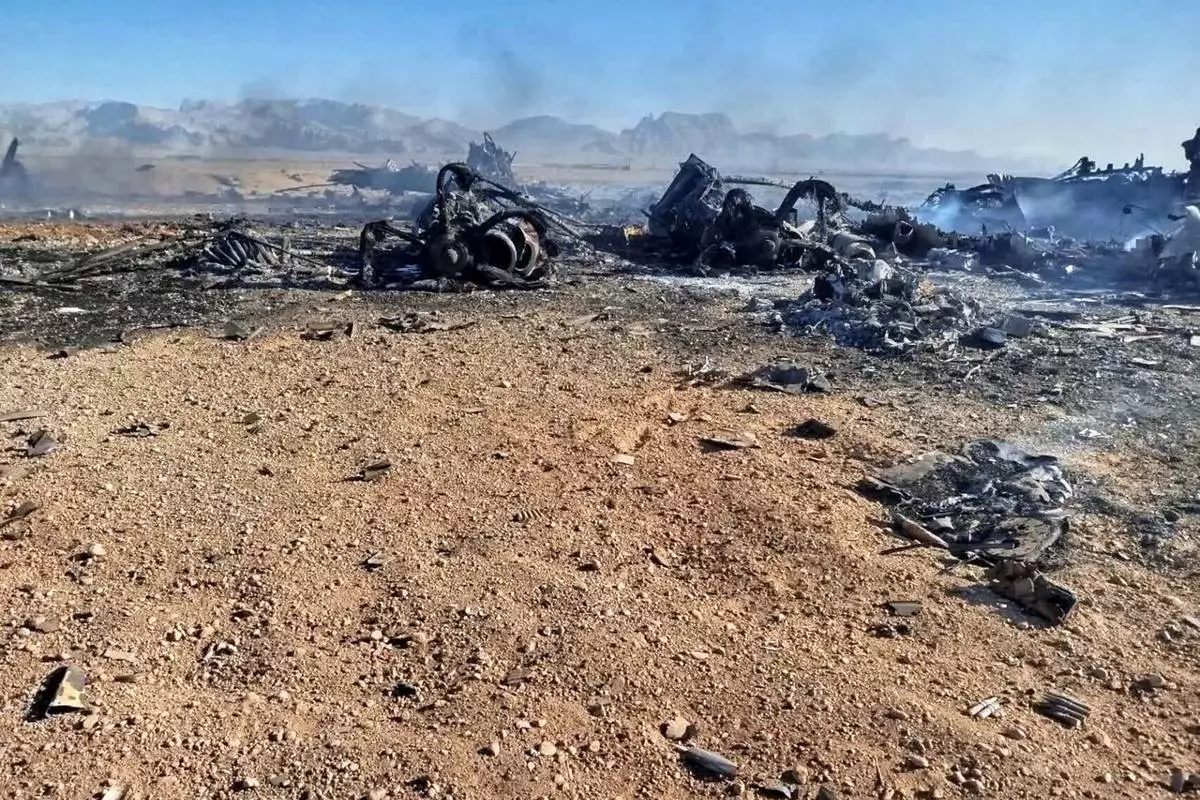
In this image provided by Sepahnews, the Iranian Revolutionary Guard's official website, wreckage is shown at what Iran's state TV claimed was the site of a downed American transport plane and two helicopters involved in a rescue operation, in Isfahan province, Iran, April, 2026. (Sepahnews via AP)
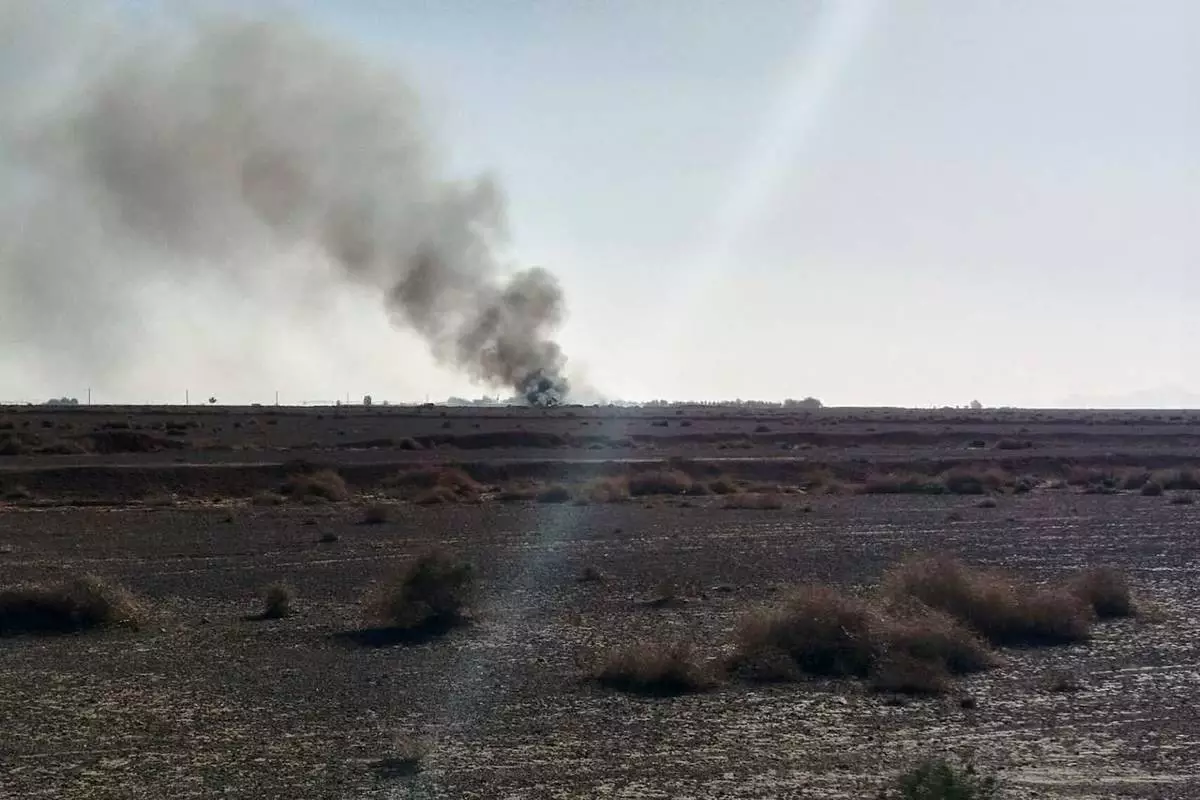
In this image provided by Sepahnews, the Iranian Revolutionary Guard's official website, black smoke rises into the air at what Iran's state TV claimed was the site where an American transport plane and two helicopters involved in a rescue operation were shot down, in Isfahan province, Iran, April, 2026. (Sepahnews via AP)
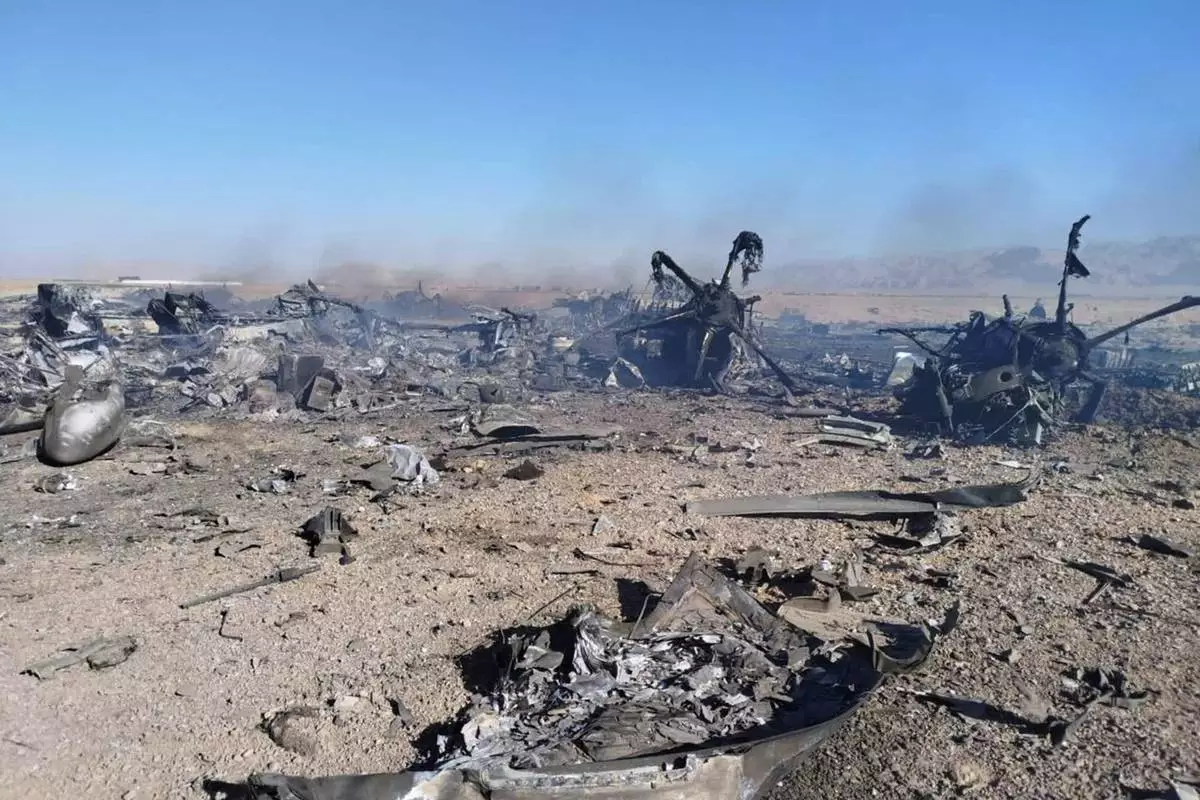
In this image provided by Sepahnews, the Iranian Revolutionary Guard's official website, wreckage is shown at what Iran's state TV claimed was the site of a downed American transport plane and two helicopters involved in a rescue operation, in Isfahan province, Iran, April, 2026. (Sepahnews via AP)
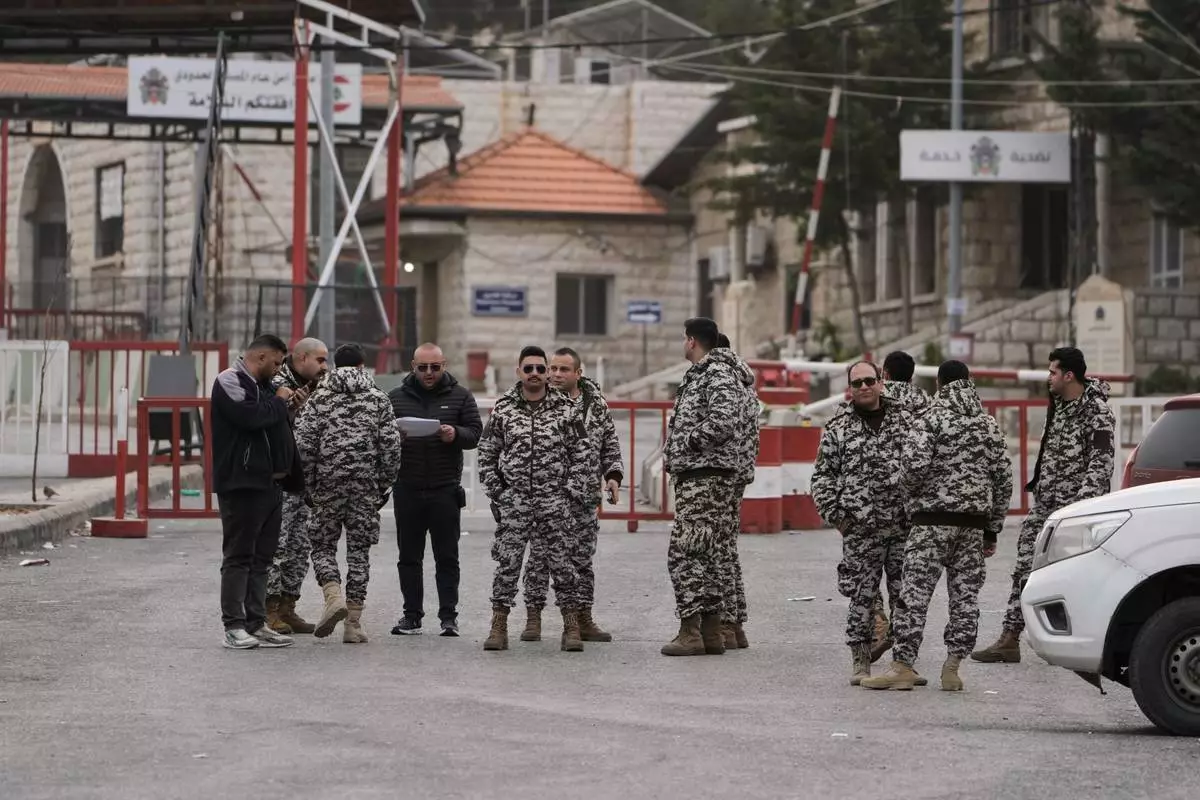
Members of Lebanon's General Security stand at the Masnaa border crossing in the Bekaa valley, eastern Lebanon, Sunday, April 5, 2026. (AP Photo/Bilal Hussein)
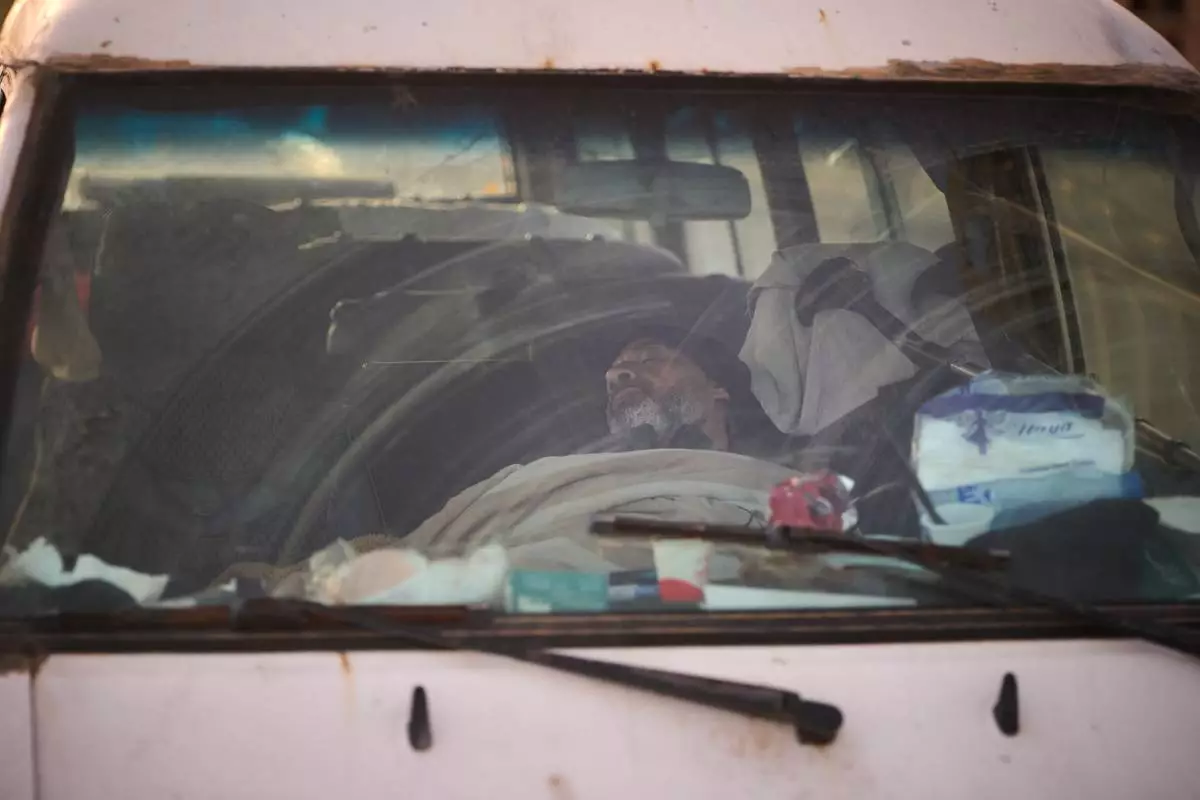
A man, who fled Israeli bombings in southern Lebanon with his family, sleeps in his car used as shelter, along a seaside promenade in downtown Beirut, Lebanon, Sunday, April 5, 2026. (AP Photo/Emilio Morenatti)
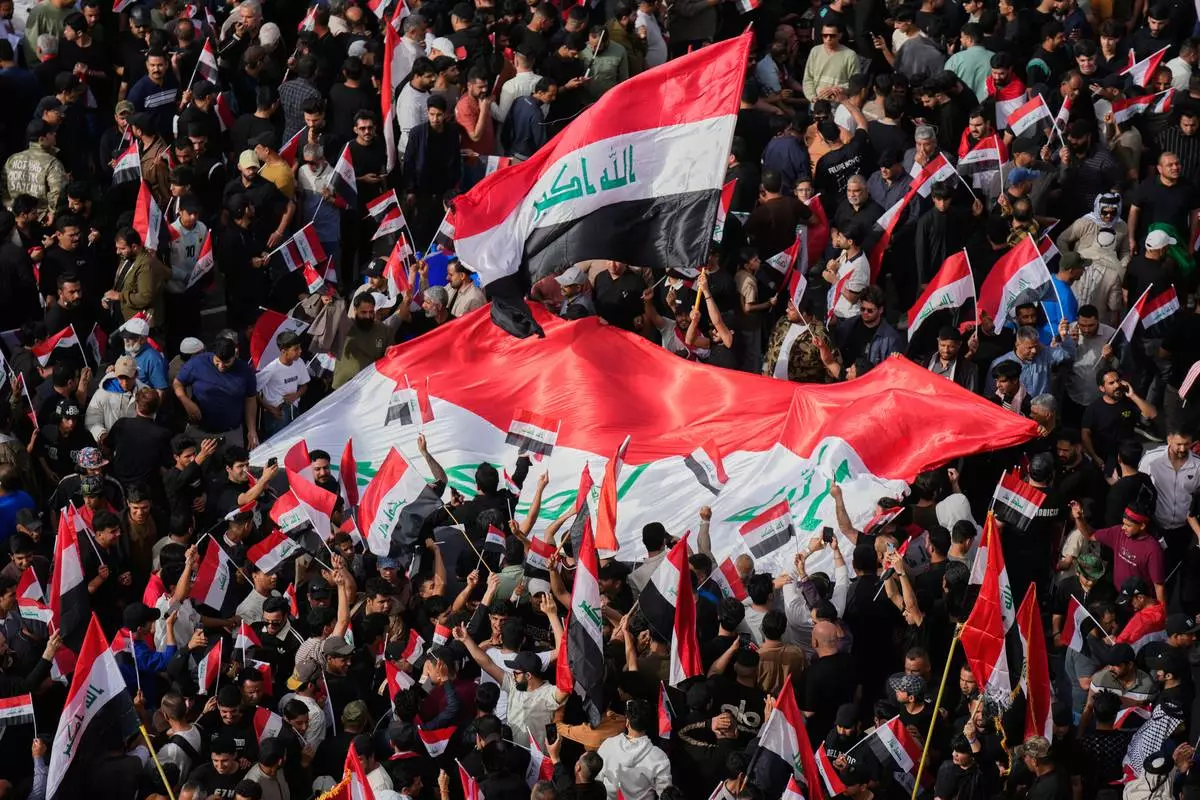
Followers of Iraq's Shiite cleric Muqtada al-Sadr chant slogans as they wave national Iraqi flag during a protest against U.S. and Israeli attacks on multiple cities across Iran, in Tahrir Square, Baghdad, Baghdad, Iraq, Saturday, April 4, 2026. (AP Photo/Hadi Mizban)
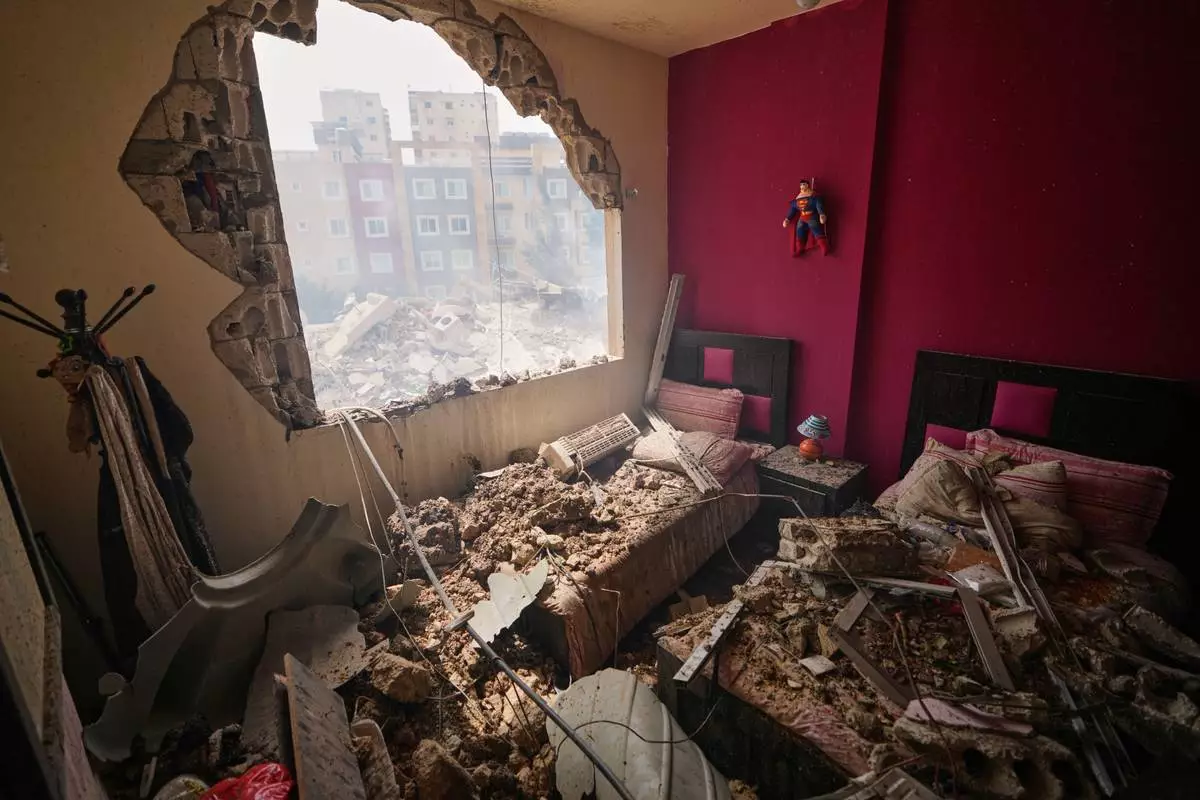
A bedroom is damaged in a building struck in an Israeli airstrike in the southern port city of Tyre, Lebanon, Saturday, April 4, 2026. (AP Photo/Mohammed Zaatari)
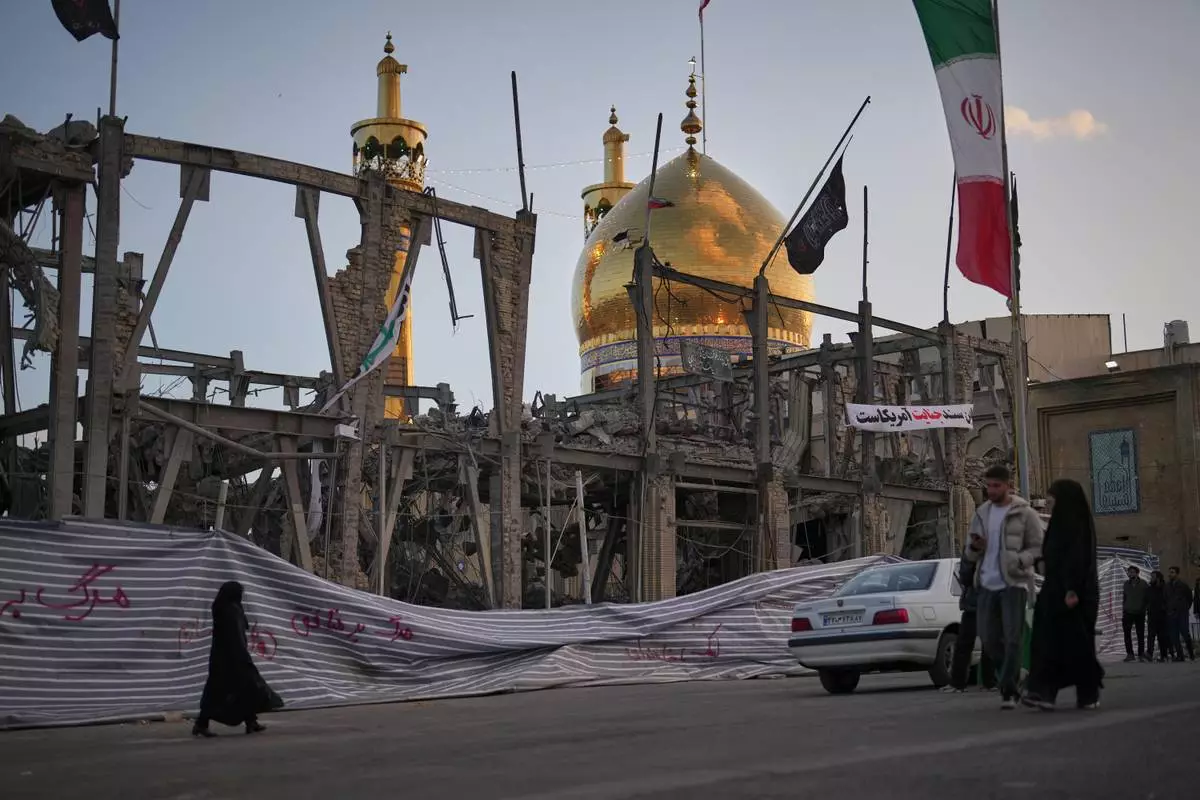
Pedetrians walk by a destroyed building within the Grand Hosseiniyeh, with the mosque visible in the background, which officials at the site say was hit by U.S.-Israeli airstrikes Tuesday, in Zanjan, Iran, Saturday, April 4, 2026. (AP Photo/Francisco Seco)
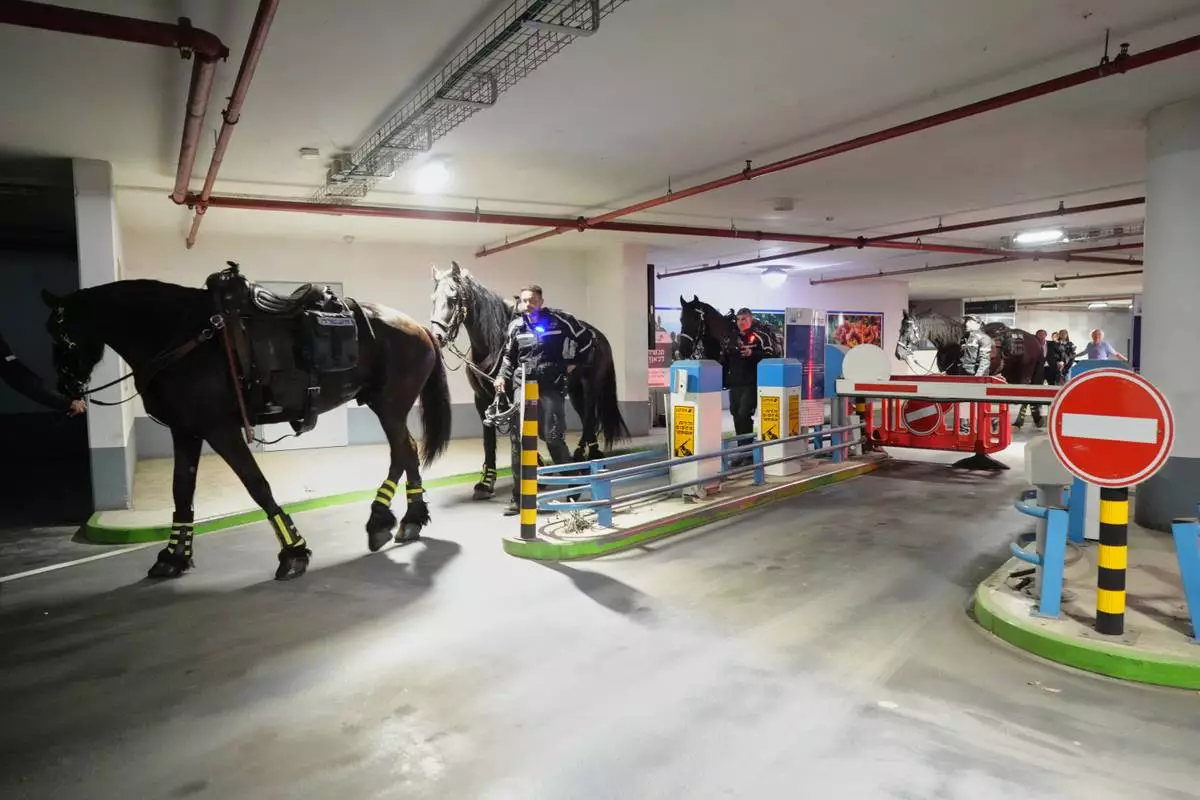
Police officers and their horses take cover in an underground parking garage as sirens warn of an incoming missile fired from Yemen in Tel Aviv, Israel, Saturday, April 4, 2026. (AP Photo/Maya Levin)
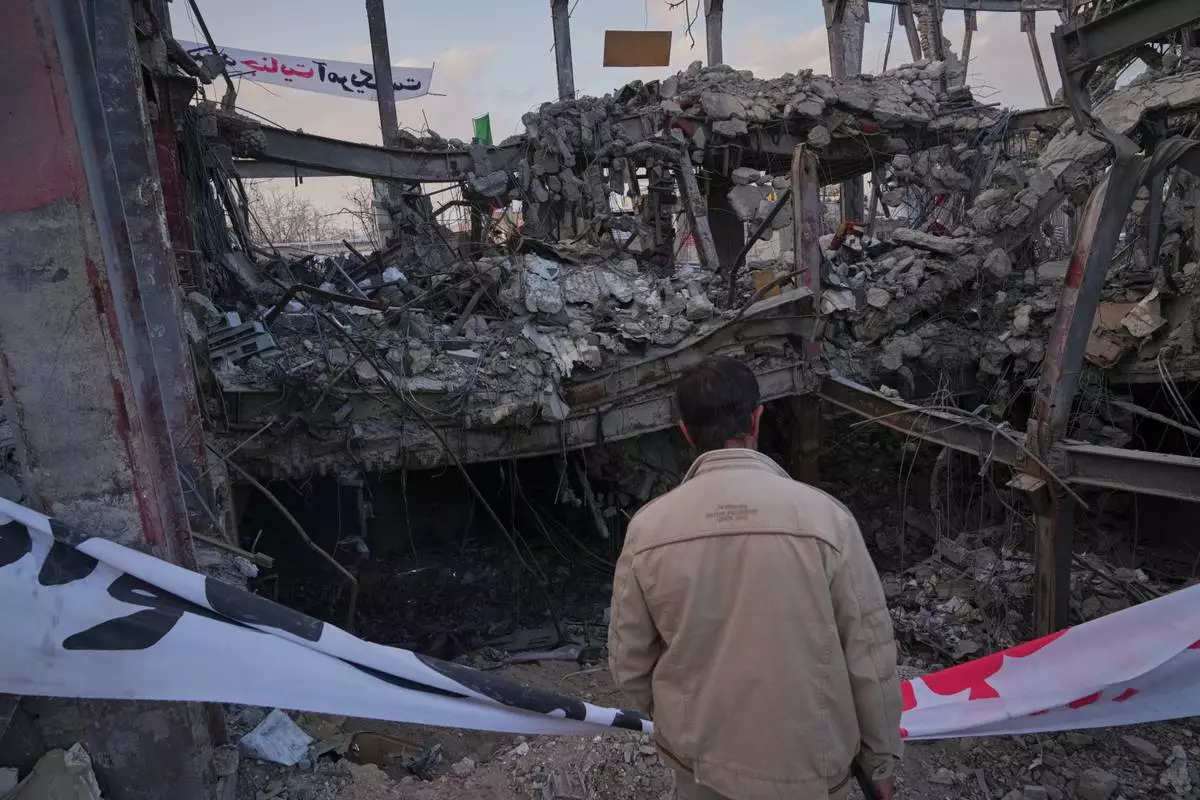
A man looks at a destroyed building within the Grand Hosseiniyeh complex that officials say was hit by U.S.-Israeli airstrikes Tuesday in Zanjan, Iran, Saturday, April 4, 2026. (AP Photo/Francisco Seco)