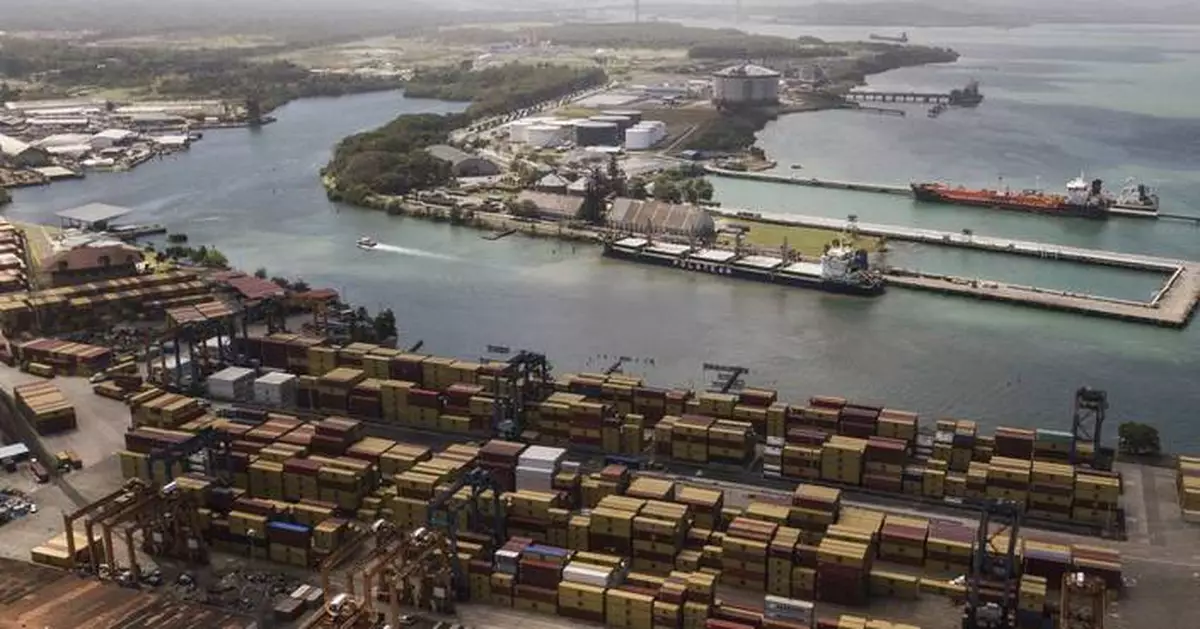
PANAMA CITY (AP) — Panamanian President José Raúl Mulino on Thursday denied the U.S. State Department’s claim that his country had reached a deal allowing U.S. warships to transit the Panama Canal for free.
Mulino said he had told U.S. Secretary of Defense Pete Hegseth on Wednesday that he could neither set the fees to transit the canal nor exempt anyone from them and that he was surprised by the U.S. State Department’s statement suggesting otherwise late Wednesday.
Click to Gallery
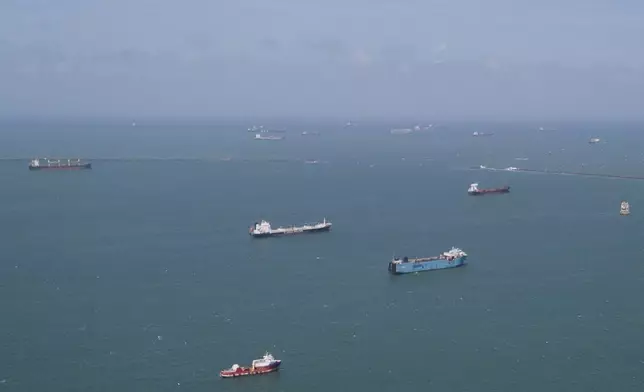
Cargo ships wait to transit the Panama Canal in Colon, Panama, Tuesday, Feb. 4, 2025. (AP Photo/Matias Delacroix)
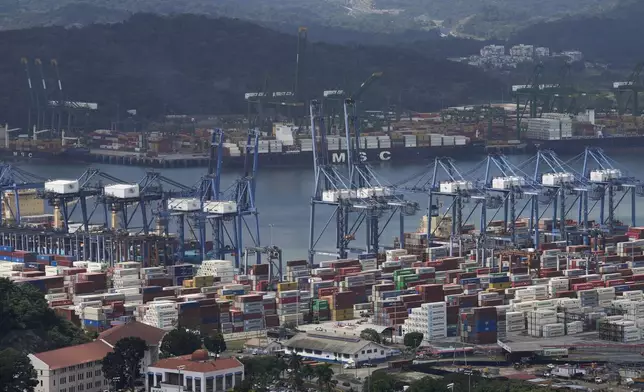
Cargo containers sit stacked as cranes load and unload containers from cargo ships at the Panama Canal's Balboa port, operated by the Panama Ports Company, in Panama City, Friday, Jan. 31, 2025. (AP Photo/Matias Delacroix)
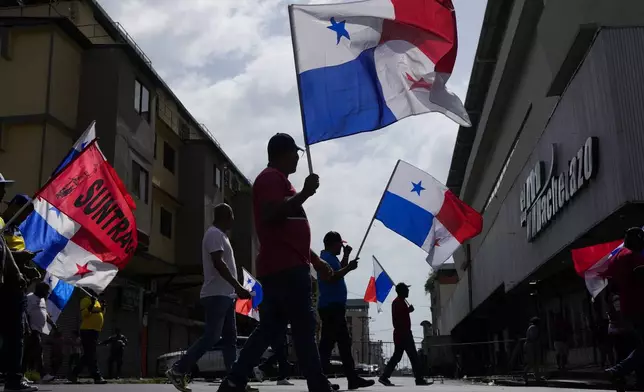
Protesters march against U.S. Secretary of State Marco Rubio's visit in Panama City, Sunday, Feb. 2, 2025. (AP Photo/Matias Delacroix)
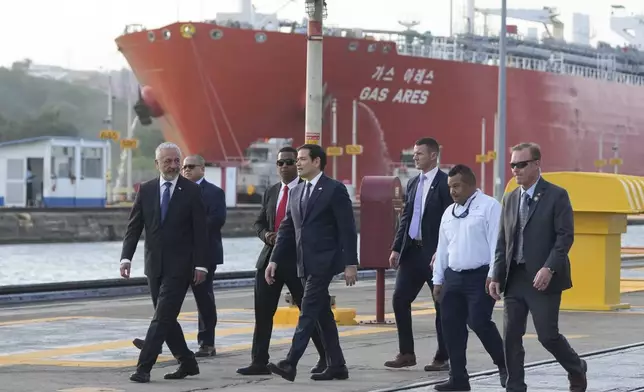
U.S. Secretary of State Marco Rubio and Panama Canal Authority Administrator Ricuarte Vásquez, left, tour the Miraflores Locks at the Panama Canal in Panama City, Sunday, Feb. 2, 2025. (AP Photo/Mark Schiefelbein, Pool)
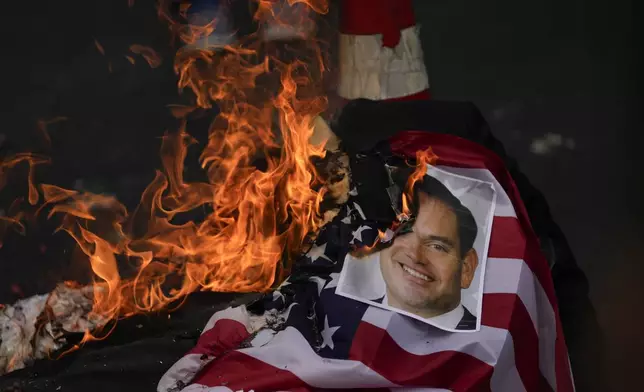
A photo of U.S. Secretary of State Marco Rubio is burned by demonstrators protesting his upcoming visit to Panama City, Friday, Jan. 31, 2025. (AP Photo/Matias Delacroix)
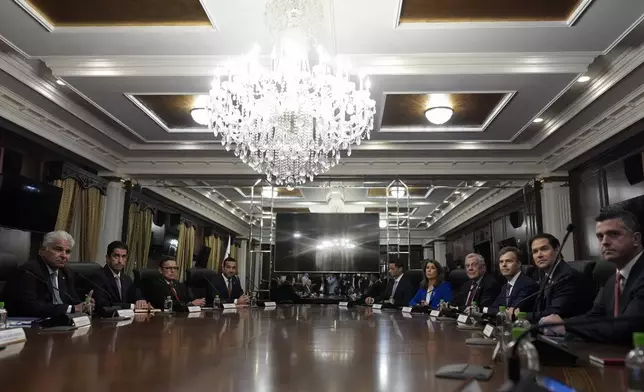
U.S. Secretary of State Marco Rubio, second right, meets with Panamanian President Jose Raul Mulino, left, at the presidential palace in Panama City, Sunday, Feb. 2, 2025. (AP Photo/Mark Schiefelbein, Pool)
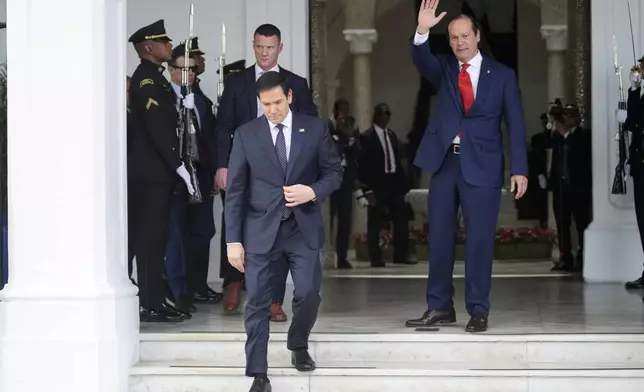
Panama's Foreign Minister Javier Martinez-Acha waves to U.S. Secretary of State Marco Rubio as he departs the presidential palace in Panama City after meeting with President Jose Mulino, Sunday, Feb. 2, 2025. (AP Photo/Mark Schiefelbein, Pool)
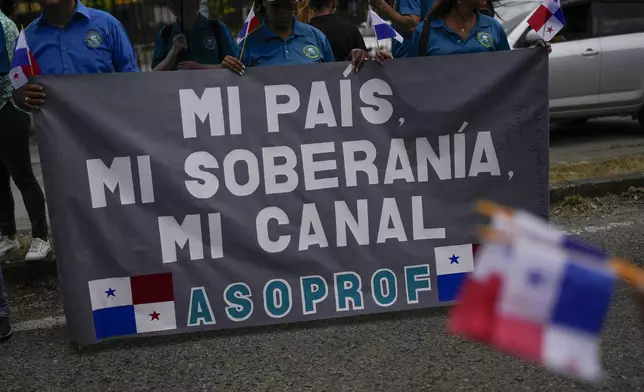
Demonstrators carry a sign that reads in Spanish: "My country, my sovereignty, my canal," referring to the Panama Canal, as they protest the upcoming visit of U.S. Secretary of State Marco Rubio in Panama City, Friday, Jan. 31, 2025. (AP Photo/Matias Delacroix)
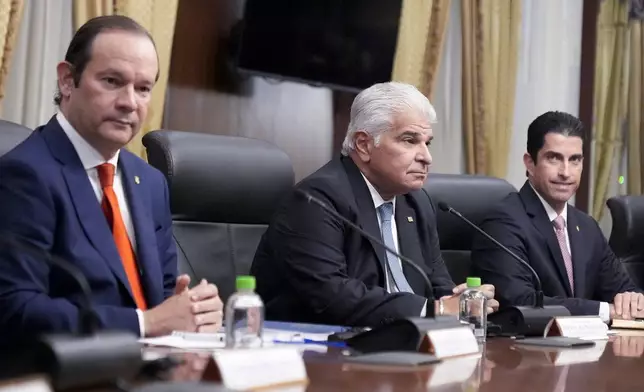
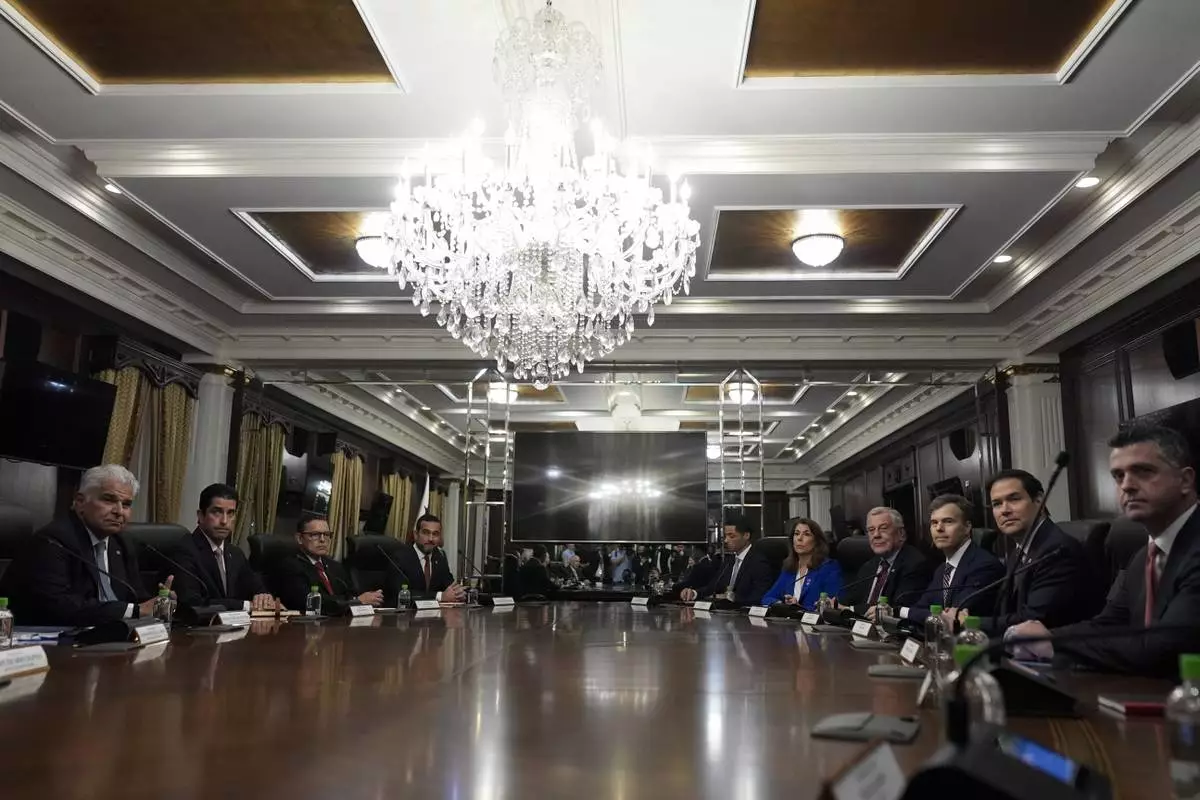
Panama's President Jose Mulino, center, and Foreign Minister Javier Martinez-Acha, let, meet with U.S. Secretary of State Marco Rubio at the presidential palace in Panama City, Sunday, Feb. 2, 2025. (AP Photo/Mark Schiefelbein, Pool)
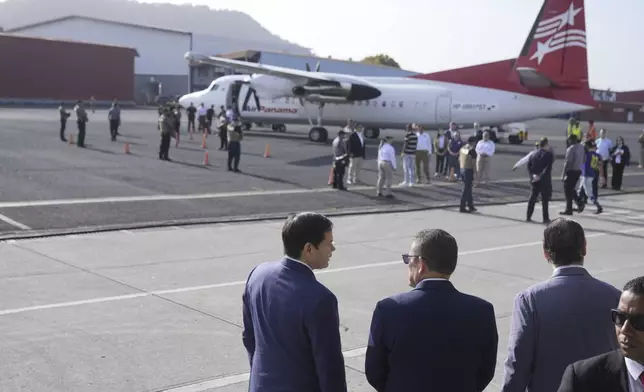
Secretary of State Marco Rubio, left, Frank Alexis Abrego, Panama's Minister of Public Security, center, and Panama's Foreign Minister Javier Martinez-Acha, watch as people board a repatriation flight bound for Colombia at Albrook Airport in Panama City, Monday, Feb. 3, 2025. (AP Photo/Mark Schiefelbein, Pool)
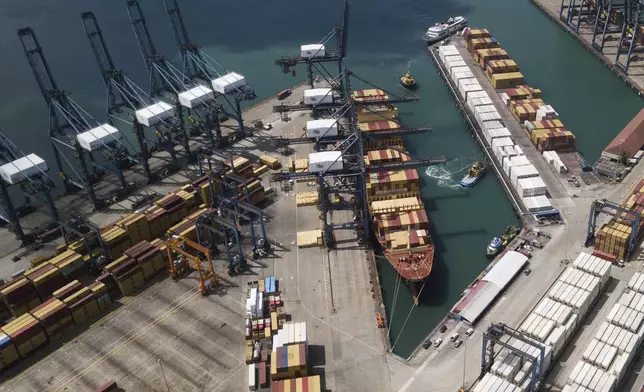
Cranes load and unload containers from cargo ships at the Cristobal port, operated by the Panama Ports Company, in Colon, Panama, Tuesday, Feb. 4, 2025. (AP Photo/Matias Delacroix)
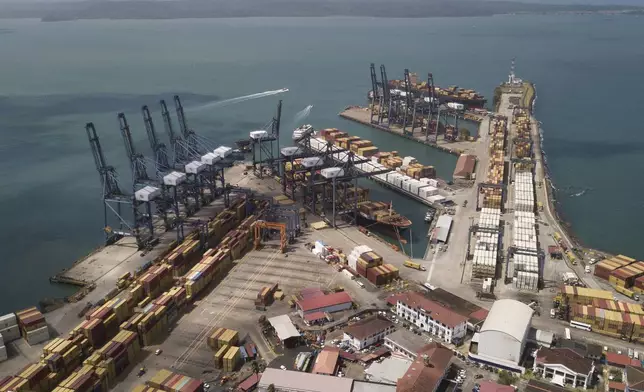
Cargo containers sit stacked as cranes load and unload containers from cargo ships at the Cristobal port, operated by the Panama Ports Company, in Colon, Tuesday, Panama, Feb. 4, 2025. (AP Photo/Matias Delacroix)
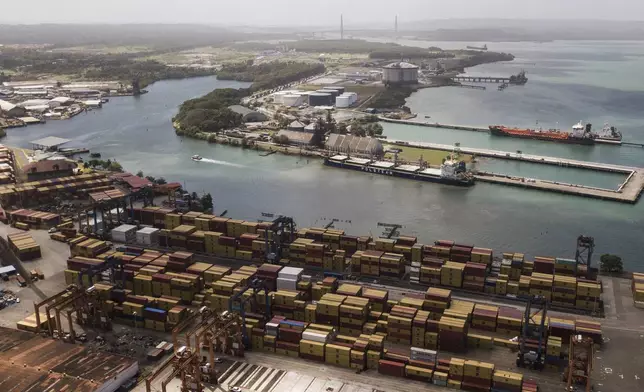
Cargo containers sit stacked as cranes load and unload containers from cargo ships at the Cristobal port, operated by the Panama Ports Company, in Colon, Tuesday, Panama, Feb. 4, 2025. (AP Photo/Matias Delacroix)
“I completely reject that statement yesterday,” Mulino said during his weekly press conference, adding that he had asked Panama’s ambassador in Washington to dispute the State Department’s statement. He was scheduled to speak with U.S. President Donald Trump on Friday.
On Wednesday evening, the U.S. State Department said via X that “U.S. government vessels can now transit the Panama Canal without charge fees, saving the U.S. government millions of dollars a year.”
The Panama Canal Authority put out its own terse statement later Wednesday night saying it had "not made any adjustments” to the fees.
Mulino said the U.S. statement “really surprises me because they’re making an important, institutional statement from the entity that governs United States foreign policy under the president of the United States based on a falsity. And that’s intolerable.”
U.S. Secretary of State Marco Rubio, who met with Mulino and canal administrators and visited the critical trade route earlier this week, said on Thursday from the Dominican Republic that he had no confusion about his discussions with Panama, but “I respect very much the fact that Panama has a process of laws and procedures that they need to follow.”
“The United States has a treaty obligation to protect the Panama Canal if it comes under attack," Rubio said. "That treaty obligation would have to be enforced by the armed forces of the United States, particularly the U.S. Navy. I find it absurd that we would have to pay fees to transit a zone that we are obligated to protect in a time of conflict.”
Rubio had carried a message from Trump that China’s influence at the canal was unacceptable.
Rubio had told Mulino that Trump believed that China’s presence in the canal area may violate a treaty that led the United States to turn the waterway over to Panama in 1999. That treaty calls for the permanent neutrality of the American-built canal.
Canal administrators said they were open to discussing giving U.S. warships priority in crossing the canal, but did not say they had considered waiving fees.
Mulino said via X that he was scheduled to speak to Trump on Friday.
Since 1998, U.S. warships, including submarines, have transited the Panama Canal 994 times. They accounted for just 0.3% of the canal’s traffic during that period. The canal received $25.4 million in total fees for those crossings, according to data from the canal authority.
The fees charged to U.S. warships and those from other nations are based on the ship’s displacement tonnage, or the weight of the water displaced by the vessel. The measure is different than that used to charge commercial vessels.
Mulino said Thursday that both Panama’s constitution and laws regulating the Canal Authority make clear that neither the government nor the authority can waive fees. “It’s a constitutional limitation,” he said.
AP journalist Matthew Lee in Santo Domingo, Dominican Republic, contributed to this report.
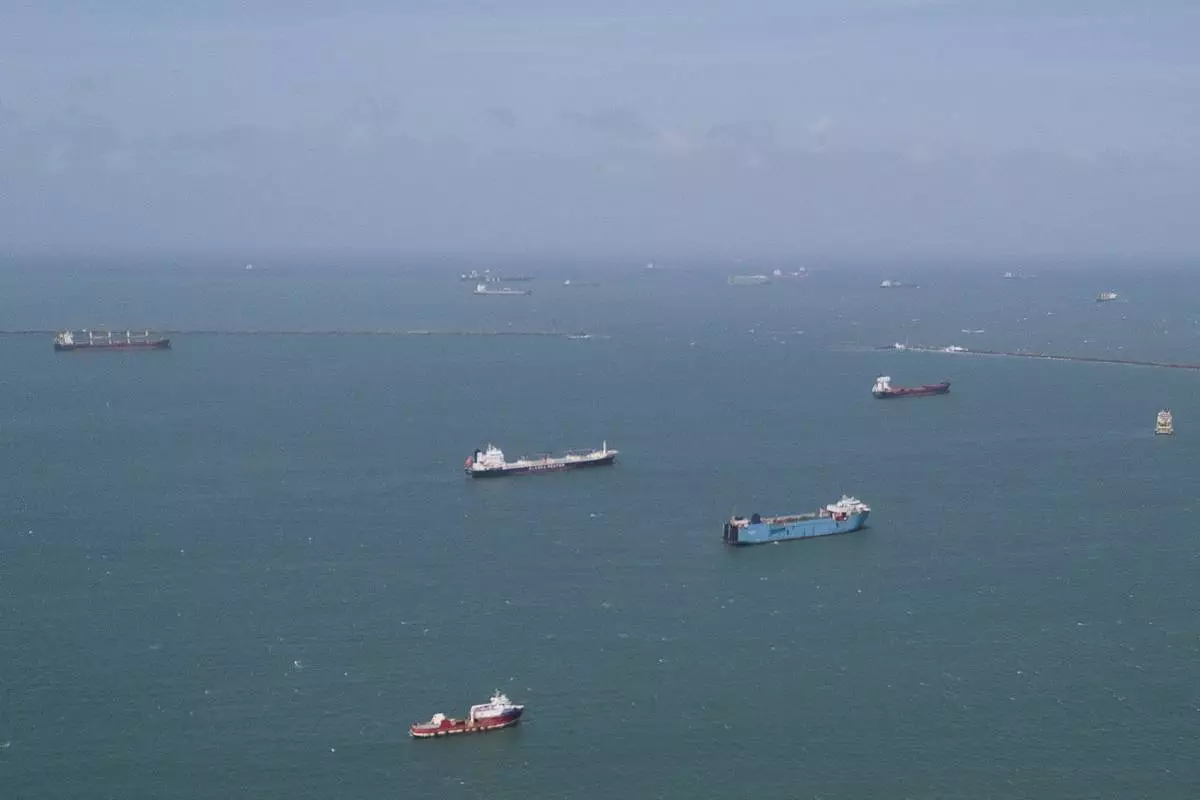
Cargo ships wait to transit the Panama Canal in Colon, Panama, Tuesday, Feb. 4, 2025. (AP Photo/Matias Delacroix)
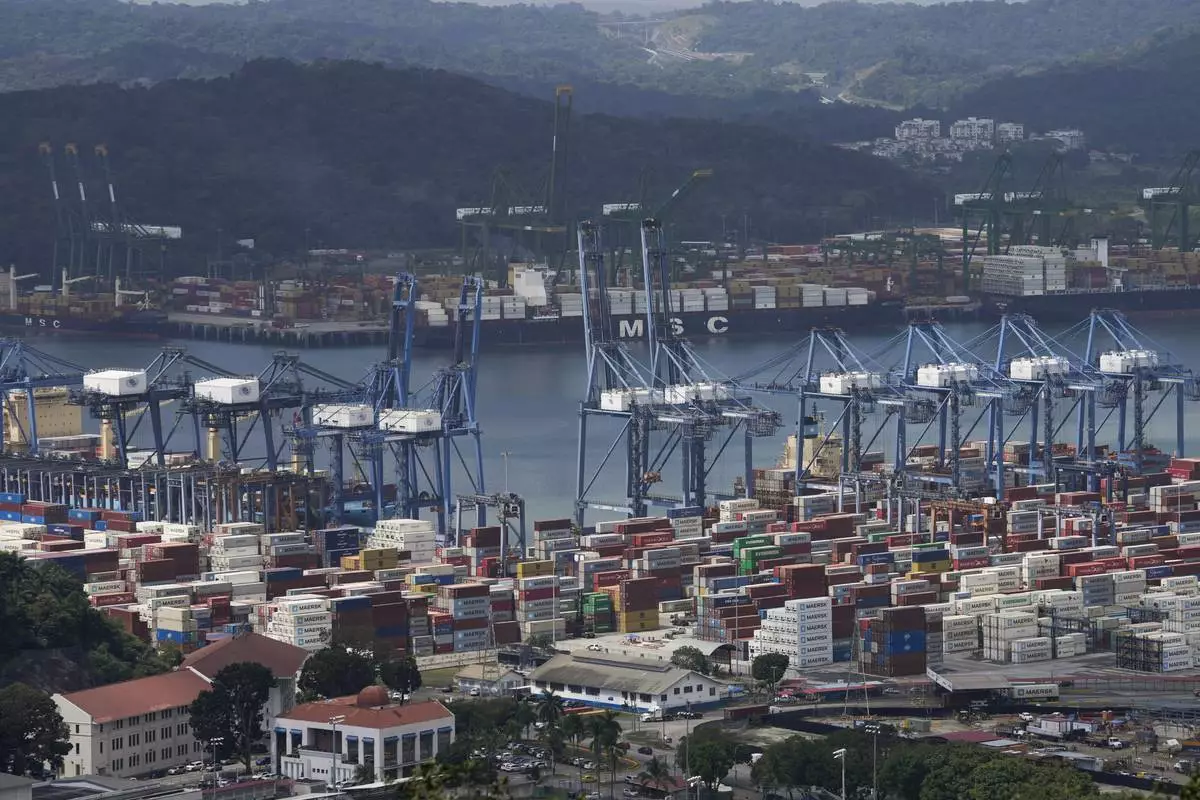
Cargo containers sit stacked as cranes load and unload containers from cargo ships at the Panama Canal's Balboa port, operated by the Panama Ports Company, in Panama City, Friday, Jan. 31, 2025. (AP Photo/Matias Delacroix)
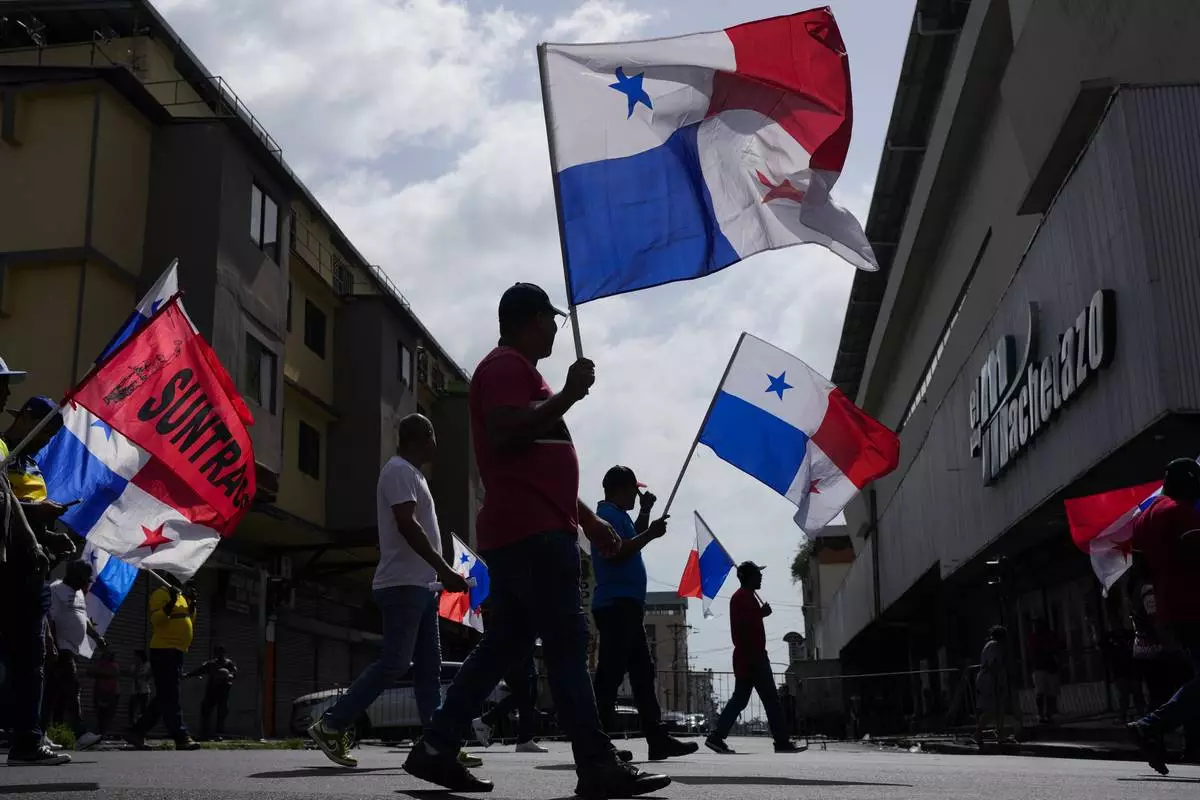
Protesters march against U.S. Secretary of State Marco Rubio's visit in Panama City, Sunday, Feb. 2, 2025. (AP Photo/Matias Delacroix)
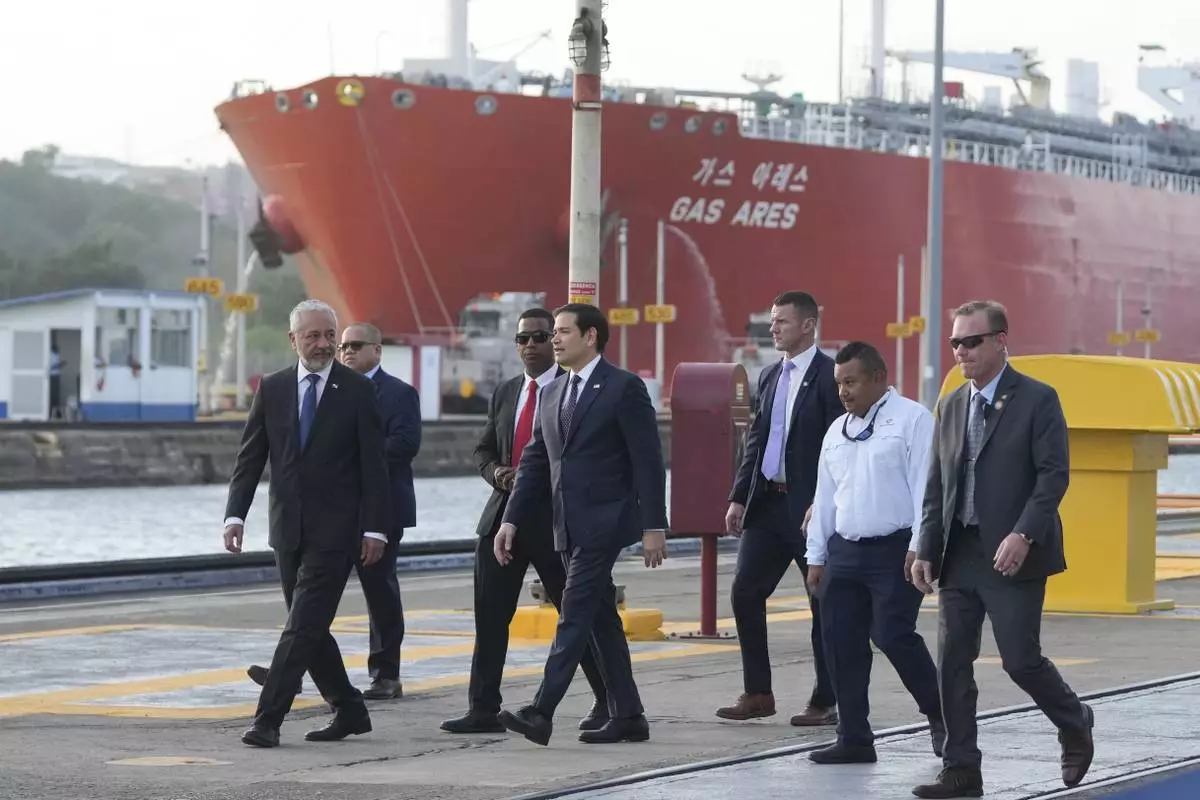
U.S. Secretary of State Marco Rubio and Panama Canal Authority Administrator Ricuarte Vásquez, left, tour the Miraflores Locks at the Panama Canal in Panama City, Sunday, Feb. 2, 2025. (AP Photo/Mark Schiefelbein, Pool)
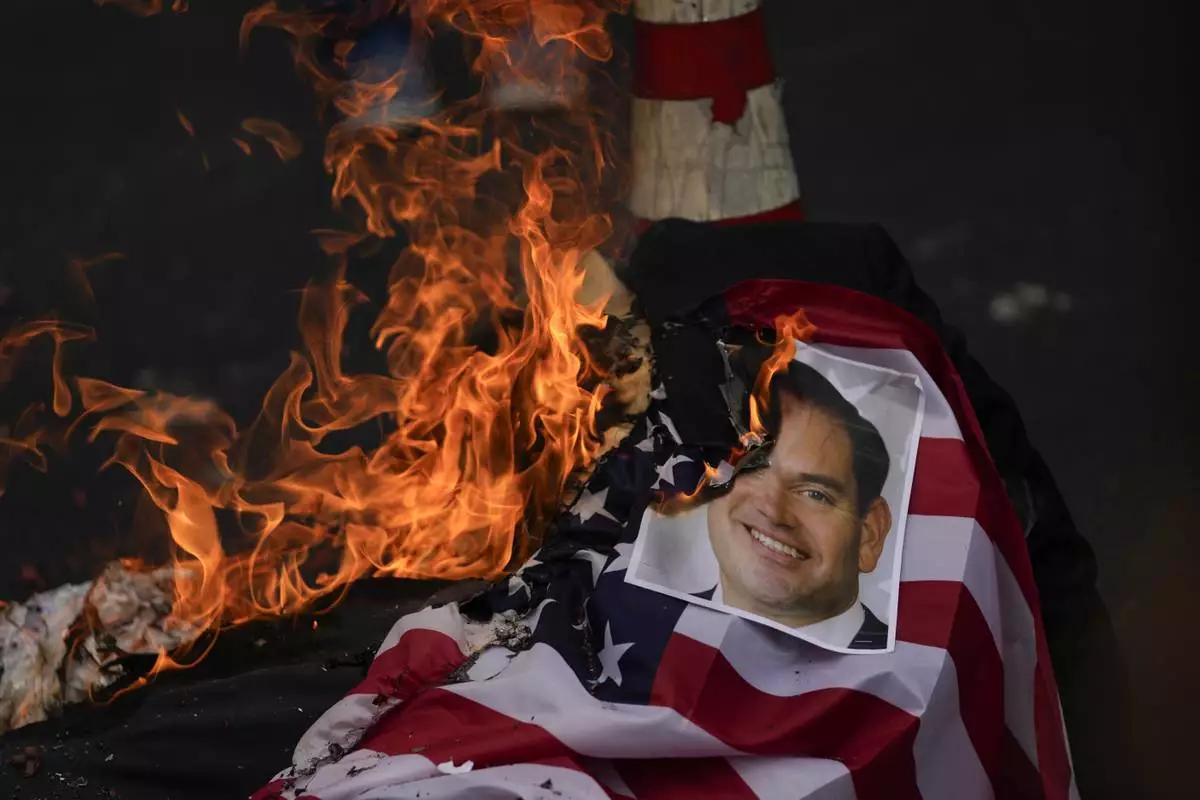
A photo of U.S. Secretary of State Marco Rubio is burned by demonstrators protesting his upcoming visit to Panama City, Friday, Jan. 31, 2025. (AP Photo/Matias Delacroix)
U.S. Secretary of State Marco Rubio, second right, meets with Panamanian President Jose Raul Mulino, left, at the presidential palace in Panama City, Sunday, Feb. 2, 2025. (AP Photo/Mark Schiefelbein, Pool)
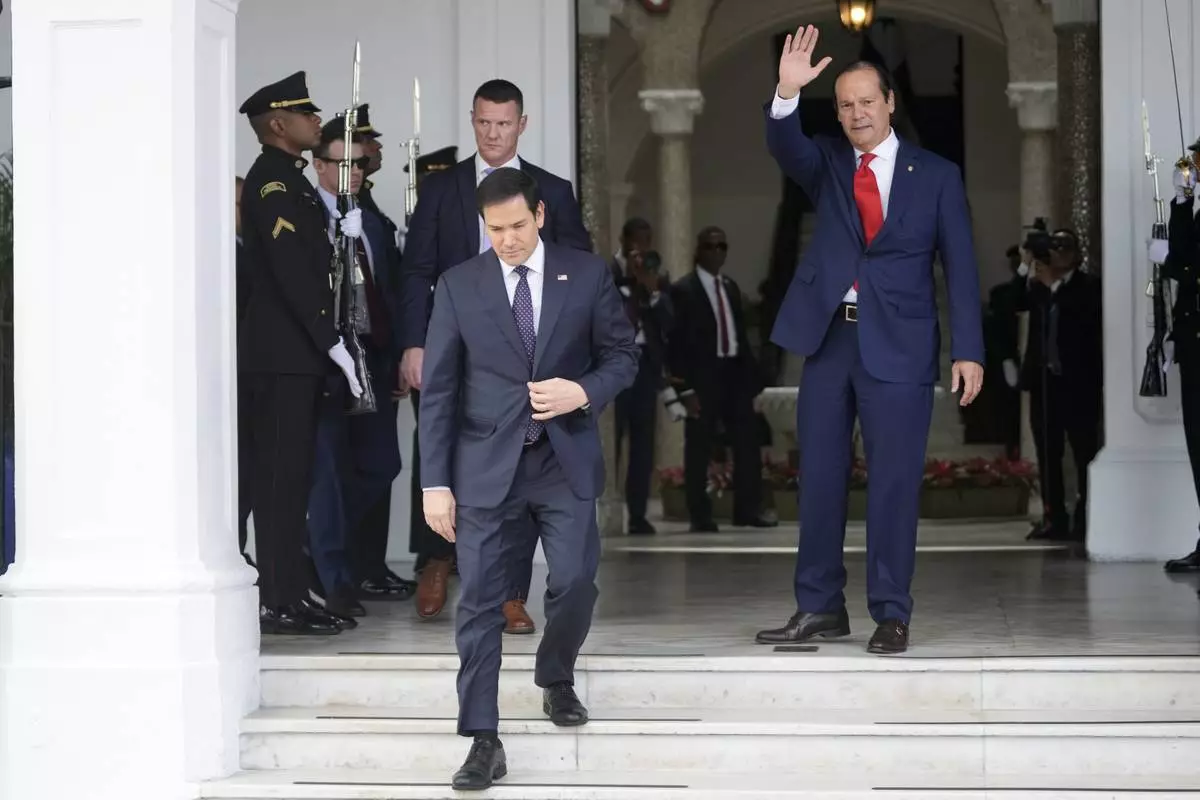
Panama's Foreign Minister Javier Martinez-Acha waves to U.S. Secretary of State Marco Rubio as he departs the presidential palace in Panama City after meeting with President Jose Mulino, Sunday, Feb. 2, 2025. (AP Photo/Mark Schiefelbein, Pool)
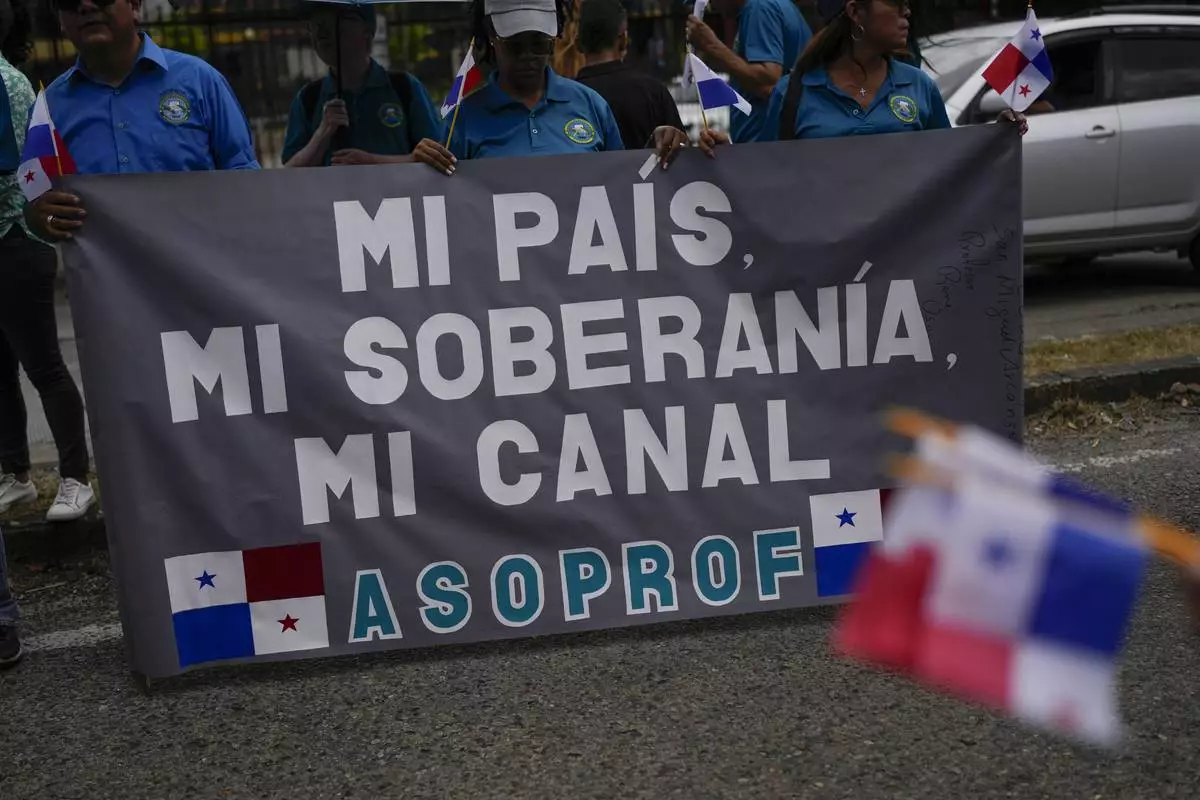
Demonstrators carry a sign that reads in Spanish: "My country, my sovereignty, my canal," referring to the Panama Canal, as they protest the upcoming visit of U.S. Secretary of State Marco Rubio in Panama City, Friday, Jan. 31, 2025. (AP Photo/Matias Delacroix)
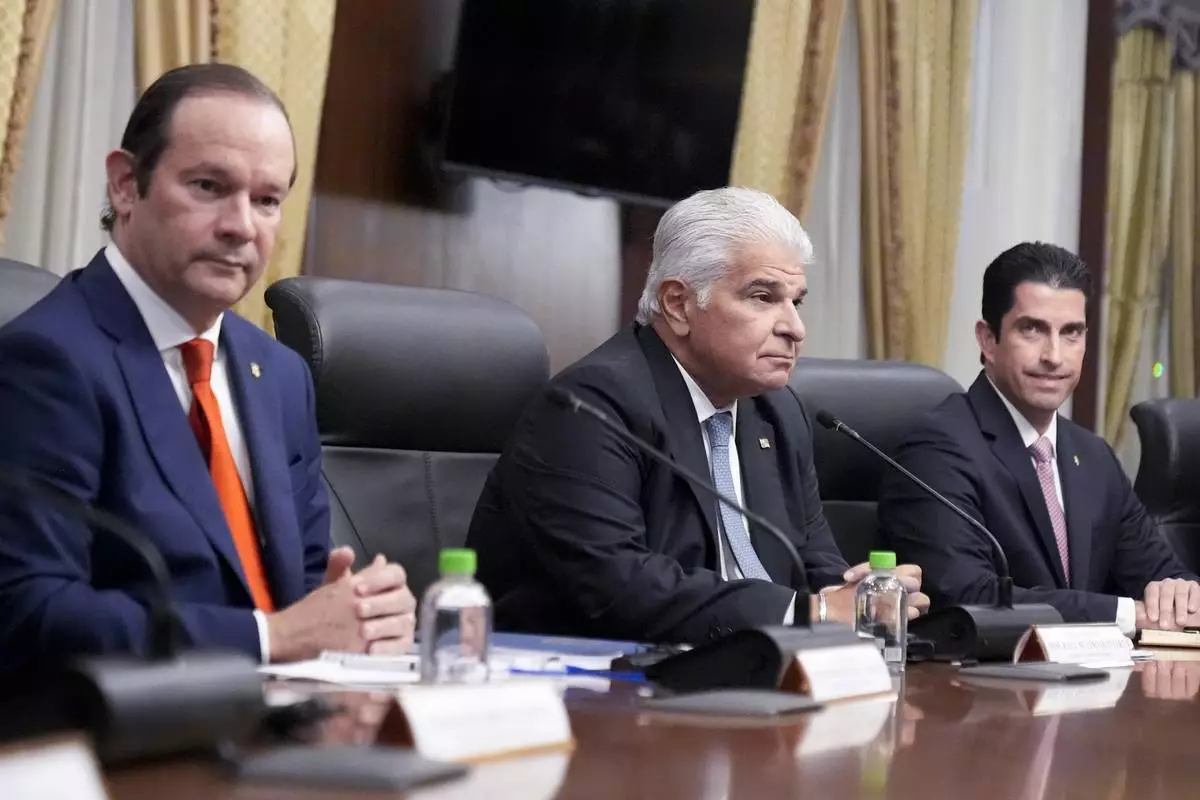
Panama's President Jose Mulino, center, and Foreign Minister Javier Martinez-Acha, let, meet with U.S. Secretary of State Marco Rubio at the presidential palace in Panama City, Sunday, Feb. 2, 2025. (AP Photo/Mark Schiefelbein, Pool)
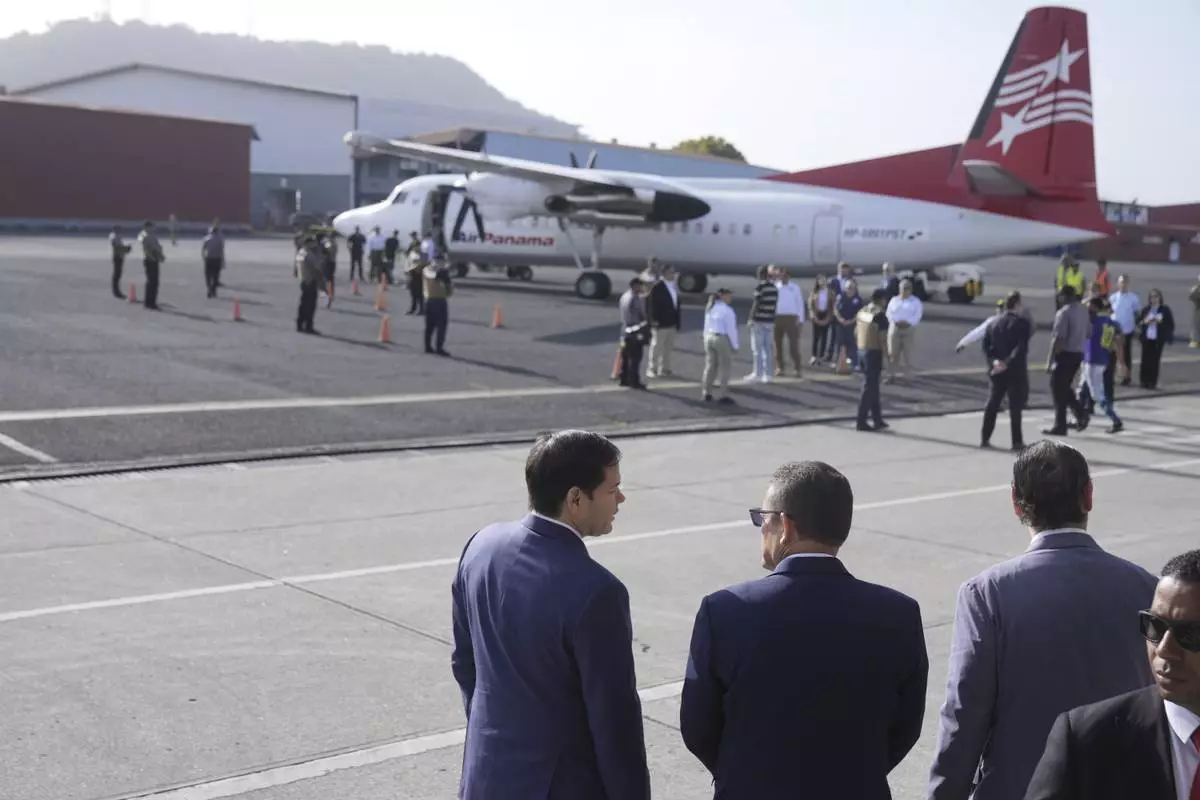
Secretary of State Marco Rubio, left, Frank Alexis Abrego, Panama's Minister of Public Security, center, and Panama's Foreign Minister Javier Martinez-Acha, watch as people board a repatriation flight bound for Colombia at Albrook Airport in Panama City, Monday, Feb. 3, 2025. (AP Photo/Mark Schiefelbein, Pool)

Cranes load and unload containers from cargo ships at the Cristobal port, operated by the Panama Ports Company, in Colon, Panama, Tuesday, Feb. 4, 2025. (AP Photo/Matias Delacroix)
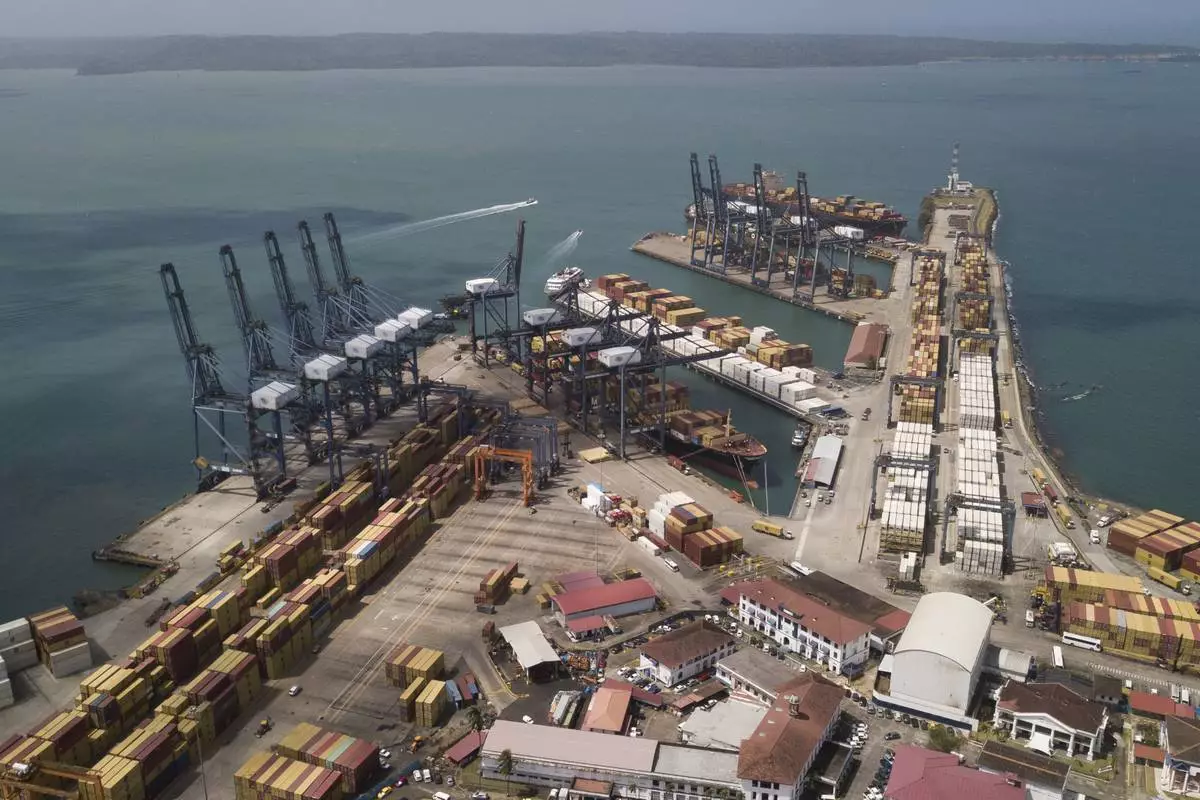
Cargo containers sit stacked as cranes load and unload containers from cargo ships at the Cristobal port, operated by the Panama Ports Company, in Colon, Tuesday, Panama, Feb. 4, 2025. (AP Photo/Matias Delacroix)
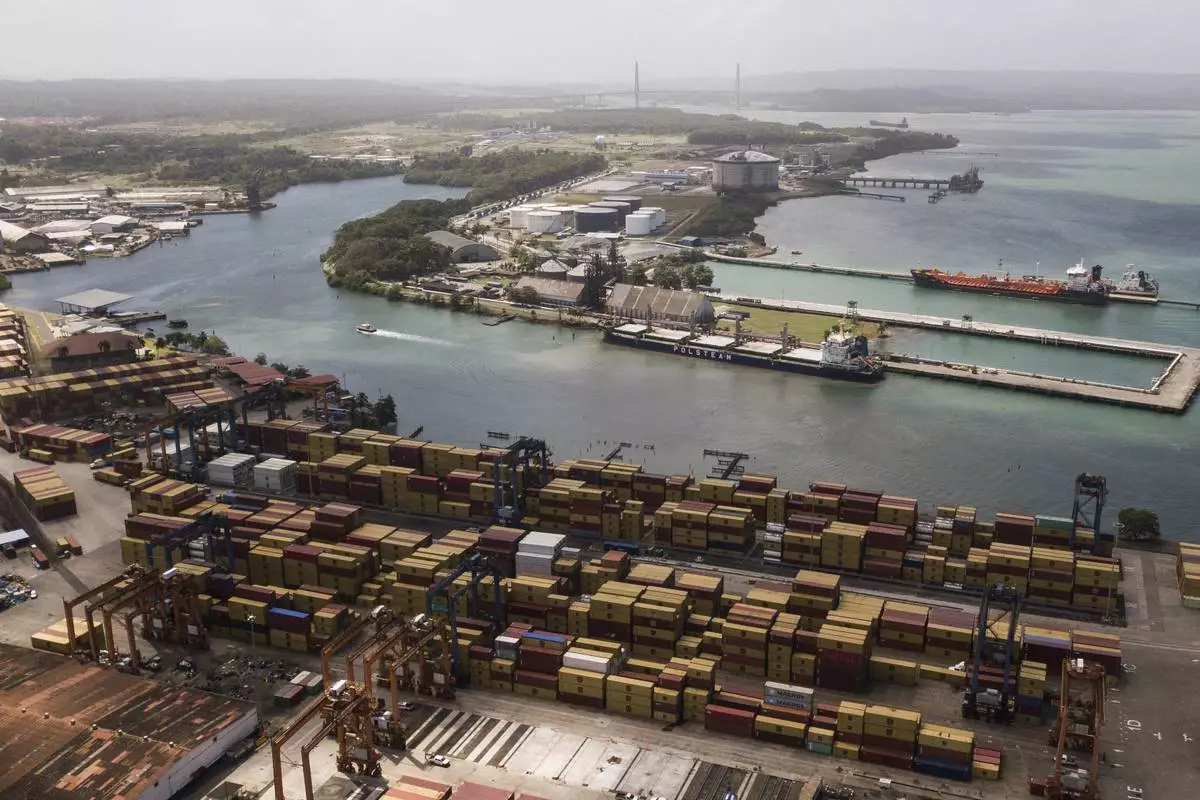
Cargo containers sit stacked as cranes load and unload containers from cargo ships at the Cristobal port, operated by the Panama Ports Company, in Colon, Tuesday, Panama, Feb. 4, 2025. (AP Photo/Matias Delacroix)