Yang Yu, director of "Ne Zha 2", an animated feature film that recently became China's all-time top-grossing film, said in an interview with China Media Group (CMG) that he makes every film as if it were his last.
By Thursday, “Ne Zha 2” had taken in more than 5.77 billion yuan (about 804.84 million U.S. dollars) in box office revenue, achieving the milestone in just eight days and five hours, according to ticketing platforms Maoyan and Beacon.
Surpassing 2021 war epic "The Battle at Lake Changjin", the film has become the highest-grossing film of all time in China.
The animated feature is the sequel to the 2019 animated blockbuster "Ne Zha", drawing inspiration from the tale of a mythological figure of the same name from the Ming Dynasty (1368-1644) novel "Fengshen Yanyi", or "The Investiture of the Gods".
The first "Ne Zha" generated an impressive 5 billion yuan in box office revenue, while also winning numerous accolades.
Yang said that making "Ne Zha 2" following the huge success of the first movie brought rising expectations from the audience and pushed the creative team to set high standards for the sequel.
"[The huge success of the prequel] gave us momentum, pressure and anxiety. The prequel was a big surprise to the audience, because they had no expectation for it, but 'Ne Zha 2' was produced amid rising expectation, which put us under pressure and kept pushing us forward. So, we set high standards for 'Ne Zha 2' and pushed ourselves to the limit," said Yang.
Noting that Ne Zha is anxious about his appearance, Yang said he introduced this feature purposely to present the character's inner struggle and avoid depicting a flat character.
"The human nature is complex. One will gradually start to doubt himself after being told 100 times he is wrong. Ne Zha is no exception and he will experience the same inner struggle as everyone does. We did this to avoid building a flat character," Yang said.
Yang said the rise of China's animation movie industry and the excellent works of his fellow filmmakers have been encouraging him to do his best in making masterpieces.
"The Chinese animation movie industry has produced many excellent works over recent years, and I think the trend does exit and I have no doubt about this. Over recent years, animation film makers have been encouraging their colleagues and have been witnessing the release of a slew of masterpieces, which also encouraged me to make more breakthroughs. I produce every film as if it were the last work in my lifetime, leaving no space for further improvement, but I will still try to make breakthroughs in my next work," said Yang.

I make every film as if it were my final work: "Ne Zha 2" director
On the 55th anniversary of the restoration of the lawful seat of the People's Republic of China (PRC) in the United Nations (UN), China is highlighting its push for global civilizational dialogue, with the UN having adopted a China-proposed resolution designating June 10 as the International Day for Dialogue among Civilizations.
On October 25, 1971, the 26th Session of the UN General Assembly adopted Resolution 2758, restoring all the lawful rights of the PRC in the UN.
Today the UN has 193 member states, each with its own language, culture and history. Stephane Dujarric, spokesperson for the secretary-general, who has served the UN for more than 25 years, said understanding across those differences begins with giving every voice room to be heard.
"I've been in the UN now for almost for more than 25 years and I've learned so much. And what has helped me learn about different people and different cultures is listening, right? And it's taken me a long time to learn that listening is the most important thing. And what I've learned is to listen and to ensure that people who may not speak are given the space to speak," said Dujarric.
To deepen understanding among countries with different histories and cultures, China proposed the Global Civilization Initiative in 2023. A year later, it put forward a proposal at the UN to establish an international day for dialogue among civilizations.
In June 2024, the 78th Session of the UN General Assembly adopted by consensus the China-proposed resolution, designating June 10 as the International Day for Dialogue among Civilizations.
Fu Cong, China's permanent representative to the UN, recalled the scene inside the General Assembly hall when the resolution passed.
"What I remember vividly is the moment in the General Assembly hall when the president struck the gavel and announced the resolution had been adopted by consensus, and all member states burst into warm applause. This is a successful practice of China's implementation of the Global Civilization Initiative, and it fully demonstrates that Chinese concepts are increasingly expanding into international consensus, showing strong leadership and vitality," he said.
The resolution has since moved from paper to practice, with the first commemorative event for the International Day for Dialogue among Civilizations held at UN Headquarters in 2025.
On June 10 this year, China joined several permanent missions and partners, including the UN Alliance of Civilizations and the UN Educational, Scientific and Cultural Organization (UNESCO), in hosting another high-level event that drew nearly 300 representatives.
"China is working with all parties to actively implement the spirit of the relevant UN General Assembly resolution and strive to build platforms for equal dialogue among different civilizations. A series of colorful commemorative events at UN Headquarters and around the world are like trickling streams converging into a river of understanding and mutual trust," Fu said.
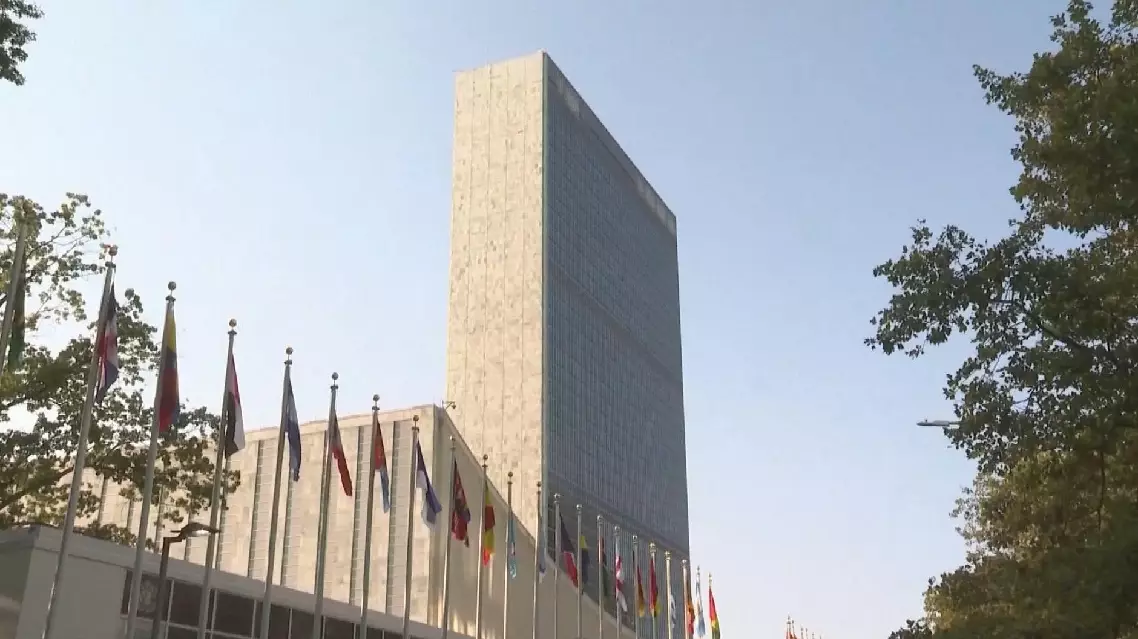
China committed to promoting dialogue among civilizations in UN