LOS ANGELES (AP) — A$AP Rocky's longtime friend and collaborator testified at his Los Angeles trial Friday that the hip-hop star fired a starter pistol that he carried as a prop during a scuffle with a former friend on a Hollywood street in 2021.
The testimony from the man who goes by A$AP Twelvyy — who was part of the same A$AP Mob crew as both the accuser and the defendant dating back to high school — is essential to Rocky's defense against two felony counts of assault with a semiautomatic firearm. A conviction could mean up to 24 years in prison.
Click to Gallery
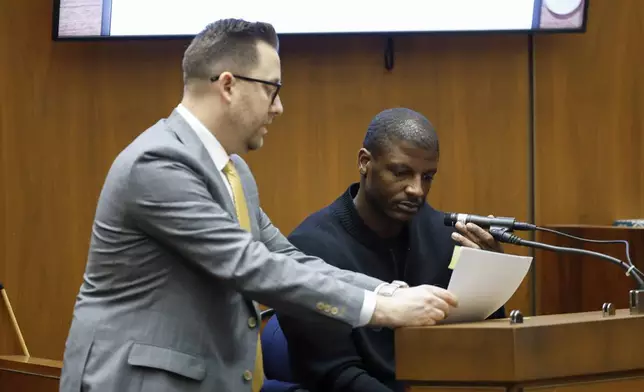
Los Angeles County Deputy District Attorney Paul Przelomiec, left, shows a document to A$AP Relli during A$AP Rocky's trial at the Clara Shortridge Foltz Criminal Justice Center in Los Angeles, Wednesday, Jan. 29, 2025. (Frazer Harrison/Pool via AP)
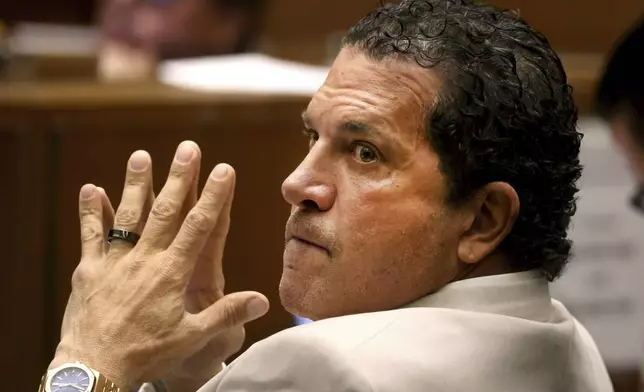
Defense attorney Joe Tacopina listens to opening remarks from the prosecuting attorney during the trial of his client, Rakim Mayers, aka A$AP Rocky, at the Clara Shortridge Foltz Criminal Justice Center in downtown Los Angeles, Friday, Jan. 24, 2025. (Genaro Molina/Los Angeles Times via AP, Pool)
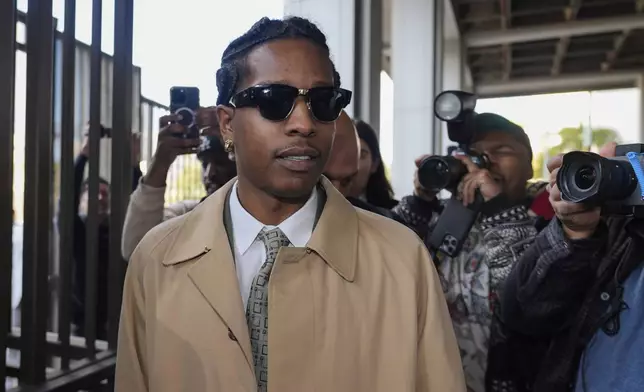
Rapper A$AP Rocky arrives at the Clara Shortridge Foltz Criminal Justice Center in Los Angeles, Wednesday, Jan. 29, 2025. (AP Photo/Damian Dovarganes)
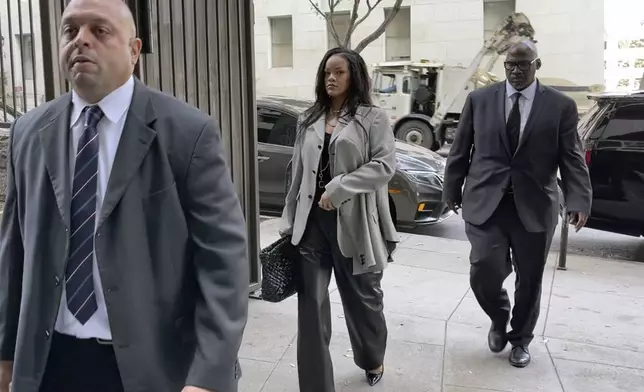
Singer Rihanna, center, returns to Clara Shortridge Foltz Criminal Justice Center in Los Angeles on Friday, Jan. 31, 2025. (AP Photo/Liam McEwan)
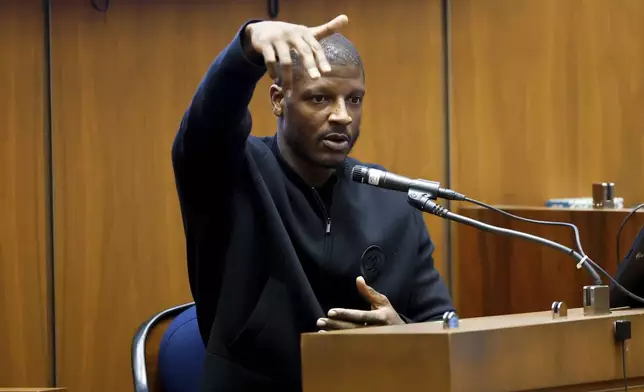
A$AP Relli testifies during A$AP Rocky's trial at the Clara Shortridge Foltz Criminal Justice Center in Los Angeles, Wednesday, Jan. 29, 2025. (Frazer Harrison/Pool via AP)
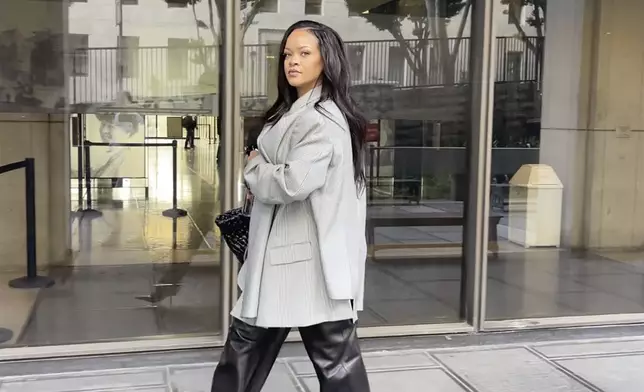
Singer Rihanna leaves Clara Shortridge Foltz Criminal Justice Center in Los Angeles on Friday, Jan. 31, 2025. (AP Photo/Liam McEwan)
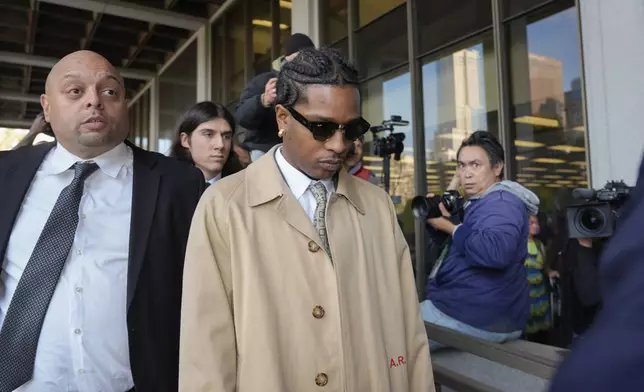
Rapper A$AP Rocky arrives at the Clara Shortridge Foltz Criminal Justice Center in Los Angeles, Wednesday, Jan. 29, 2025. (AP Photo/Damian Dovarganes)
“He walked around with a prop, like a starter pistol,” Twelvyy said, looking at the jury. “I seen it on several occasions."
Rocky’s partner, the singing superstar Rihanna, returned to court for the last stretch of the day as she had Thursday, and for the first time they left the courthouse together. The two walked arm-in-arm and climbed into a waiting SUV past a small group of cameras.
Twelvyy's testimony suggested Rocky's accuser, their mutual friend who goes by A$AP Relli, knew the pistol wasn't real when Rocky first pulled it out.
“He told him to shoot that fake-ass gun,” Twelvyy said under defense questioning.
Twelvyy testified that when Rocky did fire the gun, it was only to deter Relli from attacking a fourth crew member at the scene, A$AP Illz,
Deputy District Attorney John Lewin seized on this during his cross examination.
“Can you explain to me," he asked, "how pulling out a prop gun that Relli knew was fake was going to act as a deterrent to anything?”
“The sound,” Twelvyy answered.
“The sound," Lewin repeated back incredulously. “Can you explain how the sound of a gun that somebody knows is phony and not real is going to scare anybody?”
Twelvyy replied, “It’s so loud that you would think it was a real gunshot and move away.”
The A$AP Mob was a crew of musicians and other creators that formed at a New York high school nearly 20 years ago.
But just one member, Rocky, became a major mainstream success starting in the early 2010s with a pair of No. 1 albums. He has since been nominated for three Grammys, but has become known as much for his dealings in fashion as his music, and for his relationship with Rihanna, with whom he has two toddler sons.
Twelvyy, a rapper whose legal name is Jamel Phillips, has acted as an on-stage hype man for Rocky and appeared in his music videos.
He said that he saw Rocky with the starter pistol three times, first on a New York music video shoot in July 2021, then at a Harlem block party in September of that year, and then in Los Angeles shortly before the Nov. 6 incident.
“This is still like COVID era so he didn’t have security,” Twelvyy said. “And that was basically his line of defense.”
Lewin later asked him how he could've known it was a prop gun in the first place, and how he might have known that the one he pulled out in Los Angeles was the one he'd seen earlier.
“He told me and I seen it," Twelvyy said.
Rocky and Relli's relationship had been growing increasingly hostile, and they met up in the street the evening after Rocky had performed. Twelvyy and Illz accompanied Rocky.
Twelvyy denied Relli's testimony saying Rocky had been the first to start physically fighting, that Rocky had pointed the gun at his head and stomach, and that Twelvyy had pulled a knife.
Both sides agree that Rocky and his two companions walked away after the initial scuffle, that Relli followed them, and that shots were then fired. Relli testified that his knuckles were grazed in the shooting, but he was otherwise not physically hurt.
The idea that Rocky had fired a fake gun was only revealed — including to the judge and prosecution — on the day jury selection began in the trial two weeks ago.
Authorities did not recover the pistol they allege Rocky used. The defense said it does not have the prop gun. Police searching the scene immediately after and found no evidence of a shooting, but Relli searched himself soon after that and said he found two shell casings, which he took to police when he reported the incident two days later.
Twelvvy was the first defense witness called after the prosecution rested its case Thursday.
Lewin brought up Rihanna in his questioning. Lewin asked if she and Rocky could ruin him for not telling the story the way they wanted.
“It’s your testimony that even if the defendant and his significant other Rihanna were upset with you, they would have no ability to impact your career whatsoever?” Lewin asked.
Twelvyy replied, “I’m an artist, I could start a new career tomorrow. I could be a painter.”
He denied that he was testifying for Rocky's benefit.
“I’m not trying to help him on the case,” he said. “I was actually there. I know the truth.”
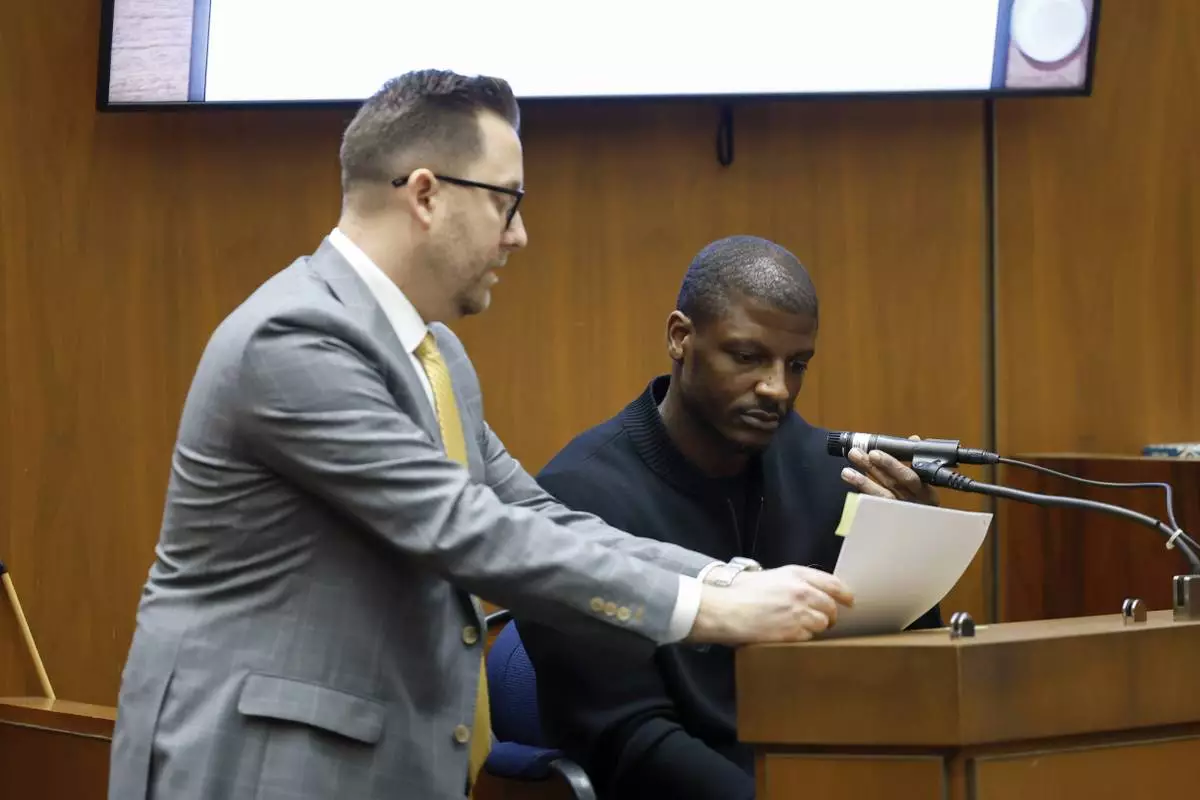
Los Angeles County Deputy District Attorney Paul Przelomiec, left, shows a document to A$AP Relli during A$AP Rocky's trial at the Clara Shortridge Foltz Criminal Justice Center in Los Angeles, Wednesday, Jan. 29, 2025. (Frazer Harrison/Pool via AP)
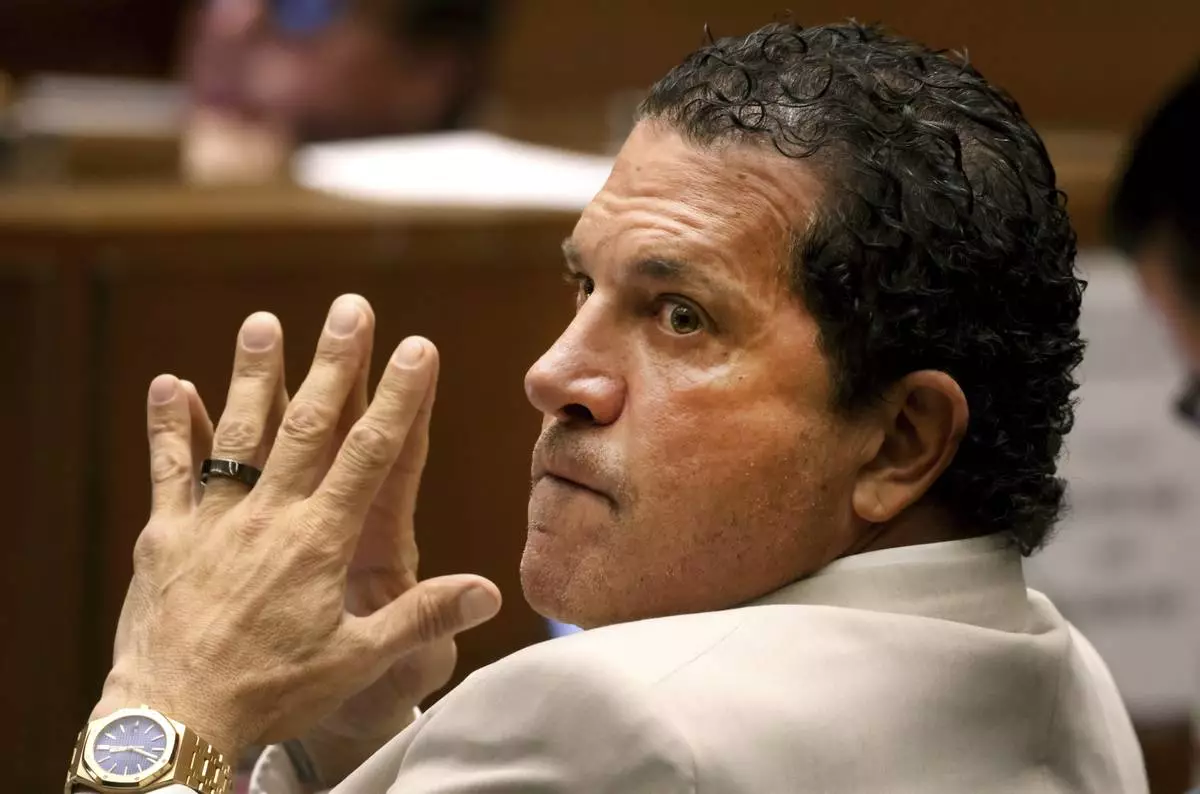
Defense attorney Joe Tacopina listens to opening remarks from the prosecuting attorney during the trial of his client, Rakim Mayers, aka A$AP Rocky, at the Clara Shortridge Foltz Criminal Justice Center in downtown Los Angeles, Friday, Jan. 24, 2025. (Genaro Molina/Los Angeles Times via AP, Pool)
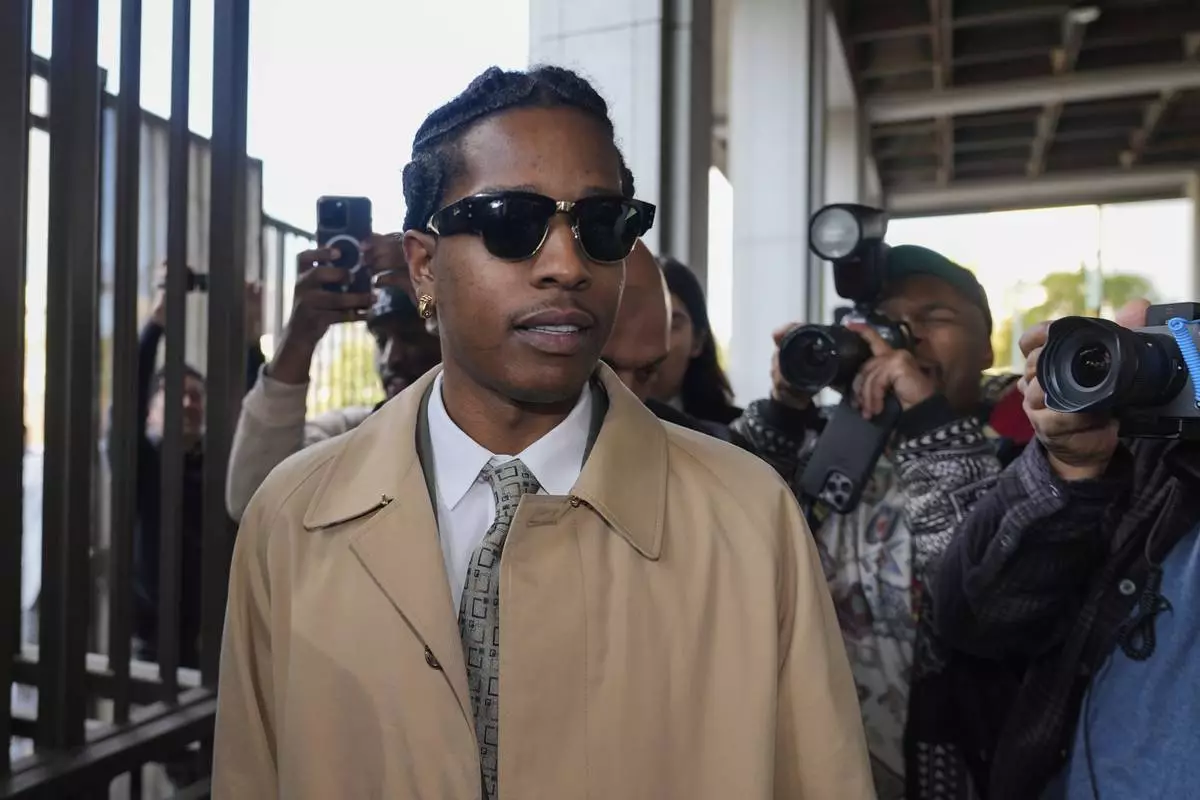
Rapper A$AP Rocky arrives at the Clara Shortridge Foltz Criminal Justice Center in Los Angeles, Wednesday, Jan. 29, 2025. (AP Photo/Damian Dovarganes)
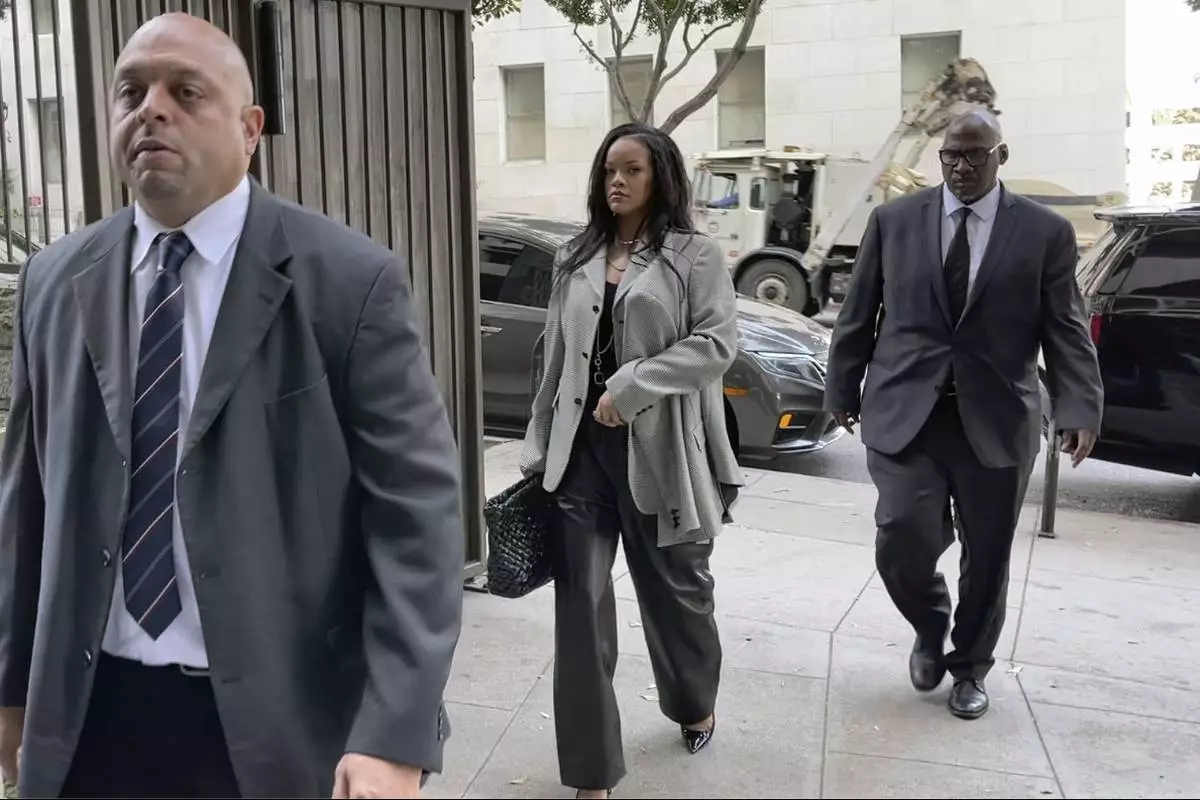
Singer Rihanna, center, returns to Clara Shortridge Foltz Criminal Justice Center in Los Angeles on Friday, Jan. 31, 2025. (AP Photo/Liam McEwan)
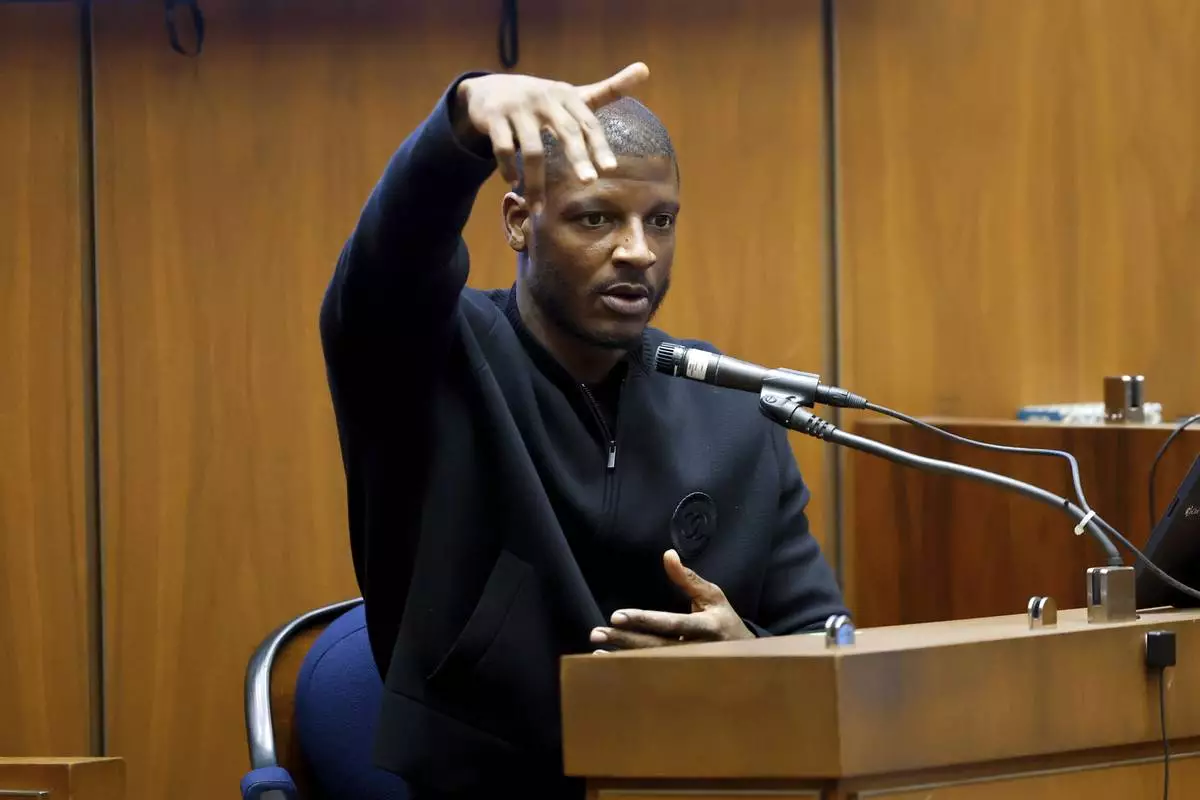
A$AP Relli testifies during A$AP Rocky's trial at the Clara Shortridge Foltz Criminal Justice Center in Los Angeles, Wednesday, Jan. 29, 2025. (Frazer Harrison/Pool via AP)
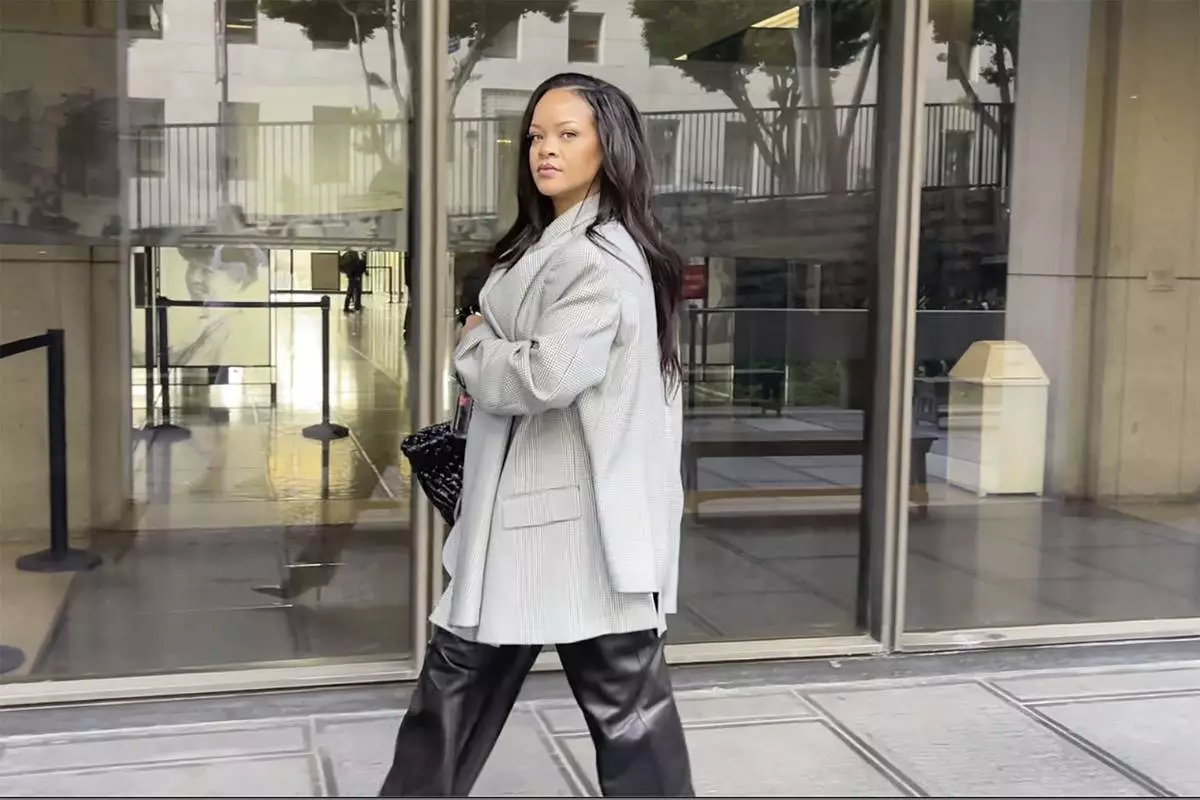
Singer Rihanna leaves Clara Shortridge Foltz Criminal Justice Center in Los Angeles on Friday, Jan. 31, 2025. (AP Photo/Liam McEwan)
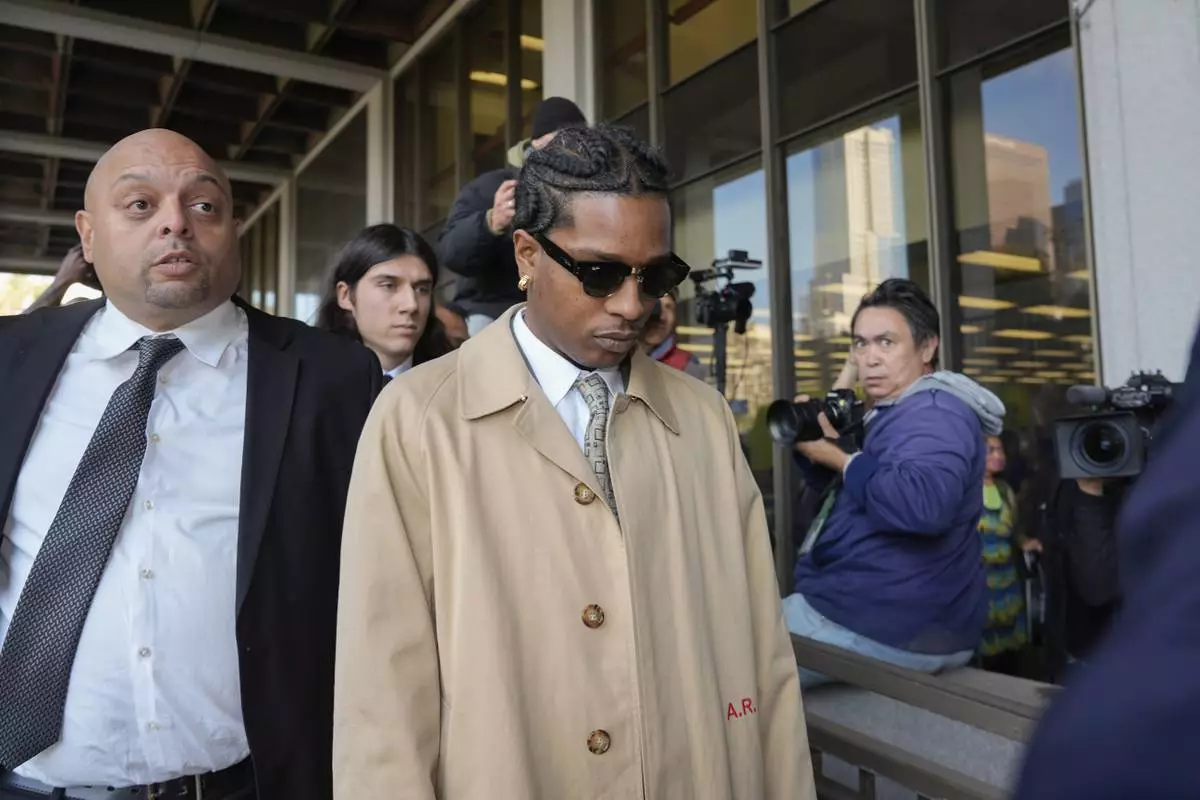
Rapper A$AP Rocky arrives at the Clara Shortridge Foltz Criminal Justice Center in Los Angeles, Wednesday, Jan. 29, 2025. (AP Photo/Damian Dovarganes)