Despite pledges to strengthen cooperation, deep-seated trade issues continue to strain Japan-U.S. relations, a renowned Japanese political expert said, highlighting uncertainties surrounding the development of bilateral ties following a meeting between U.S. President Donald Trump and visiting Japanese Prime Minister Shigeru Ishiba.
After the meeting between the two leaders held at the White House on Friday, the two sides issued a joint statement emphasizing plans to strengthen cooperation in military security, economy and trade, and regional issues.
However, Uchiyama Yu, a professor of political science at the University of Tokyo, said he believes the future of Japan-U.S. relations remains uncertain, warning that unresolved economic disputes cast a shadow over the development of bilateral ties.
"In previous trade negotiations between Japan and the United States, Japan agreed to lower tariffs on [American] agricultural products in exchange for the U.S. commitment to reduce tariffs on Japanese automobiles. But the U.S. has yet to fulfill this promise. This was an agreement between both countries, and the U.S. should honor it. As of now, this remains an unresolved issue," said the professor in an interview with China Central Television.
Trump said after the meeting that the U.S. aims to eliminate its trade deficit with Japan, which exceeds 100 billion U.S. dollars. He also revealed that Japan plans to import a record amount of liquefied natural gas from the U.S.
When asked whether the U.S. would impose additional tariffs on Japanese products, Trump responded by saying that he would later announce a policy of "reciprocal tariffs," meaning the U.S. would adjust its tariff rates to match those imposed by its trading partners. But, he did not specify whether Japan would be covered by this policy.
Japan's commitment to increasing investment in the U.S. could be a crucial factor in maintaining current tariff levels, however, if the U.S. raises tariffs on Japanese imports, it could significantly impact Japan's economy, Uchiyama Yu said.
"If U.S. tariffs increase, Japanese exports will face greater challenges. In fact, President Trump aims to reduce the U.S. trade deficit with Japan. As a result, Japanese companies seeking access to the U.S. market will inevitably have to invest more in the U.S. For businesses, entering the U.S. market is profitable," he said.
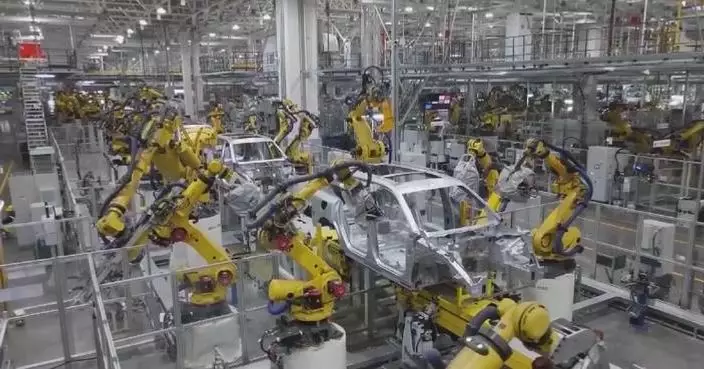
"However, if Japanese factories relocate to the U.S., domestic employment opportunities in Japan will decrease. Japan is already experiencing a labor shortage, so this will not be an immediate issue. But, in the long run, it could lead to job losses and technology outflow from Japan," he added.
Unresolved economic issues strain Japan-U.S. relations: expert
Unresolved economic issues strain Japan-U.S. relations: expert
Unresolved economic issues strain Japan-U.S. relations: expert