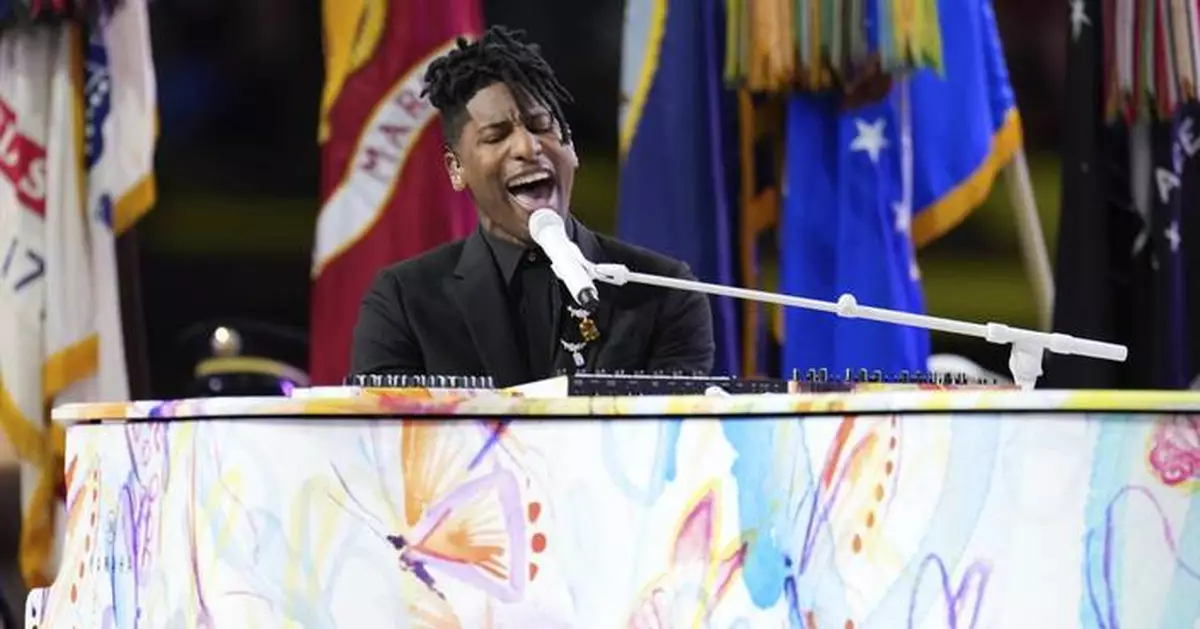
NEW ORLEANS (AP) — Jon Batiste transformed the Super Bowl stage into a symphony of creativity, debuting new music, reimagining “The Star-Spangled Banner" and shining a global spotlight on his wife's creative vision.
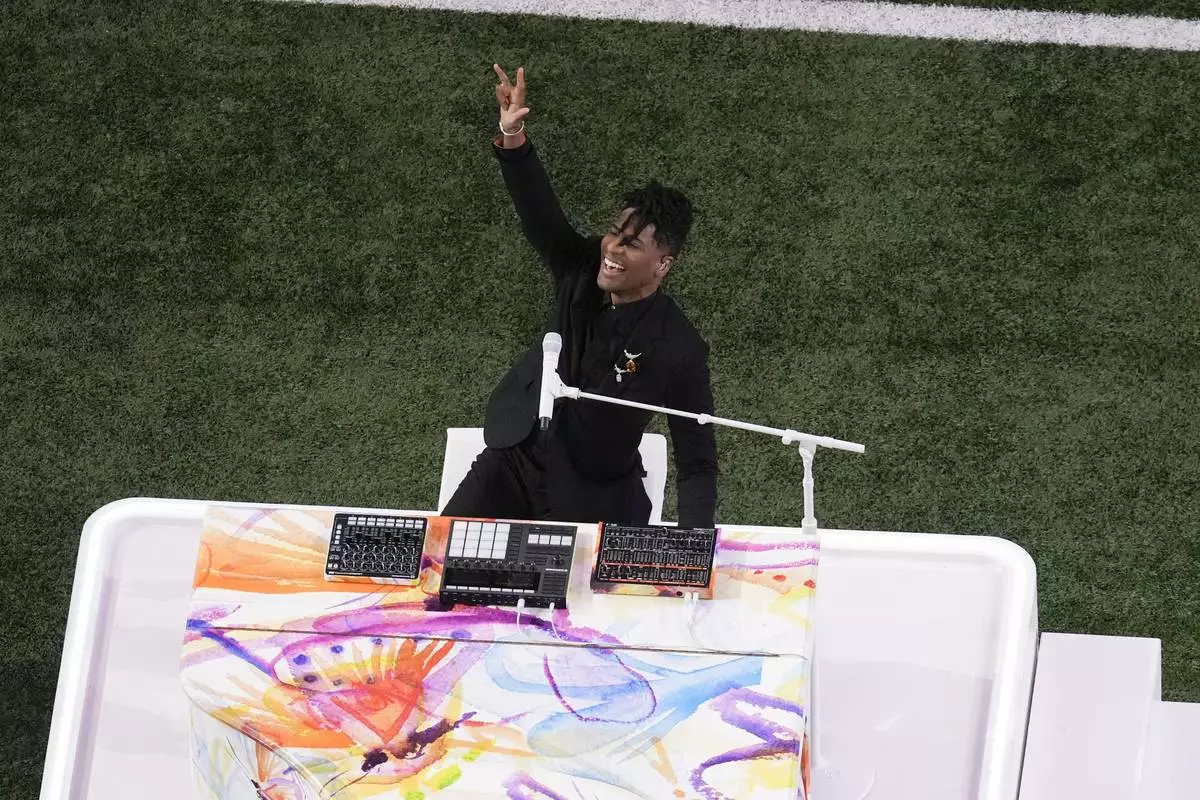
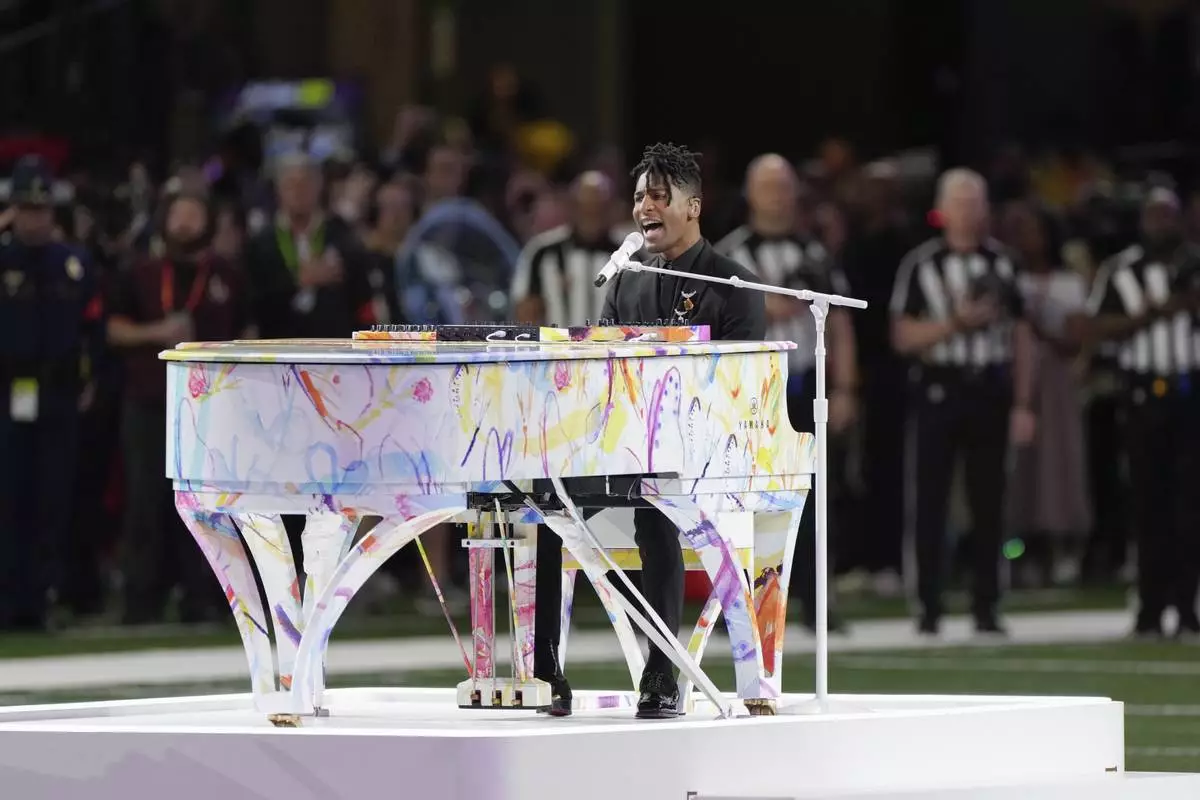
As Batiste performed the national anthem Sunday, the multi-talented musician played a piano adorned with a colorful butterfly painting by his wife, Suleika Jaouad, who came up with the idea while making their documentary “American Symphony.” Her artwork, the city’s resilience after the New Year’s attack, and the memory of his late veteran grandfather all fueled his performance.
Click to Gallery
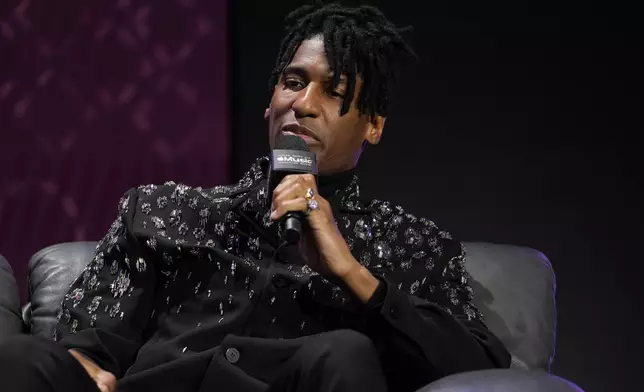
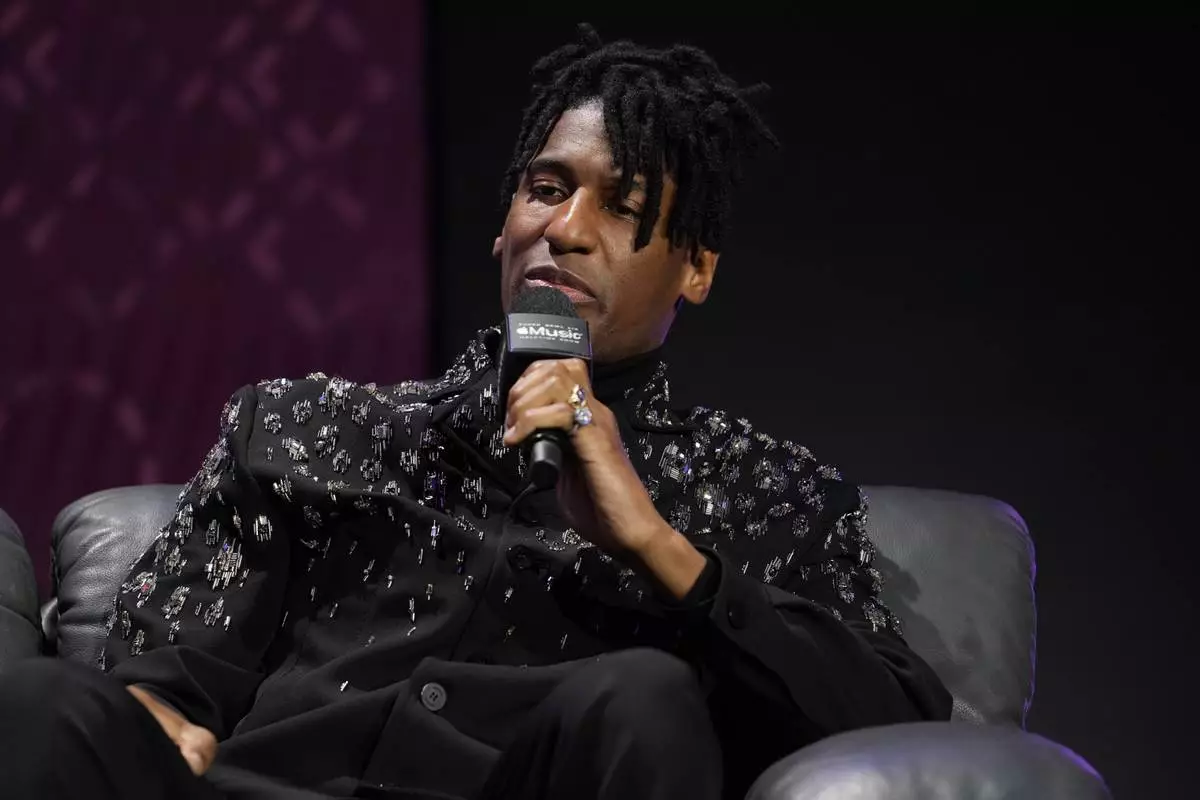
Super Bowl LIX Pregame performer Jon Batiste speaks during a news conference, Thursday, Feb. 6, 2025, in New Orleans ahead of the NFL Super Bowl 59 football game between the Philadelphia Eagles and the Kansas City Chiefs. (AP Photo/Matt York)
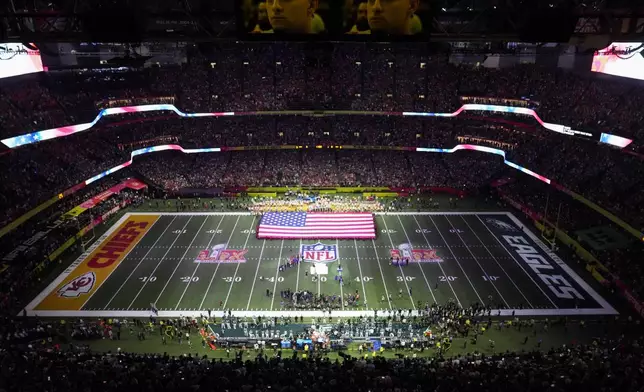
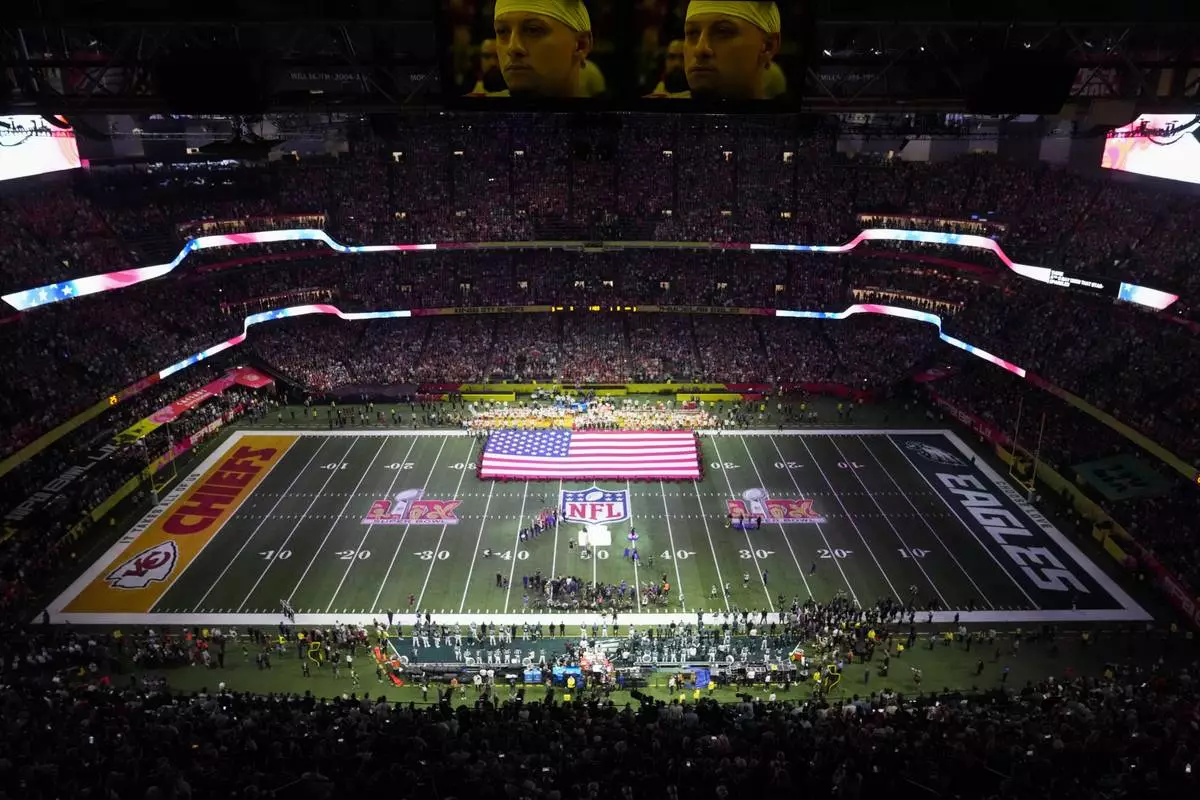
Jon Batiste performs the national anthem before the NFL Super Bowl 59 football game between the Kansas City Chiefs and the Philadelphia Eagles, Sunday, Feb. 9, 2025, in New Orleans. (AP Photo/David J. Phillip)
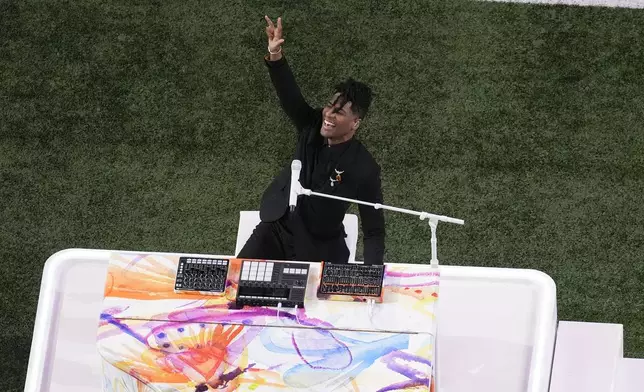
Jon Batiste performs the national anthem before the NFL Super Bowl 59 football game between the Kansas City Chiefs and the Philadelphia Eagles, Sunday, Feb. 9, 2025, in New Orleans. (AP Photo/David J. Phillip)
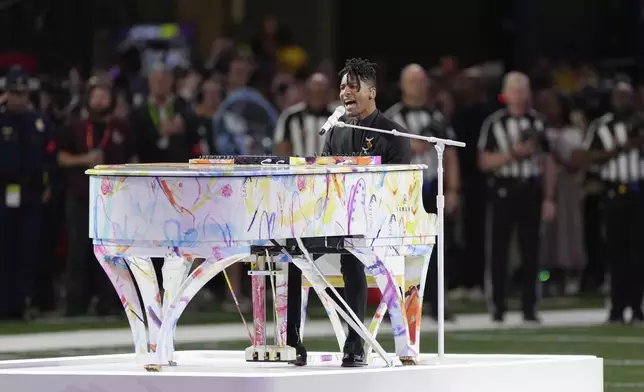
Jon Batiste performs the national anthem before the NFL Super Bowl 59 football game between the Kansas City Chiefs and the Philadelphia Eagles, Sunday, Feb. 9, 2025, in New Orleans. (AP Photo/Stephanie Scarbrough)
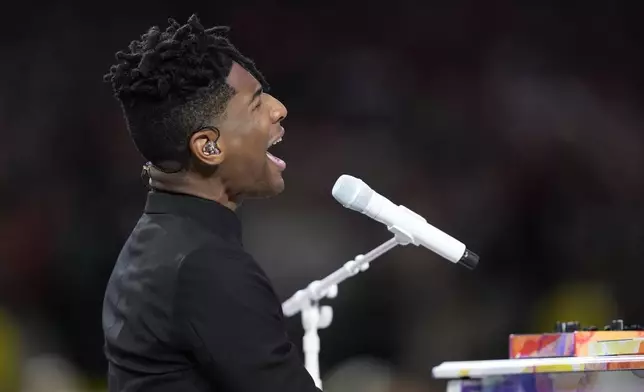
Jon Batiste performs the national anthem before the NFL Super Bowl 59 football game between the Kansas City Chiefs and the Philadelphia Eagles, Sunday, Feb. 9, 2025, in New Orleans. (AP Photo/Doug Benc)
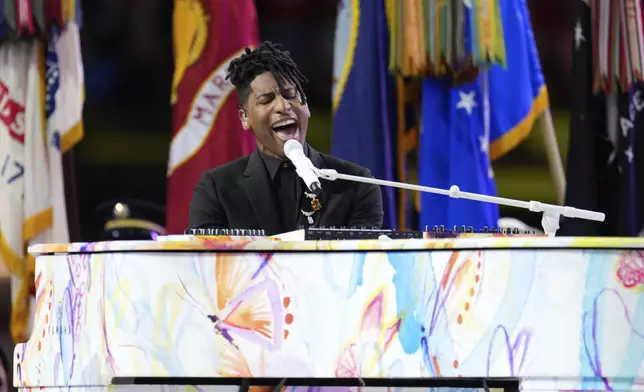
Jon Batiste performs the national anthem before the NFL Super Bowl 59 football game between the Kansas City Chiefs and the Philadelphia Eagles, Sunday, Feb. 9, 2025, in New Orleans. (AP Photo/George Walker IV)
“This was powerful. The spirit came over me,” Batiste told The Associated Press after his performance at the Caesars Superdome. On Monday he unveiled “My United State,” a two-track project featuring “Star-Spangled Blues” and “Notes from My Future Self."
“It’s the first time in the history of the anthem that had samples included in it,” said Batiste, a Louisiana native who is a Grammy and Oscar winner and former bandleader for the “The Late Show with Stephen Colbert.” “We almost couldn’t clear the main sample that I wanted until the night before.”
Batiste, 38, said his reinvented national anthem draws from “Drag Rap” by The Showboys — better known as the Triggerman beat — a staple of New Orleans bounce and hip-hop culture. He aimed to showcase the city's rich culture and heritage while putting his own stamp on a song that was first echoed at the Super Bowl in 1967, performed by The Pride of Arizona, the Michigan Marching Band and the UCLA Choir.
Over the years, the anthem has been reimagined by music legends like Whitney Houston, Diana Ross, Billy Joel, Beyoncé and Lady Gaga.
“It’s a lot of pieces to the puzzle,” he said. “They all come in different tempos and melodies. It’s a whole lot of things that wouldn’t never work together unless it was framed by the American ideal. I wanted to capture it in an arrangement. Just in the sound.”
In an AP interview, Batiste reflected on his wife’s resilience, new songs, an upcoming tour and his festival this weekend that will leave a lasting musical impact on New Orleans.
During the filming of “American Symphony,” inspiration struck — not just in the documentary, but on canvas. As Jaouad painted, one creation that took flight was a vivid butterfly, embodying what he calls the “power of resilience, delicate beauty, and grace.”
Jaouad's painting was on the piano and bench Sunday.
“It's the balance of this duality,” he said about watching his wife creatively express herself during “American Symphony,” which won a Grammy for best music film. “It Never Went Away” from the documentary also won best song written for visual media. He's thankful for the collaboration and proud of Jaouad, a writer who is battling cancer for a third time.
In December, she revealed her diagnosis on social media.
“She's a one of a kind human being, like a person who has so much light from within,” Batiste said. “You look into her eyes and you see the work. I'm very glad that she was able to not only survive, but have this alchemizing process of it all to lift it into something that's even more than just a way of making lemonade out of lemons.”
He added: “This is more than just taking a bad thing and making it good. It's almost a blessing, as wild as it is to think about it like that.”
While crafting “Notes from My Future Self,” Batiste had three things on his mind: returning home, the national anthem and the wide-eyed wonder of him at 6 years old.
“It really brought together so many things in my subconscious,” said the seven-time Grammy winner. "It brought them together, like all these stories, notes. What would the young me think about what’s happening now and how to really connect to this moment from their inner child plays in this song? It just came out of that.”
Batiste called the upbeat song an anthem that represents self-empowerment for himself and others too. He said making the song was a profound journey of artistic realization.
“When you hear the song and you’re listening, it’s me talking to my younger me,” he said. “But it could also be you, talking to young you. In a moment like this, it’s important for us to heal, to really thrive and be rooted in who we are. We have to go back to that kid.”
Batiste said the musical foundation came while talking to director Alan Ferguson, his frequent collaborator. He said they had a vision of using spoken word, poetry and hip-hop within the context of “radical cause, positivity and openness.”
“It’s a celebration of life,” he said. ”It's a natural intuition and the visual possibility and the evolution of me as an artist is just me going into this new zone. ... When it aligns like that, that's how I know it's the right direction."
After Batiste's Super Bowl performance, his next goal is creating visuals for “Notes from My Future Self" and hitting the road for a concert tour.
Full details have to yet been released, but he's looking to perform new music and songs from Beethoven Blues (Batiste Piano Series, Vol. 1),” which reimagined the iconic German pianist’s work.
“You really get a twofer on this next run,” Batiste said.
Before delivering the national anthem, Jon Batiste brought his signature energy to New Orleans’ 9th Ward, turning a neighborhood into a stage for joy and community.
His He Gets Us Presents Jon Batiste’s Love Riot Festival transformed the grounds of George Washington Carver High School into a celebration of music, hope, and action. The event also highlighted plans for a future sports field to serve local schools.
“I wanted to make something where we go to the places that are forgotten but are the foundation,” Batiste said. “They are the foundation of why we want to come to New Orleans in the first place and go to those communities.”
Batiste, alongside Sing for Hope, led 10 New Orleans artists in creating hand-painted pianos, scattered throughout the 9th Ward as an open invitation to the festival. After the event, these vibrant instruments will find permanent homes in schools and community centers, keeping the music alive long after the final note.
“They greatest thing we can do is serve and not take it,” he said. “It’s a holistic view. ... Yes, I’m honored to sing at the Super Bowl. I also want to leave something that impacts the community, my hometown.”
For more on the Super Bowl, visit https://apnews.com/hub/super-bowl
Super Bowl LIX Pregame performer Jon Batiste speaks during a news conference, Thursday, Feb. 6, 2025, in New Orleans ahead of the NFL Super Bowl 59 football game between the Philadelphia Eagles and the Kansas City Chiefs. (AP Photo/Matt York)
Jon Batiste performs the national anthem before the NFL Super Bowl 59 football game between the Kansas City Chiefs and the Philadelphia Eagles, Sunday, Feb. 9, 2025, in New Orleans. (AP Photo/David J. Phillip)
Jon Batiste performs the national anthem before the NFL Super Bowl 59 football game between the Kansas City Chiefs and the Philadelphia Eagles, Sunday, Feb. 9, 2025, in New Orleans. (AP Photo/David J. Phillip)
Jon Batiste performs the national anthem before the NFL Super Bowl 59 football game between the Kansas City Chiefs and the Philadelphia Eagles, Sunday, Feb. 9, 2025, in New Orleans. (AP Photo/Stephanie Scarbrough)
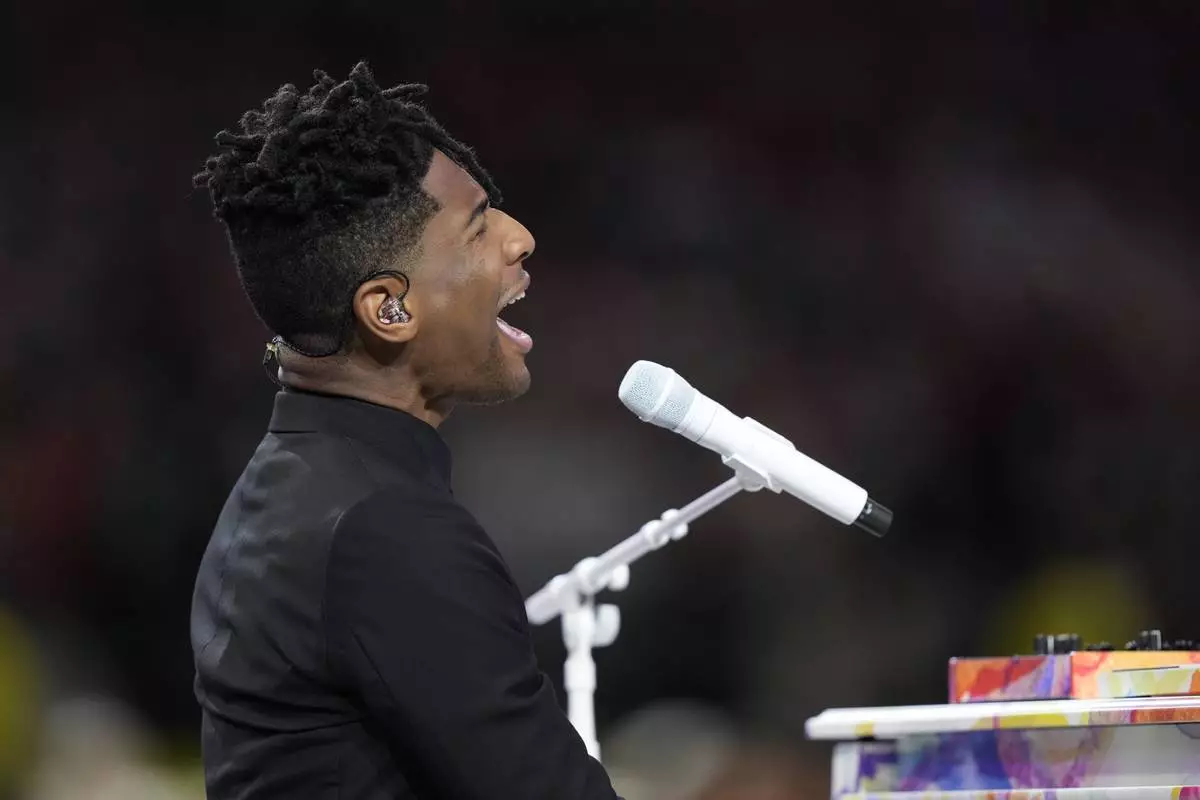
Jon Batiste performs the national anthem before the NFL Super Bowl 59 football game between the Kansas City Chiefs and the Philadelphia Eagles, Sunday, Feb. 9, 2025, in New Orleans. (AP Photo/Doug Benc)
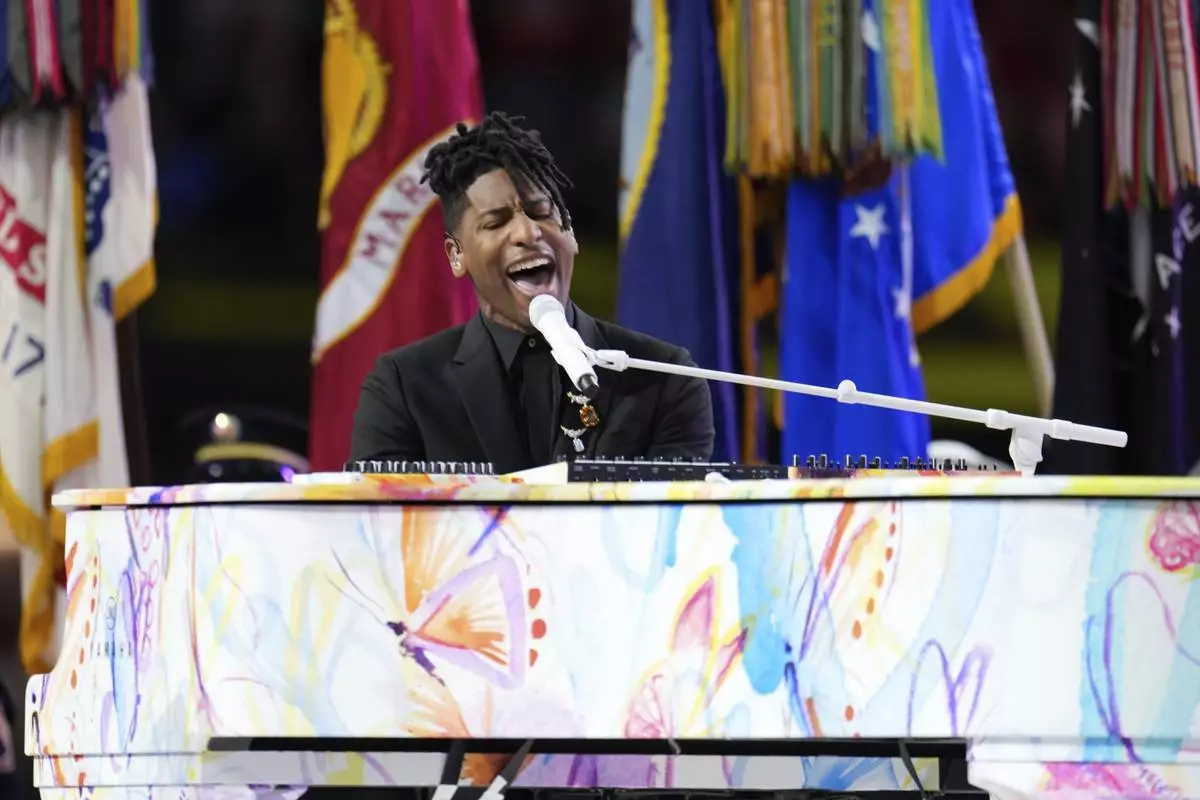
Jon Batiste performs the national anthem before the NFL Super Bowl 59 football game between the Kansas City Chiefs and the Philadelphia Eagles, Sunday, Feb. 9, 2025, in New Orleans. (AP Photo/George Walker IV)