Known for a wide variety of products and price advantages, a small commodity hub in east China is now bringing together an increasing number of buyers across the world with its well-established supply chain and high-tech empowered products.
Yiwu International Trade Market, the world's largest small commodity hub located in east China's Zhejiang Province, received a total of 235,000 visits on Sunday, the first business day after the nation's Spring Festival holiday.
This figure marks a 3.07 percent year-on-year increase. The bustling marketplace also saw around 75,000 businesses open their doors to customers on Sunday.
Foreign buyers were seen pouring into the renowned wholesale hub, seeking inspiration for their purchasing lists. Many have gathered in the Yiwu Selection Showroom of Brand Source Suppliers, which recently opened on Jan 10.
The showroom seeks to consolidate resources from diverse industries in international markets, assist emerging brands with limited global visibility, and lower the costs of expanding internationally.
"My plan this year is to purchase more products," a foreign purchaser said.
"It's our first time here. We are just trying to find some business opportunity," another said.
An increasing number of buyers are coming to the Yiwu Market for its innovative and well-produced offerings.
"One thing I've seen that all the different brands, the products are very good quality. The finishing is very good, and I also see some new technologies and some new products, so that's very intriguing for us," a foreign buyer said.
A purchaser from Colombia said she visits the market every year to explore the latest products and gain a competitive edge in the global market for her business. She placed an order at the very first store she visited, a shop specializing in 3D-printed toys.
"It's really pretty interesting. We have seen this a lot right now in China, it's super popular. So we think this is a winning product. This is the product everyone is looking for right now," the buyer said.
According to Zeng Hao, general manager of the business that produces the toys, global demand for 3D-printed toys has been skyrocketing.
"This order is for Denmark, this is for the UK, and this is for Chile in South America. We are currently producing 24 hours a day, yet demand still exceeds supply," he said.
Zeng said their products have consistently ranked first on overseas e-commerce platforms.
One of the secrets to their success lies in the printing materials. The company's team spent nearly four months developing a special tri-color material, giving their products a unique advantage.
On the upper floor of the workshop, nearly 50 machines operate simultaneously producing all the materials needed to keep the whole operation in-house, including the filament used in the printers below.
"We produce all of our 3D printing raw materials using machines located here, including molded trays and cardboard for packaging, all within our industrial park. The entire supply chain is based in China, which is crucial, as this allows us to quickly manufacture materials and transform them into toys for direct supply to overseas markets, representing our greatest advantage," Zeng said.
Yiwu City is meanwhile working actively to bolster its increasingly dominant position as a hub for the small commodities trade, with a particular focus on integrating digital innovations.
Nearby the market, a global digital trade center is under rapid construction and is expected to commence operations in October this year. In the future, this center will integrate new business formats such as digital trade, service trade, and cross-border e-commerce, further transforming traditional trade models.
"Through the empowerment of digitization and branding, along with the integration of AI technologies, we are driving innovation in new business formats and models within traditional industries, facilitating the Yiwu Market's leap into a new era of global digital trade," said Zhu Xingping, deputy head of the digital trade center.
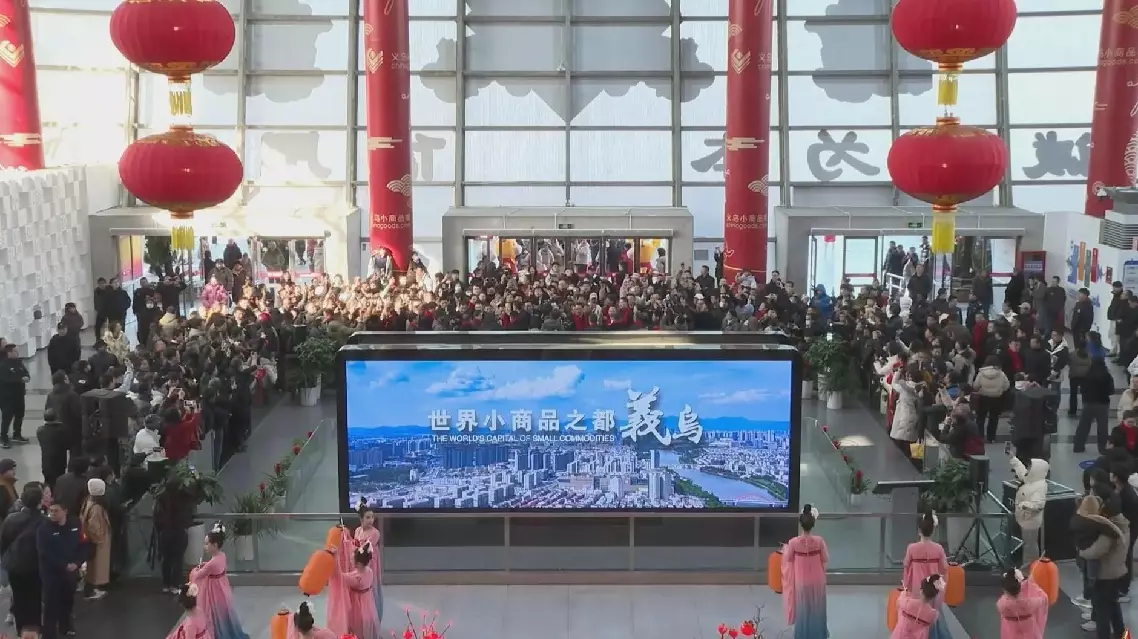
Yiwu Int'l Trade Market attracts global buyers with innovative production
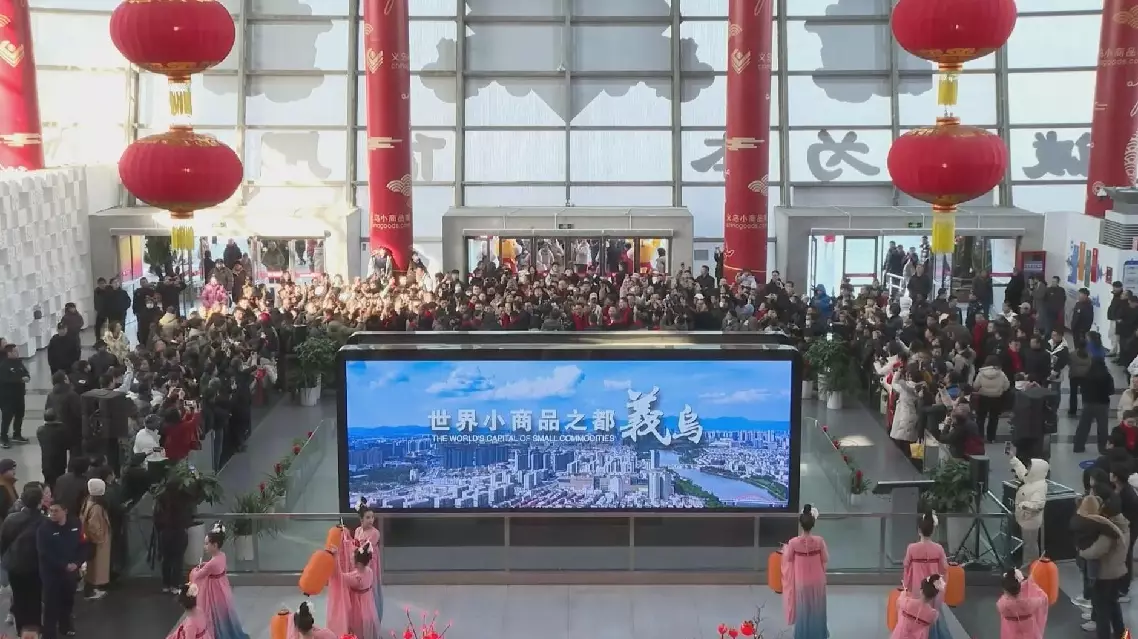
Yiwu Int'l Trade Market attracts global buyers with innovative production
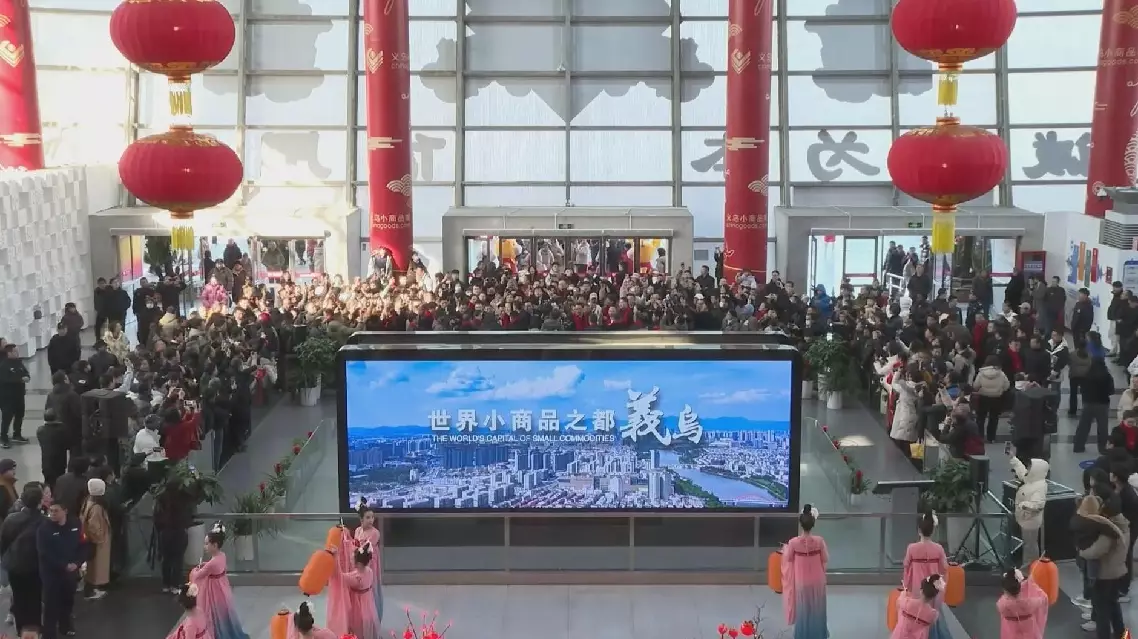
Yiwu Int'l Trade Market attracts global buyers with innovative production