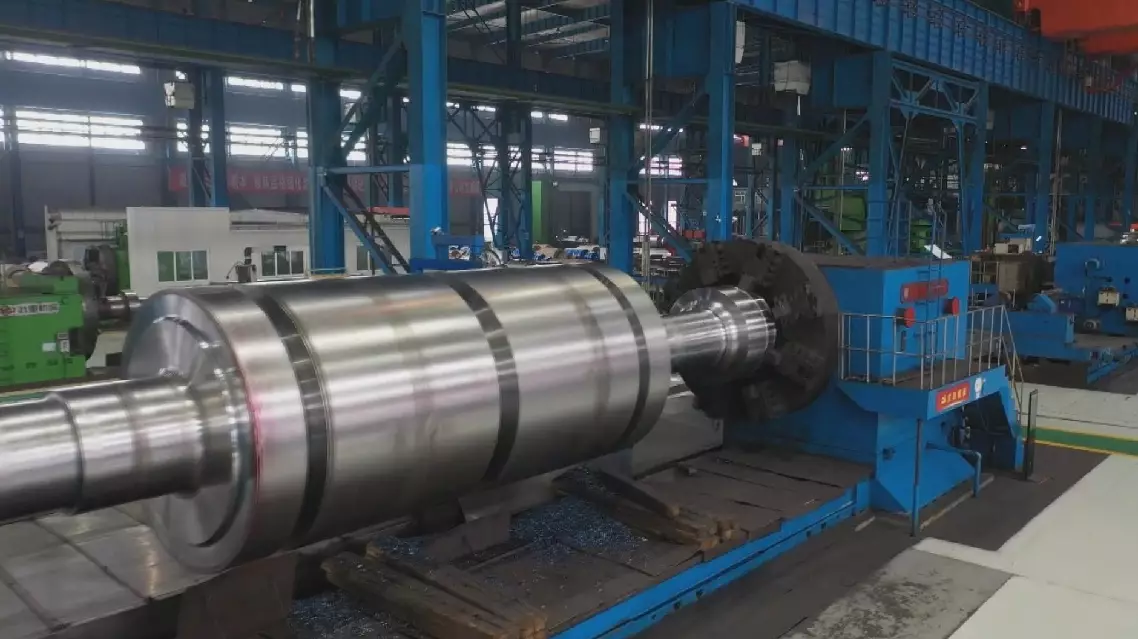
Since the start of the Chinese New Year on January 29, China First Heavy Industries (CFHI), located in the industrial hub of Qiqihar in northeast China, has already ramped up its operations, with the world's largest 700-ton nuclear power rotor just being forged.
Despite the freezing temperatures outside, forging operations at a CFHI workshop is in full swing with heat radiating from the furnace. The world's largest mass-produced steel ingot was slowly emerging from the furnace towering over 20 meters high, reaching a blistering 1,200 degrees Celsius. This massive piece will be manufactured into one of the most critical components of nuclear power units -- the rotor.
Its manufacturing complexity lies in the overall forging process. The steel ingot required for this part is the largest in size, with the heaviest billet and the biggest cross-section size. The technical standards for this process are extremely demanding. The pre-forging heating alone requires temperatures of over 1,200 degrees and takes three days to complete. After coming out of the furnace, the piece is subjected to the immense pressure of a 15,000-ton forging press, repeatedly squeezed like dough to ensure the internal and external materials meet all performance standards.
"Its large size isn't just about its weight and shape. More importantly, it's about the internal quality. It's like kneading dough -- achieving consistency from the inside out is a challenging task. The CFHI has fully mastered this technique now," said Wang Lizhong, director of casting technology workshop at CFHI Steel Casting and Forging Department.
Currently, only two companies worldwide can produce such giant nuclear equipment. The breakthrough in key technology has led to an influx of orders, with production lines running full throttle to keep up with the demands.
"This product is in short supply. Our orders are already scheduled until 2027. In the new year so far, we have kept receiving quite enough orders. Since the beginning of February, we've already produced over 3,000 tons of forged parts, setting a new record," said Ge Shuyi, director of the Production Management Department at CFHI.
Thanks to management improvements and process optimizations, the forging cycle for these products has been shortened from 45 days to about 30 days, boosting efficiency by 30 percent and significantly lowering costs.
The rough billets will then be processed for primary shaping. Now the CFHI can produce eight rotors per year, the largest capacity globally, according to Ge.
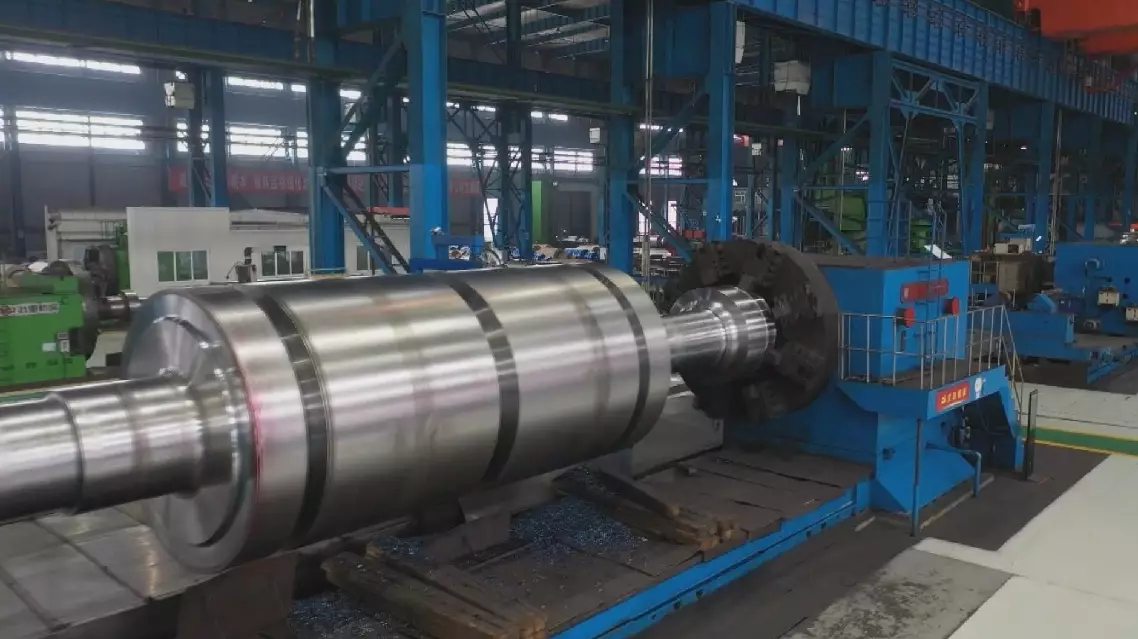
Chinese heavy industry giant produces world’s largest nuclear power unit motor
Chinese heavy industry giant produces world’s largest nuclear power unit motor
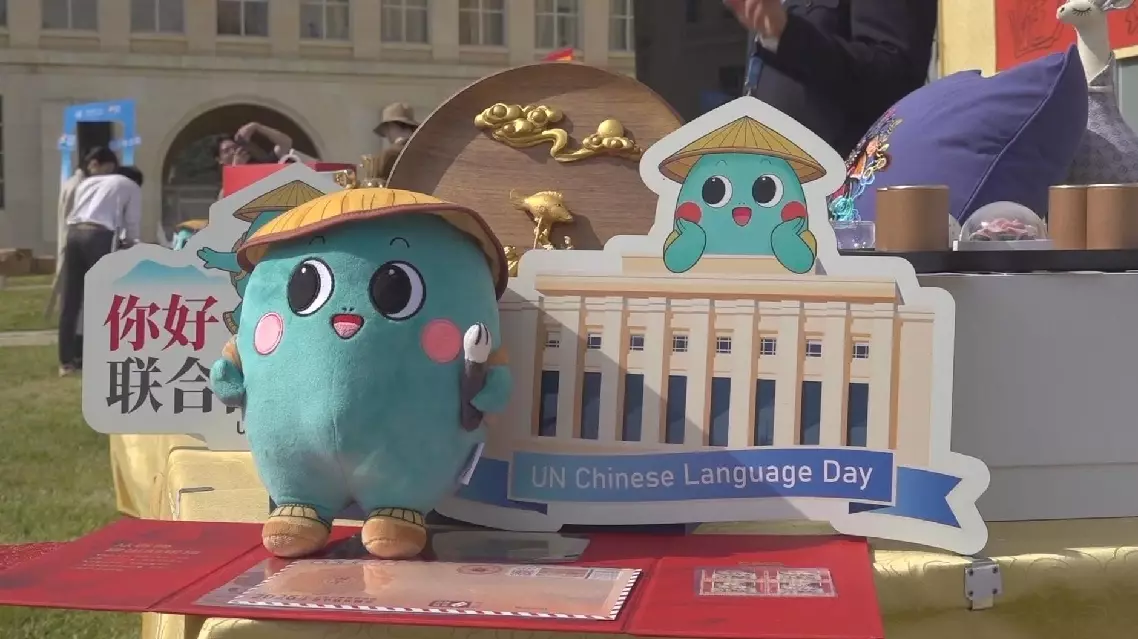
The 6th China Media Group (CMG) Chinese Language Video Festival held at Palace of Nations in Geneva, Switzerland, on Friday to mark the 2026 United Nations Chinese Language Day.
Co-hosted by CMG, China's Permanent Mission to the UN in Geneva, and the UN Office at Geneva, the event brought together over 350 guests from more than 30 countries.
At the event, Tatiana Valovaya, director-general of the United Nations Office at Geneva, said as one of the six official languages of the United Nations, the Chinese language is an important link between China and the world, and between Chinese civilization and other civilizations, which not only reflects its great value to human society, but also highlights the significance of the Chinese language in multilateral diplomacy.
Addressing the event via video link, Shen Haixiong, vice minister of the Publicity Department of the Communist Party of China Central Committee and CMG president, said that as a world-class mainstream media outlet, CMG has always been committed to spreading Chinese culture and promoting civilizational exchanges. It has carefully produced a large number of cultural programs that make China's fine traditional culture shine with new brilliance in the new era.
Shen said CMG will continue to advance "5G plus 4K/8K plus AI" innovation and build more pragmatic cultural exchange platforms.
Jia Guide, China's permanent representative and ambassador to the United Nations Office at Geneva and other international organizations in Switzerland, said that the establishment of UN Chinese Language Day not only protects linguistic diversity, but also promotes the exchange of ideas and the mutual understanding of concepts.
He expressed the hope to take this event as an opportunity to integrate historical experience, institutional advantages and innovative vitality of countries, show their strategic vision and political wisdom, and jointly inject positive energy into building a more just and rational global governance system and a better future.
During the event, many Chinese and international youths were invited to share their understanding of Chinese characters. Through this activity, young people from different cultural backgrounds can intuitively feel the emotional resonance and civilizational connection behind the language.
Many cultural television programs produced by CMG, including "The Chinese Calligraphy Conference" and "Crafted in China," were screened during the event. CMG also specially set up a creative products booth and an interactive experience area, allowing guests to experience traditional Chinese culture — such as calligraphy, embroidery, and paper-cutting — and try out intelligent interactive devices.
Chinese Language Day, established by the United Nations in 2010, is celebrated annually on Guyu, or Grain Rain, the sixth of the 24 traditional Chinese solar terms, to highlight the global significance of the Chinese language.
CMG Video Festival held in Geneva to mark 2026 UN Chinese Language Day