BORING, Ore.--(BUSINESS WIRE)--Feb 11, 2025--
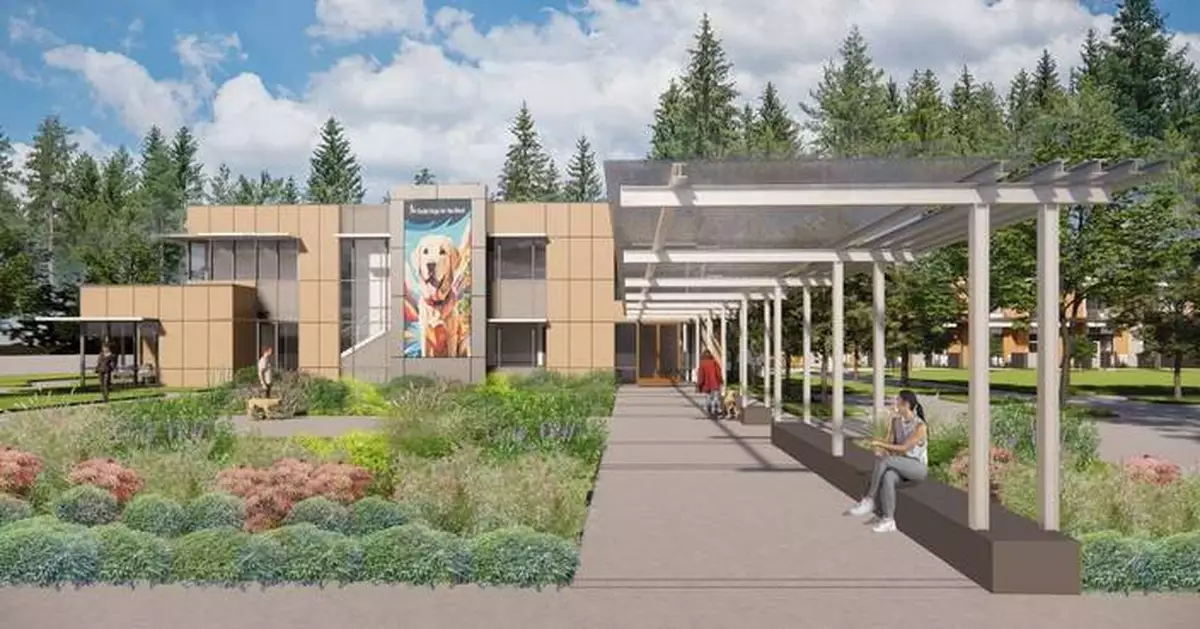
Guide Dogs for the Blind (GDB) plans to break ground this summer on a new, state-of-the art 30,000-square-foot client residence and community hub at its campus in Boring, Ore. The project will more than double GDB’s capacity to serve clients in Oregon, with an inclusive complex that brings together GDB clients, staff, puppy raisers, and other volunteers in one unified space. When completed, it will be the first of its kind in North America.
This press release features multimedia. View the full release here: https://www.businesswire.com/news/home/20250211286940/en/
The inclusive indoor/outdoor structure will contain new client residence quarters with private suites, a community hub with a café and information center, and an expansive outdoor green space with sensory gardens, and dedicated spaces for dog training and special events. The new complex will be the first expansion of GDB’s beautiful, 28-acre Oregon campus since it opened in 1995.
To support the ambitious $28 million project, GDB has launched Building Brighter Futures, a public campaign that allows donors to contribute directly to the funding of the complex. GDB has already raised $15 million of the required funding. There will be naming and recognition opportunities for contributors at different levels.
“This state-of-the art expansion will not only help us substantially expand our capacity to train and support more clients each year, but it will also create a vibrant, centralized space where individuals can connect, collaborate, and build lasting relationships,” said Christine Benninger, president and CEO of Guide Dogs for the Blind. “And we are thrilled to be launching our public campaign to support it, which allows our donors to play a pivotal role in bringing this cutting-edge project to life.”
The project is led by renowned architecture firm Studio Miers |Chou |Poon, which specializes in this area of focus. Notably, the architectural team includes architect Chris Downey, who is blind, providing a unique and inclusive perspective.
Additionally, GDB’s clients actively participated in focus groups throughout the planning process for the new complex, making it a truly client-driven endeavor informed by the experiences and needs of actual guide dog users and people who are blind or visually impaired. All details and decisions about the structure were made to help empower GDB clients to live more independently, and to equip them with the skills, confidence, and mobility to navigate the world with greater self-assurance.
For more information about the project or to contribute to the Building Brighter Futures campaign, please visit guidedogs.com/oregon-campaign.
About Guide Dogs for the Blind
Headquartered in San Rafael, Calif., Guide Dogs for the Blind (GDB) is the largest guide dog school in North America. It is a passionate community that prepares highly-qualified guide dogs to empower individuals who are blind or visually impaired to move through the world more safely and confidently. More than 16,000 guide teams have graduated from GDB since it was founded in 1942. Over the course of more than 80 years, GDB’s mission has expanded to three kinds of programs: a Guide Dog Mobility Program, an Orientation and Mobility (O&M) Program, and a K9 Buddy Program. GDB not only improves mobility for its clients, but it also furthers inclusion and advocates for policy reforms that change how the world views blindness and disability. GDB plans to break ground in the summer of 2025 on a new state-of-the-art client residence and community hub that will more than double its capacity to serve clients at its campus in Boring, Ore. GDB’s services are provided free of charge, and it receives no government funding. The organization was the subject of an award-winning documentary feature called Pick of the Litter, which is available on various streaming platforms. For more information, visit guidedogs.com, or call 800.295.4050.
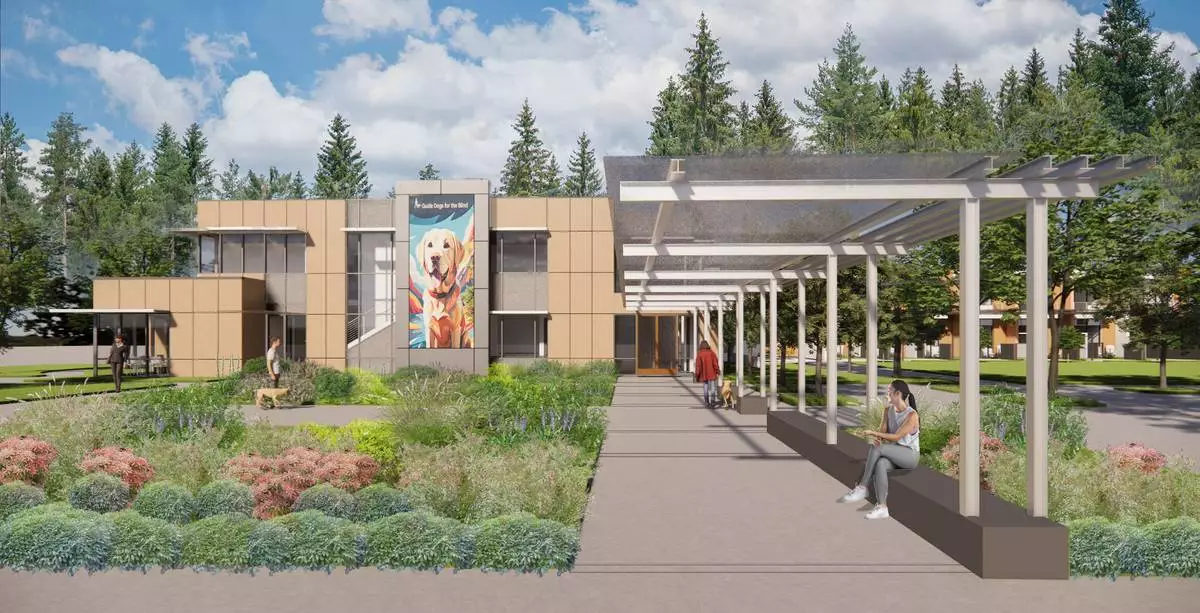
Architectural rendering of forthcoming Client Residence and Community Hub. (Graphic: Business Wire)
SIDON, Lebanon (AP) — Israel’s air force struck areas in southern and eastern Lebanon on Monday and early Tuesday, including in the country's third-largest city.
A strike around 1 a.m. Tuesday leveled a three-story commercial building in the southern coastal city of Sidon, a few days before Lebanon’s army commander is scheduled to brief the government on its mission of disarming militant group Hezbollah in areas along the border with Israel.
Lebanese President Joseph Aoun in a statement Tuesday condemned the attacks as counter to both international efforts to deescalate hostilities and Lebanon’s efforts to extend the government's authority into areas long dominated by Hezbollah and to disarm militants.
An Associated Press photographer at the scene in Sidon said the area was in a commercial district containing workshops and mechanic shops and the building was uninhabited.
At least one person was transported by ambulance and rescue teams were searching the site for others, but no deaths have been reported.
Israel's military said Tuesday they targeted weapons storage sites and infrastructure belonging to the militant groups Hezbollah and Hamas. They acknowledged the sites were located in civilian areas but blamed the groups for operating there.
The strikes were the latest in near-daily Israeli military action since a ceasefire signed more than a year ago that included a Lebanese pledge to disarm militant groups, which Israel says has not been fulfilled.
They took place nearly two hours after Israel’s military Arabic language spokesman Avichay Adraee posted warnings on X that the military would strike targets in two villages in the eastern Bekaa Valley and two others in southern Lebanon.
Lebanon's state-run National News Agency said a home struck in the village of Manara in the Bekaa Valley belonged to Sharhabil al-Sayed, a Hamas military commander who was killed in an Israeli drone strike in May 2024.
The areas were evacuated after Israel's warning. There were no reports of casualties in those strikes. Earlier Monday, Lebanon’s Health Ministry said a drone strike on a car in the southern village of Braikeh earlier Monday wounded two people. The Israeli military said the strike targeted two Hezbollah members.
The Lebanese army last year began the disarmament process of Palestinian groups while the government has said that by the end of 2025 all the areas close to the border with Israel — known as the south Litani area — will be clear of Hezbollah’s armed presence.
The Lebanese government is scheduled to discuss Hezbollah’s disarmament during a meeting Thursday that will be attended by army commander Gen. Rudolph Haikal.
Monday’s airstrikes were in villages north of the Litani river and far from the border with Israel.
The disarmament of Hezbollah and other Palestinian groups by the Lebanese government came after a 14-month war between Israel and Hezbollah in which much of the political and military leadership of the Iran-backed group was killed.
The latest Israel-Hezbollah war began Oct. 8, 2023, a day after Hamas attacked southern Israel, when Hezbollah fired rockets into Israel in solidarity with Hamas. Israel launched a widespread bombardment of Lebanon in September 2024 that severely weakened Hezbollah, followed by a ground invasion.
The war ended in November 2024 with a ceasefire brokered by the U.S.
Israel has carried out almost daily airstrikes since then, mainly targeting Hezbollah members but also killing at least 127 civilians, according to the office of the U.N. High Commissioner for Human Rights.
Mroue reported from Beirut. Associated Press writer Abby Sewell in Beirut contributed to this report.
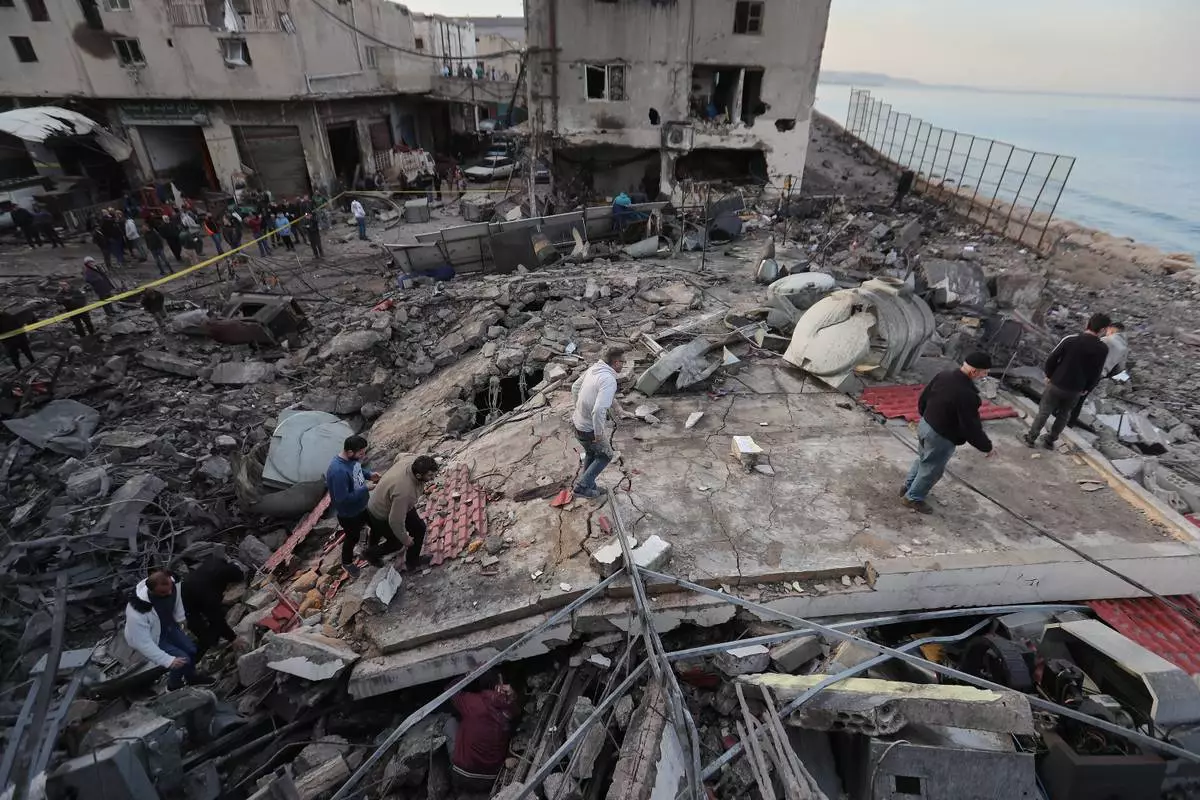
People check a destroyed building that was hit by an Israeli airstrike at a commercial district, in the southern port city of Sidon, Lebanon, Tuesday, Jan. 6, 2026. (AP Photo/Mohammed Zaatari)
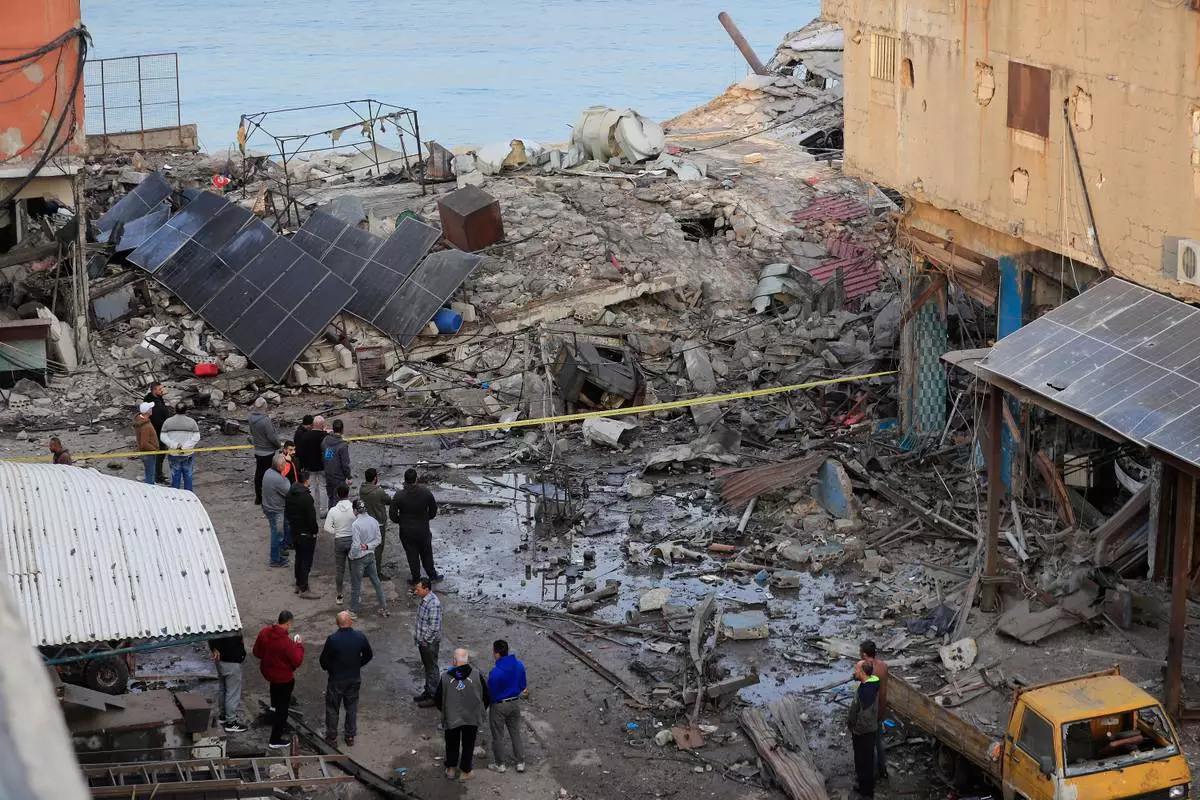
People check a destroyed building that was hit by an Israeli airstrike at a commercial district in the southern port city of Sidon, Lebanon, Tuesday, Jan. 6, 2026. (AP Photo/Mohammed Zaatari)
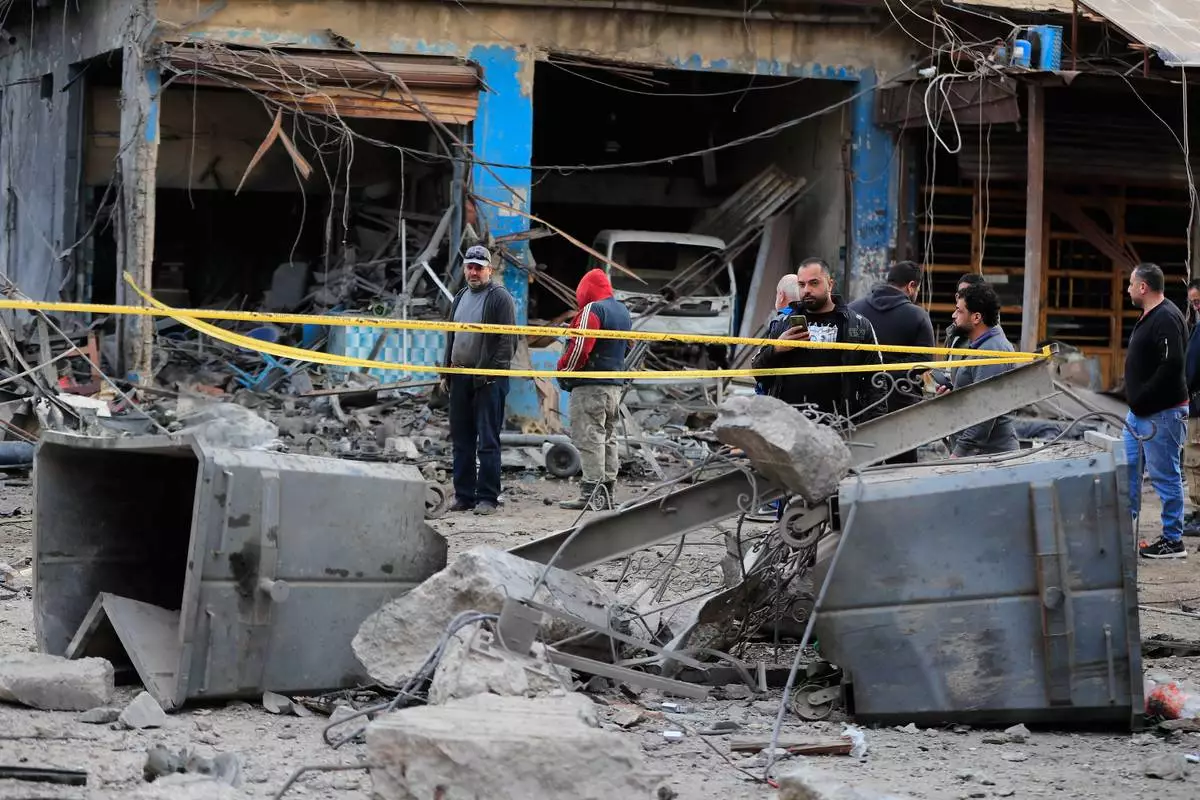
People check the site where an Israeli strike destroyed a building at a commercial district in the southern port city of Sidon, Lebanon, Tuesday, Jan. 6, 2026. (AP Photo/Mohammed Zaatari)
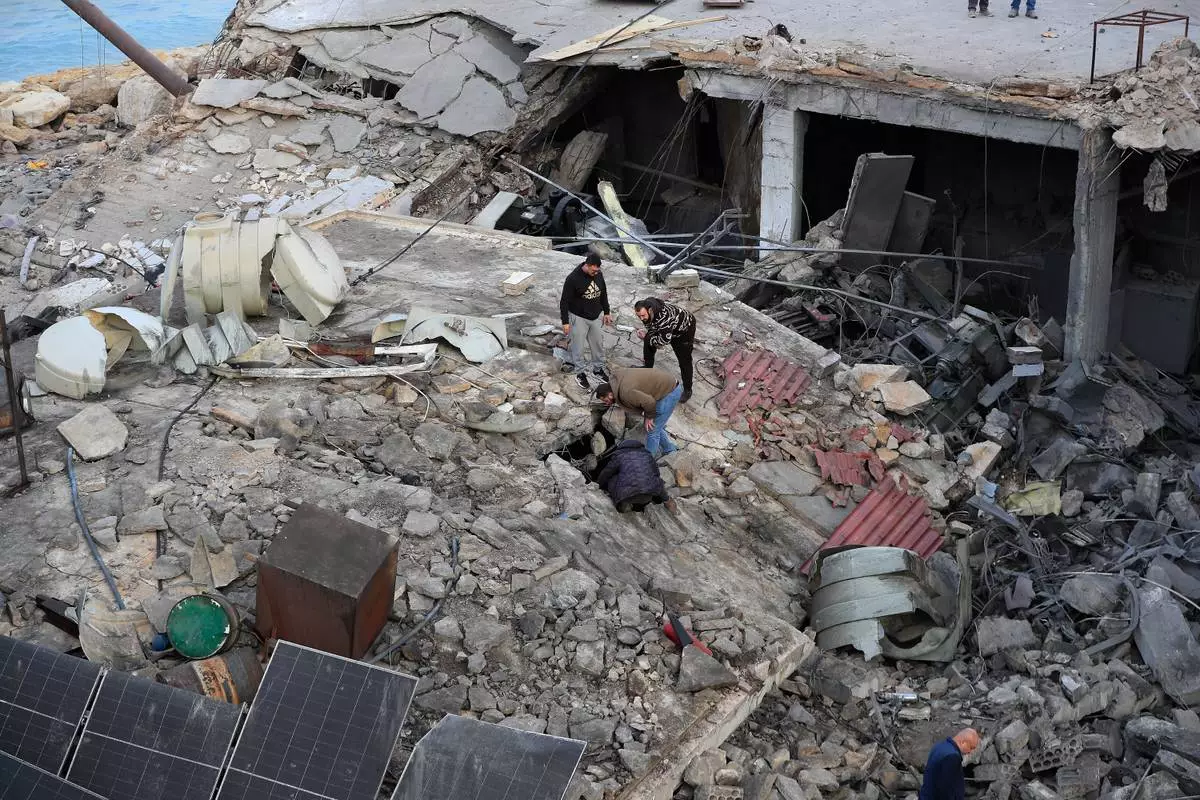
People look through the rubble of a destroyed building that was hit by an Israeli airstrike at a commercial district in the southern port city of Sidon, Lebanon, Tuesday, Jan. 6, 2026. (AP Photo/Mohammed Zaatari)

Lebanese fire fighter extinguish a building destroyed by an Israeli airstrike in the southern port city of Sidon, Lebanon, early Tuesday, Jan. 6, 2026. (AP Photo/Mohammed Zaatari)
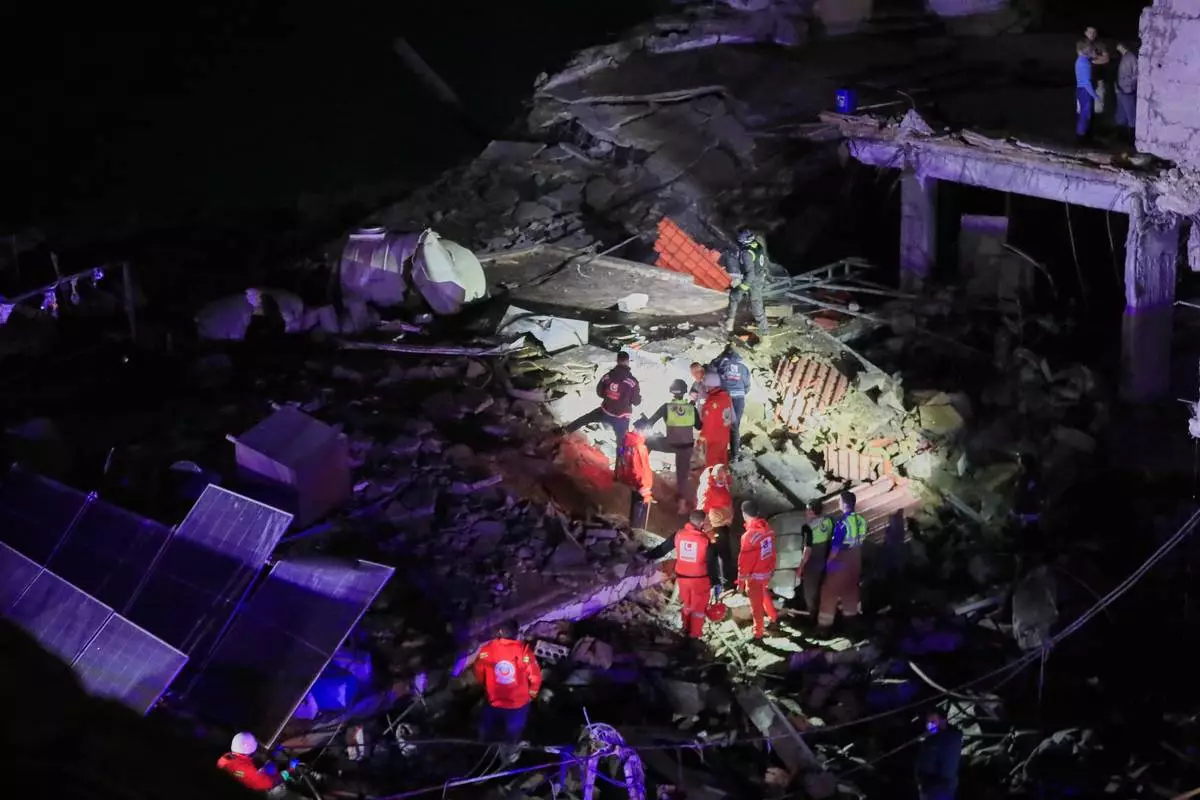
Rescue workers search for possible victims in a building destroyed by an Israeli airstrike in the southern port city of Sidon, Lebanon, early Tuesday, Jan. 6, 2026. (AP Photo/Mohammed Zaatari)
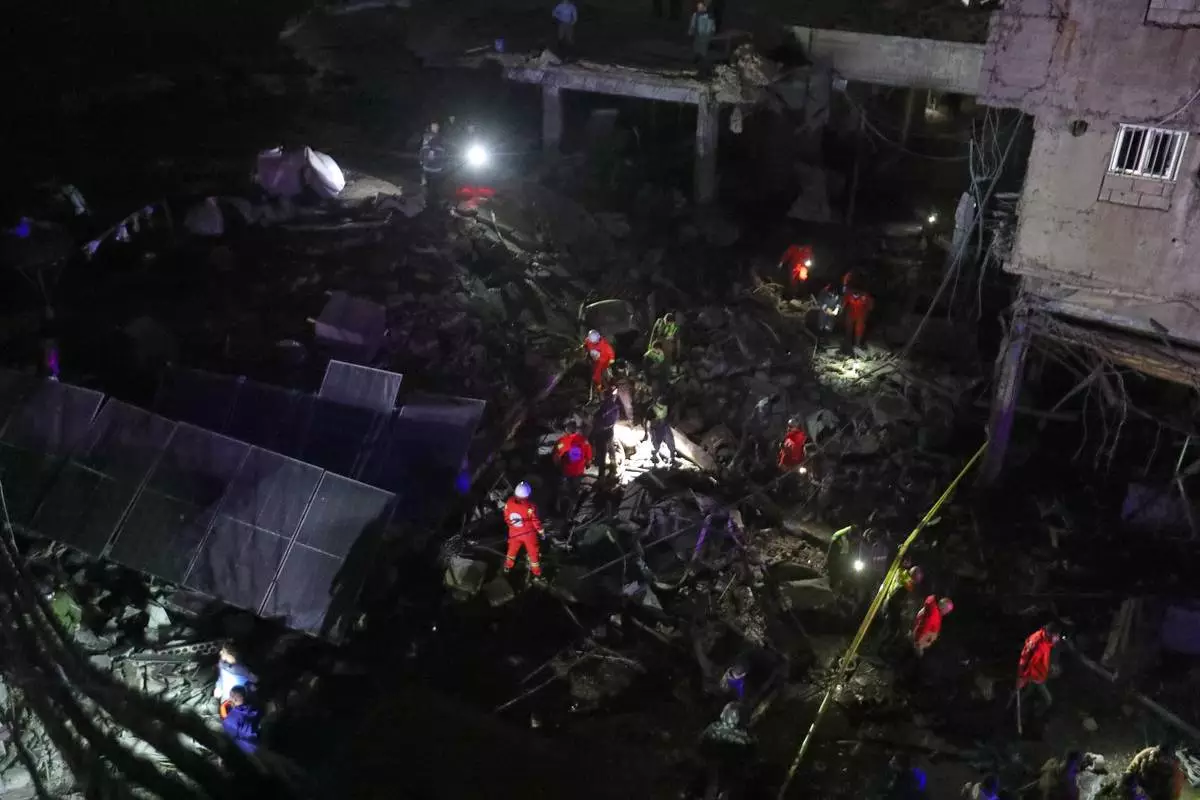
Lebanese Red Cross volunteers search for possible victims in a building destroyed by an Israeli airstrike in the southern port city of Sidon, Lebanon, early Tuesday, Jan. 6, 2026. (AP Photo/Mohammed Zaatari)