KRAGUJEVAC, Serbia (AP) — Serbia’s striking students and supporters of populist President Aleksandar Vucic held parallel rallies Saturday as both marked a major holiday in the country with notably contrasting messages.
The student-led protest is the latest in a nationwide anti-graft movement that reflects mounting calls for fundamental political changes in the Balkan state, triggered after a concrete canopy on a railway station in the northern city of Novi Sad collapsed on Nov. 1, killing 15 people.
Click to Gallery
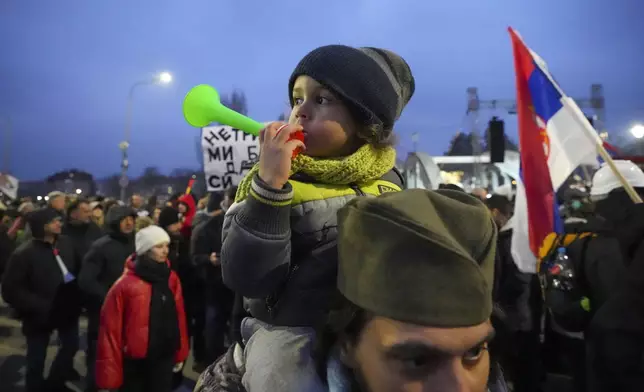
A man wearing a traditional Serbian hat with a child attends a student-led large protest and a 15-hour blockade of the streets in Serbian industrial town of Kragujevac, to protest the deaths of 15 people killed in the November collapse of a train station canopy, Saturday, Feb. 15, 2025. (AP Photo/Darko Vojinovic)
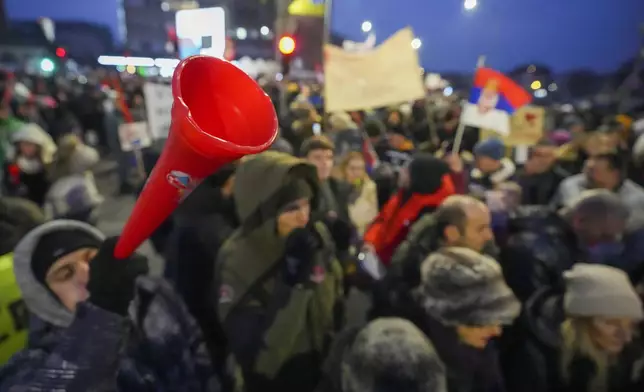
A man blows a vuvuzela during a student-led large protest and a 15-hour blockade of the streets in Serbian industrial town of Kragujevac, to protest the deaths of 15 people killed in the November collapse of a train station canopy, Saturday, Feb. 15, 2025. (AP Photo/Darko Vojinovic)
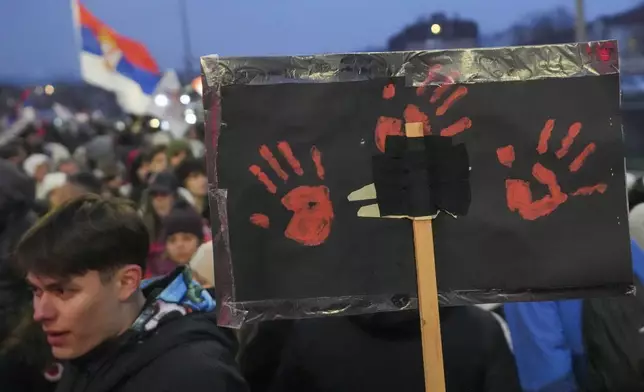
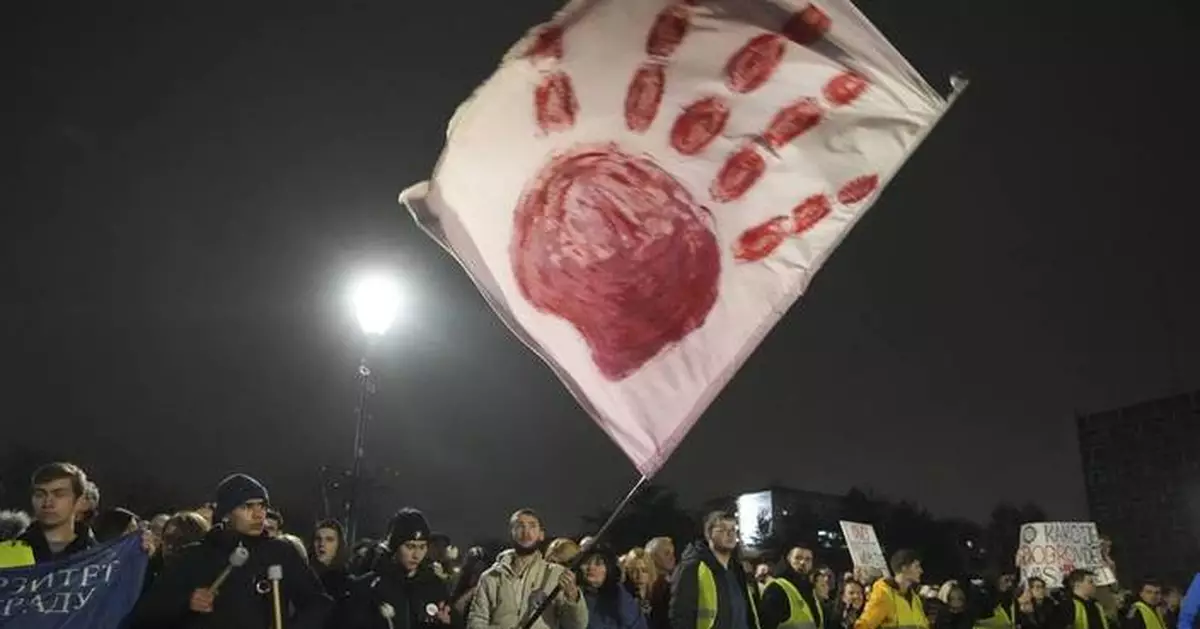
A man holds a banner with red hands symbolizing blood during a student-led large protest and a 15-hour blockade of the streets in Serbian industrial town of Kragujevac, to protest the deaths of 15 people killed in the November collapse of a train station canopy, Saturday, Feb. 15, 2025. (AP Photo/Darko Vojinovic)

Serbian President Aleksandar Vucic, left, poses with Bosnian Serb political leader Milorad Dodik during a rally marking the country's Statehood Day in Sremska Mitrovica, Serbia, Saturday, Feb. 15, 2025. (AP Photo/Antonio Ahel)

Serbian President Aleksandar Vucic waves to his supporters during a rally marking the country's Statehood Day in Sremska Mitrovica, Serbia, Saturday, Feb. 15, 2025. (AP Photo/Antonio Ahel)
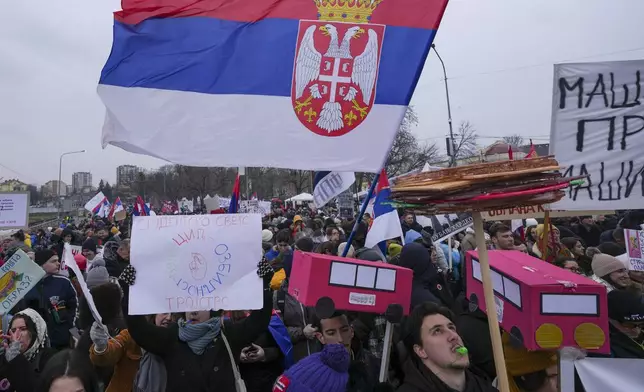
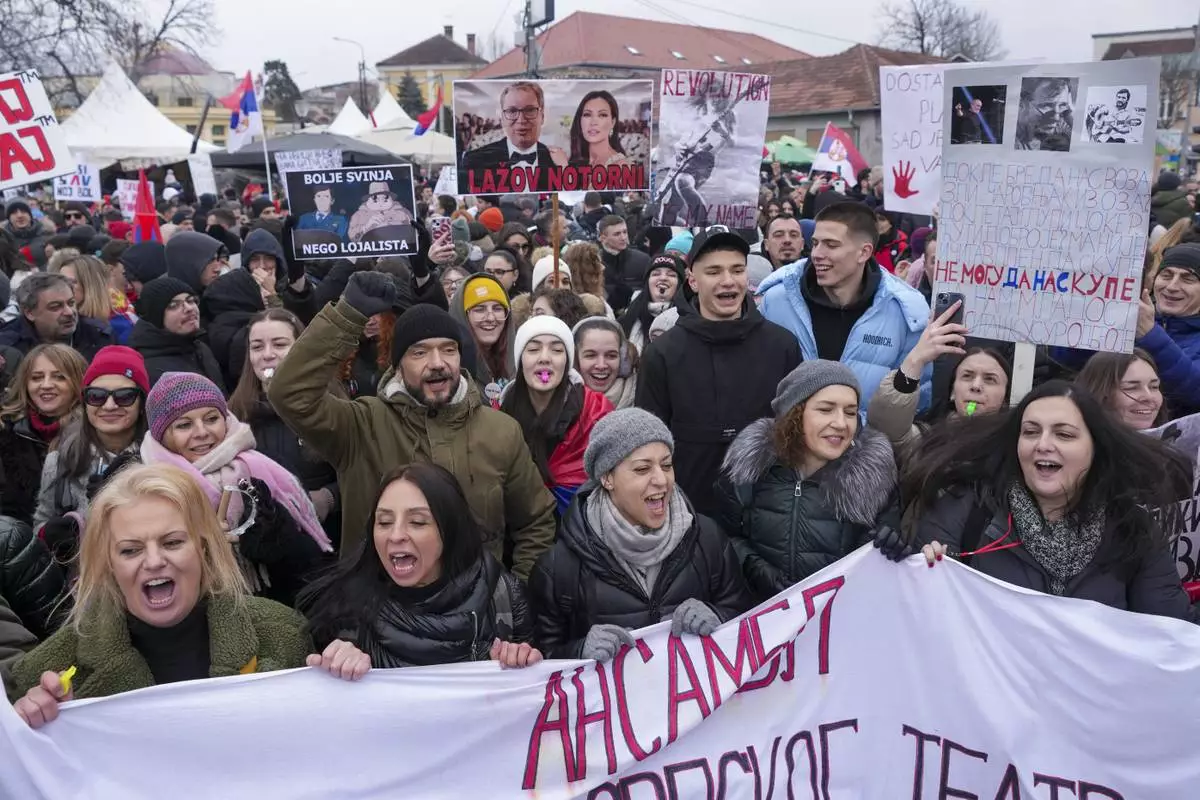
People shout slogans during a student-led large protest and a 15-hour blockade of the streets in Serbian industrial town of Kragujevac, to protest the deaths of 15 people killed in the November collapse of a train station canopy, Saturday, Feb. 15, 2025. (AP Photo/Darko Vojinovic)

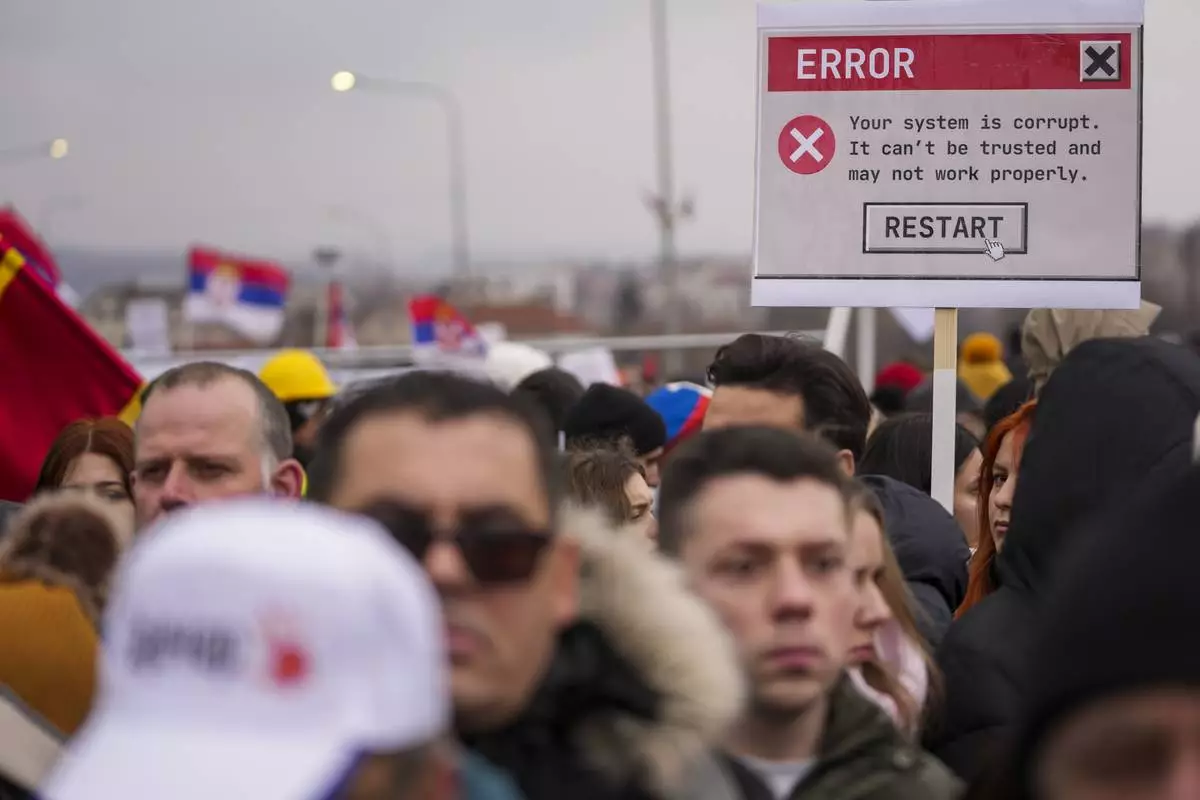
People attend a protest triggered after a concrete canopy on a railway station in the northern city of Novi Sad collapsed on Nov. 1, 2024 killed 15 people, in Kragujevac, Serbia, Saturday, Feb. 15, 2025. (AP Photo/Darko Vojinovic)

People attend a minute of silence during a protest triggered after a concrete canopy on a railway station in the northern city of Novi Sad collapsed on Nov. 1, 2024 killed 15 people, in Kragujevac, Serbia, Saturday, Feb. 15, 2025. (AP Photo/Darko Vojinovic)
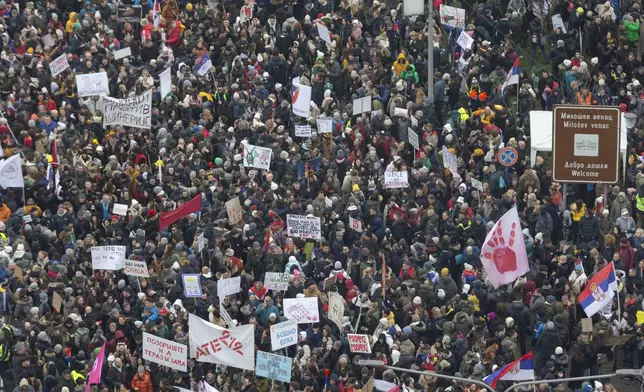
People attend a protest triggered after a concrete canopy on a railway station in the northern city of Novi Sad collapsed on Nov. 1, 2024 killed 15 people, in Kragujevac, Serbia, Saturday, Feb. 15, 2025. (AP Photo/Marko Drobnjakovic)
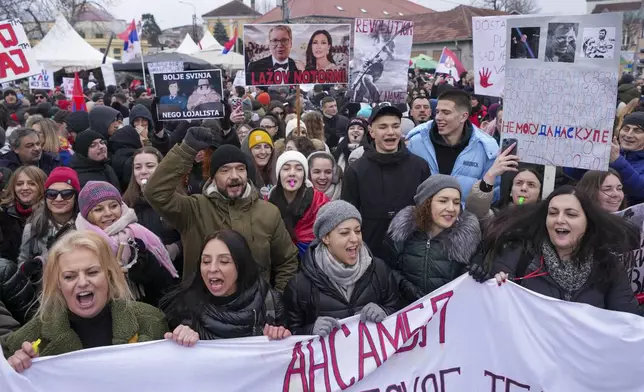
People attend a protest triggered after a concrete canopy on a railway station in the northern city of Novi Sad collapsed on Nov. 1, 2024 killed 15 people, in Kragujevac, Serbia, Saturday, Feb. 15, 2025. (AP Photo/Darko Vojinovic)
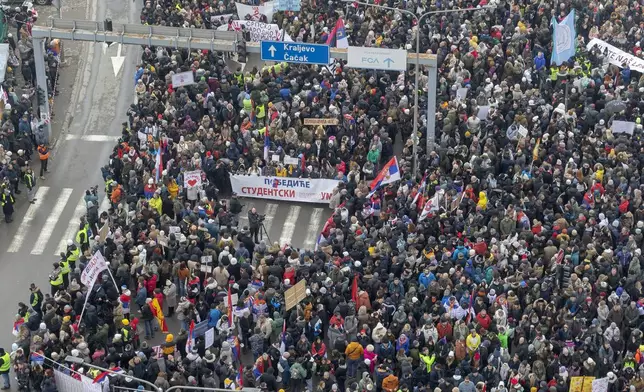
People attend a protest triggered after a concrete canopy on a railway station in the northern city of Novi Sad collapsed on Nov. 1, 2024 killed 15 people, in Kragujevac, Serbia, Saturday, Feb. 15, 2025. (AP Photo/Marko Drobnjakovic)
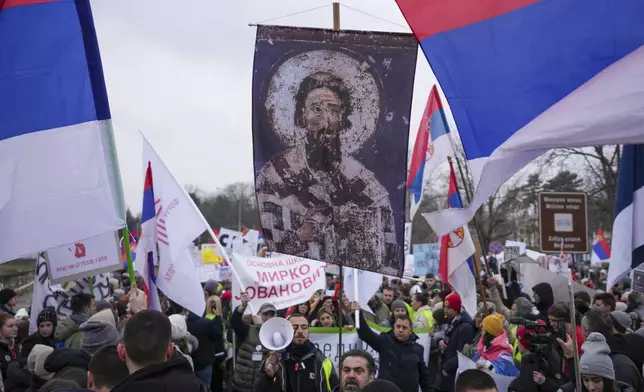
People attend a protest triggered after a concrete canopy on a railway station in the northern city of Novi Sad collapsed on Nov. 1, 2024 killed 15 people, in Kragujevac, Serbia, Saturday, Feb. 15, 2025. (AP Photo/Darko Vojinovic)
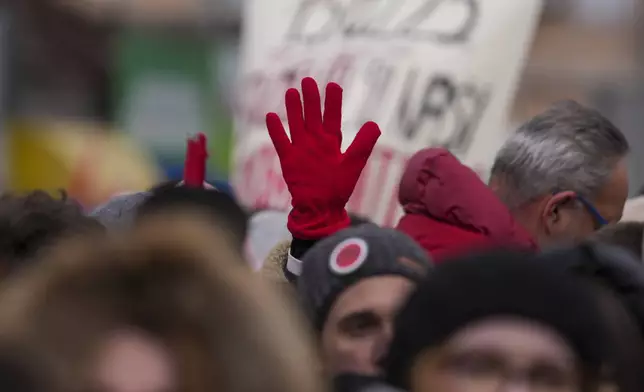
People attend a protest triggered after a concrete canopy on a railway station in the northern city of Novi Sad collapsed on Nov. 1, 2024 killed 15 people, in Kragujevac, Serbia, Saturday, Feb. 15, 2025. (AP Photo/Darko Vojinovic)
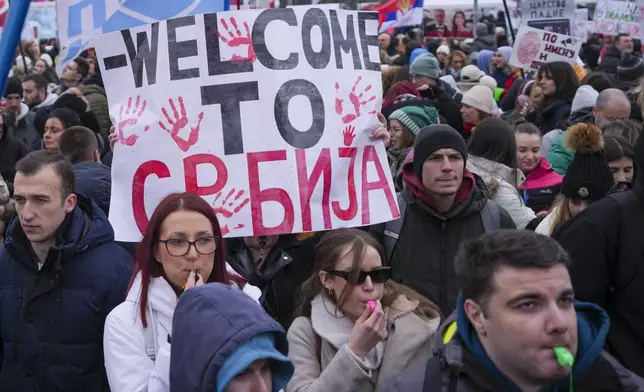
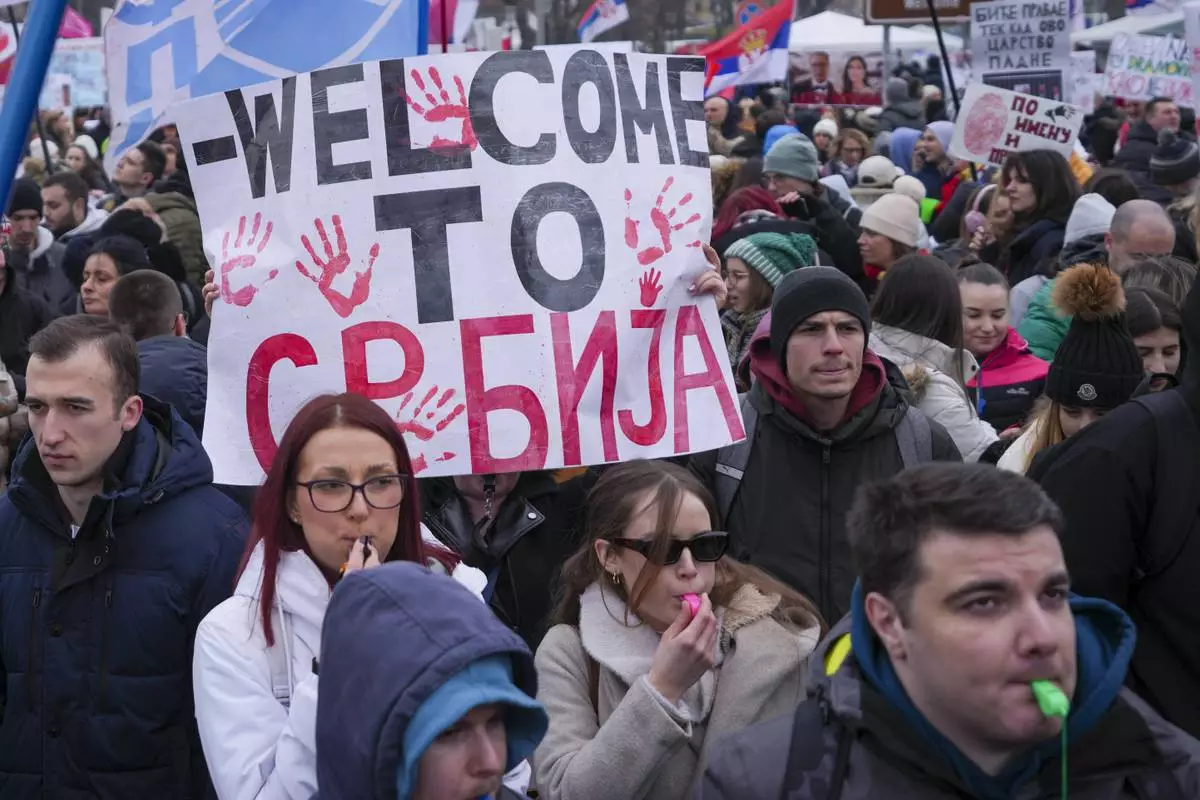
People hold banner that reads: "Welcome to Serbia" during a protest triggered after a concrete canopy on a railway station in the northern city of Novi Sad collapsed on Nov. 1, 2024 killed 15 people, in Kragujevac, Serbia, Saturday, Feb. 15, 2025. (AP Photo/Darko Vojinovic)
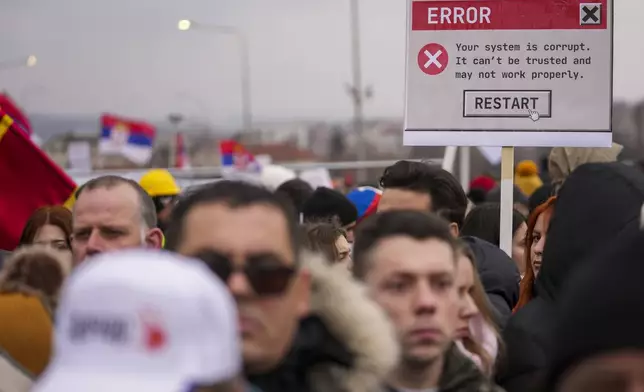
People attend a protest triggered after a concrete canopy on a railway station in the northern city of Novi Sad collapsed on Nov. 1, 2024 killed 15 people, in Kragujevac, Serbia, Saturday, Feb. 15, 2025. (AP Photo/Darko Vojinovic)
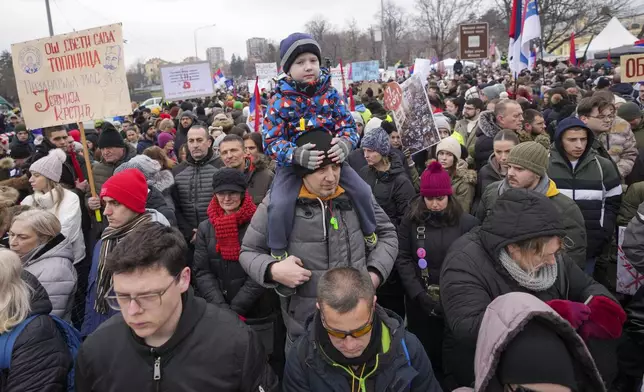
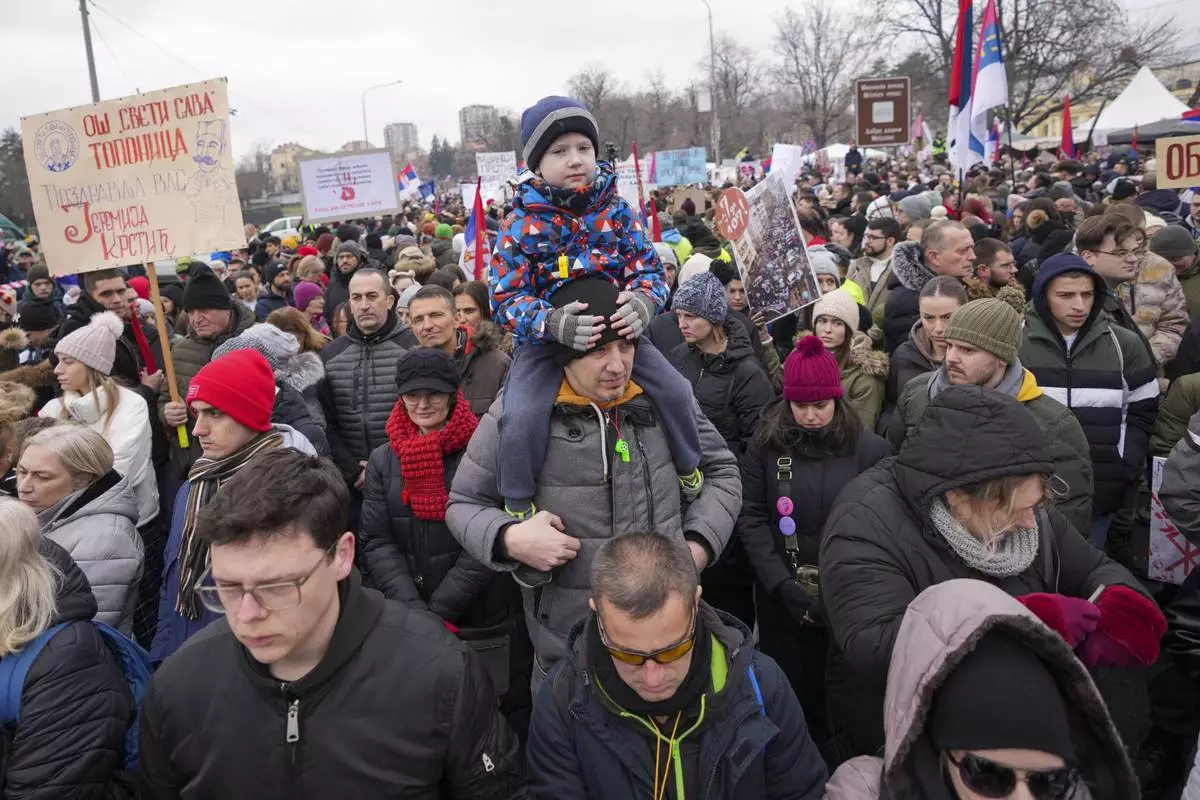
People attend a moment of silence during a protest triggered after a concrete canopy on a railway station in the northern city of Novi Sad collapsed on Nov. 1, 2024 killed 15 people, in Kragujevac, Serbia, Saturday, Feb. 15, 2025. (AP Photo/Darko Vojinovic)
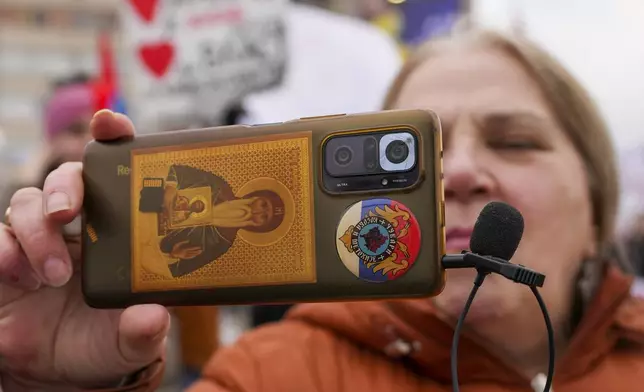
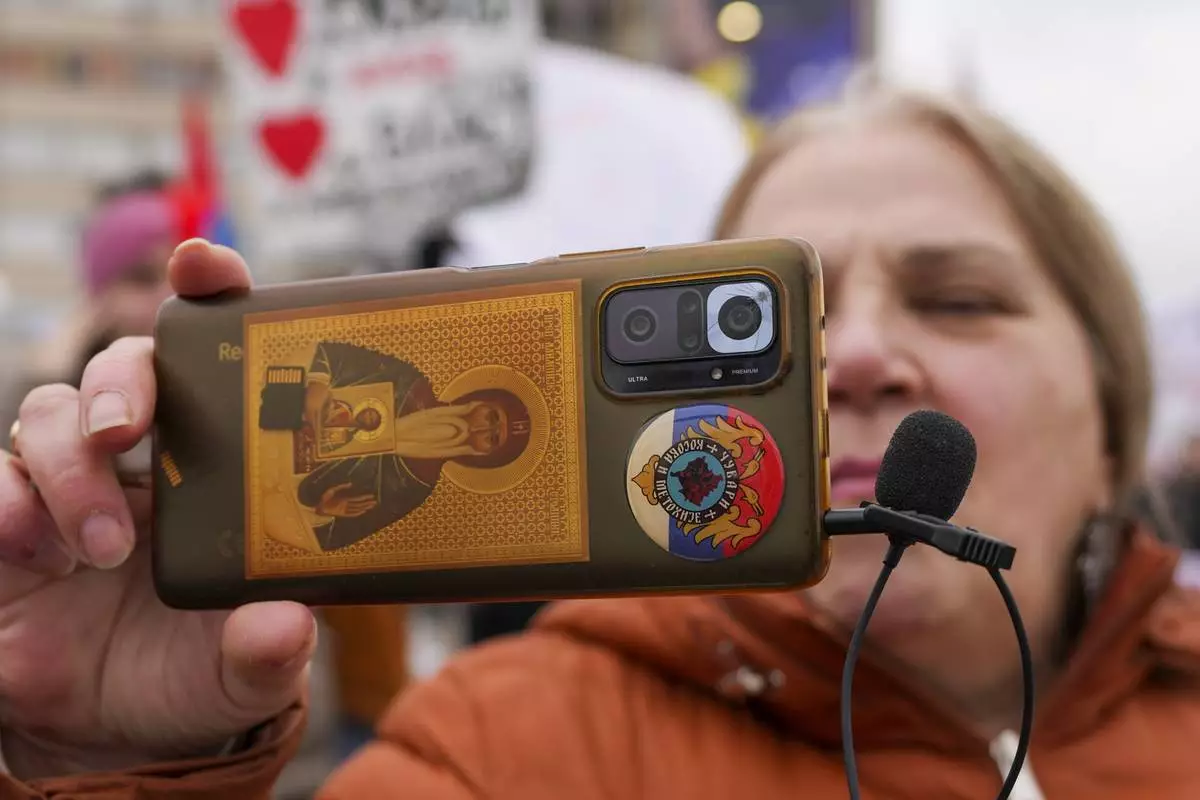
A woman records video with her smartphone during a protest triggered after a concrete canopy on a railway station in the northern city of Novi Sad collapsed on Nov. 1, 2024 killed 15 people, in Kragujevac, Serbia, Saturday, Feb. 15, 2025. (AP Photo/Darko Vojinovic)
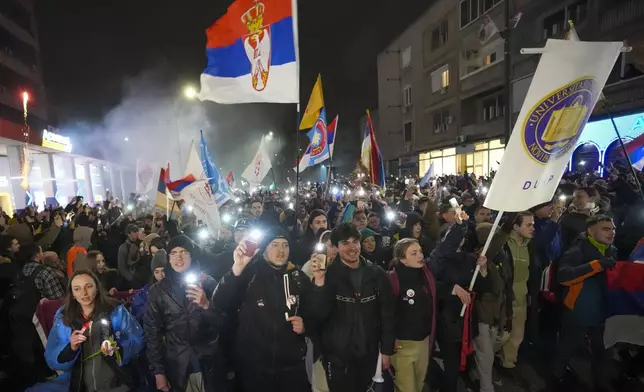
Students arrive in the Serbian industrial town of Kragujevac, to protest the deaths of 15 people killed in the November collapse of a train station canopy, Friday, Feb. 14, 2025. (AP Photo/Darko Vojinovic)
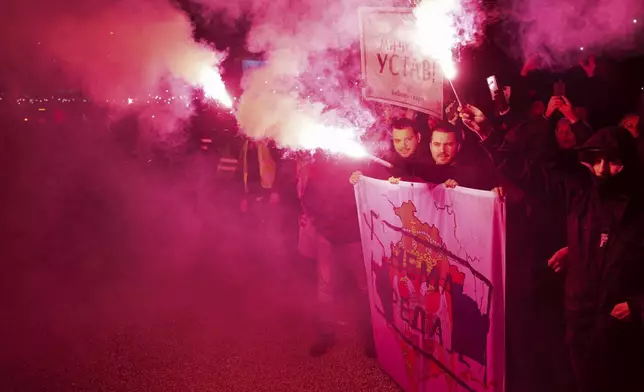
People welcome students in the Serbian industrial town of Kragujevac, who have arrived to protest the deaths of 15 people killed in the November collapse of a train station canopy, Friday, Feb. 14, 2025. (AP Photo/Darko Vojinovic)
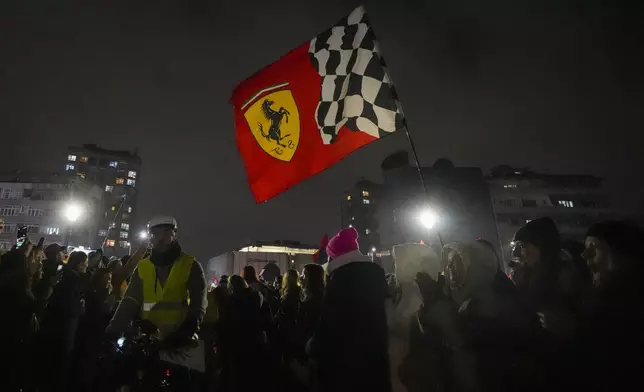
People welcome students in the Serbian industrial town of Kragujevac, who have arrived to protest the deaths of 15 people killed in the November collapse of a train station canopy, Friday, Feb. 14, 2025. (AP Photo/Darko Vojinovic)
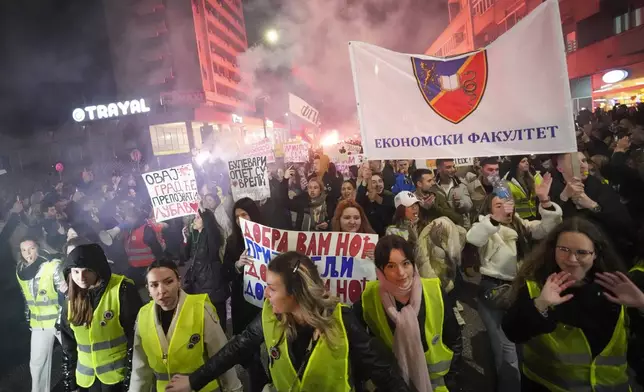
Students arrive in the Serbian industrial town of Kragujevac, to protest the deaths of 15 people killed in the November collapse of a train station canopy, Friday, Feb. 14, 2025. (AP Photo/Darko Vojinovic)
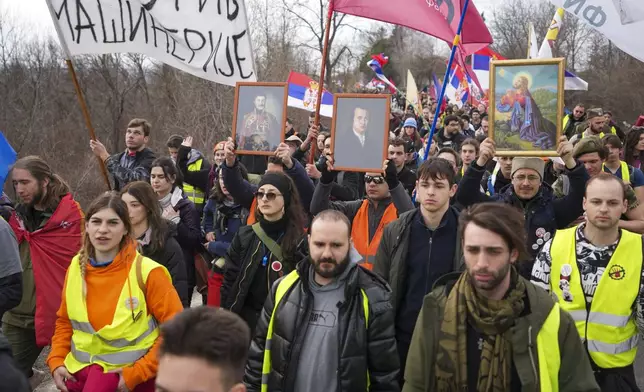
Students march near the village of Cumic near the Serbian industrial town of Kragujevac, to protest the deaths of 15 people killed in the November collapse of a train station canopy, Friday, Feb. 14, 2025. (AP Photo/Darko Vojinovic)
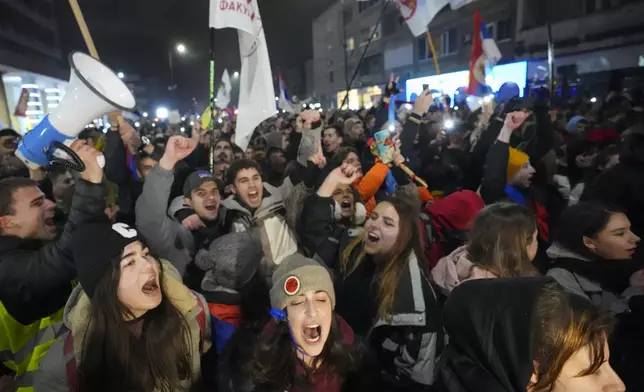
Students arrive in Serbian industrial town of Kragujevac, to protest the deaths of 15 people killed in the November collapse of a train station canopy, Friday, Feb. 14, 2025. (AP Photo/Darko Vojinovic)

People welcome students in the Serbian industrial town of Kragujevac, who have arrived to protest the deaths of 15 people killed in the November collapse of a train station canopy, Friday, Feb. 14, 2025. (AP Photo/Darko Vojinovic)
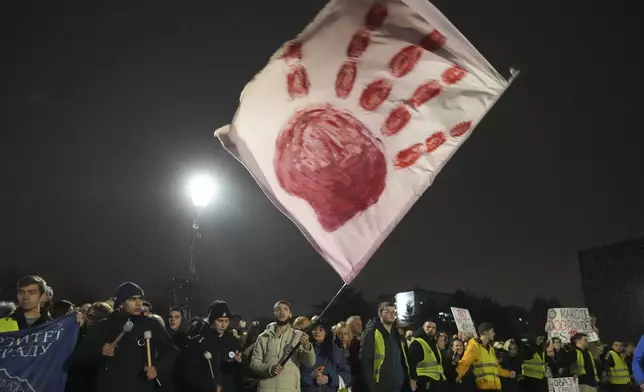
Residents welcome students in the Serbian industrial town of Kragujevac, who have arrived to protest the deaths of 15 people killed in the November collapse of a train station canopy, Friday, Feb. 14, 2025. (AP Photo/Darko Vojinovic)
The rally in the central industrial city of Kragujevac drew tens of thousands of people who, besides demanding justice over the tragedy, have been demanding that officials root out rampant endemic corruption and respect for the rule of law.
Students chose Kragujevac for Saturday's rally because of its history. In 1835, Serbia was still part of the Ottoman Empire, and people in Kragujevac announced a new constitution that sought to limit the powers of the then rulers. The date is now celebrated as Statehood Day, a national holiday.
People from all over the country streamed into Kragujevac for Saturday’s gathering.
“I am here to support this student rebellion, which has grown into a civil rebellion, and to fight for the rule of law and justice in this society, so that Serbia becomes a country where life is dignified,” said a woman from Belgrade who identified herself only by her first name Teodora because she didn't want to be targeted by state authorities.
The students arrived to cheers from the residents. Before the protest, they organized marches in various parts of the country, encouraging people to converge in Kragujevac. Some walked, others ran or cycled. Along their journey, people greeted them with food and refreshments and offered accommodation, many crying and expressing hope for change.
Meanwhile, in Sremska Mitrovica, a small town northwest of Belgrade, Vucic recycled a traditional nationalist theme, warning that the West wants to unseat him by force and that this could lead to the breakup of the country.
Before the rally attended by thousands of his supporters, Vucic said that the student protests “will go down in the history of dishonor” as “the dirtiest color revolution in the history of mankind,” referring to Ukraine and other uprisings against authoritarian governments in Eastern Europe and elsewhere in the 1980s and '90s.
At the rally, Vucic said that more than 3 billion euros ($3.14 billion) have been invested from abroad to topple him from power, but that the student “revolution” has failed. He didn't offer any proof for those claims.
“They have already lost, they don’t see how the political wheel has already turned," Vucic said, referring to the return to the White House of U.S. President Donald Trump, who the Serbian leader supports. "Unless they kill me."
“You who organized an attempted colored revolution in Serbia, I will destroy you in the whole world,” said Vucic, pledging to write a book on how he destroyed the student uprising that he said will be published abroad, including China.
Authorities in Serbia bused in thousands of supporters to the pro-Vucic rally from throughout the country as well as neighboring Bosnia.
The anti-graft movement is Vucic's biggest challenge in recent years. The president — who has ruled Serbia with a firm grip on power for more than a decade — and his right-wing Serbian Progressive Party have been previously accused of stifling democratic freedoms, publicly discrediting opponents and rigging elections, according to international vote observers.
The canopy disaster, widely believed to have happened because of government corruption, has become a flashpoint for wider discontent with the authoritarian rule, with university students at the forefront of the anti-graft uprising. Their determination, youth and creativity have struck a chord among people widely disillusioned with politicians.
Prosecutors have charged 13 people over the canopy fall, and protests have forced the resignation of Serbia’s prime minister. But students have said that their protests will continue until their demands for full accountability are met.
In the past three months, the president has shifted between accusing the students of working for foreign powers to offering concessions and claiming he has fulfilled each of their demands.
During Vucic's trip to the Serb-controlled part of Bosnia earlier this week, he stressed Serbian unity with the Serbs in Bosnia, where a bid to create a pan-Serb state in the 1990s was widely blamed for triggering a bloody war that left more than 100,000 people killed and millions displaced.
At the pro-Vucic rally, Bosnian Serb separatist leader Milorad Dodik said that Serbs in Bosnia don't want to remain a part of Bosnia, but want to join Serbia in a joint state.
“We love Serbia,” he said to the cheers of the crowd.
Jovana Gec and Dusan Stojanovic contributed to this report from in Belgrade.
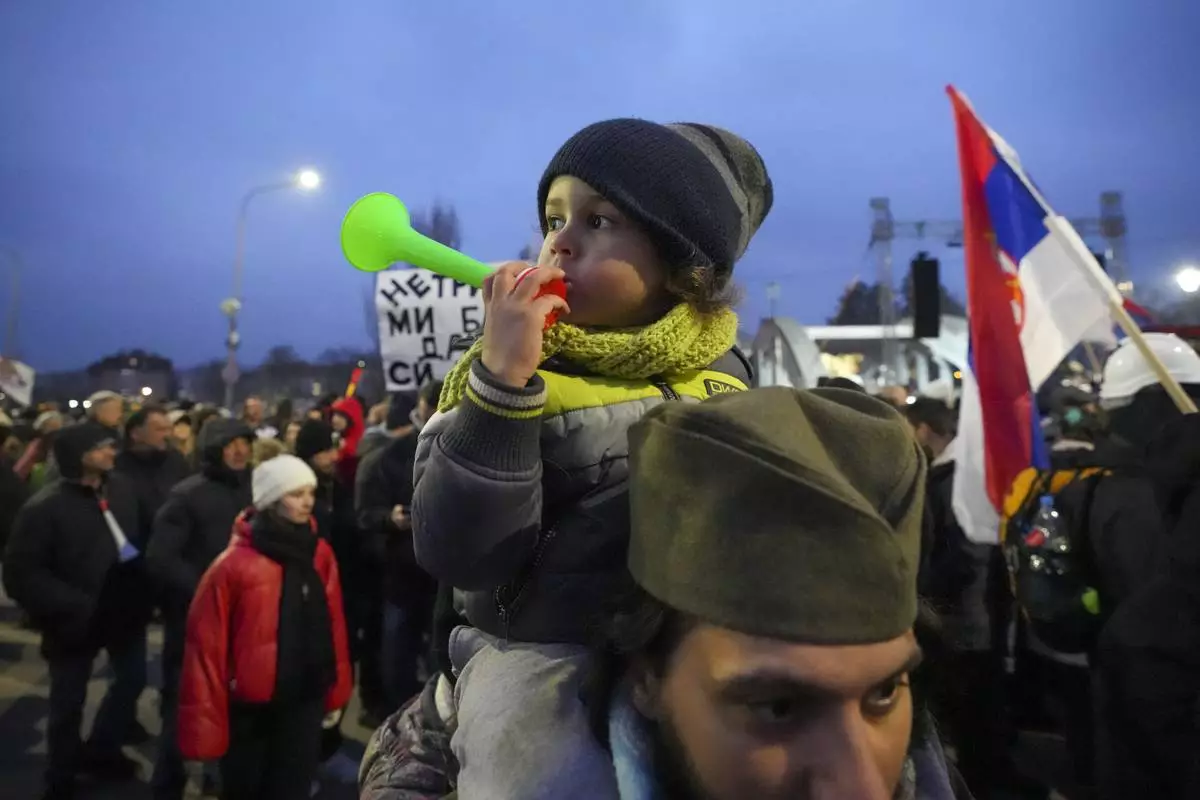
A man wearing a traditional Serbian hat with a child attends a student-led large protest and a 15-hour blockade of the streets in Serbian industrial town of Kragujevac, to protest the deaths of 15 people killed in the November collapse of a train station canopy, Saturday, Feb. 15, 2025. (AP Photo/Darko Vojinovic)
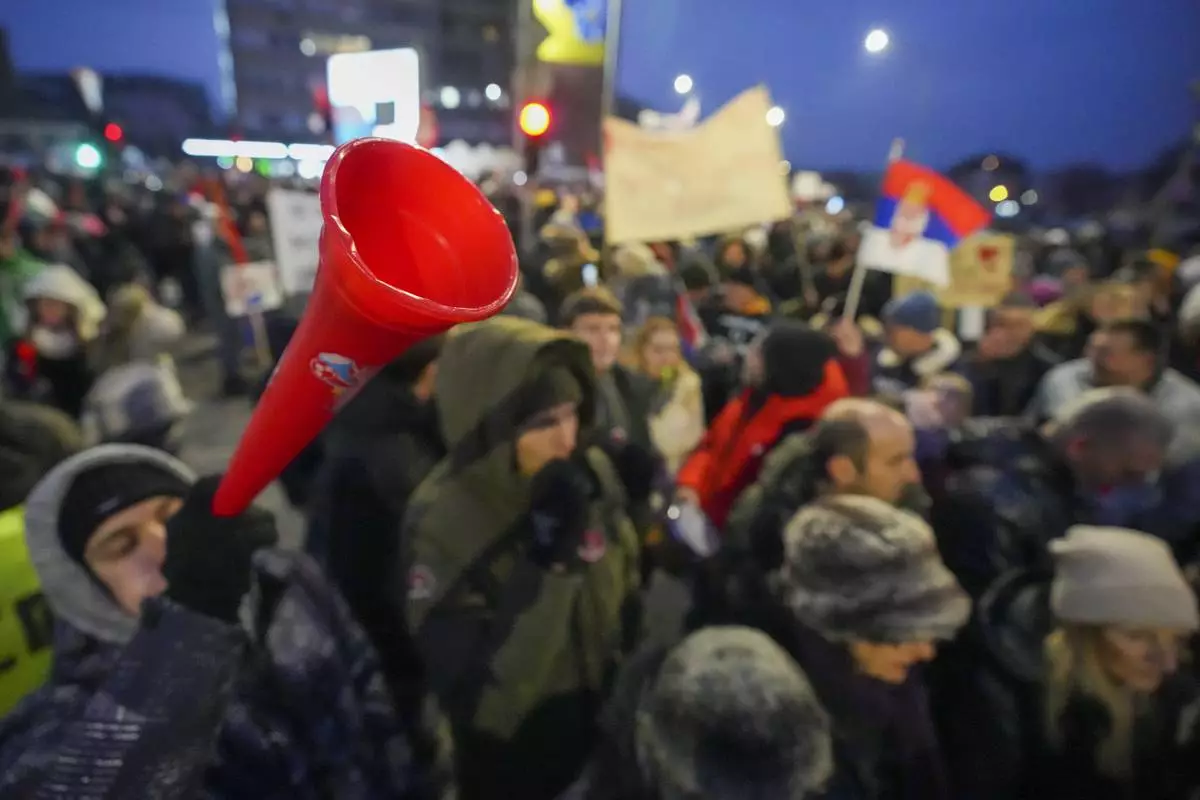
A man blows a vuvuzela during a student-led large protest and a 15-hour blockade of the streets in Serbian industrial town of Kragujevac, to protest the deaths of 15 people killed in the November collapse of a train station canopy, Saturday, Feb. 15, 2025. (AP Photo/Darko Vojinovic)
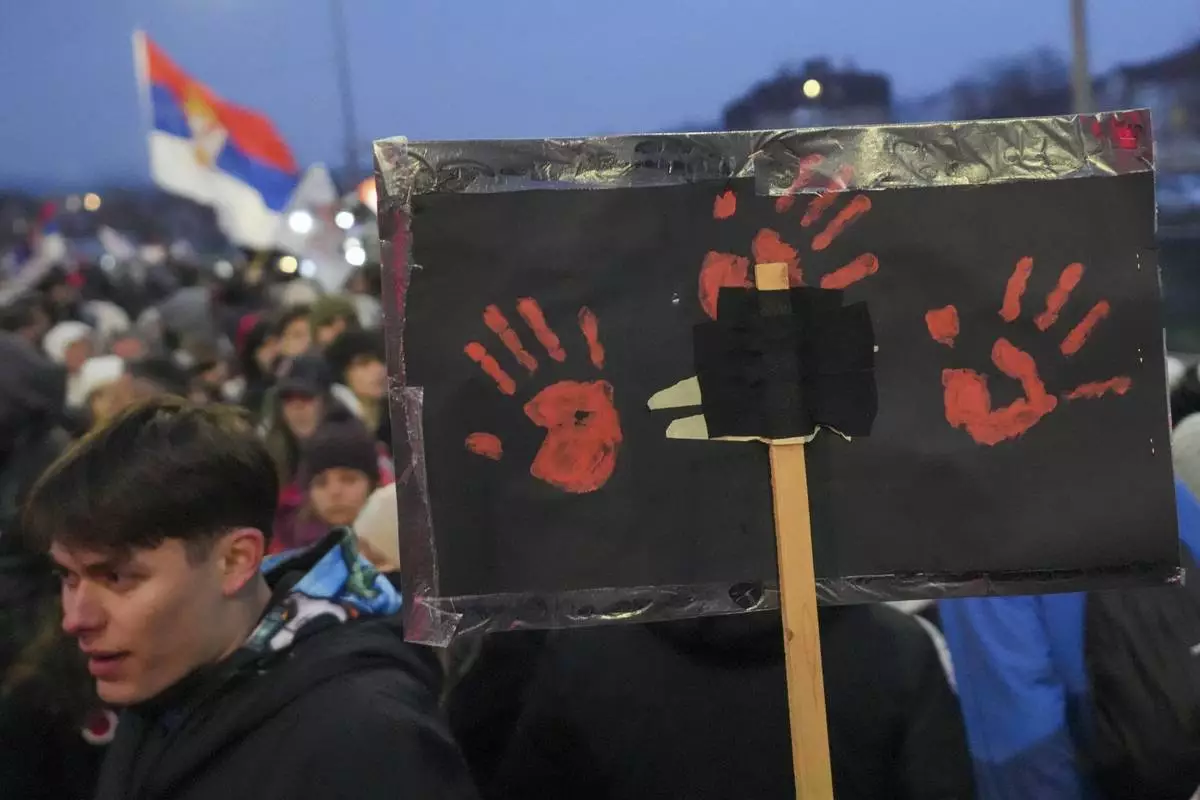
A man holds a banner with red hands symbolizing blood during a student-led large protest and a 15-hour blockade of the streets in Serbian industrial town of Kragujevac, to protest the deaths of 15 people killed in the November collapse of a train station canopy, Saturday, Feb. 15, 2025. (AP Photo/Darko Vojinovic)

Serbian President Aleksandar Vucic, left, poses with Bosnian Serb political leader Milorad Dodik during a rally marking the country's Statehood Day in Sremska Mitrovica, Serbia, Saturday, Feb. 15, 2025. (AP Photo/Antonio Ahel)

Serbian President Aleksandar Vucic waves to his supporters during a rally marking the country's Statehood Day in Sremska Mitrovica, Serbia, Saturday, Feb. 15, 2025. (AP Photo/Antonio Ahel)
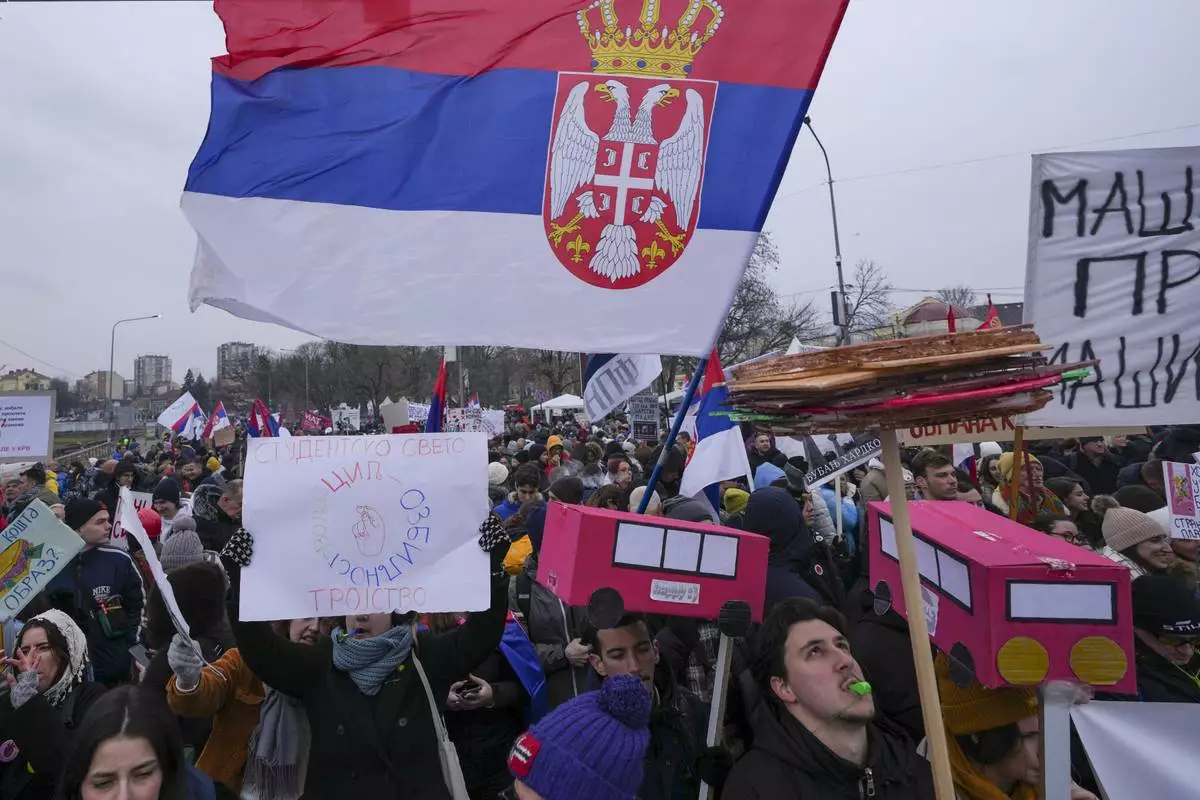
People shout slogans during a student-led large protest and a 15-hour blockade of the streets in Serbian industrial town of Kragujevac, to protest the deaths of 15 people killed in the November collapse of a train station canopy, Saturday, Feb. 15, 2025. (AP Photo/Darko Vojinovic)

People attend a protest triggered after a concrete canopy on a railway station in the northern city of Novi Sad collapsed on Nov. 1, 2024 killed 15 people, in Kragujevac, Serbia, Saturday, Feb. 15, 2025. (AP Photo/Darko Vojinovic)

People attend a minute of silence during a protest triggered after a concrete canopy on a railway station in the northern city of Novi Sad collapsed on Nov. 1, 2024 killed 15 people, in Kragujevac, Serbia, Saturday, Feb. 15, 2025. (AP Photo/Darko Vojinovic)
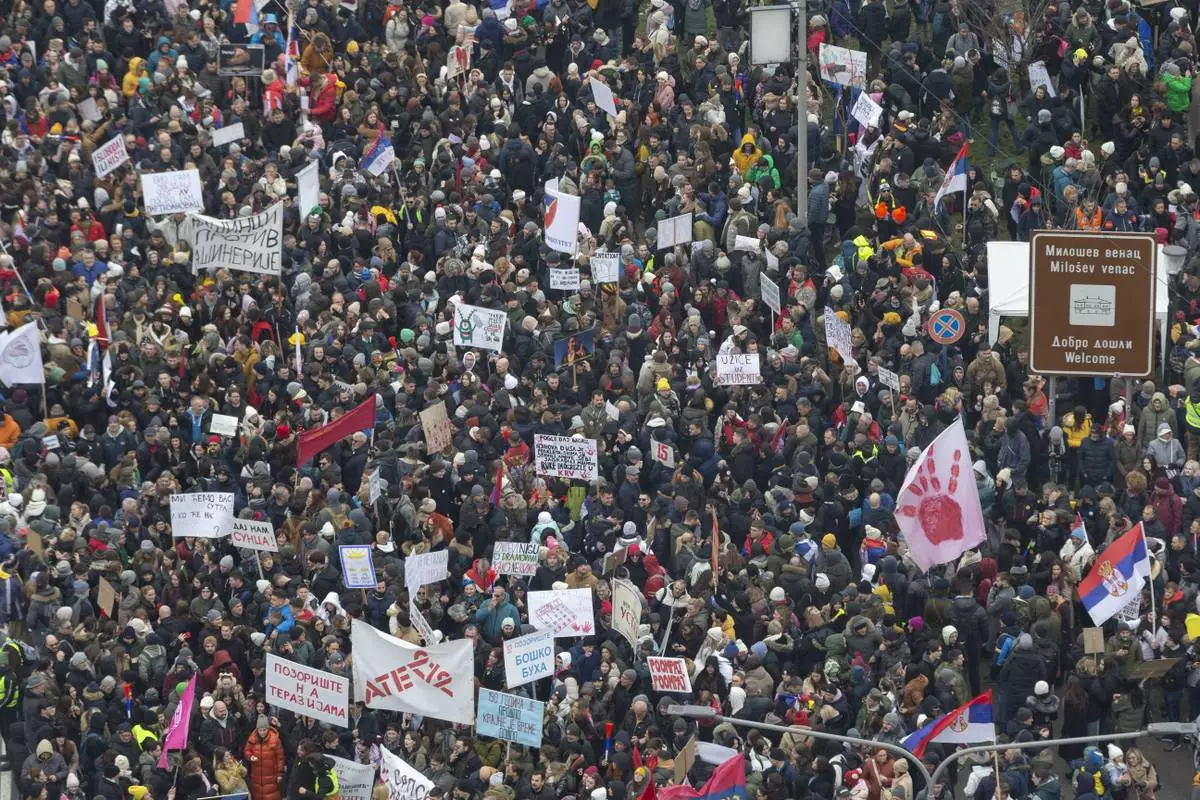
People attend a protest triggered after a concrete canopy on a railway station in the northern city of Novi Sad collapsed on Nov. 1, 2024 killed 15 people, in Kragujevac, Serbia, Saturday, Feb. 15, 2025. (AP Photo/Marko Drobnjakovic)
People attend a protest triggered after a concrete canopy on a railway station in the northern city of Novi Sad collapsed on Nov. 1, 2024 killed 15 people, in Kragujevac, Serbia, Saturday, Feb. 15, 2025. (AP Photo/Darko Vojinovic)
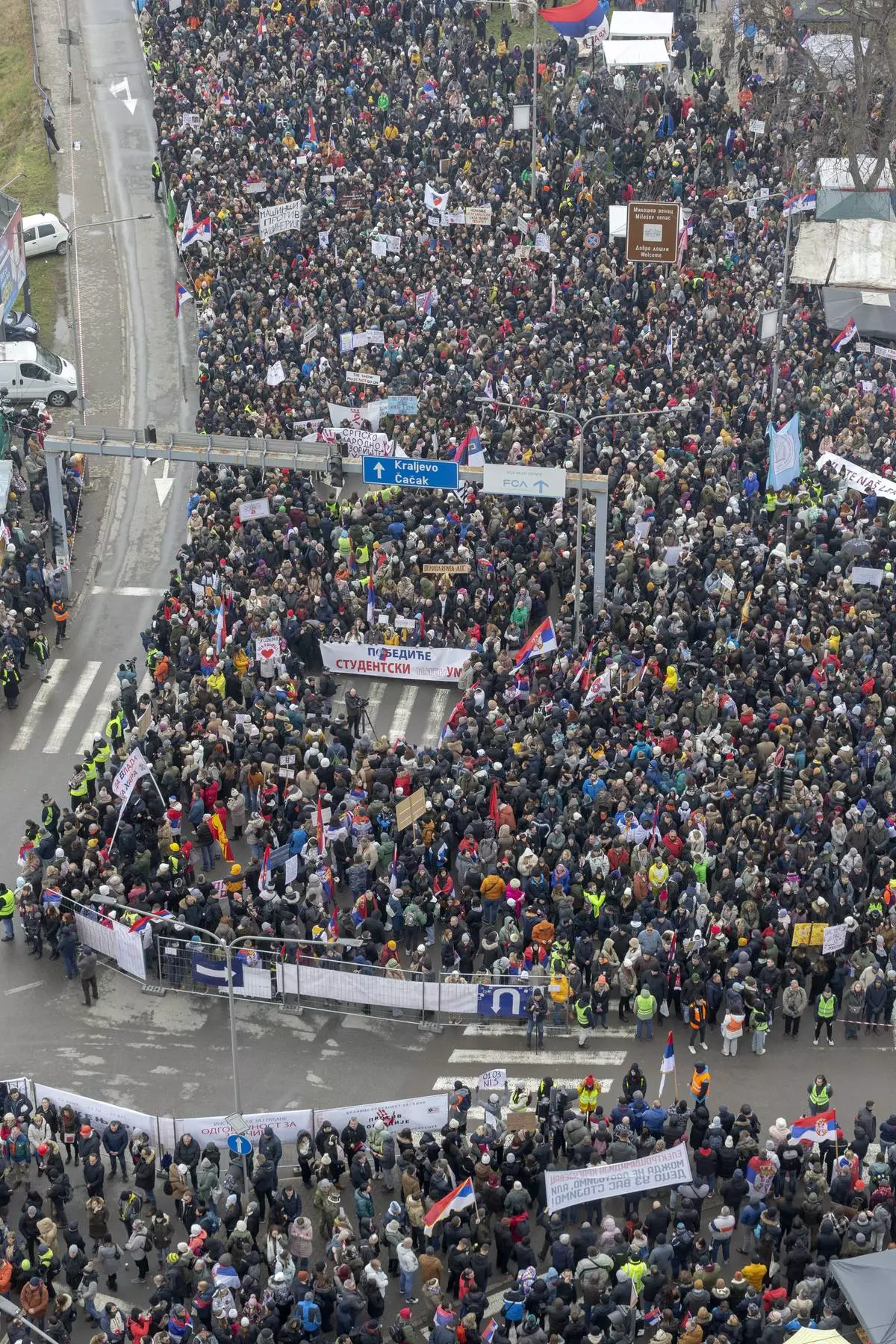
People attend a protest triggered after a concrete canopy on a railway station in the northern city of Novi Sad collapsed on Nov. 1, 2024 killed 15 people, in Kragujevac, Serbia, Saturday, Feb. 15, 2025. (AP Photo/Marko Drobnjakovic)
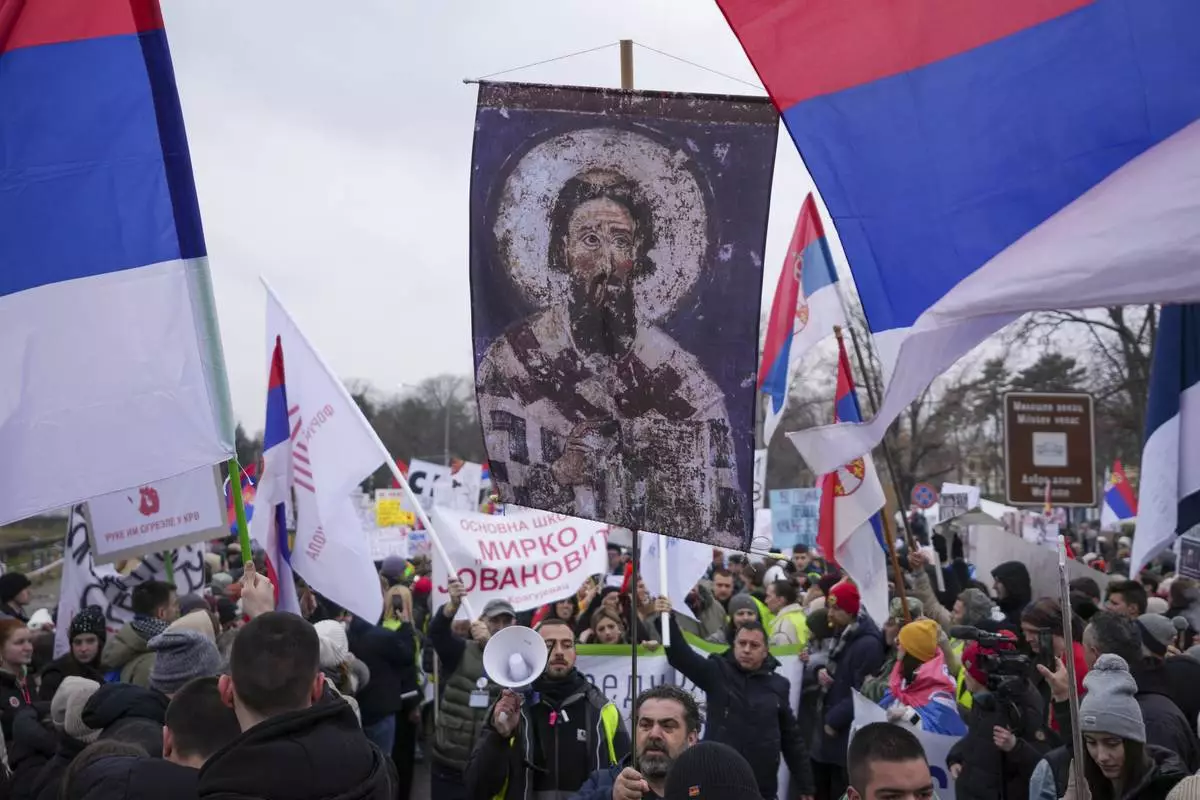
People attend a protest triggered after a concrete canopy on a railway station in the northern city of Novi Sad collapsed on Nov. 1, 2024 killed 15 people, in Kragujevac, Serbia, Saturday, Feb. 15, 2025. (AP Photo/Darko Vojinovic)
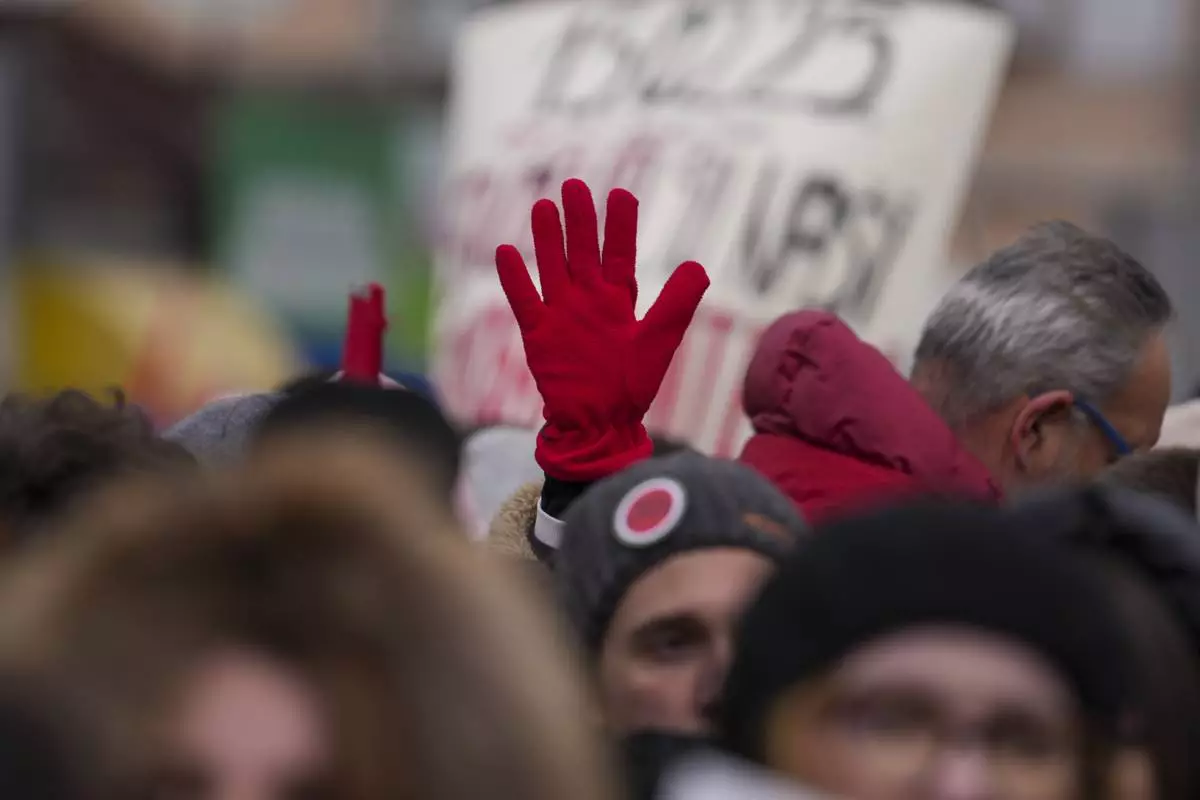
People attend a protest triggered after a concrete canopy on a railway station in the northern city of Novi Sad collapsed on Nov. 1, 2024 killed 15 people, in Kragujevac, Serbia, Saturday, Feb. 15, 2025. (AP Photo/Darko Vojinovic)
People hold banner that reads: "Welcome to Serbia" during a protest triggered after a concrete canopy on a railway station in the northern city of Novi Sad collapsed on Nov. 1, 2024 killed 15 people, in Kragujevac, Serbia, Saturday, Feb. 15, 2025. (AP Photo/Darko Vojinovic)
People attend a protest triggered after a concrete canopy on a railway station in the northern city of Novi Sad collapsed on Nov. 1, 2024 killed 15 people, in Kragujevac, Serbia, Saturday, Feb. 15, 2025. (AP Photo/Darko Vojinovic)
People attend a moment of silence during a protest triggered after a concrete canopy on a railway station in the northern city of Novi Sad collapsed on Nov. 1, 2024 killed 15 people, in Kragujevac, Serbia, Saturday, Feb. 15, 2025. (AP Photo/Darko Vojinovic)
A woman records video with her smartphone during a protest triggered after a concrete canopy on a railway station in the northern city of Novi Sad collapsed on Nov. 1, 2024 killed 15 people, in Kragujevac, Serbia, Saturday, Feb. 15, 2025. (AP Photo/Darko Vojinovic)
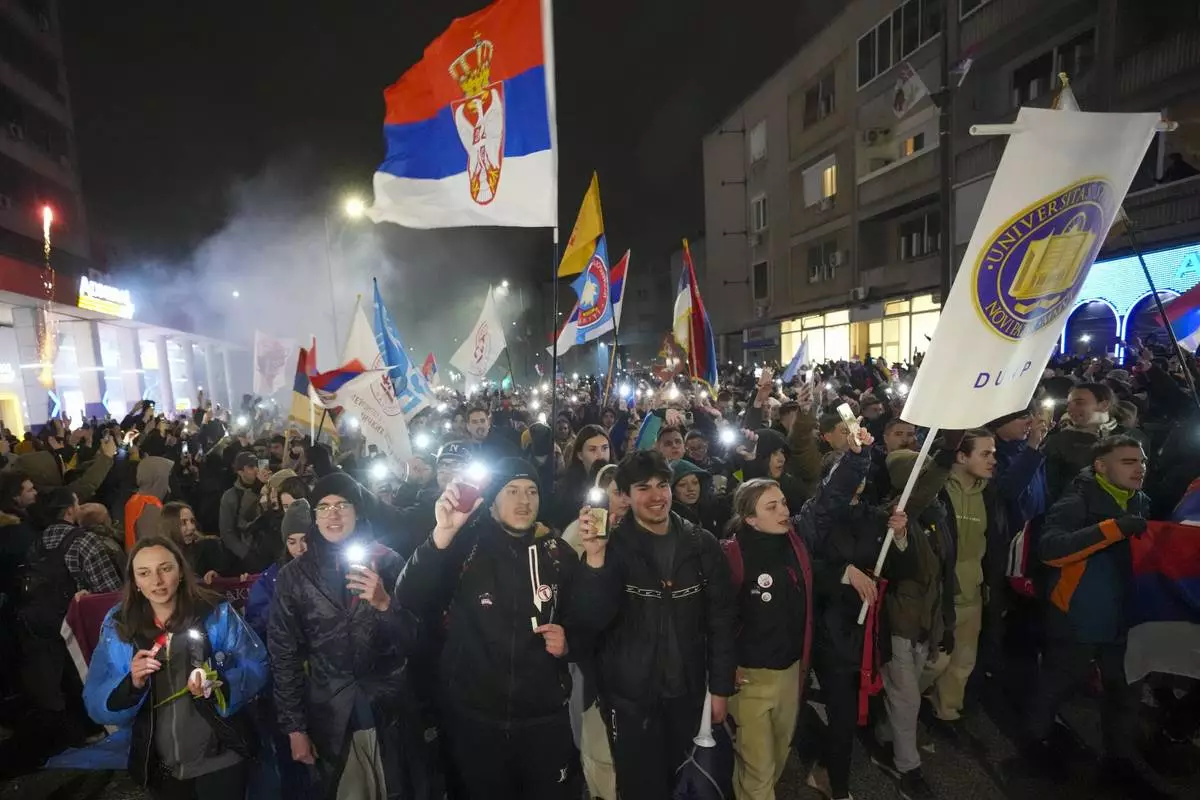
Students arrive in the Serbian industrial town of Kragujevac, to protest the deaths of 15 people killed in the November collapse of a train station canopy, Friday, Feb. 14, 2025. (AP Photo/Darko Vojinovic)
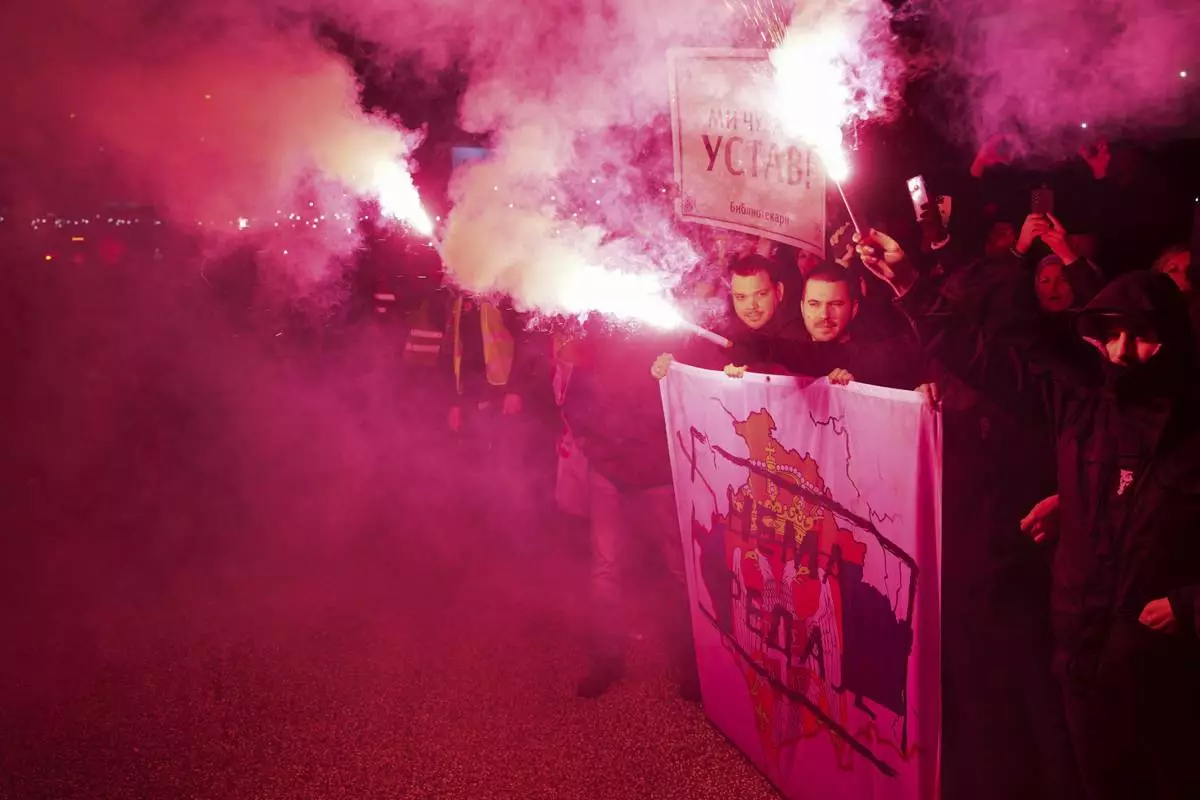
People welcome students in the Serbian industrial town of Kragujevac, who have arrived to protest the deaths of 15 people killed in the November collapse of a train station canopy, Friday, Feb. 14, 2025. (AP Photo/Darko Vojinovic)
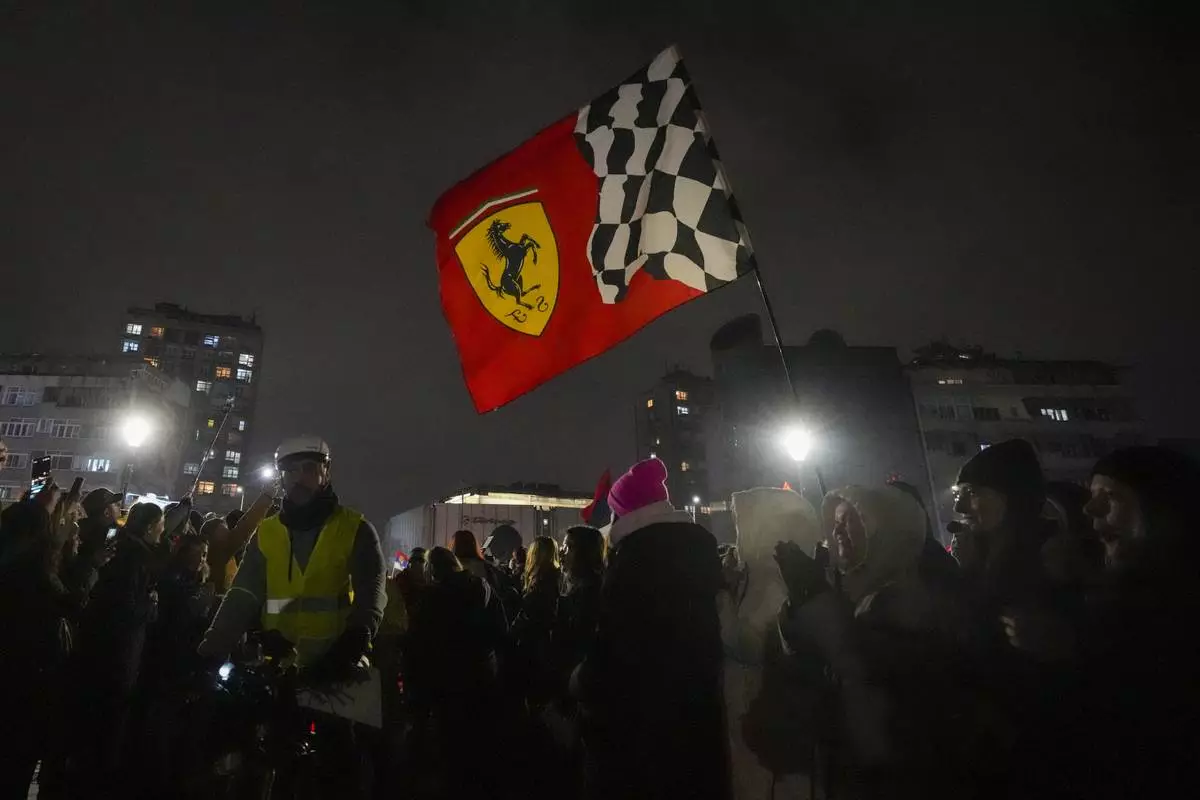
People welcome students in the Serbian industrial town of Kragujevac, who have arrived to protest the deaths of 15 people killed in the November collapse of a train station canopy, Friday, Feb. 14, 2025. (AP Photo/Darko Vojinovic)
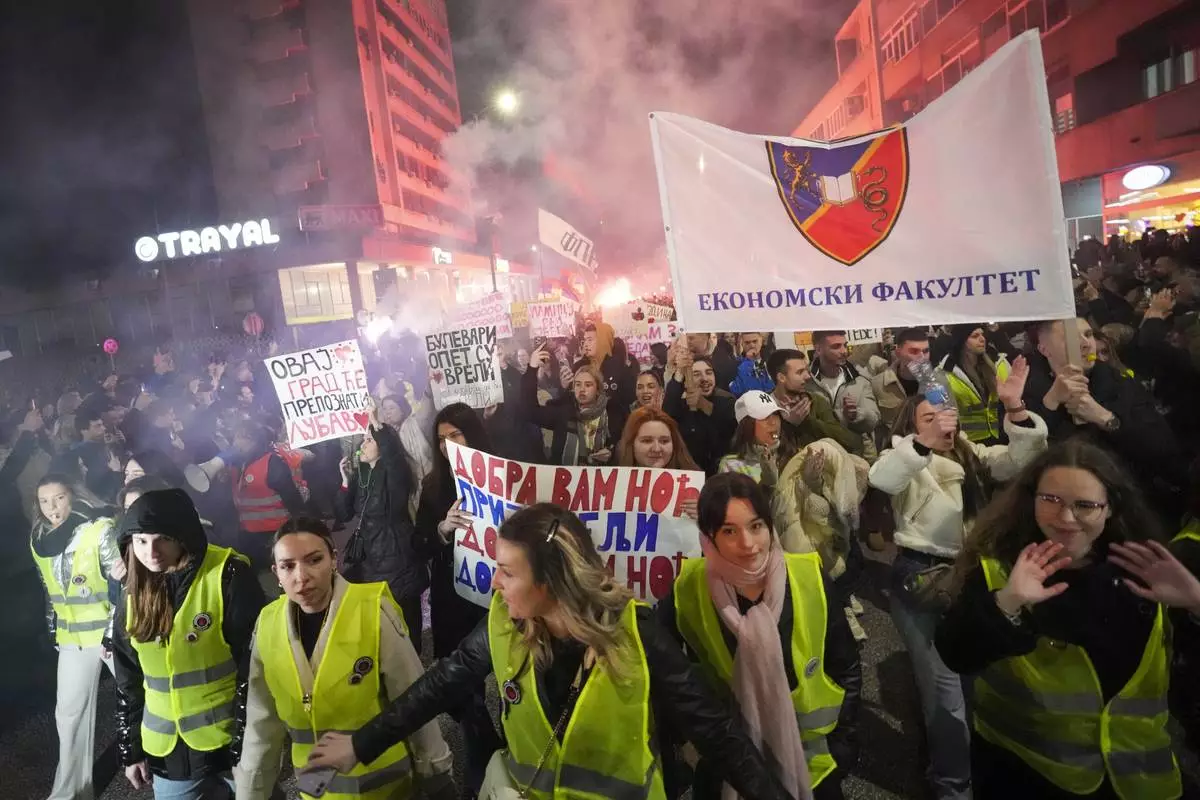
Students arrive in the Serbian industrial town of Kragujevac, to protest the deaths of 15 people killed in the November collapse of a train station canopy, Friday, Feb. 14, 2025. (AP Photo/Darko Vojinovic)
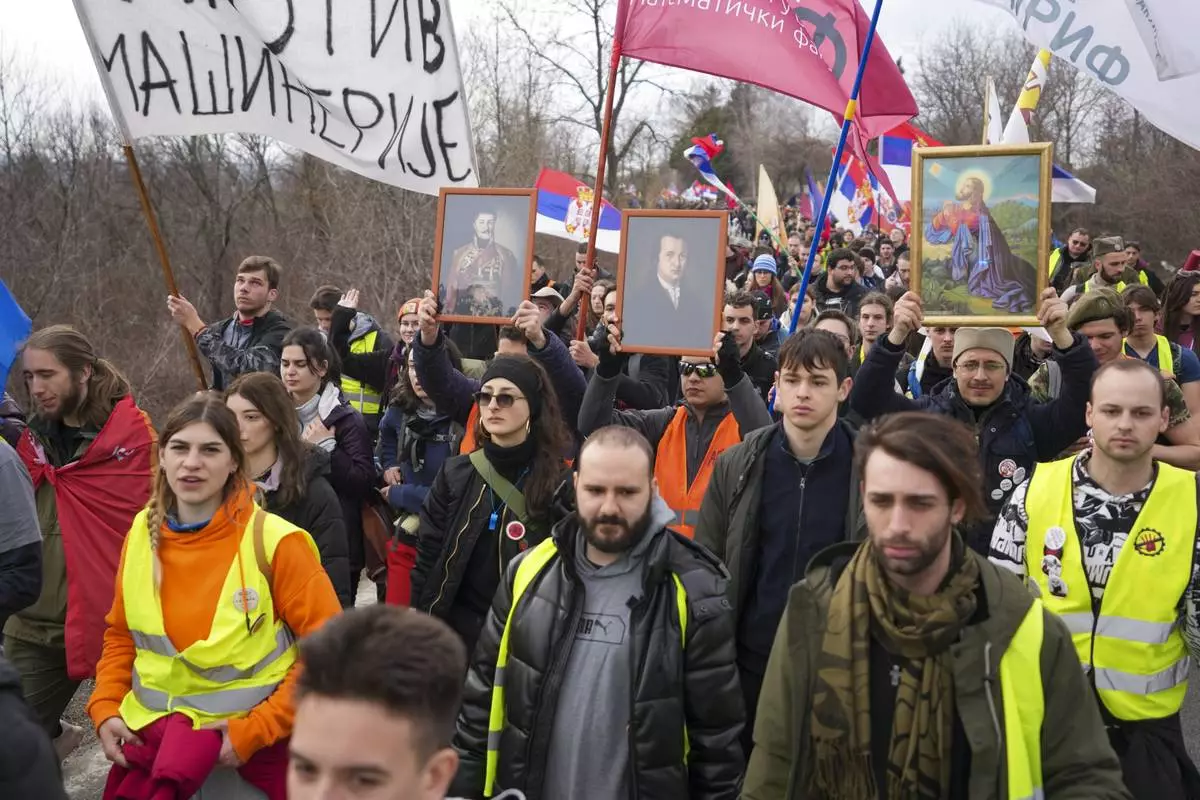
Students march near the village of Cumic near the Serbian industrial town of Kragujevac, to protest the deaths of 15 people killed in the November collapse of a train station canopy, Friday, Feb. 14, 2025. (AP Photo/Darko Vojinovic)
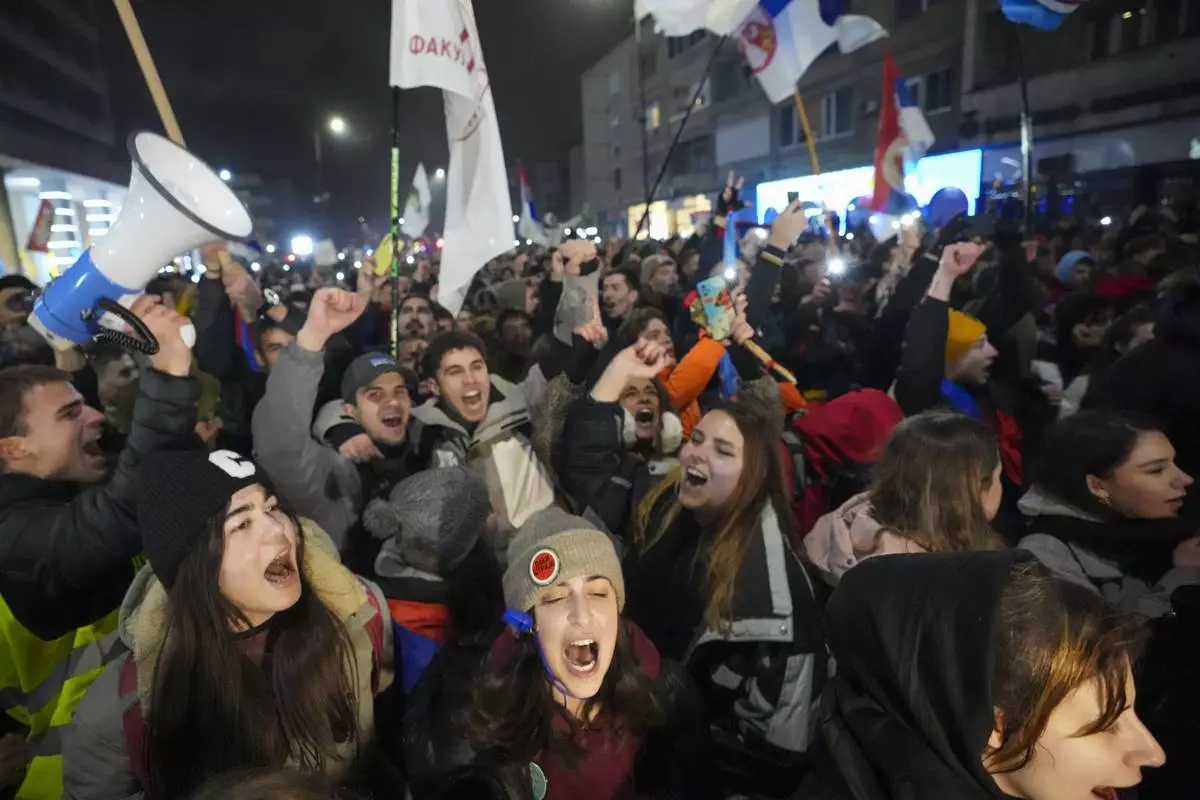
Students arrive in Serbian industrial town of Kragujevac, to protest the deaths of 15 people killed in the November collapse of a train station canopy, Friday, Feb. 14, 2025. (AP Photo/Darko Vojinovic)
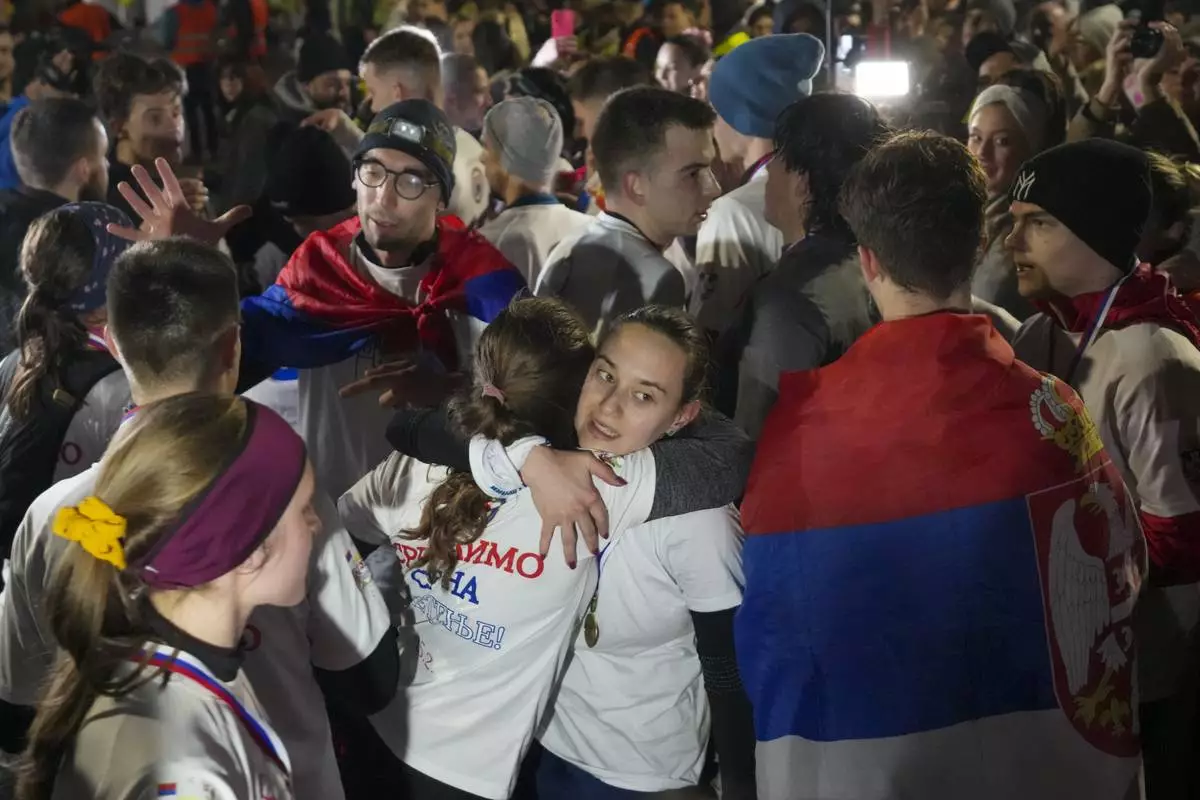
People welcome students in the Serbian industrial town of Kragujevac, who have arrived to protest the deaths of 15 people killed in the November collapse of a train station canopy, Friday, Feb. 14, 2025. (AP Photo/Darko Vojinovic)
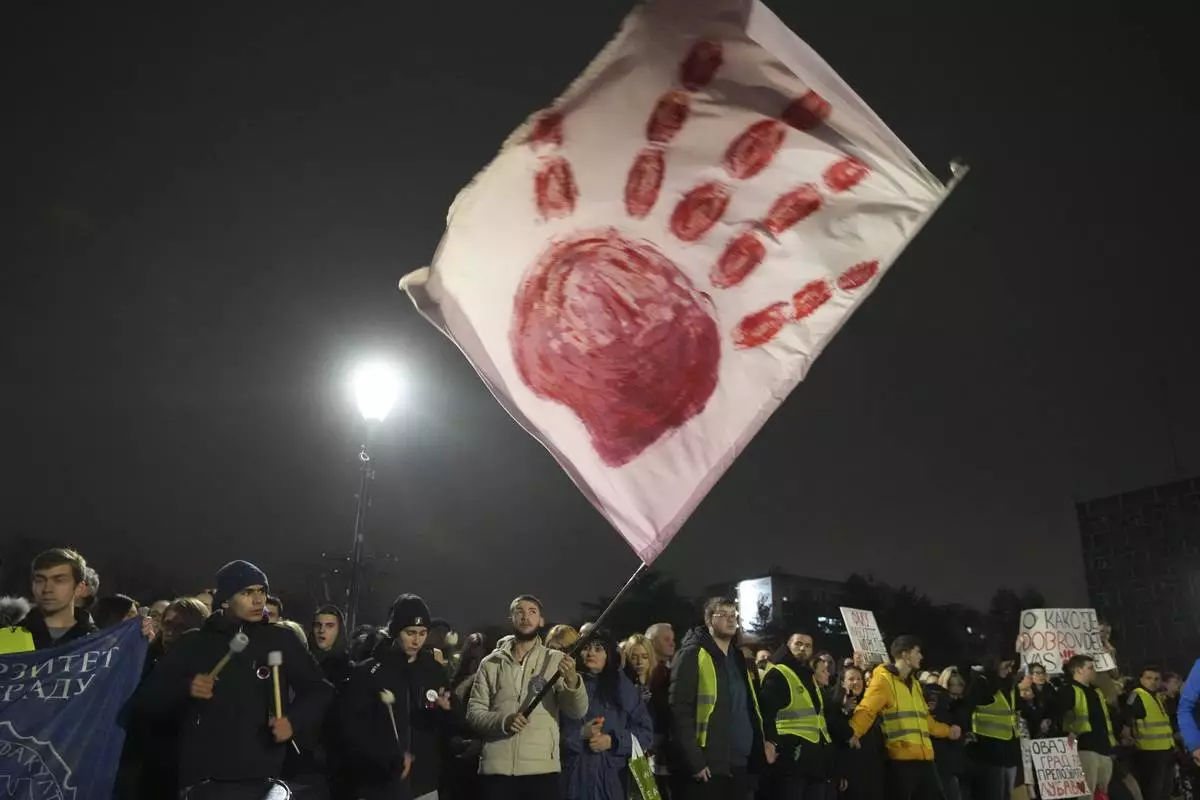
Residents welcome students in the Serbian industrial town of Kragujevac, who have arrived to protest the deaths of 15 people killed in the November collapse of a train station canopy, Friday, Feb. 14, 2025. (AP Photo/Darko Vojinovic)