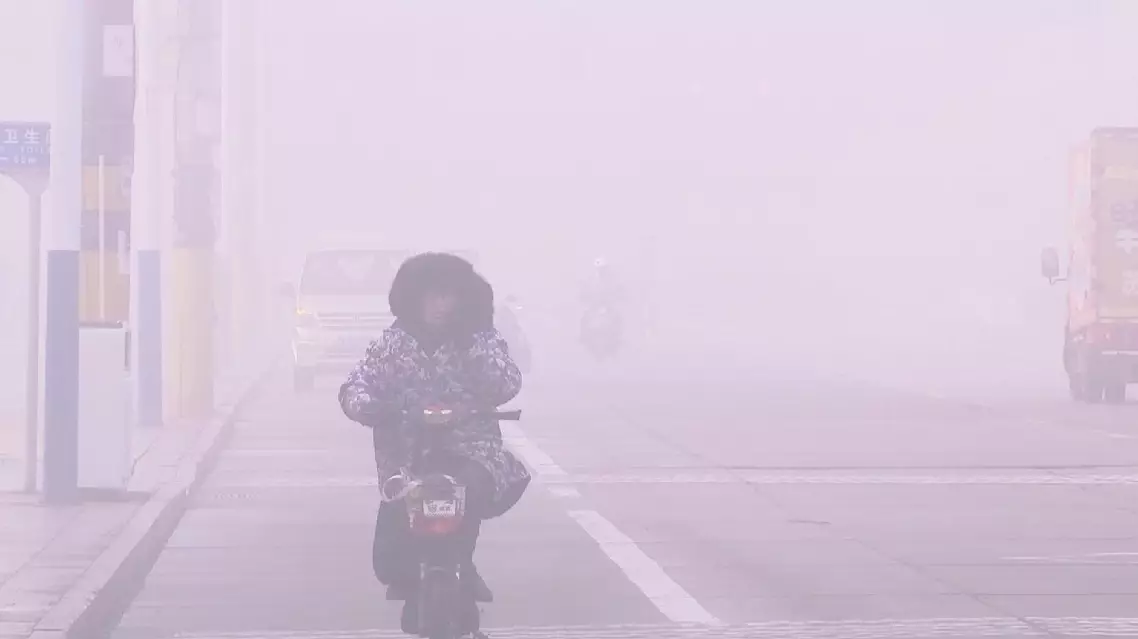
Heavy fog blanketed several cities, especially those in eastern China from Saturday to Sunday, reducing visibility to less than 50 meters in some areas and causing the closure of many expressways.
The National Meteorological Center maintained its yellow alert for foggy weather on Sunday, the third severest in China's four-tier weather warning system that is color-coded with red, orange, yellow and blue.
In Tongcheng City, east China's Anhui Province, dense fog enveloped the entire downtown area, making traffic lights nearly invisible to drivers. As a result, the Tongcheng entrance of the Hefei-Anqing Expressway was temporarily closed at 04:00 Sunday, with police directing drivers to alternate routes.
By around 09:00, as the fog began to dissipate, the affected sections of the expressway were gradually reopened, and normal traffic resumed.
The heavy fog also led to the closure of expressways in other cities across east China's Jiangsu Province, including Nantong, Suzhou, Wuxi, and Changzhou.
In Qidong, a county-level city in Nantong, local authorities issued an orange alert for the fog, as visibility dropped below 50 meters. City buses were temporarily suspended due to the hazardous conditions.
By 09:00 on Sunday, the fog gradually cleared, allowing bus services to resume. Expressways in Jiangsu that had been affected by the fog were also gradually reopened.
Dense fog causes closure of expressways across multiple Chinese cities
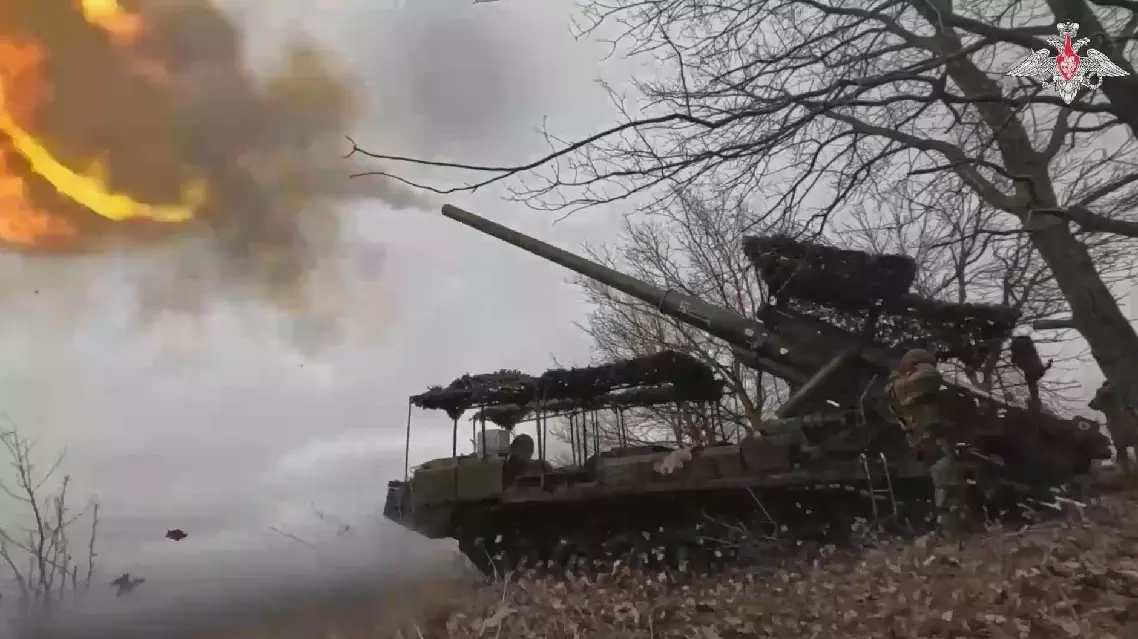
Russia's Ministry of Defense announced on Saturday that its forces conducted strikes against various Ukrainian military targets over the past day, while Ukraine's General Staff reported hitting Russian personnel and equipment concentrations, and an oil depot within Russia.
According to the Russian Ministry of Defense, Russian forces targeted industrial, energy, and transportation infrastructure used by Ukrainian troops, as well as storage facilities for unmanned boats and long-range drones. Strikes also hit temporary deployment points for Ukrainian armed forces and foreign mercenaries in 152 areas.
Russian air defense systems shot down 12 guided aerial bombs and 259 fixed-wing unmanned aerial vehicles.
Meanwhile, the General Staff of the Armed Forces of Ukraine stated on the same day that 173 combat engagements occurred along the front lines. Ukrainian forces attacked multiple Russian personnel and equipment concentration areas, drone control points, and shot down 2,014 Russian drones.
Additionally, Ukraine's National Security and Defense Council reported on Saturday that an oil depot and an oil pumping station within Russian territory were struck by Ukrainian forces in the early hours of the day.
The Orthodox Easter ceasefire with Ukraine announced by Russian President Vladimir Putin began on Saturday afternoon and will continue until Sunday midnight.
Russian President Vladimir Putin announced Thursday an Orthodox Easter ceasefire with Ukraine, set to run from 16:00 on April 11 till the end of the day on April 12, the Kremlin said in a statement on Thursday.
Ukrainian President Volodymyr Zelensky said Friday that Ukraine is ready for "symmetrical steps" if Russia adheres to an Orthodox Easter ceasefire.
Russia claims striking on Ukrainian targets, Ukraine reports hitting Russian oil depot